

Chiller
A chiller is an HVAC system that cools water or a water‑glycol mixture, then circulates it to air handlers or process equipment for cooling. Chillers use vapor‑compression or absorption cycles and are common in commercial and industrial buildings that need precise temperature control.
💡 Key Takeaways
- ✓A chiller is an HVAC system that cools water or a water‑glycol mixture, then circulates it to air handlers or process equipment for cooling. Chillers use vapor‑compression or absorption cycles and are common in commercial and industrial buildings that need precise temperature control.
- ✓Air‑cooled and water‑cooled chillers have different efficiency and water requirements.
- ✓Chillers are energy‑intensive, so efficiency upgrades have big ROI.
- ✓Modern controls and variable‑speed drives can cut energy use significantly.
Chiller
/ˈtʃɪlər/
Definition
A chiller is an HVAC system that cools water or a water‑glycol mixture, then circulates it to air handlers or process equipment for cooling. Chillers use vapor‑compression or absorption cycles and are common in commercial and industrial buildings that need precise temperature control.
What does a chiller do?
It removes heat from water or glycol and circulates the cooled fluid to HVAC equipment or processes.
Source: The Cooling Company

Quick Facts
How Chiller Works
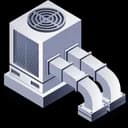
Air‑cooled and water‑cooled chillers serve different needs.
Real-World Application
Office buildings use chillers to cool water that feeds air‑handling units, keeping large areas comfortable and energy‑efficient.
Pro Tip
Maintain proper refrigerant charge and keep heat‑exchange tubes clean to preserve chiller efficiency.
“Maintain proper refrigerant charge and keep heat‑exchange tubes clean to preserve chiller efficiency.”
Important Things to Keep in Mind
- Air‑cooled and water‑cooled chillers have different efficiency and water requirements.
- Chillers are energy‑intensive, so efficiency upgrades have big ROI.
- Modern controls and variable‑speed drives can cut energy use significantly.
Did You Know?
Advanced chillers with variable‑speed drives can reduce energy use by up to 30% versus older fixed‑speed models.
FAQ
What is the difference between air‑cooled and water‑cooled chillers?
Air‑cooled chillers reject heat to outdoor air, while water‑cooled chillers use cooling towers and typically have higher efficiency.
Do chillers require regular maintenance?
Yes. Tube cleaning, refrigerant checks, and control calibration are essential for efficiency and reliability.
Where are chillers used most often?
Large commercial buildings, hospitals, data centers, and industrial facilities.
Related Services
Need help with chiller? Our licensed technicians in Las Vegas are ready to assist.
Share This Page
Why Homeowners Trust Us
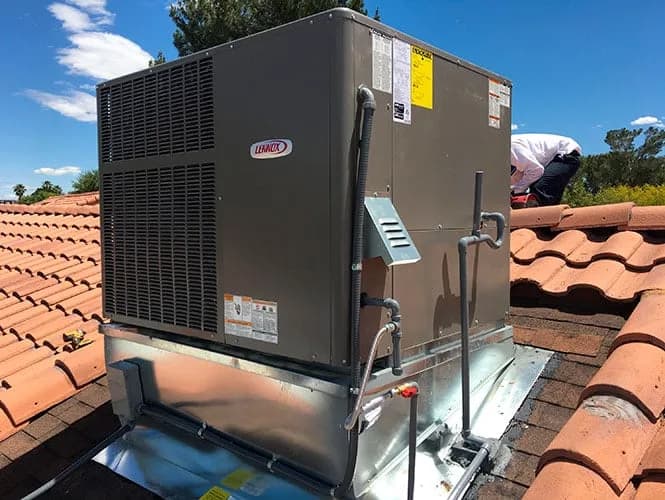


Enhance Your Cooling Efficiency with Advanced Chiller Solutions
Get a Free Estimate
Fill out the form below. Our goal is to reach you within minutes.