

TXV (Thermostatic Expansion Valve)
A thermostatic expansion valve, or TXV, is a metering device that controls how much liquid refrigerant flows into the evaporator coil. It uses a sensing bulb on the suction line to read temperature and adjust the flow so the coil gets exactly what it needs. By matching refrigerant to the cooling load, a TXV keeps the system efficient across changing conditions, from a mild morning to a brutal Las Vegas afternoon. It is more precise than fixed-orifice devices like pistons, which is why it is used in place of them in many modern systems.
💡 Key Takeaways
- ✓A thermostatic expansion valve, or TXV, is a metering device that controls how much liquid refrigerant flows into the evaporator coil. It uses a sensing bulb on the suction line to read temperature and adjust the flow so the coil gets exactly what it needs. By matching refrigerant to the cooling load, a TXV keeps the system efficient across changing conditions, from a mild morning to a brutal Las Vegas afternoon. It is more precise than fixed-orifice devices like pistons, which is why it is used in place of them in many modern systems.
- ✓A TXV is a mechanical valve that meters refrigerant, not an electronic control you can adjust yourself.
- ✓Coil icing and weak cooling are classic signs of a TXV that is stuck, clogged, or has lost its charge.
- ✓Diagnosing a TXV takes gauges and refrigerant knowledge, so it is a job for a licensed HVAC technician.
TXV (Thermostatic Expansion Valve)
/ˌtiː ɛks ˈviː/
Definition
A thermostatic expansion valve, or TXV, is a metering device that controls how much liquid refrigerant flows into the evaporator coil. It uses a sensing bulb on the suction line to read temperature and adjust the flow so the coil gets exactly what it needs. By matching refrigerant to the cooling load, a TXV keeps the system efficient across changing conditions, from a mild morning to a brutal Las Vegas afternoon. It is more precise than fixed-orifice devices like pistons, which is why it is used in place of them in many modern systems.
What does a TXV do in an AC system?
A TXV, or thermostatic expansion valve, meters liquid refrigerant into the evaporator coil based on the temperature at the coil. It feeds the coil the right amount for the current load, which keeps cooling steady and protects the compressor from liquid refrigerant.
Source: The Cooling Company

Quick Facts
Real-World Application
In a home, the TXV sits at the entrance to the indoor coil. When it works, you get steady, even cooling and a healthy temperature split across the vents. When it sticks or loses its charge, you notice weak airflow, warm rooms, higher energy bills, or ice forming on the coil and the copper lines.
Pro Tip
If you see frost on the indoor coil or the copper line at the air handler, shut the system off and call a pro. Running a frozen unit strains the compressor, the most expensive part to replace.
“If you see frost on the indoor coil or the copper line at the air handler, shut the system off and call a pro. Running a frozen unit strains the compressor, the most expensive part to replace.”
Important Things to Keep in Mind
- A TXV is a mechanical valve that meters refrigerant, not an electronic control you can adjust yourself.
- Coil icing and weak cooling are classic signs of a TXV that is stuck, clogged, or has lost its charge.
- Diagnosing a TXV takes gauges and refrigerant knowledge, so it is a job for a licensed HVAC technician.
Did You Know?
The TXV is an old device whose core design has barely changed for the better part of a century. The small sensing bulb strapped to the suction line still does the whole job using pressure and temperature, with no electronics needed.
FAQ
Can I fix a TXV myself?
No. A TXV is sealed inside the refrigerant circuit, so replacing one means recovering refrigerant, brazing new connections, pulling a vacuum, and recharging. That is licensed technician work with the right tools.
How do I know if my TXV is bad?
Common signs are ice on the coil or copper lines, warm air from the vents, long run times, and higher bills. A technician confirms it by checking superheat and system pressures with gauges.
How long does a TXV last?
A quality TXV often lasts the life of the system, around 12 to 15 years or more. Contaminated refrigerant, moisture, or debris from a compressor failure can cut that lifespan short.
Related Services
Need help with txv (thermostatic expansion valve)? Our licensed technicians in Las Vegas are ready to assist.
Share This Page
Why Homeowners Trust Us

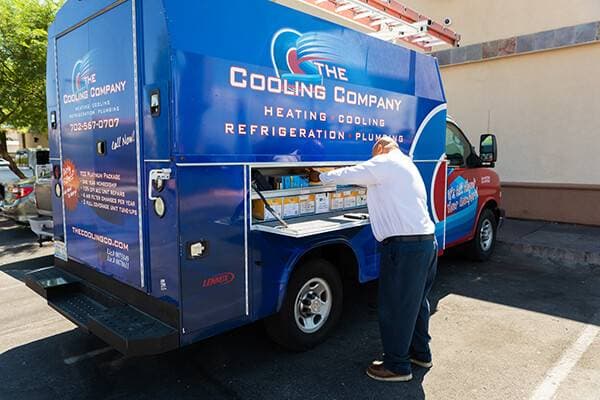

AC Not Cooling? The Cooling Company Diagnoses TXV Problems Fast
Get a Free Estimate
Fill out the form below. Our goal is to reach you within minutes.