

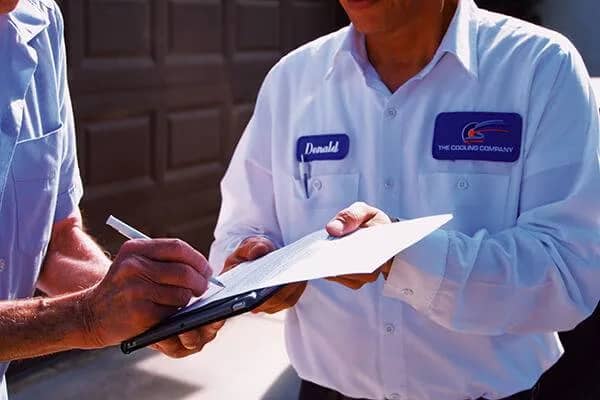
Short answer: Replacing an AC compressor in Las Vegas typically costs $2,000 to $4,500 for parts, labor, and refrigerant combined. The compressor itself runs $800 to $2,500 depending on tonnage and type, labor adds $500 to $1,200, and refrigerant recharge costs $200 to $600. Whether this repair makes financial sense depends on the age of your system, warranty status, and refrigerant type. If your unit is under 7 years old and still uses R-410A, compressor replacement is usually the right call. If it is over 10 years old or uses R-22, full system replacement almost always makes more sense. Call The Cooling Company at (702) 567-0707 for an honest diagnosis.
Key Takeaways
- Total compressor replacement cost in Las Vegas: $2,000-$4,500. This includes the compressor part ($800-$2,500), labor ($500-$1,200), refrigerant ($200-$600), and miscellaneous parts like the contactor, capacitor, and filter drier ($100-$300).
- System size is the biggest cost variable. A 2-ton residential compressor replacement runs $1,800-$2,800, while a 5-ton unit costs $3,200-$4,500 or more.
- Warranty coverage often does not mean free. Most manufacturer warranties cover the compressor part for 5-10 years but do not cover labor, refrigerant, or related components. Even under warranty, expect to pay $800-$1,500 out of pocket.
- The replace-vs-new decision hinges on system age. If your system is under 7 years old, replace the compressor. If it is 8-10 years old, evaluate carefully. If it is over 10, lean heavily toward a new system -- especially in Las Vegas where extreme heat shortens equipment life.
- Las Vegas conditions accelerate compressor failure. Extreme heat, power surges during monsoon season, desert dust, and hard water scale all contribute to compressor wear that happens faster here than in milder climates.
- Emergency replacement costs 15-25% more. If your compressor fails on a 115-degree July afternoon, expect to pay a premium for same-day service. Scheduling during shoulder season (October-March) saves money.
What Does AC Compressor Replacement Actually Cost?
Here is the full cost breakdown for compressor replacement in the Las Vegas market as of 2026. These figures reflect residential central air conditioning systems, which account for the vast majority of homes in the valley.Cost Breakdown by Component
| Component | Cost Range | Notes |
|---|---|---|
| Compressor (part) | $800-$2,500 | Varies by tonnage, brand, and type (scroll, rotary, inverter) |
| Labor | $500-$1,200 | 4-8 hours typical; rooftop units or tight installations cost more |
| Refrigerant recharge | $200-$600 | R-410A at $30-$60/lb; R-22 at $75-$150/lb if applicable |
| Misc. parts (drier, contactor, capacitor) | $100-$300 | Best practice is to replace the filter drier and test the contactor during any compressor swap |
| Total | $2,000-$4,500 | Most Las Vegas homeowners land between $2,400 and $3,800 |
Cost Breakdown by System Size
The tonnage of your system is the single biggest factor in compressor cost. Larger compressors handle more refrigerant, require heavier-duty electrical components, and take longer to install.| System Size | Typical Home Size | Compressor Replacement Cost (Total) |
|---|---|---|
| 2 Ton | 800-1,200 sq ft | $1,800-$2,800 |
| 2.5 Ton | 1,200-1,600 sq ft | $2,000-$3,000 |
| 3 Ton | 1,600-2,100 sq ft | $2,200-$3,400 |
| 3.5 Ton | 2,100-2,400 sq ft | $2,500-$3,800 |
| 4 Ton | 2,400-2,800 sq ft | $2,800-$4,000 |
| 5 Ton | 2,800-3,500 sq ft | $3,200-$4,500 |
These ranges include parts, labor, refrigerant, and miscellaneous components. Rooftop installations -- common in many Las Vegas neighborhoods, especially older homes in the central valley -- add $200-$500 for crane or hoist access.
Scroll vs. Rotary vs. Inverter Compressors
Not all compressors are created equal, and the type installed in your system affects both the replacement cost and your long-term efficiency.Scroll Compressors
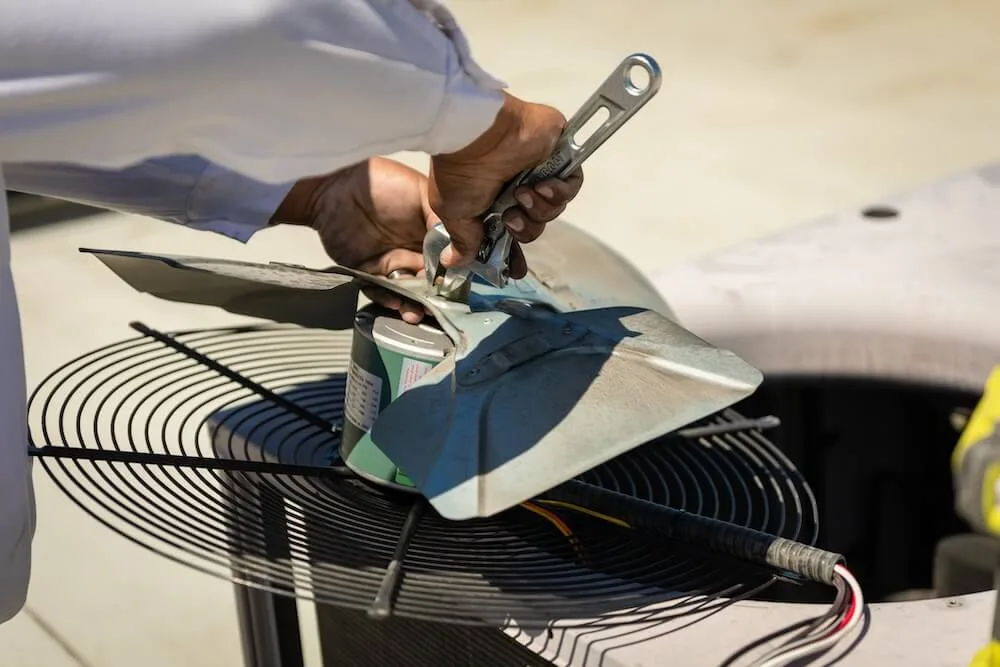
Scroll compressors are the most common type in residential AC systems built after 2000. They use two spiral-shaped scrolls to compress refrigerant -- one stationary, one orbiting. They are quieter than reciprocating compressors, more efficient, and have fewer moving parts, which means longer life in theory.
Replacement cost: $900-$2,000 for the part. This is the standard replacement for most Las Vegas homes.
Rotary Compressors
Rotary compressors are typically found in smaller systems (under 2 tons) and some ductless mini-split units. They use a rotating motion to compress refrigerant and are compact and efficient for their size.
Replacement cost: $800-$1,500 for the part. Less common in standard residential split systems but worth knowing if you have a smaller unit or ductless setup.
Inverter (Variable-Speed) Compressors
Inverter compressors adjust their speed based on cooling demand rather than cycling on and off. They are significantly more efficient, run quieter, and maintain more consistent temperatures. They are also significantly more expensive to replace.
Replacement cost: $1,500-$2,500+ for the part. These are found in high-efficiency systems (18+ SEER) from brands like Carrier Greenspeed, Lennox XC25, and Trane XV20i. If your inverter compressor fails outside of warranty, the replacement cost sometimes approaches 40-50% of a new system -- which makes the replace-vs-new conversation especially important.
The Critical Decision: Compressor Replacement vs. Full System Replacement
This is the most important section of this guide. A compressor replacement at $2,500-$3,500 sounds like a bargain compared to a full AC system installation at $11,000-$27,000. But the math is not always that simple, and making the wrong call can cost you more in the long run.When Compressor Replacement Makes Sense
Replace the compressor -- not the whole system -- when these conditions are met:
- The system is under 7 years old. You have significant useful life remaining. A new compressor should give you another 8-12 years of service in Las Vegas conditions.
- The compressor is under warranty. If the manufacturer covers the part, you are only paying for labor, refrigerant, and miscellaneous components -- typically $800-$1,500 total. That makes the repair almost always worthwhile.
- The system uses R-410A refrigerant. R-410A is still widely available and reasonably priced. Your system is compatible with current technology.
- This is the first major repair. One significant repair on a younger system is normal. It is the pattern of repeated failures that signals a system reaching end of life.
- The rest of the system is in good condition. If the condenser coil, evaporator coil, fan motor, and electrical components are all functioning well, replacing just the compressor preserves a system that has plenty of life left.
When Full System Replacement Is the Better Investment
Replace the entire system instead of just the compressor when any of these apply:
- The system is 8+ years old. In Las Vegas, an 8-year-old system has already consumed more than half its expected lifespan. Spending $3,000+ on a compressor for a unit that may need another major repair within 2-3 years is a losing bet. Read our full repair vs. replace decision guide for the complete framework.
- The system uses R-22 refrigerant. R-22 has been phased out since 2020. Reclaimed R-22 costs $75-$150 per pound and rising. Even if you replace the compressor, every future recharge or repair gets more expensive. Replacing the system with a modern R-410A or A2L unit eliminates this escalating cost entirely.
- You have had multiple repairs in the past 2-3 years. A compressor failure following a capacitor replacement, a contactor failure, and a fan motor replacement is not bad luck -- it is a system telling you it is done. Each component operates under the same age, conditions, and wear patterns.
- The system has a low SEER rating. If your current unit is rated 10-13 SEER, upgrading to a 15-18 SEER2 system can save $300-$700 per year in energy costs. Over 12-15 years, those savings offset a significant portion of the new system cost.
- Matched system concerns. If only the outdoor unit's compressor is replaced but the indoor coil and air handler are original, the mismatched components can reduce efficiency and void the new compressor's warranty. Some manufacturers require matched indoor and outdoor equipment for full warranty coverage.
Warranty Coverage: What Compressor Warranties Actually Cover
Compressor warranty coverage is one of the most misunderstood areas in HVAC. Homeowners often assume their compressor is "under warranty" and expect the repair to be free or close to it. The reality is more nuanced.What the Warranty Typically Covers
Most major manufacturers (Carrier, Lennox, Trane, Goodman, Rheem, York) offer 5-10 year parts warranties on compressors. Some premium lines come with limited lifetime compressor warranties. These warranties cover the cost of the compressor part only.
What the Warranty Does NOT Cover
- Labor: The 4-8 hours of technician time to recover refrigerant, remove the failed compressor, install the new one, pressure test, evacuate, and recharge. This alone runs $500-$1,200.
- Refrigerant: The system must be evacuated and recharged with fresh refrigerant after a compressor swap. Cost: $200-$600.
- Related parts: The filter drier must be replaced (captures contaminants from the failed compressor), and the contactor and capacitor should be tested and often replaced preventively. Cost: $100-$300.
- Diagnostic fee: The service call to diagnose the failure. Typically $79-$150.
Bottom line: Even with a valid parts warranty, expect to pay $800-$1,500 out of pocket for a compressor replacement. Without warranty, the full $2,000-$4,500 applies.
How to Check If Your Compressor Is Under Warranty
- Find your model and serial number. These are on the data plate of your outdoor condensing unit -- typically a silver or white label on the side or inside the access panel.
- Check the manufacturer's website. Most manufacturers (Carrier, Lennox, Trane, Goodman, Rheem) have online warranty lookup tools where you enter the serial number.
- Verify product registration. Many warranties require the original homeowner to have registered the equipment within 60-90 days of installation. Unregistered units often default to a shorter 5-year warranty instead of the extended 10-year coverage.
- Confirm the installing contractor. Some warranties require that the original installation was performed by a licensed, authorized dealer. If the unit was installed by an unlicensed handyman, the warranty may be void.
- Ask your HVAC company. If you cannot find this information, any reputable HVAC contractor can look up your warranty status using your equipment's serial number. Call us at (702) 567-0707 and we will check for you at no charge.
What Causes Compressor Failure in Las Vegas?
Understanding why compressors fail helps you prevent premature failure and make informed decisions about repair vs. replacement. Las Vegas presents a uniquely hostile environment for AC compressors.Low Refrigerant From Leaks
This is the number one cause of compressor failure in any climate. When refrigerant charge drops due to a leak, the compressor overheats because it relies on returning refrigerant to cool itself. Prolonged low-charge operation burns out the compressor windings. The cruel irony: by the time you notice warm air, the damage is often already done.
If a technician tells you the compressor failed but does not also perform a leak search, insist on one. Replacing a compressor without finding and fixing the underlying leak means the new compressor will fail the same way. For more on getting a thorough diagnosis, read our guide to HVAC second opinions.
Power Surges and Electrical Issues
Las Vegas monsoon season (June through September) brings lightning storms that cause power surges across the valley. A single surge can damage the compressor's start winding, run capacitor, or contactor. Even small, repeated voltage fluctuations from NV Energy grid stress during peak summer demand can degrade compressor electrical components over time. Our power outage AC protection guide covers surge protection strategies.
Dirty Condenser Coils
Desert dust, cottonwood fluff, and debris from landscaping clog condenser coils and restrict the airflow the compressor needs to reject heat. When the condenser cannot dissipate heat efficiently, the compressor runs hotter and longer. This sustained thermal stress accelerates bearing wear and winding insulation breakdown. Annual coil cleaning through a maintenance plan is the single most effective way to extend compressor life.
Hard Water Scale Buildup
Las Vegas water is among the hardest in the nation at 16+ grains per gallon. In systems with evaporative pre-coolers or where irrigation overspray hits the condenser, mineral scale builds up on coil surfaces and reduces heat transfer. The compressor compensates by running harder and longer, which shortens its life.
Extreme Heat and Extended Runtime
When outdoor temperatures hit 110-118 degrees, your compressor is trying to reject heat into air that is already brutally hot. The temperature differential between the refrigerant and the outdoor air shrinks, forcing the compressor to work at higher pressures and higher amperage draws. A compressor that might last 15 years in Portland or Seattle often lasts 10-12 in Las Vegas simply because of the accumulated thermal stress.
Age and Normal Wear
Compressors have internal bearings, valve plates, and motor windings that wear over time regardless of conditions. In Las Vegas, where systems run 2,500-3,500 hours per year compared to 1,000-1,500 in moderate climates, components accumulate wear roughly twice as fast. A compressor rated for 15 years of "normal" use may reach equivalent wear in 8-10 years here.
Emergency vs. Scheduled Replacement
When your compressor fails matters almost as much as the repair itself when it comes to cost.Emergency Replacement (Same-Day, Peak Season)
If your compressor dies on a 115-degree afternoon in July, you need cooling restored immediately. Emergency and same-day service during peak season (June through September) typically costs 15-25% more than scheduled work. This premium comes from overtime labor rates, expedited parts sourcing, and the simple reality that every HVAC company in the valley is slammed with calls during peak heat.
On a $3,000 repair, that premium adds $450-$750 to your total cost.
Scheduled Replacement (Off-Peak)
If your compressor is showing signs of failure -- hard starting, tripping the breaker, unusual noises, reduced cooling capacity -- scheduling the replacement during shoulder season (October through March) gives you access to lower labor rates, better parts availability, and more flexible scheduling. Some contractors offer off-season discounts of 10-15%.
Signs your compressor is failing but not yet dead: the outdoor unit makes a chattering or clicking sound at startup, the system trips the breaker intermittently, cooling performance declines gradually over weeks, or the compressor makes a humming sound but does not engage (the start capacitor may be compensating for worn windings).
Financing Options for Compressor Replacement
A $2,000-$4,500 repair is an unexpected expense for most households. Several options can spread the cost:
- HVAC contractor financing: Many contractors, including The Cooling Company, offer financing plans for major repairs. These range from 0% interest promotional periods to extended payment plans up to 60 months.
- Home warranty coverage: If you have a home warranty, compressor replacement may be covered with a service fee of $75-$150. However, home warranty companies are known for delays, denying claims on technicalities, and using refurbished parts. Read our guide to home warranty AC claim denials before relying on this option.
- Manufacturer warranty: As discussed above, parts-only warranty coverage reduces your out-of-pocket to $800-$1,500.
- Credit card: Some credit cards offer 0% promotional APR on purchases, which can work for a repair of this size if you can pay it off within the promotional period.
If the compressor replacement cost approaches or exceeds $3,500, seriously consider whether financing a full system replacement with modern equipment makes more financial sense over the long term. Monthly payments on a new $15,000 system with 60-month financing may be only $80-$120 more than payments on a $3,500 compressor repair -- and you get a complete warranty, higher efficiency, and a full new lifespan.

How The Cooling Company Handles Compressor Replacement
Not every HVAC company approaches compressor replacement the same way. Here is what to expect when you call us:
- Thorough diagnosis before quoting. We test amperage draw, start and run capacitors, electrical supply, superheat and subcooling, and refrigerant pressures before concluding the compressor has failed. A proper diagnosis takes 45-60 minutes, not 15. Compressor failure symptoms overlap with several less expensive problems, and we will not recommend a $3,000 repair when a $250 capacitor is the actual issue.
- Warranty verification. We check your compressor's warranty status before providing the quote. If the part is under warranty, we handle the claim process with the manufacturer.
- Honest recommendation. If your system is old enough that compressor replacement is a poor investment, we will tell you. We would rather earn your trust on a new system installation than take $3,000 for a repair that does not make financial sense.
- Complete repair, not shortcuts. Every compressor replacement includes a new filter drier, a full system evacuation and pressure test before recharging, contactor and capacitor inspection, and a post-repair performance verification. Skipping any of these steps risks premature failure of the new compressor.
Frequently Asked Questions
How long does AC compressor replacement take?
A standard residential compressor replacement takes 4-8 hours from start to finish. This includes recovering the existing refrigerant, removing the failed compressor, installing the new one, replacing the filter drier, pressure testing the system for leaks, evacuating moisture, recharging with the correct amount of refrigerant, and verifying system performance. Rooftop units or systems with access challenges may take longer. In most cases, your cooling is restored the same day.
Can I just add refrigerant instead of replacing the compressor?
No. If the compressor has failed mechanically -- seized bearings, burned windings, or internal valve damage -- adding refrigerant will not restore function. However, if the compressor is struggling due to low refrigerant from a leak rather than internal failure, finding and repairing the leak and recharging the system may solve the problem without a compressor replacement. This is exactly why proper diagnosis matters. A company that jumps to "you need a new compressor" without checking refrigerant charge, electrical components, and system pressures may be misdiagnosing the problem.
Is it worth replacing a compressor on a 10-year-old AC?
In most Las Vegas situations, no. A 10-year-old system in Las Vegas has already endured the equivalent of 15 or more years of wear in a milder climate. Spending $2,500-$4,000 on a compressor gives you perhaps 3-5 more years before other major components begin failing. A new system with a full 10-year warranty, higher efficiency, and 12-15 years of expected life is usually the better investment. The exception: if the compressor is still under an extended or lifetime parts warranty, the reduced out-of-pocket cost ($800-$1,500) may justify the repair. Run the numbers with your contractor before deciding.
Why did my AC compressor fail after only 5 years?
Premature compressor failure almost always traces back to one of three causes: a refrigerant leak that went undetected (low charge causes overheating), electrical problems (voltage fluctuations, failed capacitors, or loose connections), or improper installation (incorrect refrigerant charge, contaminants in the lines, or undersized equipment for the home). In Las Vegas, power surges during monsoon storms are a particularly common culprit. If your compressor failed prematurely, demand a root cause analysis before approving the replacement -- otherwise the new compressor may fail the same way.
Does homeowners insurance cover compressor replacement?
Standard homeowners insurance does not cover compressor failure due to wear, age, or lack of maintenance. However, if the compressor failed due to a covered peril -- such as a lightning strike or power surge from a downed utility line -- your policy may cover the repair minus your deductible. Document the circumstances, take photos, and file the claim promptly. A separate home warranty policy may cover compressor failure regardless of cause, though approval can be slow and coverage is often limited. Check your specific policy language.
Should I replace just the compressor or the entire condenser unit?
Replacing the entire condenser (outdoor unit) instead of just the compressor typically costs $1,000-$2,000 more but gives you a new condenser coil, fan motor, and electrical components along with the compressor. If your system is 6+ years old and the condenser coil or fan motor shows wear, replacing the full condenser may be more cost-effective than replacing individual components one at a time over the next few years. Your technician can assess the condition of the other condenser components during the compressor diagnosis.
How can I prevent compressor failure in Las Vegas?
Four maintenance practices significantly extend compressor life in desert conditions. First, schedule professional AC maintenance twice per year -- once before cooling season and once before heating season -- to catch refrigerant leaks, electrical issues, and dirty coils before they damage the compressor. Second, replace your air filter every 30-60 days during summer to maintain proper airflow across the evaporator coil. Third, keep the area around your outdoor condenser clear of debris, landscaping, and stored items -- maintain at least 2 feet of clearance on all sides. Fourth, install a whole-home surge protector to shield the compressor from electrical surges during monsoon storms. A TCC maintenance plan covers the first two items and gives you priority scheduling if a problem is found.
Get an Honest Compressor Diagnosis
If your AC has stopped cooling and you suspect a compressor problem, here is the right next step:
Call (702) 567-0707 or book online. Our technicians perform a complete diagnostic -- not a quick guess -- and give you a written quote with the compressor replacement cost and an honest assessment of whether the repair makes sense for your specific system. If a new system is the better path, we will explain why and provide that quote too so you can compare.
The Cooling Company is licensed (NV #0075849, C-21 and #0078611, C-1D), rated 4.8 stars across 787 Google reviews, and family-owned. We serve every community in the Las Vegas Valley -- Henderson, Summerlin, North Las Vegas, Green Valley, Enterprise, Centennial Hills, and everywhere in between.