


AC Low on Refrigerant: Signs and Fixes in Las Vegas
Short answer: Low refrigerant usually means a leak. Common signs are warm air, long run times, and ice on the coils. A proper repair includes leak detection, repair, and then a correct recharge.
What can affect repair time and cost
- Leak location and accessibility
- Coil condition and whether replacement is needed
- Line set length and connection points
- System age and refrigerant type
- Extent of moisture contamination in the system
Signs Your AC Is Low on Refrigerant
- Warm air from vents: The most common sign is air that feels lukewarm or room temperature instead of cold. This happens because low refrigerant reduces the system's ability to absorb heat from indoor air
- Long cooling cycles or nonstop runtime: The system runs continuously trying to reach the set temperature but never gets there. In Las Vegas heat, this can mean 12-18 hour runtimes without shutting off
- Ice on the evaporator coil or refrigerant line: Low refrigerant causes the coil temperature to drop below freezing, forming ice. You may see ice on the copper refrigerant lines or notice reduced airflow from vents
- Higher energy bills without higher usage: The system works harder and longer to cool, consuming more electricity. Bills can increase 20-40% even with normal thermostat settings
- Hissing sounds near the unit: Audible refrigerant leaks create a hissing or bubbling sound, especially near the evaporator coil, line set connections, or outdoor service valves
- Reduced cooling capacity: Rooms take much longer to cool down, or never reach the desired temperature even after hours of operation
- Compressor short cycling: The compressor may turn on and off rapidly as low refrigerant causes pressure issues and safety switches activate
- Visible oil stains: Refrigerant leaks often carry oil with them, leaving oily residue around connections, coils, or line sets
Why Recharging Alone Is Not the Fix
Refrigerant does not get used up. If levels are low, there is a leak. Recharging without a repair is only a temporary band-aid and can lead to repeat failures.
What a Proper Repair Includes
- Leak detection and repair
- Vacuum and moisture removal
- Correct refrigerant charge by weight and pressures
What a quality diagnostic should include
- Pressure and temperature readings
- Leak detection with confirmed repair plan
- Airflow verification to rule out filter issues
- Coil inspection for corrosion
Why Refrigerant Leaks Happen
- Age-related coil corrosion: Over time, especially in Las Vegas attic installations, evaporator coils develop corrosion from dust, moisture cycles, and extreme heat exposure. Copper coils can develop pinhole leaks after 8-12 years of service
- Vibration at fittings or line set connections: Normal compressor vibration and thermal expansion/contraction can loosen connections or cause stress fractures at brazed joints, particularly where line sets connect to indoor and outdoor units
- Improper brazing or installation defects: Poor workmanship during installation can create weak joints that fail over time. Overheating during brazing, insufficient flux, or contamination can all lead to leaks
- Formicary corrosion: A type of micro-leak corrosion that creates tiny channels through copper tubing. Common in systems exposed to high humidity and certain organic acids, which can occur in Las Vegas during monsoon season
- Physical damage: Accidental damage during maintenance, remodeling, or from falling debris can puncture refrigerant lines or coils
- Manufacturing defects: Rare but possible, defects in coil construction or line set materials can cause premature leaks
- Refrigerant line wear: Line sets rubbing against structural elements, or exposure to sharp edges, can wear through protective insulation and damage the copper tubing
- Service valve failures: Aging service valves on outdoor units can develop leaks in their seals or stems, especially after years of exposure to extreme heat and UV radiation
Why Refrigerant Issues Matter in Las Vegas
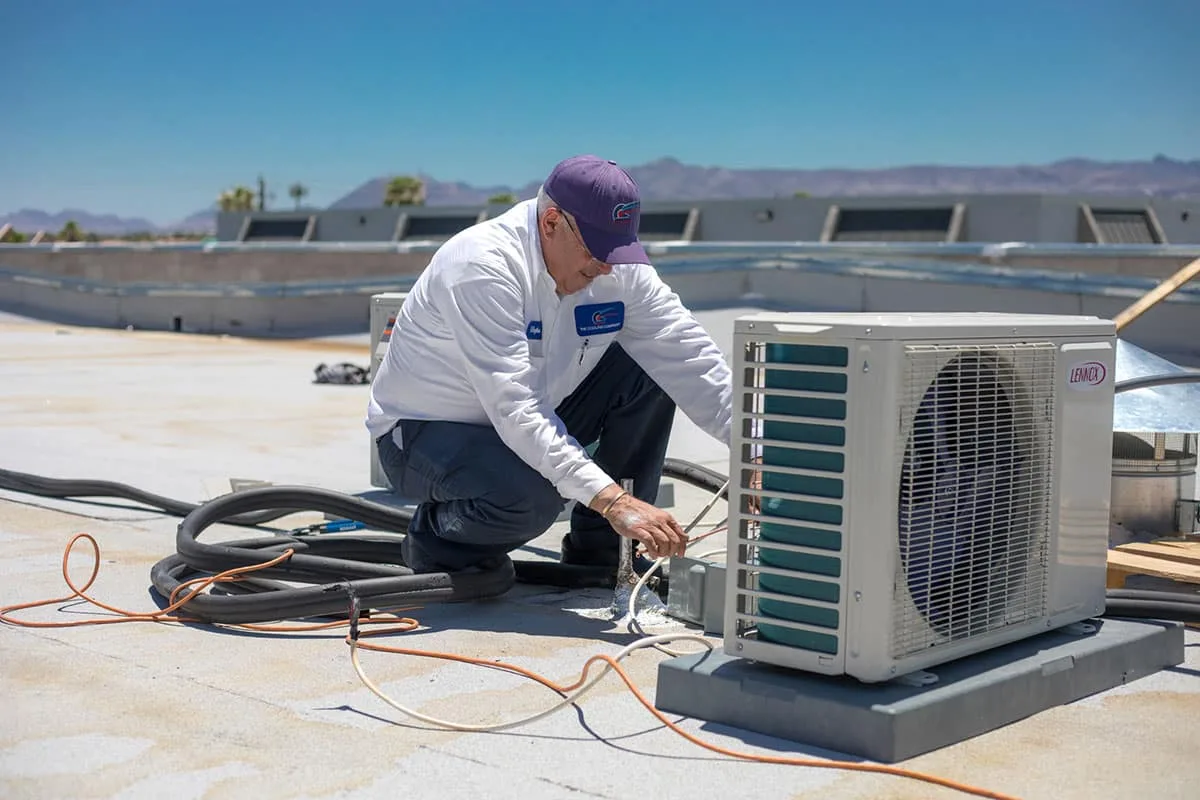
Las Vegas summers create unique challenges that make refrigerant leaks especially dangerous. When temperatures regularly exceed 110°F, AC systems run nearly continuously—often 12-18 hours per day without shutting off. This extreme workload means low refrigerant levels cause immediate problems.
Low refrigerant forces the compressor to work harder to maintain pressure, generating excessive heat. In Las Vegas heat, this combination can quickly overheat the compressor and cause complete failure. A compressor replacement can cost $2,000-$4,000, often making full system replacement more economical.
The desert climate also accelerates leak development. Extreme temperature swings between day and night cause thermal expansion and contraction that stress connections. Attic installations expose coils to 140°F+ temperatures that accelerate corrosion. Dust storms and high winds can damage exposed line sets. All of these factors make Las Vegas homes more prone to refrigerant leaks than milder climates.
During peak heat months (June through September), a system with low refrigerant may fail completely within days or weeks. The combination of high outdoor temperatures, continuous operation, and reduced cooling capacity creates a cycle that quickly escalates to compressor damage. Early leak detection and repair prevents these expensive failures.
What to Do: Step-by-Step Checklist
Follow these steps to assess your system and prepare for a professional service call. This checklist helps you identify symptoms and gather information that will help your technician diagnose the problem quickly.
- Check filters and airflow first: Replace dirty filters immediately—restricted airflow can mimic low refrigerant symptoms. Verify all supply vents are open and return air grilles are unobstructed. Check that the blower motor is running and air is moving through vents
- Look for ice on the refrigerant line: Inspect the copper refrigerant lines near the indoor unit and outdoor condenser. Ice formation indicates low refrigerant or airflow problems. If you see ice, turn the system off immediately to prevent compressor damage
- Note when cooling drops most: Document whether symptoms worsen during afternoon heat (110°F+) or evening hours. Systems with low refrigerant often fail completely during peak heat but may seem to work better at night
- Listen for unusual sounds: Check for hissing or bubbling sounds near the indoor coil, line set connections, or outdoor service valves. These sounds indicate active refrigerant leaks
- Check for oil stains: Look for oily residue around connections, coils, or line sets. Refrigerant leaks often carry compressor oil, leaving visible stains
- Monitor runtime patterns: Note how long the system runs before shutting off (if it does). Systems with low refrigerant may run continuously without reaching the set temperature
- Measure temperature split: Use a thermometer to check the temperature difference between return air and supply air. A split of less than 15-20°F suggests low refrigerant or other problems
- Document energy usage: Check recent energy bills for unusual increases. Low refrigerant causes systems to work harder, increasing electricity consumption by 20-40%
- Check system age and service history: Note when the system was installed and any previous refrigerant work. Older systems (10+ years) are more prone to leaks
- When to shut the system off: Turn off cooling immediately if you see ice forming, hear grinding or metal-on-metal sounds, smell burning, or notice the compressor won't start. Continuing to run a system with low refrigerant can cause expensive compressor damage
After completing these checks, call a licensed HVAC technician for professional leak detection and repair. Never attempt to add refrigerant yourself—EPA certification is required, and recharging without fixing the leak only delays the problem.
Helpful resources for Las Vegas homeowners
- Air conditioner not cooling
- AC freezing in Las Vegas
- What’s included in an AC diagnostic
- Air conditioning maintenance
- AC repair
Las Vegas Leak Hotspots We See
- Evaporator coils in attic units after years of heat exposure.
- Line set joints with vibration wear near air handlers.
- Outdoor service valves with aging seals.
- Older coils with corrosion from dust and moisture cycles.
Leak Repair Confirmation Checklist
- Leak location documented with photos or notes.
- Vacuum and moisture removal completed before recharge.
- Charge verified by weight and pressure readings.
- Temperature split confirmed after repair.
After-Visit Readings to Request
- Pressure readings and superheat/subcool numbers.
- Airflow confirmation to rule out restriction issues.
- Notes on coil condition and corrosion risk.
- Recommendations to prevent repeat leaks.
FAQs About Low Refrigerant
Can I top off refrigerant myself?
No. Refrigerant work requires EPA-certified technicians.
Is ice on the coils always refrigerant?
Not always. Dirty filters and low airflow can also cause ice.
How long should refrigerant last?
It should last the life of the system unless a leak develops.
Does low refrigerant damage the compressor?
Yes. It can cause overheating and compressor failure.
Do you service Henderson and North Las Vegas?
Yes. We serve the entire Las Vegas Valley.
Can a slow leak still cause damage?
Yes. Even small leaks reduce efficiency and can overheat the compressor over time.
Should I turn the system off if it is icing?
Yes. Turn cooling off and let the coil thaw before scheduling service.
Need HVAC Service in Las Vegas?
The Cooling Company provides expert HVAC service throughout Las Vegas, Henderson, and North Las Vegas. Our licensed technicians deliver honest assessments, upfront pricing, and reliable results.
Call (702) 567-0707 or visit AC repair, maintenance, heating, or installation for details.
Share This Page
Need Refrigerant Leak Repair in Las Vegas?
Don't wait for low refrigerant to damage your compressor. We provide professional leak detection using electronic leak detectors and UV dye, safe repairs with proper brazing techniques, and correct recharging by weight and pressure readings. Our technicians are EPA-certified and experienced with Las Vegas systems.
Call (702) 567-0707 or visit AC repair to schedule same-day service. We serve all Las Vegas Valley areas including Henderson, North Las Vegas, Summerlin, and The Lakes.