

Air Conditioner Tips for Las Vegas: Make Your AC Last Longer
Short answer: The fastest way to make your AC last longer in Las Vegas is simple: change filters often, keep the outdoor unit clean and unobstructed, and get a spring tune-up. Those three steps prevent most mid‑summer breakdowns, protect efficiency, and keep energy bills from spiking.
What affects AC lifespan the most
- Filter change frequency and airflow restrictions
- Outdoor coil cleanliness and heat exposure
- Duct leakage or undersized returns
- Thermostat scheduling and setpoint swings
- Annual maintenance and electrical wear checks
Vegas heat is brutal on air conditioners. Long run times, high dust loads, and 110°F days push systems hard, which means small problems become expensive fast. The tips below are the exact actions we recommend to homeowners in Summerlin, Henderson, North Las Vegas, and across the valley when they want fewer breakdowns and lower power bills.
Top AC Tips That Actually Work in Las Vegas
- Replace filters every 30–60 days during peak summer (or every 20–30 days if you have pets or allergies)
- Rinse the outdoor condenser coil and keep 2 feet of clearance around it
- Keep supply vents open and unblocked to avoid pressure issues
- Use “Auto” fan mode for better humidity control and lower energy use
- Seal doors and windows to reduce heat gain and hot‑air infiltration
- Change thermostat batteries yearly so schedules don’t fail in a heat wave
- Trim bushes and shade the outdoor unit without blocking airflow
Smart Thermostat Settings for Vegas Summers
Extreme setpoint swings are one of the most common reasons systems run nonstop. Try these settings for comfort without overworking your unit:
- 78–80°F when home, 82–85°F when away
- Limit temperature drops to 2–3°F at a time to avoid extended runtimes
- Use schedules instead of frequent manual changes
- Enable “away” or “eco” modes during peak utility hours
Air Filter Basics: The Smallest Part That Prevents Big Repairs
In Las Vegas, dust builds up quickly. A clogged filter reduces airflow, which can freeze the coil, overheat the blower motor, and shorten compressor life. If you’re unsure what to buy:
- Use MERV 8–11 for most homes for a balance of airflow and filtration
- Avoid very high MERV filters unless your system was designed for them
- Write the change date on the filter frame so you don’t forget
Outdoor Unit Care: Keep Heat Where It Belongs
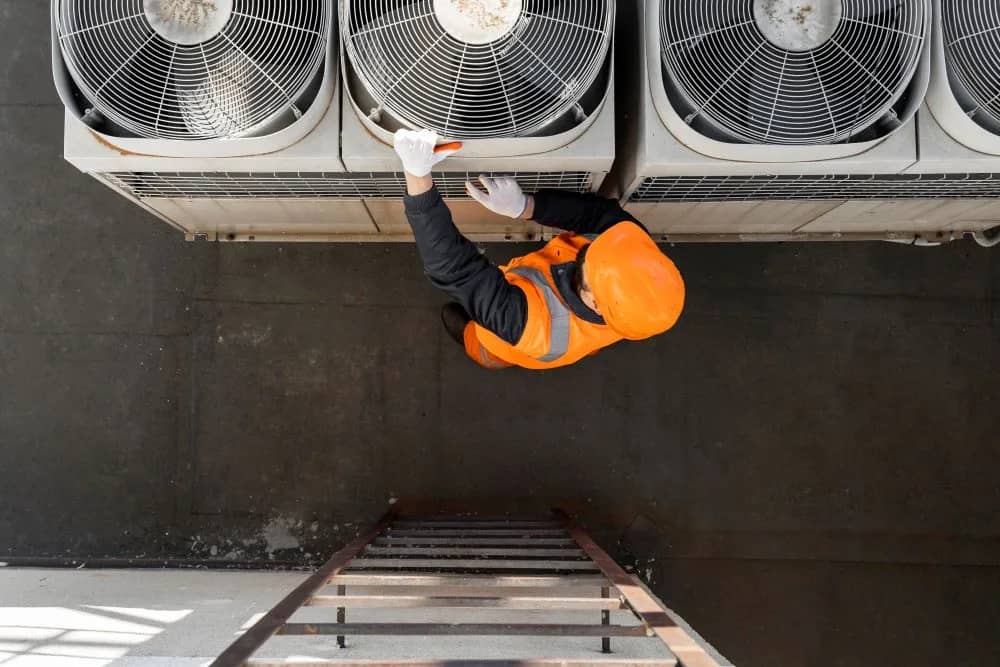
The condenser is where your system dumps heat. When it’s dirty or crowded, it can’t shed heat, which raises pressures and drives up energy use. Quick maintenance you can do:
- Shut power off at the disconnect before cleaning
- Gently rinse coils with a hose (no pressure washer)
- Remove cottonwood, leaves, and debris from the fins
- Keep the unit level to protect the compressor
Signs Your AC Is Working Too Hard
These symptoms mean your system may be struggling and needs attention before a full breakdown:
- Rooms feel uneven or warmer than the set temperature
- Long run times or the AC never shuts off
- Ice on the refrigerant line or indoor coil
- Warm air from vents during peak heat
- Higher electric bills without increased usage
When Maintenance Saves the Most Money
Annual tune-ups catch low refrigerant, weak capacitors, electrical wear, and airflow issues before they become emergency repairs. For most Vegas homes, the best timing is March through May—before 100°F days hit.
What Maintenance Costs in Las Vegas
Understanding maintenance costs helps you budget and compare service options. Typical ranges in Las Vegas:
- Spring tune-up: $150 to $300 for standard systems, $200 to $400 for heat pumps or multi-zone systems
- Filter replacements: $15 to $50 per filter depending on MERV rating and size
- Coil cleaning: $100 to $250 for outdoor condenser cleaning, $150 to $300 for indoor coil cleaning
- Drain line service: $75 to $150 for flushing and clearing blockages
- Maintenance plans: $200 to $400 per year for two visits, priority scheduling, and discounts on repairs
Peak season (June-September) and after-hours service may add 20-50% to standard rates. Spring scheduling often avoids these premiums.
What a quality tune-up should include
- Airflow measurement and temperature split testing
- Refrigerant pressure check and performance verification
- Electrical testing for capacitors and contactors
- Drain line inspection and safety switch check
After-Tune-Up Report You Should Receive
- Temperature split and airflow readings after service.
- Coil condition and cleaning notes.
- Refrigerant performance verification results.
- Priority recommendations for the next 90 days.
Baseline Performance Snapshot
- Record thermostat setpoint and indoor temperature.
- Check filter condition and last replacement date.
- Time how long it takes to drop 2 degrees.
- Note rooms that lag in cooling during peak heat.
Simple Efficiency Upgrades That Pay Off
You don’t have to replace the whole system to get better performance. These upgrades often deliver measurable savings in Las Vegas:
- Seal duct leaks and balance airflow for even cooling
- Add attic insulation and radiant barriers to reduce heat gain
- Install a smart thermostat with scheduling and geofencing
- Replace old, failing capacitors before they take down the compressor
Upgrade Cost vs. Savings in Las Vegas
Las Vegas's long cooling season (6-8 months) and high energy rates make efficiency upgrades pay off faster than in milder climates:
- Duct sealing: $500 to $2,000 typically saves 10-20% on cooling costs, paying back in 2-4 years
- Smart thermostat: $200 to $400 installed, saves 5-15% on bills when schedules match occupancy
- Attic insulation upgrade: $1,500 to $3,500 reduces heat gain and can cut cooling costs by 10-15%
- Capacitor replacement: $150 to $300 prevents compressor failure (often $2,000+ repair) and improves efficiency
NV Energy rebates and federal tax credits may offset some upgrade costs. Check current programs before scheduling work.
You may qualify for federal energy credits that reduce your upfront cost.
Homeowner Checklist for Peak Summer
- Swap filters at the start of May and July
- Clean the outdoor unit after dust storms
- Check thermostat schedules weekly during heat waves
- Listen for new noises and address them early
- Keep blinds closed on west‑facing windows during afternoons
Las Vegas Heatwave Prep Add-Ons
- Set emergency contact and gate access details before July.
- Stock extra filters for 20–30 day changes in monsoon season.
- Confirm drain line flow before humidity spikes.
- Schedule a quick airflow check if upstairs runs hot.
FAQ: AC Tips for Las Vegas Homeowners
How often should I service my AC in Las Vegas?
At least once per year, ideally in spring. If your system is older or runs nonstop in summer, a mid‑season check can prevent a mid‑July failure.
Is it bad to turn the AC off when I leave?
In extreme heat, turning the AC fully off can cause your home to gain excessive heat, forcing the system to run for hours to recover. It’s usually better to raise the setpoint to 82–85°F when away.
What should I do if my AC is blowing warm air?
Check the filter first, then confirm the thermostat is in cool mode. If the outdoor unit isn’t running or the air stays warm, stop the system and call a pro to avoid compressor damage.
How often should I change filters during monsoon season?
Every 20–30 days is ideal when dust and humidity spike.
Helpful resources for Las Vegas homeowners
- AC breakdown warning signs
- Air conditioner not cooling
- Air conditioning maintenance
- AC efficiency tips
- AC maintenance
Need Help with AC Maintenance?
We keep systems running strong across Las Vegas, Henderson, North Las Vegas, and the surrounding neighborhoods. If you want a pro to handle the tune‑up or diagnose a concern, we’re ready.
Call (702) 567-0707 or visit air conditioning service.
Need HVAC Service in Las Vegas?
The Cooling Company provides expert HVAC service throughout Las Vegas, Henderson, and North Las Vegas. Our licensed technicians deliver honest assessments, upfront pricing, and reliable results.
Call (702) 567-0707 or visit AC repair, maintenance, heating, or installation for details.