

Need fast Bryant furnace repair in Las Vegas? This guide shows common faults, local price ranges, safe checks you can do, and how to judge repair versus replacement. Read quick checks and what to tell a tech. Use the checklist to speed diagnosis and cut costs when booking service. See technical guidance from the industry at the ASHRAE Technical Resources.
Short answer: Bryant furnace repair in Las Vegas usually involves ignition, flame-sensing, or airflow issues. Quick diagnostics and local techs who stock Bryant parts often reduce downtime and prevent costly heat-exchanger damage.
Key Takeaways
- Use a room-by-room Manual J load calculation instead of a square-foot rule to size new equipment correctly.
- Select equipment per Manual S and verify ducts using Manual D to improve comfort and efficiency.
- Avoid oversizing: short-cycling wastes fuel and can create uneven temperatures.
What is Bryant furnace repair?
Bryant furnace repair covers diagnosing faults and restoring the unit so it runs safely and efficiently. A qualified technician inspects ignition, burners, flame sensors, blower motors, the heat exchanger, venting, and control circuits. They also test safety devices like pressure switches and high-limit controls. Technicians familiar with Bryant systems know the common control sequences, error codes, and service points that differ by model line.
Repair work ranges from cleaning and simple adjustments to component replacement and system reconfiguration. Simple work includes cleaning a flame sensor or replacing an ignitor and air filter. Major repairs include replacing blower motors, control boards, assemblies, or the heat exchanger. The technician should explain the diagnosis, show failed parts on request, and present a written, itemized estimate before starting repairs. Local Las Vegas dirt and dust often cause sensor fouling and restricted airflow - regular preventative maintenance reduces emergency calls.
Local essentials and challenges for Las Vegas furnaces
Desert dust, large day-night temperature swings, and short but intense cold snaps create stress on burners, sensors, and blowers. Local venting rules and tight utility closets also affect safe operation.
- Dusty returns foul flame sensors and filters quickly.
- Cold snaps drive emergency calls when ignition is marginal.
- Older homes may have undersized return ducts that cause limit trips.
Common problems and how they are diagnosed
Bryant furnaces display several recurring faults: ignition and flame-sensing issues, ignitor failures, blower motor faults, control board errors, and airflow restrictions. A tech follows a structured diagnostic path to isolate the problem. This method reduces the chance of replacing parts unnecessarily and speeds repair. Diagnostics begin with a visual inspection, then move to electrical checks, signal tracing, and component testing.
Technicians look for signs of combustion or airflow problems, such as soot, rust, discolored burners, and clogged filters. They observe the start sequence and read any control-board LED codes. Common tests include measuring ignitor resistance, checking voltage to controls, testing motor amperage, and measuring static pressure when airflow problems are suspected. Combustion efficiency indicators and visible signs around the flue are important when assessing heat-exchanger health.
What common problems do Bryant furnaces have?
Frequent Bryant issues include ignition failure, dirty flame sensors, cracked or weak ignitors, and worn blower motors. Airflow restriction due to dirty filters or duct blockage causes overheating and short cycling. Control boards can fail or show intermittent faults. Pressure switches and limit controls may also fail or trip due to blocked vents or improper airflow.
Many of these faults present as intermittent operation, no heat, or short cycling. Identifying whether the root cause is electrical, mechanical, or fuel-delivery related is key to the right repair. A step-by-step diagnostic limits part swaps and reduces repeat visits.
How are ignition failures diagnosed?
A technician watches the furnace start cycle to determine where it stops. They read the control-board LED codes and listen for error sequences. Using a multimeter, they check voltage to the ignitor and measure its resistance. The ignitor is inspected for visible cracks. The flame sensor is often cleaned and tested by observing the controller’s flame-sensing signal.
If the ignitor shows correct resistance and receives proper voltage, the issue may be wiring, switches, or the control board. If voltage is absent or resistance is out of range, the ignitor will usually be replaced. Proper testing prevents unnecessary part swaps and clarifies whether the fault is the ignitor or a related control circuit.
How does airflow affect performance?
Airflow problems change how the furnace heats and how control safeties behave. Poor airflow raises cabinet temperature and trips the high-limit switch. That causes short cycles, reduced comfort, and greater wear. A technician measures static pressure and inspects filters, return paths, and supply registers to find restrictions.
Simple fixes include replacing filters, clearing blocked vents, and sealing loose ducts. If the blower motor is failing or undersized, it may need replacement. Correcting airflow often fixes related faults and prevents repeated trips of limit controls and pressure switches.
Costs and pricing for Bryant furnace repair Las Vegas
Understanding repair cost drivers helps you compare quotes. Local Las Vegas pricing depends on part cost, labor time, technician travel, and whether the call is after normal hours. Diagnostic fees commonly range from $75 to $150. Small parts and sensor jobs often total $150–$450 including labor. Larger parts like blower motors and control boards commonly fall in the $600–$1,500 band depending on accessibility and part availability.
Our pricing guide breaks down the costs you can expect.
Full furnace replacement typically ranges from $3,000 to $8,000 or more depending on efficiency, installation complexity, and ductwork modifications. If a heat exchanger is cracked, replacement is usually mandatory and increases the cost significantly. Always request an itemized written estimate that separates diagnostic fees, parts, labor, and warranty terms so you can compare offers accurately.
Local cost drivers to ask about
Las Vegas pricing often shifts with seasonal demand, part availability, and access to tight utility closets. Ask whether the quote includes after-hours fees, additional trip charges if parts must be ordered, and any duct or venting corrections required to meet local code.
Typical cost breakdowns for common repairs
A simple cleaning or flame-sensor replacement is one of the lowest-cost repairs. Ignitor replacements cost more, and blower motor or control board swaps are higher still. Labor difficulty affects the final price - hard-to-access units or jobs that require extended disassembly increase time on site and the bill.
Also ask if the price includes return trips if further repair is needed. If parts must be ordered, confirm any additional trip charges. Request brands of replacement parts and the length of warranties included with parts and labor.
How emergency fees affect final price
After-hours, weekend, or holiday service usually adds surcharges. These fees often range from $75 to $250 or higher depending on the time and the company. Peak demand during cold snaps can raise response times and cost. When you call, ask the dispatcher about surcharges and whether they offer a reduced fee if you approve same-day repairs.
Some contractors waive part of the emergency fee if the repair is minor or if the call is near business hours. Confirm any extra cost before the technician begins work to avoid surprises.
Do parts choices affect price and warranty?
OEM Bryant parts typically cost more but preserve manufacturer warranties and often match original performance. Aftermarket or rebuilt parts can lower upfront cost but may carry shorter warranties and could affect any remaining manufacturer coverage. Ask the technician to identify the part brand and warranty terms on the estimate.
A reputable contractor should show replaced parts on request and explain the failure. That transparency helps you confirm the work and supports warranty claims if a replacement fails shortly after service.
When to replace the furnace rather than repair
Deciding between repair and replacement depends on repair cost, unit age, safety, and your long-term plans. A common rule of thumb: if a repair exceeds about 50% of replacement cost and the furnace is older than 12 years, replacement is usually a better long-term value. Safety issues such as a cracked heat exchanger require immediate replacement regardless of cost.
Frequent breakdowns and rising energy bills are signs the system is aging. If you are getting multiple service calls in a year, replacement returns better comfort and predictable performance. If you plan to sell soon, a newer furnace can be a selling point. If you will live in the home long-term, weigh energy savings from higher-efficiency models against immediate repair costs.
Try our energy saving tips to see how much you could save.
What is the break-even age for replacement?
Most contractors use 12–15 years as a break-even window for standard gas furnaces. After this, major components are more likely to fail and parts may be harder to source. Newer furnaces can operate at higher efficiency and lower operating costs.
Track annual repair totals. If those totals approach half the cost of a new system over a short time, replacement is typically the better financial decision. Also check for rebates or tax incentives on high-efficiency equipment when calculating net cost.
Learn about available federal energy credits for energy-efficient HVAC equipment.
What signs mean immediate replacement?
Visible cracks in the heat exchanger, repeated carbon monoxide alarm activations, or large holes from rust are immediate safety problems. These issues require the furnace to be shut down and replaced without delay. Never run a furnace suspected of having a cracked heat exchanger.
Other urgent signs include persistent soot, significant combustion discoloration, or repeated catastrophic failures. Safety must always override cost considerations.
Can frequent small repairs indicate total failure?
Yes. Multiple repairs in a single year often signal broad wear across components. Small fixes add up and point toward impending larger failures. If you call for different parts more than twice in a year, consider replacement.
Add up your annual repair costs and compare them to replacement estimates. If repairs near half the cost of a new system within a short period, replacement will usually bring better reliability and comfort.
Decision guidance: repair or replace
- Repair if the unit is under 12 years old and the fix is minor.
- Replace if the heat exchanger is compromised or repair cost exceeds 50% of replacement.
- Plan replacement if you have multiple failures in one heating season.
How to find a trusted local technician in Las Vegas
Choose contractors who publish clear pricing, list their state HVAC license, and show NATE certification for technicians. Good companies explain diagnostic steps and give a written, itemized estimate before any work begins. Local contractors that keep common Bryant parts in stock often complete repairs the same day.
Check for recent, detailed reviews that describe the actual service, timeliness, and whether warranties were honored. Avoid contractors who refuse to provide written estimates or who pressure you into full replacement without documented diagnostics. Request proof of insurance and ask how they handle warranty claims and follow-up visits.
What questions should you ask a contractor?
Ask for the contractor’s state HVAC license number and proof of insurance. Request NATE certification for technicians and ask how long the company has served the Las Vegas area. Get an itemized quote that lists parts, labor, diagnostic fees, and warranty lengths.
Also request references or recent job examples for the same kind of repair. Confirm whether they use OEM parts and how they handle after-hours fees. Clear answers and written terms indicate a reputable company.
How to verify credentials and insurance
Confirm the contractor’s license status using the state licensing board or its online lookup tool. Request a certificate of insurance and check that it includes workers’ compensation and general liability coverage. A legitimate company supplies these documents quickly.
When the technician arrives, ask to see identification and their NATE certificate if available. Keep copies of estimates and invoices for warranty and record-keeping purposes.
Where to read reviews of local service providers
Use Google and Yelp to find time-stamped reviews that mention the technician, the service performed, and any follow-up. The Better Business Bureau lists complaints and resolutions that can help you evaluate reliability.
Local community forums and neighborhood groups often have firsthand accounts of response times and pricing transparency. Focus on reviews that describe the same repair you need, since those are most applicable.
What diagnostics will a tech perform during a service visit?
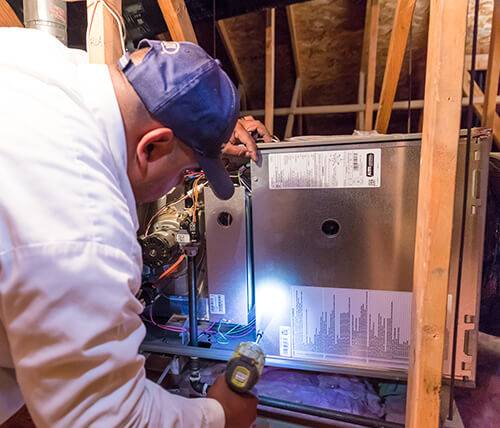
A full diagnostic isolates faults in electrical systems, fuel delivery, combustion, and airflow. The technician performs a visual inspection, reads control-board codes, measures electrical values, and may run combustion testing when required. A written report should document findings and recommended actions.
Good technicians measure motor amperage, test ignitors, clean and inspect the flame sensor, and inspect accessible portions of the heat exchanger. They verify venting, pressure switches, limit switches, and thermostat operation. For high-efficiency units they also inspect condensate drainage and safety interlocks.
Prevention steps that reduce winter breakdowns
- Replace filters regularly and keep return grilles unblocked.
- Schedule a pre-season tune-up with combustion and safety checks.
- Keep vents and flue terminations clear of debris or nesting.
- Ask for static pressure testing if you see short cycling.
What initial visual inspections are done?
Technicians inspect vents, burners, filters, wiring, and any visible portion of the heat exchanger. They search for soot, rust, corrosion, or oil stains - these often point to combustion or venting problems. Visible combustion signs require careful attention and may trigger a shut-down recommendation for safety reasons.
They also check cabinet seals and access panels, which affect combustion air and airflow. Documented photos and notes help you compare repair quotes.
How is the ignition system tested?
The technician watches a full start sequence. They check thermostat signals and read any control-board LED codes. Ignitor resistance and voltage are measured with a multimeter. The flame sensor is cleaned and observed to confirm the control board senses flame reliably.
This testing finds wiring faults, control failures, or simple sensor fouling. Proper testing prevents unnecessary replacements and speeds accurate repair.
How long does a full diagnostic take?
Most diagnostics take 45–90 minutes depending on unit access, the tests required, and whether combustion analysis is needed. Complex heat-exchanger inspections or hard-to-access components can extend the time. The technician should explain findings and present an estimate before performing repairs.
If parts are required, ask for an estimated delivery time and any interim safety steps you should take until repair occurs.
Ready to book a Bryant furnace repair visit?
If you see safety signs such as carbon monoxide alarms, odd smells, soot, or visible rust and cracks, call a professional immediately. For Las Vegas area service, have clear photos of the model and serial plate and note any control-board LED codes. Those details help the dispatcher and technician prepare and often reduce the need for multiple visits.
Local technicians who stock Bryant parts can often complete common repairs the same day. If you live in Las Vegas, Henderson, or North Las Vegas, choose a local team familiar with valley venting and local code requirements to speed repair and ensure compliance. Before the technician arrives, turn off the furnace if you suspect a safety issue and keep pets and children away from the work area.
How to schedule Bryant furnace repair Las Vegas now
Call The Cooling Company at (702) 567-0707 to book service in Las Vegas, Henderson, or North Las Vegas. Send model and serial photos and a short list of symptoms. Providing those items speeds dispatch and helps the technician bring likely parts. If you are outside the immediate area, ask any local contractor for NATE-certified technicians and OEM Bryant parts, and compare itemized quotes before approving major work.
Need bryant furnace repair las vegas help in Las Vegas?
If you're facing an HVAC emergency in Las Vegas, Henderson, or North Las Vegas, The Cooling Company offers fast, reliable service from licensed technicians. We understand that heating and cooling emergencies don't wait for business hours. Call us now at (702) 567-0707 for emergency service. Our team is ready to help restore your comfort quickly and safely.
Related reading: what to explore next?
Expand your knowledge with these related guides from our experts. Each article provides in-depth information to help you make informed decisions about your HVAC system and home comfort needs.
Need bryant furnace repair las vegas help in Las Vegas?
If you're facing an HVAC emergency in Las Vegas, Henderson, or North Las Vegas, The Cooling Company offers fast, reliable service from licensed technicians. We understand that heating and cooling emergencies don't wait for business hours.
Call us now at (702) 567-0707 for emergency service. Our team is ready to help restore your comfort quickly and safely.
About The Cooling Company
The Cooling Company has been serving the Las Vegas valley with professional HVAC services for over a decade. Our team of licensed, NATE-certified technicians specializes in air conditioning repair, heating system maintenance, and complete HVAC installations. We're committed to providing honest, reliable service with upfront pricing and a 100% satisfaction guarantee on all work performed.
- Phone: (702) 567-0707
- Reviews: 4.8/5 stars (780+ reviews) - See reviews
Trust and guarantees
- Serving Las Vegas since 2011
- 55+ years combined experience
- Licensed, EPA-certified technicians
- BBB A+ rated
- 100% satisfaction guarantee
Neighborhoods we serve in the Las Vegas Valley
- Summerlin
- Green Valley
- Henderson
- North Las Vegas
- Spring Valley
- Centennial Hills
Service Areas
We proudly serve homeowners and businesses throughout the Las Vegas metropolitan area, including Las Vegas, Henderson, and North Las Vegas. Our service technicians are available for same-day appointments in most areas, with emergency service available 24/7 for urgent HVAC issues.
Sources and further reading
- U.S. Department of Energy (Energy.gov) (accessed 2026-01-02)
- U.S. Environmental Protection Agency (EPA) (accessed 2026-01-02)
- ASHRAE (Standards and guidance) (accessed 2026-01-02)
- ENERGY STAR (Heating & cooling) (accessed 2026-01-02)
Service area map
Need HVAC Service in Las Vegas?
The Cooling Company provides expert HVAC service throughout Las Vegas, Henderson, and North Las Vegas. Our licensed technicians deliver honest assessments, upfront pricing, and reliable results.
Call (702) 567-0707 or visit heating, furnace repair, heat pump installation, or heating maintenance for details.