

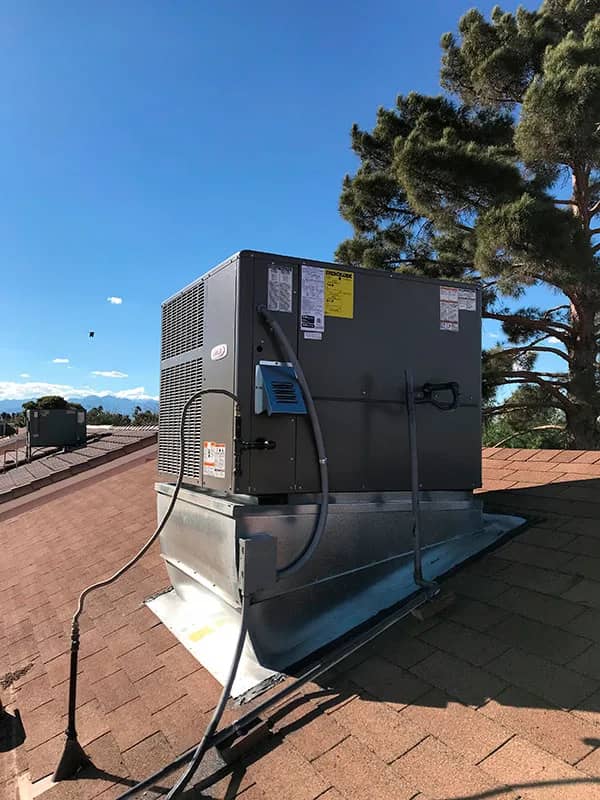
Short answer: Commercial air handling unit (AHU) cost estimates range from $5–$15 per CFM for standard units, with retrofits often adding 10–30% contingency. In Las Vegas, high commercial heat loads, dust loading, and peak demand charges make ECM fans, proper filtration, and sequencing critical for controlling both installed and operating costs. Major cost drivers include fans, coils, filtration, ERVs, controls, rigging, and structural work.
What can change AHU cost estimates
- Project type: new construction vs. retrofit (retrofits add 10–30% contingency)
- Las Vegas commercial heat load and peak demand requirements
- Dust loading and filtration needs (MERV 8–13+ impacts fan sizing)
- Monsoon season considerations for rooftop units
- Energy bills and peak demand charges during summer
- Site access constraints and rigging requirements
- Component choices: ECM fans, VFDs, ERVs, controls integration
Commercial air handling unit (AHU) projects often surprise owners with added costs. Major adders include fans, coils, filtration, energy recovery ventilators (ERVs), controls, rigging, and structural work. Retrofits need larger contingencies - plan 10–30% for unknowns. Early budgeting keeps owners from locking in wrong dollars and prevents costly mid‑project scope changes. For overall system cost benchmarks, see our commercial HVAC cost guide.
Key Takeaways
- Major adders are fans, coils, filtration, ERV, controls, rigging, and structural work.
- Retrofits need larger contingencies; plan 10–30% for unknowns.
- Get measured site info to reduce contingency and schedule risk.
This guide shows practical levers you can use to reduce installed AHU cost while protecting performance and life‑cycle value. The approach emphasizes early coordination, clear scopes, and smart component choices. Use the per‑CFM rule for quick reality checks, then refine with site data and scoped estimates.
Why does an AHU cost estimate matter?
An accurate AHU cost estimate shapes capital budgets, financing decisions, and operating forecasts. Owners who understand installed dollars can plan lifecycle energy and maintenance costs. This clarity also helps set realistic bid packages and avoid mid‑project scope adjustments that inflate cost and delay occupancy.
Early pricing also informs technical choices. If a budget check shows a premium for stainless coils, owners can compare the extra capital cost to expected life‑cycle savings from reduced corrosion. Modeling energy and maintenance over 15–25 years lets you choose options with clear payback windows instead of buying features with poor returns.
Accurate estimates reduce change orders and schedule shocks. When vendors and engineers work from the same CFM, outdoor‑air fractions, and site data, bids align. That upfront alignment prevents last‑minute curb mods, additional crane days, and rework that drive up installed cost and compress schedules.
How accurate are ballpark estimates?
Ballpark per‑CFM bands are useful for early checks but can vary widely. Initial scopes without site surveys often have ranges of +/-30–50%. Accuracy improves after a site survey, confirmed CFM, and structural review. Once suppliers include rigging, controls, commissioning, and line‑item rigging, expect firm installed quotes within 10–15%.
Ask vendors for AMCA/AHRI fan data, coil takeoffs, and a clear line‑item pricing for rigging and BAS points. That transparency lets you compare bids on like terms and reduces surprises once the project moves into detailed design or procurement.
Which project types change estimates most?
New construction is generally the lowest installed cost per CFM because access and structural provisions are planned. Rooftop replacements with curb modifications, interior swaps, or shaft constraints typically add labor and crane fees. Healthcare, labs, and high‑IAQ projects cost more because they need redundancies and higher filtration.
Retrofits often trigger the largest contingencies. Hidden issues such as asbestos, undocumented ducts, or missing structural records increase demolition, abatement, and patching scopes. Plan early inspections and structural surveys to shrink these risks and lower contingency needs.
What drives AHU cost per CFM?
The installed per‑CFM cost is the sum of multiple components: casing and insulation, fans, coils, filtration enclosures, ERVs, controls and BAS integration, factory testing, rigging, structural supports, duct tie‑ins, and commissioning. Each element can add a few dollars per CFM to tens of dollars per CFM depending on specification and site work.
Site access often determines the jump from equipment price to installed cost. Tight access, small elevators, or crane lifts that require lane closures increase labor and crane fees. Early mapping of access and lifting routes provides realistic installed pricing and scheduling. That work often pays for itself by avoiding rush charges and rework.
Which fans save energy best?
Electronically commutated motor (ECM) fans and premium backward‑curved wheels deliver the best fan energy savings. ECM motors have higher efficiency at variable speeds and reduce kWh in high run‑hour systems. The payback period often falls in the three to seven year range depending on run time and utility rates.
In Las Vegas, where commercial buildings face extreme heat loads and long summer runtimes, ECM fans are especially valuable. They reduce peak demand charges and lower energy bills during months when systems run 12–16 hours daily. Request AMCA certification and published performance curves from vendors. Those documents ensure proper sizing and avoid undersized fans that cause capacity shortfalls or premature failure. Also review access and maintenance needs - proper bearings and space for field balancing extend service life and lower long‑term costs.
How do VFDs change costs?
Variable frequency drives (VFDs) typically add $2–$10 per CFM depending on motor size and enclosure requirements. VFDs reduce operating cost by matching fan speed to demand. They can lower energy use significantly in systems with variable loads, but they add upfront cost and electrical considerations.
Use our energy savings calculator to estimate your potential savings.
Budget for harmonic filters, appropriate motor pairing, and factory mounting where practical. Factory‑mounted VFDs reduce field wiring and simplify BAS integration, cutting installation labor and commissioning time. Include safe bypass and lockouts per local code and service needs.
Check our HVAC pricing guide for current cost estimates.
How much do coils add to cost?
Coil cost depends on material, circuiting, face velocity, and service type (hot water, chilled water, DX). Standard copper‑aluminum coils are cost‑effective for many applications. All‑stainless or all‑copper coils cost more but are justified in corrosive or coastal environments to avoid early replacements.
Coil complexity affects lead time and rigging. Denser fin packs and intricate circuiting raise material cost and may require special handling. Ask vendors for lead times and factory testing requirements so you can schedule installations without holding costs or rushed freight.
How do components affect price?
Component choices shift both upfront capital and lifetime expense. Filter class, coil metallurgy, fan efficiency, ERV type, BAS scope, and rigging needs are the main levers. A clear component takeoff lets owners see where money goes and find savings without harming performance.
Standardization is a strong cost reducer. Using common coil sizes, standard filter racks, and a family of fan sizes reduces custom sheet metal and fabrication time. That lowers lead times, spare part complexity, and field adjustments during startup. Early standard choices cut labor and spare inventory costs.
What filtration MERV levels cost more?
Moving from MERV 8 to MERV 13 increases initial filter spend modestly. The bigger impact is the higher pressure drop, which can force larger fans or more VFD run time. HEPA requires dedicated housings, testing, and often separate fan systems - these are major cost drivers.
In Las Vegas, dust loading from desert conditions and occasional construction means filters need more frequent replacement. Higher MERV filters capture more particulates but require larger fan capacity to overcome pressure drop. Budget both capital and ongoing filter costs. In high‑occupancy or healthcare spaces, improved IAQ often justifies the added cost. Ask vendors to show fan curve impacts when you change MERV levels so you can see installed and operating cost together.
Which controls reduce installed labor?
Factory prewired control panels and plug‑and‑play I/O reduce field wiring and labor. Factory‑mounted VFDs and integrated control sequences simplify BAS integration and cut commissioning time. Clear point lists and open I/O diagrams let integrators price labor accurately.
Request training hours and user documentation to lower long‑term service calls and operator errors. When sequences are defined early, fewer change orders appear during commissioning, and commissioning itself becomes faster and less costly.
How do warranties change lifecycle value?
Longer factory warranties raise initial cost but cut replacement risk. Extended coverage often includes major assemblies like fans, motors, and coils. Compare exclusions, labor coverage, and prorated schedules to understand lifecycle value.
Match warranty choices to site risk. For tips on structuring your commercial HVAC maintenance agreement, see our dedicated guide. Coastal locations or corrosive processes can justify premium warranties. Also require clear warranty transfer rules if the property may change hands; that increases resale and owner confidence.
How to reduce installed costs?
Smart project coordination and early procurement choices reduce installed dollars and shorten timelines. Align mechanical design, structural plans, and rigging before ordering long‑lead items. This avoids curb mods, additional crane days, and change orders when equipment arrives and finds the site different than expected.
Consolidate electrical and control work where possible and push for factory wiring and testing. Buying standard units and bundling factory acceptance tests (FATs) often cuts field labor. These steps reduce nights and weekend premiums and free up contractor crews for productive work during normal hours.
What design choices cut material cost?
Right‑sizing is the primary material saver. Oversizing AHUs wastes capital and leads to higher energy bills. Use accurate load and ventilation modeling to avoid large safety factors when not needed. Standard coil configurations and common fan sizes reduce custom sheet metal.
Design for easy access to filters, fan bearings, and coil sections to reduce labor during maintenance and future replacements. A little extra space in the design phase saves hours of field work and lowers long‑term operating expense.
How can sequencing lower energy bills?
Demand control ventilation (DCV) and staged fans match airflow to occupancy. These controls lower energy and can permit smaller fan selection. Model run hours and occupancy patterns to confirm payback before spending on advanced hardware.
In Las Vegas, sequencing is critical for managing peak demand charges. NV Energy's commercial rates include demand charges that spike during hot afternoons. Staging multiple AHUs prevents simultaneous starts that drive peak kW readings. Use occupancy sensors and CO2 control in variable‑use zones to reduce outside‑air conditioning loads. Proper commissioning ensures sequences operate as designed. Commissioning locks in savings and prevents control drift that erodes benefits over time.
What procurement strategies reduce price?
Invite multiple vendors to bid on clear, line‑item scopes. Ask for sample takeoffs and lead‑time notes. Consolidate purchases and lock specs early to lower rush premiums and change orders. Bundle crane and rigging into vendor quotes to avoid later markups.
Factory acceptance tests before shipping catch problems early and avoid on‑site delays. When site access is tight, consider modular or split shipments planned around rigging windows rather than a single large delivery that demands special crews.
When should you hire a pro estimator?
Hire a mechanical estimator when you need firm installed dollars that include site work and rigging. Professional estimates reduce scope gaps and give you a bid package you can trust. They prevent low bids that later balloon with change orders and missing line items.
Bring an estimator if structural or access unknowns exist. A pro can scope rooftop curbs, crane picks, elevator logistics, and temporary supports. That expertise helps you set realistic contingencies and choose vendors with the right gear and crew.
When is custom AHU worth the premium?
Custom AHUs are worth a premium when site constraints block standard units. Tight shafts, odd inlet elevations, or unique code requirements for IAQ may force custom builds. The premium is justified if it avoids expensive on‑site modifications or multiple shipments.
Consider modular builds that reduce field hours even if the unit cost is higher. Ask suppliers for modular sketches and rigging plans to see if the premium reduces total installed cost. Lead time and field labor tradeoffs are the deciding factors.
How do retrofit constraints add cost?
Retrofits frequently uncover hidden problems: contaminated insulation, unknown framing, or undocumented ducts. These surprises increase demolition, abatement, and patching work. They also can trigger night work premiums if lane closures or traffic control are needed for lifts.
Reduce risk with surveys and exploratory openings before firm procurement. Plan asbestos and hazardous material testing early. Early site photos and measurements help estimators avoid large surprises and reduce contingency percentages.
What contingency percentage is typical?
New construction normally needs a 5–10% contingency on equipment budgets. Retrofits commonly require 10–30% due to unknowns and access issues. Adjust contingency based on site condition, schedule risk, and how well the existing system is documented.
Revise contingency after a field survey and structural sign‑off. A realistic contingency helps stakeholders accept the budget and reduces scope disputes during installation.
Get a scoped AHU budget estimate
A scoped AHU estimate needs clear documents. Provide measured drawings, required CFM, outdoor‑air fraction, curb elevations, and electrical service details. Roof access photos and elevator dimensions speed quoting and reduce onsite surprises. These items lower contingency by clarifying access and rigging needs before equipment ships.
AHU Budget Checklist
- ✓ Document current CFM requirements and peak load conditions
- ✓ Measure rooftop access, elevator dimensions, and crane lift paths
- ✓ Identify Las Vegas-specific factors: heat load, dust loading, peak demand
- ✓ Review energy bills to understand peak demand patterns
- ✓ Request line-item pricing for equipment, rigging, controls, commissioning
- ✓ Compare ECM fan options vs. standard fans for energy savings
- ✓ Plan for monsoon season considerations (rooftop unit protection)
- ✓ Set realistic contingency: 5–10% new construction, 10–30% retrofits
If you are in Las Vegas, Henderson, or North Las Vegas, call The Cooling Company at (702) 567-0707 for a scoped AHU budget and site survey. The Cooling Company offers NATE‑certified technicians, structural rigging reviews, and turnkey installed estimates for commercial buildings in our area. We understand Las Vegas commercial heat loads, dust loading, and peak demand charges—factors that significantly impact both installed and operating costs. We price line items and show contingency. Outside our service area, ask bidders for NATE‑certified techs, AMCA/AHRI fan curves, and FAT options. Request sample takeoffs and lead time notes to compare apples to apples when evaluating local and national suppliers.
See why homeowners trust us — view our industry awards and certifications.
Three simple rules to reduce AHU cost
Use per‑CFM benchmarks early and refine them with site data. Benchmarks give a quick reality check and highlight unrealistic budgets. Prioritize ECM fans and factory wiring to lower both installed and operating costs. ECM fans and factory‑mounted controls reduce field labor and speed commissioning.
Complete a structural rigging survey before ordering long‑lead items to avoid costly curb and crane changes later. When bidders receive consistent rigging and access data, bids are comparable, and surprise rigging markups are rare. Share clear sequences and target IAQ levels with bidders to avoid late spec changes that inflate costs.
FAQs
Ask vendors about lead times, MERV impact on fan sizing, and FAT checklists. Request AMCA/AHRI data for fans and coils so you can verify performance. Provide CFM and outdoor‑air fraction to get sample budgets that match your needs.
Vendors that offer detailed line items and testing options usually give the best installed certainty. Compare warranty terms and ask for operator training hours in bids to reduce future service calls and owner confusion. Ask a qualified HVAC pro to document sizing calculations and assumptions before final purchase.
Related reading: what to explore next?
Expand your knowledge with these related guides from our experts. Each article provides in‑depth information to help you make informed decisions about HVAC systems and building comfort.
- Average Commercial HVAC Maintenance Cost: 7 Ways to Cut Your Average
- For general home HVAC guidance, see the U.S. Department of Energy on air conditioning: Energy Saver — Air Conditioning
Need commercial HVAC service help in Las Vegas?
Las Vegas building owners trust The Cooling Company for professional commercial HVAC services. Whether you need routine maintenance, retrofits, or a new AHU installed, our licensed, NATE‑certified technicians deliver quality work backed by clear estimates and documented scopes. We specialize in commercial systems and understand the unique challenges Las Vegas buildings face: extreme heat loads, dust loading, monsoon season impacts, and peak demand charges.
Our commercial HVAC services include:
- AHU installation and replacement with turnkey estimates
- Commercial HVAC maintenance agreements tailored to your building
- Energy audits and peak demand reduction strategies
- Controls upgrades and sequencing optimization
- Emergency commercial HVAC repair with fast response times
Ready to get started? Call (702) 567-0707 or Schedule Now for a commercial HVAC consultation.
We serve Las Vegas, Henderson, North Las Vegas, and surrounding communities. If you are outside our service area, ask for NATE‑certified technicians and AMCA/AHRI fan curves when choosing a contractor.
What about tasks many owners can handle?
Some routine tasks like filter changes and visual coil inspections can be handled by building staff with basic training. However, tasks that affect safety, structural support, or refrigerant systems should be left to licensed professionals.
If you are in the Las Vegas area and need help beyond basic maintenance, The Cooling Company can perform assessments, structural rigging reviews, and provide turnkey installed budgets. Call (702) 567-0707 to schedule a professional assessment.
Local Essentials and Challenges for Las Vegas
Las Vegas AHU projects must handle extreme rooftop heat, long runtime hours, and dust loading that accelerates filter pressure drop. High‑ambient operation, monsoon humidity bursts, and demand charges make sequencing and fan efficiency critical. Plan for frequent filter changes and verify coil protection if units are exposed to direct sun or rooftop debris.
Decision Guidance for AHU Scoping
Use measured CFM, outdoor‑air fraction, and access constraints to compare bids. Require AMCA/AHRI fan data, confirm power and static pressure assumptions, and validate access for rigging. Balance higher‑MERV filtration with fan sizing so the system can maintain airflow under peak conditions.
Prevention and Maintenance Priorities
Protect AHU performance with quarterly coil inspections, monthly filter checks during dusty months, and seasonal sequence verification. Track fan amps and static pressure to spot airflow issues early. Document maintenance to keep warranties valid and reduce emergency repairs during peak season.
Neighborhood Coverage for AHU Projects
We support commercial buildings throughout the valley, including:
- Downtown Las Vegas
- Summerlin
- Spring Valley
- Henderson
- Green Valley
- Enterprise
- North Las Vegas
Trust Signals and Guarantees
- Serving Las Vegas since 2011
- 55+ years combined experience
- Licensed, EPA-certified
- BBB A+ rated
- Lennox Premier Dealer
- 100% satisfaction guarantee
Find Us on the Map
Share This Page
About The Cooling Company
The Cooling Company has been serving the Las Vegas valley with professional HVAC services for over a decade. Our team of licensed, NATE-certified technicians specializes in air conditioning repair, heating system maintenance, and complete HVAC installations. We're committed to providing honest, reliable service with upfront pricing and a 100% satisfaction guarantee on all work performed.
- Phone: (702) 567-0707
- Reviews: 4.8/5 stars (780+ reviews) - See reviews
Service Areas
We proudly serve homeowners and businesses throughout the Las Vegas metropolitan area, including Las Vegas, Henderson, and North Las Vegas. Our service technicians are available for same-day appointments in most areas, with emergency service available 24/7 for urgent HVAC issues.
Sources and further reading
- EPA Indoor Air Quality (IAQ)
- ASHRAE Technical Resources
- DOE Better Buildings – HVAC
- U.S. Department of Energy (Energy.gov) (accessed 2026-01-03)
- U.S. Environmental Protection Agency (EPA) (accessed 2026-01-03)
- ASHRAE (Standards and guidance) (accessed 2026-01-03)
- ENERGY STAR (Heating & cooling) (accessed 2026-01-03)
Need HVAC Service in Las Vegas?
The Cooling Company provides expert HVAC service throughout Las Vegas, Henderson, and North Las Vegas. Our licensed technicians deliver honest assessments, upfront pricing, and reliable results.
Call (702) 567-0707 or visit commercial HVAC, AC repair, maintenance, or installation for details.