

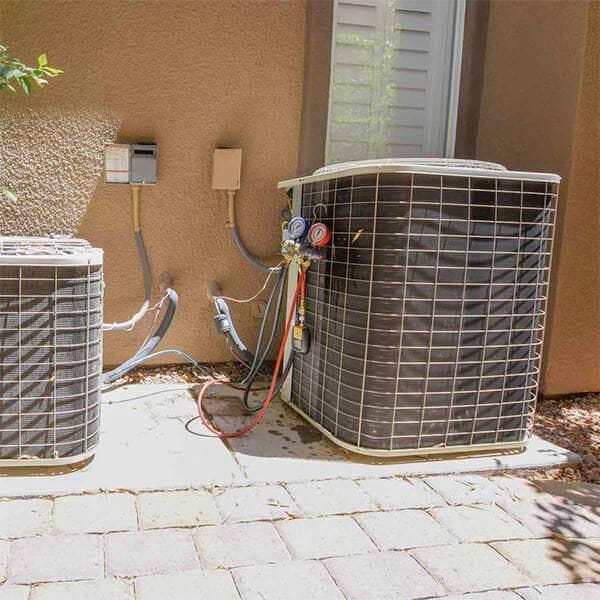
Short answer: The Mojave Desert attacks your air conditioner from every angle — fine caliche dust clogs coils and reduces efficiency by 15–30%, intense UV radiation degrades refrigerant line insulation and plastic components, Las Vegas hard water leaves mineral scale on coils, and sustained 110°F+ heat forces your compressor to operate near its thermal limit for months at a time. These aren't occasional problems — they're constant, cumulative, and invisible until something breaks. Annual professional maintenance isn't optional in this climate. It's how you keep a 15-year system from becoming a 7-year system. Call The Cooling Company at (702) 567-0707 to schedule an inspection.
Key Takeaways
- Las Vegas dust isn't ordinary dust. Caliche — calcium carbonate mixed with silica — is abrasive, alkaline, and creates a cement-like coating on condenser coils that a garden hose won't remove.
- UV exposure degrades your system year-round. Las Vegas gets 294 sunny days per year. Refrigerant line insulation, thermostat wiring jackets, and condenser fan blade plastics break down faster here than anywhere else in the country.
- Hard water creates invisible scale. Southern Nevada's water hardness runs 16–28 grains per gallon — four to seven times the national average. When sprinkler overspray hits your condenser coil, it leaves mineral deposits that insulate the fins and reduce heat transfer.
- Extreme heat compresses your system's lifespan. An AC unit that runs 2,000 hours per year in Chicago runs 3,500+ hours per year in Las Vegas. More runtime means more mechanical wear in less calendar time.
- Annual maintenance adds years. Professional coil cleaning, refrigerant line insulation checks, and electrical inspections directly counteract desert damage and keep systems running 12–18 years instead of 6–9.
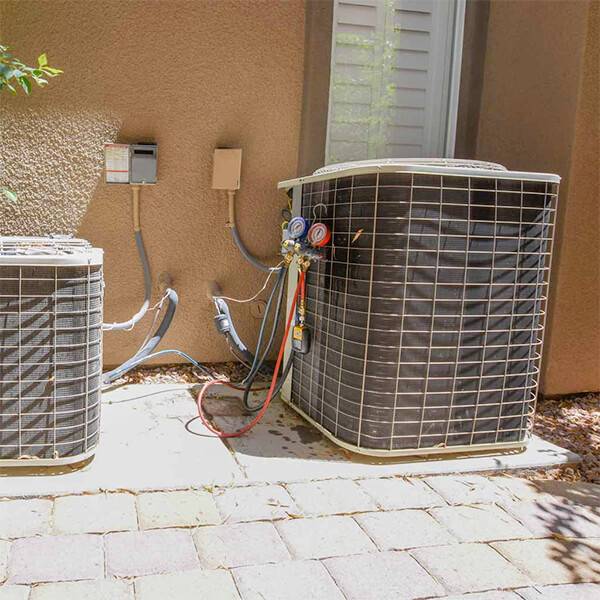
Living in a Climate That Was Never Designed for Air Conditioning
When Willis Carrier patented the first modern air conditioning system in 1902, he was solving a humidity problem in a Brooklyn printing plant. The technology evolved to cool office buildings in New York, department stores in Dallas, and homes across the postwar Sun Belt.
But nobody designed residential air conditioning for an environment like Las Vegas.
We live in the Mojave Desert. Summer temperatures routinely hit 115°F and occasionally touch 120°F. Rainfall averages 4.2 inches per year — less than any major city in the United States. The air carries fine desert particulates year-round, with sharply elevated concentrations during windstorms that can reduce visibility to a quarter mile. The water supply from Lake Mead ranks among the hardest municipal water in the country.
Every one of these factors attacks your air conditioning system in a specific, measurable way. And because the damage is gradual — no single day creates a dramatic failure — homeowners don't notice until the cumulative effect crosses a threshold.
I've been working on HVAC systems in this valley since the early 1990s. I've watched Las Vegas grow from a few hundred thousand people to over 2.2 million in the metro area. The systems have gotten better. The refrigerants have gotten more efficient. But the desert hasn't gotten any gentler.
Here's what it's doing to your air conditioner right now.
Desert Dust: The Slow Suffocation
What Makes Las Vegas Dust Different
Dust in Las Vegas isn't like dust in other cities. In the Midwest, airborne particulates are primarily organic — pollen, mold spores, textile fibers, skin cells. In the Pacific Northwest, it's a mix of organic matter and volcanic ash. These particles are relatively soft and can be rinsed away with water pressure alone.
Las Vegas dust is predominantly caliche — a calcium carbonate mineral compound mixed with fine silica (quartz) particles. Caliche is:
- Alkaline (pH 7.5–8.5), which means it reacts with the aluminum fins of your condenser coil differently than neutral or acidic dust
- Abrasive, because silica particles have sharp crystalline edges that scratch protective coatings
- Cement-like when wet, because calcium carbonate binite reacts with moisture and partially hardens — the same chemistry that creates caliche hardpan layers in desert soil
When this dust coats your condenser coil — the aluminum fin-and-tube heat exchanger in your outdoor unit — it doesn't just sit on the surface. It bonds to it. A thin layer of desert dust on condenser fins reduces heat transfer efficiency by 5–10%. A season's worth of accumulation without cleaning can reduce it by 15–30%.
The Efficiency Tax You're Already Paying
Your condenser coil's job is to reject heat from the refrigerant into the outdoor air. The process depends on maximum surface area contact between the refrigerant-carrying tubes, the aluminum fins, and the air moving across them.
Desert dust insulates those fins. Less heat transfers from the refrigerant to the air. The refrigerant exits the condenser at a higher temperature than it should, which means higher head pressure, which means the compressor works harder, which means:
Higher electricity consumption. A 15% reduction in condenser efficiency translates to roughly 10–15% higher cooling costs. On a Las Vegas summer electric bill that might run $250–$400/month for a typical single-family home, that's $25–$60/month in wasted energy.
Longer run times. The system takes longer to reach the thermostat set point. Instead of running 45 minutes per cycle, it runs 55 or 60 minutes. Those extra minutes compound across thousands of cycles per summer.
Elevated operating temperatures. Higher head pressure means higher compressor discharge temperature. The compressor oil breaks down faster at elevated temperatures, reducing lubrication and accelerating internal wear.
Construction Dust Makes It Worse
If you live near active construction — and in Las Vegas, that's a large percentage of the valley right now, with major development in Skye Canyon, Cadence, Inspirada, Summerlin West, and the southwest — your condenser coil is getting hit with construction-grade particulates on top of natural desert dust.
Construction sites generate cement dust, drywall dust, and fine aggregate that are even more adhesive than natural caliche. Homes within a quarter mile of active construction should have their condenser coils professionally cleaned twice per season, not once.
UV Radiation: The Silent Material Destroyer
Las Vegas receives more direct solar radiation per square meter than almost any other metropolitan area in the United States. We average 294 sunny days per year, with a solar irradiance that peaks around 6.5–7.0 kWh/m²/day in summer.
That UV intensity degrades materials that were designed for moderate climates:
Refrigerant Line Insulation
The suction line — the larger copper pipe running from your outdoor unit to the indoor coil — is wrapped in closed-cell foam insulation (usually Armaflex or similar). This insulation prevents condensation on the cold pipe and maintains thermal efficiency.
UV radiation breaks down the polymer bonds in foam insulation. You've probably seen it: the black foam becomes gray, then starts cracking and crumbling. Within three to five years of direct sun exposure in Las Vegas, unprotected line insulation is functionally gone.
Without insulation, the suction line absorbs heat from the ambient air. The refrigerant entering the compressor is warmer than it should be, which reduces cooling capacity and forces the compressor to work harder. The exposed cold copper surface also generates condensation that drips onto whatever is below it — stucco walls, concrete pads, patio furniture.
What to check: Walk outside and look at the insulated copper line running from the outdoor unit to the house. If the foam is cracked, crumbling, or missing, it needs replacement. This is a $75–$150 repair that directly improves system efficiency.
Thermostat Wire Jackets
The low-voltage wire running from your thermostat to the outdoor unit (usually 18/5 or 18/8 thermostat cable) passes through the attic and then exits through the exterior wall to reach the condenser. The section exposed to sunlight — typically 3 to 10 feet of wire — is wrapped in a PVC jacket that UV radiation degrades over time.
Cracked wire jackets expose the copper conductors inside. This creates two problems: short circuits from moisture contact (especially during monsoon season), and intermittent signal loss that causes erratic system behavior — the AC turns on and off randomly, doesn't respond to thermostat changes, or runs continuously.
Condenser Fan Blades and Housing
Some manufacturers use composite (plastic) fan blades and housing components. In moderate climates, these last the life of the unit. In Las Vegas, UV radiation makes the plastic brittle within five to eight years. A brittle fan blade can crack during operation — and a high-RPM fan blade failure inside the condenser housing sounds like a gunshot and sprays plastic shrapnel into the coil fins, often destroying the condenser fan motor in the process.
Metal fan blades obviously don't have this issue, which is one reason we recommend all-metal condenser construction for Las Vegas installations.
Hard Water: The Mineral Assault
The Numbers
Southern Nevada's municipal water supply comes primarily from Lake Mead via the Southern Nevada Water Authority. The water hardness measures 16 to 28 grains per gallon (275–480 ppm), depending on the specific well blends and seasonal treatment variations.
For context: the Water Quality Association defines "hard" water as anything above 7 grains per gallon. "Very hard" starts at 10.5. Las Vegas water is two to three times beyond "very hard."
How It Reaches Your Condenser Coil
Your condenser coil doesn't use water. So how does hard water damage it?
Three ways:
Sprinkler overspray. If your landscape irrigation sprinklers hit the outdoor unit — even partially — every watering cycle deposits a fine layer of mineral-laden water on the coil fins. As the water evaporates (which happens fast in 10% humidity), it leaves behind calcium and magnesium scale. Over months, this scale builds up on the fins and effectively reduces the coil's ability to transfer heat.
Monsoon rain runoff. During the July–September monsoon season, rain falls on roofs, stucco walls, and landscape hardscape that are coated in desert mineral deposits. Runoff water carries dissolved minerals that splash onto the condenser coil and surrounding components.
Evaporative cooler residue. Some Las Vegas homes still use evaporative coolers (swamp coolers) for part of the year. These systems consume large volumes of water and deposit mineral scale on everything they touch. If both an evap cooler and a central AC are present, mineral-laden moisture from the cooler can settle on AC components.
The Scale Problem
Mineral scale on condenser coil fins creates the same efficiency reduction as dust — but it's harder to remove. Dust can be rinsed with water pressure and a mild detergent. Mineral scale requires an acid-based coil cleaner (typically a diluted phosphoric or citric acid solution) applied by a technician who knows how to rinse it thoroughly without damaging the aluminum fins.
If your outdoor unit is within sprinkler range, relocating the sprinkler head or adjusting the spray pattern is the single most effective thing you can do. Five minutes with a screwdriver saves years of scale buildup.
Extreme Heat: Running at the Red Line
What 115°F Means for Your Compressor
Your air conditioner has a rated operating range. Most residential systems are rated for outdoor ambient temperatures up to 115°F or 125°F, depending on the manufacturer and model.
Las Vegas regularly hits 115°F. We touched 120°F during the June 2024 heat dome. At these temperatures, your system isn't operating with comfortable margin — it's running at or near its thermal design limit.
Here's what that means mechanically:
Head pressure spikes. The condenser can't reject heat efficiently when the outdoor air is already 115°F. Discharge pressure rises, which increases the compressor's workload and operating temperature.
Compressor oil degrades faster. Synthetic refrigerant oils maintain viscosity up to a point. Sustained high-temperature operation causes thermal breakdown that reduces lubrication and allows metal-to-metal wear inside the scroll or reciprocating mechanism.
Electrical components run hot. Capacitors, contactors, and relays are rated for maximum ambient temperatures. At 115°F inside the condenser electrical compartment — which can be 10–20°F hotter than outdoor ambient due to radiated heat from the compressor and condenser coil — these components operate near or beyond their thermal ratings.
The Runtime Gap
A typical residential AC in Minneapolis runs about 800 hours per year. In Atlanta, about 1,600 hours. In Phoenix or Las Vegas, we're looking at 3,000 to 3,500+ hours per year.
Every mechanical component in your system — the compressor bearings, the fan motor, the contactor — has a finite lifespan measured in operating hours, not calendar years. A system rated for 40,000 compressor hours reaches that threshold in:
- Minneapolis: ~50 years (effectively never)
- Atlanta: ~25 years
- Las Vegas: ~11–13 years
This is why AC systems in Las Vegas don't last as long as the same systems installed in cooler climates. It's not a quality issue — it's a math issue. More hours of operation equals more wear in less time.
What Maintenance Does About It
You can't change the climate. But you can minimize the penalty:
- Clean condenser coils maximize heat rejection, keeping head pressure as low as possible and reducing compressor workload during extreme heat events.
- Correct refrigerant charge ensures the system operates at designed pressures, preventing the compressor from compensating for under- or overcharge.
- Tight electrical connections prevent resistance heating that compounds the ambient temperature stress on contactors and capacitors.
- Fresh capacitors provide full-rated starting torque so the compressor doesn't stall and cycle under high-temperature conditions.
Annual professional maintenance doesn't eliminate heat stress. But it ensures your system starts each summer in peak condition, rather than carrying accumulated deficits from last season into the next one.
The Monsoon Factor: July Through September
The North American Monsoon affects Las Vegas from roughly early July through mid-September. While the actual rainfall is modest — maybe 1 to 3 inches across the entire monsoon window — the impact on AC systems comes from two related factors:
Humidity Spikes
Las Vegas baseline humidity is absurdly low — often 5–15% in the dry months. During monsoon, humidity can spike to 40–60% for days at a time. This dramatically increases the latent heat load on your air conditioning system.
In dry conditions, your AC primarily handles sensible heat — reducing the air temperature. During monsoon humidity, it also has to remove moisture from the air, which requires additional energy. Your system runs longer cycles, produces more condensation, and the condensate drain line handles volumes it hasn't seen in months.
If that drain line has any partial blockage from the dry season, monsoon is when it overflows.
Wind-Driven Dust
Monsoon thunderstorms are often preceded by haboob-style dust walls — outflow boundaries that push massive volumes of desert dust ahead of the storm. A single monsoon dust event can deposit more particulate matter on your condenser coil than an entire month of normal wind exposure.
If you notice a dust storm has passed through, check your condenser unit the next day. If the coil fins are visibly caked with dust, schedule a professional cleaning before running the system through another week of 110°F operation with a compromised coil.
Year-Round Desert Damage Timeline
Here's how the desert attacks your AC system across all 12 months:
| Season | Primary Threat | What's Happening |
|---|---|---|
| Winter (Dec–Feb) | Idle degradation | Dust accumulates on dormant unit. Capacitors weaken from disuse. Pests nest in protected spaces. UV continues degrading insulation on sunny days. |
| Spring (Mar–May) | Wind events | Spring winds (15–30 mph gusts common) drive extra dust into the condenser. System transitions from idle to light use — first chance to catch problems. |
| Summer (Jun–Sep) | Extreme heat + monsoon | System runs 14–18 hours/day at thermal design limits. Monsoon adds humidity spikes and dust storms. Maximum mechanical stress on all components. |
| Fall (Oct–Nov) | Residual wear | System carries summer damage into reduced operation. Slow leaks, worn bearings, and weakened capacitors from a full season of hard use persist into dormancy. |
The takeaway: there is no season in Las Vegas where your air conditioner isn't under some form of environmental stress. Even when it's not running, it's being affected.
What Professional Maintenance Does That You Can't Do Yourself
Homeowners can do three things on their own: change the air filter monthly during cooling season, clear debris from around the outdoor unit, and keep sprinklers pointed away from the condenser. These are meaningful contributions.
But the desert-specific damage described above requires professional intervention:
Chemical coil cleaning. A garden hose removes loose surface dust. It does not remove bonded caliche deposits or mineral scale. A technician uses a commercial coil cleaner formulated for the specific type of contamination (alkaline desert dust requires a different solution than organic debris in humid climates), applies it with appropriate dwell time, and rinses with controlled pressure that cleans the fins without bending them.
Capacitance testing. You cannot assess capacitor health by looking at it. A multimeter reading in microfarads compared against the rated specification tells the technician whether the capacitor is within tolerance or degrading. This is a 60-second test that prevents the most common summer compressor failure in Las Vegas.
Refrigerant pressure analysis. Checking superheat and subcooling requires professional-grade manifold gauges and knowledge of the specific refrigerant's pressure-temperature relationship. A system that "seems to cool fine" could be running 2 pounds low and compensating through longer run times — wasting energy and stressing the compressor.
Electrical connection torquing. Thermal cycling loosens every terminal connection in the system over time. A technician tightens each connection to manufacturer spec, checks for arc marks or heat discoloration, and verifies amperage draw against nameplate ratings.
Condensate drain treatment. Beyond flushing the line, a technician checks the drain pan for cracks, verifies float switch operation, and inspects the P-trap (if present) for proper water seal.
This is what a professional AC maintenance visit actually accomplishes. It's not a courtesy inspection. It's a systematic reversal of 12 months of desert-inflicted wear.
Protecting Your System Between Professional Visits
Between annual tune-ups, you can take several steps that directly slow the rate of desert damage:
Build a shade structure for the condenser. A shade screen or purpose-built pergola that blocks direct afternoon sun can reduce the operating temperature around the condenser by 5–10°F. This directly reduces head pressure and extends component life. Important: maintain at least 3 feet of clearance on all sides and 5 feet above the unit for adequate airflow. Never enclose the unit or restrict the discharge air path.
Redirect sprinklers. Walk through an irrigation cycle and confirm that no spray reaches the outdoor unit. Even indirect mist from a nearby sprinkler head deposits mineral-laden water on coil fins over hundreds of watering cycles.
Replace refrigerant line insulation proactively. If the foam insulation on the exposed portion of your suction line is cracking, gray, or crumbling, have it replaced. UV-resistant insulation products (look for "UV rated" or "outdoor rated" specifications) last three to four times longer than standard foam in Las Vegas conditions.
Change filters monthly from May through September. In the desert, the standard "every 90 days" filter recommendation doesn't apply during peak cooling season. Desert dust saturates MERV 13 filters in 30 to 45 days during summer. A clogged filter forces the blower to work harder, reduces airflow across the evaporator coil, and can cause the coil to freeze — turning a $15 filter change into a service call.
After a dust storm, hose down the condenser. Use a standard garden hose (no pressure washer) to spray the coil fins from the inside out — meaning spray from inside the unit outward through the fins. This removes loose surface dust before it bonds. It's a stopgap between professional cleanings.
The Lifespan Reality
National averages suggest residential AC systems last 15 to 20 years. Those averages are heavily skewed by systems operating in moderate climates with 1,000–2,000 annual runtime hours.
In Las Vegas, an unmaintained system lasts 6 to 9 years before requiring major component replacement (compressor, coil, or fan motor) or full system replacement. A properly maintained system — annual professional tune-ups, monthly filter changes, clean coils, correct refrigerant charge — lasts 12 to 18 years.
That's a 6 to 9 year difference in system lifespan, directly attributable to whether or not the desert damage is being addressed annually.
On a system that costs $8,000–$15,000 installed, extending the lifespan by 6 to 9 years represents $4,000–$10,000 in deferred replacement cost. Annual maintenance at $89–$168 per visit is, by any calculation, the highest-return investment you can make in your HVAC system.
Schedule Your Desert Defense
Your air conditioner is fighting the Mojave Desert every day — whether it's running or not. Dust, UV, hard water, and extreme heat are cumulative forces that don't take a season off.
The best time to counteract a year of desert damage is right now, before the first sustained heat arrives and every HVAC contractor in the valley is running flat out on emergency calls.
Call (702) 567-0707 or book online to schedule your annual AC maintenance. We serve the entire Las Vegas Valley — Henderson, Summerlin, North Las Vegas, Green Valley, Enterprise, Southern Highlands, and every neighborhood in between.
Your AC was built to cool your home. It wasn't built to survive the desert on its own.