

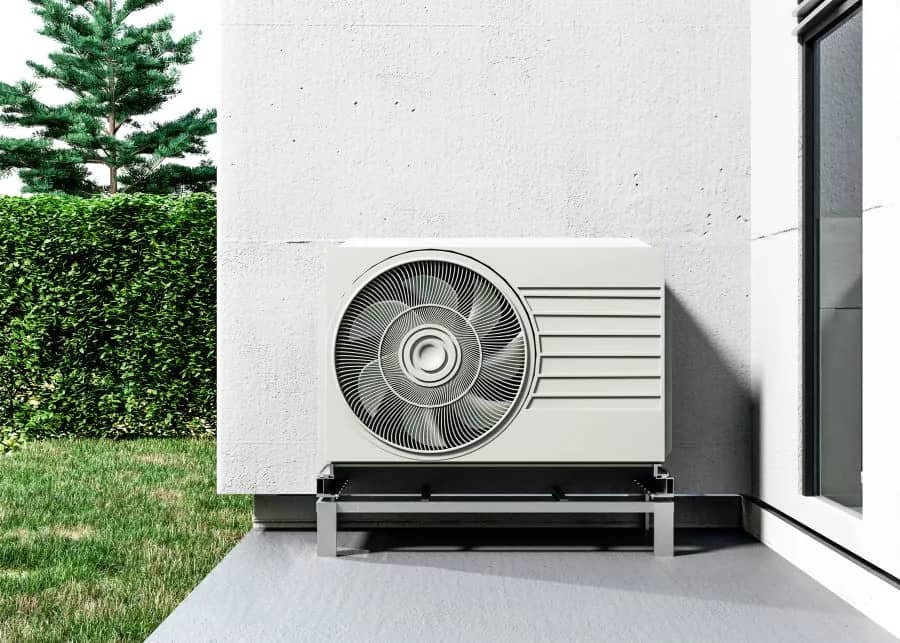
Short answer: For most Las Vegas homeowners with existing ductwork in decent condition, central AC replacement is the more cost-effective and practical choice for whole-home cooling. A 3-ton central AC replacement runs $6,325-$9,775 installed and cools every room through your existing ducts. A whole-home ductless setup for a 2,500 sq ft house requires 5+ indoor wall units, costs $15,000-$25,000+, and puts visible hardware on your walls. Where ductless wins — and wins decisively — is for specific applications: garage conversions, casitas, room additions, bonus rooms that never cool properly, and older homes with no ductwork. The hybrid approach (central AC for the main house plus a ductless unit for problem areas) is often the smartest move in this valley. Call (702) 567-0707 or request a free assessment — we install both systems daily and will recommend what actually makes sense for your home.
Key Takeaways
- Central AC replacement is cheaper for whole-home cooling in homes with existing ductwork. A 3-ton central system runs $6,325-$9,775 installed. Covering the same square footage with ductless requires 5+ zones at $15,000-$25,000+ — roughly double the cost for comparable whole-home coverage.
- Ductless mini-splits are the clear winner for targeted applications. Garage conversions, casitas, ADUs, room additions, and problem rooms that never cool properly are exactly what ductless was designed for. A single-zone unit runs $3,500-$6,000 installed and solves the problem in a day.
- Ductless efficiency ratings are real but context-dependent. A mini-split can hit 30+ SEER2, but it only saves money if you actually use the zoning capability. Cooling empty rooms with five separate units wastes the efficiency advantage.
- Central AC is invisible inside your home. Ductless is not. Every ductless zone requires a wall-mounted air handler (roughly 32 x 12 inches) visible in the room. For a whole-home setup, that means 5-8 units on your walls. Some homeowners love the look; many do not.
- The hybrid approach is often the best answer in Las Vegas. Keep central AC for your main living areas and add a ductless unit for the bonus room, casita, or converted garage. You get whole-home coverage plus targeted comfort where you need it most.
- NV Energy PowerShift rebates of $300-$2,000 apply to qualifying high-efficiency central AC and ductless heat pump installations, reducing the net cost of either system type. Note: the federal Section 25C tax credit was terminated for 2026 installations under the One Big Beautiful Bill Act.
- Las Vegas HOA restrictions can limit ductless installations. Multi-zone systems require multiple outdoor units or one large unit, and many HOAs restrict exterior equipment placement. Check your CC&Rs before committing to whole-home ductless.
- Ductwork condition is the deciding factor for many homeowners. If your ducts are in good shape (less than 10% leakage), central AC replacement is almost always the smarter financial choice. If ducts are severely damaged or nonexistent, ductless becomes far more competitive.
How Central AC and Ductless Systems Work
Before comparing costs and performance, it helps to understand what you are actually choosing between. These two technologies solve the same problem — cooling your home — through fundamentally different delivery methods.Central Air Conditioning — The Duct-Based Approach
A central AC system has three main components: an outdoor compressor/condenser unit, an indoor evaporator coil (usually mounted on your furnace or air handler), and a network of ductwork that distributes cooled air throughout the house. The thermostat calls for cooling, the system turns on, and conditioned air flows through supply ducts to every room with a register. Return ducts pull warm air back to the air handler to be cooled again. The advantages are straightforward: one system cools the entire house, the equipment is invisible from inside (registers are the only visible component), and the per-BTU cost is the lowest of any cooling technology for large spaces. The disadvantage is equally straightforward: you need ductwork, and that ductwork needs to be in reasonable condition. In Las Vegas, where attic temperatures reach 140-160 degrees in summer, duct degradation is a real and ongoing issue. Most Las Vegas homes built from the 1970s onward have central air conditioning with ductwork running through the attic. If your home already has ducts, you already have the most expensive part of the central AC infrastructure in place.Ductless Mini-Splits — The Direct Delivery Approach
A ductless mini-split eliminates the duct network entirely. Each indoor unit (called a head or air handler) mounts directly in the room it serves — typically on a wall, though ceiling-cassette and floor-mount options exist. The indoor unit connects to an outdoor condenser through a small bundle of refrigerant lines, a condensate drain, and control wiring that passes through a 3-inch hole in the wall. Each indoor unit cools its own zone independently. The bedroom can be set to 72 while the living room sits at 76 and the guest room is turned off entirely. Modern mini-splits use inverter-driven compressors that modulate speed continuously rather than cycling on and off, which is what enables their exceptional efficiency ratings. In a single-zone setup, one outdoor unit serves one indoor unit. In a multi-zone setup, one larger outdoor unit serves two to five indoor units, each independently controlled. For whole-home ductless in a typical Las Vegas house, you may need two multi-zone outdoor units or one very large outdoor unit to cover all the required zones.The Core Difference in One Sentence
Central AC produces cold air in one place and distributes it everywhere through ducts. Ductless produces cold air exactly where it is needed, eliminating the distribution system entirely. Both approaches work. The question is which one works better — and costs less — for your specific situation.
Complete Cost Comparison
This is the section most homeowners skip to, so I am going to be thorough. Every price range below reflects Las Vegas market pricing as of early 2026, including all labor, materials, permits, and equipment. These are fully installed costs — not equipment-only prices.| System Type | Configuration | Installed Cost Range | Best For |
|---|---|---|---|
| Central AC (3-ton) | Condenser + coil, existing ductwork | $6,325-$9,775 | Whole-home cooling, 1,500-2,000 sq ft |
| Central AC (4-ton) | Condenser + coil, existing ductwork | $7,200-$11,500 | Whole-home cooling, 2,000-2,800 sq ft |
| Central AC (5-ton) | Condenser + coil, existing ductwork | $8,100-$13,800 | Whole-home cooling, 2,800-3,500+ sq ft |
| Ductless single-zone | 1 outdoor + 1 indoor unit | $3,500-$6,000 | Garage, casita, single room addition |
| Ductless dual-zone | 1 outdoor + 2 indoor units | $5,500-$9,000 | Two problem rooms, small casita with bedroom |
| Ductless multi-zone (3 zones) | 1 outdoor + 3 indoor units | $8,000-$15,000 | Large addition, multi-room supplement |
| Ductless whole-home (5+ zones) | 1-2 outdoor + 5-8 indoor units | $15,000-$25,000+ | Homes without ductwork, full ductless conversion |
What the Cost Table Tells You
The math is clear: if you already have ductwork, central AC replacement is significantly cheaper for whole-home cooling. A 4-ton central system at $7,200-$11,500 cools a 2,500 sq ft house through existing ducts. Achieving the same coverage with ductless requires five or more zones at $15,000-$25,000+ — roughly double the cost. Where ductless becomes cost-competitive or even cheaper is in targeted applications. Adding cooling to a single room without ductwork via central AC extension (running new ducts, upsizing the system) can cost $3,000-$7,000 depending on accessibility. A ductless single-zone unit at $3,500-$6,000 accomplishes the same thing with a simpler installation and no ductwork modification. The price per zone drops as you add zones to a multi-zone outdoor unit, but it never drops enough to make whole-home ductless cheaper than central AC in a home that already has ducts. I want to be transparent about that because it is the most common misconception I encounter.The Hidden Cost: Ductwork Condition
There is one scenario where the cost gap narrows significantly: when your ductwork is in bad shape. If a duct blaster test reveals 20-30% leakage, or if your flex ducts have collapsed in the 150-degree attic, you are looking at duct replacement costs of $3,500-$8,500 on top of your central AC replacement. In that case, the total for central AC plus new ducts ($10,700-$20,000+) starts to approach whole-home ductless territory, and the ductless option becomes a real contender. This is why a thorough duct inspection is the first step in any honest comparison. We include a duct blaster test in our assessments because the condition of your ductwork fundamentally changes which system makes financial sense.When Central AC Replacement Is the Right Choice
For approximately 75-80% of the Las Vegas homeowners I talk to about this decision, central AC replacement is the right answer. Here is why.Your Existing Ductwork Is in Good Condition
If your ducts were installed in the last 15-20 years, are properly sealed, and show less than 10% leakage on a blaster test, they represent $8,000-$15,000 worth of existing infrastructure. Abandoning functional ductwork to go ductless is like tearing out a perfectly good foundation to build a different kind of house. You are throwing away value. The vast majority of Las Vegas homes built in the 1990s through 2010s have adequate ductwork that, with minor sealing or repair, will support a new high-efficiency central system for another 15-20 years. The central AC replacement itself is the only major expense.You Need Whole-Home Cooling
Central AC was designed to cool entire houses, and it does that job better and cheaper than any alternative when ductwork exists. One outdoor unit, one indoor coil, one thermostat, every room cooled. The simplicity is a genuine advantage — fewer components means fewer things to maintain, fewer things to break, and lower long-term service costs. A variable-speed central AC system can deliver remarkably even temperatures throughout a well-ducted home. The days of central air creating hot and cold spots are largely behind us — when the ductwork is properly designed and sealed.You Prefer Consistent Temperatures Throughout
Central AC, by its nature, aims for a single temperature throughout the house. For many households, this is exactly what they want. Everybody comfortable, no room dramatically different from any other, the thermostat set and forgotten. Ductless zoning is a feature, but it is also a management task. Somebody has to decide what temperature each zone should be, adjust them seasonally, and deal with the remote controls (or app, depending on the system) for each unit. For a family of four where everyone wants 76 degrees everywhere, central AC provides that with zero additional effort.Lower Cost Per BTU for Large Homes
This is where the economics become undeniable. A 5-ton central AC system delivers 60,000 BTU of cooling at a cost of $8,100-$13,800 installed. Achieving 60,000 BTU with ductless requires five to six 12,000 BTU zones or equivalent — easily $18,000-$28,000. For homes over 2,000 square feet, the cost-per-BTU advantage of central air grows with every additional square foot. The ductwork is a fixed asset that serves the entire home. Adding capacity to a central system means changing the outdoor unit and coil — not adding another wall-mounted unit in every room.Resale Value and Market Expectations
Las Vegas homebuyers expect central air conditioning. It is the default. Every listing description assumes it. When an appraiser evaluates your home, central AC is the baseline — it adds nothing because it is already expected, but its absence is a problem. Whole-home ductless is still unfamiliar to most Nevada buyers. Some will view wall-mounted units in every room as unusual or unappealing. While ductless systems are gaining market acceptance nationally, the Las Vegas resale market has not yet caught up with the efficiency arguments. This is a practical consideration, not a judgment — if you plan to sell within 5-10 years, central AC is the safer choice for resale.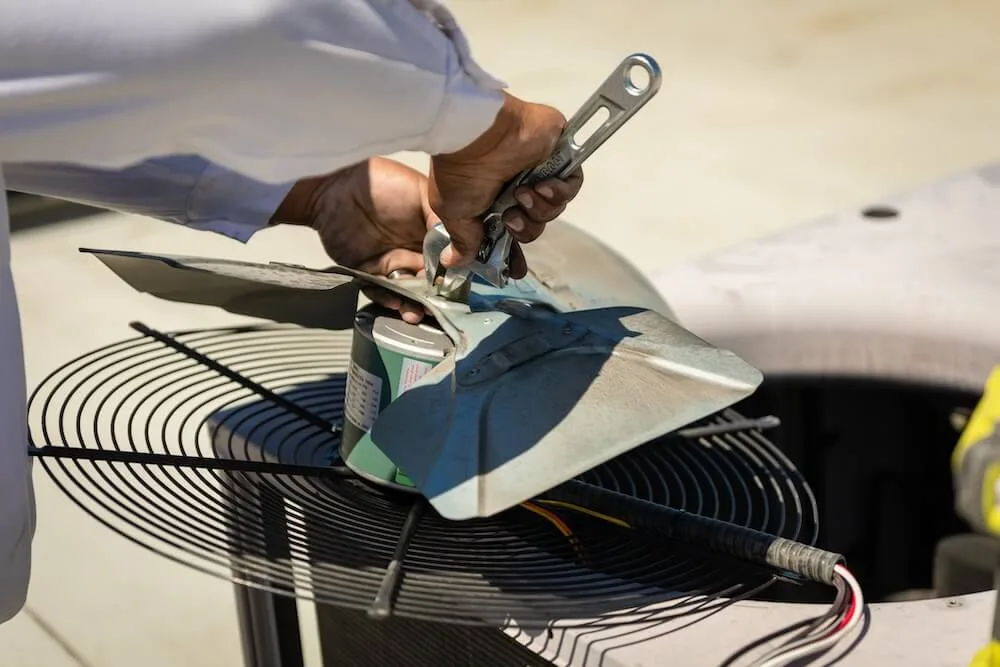
When Ductless Makes More Sense
Now for the cases where ductless is not just competitive — it is the clearly superior choice.No Existing Ductwork
If your home does not have ducts, central AC requires installing them. In an existing home, that means running ductwork through the attic (best case), through closets and soffits (compromise case), or through a significant renovation (worst case). New ductwork installation in an existing home costs $3,500-$12,000+ depending on the layout, and often requires framing work, drywall repair, and permit inspections. For homes built before central air was standard — many of the older neighborhoods around downtown Las Vegas, the Huntridge area, parts of North Las Vegas — ductless eliminates this massive expense. A four-zone ductless system at $10,000-$16,000 is often cheaper and less disruptive than central AC plus brand-new ductwork at $12,000-$22,000+.Room Additions, Casitas, and Garage Conversions
This is the single most common ductless installation I do in Las Vegas, and it is not close. Somebody converts a garage into a living space, builds a casita in the backyard, adds a room over the garage, or finishes a previously unconditioned space. Running ductwork to these spaces is expensive, sometimes physically impossible, and always disruptive. A single-zone ductless unit handles these spaces perfectly. One day of installation, a 3-inch hole in the wall, and the space goes from unusable in summer to year-round comfortable. For a garage conversion in Las Vegas, where summer temperatures inside an uninsulated garage can reach 130+ degrees, ductless is not just the best option — it is often the only practical one.Supplemental Cooling for Hot Rooms
Every two-story Las Vegas home has a hot room. Maybe it is the upstairs master bedroom that is always 5 degrees warmer than the downstairs. Maybe it is the bonus room over the garage. Maybe it is a west-facing bedroom that takes the full afternoon sun. The central AC system technically serves these rooms, but the temperature differential between floors is a physics problem that single-thermostat central systems struggle to solve without dampers, zoning systems, or oversizing. A single ductless unit in the problem room provides independent cooling exactly where you need it. Cost: $3,500-$6,000. The room stays at the temperature you set, regardless of what the rest of the house is doing. For a problem that has frustrated homeowners for years, this is a remarkably simple and effective fix.Older Homes Without Duct Space
Some Las Vegas homes — particularly those built in the 1940s through 1960s — have construction that makes ductwork installation impractical. Low-slope rooflines with minimal attic space, concrete block walls, flat-roof construction with no accessible plenum. These homes were built for evaporative cooling or window units, not central AC. Ductless was essentially made for these homes. The refrigerant lines require only a 3-inch penetration through the wall, the indoor unit mounts high on the wall consuming no floor space, and the outdoor unit needs only a concrete pad or wall bracket. No attic access needed. No ductwork. No major renovation.Zoned Comfort Control Is a Priority
If your household genuinely needs different temperatures in different rooms — one person sleeps at 68, another at 76; the home office needs cooling while the guest bedroom does not — ductless zoning provides that control natively. Each indoor unit has its own thermostat and operates independently. Central AC can be zoned with motorized dampers and a zoning control board, but it adds $1,500-$3,500 to the installation and introduces mechanical complexity. Ductless zoning is inherent to the system design — no add-ons required. The important caveat: zoning only saves money if you actually use it. If all five zones are set to 76 degrees all summer, you spent significantly more for the same outcome a central system provides. The savings from ductless zoning come from not cooling spaces when they are unoccupied. The homeowner who leaves every zone running 24/7 will not see the energy savings the spec sheets promise.The Las Vegas Ductless Reality Check
Here is where I am going to be more honest than most HVAC companies, including our competitors, tend to be about ductless systems. Ductless technology is outstanding. The engineering is impressive. The efficiency ratings are real. For the right application, I recommend ductless enthusiastically and install it multiple times a week. But whole-home ductless for a typical 2,500 square foot Las Vegas home is not the easy upgrade that online marketing often portrays. Here is the reality:The Unit Count Problem
A 2,500 square foot home with three bedrooms, a living room, a kitchen/family room, and a home office needs at least five indoor units for adequate coverage — and ideally six or seven for proper distribution. That is five to seven wall-mounted air handlers visible on your walls, each approximately 32 inches wide and 12 inches tall. In the living room, bedroom, home office, guest room, master bedroom, and kitchen area — each one gets a unit on the wall. Compare that to central AC, where the only visible elements inside the home are unobtrusive registers and a single thermostat.The Outdoor Equipment Footprint
Five to seven indoor units require either one very large multi-zone outdoor condenser or two separate outdoor units. A 5-zone multi-zone outdoor unit is significantly larger than a central AC condenser — roughly 45 inches wide, 55 inches tall, and 13 inches deep, weighing 250-300 pounds. If you need two outdoor units (common for 6+ zone configurations), you need two locations with adequate clearance. On a standard Las Vegas lot with a 5-foot side yard, this can be a tight fit. Many homes in Summerlin, Henderson, and Green Valley have limited outdoor equipment space, especially when you account for existing gas meters, electrical panels, and pool equipment.The Cost Reality
I quoted the ranges above, but let me be specific. A complete whole-home ductless installation for a 2,500 square foot home with five zones, including a premium brand like Lennox, Mitsubishi, or Daikin, typically lands between $18,000 and $25,000. A comparable central AC replacement for the same house — a high-efficiency 4-ton system using the existing ductwork — runs $8,500-$12,500. That is a $7,000-$14,000 premium for ductless. Even with the higher efficiency ratings, the energy savings take 15-25+ years to close that gap, which exceeds the expected lifespan of the equipment. The financial case for whole-home ductless in a home with existing ductwork does not typically work out unless ductwork replacement would also be needed.What I Tell Homeowners
When someone asks me about converting their entire 2,500 sq ft ducted home to ductless, I walk them through these numbers and let them decide. About 90% of the time, they choose central AC replacement, sometimes with a ductless unit added for a specific problem area. The other 10% have legitimate reasons for whole-home ductless — no ductwork, severe duct damage, or a strong personal preference for zone control — and for them, it is the right call. The point is not that ductless is bad. The point is that it is a tool, and like any tool, it works best when applied to the right job.
Energy Efficiency Comparison
This is where the ductless marketing gets most aggressive, and where the nuance matters most. Let me break down what the efficiency ratings actually mean in practice.The Headline Numbers
| System Type | Efficiency Range (SEER2) | How It Achieves Efficiency |
|---|---|---|
| Central AC (single-stage) | 14.3-16 SEER2 | Basic on/off cycling |
| Central AC (two-stage) | 16-19 SEER2 | High/low speed operation |
| Central AC (variable-speed) | 19-24 SEER2 | Continuous modulation, inverter compressor |
| Ductless single-zone | 20-42 SEER2 | Inverter compressor + zero duct loss |
| Ductless multi-zone | 18-30 SEER2 | Inverter compressor + zone control |
Factor 1 — Duct Losses Are Real, but Quantifiable
Central AC loses 15-25% of its cooling capacity through ductwork — even well-sealed ductwork in a Las Vegas attic loses some energy to the extreme heat surrounding the ducts. Ductless systems have zero duct loss because there are no ducts. This is the single biggest efficiency advantage of ductless, and it is legitimate. However, the fix for duct losses is not necessarily to eliminate ducts. Duct sealing and insulation can reduce losses from 25% to under 8% at a cost of $800-$2,500 — far less than converting to whole-home ductless. If you are replacing your central AC and your ducts are leaky, sealing them captures most of the efficiency gap at a fraction of the ductless cost.Factor 2 — Multi-Zone Efficiency Drops
The eye-popping 30-42 SEER2 ratings belong to single-zone ductless units. When you move to multi-zone configurations — which is what you need for whole-home coverage — the system efficiency drops to 18-30 SEER2. This happens because the outdoor unit must be sized for the combined capacity of all indoor units, and it operates less efficiently when only one or two zones are actively calling for cooling while the others are idle or at setpoint. A 5-zone ductless system with a SEER2 of 22 is more efficient than a 14 SEER2 single-stage central system, certainly. But compared to a 20-24 SEER2 variable-speed central system with sealed ductwork, the efficiency advantage shrinks to a few percentage points — nowhere near enough to justify the $7,000-$14,000 price premium.Factor 3 — Zoning Only Saves Money If You Use It
The energy savings promise of ductless is built on the assumption that you will not cool unoccupied rooms. If you turn off the guest bedroom, turn off the home office after 5 PM, and let the living room rise to 80 while you sleep upstairs at 72, you will see meaningful savings. That is real zoning in practice. But many homeowners set all zones to the same temperature and leave them running 24 hours a day. In that scenario, you are cooling the same volume of air as central AC, with the same runtime, at a modestly higher efficiency — but you paid thousands more for the equipment. The payback evaporates.What the Numbers Actually Mean for Your NV Energy Bill
For a 2,000 sq ft Las Vegas home with 2,600 annual cooling hours:| System | Effective SEER2 | Annual Cooling Cost | Annual Savings vs. 14 SEER2 Baseline |
|---|---|---|---|
| Central AC (14 SEER2, baseline) | 14 (after duct loss: ~11) | $1,430 | -- |
| Central AC (20 SEER2, sealed ducts) | 20 (after duct loss: ~17) | $925 | $505 |
| Ductless multi-zone (22 SEER2) | 22 (no duct loss) | $715 | $715 |
| Ductless multi-zone (22 SEER2, all zones on) | 22 (no duct loss, no zoning benefit) | $715 | $715 |
Aesthetics and Lifestyle Considerations
Energy and cost aside, there are quality-of-life factors that matter to many homeowners but rarely appear in spec sheets.Visual Impact
Central AC is invisible inside your home. The only things you see are supply registers (typically 4x10 or 6x10 inch grilles in the floor or ceiling), return air grilles, and a thermostat on the wall. For most people, these blend completely into the background. Ductless indoor units are visible. A standard wall-mount unit is approximately 32 inches wide, 12 inches tall, and 8 inches deep, mounted 7-8 feet up on the wall. In a bedroom or living room, it is noticeable. Some people do not mind it — the clean white design of modern units is unobtrusive enough. Others find it aesthetically problematic, particularly in rooms with specific design elements or in homes they have invested significant money decorating. Ceiling cassette mini-splits offer a less visible alternative — they mount flush in the ceiling with only the grille visible — but they require ceiling space for the unit body (usually 8-10 inches), which limits them to homes with sufficient plenum space or drop ceilings.Noise
Modern ductless indoor units are remarkably quiet — 19-26 dB on low speed, comparable to a quiet library or a whisper. Central AC airflow through ducts produces 35-45 dB, depending on system design and duct sizing. For noise-sensitive homeowners, particularly in bedrooms, ductless has a genuine advantage. However, ductless outdoor units for multi-zone configurations produce 48-56 dB — slightly louder than a single-zone central AC condenser at 55-72 dB, but not dramatically different. The outdoor noise difference is negligible for most homeowners. The indoor noise advantage of ductless is real and noticeable.Maintenance
Central AC requires annual maintenance — coil cleaning, filter changes, refrigerant check, electrical inspection. One system, one service visit, typically $89-$175 through a maintenance plan. Ductless systems require the same annual maintenance per outdoor unit plus regular cleaning of each indoor unit's filters and evaporator coils. For a five-zone system, that is five sets of washable filters to clean monthly (homeowner task) and five indoor units for the technician to service annually. The maintenance burden is higher, proportional to the number of zones. The indoor filter cleaning is particularly important in Las Vegas because of dust. Our desert environment means more particulate matter in the air than most U.S. cities. Ductless indoor filters need cleaning every 2-4 weeks during peak cooling season. Central AC filters need changing every 1-3 months, but it is a single filter at a single location — simpler for most homeowners.Remote and Smart Controls
Most modern ductless systems include wireless remote controls for each zone and optional WiFi modules for smartphone control. Central AC has evolved here too — smart thermostats like the Lennox iComfort or Ecobee provide WiFi control, scheduling, geofencing, and learning algorithms. The advantage ductless offers is per-zone control from your phone: turn off the guest room from the couch, lower the bedroom temperature before you go upstairs, check which zones are running. Central AC smart thermostats control the entire house as one zone (unless you have a zoning system installed). For tech-oriented homeowners who want granular control, ductless delivers more out of the box.
The Hybrid Approach — Often the Best of Both Worlds
If I had to recommend one approach that works for the largest number of Las Vegas homeowners, it would be this: replace or maintain your central AC for the main house, and add a ductless unit for the specific area that central AC cannot reach or cannot cool adequately.Common Hybrid Configurations in Las Vegas
Central AC + ductless in the converted garage. This is the single most common hybrid setup I install. The central AC handles the 2,000 sq ft main house. A single-zone 18,000-24,000 BTU ductless unit handles the garage workshop, home gym, or converted living space. Total added cost: $3,500-$6,000 for the garage unit. The garage stays at 76 degrees in July while the main house cooling is unaffected.
Central AC + ductless in the casita or ADU. Casitas — the detached guest houses common in many Las Vegas neighborhoods — almost never have ductwork connected to the main house system. A ductless unit (or a small multi-zone with two heads for a casita with bedroom and living area) provides independent climate control. Total: $3,500-$9,000 depending on casita size and number of rooms.
Central AC + ductless for the upstairs bonus room. Two-story homes in Summerlin, Henderson, and Green Valley frequently have a bonus room or loft above the garage that the central system struggles to cool. The ductwork run is long, the space is directly above the hot garage, and west-facing windows compound the problem. A single-zone ductless unit solves it. Cost: $3,500-$5,500.
Central AC + ductless for the master bedroom. Some homeowners want their bedroom at 68 degrees while keeping the rest of the house at 76 to save energy. Rather than overcooling the entire house (which costs a fortune) or installing a full zoning system ($1,500-$3,500), a single ductless unit in the master provides independent temperature control. The central AC carries the base load; the ductless handles the comfort preference.
Why Hybrid Works So Well
The hybrid approach captures the cost efficiency of central AC for whole-home coverage while using ductless precisely where it excels — specific spaces that need independent cooling. You avoid the high cost of whole-home ductless, avoid the aesthetic impact of wall units in every room, and solve the actual problem you have. From a financial standpoint, a central AC replacement at $8,000-$12,000 plus a single-zone ductless at $3,500-$6,000 totals $11,500-$18,000 — less than whole-home ductless at $15,000-$25,000+, but with better whole-home coverage and targeted comfort where it matters most.Las Vegas-Specific Considerations
Both central AC and ductless systems perform differently in our desert environment than they do in other parts of the country. Here are the factors specific to our valley.HOA Restrictions on Exterior Equipment
Many Las Vegas master-planned communities — Summerlin, Anthem, MacDonald Ranch, Mountains Edge, Southern Highlands — have HOA rules governing exterior equipment placement, visibility, and noise. Central AC condensers have been the norm for decades, and HOA guidelines are built around them: typically one unit on a side pad with screening. Multi-zone ductless outdoor units are larger and sometimes multiple units are needed. Some HOAs restrict:- Number of outdoor condenser units (often capped at one per household)
- Placement visible from the street or common areas
- Maximum height of outdoor equipment
- Noise levels at the property line
Roof-Mount Options for Tight Lots
Las Vegas lots, particularly in older neighborhoods and attached-home communities, sometimes lack adequate ground-level space for outdoor equipment. Central AC condensers have been roof-mounted for decades via packaged systems — though this adds installation cost and makes maintenance more complex. Ductless outdoor units can also be wall-mounted or roof-mounted with appropriate brackets, but multi-zone outdoor units are heavy (250-300 lbs) and the installation cost for elevated mounting is $500-$1,500 above ground-level placement. For a single-zone addition, wall-mounting is straightforward. For whole-home ductless with large outdoor units, elevated mounting becomes a significant project.Desert Dust and Filter Maintenance
Las Vegas sits in the Mojave Desert. Dust is a constant — carried by wind, generated by the sandy soil, amplified by nearby construction. Every HVAC system in this valley works harder because of particulate matter. For central AC, dust management means regular filter changes (every 30-60 days during summer, every 90 days in winter) and annual coil cleaning. One filter, one location, one routine. For ductless, each indoor unit has its own washable filter that needs cleaning every 2-4 weeks during peak dust and cooling season. In a five-zone system, that is five filters to pull out, wash, dry, and reinstall — potentially 60+ filter cleanings per year versus 6-12 filter changes for central AC. The ductless outdoor unit also requires periodic coil cleaning to remove the dust buildup that accumulates faster here than in humid or coastal climates. Neither system is unmanageable, but ductless requires more frequent homeowner interaction. If you are the type to set your HVAC and forget it until the annual service call, central AC's maintenance profile is simpler.Monsoon Humidity Handling
Las Vegas monsoon season (July through September) brings humidity spikes that push indoor relative humidity from 15% to 50-60%. Both system types handle dehumidification differently. Central AC dehumidifies as a byproduct of cooling — warm, humid air passes over the cold evaporator coil, moisture condenses, and the air is returned drier. In a well-designed ducted system, the entire home's humidity drops uniformly. Variable-speed central systems are particularly good at dehumidification because they can run at low speed for extended periods, maximizing moisture removal. Ductless units also dehumidify, and many include a dedicated "dry" mode that prioritizes moisture removal over cooling. The advantage is per-zone humidity control — you can run the living room in dry mode during monsoon season while bedrooms operate normally. The disadvantage is that unconditioned spaces (hallways, bathrooms) between zones do not benefit directly and can develop higher humidity levels.Extreme Heat Performance (110-118 Degrees)
Both modern central AC and ductless systems are rated for operation at 115 degrees or higher. Premium brands like Lennox, Mitsubishi, and Daikin test their equipment at extreme temperatures and publish performance data at 115+. The practical difference: a central AC system delivering 60,000 BTU through ductwork at 115 degrees loses some capacity to duct heat gain — the 55-degree supply air picks up heat as it travels through the 150-degree attic. By the time it reaches the farthest register, supply air temperature may have risen from 55 to 62 degrees, reducing effective cooling. Ductless units deliver conditioned air directly into the room with zero transit loss. At 115 degrees, that direct delivery means the indoor unit provides its rated capacity without degradation from hot ductwork. For rooms with extreme heat exposure (west-facing, above garage, under flat roof), ductless has a meaningful performance advantage during the 20-30 peak heat days per summer.NV Energy Rebates and Financial Incentives
Both central AC and ductless systems qualify for NV Energy PowerShift rebates when they meet efficiency thresholds. Here is what is currently available.| System Type | Efficiency Requirement | Rebate Amount |
|---|---|---|
| Central AC | 16+ SEER2 | $300-$1,200 |
| Central heat pump | 16+ SEER2 | $500-$2,000 |
| Ductless heat pump (mini-split) | 16+ SEER2 | $300-$1,000 |
| Duct sealing (bundled with system) | Verified via blaster test | $150-$400 |
Important note on federal tax credits: The Section 25C tax credit for high-efficiency HVAC equipment was terminated for 2026 installations under the One Big Beautiful Bill Act. This is a significant change from 2024-2025, when homeowners could claim up to $2,000 in federal credits for qualifying heat pumps and air conditioners. For 2026, NV Energy PowerShift rebates are the primary financial incentive for both central AC and ductless installations.
Financing is also available. We offer 0% APR for up to 120 months on qualifying installations, which allows homeowners to spread the cost while often making the monthly energy savings exceed the monthly payment — effectively making the upgrade cash-flow positive from month one.Making the Decision — A Practical Framework
After 10+ years of installing both systems in Las Vegas, I have found that three questions predict the right answer for 95% of homeowners.Question 1 — Do You Have Ductwork?
Yes, in good condition (less than 10% leakage): Central AC replacement is almost certainly the right call. You already have the expensive infrastructure. Use it.
Yes, but damaged (10-25% leakage): Central AC plus duct repair or replacement is usually still more cost-effective than whole-home ductless, but the gap narrows. Get quotes for both and compare total installed cost.
No ductwork: Ductless is very likely the right choice unless you plan to install ducts as part of a major renovation. The cost and disruption of adding ductwork to an existing home usually exceeds the cost of whole-home ductless.
Question 2 — What Are You Trying to Cool?
The entire house: Central AC wins on cost and simplicity if ductwork exists. Ductless wins if it does not.
One or two specific spaces (garage, casita, addition, problem room): Ductless wins, period. It is designed for exactly this.
The whole house plus one specific problem area: The hybrid approach. Central AC for the house, ductless for the problem space.
Question 3 — What Is Your Budget?
Under $10,000: Central AC replacement fits comfortably in this budget for most homes. Whole-home ductless does not.
$10,000-$18,000: Central AC replacement with sealed ductwork, or a hybrid approach (central + one ductless zone), or a partial ductless conversion. Options expand at this level.
$18,000+: All options are on the table, including whole-home ductless. At this budget, the question becomes which system best matches your home's layout and your comfort priorities rather than which one you can afford.
Frequently Asked Questions
Can a ductless mini-split cool an entire Las Vegas home?
Technically, yes. A multi-zone ductless system with enough indoor units can cool any home. Practically, for a 2,000-2,500 sq ft home, this requires 5-7 indoor units and costs $15,000-$25,000+ — roughly double the cost of central AC replacement using existing ductwork. It is feasible but rarely the most cost-effective option for homes that already have ducts.
Is ductless more efficient than central AC?
Ductless single-zone units achieve higher SEER2 ratings (up to 42) than any central system (max around 24 SEER2). However, multi-zone ductless systems used for whole-home cooling operate at 18-30 SEER2 — closer to high-efficiency central AC. The real-world efficiency advantage of ductless comes from eliminating duct losses (15-25% in poorly sealed systems) and from zoning — but only if you actually turn off unused zones.
How long do ductless mini-splits last in Las Vegas?
Expect 15-20 years for quality brands (Mitsubishi, Daikin, Lennox, Fujitsu) with proper maintenance. Desert heat and dust shorten lifespan compared to moderate climates, where the same systems may last 20-25 years. Annual professional maintenance and regular filter cleaning are critical for longevity. Central AC systems last 15-20 years in Las Vegas under similar conditions, so lifespan is comparable.
Do ductless systems work at 115+ degrees?
Yes. All major brands test and rate their equipment for operation at 115 degrees or higher. Mitsubishi's Hyper-Heating units are rated to 115 degrees cooling. Daikin and Lennox publish similar specifications. Performance does degrade at extreme temperatures — expect 5-15% capacity reduction at 115 versus rated conditions — but modern inverter compressors handle desert heat far better than older fixed-speed technology.
Will a ductless system increase my home's resale value?
A ductless unit in a converted garage, casita, or addition adds value because it makes a previously unconditioned space livable year-round. Whole-home ductless in place of central AC is less certain — some buyers view it positively (energy efficiency, zoning), while others view it as unusual or less desirable. In the Las Vegas resale market, central AC remains the expected standard for primary cooling.
Can I install ductless myself?
No. While some online retailers sell DIY ductless kits, professional installation is required in Clark County. Refrigerant handling requires EPA 608 certification. Electrical connections require a licensed electrician or HVAC contractor. Building permits are required for new HVAC equipment installation. Beyond the legal requirements, improper installation voids the manufacturer warranty and can create refrigerant leaks, drainage problems, and electrical hazards. Always use a licensed HVAC contractor.
How much does it cost to add one ductless zone to an existing central AC setup?
A single-zone ductless addition runs $3,500-$6,000 installed in Las Vegas, depending on brand, capacity (9,000-24,000 BTU), and installation complexity. This includes the outdoor unit, indoor unit, refrigerant line set, electrical, pad or bracket, and labor. Installation typically takes one day. This is the most common ductless installation we perform — supplementing central AC for a specific space.
Do ductless systems handle Las Vegas monsoon humidity?
Yes. Modern ductless units include dehumidification modes that prioritize moisture removal. During monsoon season (July-September), you can run individual zones in dry mode to combat humidity without overcooling the room. Central AC also dehumidifies as a byproduct of cooling, but ductless gives you more granular control. For bathrooms and hallways between zones, neither system directly conditions those spaces — ductless leaves them to ambient conditions, while central AC conditions them through ducts.
What brands does The Cooling Company install for ductless systems?
We install Lennox, Mitsubishi, Daikin, and Fujitsu ductless systems. As a Lennox Premier Dealer, we have access to Lennox's full ductless lineup with enhanced warranty coverage. For central AC, Lennox is our primary brand, with options at every efficiency tier. We recommend the brand and model based on the specific application — Daikin and Mitsubishi have excellent multi-zone configurations, while Lennox offers strong integration with existing Lennox central systems.
Is there a rebate for ductless mini-splits in Las Vegas?
Yes. NV Energy's PowerShift program offers $300-$1,000 in rebates for qualifying ductless heat pump installations meeting 16+ SEER2 efficiency requirements. These are the primary financial incentive for 2026 — the federal Section 25C tax credit was terminated for 2026 installations. We handle the rebate paperwork as part of our installation process.
Can I add ductless to my rental property instead of replacing central AC?
It depends on the property layout. For a single-family rental with existing ductwork, central AC replacement is almost always cheaper and simpler. For a casita, garage apartment, or converted space without ducts, ductless is the practical choice. For multi-unit properties, ductless can provide independent climate control for each unit without shared ductwork — which tenants and property managers both prefer. See our guide on AC solutions for rental properties for more detail.
How loud are ductless indoor units?
Modern ductless indoor units operate at 19-26 dB on low speed — quieter than a whisper (30 dB) and far quieter than central AC airflow through ducts (35-45 dB). On high speed during peak cooling, indoor units reach 38-44 dB, which is still quieter than a normal conversation. Outdoor units produce 48-56 dB, comparable to a central AC condenser. For bedrooms, the near-silent indoor operation of ductless is a genuine advantage over ducted airflow noise.
The Bottom Line
Choosing between ductless and central AC is not about which technology is objectively better — it is about which technology is better for your specific home, your specific situation, and your specific goals. Central AC replacement is the right call when you have functional ductwork, need whole-home cooling, prefer simplicity, and want the lowest total cost for complete coverage. For the majority of Las Vegas homeowners, this is the answer. Ductless is the right call when you are adding cooling to a space without ducts, supplementing central AC for a problem area, or working with a home that lacks ductwork infrastructure. For these applications, nothing else comes close. The hybrid approach — central AC for the house, ductless for the problem spots — combines the strengths of both and is what I recommend most often to Las Vegas homeowners who have both a general replacement need and a specific comfort problem. Whatever you are considering, the right starting point is an honest assessment of your home, your ductwork, and your priorities. We offer free in-home evaluations that include a duct blaster test, a room-by-room load calculation, and a side-by-side comparison of every option that makes sense for your property. No pressure, no preferred answer — just the data you need to make a confident decision.Ready to find out which approach is right for your home? Call (702) 567-0707 or request a free quote online. You can also explore our complete AC buying guide, learn more about ductless mini-split services, or review our central AC replacement options.