

Emergency AC Repair: Get Same Day Service Before Heat Hits Today
Short answer: If your AC smells like something burning, you see smoke, or water is pouring into the house, shut the system off and call for emergency AC repair right away. For no-cool symptoms on a normal day, do a few safe checks (thermostat, breaker, filter) and call same-day only if occupants are at risk. In Las Vegas, where summer temperatures regularly exceed 110°F and AC systems run 10-11 months per year, fast response is critical for comfort and safety. Desert heat, dust storms, and high energy costs make proper diagnosis and quality repairs essential for avoiding repeat failures.

Las Vegas Emergency AC Repair Context
Las Vegas homeowners face unique challenges with emergency AC repairs due to extreme desert heat. The Las Vegas Valley experiences 310+ days of direct sunlight annually, with summer highs regularly reaching 110-115°F. Unlike moderate climates, AC systems here operate nearly year-round, which increases wear and the likelihood of failures during peak heat. Desert dust storms can clog filters and coils faster, leading to airflow issues and compressor strain that trigger emergency calls.
During peak summer months (June through September), repair demand surges, and same-day service becomes critical for comfort and safety. After-hours and weekend calls typically add 20-50% surcharges to labor rates. Neighborhoods across the valley—from Summerlin and Henderson to North Las Vegas, Paradise, and Enterprise—all face similar heat challenges, but system age, maintenance history, and equipment type vary significantly. Older systems (12+ years) are more prone to failures, while newer systems may only need minor repairs if maintained properly.
Key Takeaways
- If you smell burning, see smoke, or hear grinding metal - turn the AC off at the breaker and call emergency service immediately. Evacuate if necessary.
- For non-hazardous no-cool issues, perform safe triage: check thermostat mode and batteries, reset a tripped breaker once, and inspect the filter and condensate pan. Do not touch refrigerant or internal wiring.
- Expect same-day diagnosis; small parts (capacitor, contactor, motor) are often fixed same-day for hundreds of dollars; compressors or coil replacements usually cost thousands and may require multiple visits.
Is this an AC emergency?
Acting quickly during an emergency prevents further damage and ensures your safety. Start by assessing the situation and determining if professional help is needed immediately. Many service providers offer emergency response for urgent situations. While waiting for help, take basic precautions to protect your home and family. Keep emergency contact numbers readily available for quick access when needed.
What counts as an emergency
Treat any of the following as an emergency: burning smells or visible smoke, electrical arcing, loud metal-grinding noises, steady indoor water leaking into living space, visible refrigerant hissing or oily residue, or a complete system shutdown during extreme heat when infants, elderly, or medically vulnerable people are present. Even if the symptom seems minor, a burning smell or repeated breaker trips means stop and call a pro.
Common emergency symptoms and what they suggest?
Burning smell or smoke: overheating wiring, motor insulation failure, or control board short. High fire risk. Loud grinding, scraping, or clunking: motor bearings, fan blade hitting housing, or compressor seizure. Continuing to run can cause catastrophic failure. Hissing or oily residue near copper lines: refrigerant leak. Low refrigerant hurts compressor and requires certified handling. Indoor water pooling or steady overflow: clogged condensate drain or failed float switch; can cause mold and structural damage. Repeated breaker trips: likely electrical overload or short. Reset only once and call a technician if it trips again.
Is "no cool" always an emergency?
Not always. If it’s a cooler day and no one is vulnerable, a no-cool call can often wait until the next business day after basic checks. If it’s a heat wave, or occupants include babies, elderly, or people with medical conditions, treat no cooling as urgent and request same-day service.
Refrigerant leaks: how urgent are they?
Refrigerant leaks reduce cooling and can damage the compressor. Signs include sudden loss of cooling, hissing sounds, oily spots at line connections, or ice on the indoor coil. For more detail, see our guide on AC low on refrigerant. Because refrigerant work is regulated, call an EPA-certified technician immediately if you suspect a leak.
Strange noises and the risk they pose?
Grinding, scraping, or loud banging usually indicate a mechanical failure that will worsen if the unit keeps running. Cutting power prevents further damage. Squealing belts (in some older systems) or loud humming may come from a failing capacitor or motor - a technician can test and replace these quickly in many cases.
Water under or in the unit - what to do?
Indoor pooling usually means the condensate drain is clogged, the float switch is stuck, or the pan is cracked. Turn off the system to prevent overflow, mop up water to limit damage, and call for service. Outdoor puddles are normal when the AC runs; persistent oily puddles or unusually large flows suggest refrigerant oil or major leaks and require inspection.
Compressor failures: salvageable or replace?
If a compressor won’t start, the cause might be a failed start capacitor, bad relay, or electrical problem - often repairable for a few hundred dollars and minutes to hours. Burned or mechanically failed compressors commonly require replacement, which can cost $1,200–$3,500+ depending on unit type and labor. Age matters: compressors on systems older than 12–15 years are often replaced with a full system upgrade.
Immediate safety steps to take?
Smell burning or see smoke: shut off the AC at the main breaker, evacuate if needed, and call emergency service or 911 if fire is present. See hissing or oil: open windows for ventilation, keep people and pets away, and call a certified HVAC technician. Unit not running but no hazard: check thermostat, batteries, breaker, outdoor disconnect, and filter. Reset a tripped breaker only once. Water inside: turn off the system, soak up water, move electronics and valuables, and call for service. If water nears outlets, shut power to that area and call an electrician if needed. (Source: ASHRAE Technical Resources).
When should you call for same-day service?
Timing can significantly impact both cost and convenience. Many homeowners prefer to schedule service during off-peak seasons when contractors have more availability. However, addressing urgent issues promptly prevents minor problems from becoming major repairs. Consider your household schedule and any upcoming events when planning service appointments. Professional technicians can often provide same-day or next-day service for emergency situations.
Call same-day if you have any of the following: burning smell or smoke, visible refrigerant leak, heavy water intrusion, system dead during extreme heat with vulnerable occupants, loud mechanical sounds indicating imminent failure, or repeated breaker trips. For non-urgent no-cool issues that respond to basic triage, schedule next-day service.
How to prepare for a same-day tech visit
Note your system model and outdoor unit serial number; take a photo if you don’t know where to look. Write a short timeline: when the problem started, specific noises or smells, any recent service or power events. Clear 3–5 feet of space around the indoor air handler and outdoor condenser for safe access. Have utility bills, warranty paperwork, and any maintenance records handy. Tell the dispatcher if anyone in the home is high-risk so they prioritize the call.
Before the tech arrives: 10-minute checklist (practical)
- Thermostat: set to COOL, temperature lower than room, and fan to AUTO. Replace thermostat batteries if old. (Time: 2 minutes.)
- Breaker: locate the AC breaker and the outdoor disconnect. If the breaker is tripped, switch it OFF then ON once. If it trips again, leave it OFF and call. (Time: 2–4 minutes.)
- Filter: check the return filter; if clogged, replace with a new one sized to your system. A dirty filter can reduce airflow in hours. (Time: 2 minutes.)
- Drain pan: under the indoor unit, look for water or a full condensate pan. If you see puddles inside, stop the unit. (Time: 1–2 minutes.)
- Outdoor unit: look for obvious debris, bent fan blades, or animal nests around the condenser. Remove light debris only if safe. (Time: 1–3 minutes.)
Safe DIY checks you can do in 10 minutes (and what not to touch)
- Do: check thermostat mode and batteries, inspect and replace filter, reset a tripped breaker once, clear leaves and small debris from around the condenser, and document all observations with photos.
- Don’t do: open electrical panels, attempt to handle refrigerant lines, work inside the blower or condensing unit, or repeatedly reset breakers. Those tasks require trained technicians and proper tools.
Common same-day parts technicians carry
Technicians often carry capacitors (30–70 microfarads common), contactors, run capacitors, start capacitors, fuses, relay kits, fan motors (common sizes), and common thermostats. Ask the dispatcher if the tech carries the likely parts for your model if you hope for same-day repair.
What will the technician check?
Working with qualified professionals ensures the job is done correctly and safely. Licensed technicians bring specialized knowledge and experience to every project. They can identify potential issues that might not be obvious to homeowners. Professional service typically includes warranties that protect your investment. Choosing reputable providers with positive reviews helps ensure a satisfactory experience.
A qualified HVAC technician starts with safety checks, then performs a systematic diagnostic. Our AC repair service covers these inspections thoroughly. Expect inspection of power, controls, airflow, and refrigerant/system condition, plus documented findings and a recommended plan.
Typical diagnostic steps
- Confirm customer symptoms and timeline.
- Verify thermostat call and wiring.
- Check power: disconnects, fuses, and breaker. Test voltages. (Source: ASHRAE Technical Resources)
- Inspect indoor and outdoor units visually for damage, oil, or ice.
- Measure current (amps) on motors and compressor, and test capacitors for capacitance and ESR if needed.
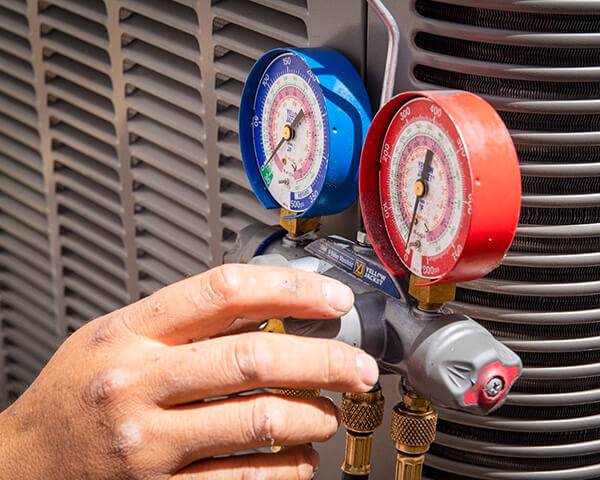
- Attach refrigerant gauges if cooling is low to check pressures and superheat/subcooling.
- Inspect evaporator coil, drain, and airflow - check filter and blower speed.
- Report findings and provide written estimate before major repairs.
Will they test the compressor and motors?
Yes. They will check whether the compressor tries to start, listen for bearing noise, test motor windings with an ohmmeter, and measure amp draw. If the compressor overheated or is mechanically seized, they’ll explain replacement options and estimated costs.
How refrigerant checks are done
Technicians use manifold gauges to measure system high- and low-side pressures and compare to expected values for the outdoor temperature. They look for oily residue, use electronic leak detectors or UV dye, and may perform soap-bubble testing at fittings. Only EPA-certified techs can legally add refrigerant.
What about the evaporator coil and drains?
Indoor checks include inspecting the evaporator coil for ice (indicates low refrigerant or poor airflow), checking the drain line and trap, and testing the condensate safety float. Clogged drains are a common emergency fix and often cleared same-day.
Electrical checks technicians perform
Technicians test and tighten electrical connections, inspect contactors, relays, capacitors, and control boards, and confirm proper breaker sizing. Loose connections cause heat and arcing - visible discoloration at terminals is a red flag.
How much does emergency AC repair cost?
Understanding the costs involved helps you make an informed decision. Several factors influence the final price, including the size of your home, equipment specifications, and local labor rates. Getting multiple quotes from reputable contractors ensures you receive competitive pricing. Many homeowners find that investing in quality equipment pays off through improved efficiency and lower long-term operating costs. Financing options may also be available to help spread the expense over time.
Typical price ranges (examples)
Same-day service call/diagnosis: $75–$200. Common quick repairs (capacitor, contactor, thermostat, fuses): $150–$500. Example: replacing a run capacitor often costs $150–$350 installed. Condensate drain unclogging or float switch repair: $100–$300. Refrigerant leak repair + small recharge: $300–$800 for simple line leaks and recharge; larger leaks or long line sets increase cost. Evaporator coil replacement: $800–$2,500+ depending on accessibility and system type. Compressor replacement: $1,200–$3,500+ depending on unit type, refrigerant, and labor.
Prices vary by region, system type (heat pump vs central AC), brand, and parts availability.
After-hours and peak demand fees
Expect a premium for after-hours, weekend, or holiday emergency calls - typically 25%–100% over regular rates during heat waves or high call volumes. Ask the dispatcher for an estimated total before the tech arrives.
Warranties and insurance: what to expect
Manufacturer warranties cover specific parts if within the warranty period and if maintenance records are up to date. Homeowner insurance rarely covers normal mechanical failure but might cover resulting damage (like water damage) depending on the policy. Always keep photos, technician reports, and invoices for claims. (Source: ASHRAE Technical Resources)
Short-term fixes and occupant safety
This aspect deserves careful consideration as you evaluate your options. Understanding the details helps you make more informed decisions. Consulting with qualified professionals provides additional insights specific to your situation. Take time to consider how this information applies to your particular needs and circumstances. Making well-informed choices typically leads to better long-term outcomes and greater satisfaction.
Cooling alternatives while you wait
Portable or window AC units: can lower a single room by 10–20°F in many setups. Place in the room where vulnerable persons sleep. Dehumidifiers: reduce humidity and make the space feel cooler; aim for 45%–55% RH for comfort. Fans and cool cloths: direct fans on people (not rooms) and use damp towels on the neck/wrists to lower body temperature. Public cooling centers or temporary relocation: public libraries, malls, or shelters often open cooling centers during heat waves.
Keeping vulnerable people safe
Move infants, elderly, and those with chronic conditions to the coolest place available. Keep them hydrated, dress in light clothing, apply cool compresses, and monitor for heat illness (dizziness, nausea, rapid heartbeat). Seek medical help for signs of heat stroke.
When temporary fixes are acceptable
Short-term measures that protect occupants or property are acceptable: turning off a smoking unit, running a portable AC, or a technician wiring a temporary safety bypass for a few hours. Avoid long-term bypasses that remove safety features.
Replace vs repair - a practical rule of thumb
If a repair approaches 50% of replacement cost, or the system is older than 10–15 years, replacement is often the better value. Example: if compressor replacement is $2,500 and a new higher-efficiency system costs $5,000–$7,000 installed, replacement may offer better efficiency and fewer future repairs. Consider expected life left, SEER rating, and refrigerant type when deciding.
Questions to ask when weighing options
How old is the system and the condenser? What is the estimated remaining life expectancy after repair? What warranty comes with the repair or the new system? What are the long-term energy savings from a higher-SEER replacement?

How to document damage for insurance or warranty claims
Take clear photos and short video clips showing smoke, flames, burned terminals, leaking water, or equipment tags/serial numbers. Save all invoices, diagnostic reports, and emails from the HVAC company. Note dates and times of the event and any phone calls. If water damage occurs, mitigate it promptly (drying, dehumidifiers) and keep receipts for mitigation costs. Contact your insurance agent promptly to report the claim and follow their documentation checklist.
What to expect when the technician arrives
Identification: the technician should show credentials and a company vehicle ID. Safety checks first: the tech will confirm hazards and secure power if needed. (Source: ASHRAE Technical Resources). On-site diagnosis: expect 15–60 minutes for a full diagnostic depending on complexity. Written estimate: for anything beyond simple parts, require a written estimate before work begins. Time to complete: small repairs often take 30–90 minutes; major work (compressor, coil) can take hours or require ordering parts.
Questions to ask the technician (sample)
What caused the failure? Is this a safety issue? Can you fix it today and how long will it take? What exact parts and labor are needed, and what are the costs? What warranty covers parts and labor? Is replacement a better option, and do you provide estimates for both?
FAQs
How quickly can I get a quote?
You can get a rough verbal estimate over the phone for likely fixes. A firm written quote usually follows an on-site diagnosis - plan 15–45 minutes for a full inspection and quote.
Can I get financing for emergency repairs?
Acting quickly during an emergency prevents further damage and ensures your safety. Start by assessing the situation and determining if professional help is needed immediately. Many service providers offer emergency response for urgent situations. While waiting for help, take basic precautions to protect your home and family. Keep emergency contact numbers readily available for quick access when needed.
Many HVAC companies offer financing or payment plans for larger repairs or replacements. Ask the dispatcher about in-house financing, third-party loans, or promotional offers before authorizing high-cost work.
Are same-day appointments guaranteed?
No. Same-day service depends on technician availability, parts, and local demand. During heat waves, expect longer wait times and higher emergency premiums. If a company promises a window, get the ETA in writing when possible.
Emergency AC Repair Decision Checklist
- ✓ Is this a true emergency (burning smell, smoke, no cooling with vulnerable occupants)?
- ✓ Have you done safe DIY checks (thermostat, breaker, filter)?
- ✓ Is the system older than 10-12 years (consider replacement)?
- ✓ Does repair cost approach 50% of replacement cost?
- ✓ Have you asked for written estimate before work begins?
- ✓ Is the contractor licensed, insured, and EPA-certified?
- ✓ Have you compared multiple quotes (if time allows)?
Prevention Tips for Las Vegas Homeowners
Preventive maintenance reduces emergency calls and costs, especially in Las Vegas heat:
- Annual tune-ups: Schedule spring AC maintenance before temperatures exceed 90°F
- Filter changes: Replace filters every 1-3 months, especially during dust storms
- Coil cleaning: Clean indoor and outdoor coils annually
- Drain line maintenance: Clear drain lines quarterly
- Monitor energy bills: Track costs to spot efficiency declines
- Outdoor unit care: Keep condenser clear of debris and plants
- Listen for unusual sounds: Grinding, squealing, or rattling indicate problems
Ready to find licensed emergency HVAC help
[Point 1] Acting quickly during an emergency prevents further damage and ensures your safety. [Point 2] Start by assessing the situation and determining if professional help is needed immediately. [Point 3] Many service providers offer emergency response for urgent situations. [Point 4] While waiting for help, take basic precautions to protect your home and family. [Point 5] Keep emergency contact numbers readily available for quick access when needed.
How to contact a licensed HVAC pro now
- Call a local NATE-certified contractor or your regular HVAC company. Find certified technicians through NATE (https://www.natex.org).
- Tell dispatch the unit model/age, clear symptoms (smell, smoke, water), and whether vulnerable people are present.
- Ask for estimated arrival time, after-hours fees, and if the tech will carry common parts (capacitor, contactor, fuses).
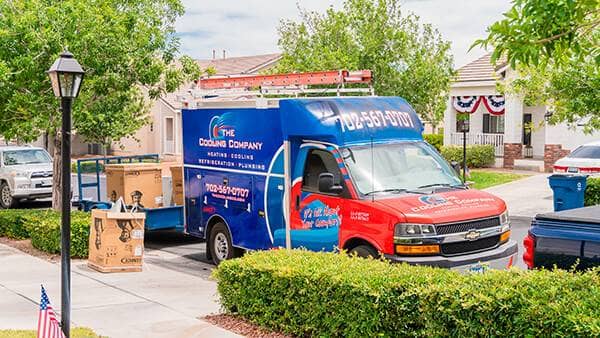
Las Vegas area homeowners: Call The Cooling Company at (702) 567-0707 for 24/7 emergency AC repair. We serve Las Vegas, Henderson, and North Las Vegas with fast dispatch, licensed technicians, and clear pricing. We offer:
- 24/7 emergency response with fast dispatch
- Licensed, EPA-certified, and NATE-certified technicians
- Clear, upfront pricing with written estimates
- Parts-on-truck for common failures
- Priority scheduling for vulnerable occupants
Related services: AC Repair | AC Installation | AC Maintenance
What service guarantees cover
Service guarantees vary. Look for written warranties on parts (30 days to several years) and labor (commonly 30–90 days). Some maintenance plans offer priority scheduling or reduced emergency fees. Ask for guarantee details before work starts.
Resources and references
This aspect deserves careful consideration as you evaluate your options. Understanding the details helps you make more informed decisions. Consulting with qualified professionals provides additional insights specific to your situation. Take time to consider how this information applies to your particular needs and circumstances. Making well-informed choices typically leads to better long-term outcomes and greater satisfaction.
EPA Section 608 refrigerant certificationENERGY STAR central AC guidanceNATE technician directory U.S.Department of Energy AC tips
Related reading: what to explore next?
- Heating System Repair: 5 Urgent Signs You Need Service Today
- Heating System Maintenance: 7 Quick Checks to Save on Bills Now
- Rebates on New HVAC Systems: Save Hundreds with These Steps Today
- Ac and Furnace: Signs You Need Repair Today Before Costs Soar
- HVAC System Types: How to Choose the Best One for Your Home Now
- Air Conditioner Not Working: AC Not Working 12 Fast Fixes to Restore
- Cost to Replace AC: What to Budget for Your New System
- Air Handler Installation Cost: What to Budget Before Buying
- Furnace Types: Fuel, Technology, Efficiency
- Cost to Add HVAC to An Old House: Real Prices And Retrofit Factors
References
- U.S. Department of Energy (Energy.gov) (accessed 2025-12-20)
- U.S. Environmental Protection Agency (EPA) (accessed 2025-12-20)
- ASHRAE (Standards and guidance) (accessed 2025-12-20)
- ENERGY STAR (Heating & cooling) (accessed 2025-12-20)
Need HVAC Service in Las Vegas?
The Cooling Company provides expert HVAC service throughout Las Vegas, Henderson, and North Las Vegas. Our licensed technicians deliver honest assessments, upfront pricing, and reliable results.
Call (702) 567-0707 or visit AC repair, maintenance, heating, or installation for details.