


Short answer: Furnace warning signs include higher bills, yellow or flickering flames, odd smells, frequent cycling, delayed ignition, and weak airflow. In Las Vegas, dust, attic heat, and short cold snaps can hide problems, so treat gas odors or CO alarms as emergencies and schedule a professional inspection.
The noises and cycling of your furnace blower are also essential to monitor. Inadequate airflow, resulting from a faulty blower, can influence the furnace's output, and any unusual noises could indicate a mechanism malfunction. Risks to your home itself, such as irregular cycling or variation in temperature, can potentially lead to as serious an issue as a fire. By being aware of these warning signs, performing regular inspection and HVAC maintenance work, you can rest with more ease:
Just like with other appliances in your house, furnaces can develop problems that require attention. Understanding the symptoms and warning signs to watch for is crucial. In some cases, these signs might indicate minor problems that simply need a tweak here and there, while in others, they could mean serious trouble that calls for furnace replacement.
Besides anything else, taking care of homes' heating systems is a crucial thing to maintain comfortable living conditions.
Bills
Your energy bill is one of the earliest indicators your furnace may be struggling. In Las Vegas, winter heating runs are shorter than in colder climates, so a noticeable spike in gas or electric use from one month to the next usually points to a problem, not the weather.
What to compare
- Look at month-to-month and year-over-year bills for the same month to filter out seasonal differences.
- If possible, compare usage per heating-degree-day (or simply compare the same December from previous years) to spot abnormal increases.
Quick homeowner checklist
- - Check thermostat settings and schedule. A mis-programmed thermostat can cause long runtimes.
- - Inspect and replace the air filter. A clogged filter can raise heating runtime by 15 to 30 percent.
- - Ensure vents and registers are open and not blocked by furniture or carpets.
- - Check doors and windows for drafts; poor envelope sealing can make the furnace run more.
- - Note specific cold spots in rooms. Uneven heating can mean duct leaks or a failing blower.
If checks above do not explain higher bills, the likely culprits include a failing blower motor, a stuck relay, short cycling, or leaking ducts. For step-by-step troubleshooting if your heater will not turn on or starts slowly, see our guide Heater Not Turning on: Quick Troubleshooting Steps Before Calling. For concerns about leaking or failing ducts that reduce efficiency, our air duct replacement resources explain when replacement is more cost effective than repair.
Pilot Lights
A healthy pilot light burns a steady pale blue. Any persistent yellow, orange, or flickering flame can indicate improper combustion, excess soot, or the presence of other gases. Incomplete combustion increases carbon monoxide risk and reduces efficiency.
Immediate safety steps if you see a yellow pilot
- - Do not try to adjust gas components yourself.
- - Ventilate the area by opening windows and doors.
- - If you smell rotten eggs or suspect a gas leak, leave the home immediately and call the gas company and emergency services.
- - If a CO alarm sounds, evacuate and call 911 or local emergency services.
Maintenance and prevention
- - Make sure there is a working CO detector on every level of the home and test it monthly.
- - Schedule annual furnace combustion and safety inspection with a licensed technician before the heating season.
- - In Las Vegas homes, dust and desert particulates can build up in burners and vents faster than in more humid climates, so have burners checked and cleaned more frequently if your home is near major roadways or construction zones.
If you see pilot light issues or smell gas, contact our emergency heating team for safe diagnostics (Emergency Heating and Cooling Service). For help selecting a trusted local provider, see Top Furnace Companies Near Vegas.
Slow Start or Failure to Turn On
Unusual Noises and Vibration
Odd Smells and Carbon Monoxide Risks
Smells from your furnace should never be ignored. Typical odors and what they usually mean:
- Burning dust smell on first start of season: Normal if it dissipates within a few hours; caused by dust on heat exchanger and ductwork.
- Persistent burning or electrical smells: Overheated motor, burning wiring, or failing components; turn off and call a pro.
- Rotten egg smell: Sulfur added to natural gas as an odorant. If persistent, evacuate and call the gas company immediately.
- No smell but symptoms like headache, nausea, dizziness, or flu-like feelings: Could indicate carbon monoxide exposure.
Safety checklist
- - Install and test CO detectors on each level and near sleeping areas.
- - If you suspect CO, get everyone out of the house, call 911, and contact a licensed HVAC technician.
- - Schedule an annual safety inspection that includes combustion analysis.
Las Vegas homeowners should be especially vigilant when using older furnaces or venting through masonry chimneys that may be compromised by settling. For urgent concerns and rapid diagnostics, contact our 24/7 emergency team (Emergency Heating and Cooling Service) or get professional installation/inspection help from trusted local contractors (Top Furnace Companies Near Vegas).
Noises often tell the story of mechanical failure long before heat output drops. Different sounds usually mean different problems.
- Rattling or banging: Loose panels, blower wheels, or heat exchanger issues. A cracked heat exchanger is a safety concern and needs immediate inspection.
- Squealing or screeching: Worn blower motor bearings or a failing blower belt.
- Clicking followed by no ignition: Faulty ignition control, flame sensor, or gas valve.
- Thumping every few minutes: Short cycling caused by overheating, a clogged filter, or a failing limit switch.
Action steps
- - Turn off the unit if you hear loud banging or feel vibration in the walls, and schedule service.
- - Record when the noise happens (startup, during run, when cycling) to help the technician diagnose.
- - In Las Vegas homes near busy roads, increased dust and grit can accelerate bearing wear. Inspect and replace filters more often in dusty districts like Summerlin and Henderson.
If noises are sudden and loud, request same-day service (Same Day AC Repair Las Vegas) to avoid further damage or comfort loss.
When a furnace hesitates to start or fails to start altogether, the problem could range from a simple thermostat setting to a failing ignition system. In Las Vegas, furnace startups can be stressed by temperature swings between hot days and cold nights, causing rapid cycling that hides intermittent faults.
Troubleshooting steps you can try safely
- - Confirm thermostat settings and replace thermostat batteries if applicable.
- - Check circuit breakers and the furnace switch. Reset a tripped breaker only once.
- - Replace the air filter. Restrictive filters can delay ignition by causing airflow problems.
- - Inspect for error codes on the furnace control board or the thermostat display.
- - Try a manual restart: turn the thermostat to off, wait five minutes, then back to heat.
When to call a technician
- - Repeated failed starts or increasing delay before ignition
- - Strange clicking or persistent attempts to ignite
- - Any gas smell, unusual flame color, or error codes you do not recognize
If you are unable to get the furnace running after these steps, our technicians can diagnose ignition control, flame sensor, pressure switches, and blower motor issues quickly. For more emergency tips and when to escalate, check our emergency heating service advice and our heater troubleshooting guide.
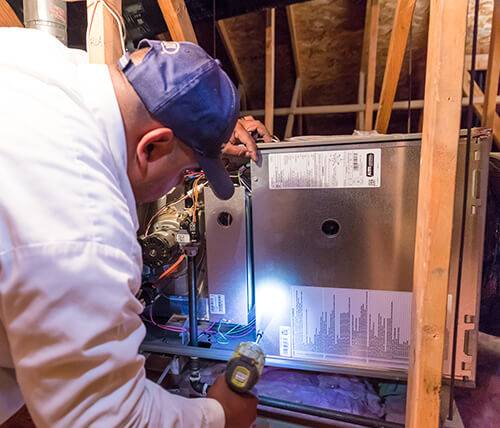
Local essentials and challenges for Las Vegas furnace warning signs
- Desert dust and wind: Filters load faster after wind events, which can mimic mechanical issues.
- Attic installs: Extreme attic temperatures stress controls and wiring, causing intermittent startups.
- Short heating season: Problems can go unnoticed until the first cold snap, then show up fast.
- Older homes: Legacy venting and duct leaks can worsen symptoms like odd odors or weak airflow.
Cost drivers for diagnosing furnace warning signs
- After-hours calls: Emergency visits for gas odor or no-heat nights typically cost more.
- Part complexity: Control boards, inducer motors, and heat exchangers carry higher parts and labor costs.
- Venting and safety upgrades: Correcting flue issues or adding combustion air can add scope.
- Duct repairs: Leaky or collapsed ducts can mask symptoms and add repair time.
Decision guidance: when to call vs. keep troubleshooting
- Call immediately: Gas smell, CO alarm, sooty flame, or visible vent damage.
- Call soon: Frequent short cycling, delayed ignition, or odd burning smells that persist.
- DIY only if safe: Replace filters, confirm thermostat settings, and check breakers once.
Prevention tips to avoid furnace warning signs
- Change filters every 1–3 months and keep return grilles clear.
- Schedule an annual combustion and safety tune-up before winter.
- Test CO alarms monthly and replace batteries twice per year.
- Seal duct leaks and insulate attic ducts to reduce cycling stress.
Neighborhoods we serve for furnace diagnostics
- Spring Valley, Paradise, and Silverado Ranch
- Summerlin, Queensridge, and Lone Mountain
- Henderson, Green Valley, and Anthem
- North Las Vegas, Aliante, and Craig Ranch
Why homeowners trust The Cooling Company
- Serving Las Vegas since 2011 with 55+ years combined experience
- Licensed, EPA-certified technicians and safety-first inspections
- BBB A+ rated with a 100% satisfaction guarantee
- Lennox Premier Dealer with local parts support
Service area map
Frequently Asked Questions
What does a yellow or flickering furnace flame mean in Las Vegas?
A healthy gas burner produces a steady blue flame with a small inner cone. A yellow, orange, or flickering flame indicates incomplete combustion, often caused by dirty burners, insufficient combustion air, or a cracked heat exchanger mixing flue gases with the air supply. In Las Vegas, desert dust and debris can clog burner ports after months of summer inactivity, causing exactly this symptom on the first cold morning of the year. Do not attempt to clean the burners yourself, shut the furnace off and call a licensed technician. Yellow flame combined with headache, nausea, or dizziness is a carbon monoxide emergency: evacuate and call 911. Visit our furnace repair service page for same-day diagnostic availability.
Is a banging or booming sound when my furnace starts dangerous?
A single bang or boom at startup, called delayed ignition, means gas is accumulating before it ignites. When the gas finally lights, the accumulated pocket ignites all at once. This is hard on the heat exchanger and can crack it over time, which is both a safety hazard and a $800–$2,500 repair. In Las Vegas, this symptom often appears at the start of heating season after months of inactivity, when residue builds up on the igniter or flame sensor during summer. A persistent banging at startup is not a maintenance issue to defer, it's a sign that the ignition system needs immediate inspection and cleaning.
How do I tell the difference between a CO detector false alarm and a real carbon monoxide emergency?
There is no safe way to confirm a CO alarm is false without testing equipment. If your CO detector alarms, treat it as a real emergency every time: get everyone (including pets) out of the house immediately, leave the door open, and call 911 from outside. Do not re-enter the home to investigate. Carbon monoxide is colorless and odorless, by the time symptoms like headache or nausea appear, exposure is already serious. Las Vegas fire departments respond to CO calls and will test your home's air before allowing re-entry. Only after the fire department confirms the air is safe should you call an HVAC technician to find and fix the source.
My furnace short-cycles, turns on and off every few minutes. What does that mean?
Short cycling is the furnace's safety system protecting itself from overheating. The most common cause in Las Vegas is a clogged air filter restricting airflow, replace it first and see if the problem resolves. Other causes include a dirty flame sensor (the furnace lights but the sensor doesn't confirm the flame, so it shuts down), an oversized furnace that heats the house too fast, or a failing limit switch that trips at normal operating temperatures. A furnace that short-cycles in October after sitting idle all summer often just needs a flame sensor cleaning, a $100–$200 repair that avoids a more expensive control board replacement later. If replacing the filter doesn't fix it, Schedule Now.
How long can I safely run a furnace that's showing warning signs before something serious happens?
That depends entirely on the symptom. For strange odors that clear quickly, elevated bills, or mild short cycling, you can typically schedule service within a week without catastrophic risk. For a yellow flame, persistent rotten-egg smell, CO alarm, or visible cracks in the heat exchanger, the answer is zero: stop using the furnace immediately and call for same-day service. Gas odors and CO alarms are not "wait and see" situations. Las Vegas nights in January regularly drop to the mid-30s, so if you shut down a furnace for safety, have a backup heat source ready (space heaters on a circuit that can handle them) while you wait for the repair. Our heating service team is available seven days a week for urgent situations.
Related service: Need furnace service in Las Vegas? Explore our furnace repair and heating maintenance services for Las Vegas homeowners.
Share This Page