

Short answer: Discover heat pump cost las vegas with budget ranges from homes to light commercial, plus electrical and rigging add-ons and tips to avoid surprises.
Key Takeaways
- Use a room-by-room Manual J load calculation (not a square-foot rule).
- Select equipment with Manual S and verify ducts with Manual D for comfort and efficiency.
- Avoid oversizing: short-cycling wastes fuel and can create uneven temperatures.
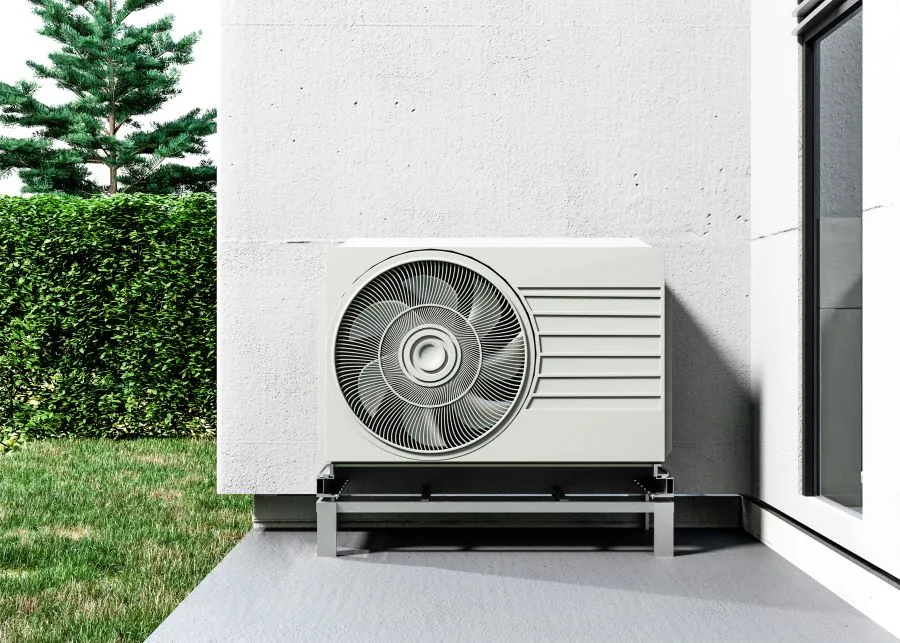
Heat Pump Cost Las Vegas: How much does a heat pump cost in Las Vegas?
Las Vegas projects range from small residential swaps to large commercial installs. Costs change quickly because site factors vary. Equipment price is only a part of the total bill. Contractors add fees for permits, panel work, rooftop rigging, and commissioning. Buyers who budget from equipment catalogs alone usually underestimate final costs.
Plan for a contingency of 10–20 percent on residential jobs and higher for commercial retrofits. Ask bidders for line-item pricing, timelines, and a written load calculation before signing. That reduces surprises and helps you compare bids on an apples-to-apples basis.
Local labor markets and supply chains shape final quotes. Summer demand for cooling can raise prices and extend lead times. Refrigerant availability, imported parts, and vendor stock also change equipment pricing. Always request current lead times in writing with each bid so you know when the project will complete.
What drives price differences?
Installed cost varies by building age, access, electrical capacity, and the scope of controls and commissioning. Duct condition, roof access, and refrigerant piping length matter. The same model installed in two buildings can have very different total costs because site conditions differ.
Another major driver is how complete the bid is. Bids that exclude commissioning, electrical, rigging, or permits often look cheaper but cause change orders later. Require line-item scope in proposals to compare costs reliably.
Labor availability and seasonality also affect price. During peak cooling season, contractors may charge premiums or schedule further out. Material lead times for higher-efficiency equipment can create project delays and push prices up.
Building age and ductwork condition?
Older buildings often have leaky or undersized ducts. Repairing or replacing ducts adds cost and is often required for comfort. If ducts are in poor shape, installing a high-efficiency unit alone will not fix comfort issues.
Assess duct airtightness and insulation on the site survey. Document any required repairs as line items so bidders match scope. That reduces the chance a low bid will turn into a large change order after demolition.
Rooftop access, rigging, and crane needs?
Rooftop lifts add crane fees, spotter crews, and roof protection. Crane lifts commonly cost a few thousand dollars per lift depending on crane size and site access. Curb modifications, roof parapet fixes, and structural reinforcements can add thousands more.
Factor these items into your budget early. Include time for crane booking, safety plans, and roof protection in schedules. Weather delays and permit constraints can push lifts into a later window and extend costs.
Controls, commissioning, and scope completeness?
Controls and commissioning confirm performance and save energy over time. Commissioning costs a small share of the project but prevents comfort complaints and rework. Require a startup plan that documents refrigerant charge, airflow, and control sequences.
That plan often is needed for rebate qualification. Including commissioning in the base bid lowers long-term risk and supports measured savings claims for incentive programs.
You may qualify for federal tax credits that reduce your upfront cost.
What are typical installed cost ranges?
Installed costs overlap between residential and commercial categories. Capacity, complexity, and accessories drive the numbers. Below are practical ranges and examples for Las Vegas projects. These figures reflect installed costs, not just equipment sticker prices.
Compare equipment efficiency and warranty when making decisions. Two bids with similar prices can perform very differently over the equipment life when efficiency, controls, or warranties differ.
Residential installed cost examples?
A 2.5 ton residential heat pump in Las Vegas often has equipment costs of $3,000–$7,000. With labor, linesets, permits, and a condenser pad, installed prices usually run $5,000–$12,000. If the job needs ductwork, insulation, or an electrical panel upgrade, add $2,000–$10,000.
Check our HVAC pricing guide for current cost estimates.
Efficiency upgrades raise first cost but lower utility bills in the long run. Ask for model numbers, efficiency ratings, and warranty terms in writing. Compare these across bids to judge value rather than price alone.
Use our energy savings calculator to estimate your potential savings.
Light commercial packaged rooftop examples?
Small packaged rooftop units in the 5–10 ton range commonly cost $10,000–$30,000 installed. These prices typically include curb adapters, a crane lift, and basic flashing. If the rooftop needs structural work, curb inserts, economizers, or variable-speed compressors, the price moves to the high end of the range.
For rooftop projects, plan for safety and access logistics. Crane time, roof protection, and spotters add labor hours that appear as separate line items in quality bids.
Large VRF and multi-zone systems
VRF systems start near $20,000 for simple multi-zone installations and can exceed $100,000 for complex projects. Costs scale with the number of indoor units, piping length, and controls complexity. VRF requires skilled installers and careful commissioning to perform as designed.
Ask for AHRI and performance data to compare VRF bids correctly. Skilled labor premiums and detailed commissioning plans are standard for VRF installations.
What hidden costs should owners expect?
Hidden costs are the usual reason budgets grow. Electrical upgrades, transformer work, and new feeders can add $5,000–$50,000 on some commercial jobs. Rooftop crane lifts, curb repairs, and structural reinforcements add thousands more. Permit and inspection fees are smaller but affect the schedule.
Duct repairs and sealing are frequent surprises after demolition. Commissioning is often skipped in very low bids but is critical to ensure correct operation. Include commissioning as a required line item in proposals to avoid scope gaps.
If a project affects tenant spaces, schedule and access constraints raise labor costs. Night work, weekend shifts, or overtime rates may apply to avoid business disruption.
Electrical service upgrades and transformer work
Electrical upgrades can be costly. Replacing panels, adding feeders, or installing new transformers requires licensed electricians and sometimes coordination with the utility. For large systems, utility upgrades can add weeks to the schedule.
Budget for both time and cost when planning commercial projects. Obtain preliminary utility coordination estimates early to set realistic timelines and contingencies.
Rooftop rigging and crane expenses
Crane rentals depend on lift weight and site access. Larger cranes and difficult access raise daily rates. Rooftop lifts need safety plans, spotters, and roof protection, increasing labor hours.
Plan lifts for low wind days and have contingency for weather delays. Weather can shift crane availability and extend the project timeline, which may increase indirect costs such as supervision and staging.
Duct repairs, sealing, and distribution issues
Poor ductwork reduces system efficiency and comfort. After demolition, many installers find leaky or undersized ducts that require repair. Sealing ducts and improving insulation is often cost-effective compared with replacing equipment to chase comfort problems.
Include ductwork inspection in the site survey. Document repairs as separate line items so bids are comparable and so you can evaluate repair versus replacement trade-offs.
How do system types compare for commercial sites?
Choosing the right system changes both first cost and lifecycle savings. Packaged rooftop units suit single-zone or simple multi-zone buildings and are easy to service. VRF systems give precise zone control and strong part-load efficiency where loads vary by zone. Ductless units solve spot cooling or add-on zones without duct repairs.
Each system type has distinct installation skill needs and commissioning requirements that affect total project cost. Match the system to occupancy patterns, control needs, and maintenance resources.
VRF versus packaged rooftop units
VRF systems offer flexible zoning and strong part-load performance. They let multiple indoor units run off a single outdoor module and often save energy where loads vary by zone. Packaged rooftop units are simpler to replace and maintain and can be cheaper to install.
Choose VRF for complex zoning and where part-load efficiency provides measurable savings. Choose packaged rooftop units for simple rooftop replacements and when serviceability and lower upfront cost matter most.
Where ductless minisplits fit
Ductless minisplits work well for retrofit add-on rooms and spaces without ducts. They avoid duct repair costs and reduce distribution losses. For whole-building retrofits where existing ducts are in good shape, ductless systems can be more expensive per ton than ducted or VRF options.
Use ductless for targeted comfort fixes, additions, or where minimally invasive installation is a priority. Evaluate line-of-sight, mounting locations, and tenant impacts during the site survey.
Installation skill and commissioning needs
VRF installations need skilled technicians for refrigerant piping and advanced controls. Wrong charge or piping practices reduce system life and performance. Packaged units require careful curb and crane planning. Ducted systems often need airflow balancing.
Include skilled labor costs in your bids. Require commissioning and performance verification to ensure systems meet design intent and to support rebate documentation when applicable.
How to compare first cost and lifecycle cost
First cost is the purchase and install price. Lifecycle cost includes energy use, maintenance, and replacement over the equipment life. In Las Vegas, cooling energy dominates annual cost, so efficiency matters for long-run savings. Use a 10–15 year horizon for most commercial choices.
Gather local utility rates, demand charges, and expected runtime to estimate savings. Include maintenance and likely mid-life repairs for a realistic total cost picture. Discount future costs to present value if you need precise comparisons.
A higher up-front cost for better efficiency can be justified when energy savings and lower maintenance reduce total ownership cost. Conversely, simpler systems with lower maintenance needs may win on lifecycle cost in some cases.
Running a lifecycle cost analysis
Collect AHRI-rated performance data, local electricity rates, and expected annual hours. Factor in commercial demand charges, which can be large for some meters. Discount future costs to present value if you want precise comparisons.
Include maintenance, filters, and expected replacement cycles in your model for realistic results. Document assumptions so you can adjust for different runtimes or tariff changes.
Efficiency metrics that matter in Las Vegas
For cooling in Las Vegas, SEER2 and part-load EER are key metrics. Higher SEER2 and good part-load performance reduce summer bills. HSPF2 or COP matter if the system will heat in cool months.
Look for variable-speed compressors and good part-load behavior. Those features reduce runtime and improve comfort during long cooling seasons.
How should commercial owners plan a heat pump project?
Start with a site survey and an ASHRAE-compliant load calculation. Early planning reveals roof obstructions, electrical limits, and duct problems that affect cost. Engage an engineer for complex jobs and coordinate with the utility early if service upgrades may be needed.
Require bidders to show line-item pricing for equipment, rigging, electrical, permits, and commissioning. Build a realistic schedule that allows for permitting, crane booking, and testing. Include a 12–24 month post-start monitoring plan to prove savings and qualify for rebates.
Early coordination with the utility and permitting offices reduces delays. For rebate-funded projects, pre-approval and documentation requirements often shape procurement timelines.
When to run a site survey
Run a full site survey before accepting any budget figures. The survey should document access points, roof framing, existing duct layout, and electrical gear. Photos and measurements let bidders size cranes and design curb adapters.
Without a proper survey, bids usually include large contingencies that hide the real costs. A good survey lowers the chance of change orders later and improves the accuracy of contractor proposals.
Who should perform load calculations
Have a licensed HVAC designer or mechanical engineer perform ASHRAE-compliant load calculations for nontrivial projects. Independent engineers add objectivity for complex or multi-tenant buildings.
The load report should show assumptions for occupancy, lighting, and internal gains. That documentation justifies proposed tonnage and reduces sizing disputes among bidders.
Permits, inspections, and timelines
Most installs require building, mechanical, and electrical permits. Rooftop work may need structural review or additional safety permits. Permit timelines vary by jurisdiction and can add weeks to the schedule.
Plan for inspections and allow time for corrections if inspectors find noncompliant work. Early permit submissions reduce delays during procurement and installation.
Which incentives and rebates apply in Las Vegas?
Owners can use federal tax credits and local utility rebates to lower net costs. NV Energy and other local programs offer incentives for high-efficiency equipment and custom projects. Many programs require pre-approval, AHRI-certified equipment, and documented commissioning to pay incentives.
Start rebate applications early so approvals do not delay procurement. Keep AHRI certificates, invoice copies, and commissioning reports for rebate audits. Custom rebate projects often need measured savings plans and monitoring and verification (M&V) work for payout.
Federal rebates and tax credits
Federal incentives for commercial heat pumps can include tax credits or depreciation bonuses. Eligibility depends on equipment type, efficiency level, and owner tax status. Commercial incentives are complex; consult a tax advisor before relying on federal credits in your budget.
Document eligibility and get pre-approval when required. Tax-based incentives often need additional paperwork and timing considerations if you want to close a financing package.
NV Energy rebates and how they work
NV Energy offers prescriptive rebates and custom incentive paths for businesses. Prescriptive rebates pay a set amount per unit for qualifying equipment. Custom programs fund part of the incremental cost for high-efficiency systems when measured savings justify the incentive.
Prescriptive incentives are faster but smaller. Custom incentives require a measured savings plan and often commissioning documentation. Work with your contractor early to capture the right pathway and documentation.
Ready to request a detailed estimate?
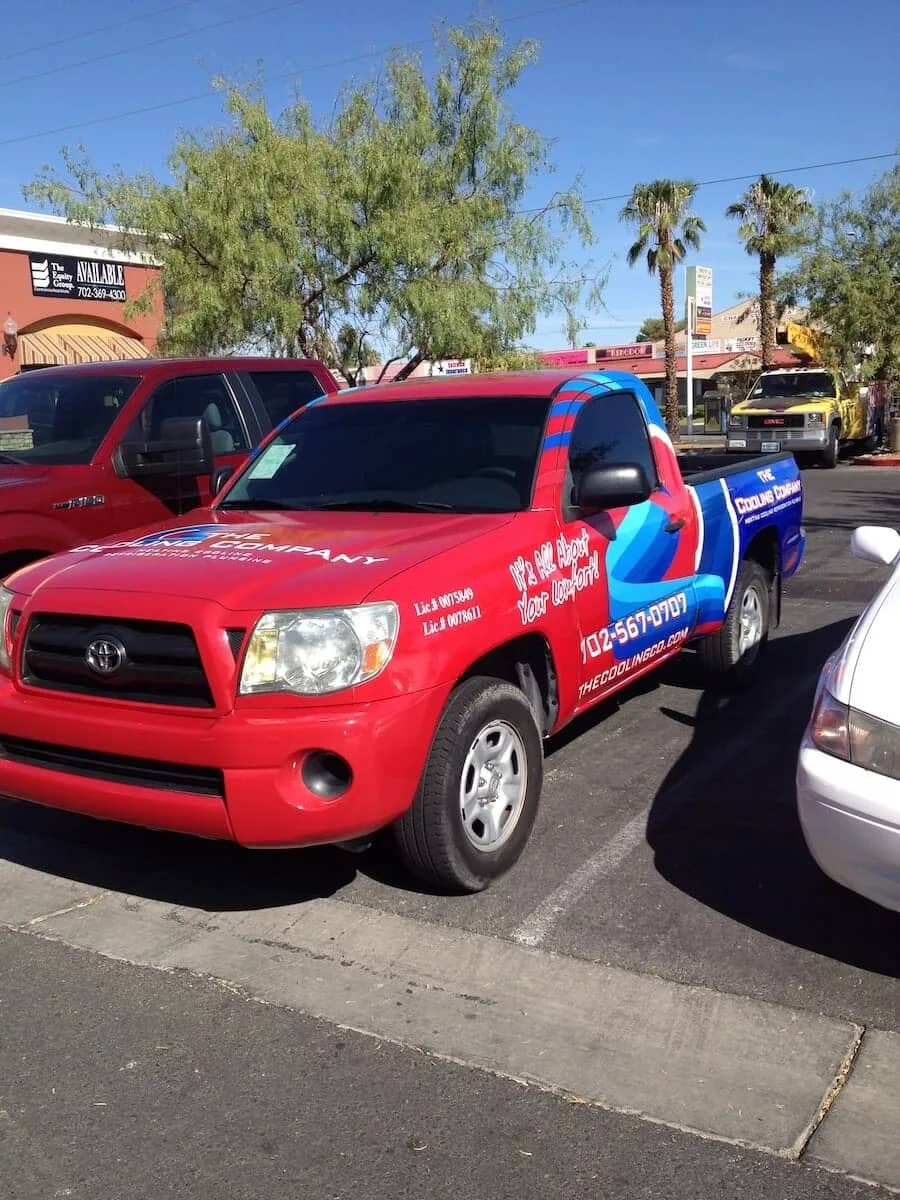
Call The Cooling Company at (702) 567-0707 to schedule a site survey and a rebate-ready estimate. Our team performs ASHRAE-compliant load calculations and documents AHRI model numbers. We provide three line-item bids so you can compare real scopes and costs.
We handle permits, rigging plans, and commissioning paperwork for NV Energy rebates. If you are outside our area, ask contractors for NATE-certified technicians and AHRI-certified equipment. That helps ensure trained techs and verified performance.
For Las Vegas-area projects, The Cooling Company serves Las Vegas, Henderson, and North Las Vegas and will prepare a full estimate packet including a commissioning plan.
How to prepare for a site visit
Gather recent utility bills, photos of existing equipment, and any past load calculations before the visit. Mark roof access points and note tenant hours or security needs that affect scheduling. Share electrical single-line diagrams if available so the estimator can identify service limits before the trip.
A prepared owner speeds the site survey and yields more accurate bids. The more documentation you provide, the fewer contingencies bidders must add.
What will our estimate include?
Your estimate will list equipment model numbers, AHRI ratings, and line items for labor, rigging, permits, and electrical work. We will include a commissioning scope and a rebate packet listing required documentation. That makes bids comparable and reduces the chance of surprise change orders.
How to choose a contractor
Select a licensed commercial HVAC firm with local project experience and clear references. Verify training and certifications such as NATE and manufacturer factory training. Check that the firm has insurance, bonding, and a safety program for rooftop and crane work to limit your liability during installation.
Ask for sample commissioning reports and project case studies that show measured savings. For systems using newer refrigerants or VRF, prefer firms with documented refrigerant training and a leak management plan.
What qualifications matter most
A Nevada mechanical or contractor license, listed manufacturer certifications, and proof of insurance are baseline requirements. NATE certification and AHRI partnership show technical competence and access to parts.
For commercial projects, commissioning experience and references for similar jobs are also critical. Those qualifications help you manage performance risk and ensure documented outcomes.
How to compare commercial bids
Use line-item comparisons to reveal true differences between bids. Match AHRI model numbers and efficiency ratings first. Confirm the scope includes rigging, curb work, electrical, permits, and commissioning.
Ask bidders to show labor hours and clarify warranty and maintenance responsibilities. That avoids surprises and clarifies who owns each scope element after startup.
Final notes and next steps
Accurate budgets start with a site survey, load calculation, and clear bid templates. Include contingencies for electrical work and rooftop rigging that commonly drive commercial costs higher. Insist on commissioning and documented AHRI ratings to secure rebates and prove savings after startup.
Call The Cooling Company at (702) 567-0707 to schedule a site visit in Las Vegas, Henderson, or North Las Vegas. Our estimate package includes a site survey, ASHRAE load calculation, AHRI-rated equipment choices, and a commissioning plan to qualify for NV Energy and federal incentives.
If your project is outside our area, ask for NATE-certified technicians and AHRI-certified equipment in your bids.
About The Cooling Company
The Cooling Company has been serving the Las Vegas valley with professional HVAC services for over a decade. Our team of licensed, NATE-certified technicians specializes in air conditioning repair, heating system maintenance, and complete HVAC installations.
We're committed to providing honest, reliable service with upfront pricing and a 100% satisfaction guarantee on all work performed. Contact us by phone at (702) 567-0707. Our reviews show strong customer satisfaction and local experience.
What are the key considerations?
Considering these factors helps you make the right choice for your home or business. Professional technicians can provide personalized recommendations based on your specific needs. Check references, verify certifications, and require written scope and load calculations.
- Reviews: 4.8/5 stars (780+ reviews) - See reviews
Service Areas
We proudly serve homeowners and businesses throughout the Las Vegas metropolitan area, including Las Vegas, Henderson, and North Las Vegas. Our service technicians are available for same-day appointments in most areas, with emergency service available 24/7 for urgent HVAC issues.
Sources
The guidance and ranges on this page reference industry standards and government guidance. Consult these primary sources for technical details and program rules:
- U.S. Department of Energy (Energy.gov) (accessed 2026-01-03)
- U.S. Environmental Protection Agency (EPA) (accessed 2026-01-03)
- ASHRAE (Standards and guidance) (accessed 2026-01-03)
- ENERGY STAR (Heating & cooling) (accessed 2026-01-03)
Sources and further reading
This information is intended to guide planning and budgeting. Consult licensed engineers and contractors for project-specific designs and cost estimates.
Related reading: For more on heat pump topics, see our guides on heat pump compressors, broken heat pump troubleshooting, and how heat pump packaged units work.
Need HVAC Service in Las Vegas?
The Cooling Company provides expert HVAC service throughout Las Vegas, Henderson, and North Las Vegas. Our licensed technicians deliver honest assessments, upfront pricing, and reliable results.
Call (702) 567-0707 or visit heating, heat pump installation, heating maintenance, or installation for details.