


Short answer: A Las Vegas home with a 3-ton AC running at SEER 14 instead of SEER 8 saves roughly $700-$1,000 per year on cooling costs alone. Add a smart thermostat, sealed ducts, and regular maintenance, and total annual savings can reach $1,200-$1,800. The exact amount depends on your system's SEER rating, NV Energy's current rate per kWh, your thermostat habits, and whether your ductwork leaks conditioned air into attic spaces.
How to Calculate Your HVAC Energy Costs
Before you can measure savings, you need to know what you are spending. Here is the basic formula for estimating annual cooling costs:
Annual Cooling Cost = (BTU capacity / SEER rating) x hours of operation x electricity rate per kWh / 1,000
For a typical Las Vegas home with a 3-ton (36,000 BTU) air conditioner rated at SEER 14, running approximately 2,500 hours per year at NV Energy's residential rate of roughly $0.12 per kWh:
- 36,000 BTU / 14 SEER = 2,571 watts per hour
- 2,571 watts x 2,500 hours = 6,428,571 watt-hours
- 6,428,571 / 1,000 = 6,429 kWh per year
- 6,429 kWh x $0.12 = approximately $771 per year in cooling costs
That same 3-ton system at SEER 8 would consume 11,250 kWh and cost roughly $1,350 per year. The difference between SEER 8 and SEER 14 is nearly $580 annually in this example, and real-world savings are often higher because older systems lose additional efficiency from worn components and dirty coils.

How SEER Ratings Directly Impact Your Bills
SEER stands for Seasonal Energy Efficiency Ratio. It measures how much cooling output a system delivers per watt of electricity consumed over a typical cooling season. Higher SEER means less electricity for the same cooling.
SEER Comparison for a 3-Ton System in Las Vegas
- SEER 8 (pre-2006 systems): ~$1,350/year cooling cost
- SEER 13 (2006-2014 minimum): ~$830/year
- SEER 14 (current federal minimum for Las Vegas): ~$771/year
- SEER 18 (mid-range efficient): ~$600/year
- SEER 22+ (high-efficiency variable speed): ~$490/year
If your current system is 12-15 years old and rated at SEER 10, upgrading to a SEER 18 unit could save you $400-$600 per year. Over the system's 15-year lifespan, that adds up to $6,000-$9,000 in reduced electricity costs. Visit our AC installation page to learn about high-efficiency options available for Las Vegas homes.
You may qualify for federal tax credits that reduce your upfront cost.
SEER2: The New Efficiency Standard
As of January 2023, the Department of Energy transitioned to SEER2 ratings, which use updated testing conditions that more closely reflect real-world performance. SEER2 numbers are slightly lower than equivalent SEER numbers. A system rated SEER 14 is approximately SEER2 13.4. When comparing systems, make sure you are using the same rating scale.
NV Energy Rates and Las Vegas Electricity Costs
NV Energy uses a tiered rate structure for residential customers. The more electricity you use, the higher your per-kWh rate climbs. As of recent rate schedules, residential rates range from approximately $0.10 to $0.14 per kWh depending on usage tier and season.
Summer rates (June through September) are typically higher than winter rates, which means your air conditioner runs during the most expensive billing period. Reducing cooling consumption by even 15-20 percent during summer months produces outsized savings because those are the kWh charged at the highest tier.
Use our energy savings guide to estimate your potential savings.
NV Energy also offers time-of-use plans where electricity costs more during afternoon peak hours (1 PM to 7 PM) and less during off-peak times. If you have a programmable or smart thermostat, you can pre-cool your home during cheaper morning hours and let the thermostat maintain a slightly higher setpoint during peak pricing windows.
Smart Thermostat Savings in the Desert
A smart thermostat is one of the most cost-effective upgrades you can make. The Department of Energy estimates that setting your thermostat back 7-10 degrees for 8 hours a day can save up to 10 percent on annual heating and cooling costs. In Las Vegas, where cooling dominates your energy bill, the impact is significant.
Smart thermostats go further by learning your schedule, adjusting automatically when you leave, and optimizing run times based on outdoor temperatures. In our experience servicing Las Vegas homes, homeowners who install a smart thermostat and actually use its scheduling features report savings of $150-$300 per year on cooling alone.
Thermostat Best Practices for Las Vegas
- Set your cooling temperature to 78 degrees when home and 85 degrees when away
- Use the "auto" fan setting rather than "on" to avoid circulating unconditioned air
- Pre-cool your home before NV Energy peak pricing hours if you are on a time-of-use plan
- Avoid setting the thermostat below 72 degrees; your system runs longer without proportional comfort gains
- Let the smart thermostat learn your patterns for at least two weeks before judging its performance
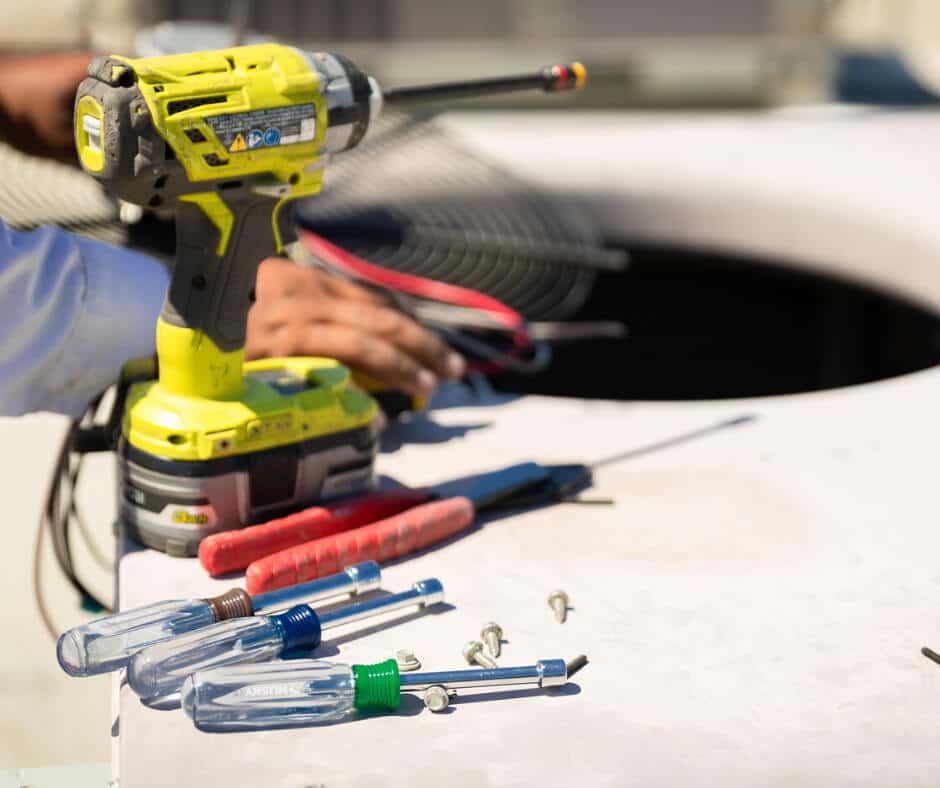
How Maintenance Impacts HVAC Efficiency
A neglected air conditioner loses 5-15 percent of its rated efficiency each year it goes without professional service. In Las Vegas, where desert dust, sand, and debris constantly assault your outdoor unit, efficiency loss accelerates faster than in milder climates.
Regular AC maintenance protects your investment in several measurable ways:
- Clean coils: Dirty condenser and evaporator coils force the compressor to work harder, increasing electricity consumption by 10-30 percent
- Proper refrigerant charge: A system that is even 10 percent low on refrigerant uses 20 percent more energy to deliver the same cooling
- Electrical connections: Loose or corroded connections increase resistance and waste energy as heat
- Capacitor health: A weak capacitor forces the compressor motor to draw more amperage, raising your bill and shortening component life
A $150-$200 annual maintenance visit that prevents a 15 percent efficiency loss on a system costing $800/year to operate saves you $120/year. The maintenance pays for itself and extends equipment life by 3-5 years.
Filter Changes: Small Cost, Measurable Savings
A clogged air filter is the single most common cause of reduced airflow and wasted energy. In Las Vegas, filters clog faster due to dust, pet dander, and construction debris carried by desert winds. Check your filter monthly and replace it every 30-60 days during peak cooling season.
A dirty filter forces your blower motor to work harder, increases static pressure in the ductwork, and can cause the evaporator coil to freeze. The energy penalty for a severely restricted filter ranges from 5-15 percent of your total cooling cost. At $80-$100 per year in filter costs, this is the simplest efficiency investment you can make.
Duct Sealing: The Hidden ROI
According to Energy Star, the average home loses 20-30 percent of conditioned air through leaky ductwork. In Las Vegas, where attic temperatures reach 140-160 degrees during summer, every cubic foot of cooled air that leaks into your attic is an expensive waste.
Professional duct sealing typically costs $1,500-$3,000 depending on system size and accessibility. For a household spending $1,200/year on cooling, eliminating 25 percent duct losses saves roughly $300/year. The investment pays for itself in 5-10 years and delivers comfort improvements you will notice immediately: more even room temperatures, less dust in the air, and reduced system run time.
Signs Your Ducts Are Leaking
- Rooms that are consistently hotter or cooler than the thermostat setting
- Visible dust streaks near supply registers
- Higher-than-expected utility bills despite a well-maintained system
- The system runs constantly without reaching the set temperature
- Utility bills that have climbed year over year without rate increases
When to Upgrade vs. Repair
Not every efficiency problem requires a new system. Here is a practical framework for deciding whether to repair or replace:
Repair Makes Sense When:
- The system is under 10 years old and rated SEER 14 or higher
- The repair cost is less than 50 percent of a new system's price
- The issue is a single component failure (capacitor, contactor, fan motor)
- The system has been regularly maintained
Replacement Makes Sense When:
- The system is 12+ years old with a SEER rating below 13
- Repair costs exceed $2,500 or are recurring annually
- The system uses R-22 refrigerant (phased out and increasingly expensive)
- Your energy bills have increased steadily despite maintenance
- The system cannot keep your home below 80 degrees on 110-degree days
If your system falls into the replacement category, consider a heat pump installation. Modern heat pumps provide both cooling and heating from a single system, often at SEER ratings of 18-22+, and they qualify for federal tax credits that reduce the upfront cost. For straightforward AC replacement, our AC installation team can help you select the right size and efficiency level for your home.
When your existing system needs attention but does not warrant full replacement, our AC repair technicians diagnose the problem and give you an honest assessment of whether the repair makes financial sense given your system's age and condition.
Environmental Impact of Efficiency Upgrades
Reducing your HVAC energy consumption has a direct environmental benefit. Upgrading from a SEER 8 system to a SEER 18 system on a 3-ton unit reduces annual electricity consumption by roughly 5,250 kWh. Based on Nevada's power generation mix, that reduction is equivalent to removing approximately 3,700 pounds of CO2 emissions per year, comparable to planting 40-50 trees annually.
Combined with duct sealing, proper maintenance, and smart thermostat use, a comprehensive efficiency approach can cut your HVAC-related carbon footprint by 40-60 percent while saving $1,000+ per year.
Need HVAC Service in Las Vegas?
The Cooling Company provides expert HVAC service throughout Las Vegas, Henderson, and North Las Vegas. Our licensed technicians deliver honest assessments, upfront pricing, and reliable results.
Call (702) 567-0707 or visit AC repair, maintenance, heating, or installation for details.