

Short answer: Proper HVAC design and installation starts with a Manual J load calculation, Manual D duct sizing, and Manual S equipment selection. Right-sizing your system avoids oversized equipment that short-cycles and wastes energy. In Las Vegas, where cooling loads are extreme, correct design can cut energy bills by 20-30% and extend equipment life. Call The Cooling Company at (702) 567-0707 for a professional design review.
Proper HVAC design and installation matches capacity to building loads and seals ducts. It starts with Manual J, Manual D, and Manual S. It needs measured static pressure, duct leakage testing, and commissioning. Correct work cuts energy, improves comfort, and extends equipment life while lowering long-term costs. (Source: ASHRAE Technical Resources)
Key Takeaways
- Right-size equipment using Manual J and Manual S.
- Target duct leakage below 10% for new installs.
- Confirm TESP is near the equipment spec, often around 0.5" wc.

Why does proper HVAC design matter?
Proper HVAC design controls energy cost, comfort, and equipment life in one move. A system sized to the actual load runs at steady cycles. That helps humidity control and lowers tenant complaints while cutting utility bills and peak demand charges.
Design affects maintenance and replacement costs over years. Oversized compressors and undersized ducts increase wear on fans and motors. Systems that run properly need less service and last longer, which reduces replacement and downtime costs.
Good design also supports code compliance and indoor air quality targets. Ventilation, filtration, and humidity control work together when design is correct. Owners see lower operating risk and better occupant satisfaction when the whole system is planned well.
What is commercial HVAC design and installation?
Commercial HVAC design includes load calculations, equipment selection, duct and piping layout, controls, and ventilation design. Installers handle field work like duct runs, refrigerant lines, wiring, and connections. The goal is to meet heating, cooling, and ventilation needs efficiently and safely.
Designers use standards like ASHRAE and ACCA methods to guide work. Install teams coordinate with other trades and confirm electrical capacity and rooftop curbs. Commissioning then proves the system performs as intended and meets contract targets. (Source: ASHRAE Technical Resources)
How does right sizing affect comfort and cost?
Right sizing matches system capacity to the building’s actual heat gains and losses. Correct capacity runs longer cycles and tightens temperature swings. That improves humidity control and gives more even comfort across rooms.
Cost balance matters over the equipment life. Oversized gear has higher purchase cost and wastes energy through short cycles. Undersized gear runs constantly and may fail at peak times. Proper sizing minimizes fuel and electricity bills while lowering lifetime costs.
How do load calculations and manuals guide sizing?
Load calculations and ACCA manuals remove guesswork from equipment selection and duct sizing. Manual J provides room loads and sensible and latent numbers. Manual D turns those airflow needs into duct sizes that meet fan and coil limits.
Manual S uses the load data to pick equipment that matches manufacturer curves at real operating conditions. Using these steps keeps part-load performance reasonable and avoids the common trap of oversizing by rule of thumb.
Design files also document assumptions and local design temperatures for permits and reviews. Ask for the calculation files, not only summary sheets. That lets you verify inputs like insulation levels and window properties.
What are Manual J, Manual D, and Manual S?
Manual J is the ACCA standard for heating and cooling load calculations. It uses building geometry, insulation, windows, and climate data to set required BTUs and latent loads. Manual D covers duct layout and sizing to deliver the needed airflow.
Manual S matches the calculated loads to specific equipment models and performance charts. Using all three ensures that ducts, fans. Coils work together and that selected equipment operates near efficient points for most hours.
How are load calculations performed?
Accurate load work starts with building plans, insulation R-values, window shading, and occupancy. Designers include internal gains like lights and equipment and account for infiltration. Software uses these inputs to produce hourly peak and part-load profiles.
For larger buildings, ASHRAE methods or energy models often replace simple residential tools. Verify that the calculation includes latent loads and ventilation. If assumptions are missing, the result can oversize or undersize equipment badly.
When is Manual S equipment selection needed?
Use Manual S after you have a correct load from Manual J and a defined duct layout from Manual D. Manual S picks specific models that meet capacity and airflow at expected coil entering conditions. It checks part-load and full-load curves. [Point 1] (Source: ASHRAE Technical Resources)
When several manufacturers offer different part-load performance, Manual S helps compare them fairly. It reduces surprises where a unit meets peak load but performs poorly at part-load conditions common in daily use.
What equipment and controls should you choose?
Choose equipment that matches the calculated load and offers good part-load efficiency. High SEER or AFUE numbers can help, but ducts and controls determine real savings. Also check warranty terms and local service access before picking a brand.
For guidance on selecting the right HVAC system for your building type, see our post on HVAC system types and how to choose the best one.
Controls that manage schedules, ventilation, and zone setpoints lower runtime and reduce wasted conditioning. Smart thermostats, remote sensors, and simple BMS interfaces give useful data for tuning and fault detection after install.
Plan for service access and spare parts. Rooftop curb size, hoist needs, and indoor clearances matter for future repairs. Good access reduces service time and cost across the equipment life.
How do SEER and AFUE ratings affect choices?
SEER measures seasonal cooling efficiency for air conditioners and heat pumps. Higher SEER usually reduces electricity use but has higher upfront cost. AFUE measures furnace efficiency and lowers fuel use with higher numbers.
Efficiency ratings help compare models, yet duct losses and control strategy change real savings. Evaluate whole-system performance, including expected run hours and local energy prices to estimate true operating cost.
What is the difference between rooftop and split units?
Rooftop units, or RTUs, are packaged systems placed on roofs. They suit low-rise commercial buildings and combine heating, cooling, and fans in one cabinet. Split systems separate condensing units from indoor air handlers and suit smaller spaces.
RTUs simplify rooftop service but require structural and curb checks. Split systems can be quieter inside and allow flexible indoor placement. The choice depends on roof access, building layout, and maintenance plans.
How do economizers reduce operating cost?
Economizers bring in cool outdoor air to reduce compressor use when conditions allow. They operate with dampers and sensors that compare outdoor and return air. Properly used, economizers cut electrical cooling while keeping ventilation rates high.
Controls must lock out economizers when humidity or temperatures are not favorable. Routine calibration and maintenance ensure economizers save energy instead of causing over-ventilation and excess heating or cooling loads. [Point 2] (Source: ASHRAE Technical Resources)
What sensors and thermostats matter for controls?
Accurate temperature, humidity, and CO2 sensors make control decisions reliable. Choose commercial-grade sensors and avoid placing them in direct sun or near supply registers. Remote sensors help average room conditions for better control.
Thermostats with setback schedules, network capabilities, and diagnostics reduce runtime and support fault detection. Calibrate sensors during commissioning and log data to spot slow declines in performance.
How to avoid installation pitfalls?
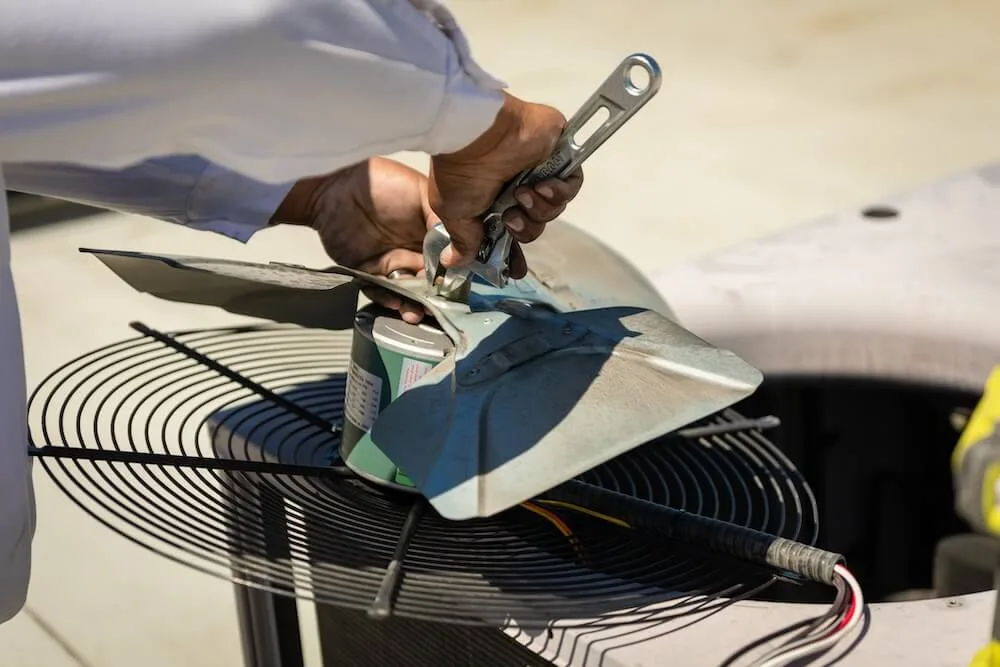
A clean installation follows the design files and manufacturer instructions. Field crews should measure static pressure, airflow, and refrigerant charge during commissioning. That proves systems meet the design and reveals defects early.
Coordinate with other trades to maintain clearances and service paths. Common pitfalls include undersized return ducts, missing drain pans, and skipped balancing. Require test reports and a final owner walkthrough before final payment.
Document all changes to the design in as-built files. That helps future service and avoids surprises when replacement parts are needed. Keep load files and control settings with the building records.
What installation defects raise energy bills?
Leaky ducts, missing insulation, or poor condensate drainage all raise energy use. Incorrect refrigerant charge and wrong fan balancing reduce efficiency and lower dehumidification. Small defects add up and erode expected savings.
A commissioning report should list defects and fixes. Require contractors to repair deficiencies and to retest before final signoff. That protects owners from paying for rework later.
How to spot poor duct sealing or routing?
Visible gaps at joints, missing mastic, and loose insulation are easy to see at a first walk. Flexible ducts that are kinked or compressed block airflow. Long, winding routes increase pressure drop and noise.
A duct blaster test gives a measured leakage number. Compare that to targets such as below 10% for typical new residential systems and tighter goals for high-performance buildings. If tests fail, repairs must be made.
What checks ensure correct airflow and CFM?
Measure airflow with a flow hood at diffusers or use pitot traverses in main ducts. Confirm each zone gets its design CFM and that CFM per ton targets are met. Record temperatures and compute temperature splits across coils. [Point 3] (Source: ASHRAE Technical Resources)
Measure total external static pressure and compare to the equipment limits. Verify fan curves and belt tension. Good airflow verification is central to comfort, humidity control, and equipment life.
What are realistic costs and timelines?
Project cost depends on building size, system complexity, and region. Small rooftop swaps may cost tens of thousands. Complex projects with DOAS, VRF, or custom controls can run into hundreds of thousands, depending on scope and finishes.
Timelines depend on design work, permitting, and equipment lead times. Small replacements often finish in days while full system replacements can take months. Include time for commissioning, inspections, and tenant coordination to avoid surprises.
Owners should ask for itemized bids and allowances for unknowns. Incentives and rebates often offset first costs. Compare lifecycle cost and payback, not only sticker price.
You may qualify for federal tax credits that reduce your upfront cost.
How much does commercial design and install cost?
Small office or retail replacements often land in the $25,000 to $75,000 range, including ducts and simple controls. Mid-size projects with new rooftop units or heat pumps may run $75,000 to $250,000 based on scope and access.
Large or complex systems with energy recovery and advanced controls often exceed $250,000. Regional labor rates, code upgrades, and structural work like roof curbs drive pricing higher.
How long does a commercial install typically take?
A direct unit swap may take one to three days when ducts are unchanged. When ducts, controls, or structural work are included, projects often take one to three weeks. Full system replacements can take six to twelve weeks or more.
Allow extra time for permit review and equipment lead times. Plan commissioning and inspections into the schedule to prevent last-minute rushes and schedule conflicts.
Ready to get expert help in Las Vegas or beyond?
If you manage property in Las Vegas, Henderson, or North Las Vegas, call The Cooling Company at (702) 567-0707 for tested HVAC design and installation. We provide Manual J, Manual D, and Manual S based designs, duct testing, and full commissioning to prove performance and protect warranties.
For local projects, we run duct leakage tests, measure TESP, and hand over a commissioning report with as-built files. Ask for itemized bids that include controls, commissioning, and clear warranty terms to avoid gaps at turnover.
If you are outside our service area, look for NATE-certified technicians via natex.org and request the same design and testing standards described here. For Las Vegas area service, call The Cooling Company at (702) 567-0707 to schedule a design review or on-site inspection today.
Related reading: what to explore next?
- New Build HVAC Cost: Save Thousands with Smart Design Choices
- HVAC Sizing and Load Calculations: Avoid Costly Oversizing Now
- HVAC Installation Checklist: Step-by-Step Guide for Las Vegas Homeowners
- HVAC Installation Cost Las Vegas: Price Ranges, Factors, And What To Expect
About The Cooling Company
- Phone: (702) 567-0707
References
- U.S. Department of Energy (Energy.gov) (accessed 2025-12-29)
- U.S. Environmental Protection Agency (EPA) (accessed 2025-12-29)
- ASHRAE (Standards and guidance) (accessed 2025-12-29)
- ENERGY STAR (Heating & cooling) (accessed 2025-12-29)
Related service: Want to lower your energy bills? Explore our AC maintenance and energy-efficient AC installation services for Las Vegas homeowners.
Need HVAC Service in Las Vegas?
The Cooling Company provides expert HVAC service throughout Las Vegas, Henderson, and North Las Vegas. Our licensed technicians deliver honest assessments, upfront pricing, and reliable results.
Call (702) 567-0707 or visit AC repair, maintenance, heating, or installation for details.