

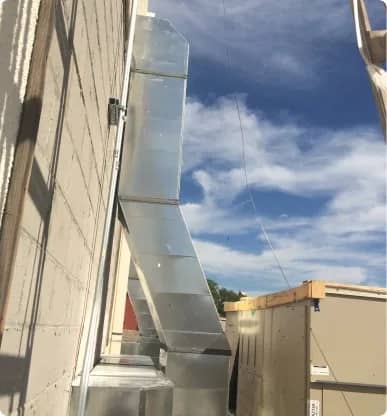
Short answer: Plan your HVAC system during the design phase — not after framing. Early planning lets you right-size equipment with Manual J calculations, optimize duct layout with Manual D, and integrate energy-efficient options like heat pumps or ERVs before walls close up.
Plan HVAC during design to cut future costs and improve comfort. Early work lets you size systems correctly and place ducts efficiently. It reduces change orders, short cycles, and poor ventilation. Require Manual J, D, and S plus duct tests and a signed commissioning report in contracts. (Source: ASHRAE Technical Resources)
Key Takeaways
- Start HVAC design early to avoid costly changes and delays.
- Require Manual J, D, and S and duct leakage testing in contracts.
- Commission systems with measured airflow, refrigerant verification, and a signed startup report.
Why plan HVAC before groundbreaking?
Early HVAC planning stops costly changes during framing and rough-in. When HVAC is sized and placed with the structure, builders avoid awkward duct runs and extra roof curbs. Decisions about attic insulation, mechanical chases, and equipment access flow from early HVAC layouts.
Owners get clearer bids when scope is defined early. Contractors can price accurately when Manual J, D, and S are done before equipment is selected. That clarity lowers the chance of change orders and speeds up the schedule during the rough-in stage.
Good sequencing also improves energy performance. When HVAC and envelope choices are coordinated, system sizes shrink. Smaller systems cost less and run more quietly. Designers should model envelope choices early to spot savings opportunities.
What happens if you delay HVAC design?
Delaying HVAC design usually raises cost and risk. Ducts can clash with beams and plumbing, forcing rework. Equipment may be crammed into unserviceable locations that add labor and compromise performance. Late design also hides true material and crew costs from bids.
Delayed work can cause oversized equipment too. When contractors guess loads, they often add capacity for safety. That leads to short cycles, poor humidity control, and higher bills. Require load calculations up front to avoid these pitfalls.
When should builders involve HVAC designers?
Involve an HVAC designer at schematic design or when framing plans start. That timing lets the designer place ducts and returns to avoid joists and floor trusses. Early input also sets attic and crawlspace strategies tied to duct routing.
For complex systems, bring in an HVAC engineer even earlier. Zoned systems, radiant floors, and integrated ERV/HRV need early coordination. For standard homes, a certified contractor doing Manuals J, D, and S at the plan stage often suffices. (Source: ASHRAE Technical Resources)
What are the key design standards and tests?
Use industry standards to protect performance. Manual J sets loads. Manual D sets ducting. Manual S helps pick equipment. These steps work together to match equipment to the house, not to rules of thumb. Require report files during bidding and in the contract.
Testing proves the work meets those designs. Duct leakage tests, blower door tests, measured airflow, static pressure, and refrigerant verification confirm performance. Insist on signed startup reports that list measured values and technician names for warranty and rebate needs.
Third-party testing is often required by rebate programs and by high-performance building programs. Independent reports reduce disputes and give buyers confidence. Include acceptance ranges and failure remedies in the contract language.
Learn about available federal tax credits for energy-efficient HVAC equipment.
What is Manual J, D, and S?
Manual J is the load-calculation method for homes. It tallies heat gains and losses for each room and gives CFM targets. Manual D takes those CFM numbers and creates a duct plan that meets static pressure limits and keeps noise low.
Manual S matches the selected equipment to the load and duct constraints. It checks blower curves, coil match, and part-load performance. Asking for these three reports in bids helps compare apples to apples across contractors.
What tests are required at startup?
Startup testing should include duct leakage tests, measured airflow at the coil, system static pressure, and refrigerant charge verification. For combustion systems add CO and draft checks. Record results on a signed commissioning form and keep copies with warranty documents.
Duct leakage tests done before drywall make repairs cheap. Airflow and refrigerant checks must be done at steady-state conditions. Require the contractor to list tools and methods used, and to meet manufacturer and program tolerances.
How do loads, ducts, and equipment selection work?
Accurate inputs make accurate systems. Start with true envelope specs, window U-values, and expected occupancy. Manual J uses those inputs to give room-by-room loads and recommended airflow targets. Update the calculation if field conditions change.
Duct design uses Manual D to meet those airflow targets while keeping static pressure low. Designers select trunk sizes, run lengths, and register locations to balance air distribution. Good duct design avoids long high-resistance runs and keeps velocity noise low.
Equipment selection follows Manual S to ensure the chosen unit can deliver the required capacity and airflow. Match coils, blowers, and controls. Choosing a high-SEER unit without proper airflow often wastes money and gives poor comfort.
Try our energy savings calculator to see how much you could save.
How are loads calculated?
Loads are calculated by modeling heat gain and loss through walls, roofs, windows, and doors. Solar orientation and shading are part of cooling loads. Internal gains like people and lights add to the cooling demand. Use local design-day climate data for accuracy.
Field validation matters. If insulation or window specs change on site, update the Manual J. Designers should also check assumptions like infiltration and duct location. Small changes in envelope R-values can change equipment sizing by a significant percentage. [Point 1] (Source: ASHRAE Technical Resources)
How does Manual D shape duct layout?
Manual D starts with blower performance and required CFM per room. Designers route trunks to minimize bends and long runs. Placing returns centrally and providing adequate grille area reduces pressure drop and improves balance.
Material choices and insulation levels are part of the design. Specify R-values for ducts in unconditioned spaces, and require sealing methods like mastic or aerosol sealing. These choices affect energy loss and system noise.
Which equipment and control choices matter?
Equipment choices shape comfort and cost for years. Decide on heat pump, furnace, or hybrid systems with input from climate and fuel price trends. Consider variable-speed blowers, multi-stage compressors, and smart controls to improve humidity and room balance.
Check our HVAC pricing guide for current cost estimates.
Efficiency ratings matter, but only when installation is correct. High SEER or AFUE needs proper airflow, refrigerant charge, and matching components to yield real savings. Factor in warranty terms and local incentives when choosing models.
Controls and zoning can raise comfort in homes with uneven loads. Thermostats, dampers, and advanced controls help manage different rooms and schedules. Require installers to program controls and train owners at handover.
Heat pump vs furnace: which suits your climate?
Heat pumps often win in mild and mixed climates because they move heat instead of burning fuel. They provide both heating and cooling with one outdoor unit. Cold-climate heat pumps can work well if backup heat or dual-fuel is planned for very low temps.
Furnaces make sense where electricity costs are high or where extreme cold makes heat pumps less efficient. Compare local utility rates, expected runtimes, and incentives. Ask contractors for a lifecycle cost estimate showing energy costs over 10 to 15 years.
Are variable-speed compressors worth it?
Variable-speed compressors modulate capacity to match load more closely than single-speed units. They run longer at low speed, which improves humidity control and reduces start-stop wear. Owners often notice quieter operation and steadier temperatures.
These units cost more up front but can save energy, especially in tight, well-insulated homes. Check expected runtime maps from the contractor to estimate annual savings. If humidity or fine comfort control is a priority, variable speed is a strong option.
Which efficiency ratings matter (SEER, HSPF, AFUE)?
SEER and SEER2 rate cooling efficiency across a season. HSPF and HSPF2 rate heat pump heating efficiency. AFUE shows furnace combustion efficiency. Higher numbers mean lower energy use if systems are installed right.
Rebates and code rules often set minimum rating levels. Ask for the rated numbers and for proof the installed model matches the bid. Remember that poor installation can erase the benefits of higher-rated equipment.
How to verify installation quality and commissioning?
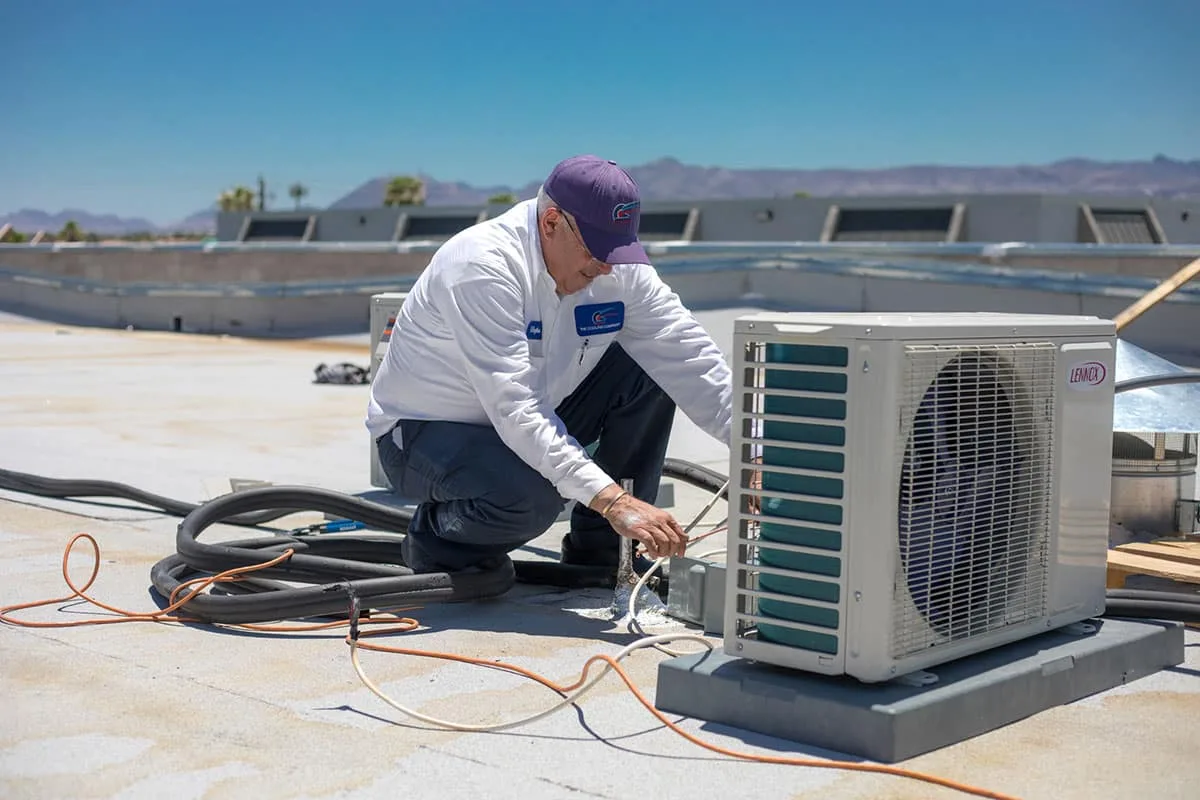
Good installation proves the design works in the real house. Commissioning includes verifying duct tightness, measured airflow, static pressure, and refrigerant charge. A signed startup form with numbers protects the owner and supports rebate claims. [Point 2] (Source: ASHRAE Technical Resources)
Insist on tests done at steady-state conditions and recorded with technician names and timestamps. If tests fail, require repairs and retesting before final payment. Include a payment holdback clause tied to successful commissioning in the contract.
Third-party verification may be required by local programs. Independent testing reduces disputes and can help sellers show documented performance to buyers. Keep all startup reports and warranty registrations in the project folder.
What is duct leakage testing and why test?
Duct leakage testing measures how much conditioned air escapes from the duct system. Unsealed ducts in attics or crawlspaces can lose a lot of air, driving up bills and reducing comfort. The test finds leaks and gives a measurable target for sealing.
Results are often reported as CFM25 or as a percentage of system flow. Programs commonly set thresholds, for example under 4 CFM per 100 square feet of conditioned area. Testing before drywall makes repairs faster and cheaper.
How to confirm correct refrigerant charge?
Technicians should verify refrigerant charge using manufacturer methods like superheat or subcooling. Some modern systems need electronic charging tied to outdoor temperature. Proper charge affects capacity, efficiency, and compressor life.
Require the startup report to show measured superheat or subcooling and the method used. If the line set is longer than factory assumptions, note the charge adjustment. Never accept charge by sight glass alone as proof of correctness.
When should airflow and static pressure be measured?
Measure airflow and static pressure during initial startup after duct sealing is complete and filters are in place. Airflow should match Manual J CFM targets and coil CFM per ton. Static pressure helps find restrictive ducts or improper blower settings.
Record branch flows along with total supply and return. If flows are low, troubleshoot filters, blower speeds, or blockages. Repeat measurements after major changes, like adding insulation around ducts or changing grilles.
How much will HVAC cost and what's the schedule?
Costs vary by region, house size, and equipment. For a 2,000 ft² home expect a ducted heat pump system to cost roughly $8,000 to $14,000 installed, with high-efficiency or cold-climate units adding $2,000 to $6,000. Ductless systems may cost more or less depending on zones.
Schedule needs coordination. Rough-in ductwork can take several days to a week. Final hookup and startup typically take one to three days. Allow extra time for testing, repairs, and any third-party inspections required by rebates or energy programs.
Budget for duct sealing and commissioning as part of the project, not as add-ons. These items protect efficiency claims and are cheaper when done during construction. Include them in bids and compare line items across contractors.
What are typical cost ranges by system type?
Split-system heat pumps and central AC with a gas furnace for a 2,000 ft² house usually fall in the $8k to $14k range. High-end cold-climate heat pumps or multi-zone mini-splits can push to $12k to $20k depending on zones and controls. [Point 3] (Source: ASHRAE Technical Resources)
Add zoning, advanced controls, or high-efficiency filtration and costs grow. Always get line-item bids that separate equipment, ductwork, sealing, and commissioning. That makes it easier to compare quotes and spot missing scope.
How long does installation typically take?
Duct rough-in for a typical home takes a few days up to a week. Equipment set, electrical hookup, and refrigerant lines usually take one to three days. Commissioning and paperwork can add several hours or a full day, depending on tests needed.
Plan HVAC milestones with framing, insulation, and electrician schedules. Avoid last-minute rushes, which can skip commissioning steps. Schedule duct leakage and blower door tests when ducts are exposed and repairs are easy.
Which incentives or rebates exist?
Utilities often offer rebates for high-efficiency heat pumps, ENERGY STAR systems, and duct sealing. State and federal incentives also change over time. Contractors should know local offers and help with paperwork to get the owner the best net price.
Some rebates require pre-approval or certified installers. Keep Manual J, duct test results, and startup reports handy for rebate filings. Early planning can make a project eligible for larger incentives.
Ready to hire or need help?
Gather plans, a target budget, and a list of must-have tests before you ask for bids. Request sample Manual J, D. S reports from installers and verify they do duct leakage testing and signed startup reports. Use those deliverables to compare quotes fairly.
For Las Vegas area readers, call The Cooling Company at (702) 567-0707 to schedule an on-site consultation. The Cooling Company runs Manual J calculations, designs ducts, seals systems, and provides documented startup reports. Service areas include Las Vegas, Henderson, and North Las Vegas.
If you are outside our service area, look for installers with NATE certification or local utility program approval. Visit natex.org to find certified technicians and use this guide to set contract expectations. If you build locally, The Cooling Company can provide verified installation and warranty support.
How to get a vetted installer quote?
Ask for completed Manual J, D, and S reports and references from recent new builds. Confirm the installer performs duct leakage testing and provides signed startup reports. Look for technicians with NATE or equivalent certification to add confidence.
Check that the bid lists duct R-values, sealing methods, and commissioning steps. Ask for timelines that fit your construction schedule. Require a holdback clause tied to passing tests and documented startup before final payment.
Where to find sample contract language?
Use clear contract clauses that require Manual J, D, and S deliverables, duct leakage limits, and startup verification. Specify holdbacks until acceptance tests pass. Have a real estate attorney or builder review the HVAC section for enforceability.
Model language is available from ENERGY STAR and ACCA for common clauses. Use program templates to ensure bids meet rebate rules. Put acceptance criteria in numbers, not vague promises, so everyone agrees on pass/fail conditions.
Final checklist before you sign
Require Manual J, D, and S reports with the bid. Include duct leakage acceptance limits and blower door targets. Demand startup reports showing airflow, static pressure, and refrigerant charge with technician signatures. Keep model numbers and warranty documents in the final handover pack.
Plan ventilation and IAQ with ERV or HRV choices based on climate. Budget for duct sealing and commissioning as line items. Require installer training for thermostats and control systems so owners can get the promised comfort and savings.
If you build in Las Vegas, Henderson, or North Las Vegas, call The Cooling Company at (702) 567-0707 for a vetted quote and documented commissioning. If you are elsewhere, use natex.org to find certified installers and bring this checklist to your contractor.
Related reading: what to explore next?
- Smart Thermostat Energy Savings: How to Cut Your Bills Fast Now
- HVAC Installation Cost in Las Vegas: What to Expect
- HVAC Installation Checklist for Las Vegas Homeowners
- Energy-Efficient Heating and Cooling Guide
About The Cooling Company
- Phone: (702) 567-0707
References
- U.S. Department of Energy (Energy.gov) (accessed 2025-12-27)
- U.S. Environmental Protection Agency (EPA) (accessed 2025-12-27)
- ASHRAE (Standards and guidance) (accessed 2025-12-27)
- ENERGY STAR (Heating & cooling) (accessed 2025-12-27)
Related service: Need AC service in Las Vegas? Explore our AC repair and AC maintenance services for Las Vegas homeowners.
Need HVAC Service in Las Vegas?
The Cooling Company provides expert HVAC service throughout Las Vegas, Henderson, and North Las Vegas. Our licensed technicians deliver honest assessments, upfront pricing, and reliable results.
Call (702) 567-0707 or visit AC repair, maintenance, heating, or installation for details.