

The Las Vegas HVAC Calendar: Month-by-Month Guide to Keeping Your Home Comfortable
Short answer: Las Vegas HVAC maintenance follows a distinct desert rhythm. Schedule your AC tune-up in March or April (best pricing and availability). Change filters every 30 days from May through September, every 60-90 days the rest of the year. Schedule your heating tune-up in October. The worst time to need a new system is June through August — if your unit is over 12 years old, replace it in the spring shoulder season (February-April) when contractors have availability and manufacturers run promotions. Bookmark this calendar and check it the first of each month.
Ready to schedule seasonal maintenance? Call (702) 567-0707 or book online.
Year-at-a-Glance Calendar
| Month | Avg High / Low | System Mode | Primary Task | Filter Change? |
|---|---|---|---|---|
| January | 58F / 37F | Heating | Monitor heating performance | If due (every 60-90 days) |
| February | 63F / 41F | Heating | Schedule spring AC tune-up (best prices) | If due |
| March | 70F / 47F | Transition | AC spring tune-up + filter change | Yes |
| April | 78F / 54F | Transition/Cooling | Thermostat programming + final pre-summer prep | Yes |
| May | 89F / 63F | Cooling | Last chance for replacement before summer rush | Yes (start monthly cycle) |
| June | 100F / 73F | Cooling (heavy) | Monitor performance, emergency prep | Yes |
| July | 106F / 81F | Cooling (extreme) | Filter change, thermostat strategies | Yes |
| August | 104F / 79F | Cooling (extreme + monsoon) | Monitor humidity handling, check condensate drain | Yes |
| September | 96F / 70F | Cooling (winding down) | Post-summer system assessment | Yes (last monthly change) |
| October | 82F / 57F | Transition | Heating tune-up + filter change | Yes |
| November | 67F / 45F | Heating | Verify heating, holiday IAQ prep | If due |
| December | 57F / 37F | Heating | Holiday gathering IAQ, year-end system review | If due |
January: Heating Season, Deep Winter
Weather: Highs around 58 degrees F, lows dropping into the mid-30s. Overnight freezes are possible, though rare in the valley floor — more common in the western foothills near Red Rock and Blue Diamond. Wind chill can make it feel like the mid-20s on cold mornings. Heating demand is moderate — nothing like a Midwest winter, but Las Vegas homes are built for cooling, not heating, and most have limited insulation in walls.
What your HVAC system is doing: Running in heating mode, typically 6-12 hours per day depending on your thermostat setting and home insulation. Gas furnaces cycle on and off throughout the night. Heat pumps run more continuously but at lower intensity. If you have a heat pump, January is the month when it works hardest because outdoor temperatures occasionally dip below the heat pump's efficient operating range (below about 35 degrees F, heat pumps lose efficiency and may switch to auxiliary/emergency heat strips).
Maintenance tasks:
- Check your filter. If you changed it in October or November, it may be due. Heating-season filters last longer than cooling-season filters because systems run fewer hours and produce less moisture.
- Monitor your heating bill. Compare it to January of last year. A significant increase (20%+ with similar weather) can signal declining system efficiency.
- Check all vents in occupied rooms — make sure none are blocked by furniture, rugs, or curtains.
Pro tip: If your heat pump switches to auxiliary/emergency heat (you may see an "AUX" or "EM HEAT" indicator on your thermostat) for more than an hour during moderate cold (above 35 degrees F), something is wrong — low refrigerant, a failing reversing valve, or a defrost issue. Schedule a diagnostic before the problem gets worse. See our heating services page for more information.
Watch for: Carbon monoxide detectors should be tested monthly during heating season. Gas furnaces can develop cracked heat exchangers, which leak CO. If your CO detector alarms, leave the house immediately, call 911, then call your HVAC company. Do not re-enter the home until cleared by the fire department.
February: Pre-Season Planning
Weather: Highs climbing to the low 60s, lows in the low 40s. The first warm days appear — occasionally hitting the mid-70s by late February. Desert wildflowers begin blooming in the surrounding areas, and wind events pick up, carrying dust and pollen into the valley.
What your HVAC system is doing: Still in heating mode most days, but some afternoons are warm enough that the system sits idle. This is the most relaxed month for your HVAC system all year.
Maintenance tasks:
- Schedule your spring AC tune-up NOW. This is the single most important item on this entire calendar. February and early March offer the best scheduling availability and the best pricing. Every HVAC company in Las Vegas has wide-open schedules in February. By April, the good time slots fill up. By May, you are waiting 1-2 weeks. By June, you are begging.
- If your system is over 12 years old, this is the time to get a replacement estimate. Not because you need to replace it tomorrow — because if you do need to replace it, doing so in February or March saves you $500-1,500 compared to an emergency replacement in July, and you get your choice of equipment and installation dates instead of whatever is in stock during a heat wave.
Pro tip: February is when manufacturers and HVAC companies launch spring promotions — rebates, financing deals, and package pricing on equipment plus installation. These deals disappear by June when demand outstrips supply. Check our current promotions page for available offers.
Watch for: Unusual smells when the heating system kicks on (burning dust is normal for the first cycle of the season, but persistent burning smells are not). Also watch for uneven heating — rooms that stay cold while others are warm — which may indicate duct leaks or balance issues.
March: Spring Tune-Up Season
Weather: Highs around 70 degrees F, lows in the upper 40s. Gorgeous weather. You will open windows some days. Winds intensify — March is historically Las Vegas's windiest month, with gusts of 40-60+ mph possible. These wind events carry enormous amounts of dust, sand, and debris that coat outdoor AC units and clog filters.
What your HVAC system is doing: Transitioning. Some days need heating in the morning and cooling in the afternoon. Many homeowners switch to "auto" mode where the system alternates between heating and cooling based on temperature.
Maintenance tasks:
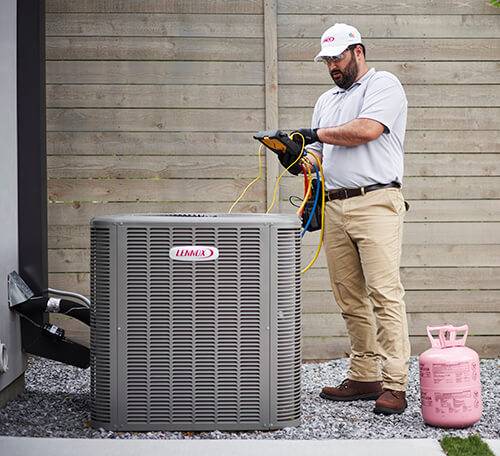
- Get your spring AC tune-up. This is the ideal month. A technician will clean the outdoor condenser coils (critical after winter dust accumulation), check refrigerant charge, test capacitors and electrical connections, verify thermostat operation, clear the condensate drain line, inspect the evaporator coil, and test cooling performance. Typical cost: $89-149.
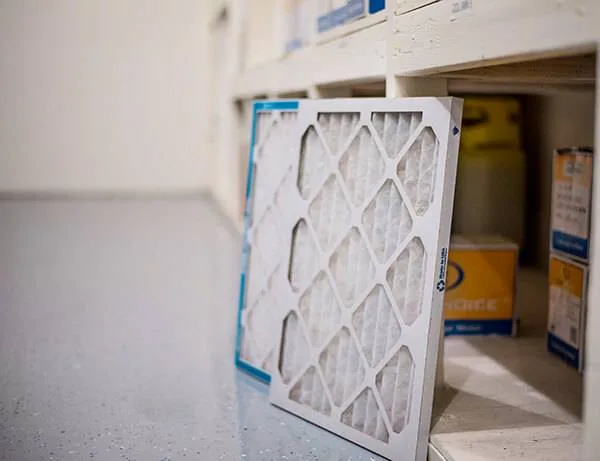
- Change the air filter. After a winter of heating and March windstorms, the filter is loaded. Start fresh.
- Clear vegetation and debris from around the outdoor unit. Maintain 24 inches of clearance on all sides. Trim back any plants that grew over the winter.
- Test the AC. Run it for 30 minutes on a warm afternoon. Confirm it cools, the air coming from vents is cold, and there are no strange noises or smells. If anything seems off, mention it during your tune-up appointment.
Pro tip: Ask your technician to check your capacitor's microfarad rating against its specification. Capacitors in Las Vegas degrade from heat stress. A capacitor that has lost 10-15% of its rated capacitance is heading toward failure — replacing it now for $150-250 during a scheduled visit costs a fraction of a $300-450 emergency call at midnight in July. Learn more about preventive AC maintenance.
Watch for: After major windstorms, check the outdoor unit for accumulated sand, plastic bags, tumbleweeds, or other debris that can block airflow. A condenser coil packed with desert sand reduces efficiency by 15-25% and accelerates compressor wear.
April: Final Preparations
Weather: Highs pushing toward 80 degrees F, lows in the mid-50s. The first 90-degree days typically arrive in late April. Heating is essentially done for the year. Cooling demand increases steadily throughout the month.
What your HVAC system is doing: Running in cooling mode most afternoons. Runtime is still moderate — 4-8 hours per day depending on home orientation and insulation. The system is easing into its workload.
Maintenance tasks:
- Change the air filter. If you changed it in March, check it in late April. Spring pollen and dust from wind events may have loaded it faster than expected.
- Program your thermostat for summer. Set your daytime temperature (78 degrees F is the DOE recommendation for energy efficiency while occupied), sleeping temperature (76-78), and away temperature (82-85). If you have a programmable or smart thermostat, set schedules now instead of manually adjusting throughout the summer.
- Check your attic insulation. If you can see the ceiling joists above the insulation, you do not have enough. Las Vegas attics should have R-38 minimum (about 12-14 inches of blown fiberglass or cellulose). Upgrading attic insulation from R-19 to R-38 typically reduces cooling costs by 10-20% and costs $1,200-2,500 for an average home.
- Seal air leaks. Check weatherstripping around exterior doors, caulking around windows, and duct boot seals where duct registers meet the ceiling. Air leaks account for 15-25% of cooling loss in many Las Vegas homes.
Pro tip: If you have not had your tune-up yet, April is your last comfortable window. May appointments are harder to get, and if the technician finds something that needs repair, you want it fixed before the first 100-degree day, not during it.
Watch for: Your first big cooling bill of the season will arrive based on late April usage. Use it as your baseline. If the bill seems high relative to the mild weather, your system may have an efficiency problem worth investigating now.
May: The Shoulder Season (Your Last Window)
Weather: Highs approaching 90 degrees F, with occasional jumps above 95. Lows in the low 60s. The heat is building. By late May, triple digits arrive and do not leave until October.
What your HVAC system is doing: Running 8-14 hours per day. Cooling demand is real but not yet extreme. This is the month that separates maintained systems from neglected ones — a well-maintained unit handles May effortlessly, while a struggling system starts showing symptoms.
Maintenance tasks:
- Change the air filter. Begin the monthly summer cycle. From May through September, change your filter every 30 days. No exceptions. A clogged filter during a 110-degree day starves the system of airflow, causes the evaporator coil to freeze, and can lead to compressor failure. A $15 filter change prevents a $3,000 compressor repair.
- If your system is struggling, this is your last chance for a non-emergency replacement. HVAC companies can still schedule installations within a week in May. By mid-June, waits stretch to 2-3 weeks. By July, popular equipment models go on backorder. Replacing a failing system in May means you choose the equipment, choose the date, and get the best pricing. Replacing in July means you take whatever is available. Visit our AC installation page for options.
Pro tip: May is when NV Energy rebates for high-efficiency equipment are fully funded. Later in the year, rebate funds can be exhausted. If you are replacing a system, applying for rebates in May gives you the best chance of receiving the full rebate amount ($200-750 depending on equipment). Check our energy savings calculator to estimate potential savings.
Watch for: The system taking noticeably longer to reach your set temperature compared to the same outdoor temperature last spring. If it took 15 minutes to cool the house from 80 to 76 last May, and now it takes 30 minutes, something is declining — refrigerant charge, coil cleanliness, duct integrity, or compressor health.
June: Summer Begins
Weather: Highs consistently above 100 degrees F, often reaching 108-112. Lows in the low-to-mid 70s. The sun rises before 5:30 AM and sets after 8 PM, delivering 14+ hours of solar radiation daily. Outdoor surfaces (driveways, walls, roofs) absorb and re-radiate heat well into the evening.
What your HVAC system is doing: Running 14-18 hours per day. The system rarely reaches its set temperature during peak afternoon hours on the hottest days — holding the house at 78-80 degrees when it is 112 outside is normal and expected. If your system cannot hold below 82-83 on a 110-degree day, something needs attention.
Maintenance tasks:
- Change the air filter. First of June, no matter when you last changed it.
- Prepare an emergency plan. Know which HVAC company you will call if the system fails. Have their number saved in your phone. Know where the nearest 24-hour cooling center is (Clark County operates several during extreme heat events). Have a box fan and bottled water accessible.
- Rinse the outdoor condenser coils. Use a garden hose with gentle pressure (not a pressure washer — high pressure bends the delicate aluminum fins). Spray from inside out to push dirt off the coils. This takes 10 minutes and can improve efficiency by 5-10%.
Pro tip: Set your thermostat 2-3 degrees higher than your ideal temperature and use ceiling fans to make up the difference. Moving air feels about 4 degrees cooler on skin. Running the AC at 78 with ceiling fans feels like 74-75 but uses 8-12% less electricity than running the AC at 74 without fans. Over a summer, that saves $100-200 on a typical Las Vegas energy bill.
Watch for: Ice on the refrigerant lines at the outdoor unit. If you see frost or ice on the larger copper line (the suction line), the system is low on refrigerant or has an airflow restriction. Turn the system off for 2-3 hours to let the ice melt, then call for AC repair — running a system with a frozen coil can damage the compressor.
July: Peak Survival Month
Weather: The hottest month. Highs average 106 degrees F but routinely hit 112-118. Record temperatures above 120 degrees have occurred in July. Overnight lows average 81 degrees F — the "cooling off" period barely exists. Late July brings the leading edge of monsoon season with increasing humidity, dust storms (haboobs), and occasional thunderstorms.
What your HVAC system is doing: Running nearly continuously. On the worst days, the system may run 20-22 hours out of 24. This is the maximum stress period. Components that have been gradually weakening all year — capacitors, contactors, fan motors — fail under this sustained load. July has more emergency AC calls than any other month in Las Vegas by a factor of 3-4x compared to the annual average.
Maintenance tasks:
- Change the air filter. July 1. Non-negotiable. If you live near construction (most of Las Vegas), consider checking at 2 weeks — heavy construction dust can clog a filter in 14-21 days.
- Check the condensate drain. The condensate drain line carries moisture removed from indoor air. In the dry months, it does not produce much flow and can develop algae or mineral buildup. When monsoon humidity arrives, the drain suddenly needs to handle 2-5 gallons per day. If it is partially blocked, water backs up and overflows the drain pan — potentially causing ceiling or floor water damage. Pour a cup of white vinegar down the drain access point monthly to keep it clear.
- Inspect the outdoor unit at least weekly. Look for debris accumulation, listen for unusual sounds, and verify the fan is spinning freely.
Pro tip: Close blinds on east-facing windows in the morning and west-facing windows in the afternoon. Solar heat gain through windows accounts for 25-35% of your cooling load. A set of quality blackout curtains on west-facing windows can reduce your cooling costs by $20-40 per month during peak summer. Learn more about indoor air quality and comfort strategies.
Watch for: The outdoor unit's fan stopping while the compressor continues to run. This means the fan motor or fan capacitor has failed. Turn the system off immediately — running a compressor without condenser airflow will overheat it and cause compressor failure within 15-30 minutes. Call for service. This is a genuine emergency during July heat.
August: Monsoon Season
Weather: Highs averaging 104 degrees F, still brutal. The defining feature of August in Las Vegas is monsoon moisture. Humidity that normally sits at 10-20% can spike to 40-60% during monsoon events. Dramatic dust storms roll through the valley, followed by intense but brief thunderstorms. Flash flooding is possible in low-lying areas and washes.
What your HVAC system is doing: Working even harder than in July, counterintuitively. The combination of high temperatures and high humidity creates a dramatically higher cooling load. Your AC system removes both heat (sensible cooling) and moisture (latent cooling). When humidity spikes, the system has to do double duty. A system that comfortably maintained 76 degrees in dry June heat may struggle to hold 78 in humid August heat at the same outdoor temperature.
Maintenance tasks:
- Change the air filter. August 1. Monsoon dust storms deposit enormous amounts of fine particulate. If a major haboob rolls through, check the filter the next day — a single severe dust storm can clog a filter overnight.
- Check the condensate drain again. August is peak condensate production. The drain line should be flowing steadily. If you see water dripping from the air handler, pooling near the indoor unit, or water stains on the ceiling near vents, the drain is blocked. This needs same-day attention to prevent water damage.
- After any major dust storm, inspect and rinse the outdoor unit. Haboobs deposit a thick layer of fine dust on condenser coils that can reduce airflow by 20-40% in a single event. A gentle rinse with the garden hose restores performance.
Pro tip: If your home feels clammy or sticky even with the AC running during monsoon events, your system may be oversized. An oversized system cools quickly but shuts off before removing adequate moisture, leaving the air cool but humid. This is a sizing issue that a maintenance visit can identify. In the short term, running the fan in "auto" mode (not "on") helps — the fan stops between cycles, allowing collected moisture to drain off the coil instead of being re-evaporated back into the air.
Watch for: Musty or moldy smells from the vents during and after monsoon events. The combination of high humidity and cool evaporator coils creates ideal conditions for mold and mildew growth inside the air handler. If you smell mustiness, schedule a coil cleaning and have the drain pan inspected. Left unchecked, mold in the air handler becomes an indoor air quality problem that affects everyone in the household.
September: The Light at the End of the Tunnel
Weather: Highs averaging 96 degrees F, dropping into the upper 80s by month's end. Lows back into the upper 60s. Monsoon moisture gradually recedes. The first genuinely pleasant evenings appear in late September — the kind where you open the back door and realize the air outside does not feel like a hair dryer anymore.
What your HVAC system is doing: Still cooling, but the load is dropping noticeably. Runtime decreases from 16-20 hours per day to 8-14. The system is recovering from its four-month marathon. Components that survived the summer may be weakened but functional — they will hold through the cool months but may not survive another summer.
Maintenance tasks:
- Change the air filter. Last monthly change until next May. After September, you can return to a 60-90 day change interval through the winter.
- Do a post-summer assessment. Walk around the house and note anything that was not right during the summer: rooms that never got cool enough, strange sounds from the system, higher-than-expected bills, any water damage from condensate overflow. Compile these notes for your fall tune-up appointment.
- Schedule your heating tune-up for October. Just like the spring AC tune-up, booking a month ahead gets you the best availability.
Pro tip: September is an excellent time to get estimates for system replacement if your unit struggled through the summer. Demand for installations drops sharply after Labor Day, and companies are motivated to fill their schedules. You will often find better pricing and faster installation dates in September-October than at any other time of year.
Watch for: The system cycling on and off rapidly (short cycling) as outdoor temperatures drop. During summer, the system runs long cycles because the cooling load is constant. In September, shorter intervals between load and setpoint can cause rapid cycling in some systems. If you hear the outdoor unit turning on and off every 5-8 minutes, raise the thermostat 1-2 degrees to give it longer run times, or schedule a diagnostic to check for a failing thermostatic expansion valve or oversized system.
October: Transition Month
Weather: Highs around 82 degrees F, lows in the upper 50s. Daytime cooling is still needed most days, but evenings are pleasant. Some late October days drop into the 70s — the kind of weather that makes you remember why people choose to live in Las Vegas.
What your HVAC system is doing: Transitioning from cooling to heating. Some days the system does not run at all — outdoor temperatures match your thermostat setting. This is the recovery period. The system is essentially resting.
Maintenance tasks:
- Get your heating tune-up. A technician inspects the furnace or heat pump for winter readiness: checking the heat exchanger for cracks (gas furnaces), testing the igniter and flame sensor, verifying the reversing valve (heat pumps), checking gas connections for leaks, and testing safety controls. Cost: $89-149. This visit is especially important for gas furnaces, where a cracked heat exchanger can leak carbon monoxide. See our heating maintenance page for details.
- Change the air filter. Fresh filter for the heating season.
- Test your heating system. Switch the thermostat to heat mode and set it a few degrees above room temperature. Verify warm air comes from the vents within 5 minutes. If you have a gas furnace, check that the burners ignite smoothly (no delayed ignition bangs or pops).
- Check and replace CO detector batteries. Carbon monoxide detectors are critical during heating season, especially with gas furnaces. Replace batteries annually in October — make it part of your routine.
Pro tip: October is the best month to negotiate HVAC system replacement pricing. Demand is at its annual low, inventory is stocked from summer production, and companies are looking to keep crews busy. If your system is aging and you are planning a replacement, get quotes now — you will likely pay $500-1,500 less than the same job in June.
Watch for: A burning smell when the heating system first kicks on. This is usually normal — dust that settled on the heat exchanger or burners during the summer months is burning off. It should dissipate within 30-60 minutes. If the smell persists beyond a few hours, or smells like melting plastic or electrical burning rather than dusty burning, shut the system off and call for service.
November: Heating Season Begins
Weather: Highs around 67 degrees F, lows in the mid-40s. Clear, dry, and cold at night. Wind events become less frequent. This is the start of Las Vegas's most comfortable outdoor weather, but homes cool quickly after sunset and heating runs overnight.
What your HVAC system is doing: Running in heating mode, mostly in the early morning and evening hours. Daytime heating demand is low — solar gain through windows often keeps homes warm enough during the day. Gas furnaces cycle for shorter periods than summer AC cycles. Heat pumps run more continuously at low output.
Maintenance tasks:
- Check the filter. If you changed it in October, it is probably fine through November. Check it to be sure.
- Verify the humidifier (if applicable). Las Vegas winter air is very dry — indoor humidity can drop below 15%. A whole-home humidifier connected to your HVAC system should be activated in November. If you do not have a whole-home humidifier, portable units in bedrooms help prevent nosebleeds, cracked skin, and static electricity. Target 30-40% indoor humidity.
- Prepare for holiday gatherings. Thanksgiving brings a house full of people, cooking heat, and moisture. The system handles this extra load, but air quality can suffer. Run the kitchen exhaust fan during cooking, and consider running the HVAC fan in "on" mode during large gatherings to improve air circulation.
Pro tip: Set your thermostat to 68 degrees F during occupied hours and 62-65 degrees during sleeping hours. Every degree above 68 increases heating costs by approximately 3%. In Las Vegas, where heating bills are a fraction of cooling bills, this optimization matters less financially — but it adds up over three months of heating.
Watch for: Cold air blowing from supply vents when the system first cycles on, followed by warm air. A short burst of cool air (30-60 seconds) is normal as the system pressurizes the ductwork. If cold air blows for several minutes before warming up, the heat exchanger or heat pump may be slow to respond, indicating a performance issue worth investigating. Check our heating services for diagnostic options.
December: Deep Winter and Year-End Review
Weather: Highs around 57 degrees F, lows in the upper 30s. Occasional overnight freezes. Rare but possible: a dusting of snow in the valley, though significant snowfall is extremely uncommon below 3,000 feet. Dry, cold air with low humidity. Short days (sunset before 4:45 PM) mean homes lose solar heat early.
What your HVAC system is doing: Running in heating mode 8-14 hours per day, primarily overnight and early morning. Gas furnaces are in their primary operating season. Heat pumps may occasionally switch to auxiliary heat during the coldest nights (below 35 degrees F).
Maintenance tasks:
- Check the filter. If it has been 60-90 days since your October change, swap it out.
- Year-end system review. How old is your system? How did it perform this past summer? Were there any repair calls? Any rooms that never got comfortable? Use this information to decide whether to budget for replacement in the spring or continue with maintenance. The best time to make this decision is December — not June, when the system fails and forces a panicked, overpriced emergency replacement.
- Holiday indoor air quality. December brings increased cooking, fireplace use, candle burning, holiday spray fragrances, and more people indoors with doors closed. All of these affect indoor air quality. Run the HVAC fan for air circulation, open a window briefly each day for fresh air exchange if weather permits, and avoid burning heavily scented candles near return air vents.
Pro tip: December and January are when HVAC manufacturers announce new model-year equipment. Dealers often discount outgoing models to make room for new inventory. If you are considering a replacement, ask about prior-year models — they may be identical in performance to the current year but available at 10-15% lower cost.
Watch for: Your heating bill. December is typically the highest heating month in Las Vegas. Compare it to the previous December. If it is significantly higher with similar weather, the system is losing efficiency. A system that costs $30-50 more per month to heat than it should might justify replacement more quickly than you think — $40/month in extra heating costs plus $100-150/month in extra summer cooling costs adds up to $1,000-1,500 per year in wasted energy.
The One Thing That Matters Most
If this entire calendar feels like too much to track, here is the single action that provides the greatest return on investment: schedule a professional AC tune-up every March and a heating tune-up every October. Two visits per year, about $200-300 total, catches 90% of potential failures before they become emergencies, extends your system's life by 3-5 years, and keeps your energy bills 10-20% lower than they would be with a neglected system.
Call The Cooling Company at (702) 567-0707 or book online to schedule your next seasonal tune-up. We serve the entire Las Vegas Valley — Summerlin, Henderson, North Las Vegas, Green Valley, Enterprise, Centennial Hills, Boulder City, and all surrounding communities.
Frequently Asked Questions
How often should I change my HVAC filter in Las Vegas?
Every 30 days from May through September (summer cooling season) and every 60-90 days from October through April (heating/off-season). Las Vegas desert dust, construction particulates, and high system runtime during summer clog filters significantly faster than in moderate climates. A 1-inch pleated filter rated MERV 8-11 provides the best balance of filtration and airflow for most Las Vegas homes.
When is the best time to replace an AC system in Las Vegas?
February through April offers the best combination of pricing, equipment availability, and scheduling flexibility. HVAC companies have the most open schedules, manufacturers run spring promotions, and NV Energy rebate funds are fully funded. The worst time is June through August, when demand peaks, wait times extend to 2-3 weeks, popular models go on backorder, and emergency replacements limit your options.
What temperature should I set my thermostat to in Las Vegas summer?
The Department of Energy recommends 78 degrees F when home and 85 degrees F when away for the best balance of comfort and efficiency. Using ceiling fans allows you to raise the thermostat 2-3 degrees while maintaining the same comfort level, saving 8-12% on cooling costs. Avoid setting the thermostat below 74 degrees F during peak heat — the system will run continuously without reaching the setpoint, wasting energy and accelerating wear.
How long do HVAC systems last in Las Vegas?
Las Vegas HVAC systems typically last 12-18 years, compared to the national average of 15-20 years. The shortened lifespan results from year-round operation (10-11 months of active cooling or heating), extreme heat stress on components during summer, desert dust accelerating wear on filters, coils, and electrical connections, and thermal cycling from daily temperature swings of 30-40 degrees. Well-maintained systems last toward the upper end of this range; neglected systems often fail before 12 years.
What does a Las Vegas AC tune-up include?
A standard spring AC tune-up includes: cleaning condenser coils, checking and measuring refrigerant charge, testing capacitors and electrical connections, verifying thermostat operation, clearing the condensate drain line, inspecting the evaporator coil and blower, checking air filter condition, measuring airflow and temperature differential, and inspecting ductwork for visible issues. The service typically takes 45-90 minutes and costs $89-149 in Las Vegas.
Why is my AC struggling to keep up on the hottest Las Vegas days?
On days above 110 degrees F, most residential AC systems cannot maintain more than a 20-25 degree temperature differential between outdoor and indoor temperatures. This means if it is 115 outside, holding the house at 78-80 degrees is normal operation, not a system failure. If the system cannot maintain a 20-degree differential or the house is climbing above 85 degrees, potential causes include low refrigerant, dirty coils, a failing compressor, inadequate insulation, or excessive air leaks. Schedule a diagnostic to determine the cause.
Is it worth getting a maintenance plan for my Las Vegas HVAC system?
For most Las Vegas homeowners, yes. Maintenance plans typically cost $150-300 per year and include two seasonal tune-ups (spring AC, fall heating), a filter supply or filter change reminders, priority scheduling during peak season, and discounts on repairs (typically 10-15%). The priority scheduling alone justifies the cost during Las Vegas summers — plan members get same-day or next-day service when non-members may wait 3-5 days during a heat wave. The tune-ups catch failing components before they become expensive emergency repairs.
Should I cover my outdoor AC unit during Las Vegas winter?
No. Covering the outdoor unit traps moisture inside, which promotes corrosion and provides nesting habitat for rodents and insects. Las Vegas winters are mild and dry, so there is no ice or snow load to protect against. The unit is designed to withstand outdoor conditions year-round. If you have a heat pump, it needs the outdoor unit exposed for winter heating operation. The only exception: placing a piece of plywood on top of the unit during October-November to prevent falling leaves from entering — remove it before any heating or cooling operation.