

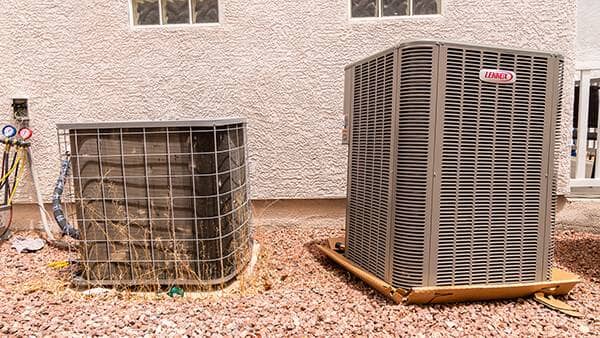
Short answer: Get HVAC maintenance tips with fast repair estimates for a stuck Lennox reversing valve in Henderson, plus cost ranges and certified tech help today.
A stuck Lennox reversing valve keeps the heat pump locked in one mode. You will lose cooling or heating until a repair is made. A qualified HVAC technician can test coil voltage, listen for valve action, and inspect refrigerant and oil to decide if repair or replacement is needed. Use documented symptoms and the outdoor unit nameplate to speed up.
Key Takeaways
- A stuck reversing valve can be electrical, mechanical, or contamination related. Diagnosis is required before ordering parts.
- Typical repair ranges are $300–$1,500; full outdoor replacement often runs $5,000–$12,000 installed. Emergency slots raise prices.
- Ask for a 608 or NATE certified tech if the valve energizes but does not move.
What is a reversing valve and why does it matter?
A reversing valve is a four-way valve inside most heat pump outdoor units. It flips the refrigerant path so the system can heat or cool. The valve changes which coil rejects heat and which coil absorbs heat. When it works, the system moves heat out of the house to cool or into the house to heat. When it fails, the system stays in one mode and cannot meet thermostat demands.
Homeowners value heat pump flexibility because one unit provides both heating and cooling. That flexibility depends on correct reversing valve action. If the valve is stuck, run time increases and the compressor may work under abnormal pressures. Early diagnosis helps protect other components and reduce repair scope.
How does a reversing valve work?
The valve uses a solenoid coil and an internal movable spool. When the thermostat commands a mode change, the control board sends 24 VAC to the solenoid. The solenoid moves a plunger. That motion shifts the spool and redirects refrigerant flow. This change swaps which coil is the condenser or evaporator.
The timing and electrical signal must match. A weak or missing 24 VAC signal can make a healthy valve appear stuck. Technicians verify both voltage and physical movement to confirm the true fault.
Why does a stuck valve affect heating and cooling?
If the valve remains locked, refrigerant follows the same route continuously. One coil will always reject heat while the other always absorbs heat. The thermostat may call for the opposite mode, but the system cannot comply. Rooms stay too hot or too cold, depending on which position the valve is stuck in.
Long runs in the wrong mode can also cause oil to migrate incorrectly and raise pressure on the compressor. That stress can lead to further component damage if the issue is not fixed quickly.
Are Lennox valves different from others?
Lennox uses common reversing valve designs similar to other major manufacturers. The basic function and solenoid control are comparable. However, Lennox part numbers, valve dimensions, and recommended oils may differ by model and age.
Using the correct OEM part preserves refrigerant and oil compatibility and can simplify warranty claims. When available, match part numbers from the outdoor unit nameplate to avoid mismatches and repeated service calls.
How do you tell a valve is stuck?
You can often detect a stuck reversing valve with simple observations and a few basic checks. Begin by watching the outdoor unit during a mode change. Command heat then cool from the thermostat and observe the compressor and outdoor fan. Listen for valve action and note whether pressure and fan behavior change.
Document the exact symptoms. Take photos of the outdoor nameplate and any visible oil stains or leaks. Record thermostat settings and the time of each observation. Supplying these details to a technician helps them bring needed tools and parts and may shorten repair time.
Which noises indicate valve failure?
A soft click when the system changes mode is normal in many systems. A loud clunk, grinding sound, or continuous humming near the outdoor unit when switching suggests mechanical seizure or internal contamination. These harsher sounds imply physical movement is obstructed.
Note timing and the sound pattern. If the noise is repeated or accompanied by burning smells, stop the unit and call a technician. Those signs can mean internal damage or electrical faults that need immediate attention.
Why is constant heat or cool a clue?
If the thermostat clearly asks for the opposite mode but the air output never changes, the refrigerant path likely has not reversed. Constant output that matches the wrong mode points to either a stuck valve or a control wiring issue.
Log the times you see the wrong output and compare them with the thermostat calls. This record helps the technician confirm the failure without unnecessary trial repairs.
How to check thermostat mode changes?
Set the thermostat from heat to cool and wait while you watch the outdoor unit. On most systems the outdoor fan and compressor behavior should change within a minute. If there is no change, the valve may be stuck or the control signal may be missing.
Also check that the thermostat wiring matches the system type. Incorrect wiring or a misconfigured thermostat can prevent the valve from receiving the 24 VAC signal it needs to shift.
Can refrigerant flow tests confirm a stick?
Technicians use pressure gauges and superheat or subcooling checks to infer refrigerant flow. Pressure patterns that do not change during a commanded mode switch indicate the valve may not have shifted. These tests require gauges and refrigerant knowledge.
Because handling refrigerant carries EPA rules, these checks should be done by a certified technician. The tests help separate electrical control faults from true mechanical failures.
Should I try flipping the breaker?
Power cycling can reset control boards in rare cases and sometimes clears false lockups. Turn the unit off at the thermostat and the breaker, wait one minute, and then restore power. This simple reset can resolve control logic issues.
If the valve still fails to shift after a reset, stop further attempts and call a pro. Repeated power cycling or incorrect handling can create electrical hazards or mask progressive mechanical damage.
What should a technician check first?
A skilled technician follows a clear sequence to diagnose a stuck reversing valve. They start by verifying the symptom and confirming thermostat wiring and control signals. Next they measure 24 VAC at the valve coil while commanding a mode change to see if the coil energizes.
Technicians then inspect the outdoor unit for oil stains, visible leaks, and valve access. They listen for valve movement during mode changes and record system pressures and voltages. A detailed diagnostic report helps you compare estimates and choose the right scope of work.
Will a diagnostic callout include a valve test?
A standard diagnostic should include valve coil voltage checks, a visual inspection, and system pressure readings. Confirm the scope when you book service so you know what is included with the visit. Ask whether the diagnostic will attempt an actual valve movement check during a mode change.
Some dispatchers charge extra for extended tests that involve refrigerant handling or system evacuation. Request clear pricing up front.
Do techs inspect the outdoor unit first?
Yes. Outdoor unit checks reveal coil condition, oil stains, visible leaks, and valve access points. These inspections often show signs of contamination or previous repairs. Listening to valve action during mode changes is a critical step in the initial check.
Outdoor inspection can also reveal blocked airflow or debris that affects system operation. Fixing those simple issues sometimes resolves symptoms that seem like a valve fault.
How is the Lennox reversing valve electrically tested?
Technicians measure 24 VAC to the valve coil with a multimeter while the thermostat commands a mode change. They also test coil resistance to confirm the coil is intact. If there is no voltage, the fault often lies in the control board or wiring rather than in the valve itself.
Properly documenting voltages and resistance values is important. The data helps determine if replacement of the coil, control board, or wiring is needed.
What role does the solenoid play?
The solenoid converts the 24 VAC electrical signal into linear motion that shifts the spool inside the valve. A burnt or shorted coil can fail electrically and prevent motion. A working solenoid may still be unable to move the spool when the spool is seized by contamination.
Solenoid failure is not the only cause of a stuck valve. Technicians confirm coil health before ordering a full valve assembly replacement.
Can contamination lock the valve?
Yes. Moisture, acid, and metal shavings from compressor failure can jam the spool and lock the valve. Contaminated systems often need valve replacement plus flushing, a new filter drier, and possibly a compressor swap. These repairs are more costly than a simple valve swap.
Technicians test oil for acidity and metal content. Those tests help decide whether flushing will be effective or if full replacement is the safer, more cost-effective route.
How long does a proper diagnosis take?
Expect 30 to 90 minutes for a full diagnostic on most residential systems. Technicians need to command mode changes, measure voltages, record pressures, and test for leaks. Hard access or complex systems can push diagnostics toward the longer side.
A clear record of findings should accompany the quote. Ask for a written diagnostic sheet that lists voltages, pressures, and recommended next steps.
How much will repair or replacement cost?
Costs vary by diagnosis, parts, refrigerant, and local labor rates. In Henderson and nearby areas, summer demand can push prices higher. Emergency calls and after-hours service add further labor premiums. Ask for itemized, written estimates to avoid surprises.
Get at least two estimates for jobs over $1,000. Compare parts, labor hours, refrigerant costs, and warranty terms. A transparent quote speeds decisions and reduces the risk of hidden fees on the final invoice.
What is the typical cost range for Lennox valve repair?
Valve replacement jobs commonly range from $300 to $1,500. The low end applies when the valve swap is straightforward and no contamination exists. The high end includes refrigerant recovery, filter drier, vacuuming, and added labor when oil flushing is needed.
If a compressor, filter drier, or extended flushing is required, expect costs to rise. Always ask for a detailed quote that lists each part and labor line. For a wider view of Lennox repair pricing across different components, see our Lennox AC common problems and costs overview.
For a detailed cost breakdown, see our HVAC pricing guide.
How do same-day emergency rates affect price?
Same-day or after-hours service often adds 20 to 50 percent to labor charges. Peak season demand can push dispatch times and part availability to the limits. Expedited shipping for parts also raises costs.
Ask the dispatcher about emergency rates before booking. When feasible, schedule during regular business hours to avoid premiums.
What factors raise costs in Henderson?
High summer demand, scarce legacy parts, and weekend work increase local prices. Older units that use R-22 refrigerant often cost more because that refrigerant is limited and expensive. Distance and travel time can add to labor charges in outlying neighborhoods.
Also, contamination or compressor damage can quickly push repair totals higher. Inspecting systems early helps avoid large, surprise bills.
Should a tech check for refrigerant leaks?
Yes. If the system circuit must be opened, technicians should pressure test and check for leaks first. Repairing a valve without finding the leak source can lead to repeat failures and wasted expense. Certified techs follow EPA Section 608 rules when handling refrigerant.
If a leak is found, the quote should include leak repair, pressure testing, and post-repair verification steps.
When is replacement better than repair?
Replacement is often the better option when the unit is old, inefficient, or contaminated. If repair costs approach half of a replacement price, a new unit usually gives better value and longer-term reliability. New heat pumps offer higher SEER ratings and updated controls, which reduce running costs over time.
Use our energy savings calculator to estimate your potential savings.
For systems older than about 12 to 15 years, parts may be scarce and efficiency is lower. Replacement can save money over the long run through lower energy bills and fewer service calls.
How does unit age affect the decision?
Units older than 12 to 15 years commonly reach end of life. Compressor and control failures become more frequent. Repairing major components on such units may cost nearly as much as a new system.
New equipment often brings improved warranties and better efficiency. Factor those benefits into a replacement decision rather than comparing sticker prices alone.
What contamination risk merits replacement?
If the system shows compressor burnout, acid in the oil, or many metal particles, replacement often costs less than extensive flushing and multiple part swaps. Contamination can spread and force repeated repairs if not handled correctly.
Technicians use oil analysis and particle checks to decide whether flushing will restore reliability. If analysis shows heavy contamination, full replacement is usually recommended.
Is compressor damage likely with a stuck valve?
A stuck valve can cause abnormal pressures and oil migration that stress the compressor. Over time this stress may lead to compressor burnout. Metal in the system is a red flag that compressor replacement is likely needed.
Early diagnosis reduces the chance of a full compressor failure and can limit repair scope and cost.
Will choosing OEM Lennox parts help?
OEM parts match factory specifications for refrigerant and oil and often simplify warranty claims. They can be more expensive than aftermarket parts. For under-warranty units, OEM parts usually preserve coverage and reduce the risk of repeat failure.
Ask the technician to list OEM versus aftermarket options on the estimate so you can compare long-term value and warranty differences.
Can a valve swap fix recurring failures?
If the root cause is purely mechanical and no contamination exists, a valve swap can fix the issue. However, if contamination or compressor stress caused the failure, a swap alone may not prevent recurrence. Technicians should test oil and inspect for metal fragments before relying on a single part swap.
If symptoms return after a valve swap, expect a more in-depth system flush and component replacements.
When is full outdoor unit replacement needed?
Full outdoor unit replacement is recommended if repair costs exceed 40 to 50 percent of replacement, if the unit is very old, or if contamination affects multiple components. Replacement offers improved efficiency and often more reliable operation.
Ask contractors to include expected energy savings and payback estimates in quotes for replacements. That helps compare the financial effects over time.
How do efficiency upgrades change ROI?
Higher SEER heat pumps can lower energy bills and reduce run time. The value of efficiency gains depends on local energy rates and the system's expected run hours. In climates with long cooling seasons, efficiency gains often justify some replacement cost.
Calculate payback using local utility rates and realistic run-hour estimates to decide if an upgrade fits your budget and goals.
Are Lennox warranties covering valve failure?
Warranty coverage depends on the original warranty terms and the unit's age. Some parts are covered for fixed periods. Keep service records and the serial number handy when making a claim. Ask the servicing tech to document diagnostic tests in writing to support a warranty claim.
If you suspect a warranty issue, contact the dealer first and provide the written diagnostic report from the technician.
Get fast repair estimates
A clear scope and documented symptoms speed estimates. Be ready with the outdoor unit model number, serial number, system age, and observed behavior. Photos of the nameplate and symptom logs help techs give accurate quotes over the phone. Booking early in the day can improve same-day options.
Many contractors assign emergency slots first thing in the morning. If you can be flexible on timing, you may avoid after-hours premiums and get faster weekday response. Always ask for written diagnostics and itemized estimates before approving work.
How to request same-day estimates?
Call local HVAC companies early and describe the stuck mode and urgency. Ask if same-day emergency slots exist and whether they charge a premium. Confirm the dispatcher will send a 608 certified technician when you book service.
Have the outdoor unit photo, model, and serial number ready. If parts are likely needed, ask whether the company stocks common Lennox valves or will need to order them. This helps set realistic arrival times and costs.
Contact us for quotes
The Cooling Company offers fast Lennox diagnostics and repairs in Las Vegas, Henderson, and North Las Vegas. Call The Cooling Company at (702) 567-0707 for same day or next day quotes and emergency service. If you are outside our area, ask for NATE certified and EPA 608 technicians and request written diagnostics before approving major work.
You Might Also Like
This section lists related topics that homeowners often consult when evaluating HVAC repair options. Each linked article dives into costs, troubleshooting tips, and equipment choices. Reviewing these resources can help you compare repair versus replace decisions and prepare better questions for contractors.
Take time to read the linked guides. They cover cost breakdowns, common failure modes, and practical steps you can take to document symptoms and limit expense. Use the information to get clearer, more comparable estimates from local techs.
- "ac repair costs"
- "troubleshooting hvac odors"
- "ruud furnace problems"
- "trane furnace repair henderson"
- "how much to install hvac system in old house"
Sources: ASHRAE Technical Resources and manufacturer service literature are useful for technicians and contractors. See the ASHRAE Technical Resources for general standards and guidance.
About The Cooling Company
The Cooling Company has been serving the Las Vegas valley with professional HVAC services for over a decade. Our team of licensed, NATE-certified technicians specializes in air conditioning repair, heating system maintenance, and complete HVAC installations. We're committed to providing honest, reliable service with upfront pricing and a 100% satisfaction guarantee on all work performed.
- Phone: (702) 567-0707
- Reviews: 4.8/5 stars (780+ reviews) - See reviews
Service Areas
We proudly serve homeowners and businesses throughout the Las Vegas metropolitan area, including Las Vegas, Henderson, and North Las Vegas. Our service technicians are available for same-day appointments in most areas, with emergency service available 24/7 for urgent HVAC issues.
References
- U.S. Department of Energy (Energy.gov) (accessed 2026-01-02)
- U.S. Environmental Protection Agency (EPA) (accessed 2026-01-02)
- ASHRAE (Standards and guidance) (accessed 2026-01-02)
- ENERGY STAR (Heating & cooling) (accessed 2026-01-02)
Need HVAC Service in Las Vegas?
The Cooling Company provides expert HVAC service throughout Las Vegas, Henderson, and North Las Vegas. Our licensed technicians deliver honest assessments, upfront pricing, and reliable results.
Call (702) 567-0707 or visit heating, furnace repair, heat pump installation, or heating maintenance for details.