

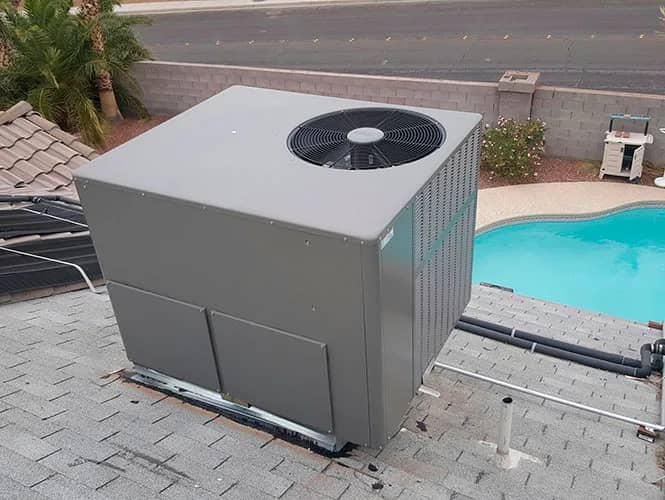
Short answer: Discover HVAC maintenance tips to pick the best Lennox vs Goodman RTU by comparing IEER, parts availability and controls to cut energy bills and downtime.
Choosing between Lennox and Goodman for a commercial rooftop unit (RTU) is a decision that affects energy use, maintenance burden, and uptime for years. Both brands offer broad product lines, but their strengths differ. Lennox tends to emphasize higher measured efficiency and more factory-installed controls. Goodman, now part of Daikin, commonly competes on initial cost and benefits from Daikin’s.
Key Takeaways
- Use a room-by-room Manual J load calculation (not a square-foot rule).
- Select equipment with Manual S and verify ducts with Manual D for comfort and efficiency.
- Avoid oversizing: short-cycling wastes fuel and can create uneven temperatures.
Lennox Vs Goodman: How To Choose The Best Commercial Rooftop Unit - overview
Choosing the right RTU requires looking beyond brand perception to model-level data, service footprint, and warranty terms. Lennox frequently packages variable-speed compressors, advanced coil designs, and factory gateways as standard or available factory options. Those features can yield measurable energy savings in long-run commercial duty cycles where part-load operation dominates. Goodman focuses on value and benefits from larger parts distribution after the Daikin acquisition; that can reduce out-of-warranty downtime in some regions.
A practical procurement process includes a written RFI or RFP that demands: exact IEER tables for the model and options you will order, a full list of factory-installed controls and gateways, documented commissioning scope, and an expected duty cycle for life-cycle cost modeling. Require vendors to include local parts lead-time commitments and a list of authorized installers. That level of specificity reduces surprises and enables objective bid scoring based on total cost of ownership rather than headline price.
Why compare Lennox and Goodman?
Small efficiency differences can compound into large dollar amounts when RTUs run daily for many hours. IEER differences of a few points are meaningful in hot climates or continuously occupied spaces. Comparing brands at model level lets owners trade off capital cost against lifecycle risk, such as parts lead times and retrofit paths for lower-GWP refrigerants. A low upfront price can be offset by slower repairs or shorter useful life if parts are hard to source.
Beyond efficiency, differences in compressor technology, coil construction, and integrated control suites affect maintenance needs and downtime. Regional distribution and warranty terms are also deciding factors. Before awarding a contract, ask for model-level performance tables, a sample commissioning plan, and local dealer references so the procurement team can estimate response times and realistic operating costs.
See why homeowners trust us — view our industry awards and certifications.
What are each brand's market positions?
Lennox targets owners who want higher part-load efficiency and more factory-installed control options. They often include inverter-driven compressors and integrated diagnostics on higher-tier models. Lennox appeals to organizations that prioritize tighter control and lower energy use over long service lives.
Goodman, as part of Daikin, aims at competitive pricing and broad distributor access. Its scale often helps with better dealer discounts and parts logistics. Owners with tight initial budgets or large rooftop fleets that need fast parts access may favor Goodman for these reasons.
How do product lines differ for rooftops?
Product lines differ in compressor types, control architecture, and what is factory-installed versus optional. Lennox premium models may come with inverter compressors, higher-efficiency coils, and factory gateways for BAS. These features reduce runtime at part load and often simplify integration.
Goodman emphasizes simple, robust packaged units and benefits from shared components with Daikin. After the acquisition, Goodman gained access to wider parts sourcing, which can reduce lead times and lower purchase cost in many markets.
Which models suit light commercial sites?
For small retail and restaurant sites, 3–7 ton units are common. Look for units with compact economizers, easy rooftop access, and service-friendly panels. Restaurants need good latent capacity and reliable economizers to handle humidity and grease loads.
Retail sites prioritize sensible cooling and consistent airflow. Confirm curb dimensions and rooftop structural details before finalizing model choice. Small errors in curb sizing or access planning create delays and add installation cost.
For a detailed cost breakdown, see our HVAC pricing guide.
How much does upfront price matter?
Upfront price is easy to compare and often drives initial selection. Yet it is only one part of total cost. A low sticker price may hide longer-term costs such as lower IEER, higher maintenance needs, slow parts delivery, or limited retrofit options for future refrigerant rules. Owners should include energy, maintenance, parts, downtime, and end-of-life retrofit costs when evaluating bids.
Procurement teams should force realism by requiring line-item bids that separate equipment price, installation labor, commissioning, spare parts lead times, and any BAS or gateway hardware. Require vendors to include factory startup and sequence verification as part of the deliverables. This reduces later disputes and makes bids easier to compare on a consistent basis.
What drives Lennox sticker price?
Lennox higher MSRP often reflects additional factory-installed hardware such as inverter compressors, superior coil metallurgy, and more extensive sensor arrays. Factory testing and added diagnostics also contribute to list price. These items can convert into lower energy bills and fewer service events, especially in high-utility markets.
When assessing Lennox pricing, confirm which premium features are standard and which are options. Compare IEER with required options included so that quotes are for the same configuration. This prevents comparing a base Goodman model to a fully optioned Lennox, which is misleading.
How do Goodman's MSRP and discounts compare?
Goodman usually lists a lower base MSRP and supports dealer-level volume discounts. That makes them appealing for budget-sensitive projects and larger roof fleets where initial capital matters. Discounts can be substantial at scale, and adding options may still keep overall cost competitive.
However, when options are required - economizers, BACnet gateways, or variable-speed drives - those adders can narrow the gap with premium models. Always request a fully configured price that includes required accessories, curb adapters, and the factory startup so comparisons reflect installed cost rather than headline price.
How to compare lifecycle costs?
Lifecycle cost must capture capital cost, expected energy use, maintenance, spare parts, downtime, and end-of-life disposal or retrofit. Use a 10–15 year horizon and discount future costs to account for time value of money. If rooftop units cool revenue-generating space, include lost sales or productivity from unplanned outages; those can exceed small energy savings.
Try our energy savings calculator to see how much you could save.
Standardize vendor submissions with a TCO worksheet that requires model IEER, expected annual kWh by load profile, assumed utility rates, and typical service costs. Request refrigerant phase-down risk analysis and likely mid-life retrofit costs. Treat vendor responses as inputs to a single spreadsheet so you can score bids consistently on TCO and operational risk.
What is IEER and why does it matter?
IEER, or Integrated Energy Efficiency Ratio, measures part-load efficiency across several operating points. Rooftop units rarely run at full load for long periods. IEER captures the real-world performance across common load steps, which yields a better estimate of annual energy consumption than single-point EER alone.
Require certified IEER tables for the exact model and options you will order. Family-level IEER claims can be misleading if different coils or economizers were tested. Certified tables or AHRI-rated data are more reliable for procurement comparisons.
How much energy savings per IEER point?
A rough rule of thumb is each 1–2 points of IEER can reduce cooling energy by about 3–7 percent. Actual savings vary with climate and runtime. Hot, humid climates with long daily runtimes benefit more from higher IEER than temperate climates with short duty cycles.
Translate IEER differences into dollars using your site’s hourly load profile and local electricity rates. For large installations, run a simple hourly model or ask for vendor energy modeling to validate the savings claim when the cost difference justifies the analysis.
What role do controls play in TCO?
Controls can deliver energy and maintenance savings by minimizing runtime and optimizing economizer use. Factory-integrated control systems and gateways simplify BAS integration and reduce commissioning hours. Remote diagnostics and trending help detect faults early, reduce unnecessary runtimes, and avoid costly repairs.
Require documented sequences of operation, a BACnet or protocol support list, and remote alarm capabilities in the RFP. These requirements affect both first-year performance and long-term maintenance costs, and they should be scored in bid evaluations.
Which specs should you check before buying?
Always request the exact spec sheet for the precise model and factory options you will install. Confirm IEER/EER at the rated configuration, refrigerant type, factory economizer inclusion, and whether variable-speed drives are included. These specs affect efficiency, warranty terms, and retrofit options.
Require a BAS protocol list and points map. Confirm whether the unit ships with a gateway or requires a third-party integration device. Insist on documented commissioning steps and clear manufacturer guidance for future lower-GWP refrigerant retrofits to reduce regulatory surprises later.
What capacity and sizing checks matter?
Size equipment using actual sensible and latent loads, not simple rules of thumb. Confirm external static pressure allowances for duct runs and rooftop transitions. Oversized units short-cycle and provide poor humidity control; undersized units fail at peak conditions.
Include supply and return airflow requirements, confirm curb dimensions, and ensure rooftop structural support can handle unit weight and crane access. Fixing a sizing mistake after installation is costly and often requires full replacement.
How to verify IEER at rated capacity?
Request certified IEER tables and test reports for the exact model and options you will order. Family-level ratings can hide differences from different coil or compressor choices. When available, ask for AHRI certifications or third-party test reports to validate vendor claims.
If the project is large enough, include a site-specific energy model that uses hourly loads and the vendor’s IEER table. Third-party modeling helps validate payback claims when cost differences are significant.
Which controls and factory options matter?
Key options include factory economizers, variable compressors, integrated fault detection, and BACnet gateways. Economizers reduce compressor runtime when conditions allow. Variable compressors improve part-load efficiency and comfort by matching output to demand.
Confirm which items are standard and which are optional. Ask vendors to show how options change IEER and warranty terms so you can compare fully configured performance and cost.
How to assess serviceability and parts?
Serviceability is a major driver of uptime and long-term cost. Evaluate local distributor inventory, regional warehouses, and typical lead times for compressors, control boards, and common spares. Request written lead-time commitments for mission-critical parts as part of the contract.
Also review local training and tech-transfer offerings. Local technicians familiar with the model and factory sequences diagnose faults faster. Ask for a list of authorized dealers and recent regional references to estimate realistic response times.
How extensive is Lennox dealer coverage?
Lennox maintains authorized commercial dealers in many populated areas, with factory training and parts support. Coverage varies by region, so verify local dealer presence and warehouse proximity before finalizing specifications.
Ask Lennox or your sales rep for a dealer list and recent project references in your market. That will help you estimate response times, common spare availability, and likely on-site lead times for warranty events.
Where is Daikin support strongest for Goodman?
Daikin’s global reach strengthens Goodman’s parts sourcing and logistics in markets where Daikin has a strong presence. This can mean shorter lead times and better regional stocking policies in some areas.
However, global scale does not guarantee local stock. Confirm local branch presence, distributor partners, and actual on-the-ground inventory in the geography where your buildings sit.
How fast are common parts delivered?
Consumables like filters and contactors are often next-day from major distributors. Specialized items like compressors and custom control boards can take days to weeks, depending on market demand and distribution agreements.
When awarding contracts, require written lead-time commitments for mission-critical spares. That reduces operational risk for revenue-critical facilities and allows you to plan a spare-parts policy.
What spare parts should facilities stock?
At a minimum, stock filters, contactors, belts, economizer actuators, and common control devices. For rooftop fleets, consider holding one spare compressor or one spare control board that fits multiple units to reduce mean time to repair.
Tailor spares to local lead times and budget. A small, focused spare inventory often yields faster returns than trying to stock every possible item.
How do tech training and documentation compare?
Lennox publishes detailed commissioning guides and runs factory training programs in many markets. These resources help maintenance staff understand factory sequences and warranty requirements.
Daikin and Goodman provide technical literature, webinars, and distributor training. Verify the frequency and depth of training in your region and include factory startup and on-site tech-transfer as contract requirements for complex installs.
What local contractor availability checks help?
Ask vendors for a list of NATE- or factory-certified contractors in your area and verify recent project references. Confirm emergency response SLAs and whether contractors maintain parts inventory locally or on consignment.
Check contractor experience with the specific models you plan to install. Familiarity speeds repairs and prevents misdiagnoses that can lengthen outages.
How do warranties affect repair choices?
Warranties often require authorized installers and scheduled maintenance to remain valid. Compressor coverage, extended warranties, and labor terms vary by model and usually require vendor registration and documentation.
Clarify labor coverage and parts lead-time guarantees before awarding the contract. Include warranty compliance steps in procurement documents so installers know required service levels and paperwork to avoid disputes.
Checklist to finalize a rooftop RTU choice
Use a concise RFP checklist to compare bids objectively. Key items include: exact model IEER/EER tables, refrigerant type and retrofit path, BAS protocol and points list, documented commissioning deliverables, parts lead-time commitments, warranty terms, and a list of authorized installers. Score vendors using TCO and availability metrics so decision factors are transparent.
Require vendors to submit a line-item quote that separates equipment price, installation labor, testing and commissioning, and any gateway or BAS integration hardware. That transparency prevents misunderstandings during project execution and warranty periods. It also forces vendors to price factory startup and any training realistically.
Ready to get a site survey?
Las Vegas-area owners can get a written TCO and site survey from The Cooling Company. We perform model checks, parts lead-time verification, and documented commissioning scopes to compare brands fairly. Our proposals use local labor rates and real stocking data so bids reflect true lifecycle cost rather than the lowest upfront price alone.
We deploy NATE-certified technicians and factory-authorized installers for rooftop units. Call The Cooling Company at (702) 567-0707 for Las Vegas, Henderson, or North Las Vegas service. Ask for a written parts lead-time schedule and included factory startup to protect your warranty and uptime. We return clear, line-item quotes and include a recommended spare parts list tailored to your rooftop fleet.
Match the Right Brand to Your Building’s Needs
Choose equipment by matching efficiency, control features, and local service support to your organization’s risk appetite and budget. Lennox often leads on peak IEER and integrated factory controls. Goodman, under Daikin, tends to win on first cost and parts scale in many markets. Make procurement decisions on total cost of ownership, not sticker price alone. To see where both brands land alongside the rest of the industry, review our top 25 air conditioning brands for 2026.
Require model-specific IEER tables, a clear refrigerant roadmap, and documented commissioning in your RFP. Include written parts lead times, factory startup, and a trained local service plan in the contract. These items protect uptime, warranty rights, and long-term operating cost and make vendor performance measurable.
You Might Also Like
This topic links to other practical HVAC resources that can help your planning. Understanding repair cost drivers, common faults, and local contractor options will help you build a robust rooftop strategy. Consult with a qualified professional for site-specific recommendations.
- ac repair costs
- troubleshooting hvac odors
- ruud furnace problems
- trane furnace repair henderson
- how much to install hvac system in old house
About The Cooling Company
The Cooling Company has been serving the Las Vegas valley with professional HVAC services for over a decade. Our team of licensed, NATE-certified technicians specializes in air conditioning repair, heating system maintenance, and complete HVAC installations. We're committed to providing honest, reliable service with upfront pricing and a 100% satisfaction guarantee on all work performed.
- Phone: (702) 567-0707
- Reviews: 4.8/5 stars (780+ reviews) - See reviews
Service Areas
We proudly serve homeowners and businesses throughout the Las Vegas metropolitan area, including Las Vegas, Henderson, and North Las Vegas. Our service technicians are available for same-day appointments in most areas, with emergency service available 24/7 for urgent HVAC issues.
References
- U.S. Department of Energy (Energy.gov) (accessed 2026-01-02)
- U.S. Environmental Protection Agency (EPA) (accessed 2026-01-02)
- ASHRAE (Standards and guidance) (accessed 2026-01-02)
- ENERGY STAR (Heating & cooling) (accessed 2026-01-02)
Need HVAC Service in Las Vegas?
The Cooling Company provides expert HVAC service throughout Las Vegas, Henderson, and North Las Vegas. Our licensed technicians deliver honest assessments, upfront pricing, and reliable results.
Call (702) 567-0707 or visit HVAC services, HVAC maintenance, heating, or AC repair for details.