

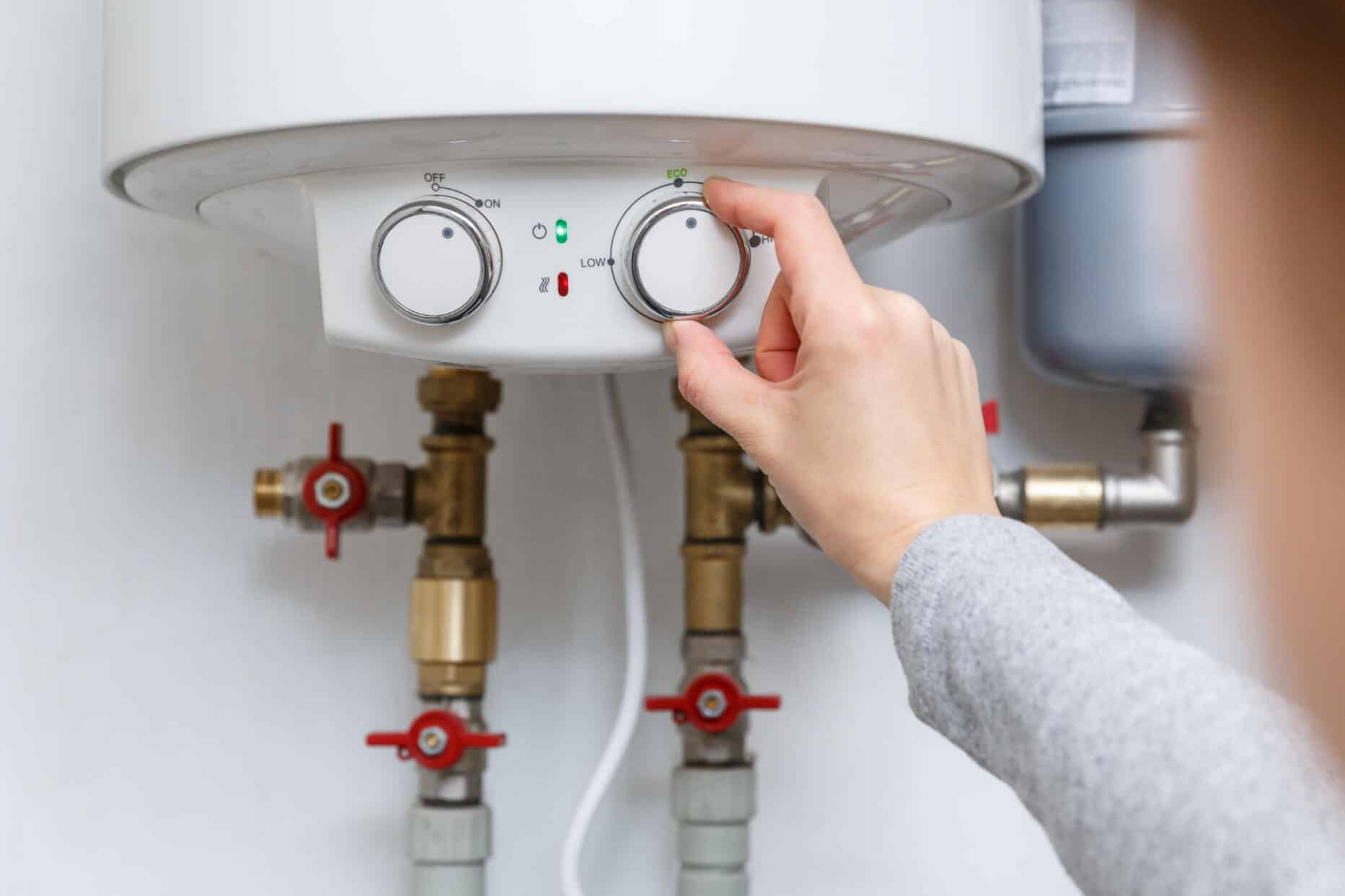
Short answer: A powered anode rod uses a low-voltage electrical current instead of sacrificial metal to protect your water heater tank from corrosion. Unlike standard magnesium or aluminum rods that Las Vegas hard water (16–22 grains per gallon) destroys in 2–3 years, a powered anode's titanium electrode lasts 20+ years — effectively the life of the water heater.
Las Vegas water is relentless. At 16–22 grains per gallon and 250–400 PPM of dissolved calcium and magnesium, our water supply ranks among the hardest in the country. That mineral load does not just show up as white crust on your faucets — it attacks the inside of your water heater tank around the clock. The component standing between your tank and early corrosion failure is the anode rod. If you have a standard magnesium or aluminum rod, Las Vegas hard water will eat through it in two to three years. A powered anode rod eliminates that problem entirely. Here is what we see every day on the job and what you need to know before your next water heater service call.
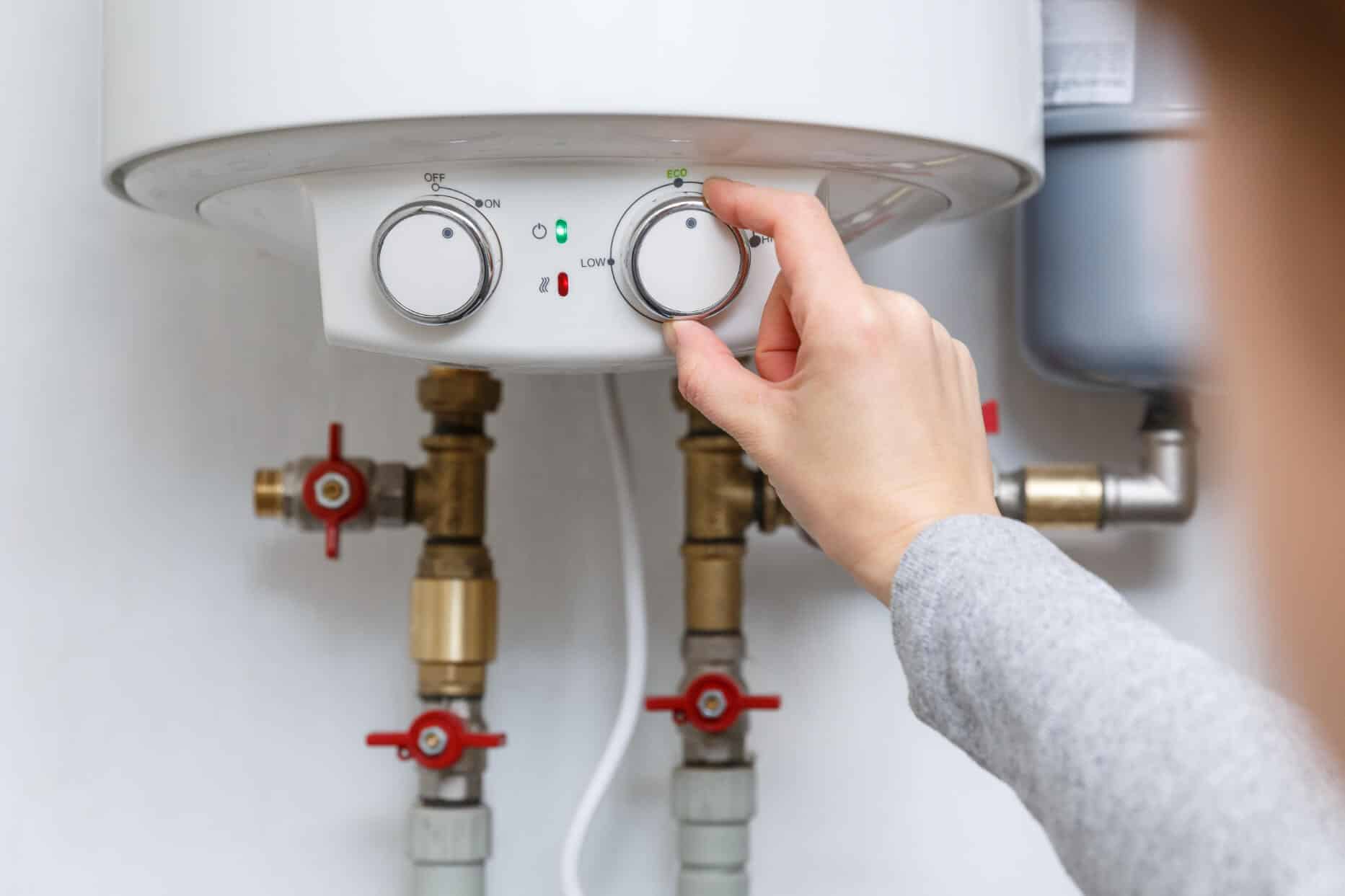
What Is an Anode Rod and Why Does Your Water Heater Need One?
Every tank-style water heater — gas or electric — ships from the factory with an anode rod installed in the top of the tank. The rod is typically made of magnesium or aluminum wrapped around a steel core. Its job is straightforward: corrode so the steel tank does not have to. This process is called galvanic protection, and it is the same principle that protects the hulls of ships and buried pipelines.
Electrochemically, the anode rod is the sacrificial metal. When water, oxygen, and dissolved minerals create a corrosive environment inside the tank, the rod reacts first. Ions migrate from the rod rather than from the steel walls. As long as there is active rod material present, the tank is shielded. Once the rod is depleted — down to the bare core wire — corrosion switches targets and the steel tank begins to rust from the inside out.
In a typical U.S. city with moderately hard water, a standard magnesium rod might last four to six years. In Las Vegas, we routinely pull rods that are completely consumed in under three years. Some units in older neighborhoods with particularly aggressive water show rod failure in 18 months. When homeowners skip anode inspections, the first sign of a dead rod is usually a rusted puddle under the water heater — by which point the tank is done.
Why Las Vegas Hard Water Destroys Standard Anodes So Fast
The Southern Nevada Water Authority draws from Lake Mead, and that water carries dissolved minerals picked up from the Colorado River basin. By the time it reaches your water heater, it consistently measures 250–400 PPM of calcium carbonate. The water hardness typically falls between 16 and 22 grains per gallon, well above the 10.5 GPG threshold that classifies water as "very hard."
High mineral concentrations accelerate galvanic corrosion in two ways. First, hard water is an excellent electrolyte — the more dissolved minerals, the more efficiently electrical current flows between the anode rod and the tank walls, which speeds up ion migration and rod consumption. Second, calcium and magnesium scale deposits coat the interior of the tank and can trap localized corrosion cells against the steel, compounding the damage once the rod is weakened.
Hot water makes things worse. Heating water above 120°F drives dissolved minerals out of solution, causing them to precipitate as limescale on the heating element, the tank floor, and the rod itself. A rod encased in scale cannot do its job — it becomes electrically isolated from the water it is supposed to protect. This is why our plumbing technicians sometimes find tanks in Las Vegas that have both a visually intact-looking rod (coated in scale) and advanced interior corrosion — the rod looked fine but was not functioning.
How a Powered Anode Rod Works Differently
A powered anode rod — also called an impressed current anode — operates on a completely different principle than a sacrificial rod. Instead of a chunk of reactive metal that dissolves over time, a powered anode uses a small titanium or mixed-metal-oxide electrode connected to an external power supply. The power supply delivers a low-level direct current to the electrode, which creates the same protective electrical field that a sacrificial rod creates through chemistry — but without consuming any electrode material.
Because the electrode does not dissolve, it does not wear out. The titanium core of a quality powered anode rod can last 20 years or more, effectively matching or exceeding the service life of the water heater itself. The power draw is minimal — most units consume less than one watt continuously, adding only a few cents per month to your electric bill.
Powered anodes also handle scale-heavy environments better than sacrificial rods. The impressed current field is not blocked by scale deposits the same way a passive chemical reaction is. The protective current reaches the tank walls even when mineral buildup is present. For Las Vegas homeowners running hard, hot water through their tanks every day, that reliability is a meaningful advantage over a magnesium rod that may be silently failing behind a crust of limescale.
One additional benefit: standard magnesium anode rods in hard water or softened water can produce hydrogen sulfide gas, the source of that rotten-egg smell some homeowners notice from their hot water. Powered anode rods do not produce that reaction, so switching to a powered unit often eliminates odor complaints at the same time it extends tank life.
Powered Anode vs. Standard Anode: Cost Comparison
The upfront cost difference is real, and it is worth understanding before you decide. A standard magnesium or aluminum anode rod costs $20–$50 for the part, plus labor. If you are paying a plumber to change it, expect a service call of $100–$175 total depending on rod accessibility — some tanks have the rod under the top cover or beneath the water heater's hot-water outlet fitting, which adds time.
A quality powered anode rod runs $150–$300 for the unit itself, with installation adding $75–$150 in most cases, bringing the all-in cost to $225–$450 installed. That sounds like more money, and it is — initially.
Here is where the math changes. In Las Vegas, you would need to replace a standard anode rod every two to three years to maintain protection. Over a 12-year water heater lifespan, that means four to six rod replacements at $100–$175 each — a total spend of $400–$1,050 in service calls alone, not counting the rods themselves. A powered anode rod installed once at $225–$450 and never replaced represents significant savings over that same period.
More importantly, skipped anode replacements — which happen constantly because homeowners do not know to check — lead to premature tank failure. A new 50-gallon gas water heater installed in Las Vegas runs $900–$1,500 in equipment and labor. A powered anode that adds five to eight years to your existing tank's life pays for itself many times over when weighed against early replacement costs.
If your water heater is still under warranty, check manufacturer requirements before switching anode types. Some warranties specify the use of manufacturer-supplied rods, and replacing with a third-party powered unit can affect coverage. Our team reviews this during every water heater service visit so you do not unknowingly void your protection.
Signs Your Current Anode Rod Has Already Failed
Most Las Vegas homeowners have no idea when their anode rod was last inspected, let alone replaced. If you purchased a home, inherited an aging water heater, or simply never had anode maintenance done, there is a good chance the rod is depleted or nonfunctional. Here are the warning signs we look for:
Discolored or metallic-tasting hot water. Rusty or brownish hot water is a strong indicator that the tank interior is corroding. Cold water running clear while hot water looks off is the key distinction — the tank is the source.
Rotten-egg odor from hot water only. As mentioned, a depleted magnesium rod in hard or softened water can produce hydrogen sulfide. If the smell is only present in the hot water lines, the anode is the likely culprit.
Water heater age over five years with no service history. If you cannot point to a service record that includes anode inspection, assume it needs attention. After five years in Las Vegas water, there is a high probability the rod is significantly depleted.
Rumbling or popping sounds from the tank. Scale buildup on the tank floor is not directly an anode issue, but it often accompanies advanced mineral accumulation and may indicate the tank has been operating without adequate protection for some time. A maintenance plan that includes annual water heater inspection catches these problems early.
Installation: What to Expect
Installing a powered anode rod is a straightforward job for a licensed plumber, typically completed in under an hour on an accessible water heater. The process involves shutting off the cold water supply, connecting a hose to the drain valve to relieve tank pressure, removing the existing anode rod (which can be corroded in place and occasionally requires significant torque to break loose), and threading in the powered unit.
The power supply cord on most powered anode rods runs out through the top of the tank and plugs into a standard 120V outlet — the same outlet that powers the igniter on a gas water heater or the element on an electric unit. The power draw is so low that dedicated wiring is not required. The entire installation is non-invasive and does not affect the warranty-relevant components of the tank.
One consideration specific to Las Vegas homes: if the water heater has not had an anode replaced in several years, the rod may have corroded into the hex fitting at the top of the tank. We carry breaker bars and penetrating lubricant on every water heater repair call for exactly this reason. In severe cases where the fitting is seized and corroded, applying force to remove the rod risks cracking the tank fitting — at that point, tank replacement becomes the right conversation to have. This is another argument for staying ahead of maintenance rather than waiting for failure.
For homeowners considering an upgrade to a tankless water heater, it is worth noting that tankless units do not use anode rods — the absence of a storage tank eliminates the corrosion dynamic entirely. If your current tank is nearing end of life, a tankless conversion deserves consideration alongside a powered anode installation on a tank that still has useful years remaining.
Frequently Asked Questions
How often does a powered anode rod need to be replaced?
A quality powered anode rod does not need to be replaced on any set schedule. The titanium or mixed-metal-oxide electrode does not consume itself the way a sacrificial magnesium or aluminum rod does. Most powered anodes are designed to last 20 years or more — effectively the lifetime of the water heater. You should still have the unit inspected periodically to confirm the power supply is functioning, but there is no rod material to deplete.
Will a powered anode rod work with my existing water heater?
Powered anode rods are compatible with nearly all standard tank-style water heaters, both gas and electric. They thread into the same hex fitting that holds the factory anode rod — typically a 1-1/16-inch hex. The power cord requires a standard 120V outlet nearby, which is present in most water heater closets and garages. If your installation is in an unusual location without an outlet, an electrician can add one at minimal cost. Check manufacturer warranty terms before swapping rods on newer units still under factory coverage.
Can I install a powered anode rod myself?
The installation itself is mechanically straightforward, but there are a few reasons to hire a licensed plumber for this job in Las Vegas. Anode rods that have been in service for several years are frequently seized in the fitting and require substantial torque to remove — applying that force incorrectly can damage the tank. Additionally, a plumber will inspect the anode port, tank condition, and connections while the tank is partially drained, giving you a full picture of where things stand. Given that the cost of professional installation is modest relative to the investment, we recommend having it done right.
Does a powered anode rod eliminate the rotten-egg smell from hot water?
Yes, in most cases. The rotten-egg or sulfur smell in hot water is caused by a chemical reaction between standard magnesium anode rods and sulfate-reducing bacteria present in some water supplies. The magnesium provides the hydrogen needed for hydrogen sulfide production. A powered anode rod uses a titanium electrode that does not participate in this reaction, so the odor-producing chemistry stops. If the smell persists after switching, it may indicate bacteria present in the tank itself, which can be addressed with a tank flush and disinfection.
My water heater is only four years old. Is it too early to switch to a powered anode?
Not at all — in Las Vegas, four years is actually close to the point where a standard anode rod may be significantly depleted. Switching to a powered anode now extends the protection forward without a gap. If the existing rod is still in reasonable condition, we may recommend leaving it in place until the next service interval and installing the powered unit then, or we may recommend swapping immediately depending on the rod's condition when we inspect it. Either way, proactive maintenance at this stage is far better than waiting until you see the signs of tank corrosion.
Protect Your Water Heater Before the Damage Is Done
Las Vegas hard water does not give your water heater a break. Between the mineral load, the heat cycling, and the accelerated galvanic activity that comes with very hard water, standard anode rods simply cannot keep up with the pace of corrosion here. A powered anode rod is the most cost-effective single upgrade you can make to a tank water heater — it extends service life, eliminates recurring maintenance costs, and removes the risk of tank failure from a depleted rod going unnoticed.
The Cooling Company provides water heater inspections, anode rod service, and powered anode installations throughout Las Vegas, Henderson, and North Las Vegas. Our licensed plumbers carry the tools and parts to handle seized rods, assess tank condition, and give you an honest recommendation on whether a powered upgrade makes sense for your specific unit. Call us at (702) 567-0707 to schedule a visit.