

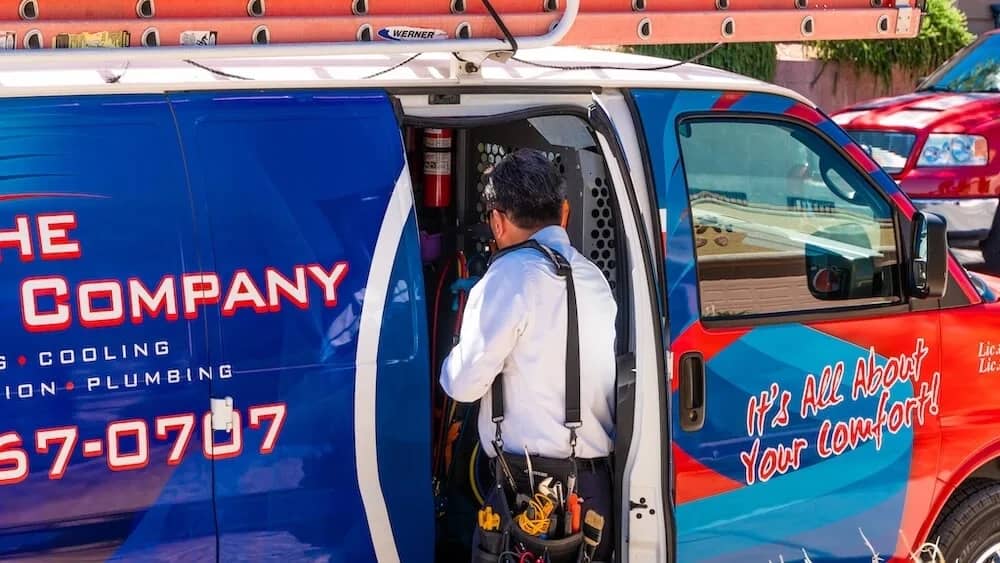
Short answer: If your AC is 10+ years old, showing signs of decline, or using R-22 refrigerant, March-April 2026 is your best window to replace it. You will save $1,000-$3,000 compared to emergency summer replacement, get your pick of installation dates, and have a fully tested system before the first 100°F day. Spring scheduling means your installer works in mild weather — not in a 140°F attic rushing between emergencies — which translates to better installation quality that affects performance for the next 15 years. NV Energy PowerShift rebates of $300-$2,000 are active now, manufacturer spring promotions are stacking, and financing at 0% APR is available with same-day approval. The window closes fast: by mid-May, demand surges and every advantage listed here begins to evaporate. Call (702) 567-0707 to schedule a free in-home assessment this week, or request a quote online.
Key Takeaways
- Spring replacement saves $1,000-$3,000 over summer emergency pricing. Contractor schedules are open, there is no rush premium, and you have the leverage to compare quotes. By June, demand-driven pricing eliminates all of this.
- Installation quality is measurably higher in spring. Installers working in 75°F weather do better work than crews in 140°F attics rushing between emergencies. A poor installation cuts system efficiency by 20-30% for its entire lifespan.
- Full equipment inventory is available now. Every brand, every model, every efficiency tier is in stock at local distributors. By July, you get whatever is left — often not the best match for your home.
- NV Energy PowerShift rebates are active: $300-$2,000 back on qualifying high-efficiency systems. These are first-come, first-served with annual funding caps. Early applicants get funded; late applicants risk budget exhaustion.
- The federal 25C tax credit is no longer available for 2026 installations — it was terminated by the One Big Beautiful Bill Act (signed July 4, 2025). NV Energy rebates are now your primary incentive. Do not let outdated information from other websites mislead you.
- R-454B refrigerant systems are now available alongside R-410A. Both are excellent choices. Do not delay a needed replacement waiting for the "perfect" refrigerant — R-410A systems will be serviced for decades.
- From first call to fully tested system takes 3-4 weeks in spring. That same process takes 5-8 weeks in peak summer when every contractor in the valley is booked solid.
- Your old system is telling you something right now. If it struggled during March's 90°F days, it will not survive July at 115°F. The dress rehearsal is happening today — and your system is failing it.
Why Spring 2026 Is Different
Every spring is a good time to replace your AC in Las Vegas. But spring 2026 has four converging factors that make this particular window unusually important for homeowners with aging systems.
The R-454B Refrigerant Transition Is Happening Now
The EPA's phasedown of R-410A refrigerant production under the American Innovation and Manufacturing (AIM) Act means new equipment is transitioning to R-454B ("Puron Advance"). Equipment manufactured after January 1, 2025 increasingly uses the new refrigerant. This does not make R-410A systems obsolete — far from it. But it does mean the industry is in a transition year, and spring 2026 gives you the widest selection of both R-410A and R-454B equipment. By late summer, specific models may be in short supply as distributors work through the transition inventory.
NV Energy's Rebate Program Is Refreshed for 2026
NV Energy's PowerShift rebate program operates on annual funding cycles. The 2026 budget is fully funded right now. Rebates range from $300 for high-efficiency central air conditioners to $2,000 for ultra-high-efficiency heat pumps. These are first-come, first-served within the annual allocation. Installing in spring means your rebate application is processed against a full budget, not a nearly depleted one.
Manufacturer Spring Promotions Are Stacking
Lennox, Carrier, and other major manufacturers run their largest promotional events in spring. As a Lennox Premier Dealer, we see spring rebate events that can add $200-$1,200 in manufacturer rebates on top of NV Energy incentives. These promotions have hard end dates — typically late April or early May. Once they expire, they are gone until the following spring. Combining a manufacturer spring promotion with an NV Energy rebate creates savings that are simply not available in any other season.
The Las Vegas Construction Boom Creates Labor Competition
The Las Vegas construction market is booming in 2026. New home construction and commercial development compete for the same licensed HVAC technicians who install residential replacement systems. As summer approaches and new construction projects accelerate, the best installation crews get pulled in multiple directions. Scheduling in March and April means you get your contractor's A-team — not the overflow crew they assembled in July to handle demand.

The Cost of Waiting Until Summer
The difference between a planned spring replacement and an emergency summer replacement is not just price — it is the entire experience. Here is what changes when you wait.
| Factor | Spring Replacement (March-April) | Emergency Summer Replacement (June-August) |
|---|---|---|
| Scheduling | Same week, your choice of day | 3-5 day wait minimum; 7-10 days at peak |
| Pricing | Standard rates, room to negotiate | +$1,000-$3,000 premium (demand-driven) |
| Equipment choice | Full inventory — every brand, model, size | Whatever is in stock or on the truck |
| Installation quality | Calm, methodical, mild-weather conditions | Rushed crews in 140°F attics between emergencies |
| Permit processing | 1-2 business days (Clark County) | 3-5+ days backlogged |
| Quote comparison | Time to collect 3 quotes, ask questions | Decide in hours in a 95°F house |
| Financing approval | Pre-approved at your pace | Applying under pressure, may accept worse terms |
| Rebate application | Full NV Energy budget available | Budget may be partially depleted |
| Your leverage | You are the buyer in control | You are a desperate seller of your own comfort |
The math is straightforward. A 3-ton Lennox system that costs $8,500 in March might cost $10,000-$11,500 as an emergency replacement in July — same equipment, same installation, different circumstances. That $1,500-$3,000 premium buys you nothing except the regret of not acting sooner. Our detailed seasonal buying guide breaks down every month of the year, but the conclusion is always the same: spring wins.
Your Spring 2026 Replacement Timeline
A planned spring replacement is a four-week process from first call to a fully commissioned, warranty-registered, rebate-submitted system. Here is exactly what each week looks like.
Week 1: Assessment and Load Calculation
Call (702) 567-0707 or request a quote online to schedule your free in-home assessment. A licensed technician will evaluate your current system, inspect your ductwork, check your electrical panel capacity, and perform a Manual J load calculation — the engineering analysis that determines the correct system size for your specific home. This is not optional. Never accept a sizing recommendation based on square footage alone. In Las Vegas, window orientation, insulation quality, ceiling height, attic conditions, and duct leakage all affect the correct tonnage. A 2,000-square-foot home might need a 3-ton or a 4-ton system depending on these variables. Getting the size wrong — in either direction — costs you money for the life of the system. Our AC sizing guide explains exactly how this works.
Week 2: Review Options and Financing
Based on the load calculation, your contractor presents good/better/best options with clear pricing for each tier. This is where spring's time advantage matters most. You have days, not hours, to review the options. Compare efficiency ratings. Understand the warranty differences. Check our brand comparison guides and our complete AC buying guide. If financing, apply through GoodLeap — approval takes 15-30 minutes, and you can do it from your couch with zero time pressure. Ask your contractor about manufacturer spring promotions currently running and confirm NV Energy rebate eligibility for each system option.
Week 3: Installation Day
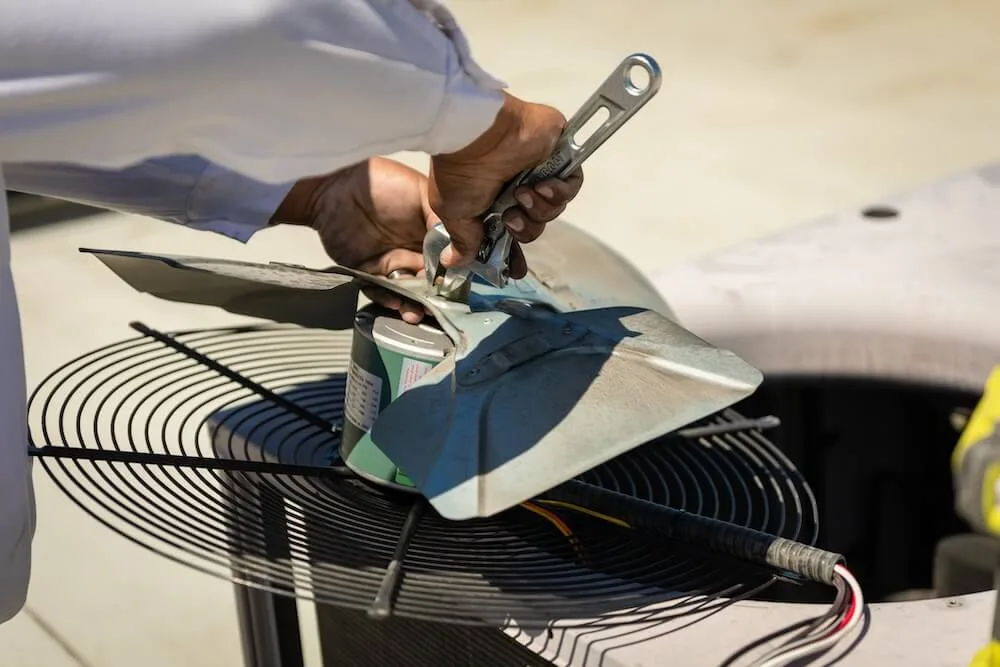
A standard AC installation takes 4-8 hours for a two-person crew — longer if ductwork modifications are needed. In spring, your installer is not rushing between emergencies. They are focused on your job. The process includes: removing and properly disposing of the old system (including EPA-compliant refrigerant recovery), installing the new outdoor condenser and indoor air handler or evaporator coil, connecting refrigerant lines, connecting electrical, pulling the Clark County mechanical permit, and initial system startup. Installation in 75°F weather means the crew is fresh, focused, and able to work methodically — not fighting heat exhaustion in a 140°F attic while their next emergency call buzzes their phone.
Week 4: Commissioning, Registration, and Rebate Submission
Post-installation commissioning is what separates a quality installation from a mediocre one. Your technician verifies airflow, checks refrigerant charge with a manifold gauge set (not just pressure — actual superheat and subcooling measurements), tests thermostat operation across all modes, and confirms the system is operating at rated specifications. This is also when your warranty is registered with the manufacturer — do not skip this step, as unregistered systems default to shorter warranty terms. Finally, your contractor submits the NV Energy rebate application with all required documentation. Rebate checks typically arrive in 6-10 weeks.
May 1: Fully Ready for Summer
By the first week of May, your new system has been running for a week or two. Any startup issues have been identified and resolved during the mild weather, when it is an inconvenience rather than a crisis. Your warranty is registered. Your rebate is submitted. Your first NV Energy bill will show the efficiency improvement. And when the first 100°F day arrives — typically mid-to-late May in Las Vegas — you will watch the temperature climb on the news and know that your home is ready. That peace of mind is worth more than any dollar figure in this guide.
2026 Pricing: What to Expect This Spring
Transparency on pricing is one of the most important things we can offer as an HVAC company. These are real 2026 installed prices for the Las Vegas market, reflecting current equipment costs, labor rates, and the full scope of a quality installation including permits, commissioning, and old system disposal. For a much deeper dive into every cost factor, see our 2026 AC replacement cost guide.
Central Air Conditioner Pricing (Installed)
| System Size | Typical Home (LV) | Entry Tier (14-16 SEER2) | Mid Tier (17-20 SEER2) | Premium Tier (21+ SEER2) |
|---|---|---|---|---|
| 2-ton | 800-1,100 sq ft | $5,200-$6,800 | $6,800-$8,500 | $8,500-$11,000 |
| 2.5-ton | 1,100-1,400 sq ft | $5,400-$7,200 | $7,200-$9,000 | $9,000-$12,000 |
| 3-ton | 1,400-1,900 sq ft | $6,500-$8,000 | $8,000-$10,500 | $10,500-$14,500 |
| 3.5-ton | 1,900-2,300 sq ft | $7,200-$8,800 | $8,800-$12,000 | $12,000-$15,500 |
| 4-ton | 2,300-2,800 sq ft | $8,200-$10,000 | $10,000-$14,000 | $14,000-$17,000+ |
| 5-ton | 2,800-3,500+ sq ft | $9,800-$11,500 | $11,500-$15,500 | $15,500-$19,000+ |
Heat Pump Pricing (Installed)
Heat pumps cost 10-20% more than AC-only systems but provide both cooling and heating, eliminating the need for a separate gas furnace. In Las Vegas, where winter lows rarely drop below 28°F, heat pumps operate efficiently year-round. See our best heat pumps for Las Vegas guide for detailed brand comparisons.
| System Size | Typical Home (LV) | Entry Tier (15-17 SEER2) | Mid Tier (18-21 SEER2) | Premium Tier (22+ SEER2) |
|---|---|---|---|---|
| 2-ton | 800-1,100 sq ft | $6,000-$7,800 | $7,800-$9,800 | $9,800-$12,500 |
| 2.5-ton | 1,100-1,400 sq ft | $6,400-$8,200 | $8,200-$10,500 | $10,500-$13,500 |
| 3-ton | 1,400-1,900 sq ft | $7,500-$9,200 | $9,200-$12,000 | $12,000-$16,000 |
| 3.5-ton | 1,900-2,300 sq ft | $8,200-$10,500 | $10,500-$13,500 | $13,500-$17,500 |
| 4-ton | 2,300-2,800 sq ft | $9,500-$12,000 | $12,000-$15,500 | $15,500-$19,500 |
| 5-ton | 2,800-3,500+ sq ft | $11,000-$14,000 | $14,000-$18,000 | $18,000-$22,000+ |
These prices include the complete installation: outdoor unit, indoor coil or air handler, refrigerant lines, electrical work, thermostat, Clark County permit, and commissioning. They do not include ductwork modifications, which add $350-$8,000 depending on scope. Most replacements on existing ductwork require no modification or minor sealing ($350-$800).

Spring 2026 Rebates and Incentives
The incentive landscape for 2026 has changed significantly from 2025. Understanding what is and is not available will save you from bad advice and help you maximize the real savings that are on the table right now. For the complete deep-dive, see our 2026 rebates and tax credits guide.
NV Energy PowerShift Rebates: $300-$2,000 (Active Now)
NV Energy's PowerShift rebate program is the primary incentive for Las Vegas homeowners replacing HVAC equipment in 2026. These are cash rebates paid directly to you after installation, submitted by your contractor on your behalf. Processing typically takes 6-10 weeks.
| Equipment Type | Minimum Efficiency | Rebate Amount |
|---|---|---|
| Central AC (high efficiency) | 17.0+ SEER2 | $300-$700 |
| Central AC (ultra-high efficiency) | 21.0+ SEER2 | $700-$1,200 |
| Heat pump (ducted, high efficiency) | 20.0+ SEER2 / 9.5+ HSPF2 | $1,000-$1,500 |
| Heat pump (ducted, ultra-high efficiency) | 22.0+ SEER2 / 10.0+ HSPF2 | $1,500-$2,000 |
| Smart thermostat (ENERGY STAR) | ENERGY STAR certified | $75-$100 |
Important: Rebate qualification is by specific model number, not just SEER2 rating. NV Energy maintains a qualified product list that is updated quarterly. Confirm with your contractor before installation that the exact model you are purchasing appears on the current list. Some contractors will advance the rebate amount at installation, reducing your out-of-pocket cost immediately — ask about this option.
Federal 25C Tax Credit: No Longer Available for 2026
The federal Section 25C Energy Efficient Home Improvement Credit was terminated by the One Big Beautiful Bill Act (Public Law 119-21, signed July 4, 2025) for property placed in service after December 31, 2025. If you installed qualifying equipment in 2025, you can still claim the credit on your 2025 tax return. But for 2026 installations, this incentive does not exist. If any contractor or website tells you the 25C credit is available for your 2026 installation, they are wrong. Get your information from the IRS directly.
Manufacturer Spring Promotions: $200-$1,200 Additional
Every major manufacturer runs spring promotional events with rebates that stack on top of NV Energy incentives. These have hard expiration dates and cannot be claimed retroactively. Spring 2026 promotions we are tracking:
- Lennox Spring Rebate Event: Up to $1,200 in rebates on qualifying Lennox systems, including the XC25, XC21, and XP25 heat pump. As a Lennox Premier Dealer, we can process these rebates directly. Event typically runs March through April.
- Carrier Cool Cash: Rebates on Carrier Infinity and Performance series systems. Typically $200-$500 per qualifying system.
- Trane, Rheem, and Goodman: Each runs seasonal promotions through their dealer networks. Amounts and timelines vary — ask your contractor what is currently active for their brands.
Stacking Example: Maximum Spring 2026 Savings
Here is a real example of how incentives stack on a spring 2026 installation:
System: 3-ton Lennox XC21 (22.0 SEER2), installed in Las Vegas
Installed price: $11,500
NV Energy rebate (ultra-high efficiency AC): -$1,000
Lennox Spring Rebate Event: -$800
Smart thermostat rebate: -$75
Net cost after incentives: $9,625
That is $1,875 in savings from incentives alone — savings that are only fully available during the spring window. Wait until July, and the manufacturer spring promotion is gone. Wait until October, and the NV Energy budget may be depleted. Spring stacking is the single best strategy for minimizing your net cost.
HEEHRA Rebates: Not Yet Available in Nevada
The IRA's High-Efficiency Electric Home Rebate Act (HEEHRA) program offers rebates of up to $8,000 for qualifying heat pump systems for lower and moderate income households. Nevada has selected a program administrator but has not yet announced a launch date. We will update our rebates guide when the program goes live. If you are income-eligible, this could be a significant additional incentive — but do not delay a needed replacement waiting for an unannounced program. Your system does not care about rebate timelines; it cares about surviving June.
The R-454B Question: Should You Wait?
We hear this question multiple times per week: "Should I wait for R-454B systems to become the standard before I replace?" The short answer is no. Here is why.
R-454B (marketed by Carrier/Lennox as "Puron Advance") is the successor refrigerant to R-410A. The EPA's AIM Act phases down R-410A production over the coming years, and new equipment is transitioning to R-454B. Some R-454B systems are already available in 2026. Within a few years, most new residential equipment will use R-454B.
But here is what the transition does NOT mean:
- R-410A is not being banned. Production is being phased down, not eliminated. R-410A will remain available for servicing existing systems for decades — similar to how R-22 remained available (at higher cost) for years after its phaseout.
- R-410A systems installed today have a normal 15-20 year service life. A system installed in spring 2026 will run until 2041-2046. Throughout that entire period, R-410A refrigerant will be available for service and repair.
- R-454B systems are not dramatically better performers. R-454B has a lower global warming potential (GWP), which is the environmental reason for the transition. But in terms of cooling your home, an R-410A system at 20 SEER2 performs identically to an R-454B system at 20 SEER2. The refrigerant change is about environmental impact, not homeowner performance.
- R-454B systems currently cost more. First-generation R-454B equipment carries a 5-10% premium in many product lines, and technician training is still ramping up. Prices will normalize over time, but today you may pay more for a system that does not cool your house any better.
- Parts and service infrastructure for R-454B is still maturing. Every HVAC supply house in Las Vegas carries R-410A parts and refrigerant in volume today. R-454B supply chains are building but are not yet at the same depth.
If your current system is failing, struggling, or costing you hundreds in repair bills, waiting for the "perfect" refrigerant transition is like refusing to buy a car because next year's model might have a slightly better feature. Meanwhile, you are paying $300-$500 per month in extra energy costs running a dying system through a Las Vegas summer. Replace now. An R-410A system installed this spring will serve you well for 15+ years.
If your system is healthy and you are simply curious about R-454B, you can afford to wait. But if you are reading this guide, your system is probably not healthy.
Signs Your AC Will Not Survive Another Vegas Summer
Las Vegas is not a city where you can gamble on your AC making it one more year. When systems fail here, they fail completely — in 115°F heat, with no gradual decline, no warning day, just an afternoon where the thermostat keeps climbing and does not stop. If you recognize two or more of these signs, spring replacement is not optional — it is urgent. For the complete diagnostic breakdown, see our 10 signs you need a new AC guide.
Sign 1: Your System Is 12+ Years Old
The national average AC lifespan is 15-20 years. In Las Vegas, it is 10-14 years. Your system runs 2,500-3,500 hours per year — roughly 2.5 times the national average. If your system is 12 or older, it is in the final chapters of its life regardless of how well it seems to be running today.
Sign 2: Repair Bills Exceeded $1,500 in the Past 12 Months
The 5,000-rule applies: multiply system age by the proposed repair cost. If the result exceeds $5,000, replace. A 10-year-old system facing a $600 repair hits $6,000 — replacement territory. Use our repair-or-replace calculator to run your specific numbers.
Sign 3: Your Energy Bills Climbed 20%+ Without Explanation
Rising energy bills with the same thermostat settings and the same occupancy means your system is working harder to produce the same output. That is efficiency degradation, and it accelerates — the extra strain from reduced efficiency causes further component wear, which reduces efficiency further. It is a death spiral that ends in failure.
Sign 4: Your System Uses R-22 Refrigerant
R-22 was banned from new production in 2020. Available supply is recovered stock only, costing $50-$150 per pound. An R-22 system needing refrigerant is the single clearest replacement signal. You are spending premium prices to sustain obsolete equipment.
Sign 5: The System Cannot Hold 75°F When It Is 100°F Outside
A properly sized and functioning AC should maintain 75°F when outdoor temps hit 115°F. If your system is losing the battle at 100°F — a temperature Las Vegas sees in late April and May — it will be catastrophically overmatched in July. Spring is your last window to replace before you are living through the failure.
Sign 6: Short Cycling (Constant On-Off-On-Off)
Short cycling — the system running for 5-10 minutes, shutting off, then restarting — is a symptom of compressor stress, refrigerant issues, or electrical problems. Each cycle adds wear. By summer, the on-off intervals get shorter and the system eventually refuses to restart at all.
Sign 7: Strange Noises You Have Not Heard Before
Grinding, banging, screeching, or buzzing from the outdoor unit indicate failing motors, loose components, or compressor issues. These do not self-repair. They get worse under the load of summer operation.
Sign 8: Visible Corrosion, Rust, or Physical Damage on the Outdoor Unit
Las Vegas desert conditions — UV radiation, dust storms, extreme temperature cycling — degrade outdoor equipment faster than most climates. Visible corrosion on the condenser coils or refrigerant lines indicates the system is approaching end of life. Once the coils are compromised, efficiency drops dramatically and refrigerant leaks become chronic.
Brand Recommendations for Spring 2026
Every Las Vegas homeowner has different priorities — budget, efficiency, warranty, or just wanting the best system money can buy. Here is our honest breakdown by category. For detailed head-to-head comparisons, follow the links to our brand comparison guides.
Best Value: Goodman or Rheem ($5,000-$9,000 installed, 3-ton)
Goodman and Rheem offer reliable equipment at the lowest price point. Goodman's lifetime compressor warranty is genuinely attractive. The tradeoff: in Las Vegas heat, we see more callbacks and shorter component life versus premium brands. If budget is the primary constraint, these are solid systems — but invest in the best installer you can find. Installation quality matters more than brand at this tier. See our Goodman vs. Lennox comparison for the full analysis.
Best Mid-Range: Carrier ($6,000-$10,500 installed, 3-ton)
Carrier's Performance and Infinity series deliver excellent desert performance with strong warranty support and deep parts availability in the Las Vegas market. The Carrier Infinity 26 heat pump is one of the best mid-to-premium options available. See our Carrier vs. Lennox vs. Trane comparison for detailed analysis.
Best Premium: Lennox ($6,500-$14,500 installed, 3-ton)
As a Lennox Premier Dealer, we install more Lennox systems than any other brand. The Lennox SL28XCV — their flagship at 28.0 SEER2 — is the most efficient residential AC system available. Its variable-speed inverter compressor modulates continuously rather than cycling on and off, delivering exceptional comfort and energy savings in desert conditions. The premium over Carrier or Trane is real ($2,000-$4,000 at equivalent tonnage), but the 15-year energy savings in a Las Vegas home frequently exceed the upfront delta. The mid-tier Lennox XC21 at 22.0 SEER2 is our most-recommended system for homeowners who want premium quality without the flagship price.
Best Heat Pump: Lennox or Carrier ($7,500-$16,000 installed, 3-ton)
If you are considering a heat pump — and in Las Vegas, you should be — the Lennox XP25 and Carrier Infinity 26 lead our recommendations. Las Vegas winters are mild enough that heat pumps operate at near-peak efficiency year-round, and the NV Energy heat pump rebates ($1,000-$2,000) are significantly higher than AC-only rebates. See our 2026 heat pump buyer's guide for the full ranking.
Financing Your Spring Replacement
A spring replacement is planned, not panicked — and that means you have time to arrange the best financing available. Here are the options, ranked by total cost to you. For the complete breakdown, see our 2026 HVAC financing guide.
Option 1: Cash or Savings (Lowest Total Cost)
If you can pay cash without depleting your emergency fund, this is always the cheapest option. No interest, no payments, no paperwork. But do not drain your savings for this — HVAC systems are important, but so is financial reserves for other emergencies.
Option 2: 0% APR Dealer Financing (Best for Most Homeowners)
GoodLeap offers 0% APR financing for up to 120 months on qualifying systems, with same-day approval in 15-30 minutes. This is the best financing option for most homeowners — you pay zero interest if you make your payments on time. The critical detail: some 0% promotional plans charge deferred interest retroactively if the balance is not paid in full by the end of the promotional period. Confirm the exact terms before signing.
Monthly payment examples at 0% APR:
| System Cost (After Rebates) | 36-Month Payment | 60-Month Payment | 120-Month Payment |
|---|---|---|---|
| $6,000 | $167/mo | $100/mo | $50/mo |
| $8,000 | $222/mo | $133/mo | $67/mo |
| $10,000 | $278/mo | $167/mo | $83/mo |
| $12,000 | $333/mo | $200/mo | $100/mo |
Option 3: Personal Loan (7-12% APR)
Fixed-rate personal loans from online lenders like SoFi, LightStream, or Marcus offer predictable payments for homeowners who prefer traditional lending. Best for borrowers with 700+ FICO scores. No deferred interest risk — the rate you see is the rate you pay.
Option 4: Home Equity (7-9% APR)
HELOCs and home equity loans offer the lowest long-term rates for homeowners with equity. Interest may be tax-deductible. The risk: your home is collateral. Only appropriate if you are comfortable with that structure.
Visit our HVAC financing page or call (702) 567-0707 to discuss the best option for your situation. Spring gives you time to get pre-approved before installation, rather than scrambling for financing approval while your house is 95°F and climbing.
What to Do Right Now: Your 3-Step Action Plan
You have read the data. You understand the window. Here is what to do with that knowledge — today, not next week.
Step 1: Schedule Your Free In-Home Assessment
Call (702) 567-0707 or request a quote online. A licensed technician will evaluate your current system, perform a Manual J load calculation, and provide good/better/best options with transparent pricing. This assessment is free, takes 45-60 minutes, and puts you in possession of the information you need to make a decision. There is zero obligation. If your system has more life in it, we will tell you.
Step 2: Compare Your Options
Review the good/better/best options against your budget, your energy goals, and the rebate and financing opportunities available this spring. Read our AC buying guide and the brand comparisons linked throughout this article. If you want a second opinion, get one — spring gives you the time. Just do not let perfect be the enemy of good. The best system is the one installed before summer.
Step 3: Lock in Your Spring Installation Date
Once you have chosen your system, lock in the installation date. Spring scheduling is first-come, first-served, and our installation calendar fills progressively through March and April. The homeowners who read this guide and call today get the best dates. The homeowners who bookmark it and plan to "call next week" are the same homeowners calling in July from a 95-degree house.
The window is open right now. Every week you wait, it gets a little narrower.
Frequently Asked Questions
How much does AC replacement cost in Las Vegas in spring 2026?
Central AC replacement in Las Vegas ranges from $5,200 to $19,000+ depending on system size (2-ton to 5-ton), efficiency tier, and brand. A typical 3-ton system for a 1,400-1,900 sq ft home costs $6,500-$14,500 installed. Heat pumps run 10-20% more. Spring pricing is $1,000-$3,000 lower than emergency summer pricing for the same equipment. See our full 2026 price guide for detailed breakdowns by size, brand, and efficiency tier.
Is March or April better for AC replacement in Las Vegas?
Both are excellent. March offers slightly more scheduling flexibility and the full duration of manufacturer spring promotions. April still has wide-open scheduling but promotions may be nearing their end dates. Either month gives you the full advantage of spring pricing, spring weather installation conditions, and plenty of time before the first 100°F day. The worst choice is waiting until May or later.
What rebates are available for AC replacement in Las Vegas in 2026?
NV Energy PowerShift rebates of $300-$2,000 are the primary incentive for 2026 installations. Heat pumps qualify for the highest rebates ($1,000-$2,000). Manufacturer spring promotions add $200-$1,200 on top. The federal Section 25C tax credit is no longer available for 2026 installations — it was terminated by the One Big Beautiful Bill Act. See our complete 2026 rebates guide for details.
Should I get a heat pump or central AC in Las Vegas?
Heat pumps are an increasingly strong choice for Las Vegas. They cool identically to a traditional AC in summer and heat your home efficiently in Las Vegas's mild winters (design low of 28°F). NV Energy offers higher rebates for heat pumps ($1,000-$2,000 vs. $300-$1,200 for AC-only). The upfront cost is 10-20% higher, but the elimination of gas heating costs and higher rebates often make the math favorable. Our heat pump guide and gas furnace vs. heat pump comparison cover this in detail.
How long does AC installation take?
A standard AC installation takes 4-8 hours for a two-person crew. Complex installations involving ductwork modifications, electrical panel upgrades, or attic air handler replacements may take 8-12 hours or extend to a second day. Spring scheduling means no emergency queue — your crew is focused on your job for the full duration.
Should I wait for R-454B refrigerant systems?
No — not if your current system is showing signs of failure. R-410A systems installed in 2026 have a 15-20 year service life, and R-410A refrigerant will be available for servicing throughout that entire period. R-454B is the future, but it does not cool your home any better than R-410A at the same efficiency rating. Waiting for the "perfect" time costs you $300-$500 per month in excess energy bills on a struggling system. Replace now.
What size AC do I need for my Las Vegas home?
Las Vegas homes require more cooling capacity per square foot than national averages due to 115°F outdoor design temperatures. General ranges: 800-1,100 sq ft needs 2 tons, 1,400-1,900 sq ft needs 3 tons, 2,300-2,800 sq ft needs 4 tons. But these are approximations — window orientation, insulation, attic conditions, and duct leakage all affect the correct size. A Manual J load calculation is the only accurate sizing method. Our AC sizing guide explains why getting this right matters.
Can I finance a new AC with bad credit?
Yes. GoodLeap financing through our dealership works with a range of credit profiles. PACE (Property Assessed Clean Energy) programs have no credit score requirement at all — repayment is attached to your property tax bill. That said, better credit gets you better terms. Spring gives you time to check your credit, correct any errors, and explore all options before committing. See our financing guide for the full breakdown by credit tier.
How do I avoid HVAC scams when replacing my AC?
Verify the contractor holds a Nevada C-21 Air Conditioning Contractor License at nscb.nv.gov. Insist on a written, itemized quote. Confirm they will pull Clark County permits. Check Google reviews (look for 4.0+ stars with 100+ reviews). Never accept a quote that seems dramatically lower than competitors — the "$3,500 AC installation" does not exist in 2026 Las Vegas. It is a bait-and-switch. Our HVAC scam prevention guide covers every red flag in detail.
What is the best AC brand for Las Vegas in 2026?
It depends on your budget and priorities. Lennox leads in maximum efficiency (28.0 SEER2) and premium performance. Carrier offers the best balance of performance and value. Goodman and Rheem provide budget-friendly reliability. All four brands have strong local support in the Las Vegas market. Our Carrier vs. Lennox vs. Trane comparison and Goodman vs. Lennox comparison provide detailed head-to-head analysis.
What SEER rating should I get for Las Vegas?
The federal minimum for the Southwest region is 14.3 SEER2. For Las Vegas, we recommend 17+ SEER2 as the practical minimum — this qualifies for NV Energy rebates and delivers meaningful energy savings given our 2,500-3,500 annual runtime hours. The sweet spot for most homeowners is 18-22 SEER2, balancing upfront cost with long-term savings. Our efficiency savings calculator shows the exact dollar return for each SEER tier in Las Vegas conditions. Also read our single-stage vs. two-stage vs. variable-speed comparison to understand how compressor type affects real-world performance.
Will a new AC lower my NV Energy bill?
Yes — significantly. Replacing a 10-15 SEER system with a 20 SEER2 system in a typical Las Vegas home saves $900-$1,500 per year in energy costs. Replacing with a 24+ SEER2 variable-speed system saves $1,200-$2,100 per year. At Las Vegas runtime hours (2,500-3,500/year), every SEER point saves more dollars here than in any milder climate. Our real savings analysis shows the math with actual NV Energy rates.
Do I need to replace my ductwork when I replace my AC?
Not always, but it should be inspected. Approximately 30-40% of Las Vegas AC replacements involve some ductwork work — ranging from minor sealing ($350-$800) to full replacement ($3,500-$8,000). Homes with ductwork over 15 years old should have duct leakage tested before finalizing the replacement quote. Leaking ducts in a 150°F attic can reduce system efficiency by 20-30%, negating the benefits of high-efficiency equipment.
Need HVAC Service in Las Vegas?
The Cooling Company is a Lennox Premier Dealer serving all of Southern Nevada — Las Vegas, Henderson, North Las Vegas, Summerlin, Green Valley, Paradise, Enterprise, Boulder City, Centennial Hills, Seven Hills, Silverado Ranch, The Lakes, Downtown Summerlin, and Downtown Las Vegas. We hold a 4.9-star rating across 740+ verified reviews.
- Phone: (702) 567-0707
- Free quotes: Request a quote online
- AC replacement: Learn More
- AC installation: Learn More
- Financing: View options
Spring 2026 is the window. The pricing advantage, the scheduling advantage, the inventory advantage, the installation quality advantage, and the incentive stacking advantage — all of them are available right now and all of them erode with every week that passes. The homeowners who act in March and April will spend less, get better installations, and enter summer with complete confidence. The homeowners who wait will spend more, get less, and wonder why they did not call sooner.
Call (702) 567-0707 today.