

Variable-Speed Motor
A variable-speed motor in HVAC refers to a brushless, electronically commutated motor (ECM) that can operate at a wide range of speeds rather than just on or off. Found in blower motors, condenser fan motors, and compressors, variable-speed motors adjust their output to match the exact heating or cooling demand at any given moment. Instead of cycling between full blast and completely off, a variable-speed system ramps up and down smoothly, providing more consistent temperatures, better humidity control, quieter operation, and significantly lower energy consumption. Variable-speed technology is a defining feature of high-efficiency HVAC systems.
💡 Key Takeaways
- ✓A variable-speed motor in HVAC refers to a brushless, electronically commutated motor (ECM) that can operate at a wide range of speeds rather than just on or off. Found in blower motors, condenser fan motors, and compressors, variable-speed motors adjust their output to match the exact heating or cooling demand at any given moment. Instead of cycling between full blast and completely off, a variable-speed system ramps up and down smoothly, providing more consistent temperatures, better humidity control, quieter operation, and significantly lower energy consumption. Variable-speed technology is a defining feature of high-efficiency HVAC systems.
- ✓Variable-speed blower motors can use up to 75% less electricity than standard PSC (permanent split capacitor) motors.
- ✓Continuous low-speed airflow improves filtration because air passes through the filter more consistently throughout the day.
- ✓Variable-speed systems excel at dehumidification because they run longer at lower speeds, extracting more moisture from the air.
Variable-Speed Motor
/ˈvɛriəbəl spiːd ˈmoʊtər/
Definition
A variable-speed motor in HVAC refers to a brushless, electronically commutated motor (ECM) that can operate at a wide range of speeds rather than just on or off. Found in blower motors, condenser fan motors, and compressors, variable-speed motors adjust their output to match the exact heating or cooling demand at any given moment. Instead of cycling between full blast and completely off, a variable-speed system ramps up and down smoothly, providing more consistent temperatures, better humidity control, quieter operation, and significantly lower energy consumption. Variable-speed technology is a defining feature of high-efficiency HVAC systems.
What is a variable-speed motor in HVAC?
A variable-speed motor adjusts its speed to match the exact heating or cooling demand, rather than running at full speed or shutting off. This delivers more even temperatures, quieter operation, and lower energy bills.
Source: The Cooling Company

Quick Facts
How Variable-Speed Motor Works
Variable-speed motors adjust output to match demand, saving energy and improving comfort.
Real-World Application
In a Las Vegas home with a variable-speed system, the blower runs at low speed most of the time, gently circulating air and maintaining even temperatures. During a 115°F afternoon, it ramps up to full capacity. This is far more efficient and comfortable than a single-speed system that blasts at 100% and then shuts off completely, creating temperature swings.
Pro Tip
When replacing your HVAC system, prioritize variable-speed blower motors even if the compressor is single-stage. A variable-speed blower alone improves comfort, reduces noise, and lowers electricity consumption by hundreds of dollars per year.
“When replacing your HVAC system, prioritize variable-speed blower motors even if the compressor is single-stage. A variable-speed blower alone improves comfort, reduces noise, and lowers electricity consumption by hundreds of dollars per year.”
Important Things to Keep in Mind
- Variable-speed blower motors can use up to 75% less electricity than standard PSC (permanent split capacitor) motors.
- Continuous low-speed airflow improves filtration because air passes through the filter more consistently throughout the day.
- Variable-speed systems excel at dehumidification because they run longer at lower speeds, extracting more moisture from the air.
Did You Know?
At low speed, a variable-speed ECM motor may draw only 80 watts, comparable to a standard light bulb, while a single-speed PSC motor draws 400 to 500 watts every time it runs.
FAQ
Is a variable-speed motor worth the extra cost?
In hot climates like Las Vegas where HVAC runs extensively, the energy savings and comfort improvements typically pay back the premium within two to four years.
Can I add a variable-speed motor to my existing system?
In some cases, yes. A variable-speed blower motor can replace a single-speed motor if the control board supports it, but a technician should evaluate compatibility.
Are variable-speed systems quieter?
Significantly. Because they run at lower speeds most of the time, variable-speed systems produce noticeably less noise than single-speed systems that cycle between full blast and off.
Related Services
Need help with variable-speed motor? Our licensed technicians in Las Vegas are ready to assist.
Share This Page
Why Homeowners Trust Us
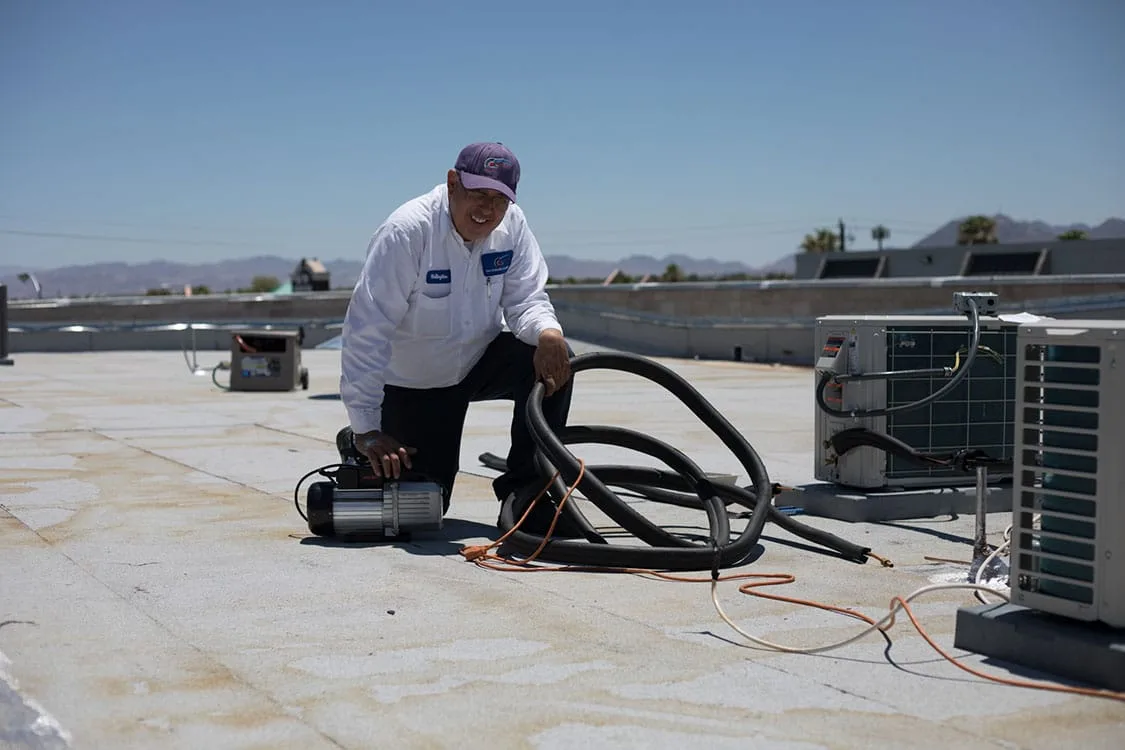


Experience Premium Comfort with Variable-Speed HVAC Technology
Get a Free Estimate
Fill out the form below. Our goal is to reach you within minutes.