

Short answer: The best time to prepare your Las Vegas AC for summer is March through early May -- before the first 100-degree day hits. A proper pre-season routine includes changing your filter, clearing your condenser, testing your system, scheduling a professional tune-up, and checking your thermostat programming. Homeowners who complete this checklist avoid the mid-summer breakdown rush, lower their energy bills by 10 to 25%, and extend their system's lifespan by years.
March: Foundation Work (Highs 65-75 degrees F)
March is your opportunity to handle the basics while temperatures are still mild and HVAC companies are not yet slammed with emergency calls.Replace Your Air Filter
If you did not change your filter during winter, it has been collecting dust for months. A dirty filter is the single most common cause of preventable AC problems. It restricts airflow, forces your system to work harder, increases energy consumption, and can cause the evaporator coil to freeze.
- Standard 1-inch filters: Replace every 30 to 60 days during cooling season in Las Vegas (monthly is ideal given our dust levels)
- 4-inch or 5-inch media filters: Replace every 3 to 6 months
- Choose the right MERV rating: MERV 8 to 11 provides a good balance of filtration and airflow for most Las Vegas homes. Higher MERV ratings (13+) can restrict airflow if your system is not designed for them
- Buy filters in bulk now: Purchase enough filters for the entire cooling season (6 to 8 standard filters). You will save money and never scramble to find one at the hardware store mid-summer
Clear the Area Around Your Outdoor Condenser
Your outdoor condenser unit needs unobstructed airflow to reject heat efficiently. Walk outside and inspect the unit:
- Remove any accumulated debris, leaves, trash, or landscaping clippings within 2 feet of the unit on all sides
- Trim back bushes, plants, or decorative screens that may have grown too close over winter
- Verify the condenser is level on its pad -- settling soil can tilt the unit over time, which stresses refrigerant lines and reduces efficiency
- Check that the electrical disconnect box near the condenser is accessible and not corroded
Schedule Your Professional Tune-Up
March is the ideal month to book a professional AC maintenance visit for April or early May. Here is why timing matters:
- HVAC companies start filling their schedules rapidly once temperatures climb above 90 degrees
- March scheduling gives you the widest selection of appointment times
- If the technician identifies a problem, you have weeks to address it before you need the AC running full-time
- Spring tune-up pricing is typically lower than summer emergency rates

April: System Testing and Optimization (Highs 80-90 degrees F)
April brings warm enough weather to meaningfully test your cooling system while still giving you a buffer before extreme heat arrives.Run a Full System Test
On a day when outdoor temperatures reach at least 80 degrees, set your thermostat to cool mode and drop it 5 degrees below the current indoor temperature. Then monitor:
- Does the system start within 1 to 2 minutes? Delayed starts can indicate a failing capacitor, contactor, or thermostat issue
- Does the outdoor unit start and run continuously? If it cycles on and off rapidly (every few minutes), the system may be short-cycling due to a refrigerant issue, electrical problem, or oversized unit
- Does air blow from all vents? Walk through every room and verify airflow at each register. Weak or no airflow from certain vents suggests duct disconnection, damper issues, or blockages
- Is the air cool? After 15 minutes of runtime, the supply air at the vent closest to the air handler should be 15 to 20 degrees cooler than the return air temperature. If it is less than 14 degrees cooler, the system may be low on refrigerant or the coil may need cleaning
- Any unusual noises? Grinding, squealing, banging, or clicking sounds from either the indoor or outdoor unit warrant professional inspection before summer
- Any unusual smells? Musty odors indicate potential mold in the ductwork or on the coil. A burning smell suggests an electrical issue. Either warrants an immediate service call
Check and Program Your Thermostat
Your thermostat is the brain of your cooling system. A few minutes of programming now saves you money all summer:
- Replace thermostat batteries if applicable (low batteries cause erratic system behavior)
- Set a summer schedule: Program higher temperatures (78 to 82 degrees) when the house is empty and comfortable temperatures (75 to 78 degrees) when you are home. Every degree higher saves approximately 3% on cooling costs.
- Enable "Auto" fan mode rather than "On." In auto mode, the fan only runs during cooling cycles, which improves dehumidification and reduces energy use. Keeping the fan on "On" continuously circulates air but can increase humidity and energy bills.
- Consider a smart thermostat upgrade: Smart thermostats learn your schedule, adjust automatically, and let you control temperatures remotely. They typically pay for themselves within one Las Vegas cooling season through energy savings of 10 to 15%.
Inspect Visible Ductwork
If you have accessible ductwork in your attic, garage, or crawl space, do a visual inspection:
- Look for disconnected sections, crushed flex duct, or visible holes and tears
- Check that duct connections at registers and the air handler are secure and sealed
- Feel for air leaking from joints while the system is running
- Note any areas where duct insulation has fallen away or compressed -- exposed ducts in a 150-degree Las Vegas attic lose enormous amounts of cooling capacity
Duct problems are responsible for 20 to 30% of cooling energy loss in many Las Vegas homes. If you find issues, schedule a professional duct repair before summer.
May: Final Preparations (Highs 95-105 degrees F)
May is your last comfortable window before Las Vegas summer arrives in full force. Complete these final steps:Complete Your Professional Tune-Up
If you scheduled your professional maintenance visit in March, it should happen in April or early May. A thorough professional AC tune-up includes:
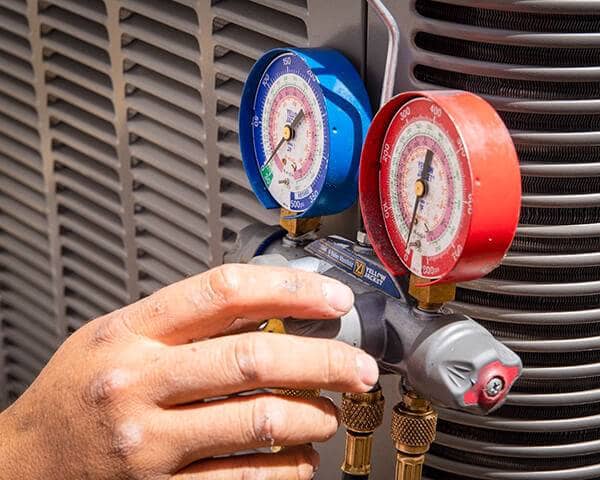
- Refrigerant level check: The technician measures refrigerant pressure against manufacturer specifications. Low refrigerant means a leak exists that needs repair -- simply topping off the refrigerant is a temporary fix that wastes money
- Electrical component inspection: Testing capacitors, contactors, relays, and wiring for wear or damage. Catching a $200 capacitor about to fail prevents a $0 cooling situation on a 112-degree Saturday
- Evaporator and condenser coil cleaning: Dirty coils reduce heat transfer efficiency by 10 to 30%. In Las Vegas, dust and hard water mineral buildup coat coils faster than in most climates
- Condensate drain clearing: The drain line that removes moisture from your system can clog with algae and debris, causing water damage or triggering a safety shutoff
- Blower motor and fan inspection: Checking motor amperage, bearing condition, and fan blade balance
- Temperature split measurement: Verifying that the system is producing the correct temperature differential between supply and return air
- Thermostat calibration: Ensuring the thermostat reading matches actual room temperature
Replace Your Filter Again
If you replaced your filter in March, it has now been collecting dust for two months -- including the spring wind season that blankets the valley in dust. Start summer with a fresh filter. This is the beginning of your monthly replacement schedule that should continue through October.
Prepare Your Home for Heat
Your AC does not work in isolation. The easier you make its job, the less energy it uses and the longer it lasts:
- Check weatherstripping around exterior doors. Gaps allow hot air infiltration that your AC must overcome
- Close blinds and curtains on south- and west-facing windows during afternoon hours. Solar heat gain through windows accounts for up to 30% of cooling load in Las Vegas homes
- Verify attic insulation. Las Vegas attics can exceed 150 degrees in summer. Inadequate insulation (below R-30) lets that heat radiate into your living space. The Department of Energy recommends R-38 to R-60 for Las Vegas attics
- Seal obvious air leaks around electrical outlets, plumbing penetrations, and recessed lighting on exterior walls and ceilings
- Ensure return air vents are unblocked. Furniture, curtains, or storage items blocking return vents starve your system of airflow and reduce efficiency
June Through September: Ongoing Summer Maintenance
Once summer arrives, shift to a monthly maintenance rhythm:Monthly Tasks
- Replace or clean your air filter -- every 30 days without exception during Las Vegas summer. Mark it on your calendar or set a phone reminder
- Rinse the outdoor condenser with a garden hose (from the top down, gentle pressure). Desert dust accumulates on the fins rapidly and reduces airflow. Do this monthly or after any dust storm
- Check the condensate drain line. Pour a cup of white vinegar or bleach solution down the drain line access point to prevent algae growth and clogs
- Monitor your energy bills. A sudden spike in NV Energy charges with no change in thermostat settings indicates a system efficiency problem that warrants investigation
Thermostat Best Practices for Peak Summer
- Do not set the thermostat below 72 degrees. Most residential AC systems in Las Vegas are designed to maintain roughly a 20 to 25 degree differential from outdoor temperature. On a 115-degree day, setting the thermostat to 68 forces the system to attempt a 47-degree differential, which it cannot achieve. The system runs non-stop, energy bills skyrocket, and the compressor is at risk of failure.
- 76 to 78 degrees is the sweet spot for balancing comfort and efficiency during extreme heat
- Use ceiling fans to supplement. Fans make 78 degrees feel like 74 degrees at a fraction of the energy cost. Just remember fans cool people, not rooms -- turn them off when you leave
- Raise the temperature when you leave. Set it to 82 to 85 degrees when the house is empty. Do not turn the AC off entirely -- restarting from 95+ degrees interior temperature is harder on the system and takes hours to recover
Signs of Trouble: What to Watch For
Even with thorough preparation, things can go wrong. Know what to watch for so you can catch problems early:- Ice on the refrigerant lines or indoor coil: Indicates low refrigerant, restricted airflow, or a failing component. Turn the system off and call for service
- Water pooling around the indoor unit: Clogged condensate drain or cracked drain pan. Needs immediate attention to prevent water damage
- Warm air from vents with the system running: Could be a refrigerant leak, compressor issue, or frozen coil. Turn the system off for 2 hours (run fan only to defrost), then restart. If the problem persists, call for AC repair
- Circuit breaker tripping repeatedly: Electrical issue that requires professional diagnosis. Do not keep resetting the breaker -- this can cause a fire hazard
- Rapid cycling (turning on and off every few minutes): Could be an oversized system, refrigerant issue, or electrical problem. Reduces efficiency and accelerates wear
- Unusual increase in humidity indoors: Your AC should dehumidify as it cools. Rising indoor humidity suggests the system is not running long enough per cycle or the evaporator coil is dirty
What a Professional Tune-Up Costs vs. What It Saves
A professional AC tune-up in Las Vegas typically costs $79 to $149. Here is what that investment prevents:
- Emergency repair during peak summer: $150 to $500+ in premium labor charges, plus days of waiting
- Dirty coil efficiency loss: $200 to $600 per year in wasted energy
- Premature system failure: $5,000 to $12,000 for early replacement that proper maintenance could have delayed by years
- Condensate water damage: $500 to $5,000+ in ceiling, flooring, or drywall repairs from a clogged drain line
The math is clear: $100 in spring maintenance prevents $500 to $5,000+ in summer problems. Our maintenance plans include priority scheduling, which means you jump ahead of the queue if you do need a repair during peak season.
Your 2026 Pre-Season Checklist Summary
March
- Replace air filter
- Clear debris from outdoor condenser (2-foot clearance on all sides)
- Schedule professional tune-up for April or May
- Buy filters in bulk for the cooling season
April
- Run full system test on a warm day (80 degrees F+)
- Check all vents for airflow
- Program thermostat with summer schedule
- Inspect accessible ductwork
- Replace thermostat batteries
May
- Complete professional tune-up
- Replace filter again (start monthly schedule)
- Check weatherstripping on exterior doors
- Close window coverings on south/west windows
- Verify attic insulation levels
- Unblock all return air vents
June Through September (Monthly)
- Replace air filter
- Rinse outdoor condenser with hose
- Pour vinegar down condensate drain line
- Monitor energy bills for unexplained spikes
Schedule Your 2026 Pre-Season Tune-Up
The Cooling Company has been keeping Las Vegas homes cool since 2011. As a Lennox Premier Dealer with BBB A+ rating, we provide thorough 20+ point tune-ups, honest assessments, and upfront pricing with no surprise charges. Our technicians will tell you exactly what your system needs -- nothing more, nothing less.
We serve homeowners across the entire Las Vegas Valley, including Summerlin, Henderson, North Las Vegas, Green Valley, Centennial Hills, Mountains Edge, Aliante, Southern Highlands, Anthem, Enterprise, Paradise, Spring Valley, and Sunrise Manor.
Call (702) 567-0707 today to schedule your spring tune-up, or book your appointment online. Spots fill fast once temperatures start climbing -- the homeowners who call in March and April are the ones who stay comfortable all summer.
Related Resources
- What Is Included in an AC Tune-Up?
- HVAC Tune-Up Checklist
- How to Maximize AC Efficiency
- Top Air Conditioner Tips for Las Vegas
- Maintenance Plans and Pricing