
Short answer: Seven HVAC upgrades deliver measurable ROI in Las Vegas: duct sealing (saves 20-30% on cooling costs), variable speed motors (40-75% blower energy savings), zoning systems (up to 30% energy reduction), smart thermostats ($100-$200 annual savings), coil cleaning (restores up to 30% lost efficiency), refrigerant charge optimization (5-20% efficiency gain), and attic insulation (15-25% lower cooling bills). Most pay for themselves in one to three Las Vegas cooling seasons.
Your AC runs roughly 2,800 hours per year in Las Vegas. That is four months of nonstop operation compressed into a seven-month cooling season, from March through October. When outdoor temps hit 115 and your attic soaks up 150+ degrees of radiant heat, every percentage point of wasted efficiency shows up on your NV Energy bill.
The good news: you do not need a full system replacement to reclaim that efficiency. Targeted performance upgrades can drop your cooling costs by hundreds of dollars annually, extend equipment life, and keep every room in the house comfortable even on the worst July afternoons.
Here are seven upgrades ranked by return on investment for Las Vegas homeowners, with real numbers from local installs and desert-specific considerations you will not find in a generic HVAC guide.
1. Duct Sealing: The Highest-ROI Upgrade You Are Probably Ignoring
The average Las Vegas home loses 25-40% of conditioned air through duct leaks before it ever reaches a register. In a valley where 90% of ductwork runs through unconditioned attics baking at 140-160 degrees in summer, those leaks are not just wasteful. They are brutal.
A duct system leaking 30% forces your compressor to run roughly a third longer to maintain setpoint. That is an extra $40-$80 per month on a typical Las Vegas summer bill.
What professional duct sealing involves:
- Pressure testing with a duct blaster to measure total leakage (expressed in CFM25)
- Sealing joints, connections, and boot-to-drywall gaps with mastic or Aeroseal
- Verifying post-seal leakage against ACCA standards (target: under 4% of total airflow)
- Re-insulating any sections where R-6 or R-8 wrap has deteriorated
Las Vegas ROI: Professional duct sealing runs $1,200-$2,500 for a typical single-story home. At $50-$80/month in summer savings and $15-$25/month during shoulder months, most homeowners recoup the cost in 18-30 months. That makes it the single highest-return upgrade available. For a deeper look at how leaking ducts affect your system, see our guide to detecting and fixing leaking air ducts.
2. Variable Speed Blower Motors: Precision Airflow for Desert Conditions
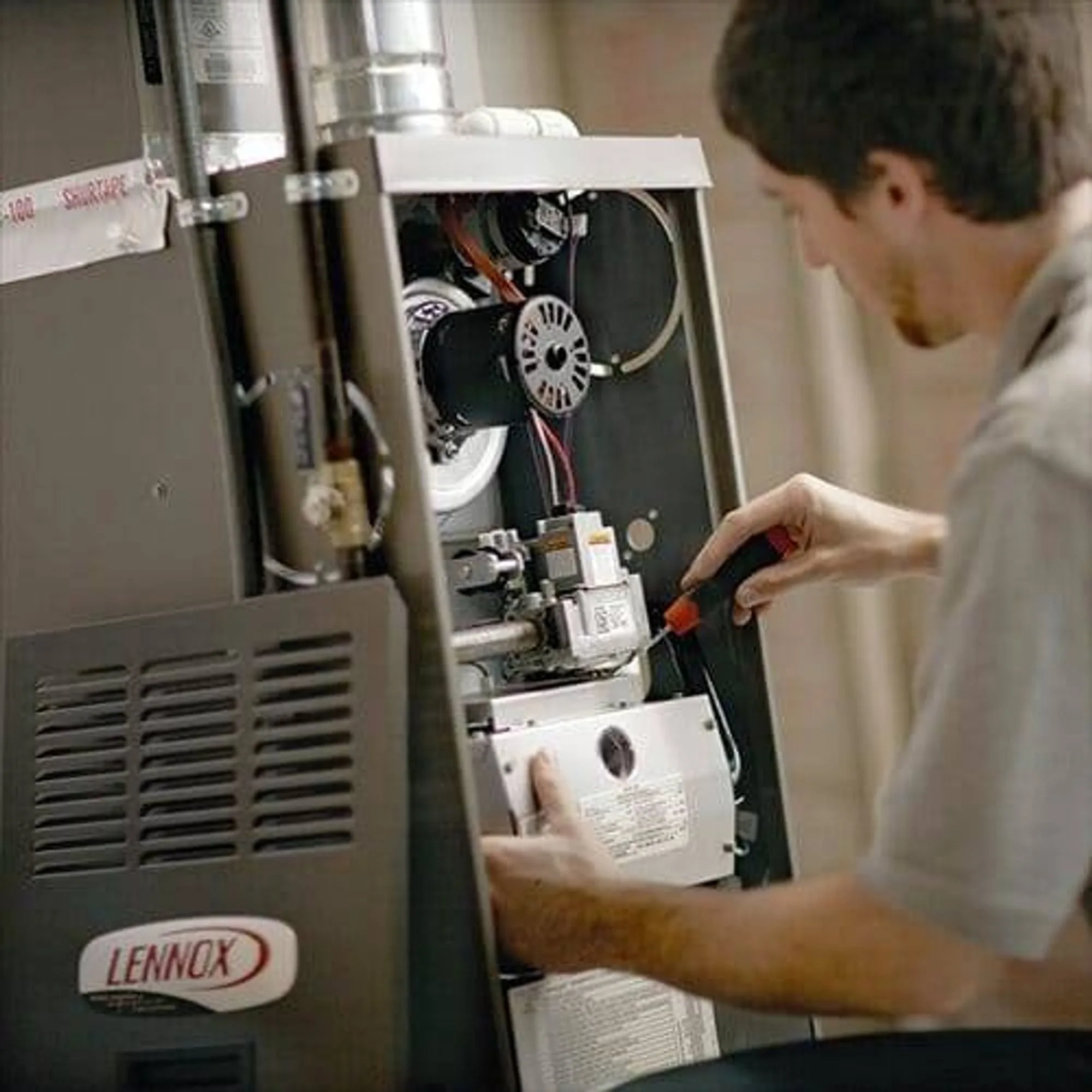
Standard single-speed blower motors have two settings: full blast and off. That works fine in mild climates. In Las Vegas, where your system cycles dozens of times per day for seven months straight, that constant on-off hammering wastes energy, creates temperature swings, and wears out components faster.
Variable speed (ECM) motors ramp up and down based on demand. They run at lower speeds most of the time, consuming 40-75% less electricity than a PSC motor while delivering steadier temperatures and better dehumidification during monsoon season.
Why this matters in Las Vegas specifically:
- Desert dust infiltration drops when airflow stays consistent rather than surging and stopping
- Quieter operation at low speed (a big deal when the system runs 18+ hours a day)
- Better humidity control during July-September monsoon storms
- Longer compressor life because the system ramps rather than hard-starting
Las Vegas ROI: Replacing a PSC motor with an ECM costs $800-$1,500 installed. Blower energy savings of $200-$400 per year are typical in Las Vegas, putting payback at two to four cooling seasons. If your current blower motor fails, upgrading to variable speed at that point is close to a no-brainer. Talk to your technician during your next HVAC maintenance visit about whether your air handler supports an ECM retrofit.
3. Zoning Systems: Stop Cooling Rooms Nobody Is Using
Most Las Vegas homes run a single thermostat that treats the entire house as one zone. The master bedroom on the west side bakes in afternoon sun while the east-facing guest room stays cool. The system runs longer trying to satisfy the hottest room, overcooling every other space in the process.
Zoning systems use motorized dampers in the ductwork and multiple thermostats to direct airflow where it is actually needed. A well-designed two- or three-zone system can cut total cooling runtime by 20-30%.
Desert-specific zoning considerations:
- West-facing rooms in Las Vegas absorb 30-50% more solar heat than east-facing rooms by late afternoon. Zoning lets you send extra cooling there without freezing the rest of the house.
- Two-story homes gain the most. Second floors in Las Vegas routinely run 8-12 degrees warmer than ground level without zoning.
- Pair zoning with a variable speed system for the best results. The blower adjusts output to match however many zones are calling for air.
Las Vegas ROI: A two-zone retrofit runs $2,000-$3,500 installed. Three or four zones typically cost $3,500-$5,500. Annual savings of $300-$600 are realistic in homes with significant solar exposure variance, putting payback at three to five years. The comfort improvement is often worth more than the dollar savings.
4. Smart Thermostats: Automation That Understands Desert Schedules
A smart thermostat is the lowest-cost, easiest-to-install upgrade on this list. But the savings depend entirely on how you use it, and Las Vegas heat creates specific programming opportunities that a homeowner in Portland would never think about.
Las Vegas smart thermostat strategies that actually move the needle:
- Pre-cooling: Drop your setpoint 2-3 degrees before NV Energy's peak rate window (1-7 PM summer). Cooling the house from 74 to 72 at off-peak rates costs less than holding 76 during peak.
- Occupancy-based setbacks: Raising the thermostat to 82-85 degrees while you are at work saves 10-15% on cooling. Smart models learn your schedule automatically.
- Geofencing: The thermostat detects when you leave and arrive via your phone. Starts cooling 20-30 minutes before you get home so it is comfortable on arrival.
- Humidity monitoring: During monsoon season, some smart thermostats can trigger the fan to run for dehumidification even when the compressor is off.
Las Vegas ROI: Smart thermostats cost $150-$350 installed. Annual savings of $100-$200 are well-documented in desert climates, with payback in one to two years. NV Energy has offered rebates on qualifying Wi-Fi thermostats, so check current incentives before purchasing.
5. Evaporator and Condenser Coil Cleaning: Restoring Lost Capacity
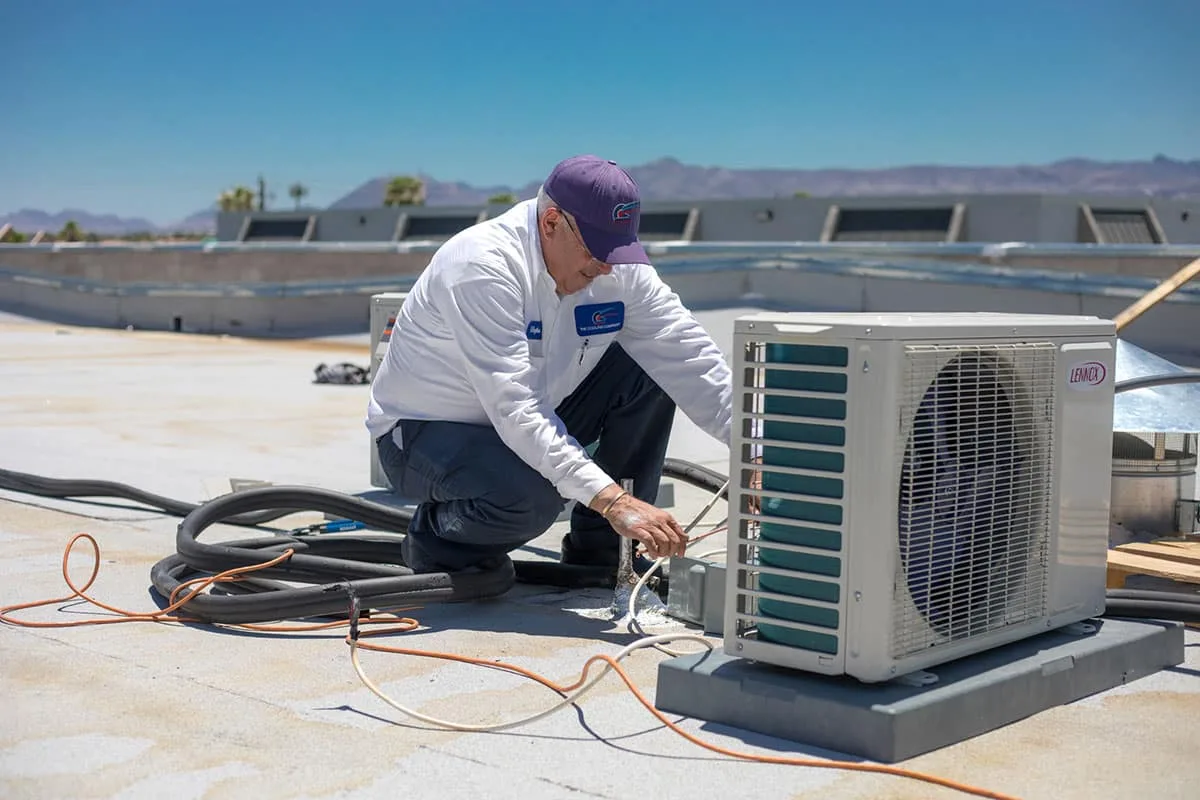
Las Vegas dust is relentless. Fine particulate from the Mojave coats everything, and your HVAC coils are no exception. A dirty evaporator coil can reduce cooling capacity by 7-30%. A dirty condenser coil forces higher head pressure, making the compressor work harder and consume more electricity.
The problem compounds: after one Las Vegas summer without cleaning, coil efficiency drops. After two summers, you are paying significantly more for noticeably less cooling. After three, you are risking compressor damage from sustained high-pressure operation.
What professional coil cleaning involves:
- Evaporator coil: chemical foam cleaner application, rinse, condensate drain flush, drain pan inspection
- Condenser coil: high-pressure rinse from inside out (never outside in, which pushes debris deeper), fin straightening, debris removal from the unit base
- Both should be done as part of a spring tune-up before the heavy cooling season begins
Las Vegas ROI: Professional coil cleaning runs $150-$350 for both coils. If your system has lost 15-20% efficiency from dirty coils, cleaning restores that performance immediately. On a system that costs $250-$400/month to run in peak summer, recovering even 15% saves $37-$60/month. Payback happens in a single billing cycle. This is included in most professional HVAC service plans.
6. Refrigerant Charge Optimization: The Invisible Efficiency Killer
Refrigerant charge is one of the most overlooked factors in HVAC efficiency. Studies from the Department of Energy show that 60-70% of residential AC systems have incorrect refrigerant charge. That is not a typo. The majority of systems are either overcharged or undercharged, and both conditions waste energy.
In Las Vegas, the consequences are amplified. An undercharged system running in 110+ degree heat cannot reject enough heat at the condenser, causing the compressor to work overtime and eventually fail. An overcharged system floods the compressor with liquid refrigerant, risking immediate damage.
What proper charge optimization looks like:
- Measuring superheat and subcooling at both the evaporator and condenser
- Comparing readings against manufacturer specifications for the current outdoor temperature
- Adjusting charge in small increments and re-measuring
- Checking for leaks at service valves, flare connections, and the evaporator coil if charge is low
A system that is 10% undercharged loses roughly 5-20% of its cooling capacity. At Las Vegas electricity rates, that translates to $20-$50 per month in wasted energy during peak summer.
Las Vegas ROI: Refrigerant charge verification and adjustment typically costs $150-$300 during a service call (assuming no leak repair is needed). The efficiency gains are immediate and sustain for the life of the charge. If your system has never had its charge verified with proper instruments (not just a pressure gauge), schedule this during your next maintenance visit.
7. Attic Insulation: The Thermal Barrier Between You and 150-Degree Heat
Your attic is the largest source of heat gain in a Las Vegas home. On a 115-degree day, attic temperatures reach 150-160 degrees. If your insulation is thin, compressed, or missing in spots, that heat radiates directly into your living space, forcing the AC to work far harder than it should.
Most Las Vegas homes built before 2010 have R-19 to R-25 attic insulation. Current code calls for R-38, and energy modeling shows R-49 delivers measurable additional savings in our climate. The difference between R-19 and R-38 is substantial, cutting heat gain through the ceiling by roughly 40%.
Las Vegas attic insulation specifics:
- Blown cellulose or fiberglass is the standard for existing homes. Both work. Cellulose settles less over time in dry climates.
- Radiant barriers (foil-faced sheathing on the underside of the roof deck) can reduce attic temperature by 20-30 degrees and are especially effective in Las Vegas due to intense direct solar radiation.
- Air sealing before adding insulation is critical. Gaps around can lights, plumbing penetrations, and top plates let conditioned air escape into the attic. Sealing these first can improve insulation effectiveness by 25-40%.
- Check for compressed or shifted insulation around ductwork. In many older Las Vegas homes, attic ducts sit directly on the ceiling with insulation pushed aside, creating massive heat gain right at the supply lines.
Las Vegas ROI: Adding insulation from R-19 to R-38 costs $1,500-$3,000 for a typical 1,800-2,200 square foot home. A radiant barrier adds $800-$1,500. Annual cooling savings of 15-25% on the cooling portion of your bill are documented, which in Las Vegas means $300-$600 per year. Combined with duct sealing, this upgrade can cut summer cooling costs by 35-50%.
Stacking Upgrades: Where the Real Savings Happen
Each of these upgrades delivers standalone value, but the math gets interesting when you combine them. Duct sealing plus attic insulation eliminates the two biggest sources of wasted energy in a Las Vegas home. Add a smart thermostat and coil cleaning, and you have addressed both the delivery system and the control system.
A reasonable approach for most homeowners:
- Start with coil cleaning and refrigerant charge verification during your next maintenance visit. Lowest cost, fastest payback.
- Add a smart thermostat if you do not already have one. Easy install, immediate savings.
- Get a duct leakage test. If leakage exceeds 15%, seal the ducts. This is the biggest single upgrade for most homes.
- Evaluate attic insulation. If you are below R-30, adding insulation delivers strong returns.
- Consider zoning and variable speed when replacing equipment or if comfort issues persist after the above steps.
For homeowners ready to take the next step, our team at The Cooling Company can evaluate your specific system and home to prioritize which upgrades will deliver the best returns. We perform comprehensive diagnostics, not guesswork. Browse our AC installation page for information on full system upgrades, or call us to discuss targeted performance improvements.
Frequently Asked Questions
Which HVAC upgrade has the fastest payback in Las Vegas?
Coil cleaning and refrigerant charge optimization pay for themselves in a single billing cycle. A dirty coil can cost you $37-$60 per month in lost efficiency during peak summer, and cleaning costs $150-$350. Duct sealing has the best long-term ROI, typically paying back in 18-30 months, with savings that continue for the life of the ductwork. Smart thermostats fall in between, with payback in one to two years depending on your usage habits and whether you take advantage of NV Energy peak-rate scheduling.
Can I do any of these upgrades myself, or do I need a professional?
Smart thermostat installation is a straightforward DIY project for most homeowners, as long as you have a C-wire or use an adapter kit. Basic condenser coil rinsing with a garden hose can help between professional cleanings. Everything else, including duct sealing, refrigerant charge work, variable speed motor installation, and zoning system design, requires a licensed HVAC technician. Refrigerant handling in particular requires EPA Section 608 certification, and incorrect duct sealing can create pressure imbalances that damage equipment.
How much can I realistically save by combining multiple upgrades?
In Las Vegas, combining duct sealing, attic insulation, coil cleaning, and a smart thermostat typically reduces summer cooling costs by 35-50%. For a home spending $350-$500 per month on summer electricity, that translates to $120-$250 per month in savings. The total investment for all four upgrades ranges from $3,000-$6,000, with full payback in two to three cooling seasons. After that, the savings are pure return.
How often should these upgrades be maintained or re-checked?
Coil cleaning should happen at least once per year, ideally in spring before heavy cooling season. In Las Vegas, twice-yearly cleaning is recommended for homes near construction zones or open desert. Refrigerant charge should be verified annually during your maintenance visit. Smart thermostats and zoning systems need firmware updates and occasional recalibration but are largely maintenance-free. Duct sealing lasts 10-15 years or more. Attic insulation is permanent unless physically disturbed, though it should be inspected every few years for settling or displacement.
Are there rebates or tax credits for these HVAC upgrades in Nevada?
NV Energy periodically offers rebates on smart thermostats, insulation upgrades, and high-efficiency HVAC equipment. Federal tax credits under the Inflation Reduction Act cover qualifying insulation improvements (up to $1,200 per year for envelope upgrades) and high-efficiency HVAC equipment. Variable speed systems and heat pumps meeting specific efficiency thresholds may qualify for up to $2,000 in federal credits. Check NV Energy's current rebate page and consult a tax professional for the latest eligibility details, as programs and amounts change annually.
Get a Performance Assessment for Your Las Vegas HVAC System
The Cooling Company provides comprehensive HVAC performance evaluations for Las Vegas homeowners. Our NATE-certified technicians measure duct leakage, verify refrigerant charge, test airflow, and inspect insulation to identify exactly where your system is losing efficiency. No guessing, no upselling. Just data-driven recommendations ranked by ROI for your specific home.
As a Lennox Premier Dealer and BBB A+ rated company serving the Las Vegas valley since 2011, we stand behind every recommendation with upfront pricing and a 100% satisfaction guarantee.
We serve Summerlin, Henderson, North Las Vegas, Green Valley, Centennial Hills, Mountains Edge, Aliante, Anthem, Southern Highlands, Skye Canyon, Cadence, and all Las Vegas valley communities.
Call (702) 567-0707 to schedule a performance assessment, or visit our HVAC services page to explore our full range of maintenance and upgrade options.