


Short answer: Power surges from storms and outages can trip breakers, reset your thermostat programming, blow capacitors, and engage furnace safety lockouts. After power returns, reset the furnace breaker, check your thermostat settings, and wait 5 minutes for the system to restart. If it won't start after one reset, call (702) 567-0707 — surge damage may need professional repair.
Check the thermostat, power, and filter first to fix most no-heat calls quickly. Smell gas or a CO alarm requires immediate evacuation. For furnaces check ignition and flame sensors. For heat pumps inspect the outdoor unit for ice and fan or compressor noise. Call a technician for safety or major parts. (Source: ASHRAE Technical Resources)
Key Takeaways
- Power surges can trip furnace breakers, reset thermostat schedules, and blow run capacitors — check all three after an outage.
- Wait 5 minutes after power returns before resetting; rapid cycling during voltage fluctuations can damage the compressor or control board.
- If the system won't restart after one breaker reset, a surge may have damaged internal components — call a licensed technician.
What should I check first for safety?
Always start with safety before troubleshooting. Look for gas smells, burning odors, or visible sparks. If you detect any of these, leave the home and call emergency services or your gas utility from a safe distance.
After you confirm safety, work through the quick checks in this order: thermostat, breakers, the furnace switch, and the air filter. These steps take minutes and often fix simple problems. Keep a flashlight and a pen to note anything unusual.
Is the thermostat set correctly?
Confirm the thermostat is set to HEAT and the setpoint is above current room temperature. For programmable models switch to HOLD to bypass schedules and test. Many problems are just a mode or schedule issue that trips up homeowners in winter.
Digital thermostats can show error codes or a blank screen. Replace AA or AAA batteries when the display is dim. If a smart thermostat has power issues, a common wire problem may exist and an HVAC tech can add one.
Have you checked the circuit breaker?
Open the breaker box and look for any tripped switches. A tripped breaker often sits between ON and OFF, or shows a red tab. Flip it fully to OFF then back to ON to reset and test the system again.
If a breaker trips again, stop resetting and call a professional. Repeated trips can mean a shorted motor, a bad capacitor, or wiring trouble. Note which breaker serves the furnace and which serves the outdoor unit.
Is the thermostat battery dead?
Thermostat batteries can die without warning. Replace AA or AAA cells when the display is weak or blank. A fresh battery often restores control and avoids an unnecessary service call in cold weather.
If batteries fail repeatedly, the thermostat may lack a common wire or there could be a wiring fault. A tech can add a common wire or diagnose control power to stop repeated battery issues.
Where is the furnace switch and is it on?
Many systems have a service switch on or near the furnace cabinet. It looks like a light switch and may have been turned off during maintenance. Flip it on and try the system again after a minute.
Also check the gas valve near a gas furnace. When open the handle runs parallel to the pipe. Do not turn gas valves if you smell gas or suspect damage; call the gas company or a pro.
Have I inspected the air filter?
A clogged filter reduces airflow and can cause the furnace to overheat and shut down. Remove the filter and hold it to light. If you cannot see light through most of it, replace the filter with the correct size.
Filters typically need changing every one to three months. Homes with pets or heavy use may need monthly changes. Keeping the filter clean improves airflow, comfort, and system life. (Source: ASHRAE Technical Resources)
Are supply vents open and unobstructed?
Walk through rooms and check that supply registers and return grilles are open. Furniture, curtains, or rugs can block airflow and leave rooms cold. Open vents help balance heat across the house.
Also inspect any manual dampers in ductwork and make sure they are not closed. If many rooms stay cold, duct balancing or a tech visit may be needed to restore even heating.
How do I diagnose by system type?
Heating systems show different issues based on how they move heat. Identify whether you have a gas furnace, heat pump, boiler, or electric baseboard. That helps pick the right checks and describe the problem to a technician.
Start with the universal checks above: thermostat, power, and airflow. Then use system-specific tests, like looking for an outdoor unit fan on heat pumps, or checking for a hot boiler and cold radiators on hydronic systems.
How do I check a gas furnace?
Confirm the furnace has power and the gas valve is open. Listen for the inducer motor, the sound of ignition, and then the burner flame. If the unit tries to light but shuts off, a dirty flame sensor or failed ignitor is likely.
Unusual noises like bangs or repeated clicking can signal delayed ignition or blocked venting. If you hear those sounds, shut the system down and call a certified technician to inspect the combustion path and safety devices.
Can the outdoor unit fan run?
For heat pumps the outdoor unit must spin during heating. If the indoor fan runs but the outdoor fan does not, check the outdoor breaker and disconnect switch. Power loss is a common cause of no heat from a heat pump.
If power is present but the fan will not spin, the fan motor or the run capacitor may have failed. Also listen for unusual compressor noise, which could mean a more serious mechanical fault requiring a technician.
How do I inspect a boiler system?
A boiler heats water and uses a circulator pump to move heat. If the boiler is hot but radiators or baseboards stay cold, the pump or a zone valve may be stuck. Check for pump vibration and listen for circulation sounds.
Many boilers have a pressure gauge. If pressure is low the system may not circulate. Bleeding air from radiators can restore flow. For any complex work on boilers call a licensed plumber or HVAC tech.
What to do if the pilot light is out?
Some older gas furnaces have a standing pilot. If the pilot is out follow the manufacturer's procedure to relight, or call a technician. If the pilot keeps going out, the thermocouple may be failing and needs service.
Never try to relight a pilot if you smell gas. In that case evacuate and call the gas company. Repeated pilot outages can mean a larger gas control problem that must be handled safely by pros.
How do I troubleshoot electric baseboard heat?
Electric baseboards use resistance elements to make heat. If some units are cold, check the breaker and the local thermostat. Line-voltage thermostats may need an electrician to replace them safely.
Dust and blocked baseboard fins reduce heat output. Clean gently and ensure furniture is not blocking flow. If multiple zones are dead despite breakers on, call a technician to test wiring and heating elements.
What DIY fixes can I try today?
Try low-risk checks that can restore heat quickly. These steps give clues and sometimes fix the issue. Avoid anything involving gas lines, refrigerant, or high-voltage wiring unless you are qualified. [Point 1] (Source: ASHRAE Technical Resources)
Take notes of what you tried and the results. A clear timeline and list of observations save technician time and may reduce the repair bill. Keep photos or short videos of error displays.
How do I safely change the air filter?
Turn the system off at the thermostat first. Slide open the return grille or the furnace filter slot. Hold the old filter to light and replace it if most of the surface blocks light. Insert the new filter with the airflow arrow pointing inward.
Use the right filter size and note the MERV rating. High-MERV filters improve air quality but can restrict airflow if the blower is weak. Set calendar reminders to change the filter on schedule.
How can I reset the furnace or breaker?
Turn the furnace off at the service switch on the cabinet. Go to the main breaker box and switch the furnace and outdoor unit breakers fully to OFF, then back to ON. Wait a few minutes and test the thermostat again.
If the breaker trips again, do not keep resetting it. Repeated trips can mean a serious electrical fault. Call an HVAC technician or electrician to diagnose and fix the root cause safely.
What thermostat tweaks might restore heat?
Raise the setpoint a few degrees to see if the system starts. For programmable units switch to HOLD to bypass the schedule. Replacing old batteries or swapping in a simple thermostat can confirm whether the thermostat is the issue.
Smart thermostats sometimes need firmware updates or reboots. If you suspect wiring or power problems, switch power off before inspecting terminals. A quick thermostat test often saves an unnecessary service visit.
When should I call a professional?
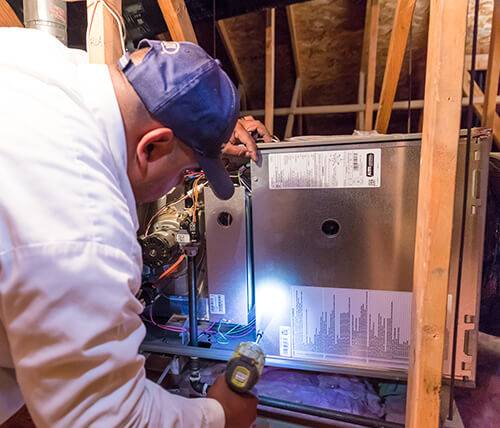
Call a licensed technician whenever a safety risk exists or when the fix needs special tools. Leave gas, refrigerant, and electrical repairs to trained pros. If DIY checks do not restore heat, call for service.
A technician will use gauges, meters, and inspection tools to find the cause faster. They can also explain whether repair or replacement is the best option based on age and cost. Keep service records handy for that discussion.
When is a gas smell an emergency?
A gas smell is always an emergency. Evacuate everyone right away and call your gas company or 911 from a safe location. Avoid turning switches or phones on inside the house until you are outside and safe.
Do not re-enter until the utility or emergency responders confirm it is safe. After the leak is fixed have all fuel-burning appliances inspected before use to prevent repeat danger.
Should I leave if the CO alarm sounds?
Yes. Any carbon monoxide alarm requires immediate evacuation. Move to fresh air, call emergency services, and do not re-enter until responders clear the home. CO exposure can be life threatening even at low levels.
Install CO detectors on each level and near bedrooms. Test detectors monthly and replace batteries per the manufacturer. Prompt action with CO alarms protects your household and pets.
What info should I tell the HVAC technician?
Give a clear timeline of the problem, when it started, and what you already checked. Note any smells, unusual noises, and error codes shown on displays. Mention the last service date and the unit age.
Photos or short videos of the outdoor unit, pilot flame, or error lights help. Clear details speed diagnosis and often reduce time on site, which can lower your bill. [Point 2] (Source: ASHRAE Technical Resources)
How much does a typical repair cost?
Small fixes like filters or batteries typically cost under $200. Mid-range repairs such as ignitors, flame sensors, or capacitors often fall between $200 and $1,200. Major work like compressor or heat-exchanger replacement can exceed $1,500.
Get a written estimate before committing to major repairs. Ask whether labor, parts, and permits are included. Compare repair cost against the unit age to guide repair versus replacement.
How long do common repairs usually take?
Small tasks like filter changes or resets take minutes. Replacing an ignitor or cleaning a flame sensor typically takes one to two hours. Compressor or motor jobs can take a day or more, depending on parts availability.
If a needed part is not on the truck, expect a follow-up. Ask about emergency options and average wait times, especially during peak service seasons when demand rises sharply.
Why might my heat stop working?
Heat can stop for many reasons, from a dead thermostat to complex mechanical failure. Causes fall into basic fixes you can try and deeper problems that need tools and training to fix safely.
Age and lack of maintenance raise the chance of failure. Our common heater problems guide lists the most frequent winter failures. Safety shutdowns due to blocked venting, a cracked heat exchanger, or a tripped safety switch also cause no-heat situations. Address safety triggers promptly.
Could a dirty filter cause no heat?
Yes. A clogged filter limits airflow and can cause the furnace to overheat and shut off. Even when the unit runs, restricted airflow yields weak warm output at registers. Replacing the filter is often the fastest fix.
Long-term use with a clogged filter stresses the blower motor and can cause uneven heating and higher bills. Regular checks and timely replacements extend equipment life and reduce service calls.
Can a tripped breaker shut off heating?
Absolutely. A tripped breaker will stop furnaces and outdoor compressors. If a breaker trips repeatedly do not keep resetting it. Repeated trips can indicate shorted wiring, a failed motor, or a bad capacitor.
Label breakers to find furnace and outdoor unit circuits quickly. Check fused disconnects near the outdoor unit as well. Clear labels save time in an outage and during service visits.
Is a faulty thermostat a likely cause?
Thermostats are a common reason systems do not call for heat. Loose wiring, dead batteries, or failed sensors can stop the control signal. Many smart thermostats need a common wire for reliable power.
If you suspect the thermostat, swap in a basic battery-powered model to test. Replacement often fixes intermittent issues and is usually a same-day job for a technician or a handy homeowner.
Could a failed ignition or pilot be the issue?
Yes. A failed ignitor or pilot prevents gas from lighting. Symptoms include repeated ignition attempts with no flame, or the furnace starting then shutting off. Dirty flame sensors also cause similar behavior and are often cleanable.
If the hot surface ignitor is cracked or weak it needs replacement. These parts are fragile and usually replaced the same day by a technician with the correct part on hand.
Can a cracked heat exchanger be dangerous?
A cracked heat exchanger can leak combustion gases and carbon monoxide into living spaces. If a technician suspects a crack the unit may be deemed unsafe and replacement recommended. Safety is top priority with heat-exchange failures. [Point 3] (Source: ASHRAE Technical Resources)
Look for soot, rust, or odd smells around the furnace. If you have any CO alarm alerts, evacuate and schedule inspection right away. Never run a furnace you suspect is leaking combustion gases.
Are frozen coils or low refrigerant a heat pump problem?
Yes. Ice on the outdoor coil or thick buildup around the fan and compressor prevents heat transfer. Low refrigerant also reduces heating and can cause repeated icing. Both conditions need a trained HVAC technician with gauges.
Let the unit run through a normal defrost cycle to clear light frost. If heavy ice returns, call a pro. Avoid chipping or forcing ice off the unit, which can damage fins and coils.
Could a clogged condensate drain stop the system?
High-efficiency furnaces and many air handlers drain condensate. A clogged line can trip a safety switch and shut the system down. Look for water near the unit or a pump that runs and fails to move water.
You may qualify for federal tax credits that reduce your upfront cost.
Clearing the condensate line or replacing a failed pump is often a moderate-cost fix. See our furnace maintenance checklist for a full pre-season inspection list. Add checking the drain to your preventive list each fall to avoid winter shutdowns.
Is compressor failure common and costly?
Compressor failure is one of the costliest HVAC repairs. Replacing a compressor can cost hundreds to several thousand dollars depending on the unit. On older systems technicians may recommend full replacement instead of repair.
Signs of a bad compressor include loud knocking noises, the outdoor unit not starting, or breakers tripping. See our compressor cost guide for repair versus replacement pricing. A technician will test refrigerant, contactors, and capacitors before diagnosing compressor failure.
How can I get help now?
If your DIY checks do not fix the problem, call a licensed HVAC company. For safety issues such as gas smells or CO alarms evacuate and call emergency services first. Then contact a local professional for a fast inspection.
Las Vegas area readers can call The Cooling Company at (702) 567-0707 for service. The Cooling Company offers emergency diagnostics and repairs across Las Vegas, Henderson, and North Las Vegas. Tell the scheduler what you checked so the crew arrives ready to help.
How do I schedule an inspection?
Las Vegas area readers should call The Cooling Company at (702) 567-0707 to book a prompt inspection. Provide the unit type, age, and a brief symptom list. That helps the team bring the right parts and tools to the visit.
If you live outside the Las Vegas area, look for NATE-certified technicians for qualified service. The NATE site lists certification information and helps you find trained techs in your area. After a local visit, follow the safety steps above.
What happens during a service visit?
A technician inspects power, controls, burners or heat sources, and airflow. They read error codes, test safety devices, and measure temperatures and pressures as needed. The tech explains findings and gives repair or replacement options with written estimates.
Common fixes are often completed on the first visit. If a major part is needed the tech will schedule a return visit and provide a clear timeline. You will receive a written invoice and maintenance tips to avoid repeat problems.
If you need immediate help in the Las Vegas area, call The Cooling Company at (702) 567-0707 now. We serve Las Vegas, Henderson, and North Las Vegas with fast diagnostics, emergency service, and honest pricing. For readers outside our area, find a NATE-certified professional at natex.org and follow the troubleshooting steps above before a visit.
Related reading: what to explore next?
Need HVAC service help in Las Vegas?
If you're facing an HVAC emergency in Las Vegas, Henderson, or North Las Vegas, The Cooling Company offers fast, reliable service from licensed technicians. We understand that heating and cooling emergencies don't wait for business hours.
Call us now at (702) 567-0707 for emergency service. Our team is ready to help restore your comfort quickly and safely.
About The Cooling Company
- Phone: (702) 567-0707
References
- U.S. Department of Energy (Energy.gov) (accessed 2025-12-22)
- U.S. Environmental Protection Agency (EPA) (accessed 2025-12-22)
- ASHRAE (Standards and guidance) (accessed 2025-12-22)
- ENERGY STAR (Heating & cooling) (accessed 2025-12-22)
Related service: Considering a heat pump for your Las Vegas home? Explore our heat pump installation and heating services services for Las Vegas homeowners.
Need HVAC Service in Las Vegas?
The Cooling Company provides expert HVAC service throughout Las Vegas, Henderson, and North Las Vegas. Our licensed technicians deliver honest assessments, upfront pricing, and reliable results.
Call (702) 567-0707 or visit heating services, furnace repair, heat pump installation, or heating maintenance for details.