

Flow Sensor
A flow sensor is an instrument that measures the rate of water, air, or other fluids moving through a system. In HVAC and water heating, these sensors help monitor airflow and hydronic flow to keep equipment operating efficiently, detect abnormal conditions, and support automatic control. Flow sensors come in several types, including turbine, ultrasonic, and thermal designs, each suited to specific flow ranges and media.
💡 Key Takeaways
- ✓A flow sensor is an instrument that measures the rate of water, air, or other fluids moving through a system. In HVAC and water heating, these sensors help monitor airflow and hydronic flow to keep equipment operating efficiently, detect abnormal conditions, and support automatic control. Flow sensors come in several types, including turbine, ultrasonic, and thermal designs, each suited to specific flow ranges and media.
- ✓Choose a sensor based on fluid type, flow range, and installation conditions.
- ✓Incorrect installation (straight pipe length, orientation) can cause inaccurate readings.
- ✓Smart sensors can integrate with building controls for alarms, analytics, and optimization.
Flow Sensor
/floʊ ˈsɛnsər/
Definition
A flow sensor is an instrument that measures the rate of water, air, or other fluids moving through a system. In HVAC and water heating, these sensors help monitor airflow and hydronic flow to keep equipment operating efficiently, detect abnormal conditions, and support automatic control. Flow sensors come in several types, including turbine, ultrasonic, and thermal designs, each suited to specific flow ranges and media.
Why are flow sensors important in HVAC and water heating?
They verify airflow or water flow, helping systems stay efficient, safe, and stable while enabling automated control.
Source: The Cooling Company

Quick Facts
How Flow Sensor Works
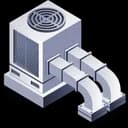
Flow sensors provide real-time data for HVAC and water heating control.
Real-World Application
In a commercial HVAC system, a flow sensor helps balance air distribution and verifies chilled water flow to coils. In water heating, flow sensors monitor recirculation loops or tankless demand to deliver consistent temperature and detect leaks or blockages.
Pro Tip
Calibrate and inspect flow sensors during routine service so your HVAC and water heating controls can rely on accurate flow data.
“Calibrate and inspect flow sensors during routine service so your HVAC and water heating controls can rely on accurate flow data.”
Important Things to Keep in Mind
- Choose a sensor based on fluid type, flow range, and installation conditions.
- Incorrect installation (straight pipe length, orientation) can cause inaccurate readings.
- Smart sensors can integrate with building controls for alarms, analytics, and optimization.
Did You Know?
Flow sensors are also used in medical devices, automotive systems, and aerospace fuel management.
FAQ
Do flow sensors work for both air and water?
Yes. HVAC airflow sensors and hydronic flow sensors use different designs, but the purpose is the same: accurate flow measurement.
Can a bad flow sensor affect comfort?
Absolutely. Incorrect readings can cause poor airflow, unstable water temperatures, or inefficient operation.
How often should flow sensors be calibrated?
At least during routine annual service, and more often in critical commercial systems.
Related Services
Need help with flow sensor? Our licensed technicians in Las Vegas are ready to assist.
Share This Page
Why Homeowners Trust Us
Enhance System Monitoring with Advanced Flow Sensors
Get a Free Estimate
Fill out the form below. Our goal is to reach you within minutes.