

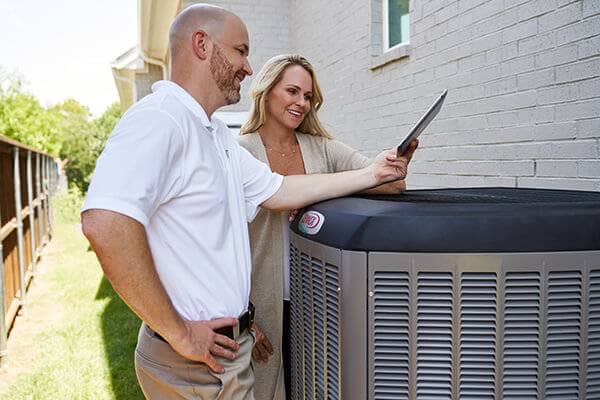
Short answer: Carrier is the second most-requested AC brand in our Las Vegas service area, and for good reason — their WeatherArmor Ultra protection, Greenspeed Intelligence, and proven desert track record make them a strong choice. The Infinity 26 (24VNA6) is our top Carrier pick for Las Vegas, with 26.0 SEER2 and a variable-speed compressor that handles 115-degree-plus heat without efficiency losses. Installed pricing ranges from $5,200 for a 2-ton Comfort series to $14,000+ for a 5-ton Infinity. Here's every model, ranked for Las Vegas conditions. Call (702) 567-0707 for a free Carrier system quote.
Key Takeaways
- Carrier's Infinity 26 (24VNA6) is the best Carrier AC for Las Vegas: 26.0 SEER2, variable-speed Greenspeed Intelligence compressor, 125-degree maximum ambient rating, and WeatherArmor Ultra cabinet. It is purpose-built for extreme desert heat and delivers premium performance at $9,500-$14,000+ installed.
- The Performance 17 (24TPB7) is the best mid-range value: 17.0 SEER2 with two-stage cooling handles daily Las Vegas temperature swings effectively. At $7,200-$9,500 installed for a 3-ton system, it hits the sweet spot of efficiency and affordability for most homeowners.
- Carrier rates its Infinity series to 125 degrees ambient: This is the highest published ambient rating of any major residential AC brand. In a city that regularly sees 115-degree-plus afternoons, that 10-degree safety margin matters.
- WeatherArmor Ultra protection resists Las Vegas conditions: Galvanized steel cabinet, louvered coil guard, and powder-coat finish protect against UV degradation, sand infiltration, and monsoon moisture — the three biggest threats to outdoor HVAC equipment in Southern Nevada.
- Carrier has the largest dealer network in Las Vegas: More authorized Carrier dealers in the valley means more competitive installation pricing, faster parts availability, and easier warranty service than brands with fewer local representatives.
- NV Energy PowerShift rebates of $300-$1,200 apply to qualifying Carrier systems: The federal 25C tax credit was terminated for 2026 installations. NV Energy utility rebates are the primary financial incentive, and we handle all rebate paperwork for every Carrier installation.
- Carrier's micro-channel coils are a double-edged sword: Lighter weight and lower refrigerant charge are advantages, but micro-channel coils can be more expensive to repair than traditional tube-and-fin designs if damaged. Proper installation and coil guard placement mitigate this risk.
- A good installation matters more than the brand name: A perfectly engineered Carrier system paired with undersized ductwork, poor airflow, or incorrect refrigerant charge will underperform a mid-range system with a flawless installation. We size every system using Manual J calculations for Las Vegas conditions.
Why Carrier Is Popular in Las Vegas
Willis Carrier invented modern air conditioning in 1902. That is not marketing copy — it is literal history. The company that bears his name has been manufacturing cooling equipment for over 120 years, and their systems are installed in more buildings worldwide than any other HVAC brand. When Las Vegas homeowners tell us they want a Carrier system, they are choosing a brand with deep roots in the science of moving heat.
In Southern Nevada specifically, Carrier holds a strong market position for several reasons that go beyond brand recognition. First, Carrier has more authorized dealers in the Las Vegas valley than any other premium brand. That dealer density creates genuine competition on installation pricing — we regularly see Carrier quotes come in $500-$1,500 lower than equivalent Lennox or Trane configurations because there are simply more contractors bidding for the work. Second, Carrier's parts distribution network is excellent locally. When a Carrier condenser coil or control board fails in July, the replacement part is typically available same-day from local distributors. For some other brands, a parts delay of 3-7 business days during peak summer is common — and that is an eternity when your house is 95 degrees inside.
Third, Carrier's engineering has specifically targeted high-ambient performance in their premium lineup. The Infinity series is rated to operate at 125 degrees Fahrenheit, which provides genuine safety margin for a city where ground-level temperatures near west-facing condenser units can exceed the official air temperature by 5-10 degrees due to radiant heat from stucco walls and concrete patios. When we perform AC service calls in July and August, a unit rated to 115 degrees is cutting it close. A unit rated to 125 degrees has real headroom.
Carrier's WeatherArmor Ultra cabinet technology deserves specific mention for Las Vegas installations. The galvanized steel construction with powder-coat finish resists the UV degradation that destroys painted finishes on lesser cabinets within 5-7 years. The louvered coil guard prevents large debris from reaching the condenser coil while maintaining airflow. And the raised base pan lifts internal components above the standing water that can accumulate during monsoon season downpours. These are not premium upsells — they are standard features across all Carrier residential systems, including the entry-level Comfort series.
We install Carrier alongside our primary Lennox product line because we believe homeowners deserve options. Carrier is an excellent system. When a customer's budget, home configuration, or specific needs align better with Carrier than Lennox, we say so honestly. This guide provides the same level of detail and candor we give during an in-home consultation.

Complete Carrier AC Lineup for 2026
Carrier organizes their residential air conditioner lineup into three tiers: Comfort (economy), Performance (mid-range), and Infinity (premium). Each tier targets a different balance of upfront cost, operating efficiency, and feature set. Below is every current model available for Las Vegas installation, ranked within each tier by our assessment of desert suitability.
Comfort Series (Economy Tier)
The Comfort series is Carrier's entry-level residential lineup. These are single-stage systems designed for budget-conscious replacements where the primary goal is reliable cooling at the lowest installed cost. Both Comfort models use R-410A refrigerant and single-stage scroll compressors.
Carrier Comfort 14 (24ACC4)
| Specification | Carrier Comfort 14 (24ACC4) |
|---|---|
| SEER2 Rating | Up to 14.3 |
| EER2 Rating | Up to 12.0 |
| Compressor Type | Single-stage scroll |
| Refrigerant | R-410A |
| Sound Level | 72 dB |
| Max Ambient Temperature | 115 degrees F |
| Available Capacities | 1.5 to 5 tons |
| Warranty (registered) | 10-year parts, 10-year compressor |
The 24ACC4 meets the federal minimum efficiency standard for the Southwest region (14.3 SEER2) and nothing more. It is a basic, functional air conditioner. The single-stage compressor runs at 100% capacity every time it cycles on, regardless of whether the outdoor temperature is 85 degrees or 115 degrees. This all-or-nothing operation produces wider indoor temperature swings (typically 3-5 degrees around the thermostat setpoint), higher electricity consumption during mild weather, and less effective dehumidification during monsoon season.
Las Vegas assessment: The 24ACC4 is adequate for rental properties, guest houses, or strict-budget replacements where the existing system has failed and the homeowner needs cooling restored immediately at the lowest possible cost. It is not a system we recommend for primary residences where the homeowner will be living for 5+ years, because the energy cost penalty of 14.3 SEER2 versus a 17.0 SEER2 two-stage system is approximately $300-$450 per year in Las Vegas — enough to offset the upfront savings within 3-4 years.
Installed pricing (Las Vegas): $5,200-$6,800 for a 2-ton system. $5,800-$7,500 for a 3-ton system. $7,000-$9,200 for a 5-ton system. Pricing includes standard installation with permit, but excludes ductwork modifications.
Carrier Comfort 15 (24ACC5)
| Specification | Carrier Comfort 15 (24ACC5) |
|---|---|
| SEER2 Rating | Up to 15.2 |
| EER2 Rating | Up to 12.5 |
| Compressor Type | Single-stage scroll |
| Refrigerant | R-410A |
| Sound Level | 70 dB |
| Max Ambient Temperature | 115 degrees F |
| Available Capacities | 1.5 to 5 tons |
| Warranty (registered) | 10-year parts, 10-year compressor |
The 24ACC5 is a marginal efficiency improvement over the 24ACC4 — 15.2 SEER2 versus 14.3. It is still single-stage with the same operational limitations. The slightly higher efficiency comes from a larger condenser coil surface area and a more efficient fan motor, which also produces slightly lower operating noise (70 dB versus 72 dB). The price premium over the 24ACC4 is typically $300-$600.
Las Vegas assessment: The 15.2 SEER2 rating crosses the 15.0 threshold that makes the system eligible for the lowest tier of NV Energy PowerShift rebates ($300-$500). If you are buying a Comfort series system regardless, the 24ACC5 is the better choice — the rebate alone can offset most or all of the price premium over the 24ACC4. However, our honest recommendation for Las Vegas homeowners remains to step up to the Performance series if at all possible.
Installed pricing (Las Vegas): $5,400-$7,200 for a 2-ton system. $6,200-$8,000 for a 3-ton system. $7,500-$9,800 for a 5-ton system.
Performance Series (Mid-Range Tier)
The Performance series is where Carrier starts delivering genuine value for Las Vegas homeowners. Two-stage compressor technology, meaningfully higher efficiency, and improved comfort control make this tier the sweet spot for most residential replacements in our market.
Carrier Performance 17 (24TPB7)
| Specification | Carrier Performance 17 (24TPB7) |
|---|---|
| SEER2 Rating | Up to 17.0 |
| EER2 Rating | Up to 13.5 |
| Compressor Type | Two-stage scroll |
| Refrigerant | R-410A |
| Sound Level | 67 dB (low stage) |
| Max Ambient Temperature | 120 degrees F |
| Available Capacities | 2 to 5 tons |
| Warranty (registered) | 10-year parts, 10-year compressor |
The 24TPB7 is the model we most frequently recommend to Las Vegas homeowners who want strong performance without the premium price of the Infinity series. The two-stage compressor operates at approximately 67% capacity (low stage) when the cooling load is moderate and ramps to 100% (high stage) during peak afternoon heat. This two-stage operation delivers three critical benefits in Las Vegas.
First, the system runs on low stage for roughly 70-80% of total runtime during the April-through-October cooling season, using less electricity per hour than a single-stage system running at full blast. Second, longer low-stage run cycles produce more consistent indoor temperatures with smaller swings around the thermostat setpoint — typically 1-2 degrees instead of the 3-5 degree swings common with single-stage systems. Third, those longer run cycles pull significantly more moisture from indoor air during monsoon season (July through September), when Las Vegas humidity can spike from our normal 10-15% to 40-60%.
The 17.0 SEER2 rating qualifies for mid-tier NV Energy PowerShift rebates ($500-$800), and the 120-degree maximum ambient rating provides 5 degrees more headroom than the Comfort series. In a market where outdoor condenser units on south- or west-facing walls regularly experience localized temperatures above the official air temperature, that extra margin is meaningful.
Las Vegas assessment: This is our most-recommended Carrier model for primary residences. The two-stage compressor, improved ambient rating, and rebate-qualifying efficiency make it a genuine value proposition. For a homeowner replacing a 10-15 year old single-stage system, the Performance 17 delivers noticeable improvements in comfort, noise, and energy bills from day one. See our variable-speed vs. single-stage comparison for a deeper dive on how compressor staging affects Las Vegas energy costs.
Installed pricing (Las Vegas): $7,200-$8,800 for a 2-ton system. $7,800-$9,500 for a 3-ton system. $9,200-$11,500 for a 5-ton system.
Infinity Series (Premium Tier)
The Infinity series is Carrier's flagship residential lineup and where the brand competes head-to-head with the premium offerings from Lennox and Trane. Variable-speed compressor technology, Greenspeed Intelligence controls, the highest ambient temperature ratings, and the quietest operation define this tier. The Infinity series includes three current models that span from 21.0 to 26.0 SEER2.
Carrier Infinity 21 (24VNA0)
| Specification | Carrier Infinity 21 (24VNA0) |
|---|---|
| SEER2 Rating | Up to 21.0 |
| EER2 Rating | Up to 14.5 |
| Compressor Type | Variable-speed Greenspeed Intelligence |
| Refrigerant | R-410A |
| Sound Level (minimum) | 58 dB |
| Max Ambient Temperature | 125 degrees F |
| Available Capacities | 2 to 5 tons |
| Warranty (registered) | 10-year parts, 10-year compressor |
The 24VNA0 is the entry point to Carrier's Greenspeed Intelligence technology — the same variable-speed compressor platform used in the higher Infinity models, but with a slightly lower maximum efficiency ceiling. The compressor modulates continuously between approximately 25% and 100% capacity, with Carrier claiming up to 700 discrete operating positions. In practice, this means the system finds and maintains the exact output needed to hold your thermostat setpoint, rather than cycling between full-on and off.
At 21.0 SEER2, the Infinity 21 qualifies for the highest tier of NV Energy PowerShift AC rebates ($800-$1,200). Combined with the variable-speed compressor, 125-degree ambient rating, and 58 dB minimum sound level, it represents a substantial step up from the Performance series.
Las Vegas assessment: The Infinity 21 is an excellent choice for homeowners who want variable-speed comfort and the 125-degree ambient rating but do not need the absolute highest efficiency numbers. The $1,500-$2,500 price gap between the Infinity 21 and Infinity 24 is difficult to recover through energy savings alone — the difference between 21.0 and 24.0 SEER2 translates to roughly $100-$180 per year in our climate. If your priority is comfort, quiet operation, and the strongest ambient rating, the Infinity 21 delivers those without the premium of the higher-SEER siblings.
Installed pricing (Las Vegas): $9,500-$11,000 for a 2-ton system. $10,500-$12,500 for a 3-ton system. $12,500-$15,000 for a 5-ton system.
Carrier Infinity 24 (24VNA4)
| Specification | Carrier Infinity 24 (24VNA4) |
|---|---|
| SEER2 Rating | Up to 24.0 |
| EER2 Rating | Up to 15.5 |
| Compressor Type | Variable-speed Greenspeed Intelligence |
| Refrigerant | R-410A |
| Sound Level (minimum) | 56 dB |
| Max Ambient Temperature | 125 degrees F |
| Available Capacities | 2 to 5 tons |
| Warranty (registered) | 10-year parts, 10-year compressor |
The 24VNA4 pushes Carrier's variable-speed platform to 24.0 SEER2 through optimized coil geometry, enhanced compressor efficiency at partial load, and more refined Greenspeed control algorithms. The 56 dB minimum sound level is 2 dB quieter than the Infinity 21, which is noticeable when the unit is installed near bedroom windows or patio areas. It uses R-410A refrigerant, meaning parts and service will be widely available for the full life of the equipment.
Las Vegas assessment: The Infinity 24 occupies a challenging middle position between the Infinity 21 (which offers the same variable-speed comfort at a lower price) and the Infinity 26 (which adds the next-generation R-454B refrigerant and even higher efficiency). For homeowners committed to the Infinity tier but not ready for R-454B, the 24VNA4 is the best R-410A-based Carrier system you can buy. It qualifies for the highest NV Energy PowerShift rebates and delivers energy savings of approximately $400-$600 per year over a 14.3 SEER2 baseline in a typical Las Vegas home.
Installed pricing (Las Vegas): $10,500-$12,000 for a 2-ton system. $11,500-$13,500 for a 3-ton system. $13,500-$16,500 for a 5-ton system.
Carrier Infinity 26 (24VNA6) — Our Top Pick
| Specification | Carrier Infinity 26 (24VNA6) |
|---|---|
| SEER2 Rating | Up to 26.0 |
| EER2 Rating | Up to 16.0 |
| Compressor Type | Variable-speed Greenspeed Intelligence |
| Refrigerant | R-454B (Puron Advance) |
| Sound Level (minimum) | 51 dB |
| Max Ambient Temperature | 125 degrees F |
| Available Capacities | 2 to 5 tons |
| Thermostat Requirement | Infinity Touch / Infinity System Control |
| Warranty (registered) | 10-year parts, 10-year compressor |
The 24VNA6 is the pinnacle of Carrier's residential air conditioning technology and our top overall Carrier recommendation for Las Vegas. At 26.0 SEER2, it delivers the highest efficiency in the Carrier lineup, driven by the most refined generation of Greenspeed Intelligence and a transition to R-454B (Puron Advance) — a lower-GWP refrigerant that replaces R-410A in Carrier's premium systems as part of the industry-wide refrigerant transition.
The 51 dB minimum sound level makes the Infinity 26 the quietest Carrier residential system ever produced. For context, 51 dB is roughly the volume of a refrigerator humming in a quiet kitchen. In Las Vegas neighborhoods with 5-6 foot side yards, where your condenser sits a few feet from your neighbor's bedroom window, that sound level eliminates one of the most common sources of neighbor complaints about outdoor HVAC equipment.
The system requires pairing with the Carrier Infinity Touch or Infinity System Control thermostat to achieve its rated efficiency and access the full Greenspeed modulation range. When properly matched with a compatible Carrier indoor coil and the Infinity control system, the 24VNA6 communicates data continuously between the outdoor unit, indoor coil, and thermostat — adjusting compressor speed, fan speed, and airflow in real time to maintain optimal efficiency at any outdoor temperature.
For a detailed breakdown of this specific model, see our Carrier Infinity review.
Las Vegas assessment: If your budget allows an Infinity-tier system, the 24VNA6 is the one to buy. The R-454B refrigerant is the future of the industry, the 125-degree ambient rating provides the widest safety margin available, and the 26.0 SEER2 efficiency will produce the lowest operating costs of any Carrier system over the 15-20 year expected lifespan. The one consideration is that R-454B service infrastructure is still maturing — while parts and refrigerant are available, not every local shop carries them yet. Working with an established dealer like The Cooling Company ensures service availability.
Installed pricing (Las Vegas): $11,000-$12,500 for a 2-ton system. $12,000-$14,000 for a 3-ton system. $14,000-$17,000+ for a 5-ton system.
Carrier Model Comparison: Quick Reference
| Model | SEER2 | Compressor | Refrigerant | Max Ambient | Sound (dB) | 3-Ton Installed |
|---|---|---|---|---|---|---|
| Comfort 14 (24ACC4) | 14.3 | Single-stage | R-410A | 115 F | 72 | $5,800-$7,500 |
| Comfort 15 (24ACC5) | 15.2 | Single-stage | R-410A | 115 F | 70 | $6,200-$8,000 |
| Performance 17 (24TPB7) | 17.0 | Two-stage | R-410A | 120 F | 67 | $7,800-$9,500 |
| Infinity 21 (24VNA0) | 21.0 | Variable-speed | R-410A | 125 F | 58 | $10,500-$12,500 |
| Infinity 24 (24VNA4) | 24.0 | Variable-speed | R-410A | 125 F | 56 | $11,500-$13,500 |
| Infinity 26 (24VNA6) | 26.0 | Variable-speed | R-454B | 125 F | 51 | $12,000-$14,000 |
Carrier Desert Performance Analysis
Lab specifications are one thing. How a system actually performs when it is July 15th, the outdoor temperature is 117 degrees, and your condenser unit is baking on a south-facing concrete pad — that is something else entirely. Based on our field experience installing and servicing Carrier systems across the Las Vegas valley, here is how Carrier's technology holds up against the specific challenges of our desert climate.
WeatherArmor Ultra Cabinet Construction
Carrier's WeatherArmor Ultra protection is standard across the full residential lineup, and it is one of the strongest cabinet designs in the industry for desert conditions. The key features:
- Galvanized steel construction: The cabinet panels are galvanized before assembly, meaning the zinc protective coating covers the entire surface — including edges and fastener holes that can become corrosion starting points on painted-only cabinets.
- Powder-coat finish: Applied over the galvanized steel, the powder coat provides UV resistance that holds up significantly better than standard baked-on paint in Las Vegas's extreme solar exposure (300+ sunny days per year, UV index regularly at 10-11 during summer).
- Louvered coil guard: The angled louvers protect the condenser coil from direct debris impact while maintaining adequate airflow. This matters in Las Vegas for two reasons: dust storms (haboobs) can deposit significant fine particulate on coil surfaces, and landscaping debris from wind events can physically damage unprotected coil fins.
- Raised base pan: Lifts internal electrical components above the 1-2 inches of standing water that can accumulate during monsoon season downpours. Flash flooding is a real concern in Las Vegas, and we have seen control boards destroyed on units where the base pan sits at or below grade level.
In our experience, Carrier's WeatherArmor cabinet shows minimal cosmetic degradation after 10+ years of Las Vegas sun exposure. The powder coat retains color better than most competitors, and the galvanized steel prevents the cabinet rust that plagues lower-quality brands within 5-7 years. It is not as robust as the marine-grade protective coatings found on some commercial equipment, but for residential applications, it is among the best available.
High-Ambient Performance
This is where Carrier earns its strongest marks for Las Vegas. The Infinity series is rated to operate at 125 degrees Fahrenheit ambient temperature — the highest published rating of any major residential AC brand. The Performance series is rated to 120 degrees, and even the Comfort series is rated to 115 degrees.
Why does this matter? Because the published outdoor air temperature in Las Vegas (measured at McCarran International Airport in shaded conditions) does not represent what your condenser unit actually experiences. Outdoor AC units installed on south- or west-facing walls, on concrete pads that absorb and radiate heat, or near reflective stucco surfaces can experience localized temperatures 5-15 degrees above the official air temperature. On a day when the official high is 117 degrees, your condenser may be operating in a 125-130 degree microenvironment.
A system rated to only 115 degrees will begin to lose capacity and efficiency in those conditions — the compressor works harder, discharge pressures rise, and the system may trigger high-pressure safety lockouts that shut it down entirely. A system rated to 125 degrees continues operating within its designed parameters. Over a Las Vegas summer, this translates to fewer service calls, more consistent cooling, and longer equipment life.
For additional context on how different brands perform in extreme heat, see our desert performance ratings by brand.
Coil Technology: Micro-Channel Design
Carrier uses micro-channel condenser coils in their Infinity and Performance series, and this is an area where honest assessment requires acknowledging both advantages and trade-offs. Micro-channel coils use flat aluminum tubes with multiple small channels instead of the traditional round copper tubes with aluminum fins. The design differences produce real-world impacts:
Advantages of Carrier's micro-channel coils:
- Lower refrigerant charge: Micro-channel coils hold approximately 30-40% less refrigerant than traditional round-tube designs. This reduces the environmental impact of a potential leak and lowers the cost of a refrigerant recharge.
- Lighter weight: Easier to handle during installation and places less stress on the unit's mounting platform.
- Better heat transfer efficiency: The increased surface-area-to-volume ratio of the flat tubes and internal channels moves heat more effectively per unit of refrigerant.
- All-aluminum construction: Eliminates the copper-to-aluminum galvanic corrosion that can develop at tube-to-fin joints in traditional coils over time. This is a meaningful advantage in desert conditions where temperature cycling stresses these joints daily.
Trade-offs of micro-channel coils in Las Vegas:
- Fin damage is harder to repair: The flat-tube design means individual fins cannot be straightened as easily as traditional round-tube coil fins. Physical damage from debris or careless maintenance requires coil replacement rather than fin repair in some cases.
- Coil replacement cost: A micro-channel coil replacement typically costs $1,800-$3,500 installed, compared to $1,200-$2,500 for a traditional round-tube coil replacement. The cost difference reflects both the part price and the more precise brazing required.
- Debris accumulation pattern: Micro-channel coils can trap fine desert dust between the flat tubes differently than traditional coils. Regular coil cleaning (at least annually, preferably twice per year in Las Vegas) is important. See our AC maintenance page for cleaning schedules.
For a deeper comparison of coil technologies, see our spine fin vs. micro-channel coil analysis.
Sound Levels in Las Vegas Neighborhoods
Outdoor unit noise is a genuine quality-of-life consideration in Las Vegas, where tract home lots typically have 5-6 foot side yards and HOA regulations in master-planned communities like Summerlin, Green Valley, and Anthem may include noise restrictions. Carrier's sound levels across the lineup:
- Infinity 26 (24VNA6): 51 dB — quieter than a normal conversation. Barely audible from inside the house and unlikely to disturb neighbors.
- Infinity 24 (24VNA4): 56 dB — comparable to light background music. Still very quiet for an outdoor unit.
- Infinity 21 (24VNA0): 58 dB — noticeably quieter than a standard conversation at normal volume.
- Performance 17 (24TPB7): 67 dB on low stage — moderate sound level, comparable to a dishwasher running. Quiet for a mid-range system.
- Comfort 15/14: 70-72 dB — standard AC unit sound level. Audible from inside through closed windows, especially at night.
The sound difference between a Comfort series unit at 72 dB and an Infinity 26 at 51 dB is dramatic. Decibels are logarithmic — a 20 dB reduction represents a perceived loudness reduction of approximately 75%. If outdoor noise matters to you (and in Las Vegas neighborhoods, it should), the Infinity series is worth the premium.
Carrier vs. Lennox in Las Vegas: Honest Comparison
As a Lennox Premier Dealer, we have the deepest expertise with Lennox systems. But we install Carrier regularly and we owe our customers an honest assessment of both brands. Here is how they compare on the metrics that matter most in Las Vegas.
Where Lennox Wins
- Maximum SEER2 efficiency: The Lennox SL28XCV reaches 28.0 SEER2 versus Carrier's maximum of 26.0. For a 3-ton system in a 2,000 square foot Las Vegas home, that 2-point difference translates to approximately $100-$180 per year in energy savings — meaningful over a 15-20 year system life.
- Coil corrosion resistance: Lennox's proprietary Quantum Coil (aluminum spine fin) eliminates copper entirely and resists the formicary corrosion that can affect copper-containing coils. Carrier's micro-channel coils are all-aluminum as well, but the Quantum design has a longer desert track record.
- Flagship sound level: The SL28XCV at 52 dB versus the Infinity 26 at 51 dB is essentially a tie. But across the lineup, Lennox's mid-range Elite series (54-58 dB) is generally 5-8 dB quieter than Carrier's Performance series (67 dB).
- iComfort smart thermostat integration: Lennox's iComfort S30 provides tighter integration with Lennox equipment than the Carrier Infinity Touch provides with Carrier equipment. The iComfort system can manage zoning, scheduling, and diagnostics with fewer compatibility issues.
Where Carrier Wins
- Lower entry price: Across every tier, Carrier systems typically install for $500-$1,500 less than the equivalent Lennox model. This is partly due to manufacturing scale and partly due to the larger Las Vegas dealer network creating pricing competition.
- Larger dealer network: More Carrier dealers in Las Vegas means more service options if you move and want a different company to maintain your system. It also means faster parts availability for warranty and non-warranty repairs.
- Parts availability: Carrier replacement parts — capacitors, contactors, control boards, fan motors — are the most widely stocked HVAC parts in Las Vegas. Most supply houses carry Carrier components on the shelf, reducing service wait times.
- Mid-range value: The Carrier Performance 17 (24TPB7) at $7,800-$9,500 installed represents better value than the Lennox Elite EL16XC1 at a similar efficiency point but higher price. For homeowners in the $8,000-$10,000 budget range, Carrier offers more system for the money.
- High-ambient rating: Carrier's 125-degree rating on the Infinity series is the highest published residential ambient rating. Lennox rates their top systems to 120 degrees. In Las Vegas, those 5 degrees of additional headroom are meaningful.
Both are excellent brands for Las Vegas. The right choice depends on your specific priorities — maximum efficiency and noise performance favor Lennox, while budget optimization, parts availability, and the highest ambient rating favor Carrier. For a detailed head-to-head, see our Carrier vs. Lennox vs. Trane comparison and our Lennox vs. Carrier AC comparison.
Carrier Warranty Details for Las Vegas Installations
Carrier's warranty structure is straightforward compared to some competitors, but there are registration requirements and fine print that every buyer should understand before signing a contract. Warranty claims are one of the most common sources of homeowner frustration across all HVAC brands, and knowing the rules upfront prevents surprises.
Standard Carrier Warranty (Registered)
| Component | Registered Coverage | Unregistered Coverage |
|---|---|---|
| Compressor | 10 years | 5 years |
| Parts (all other components) | 10 years | 5 years |
| Labor | Not included (dealer-dependent) | Not included |
Registration Requirement
This is the single most important warranty detail: you must register your Carrier system within 90 days of installation to receive the full 10-year warranty. Failure to register reduces both the compressor and parts warranty to 5 years. Registration is done online at Carrier's website and requires the model number, serial number, installation date, and homeowner information.
At The Cooling Company, we register every Carrier system we install as part of our standard installation process. You receive the registration confirmation before we close out the job. If you are working with another contractor, confirm in writing that warranty registration is included in their scope of work. We see warranty claims denied every year because systems were never registered — and the homeowner assumed it had been done.
What the Warranty Does Not Cover
- Labor costs: Carrier's factory warranty covers the replacement part only. The labor to diagnose the issue, remove the failed part, and install the replacement is not covered by Carrier. Some dealers (including us) offer extended labor warranty packages that cover this gap for an additional cost.
- Refrigerant: If a warranty-covered component (like a coil) fails and the system needs to be evacuated and recharged with refrigerant, the refrigerant cost is typically not covered by the factory warranty. For an R-410A system, this adds $150-$400 to the repair. For R-454B, it may be $200-$500 as the newer refrigerant stabilizes in price.
- Damage from improper installation: If Carrier determines that the failure was caused by improper installation — incorrect refrigerant charge, wrong wire gauge, improper brazing, or other installation defects — the warranty claim will be denied. This is another reason why choosing a qualified, insured contractor matters more than saving $500 on the installation bid. See our AC installation page for what proper installation includes.
- Damage from lack of maintenance: Carrier requires evidence of annual professional maintenance to uphold warranty coverage. A coil failure caused by years of accumulated debris, or a compressor failure caused by operating with low refrigerant charge, can be denied if there is no maintenance history.
For a broader comparison of HVAC warranty terms, see our warranty registration guide.
NV Energy Rebates for Carrier Systems in 2026
The financial incentive landscape for HVAC upgrades changed significantly for 2026. The federal Section 25C Energy Efficient Home Improvement Credit was terminated under the One Big Beautiful Bill Act for equipment installed after December 31, 2025. This means no federal tax credits are available for Carrier (or any other brand) AC installations in 2026. For full details on what changed and what remains, see our 2026 federal tax credit guide.
NV Energy PowerShift rebates are now the primary financial incentive for Las Vegas HVAC upgrades. These are utility-funded rebates — not tax credits — meaning you receive the money as a bill credit or check within 4-8 weeks rather than waiting until tax filing season. Rebates are based on system efficiency, not brand, so every Carrier model that meets the efficiency threshold qualifies.
Carrier Models and NV Energy Rebate Eligibility
| Carrier Model | SEER2 | NV Energy Rebate Tier | Estimated Rebate |
|---|---|---|---|
| Comfort 14 (24ACC4) | 14.3 | Does not qualify | $0 |
| Comfort 15 (24ACC5) | 15.2 | Does not qualify | $0 |
| Performance 17 (24TPB7) | 17.0 | Base tier (16.0+ SEER2) | $300-$500 |
| Infinity 21 (24VNA0) | 21.0 | Ultra-high tier (20.0+ SEER2) | $800-$1,200 |
| Infinity 24 (24VNA4) | 24.0 | Ultra-high tier (20.0+ SEER2) | $800-$1,200 |
| Infinity 26 (24VNA6) | 26.0 | Ultra-high tier (20.0+ SEER2) | $800-$1,200 |
Note that NV Energy rebates are subject to annual funding availability and program terms can change. We verify current rebate amounts at the time of every quote and handle all rebate paperwork as part of our installation service. For the latest rebate details across all brands, see our NV Energy rebates by HVAC brand guide.
Carrier also runs manufacturer-specific promotions periodically — typically during spring and fall selling seasons. These manufacturer rebates can stack with NV Energy rebates, potentially reducing the net cost of an Infinity system by $1,500-$2,500 when both incentives are active. Call (702) 567-0707 to ask about current Carrier promotions.

5 Most Common Carrier Problems in Las Vegas
No HVAC brand is immune to failures, and Carrier is no exception. Based on our service records across thousands of Carrier systems in the Las Vegas valley, these are the five issues we see most frequently, along with typical repair costs and how to mitigate them.
1. Capacitor Failure
This is the most common repair on Carrier systems (and honestly, on every brand) in Las Vegas. The run capacitor stores and releases electrical energy to keep the compressor and fan motor running efficiently. Las Vegas heat — both the ambient air temperature and the internal heat generated by continuous summer operation — accelerates capacitor degradation. We replace more capacitors in June through September than in all other months combined.
Symptoms: System struggling to start, humming without engaging, intermittent shutoffs, fan running but compressor not engaging.
Typical repair cost: $175-$350 including parts and labor. An OEM Carrier capacitor is slightly more expensive than a universal replacement, but we recommend OEM for systems under warranty.
Prevention: Annual maintenance visits include capacitor testing. A capacitor reading below 10% of its rated microfarad value should be proactively replaced before it fails completely in mid-July.
2. Contactor Wear and Pitting
The contactor is the electrical switch that turns the compressor and condenser fan on and off. Every time your system cycles, the contactor's contacts make and break connection under electrical load, which causes gradual pitting and erosion of the contact surfaces. In Las Vegas, where systems may cycle 8-12 times per day (single-stage) or run nearly continuously (variable-speed at varying loads), contactor wear is accelerated compared to mild climates.
Symptoms: Chattering or buzzing sound from the outdoor unit, system not turning on, intermittent operation.
Typical repair cost: $150-$300 including parts and labor.
Prevention: Contactors are inspected during annual maintenance. Visible pitting on the contact surfaces indicates replacement is needed soon. On Carrier Comfort and Performance series units, plan for contactor replacement around years 7-10.
3. TXV (Thermostatic Expansion Valve) Issues
The TXV controls refrigerant flow into the evaporator coil. On older Carrier models (pre-2020 production), TXV failures were more common than industry average, particularly in high-ambient conditions where the valve operates at the extreme end of its designed range for extended periods. Carrier has improved TXV quality on current-production models, but if you are buying a Carrier system that has been sitting in a warehouse, verify the production date.
Symptoms: Insufficient cooling despite the system running, icing on the evaporator coil or suction line, wide temperature differential between supply and return air that does not match expected values.
Typical repair cost: $350-$700 including parts, labor, and refrigerant recovery/recharge.
Prevention: Proper installation with correct subcooling and superheat verification at commissioning. Annual maintenance that checks refrigerant charge and operating pressures catches TXV degradation before complete failure.
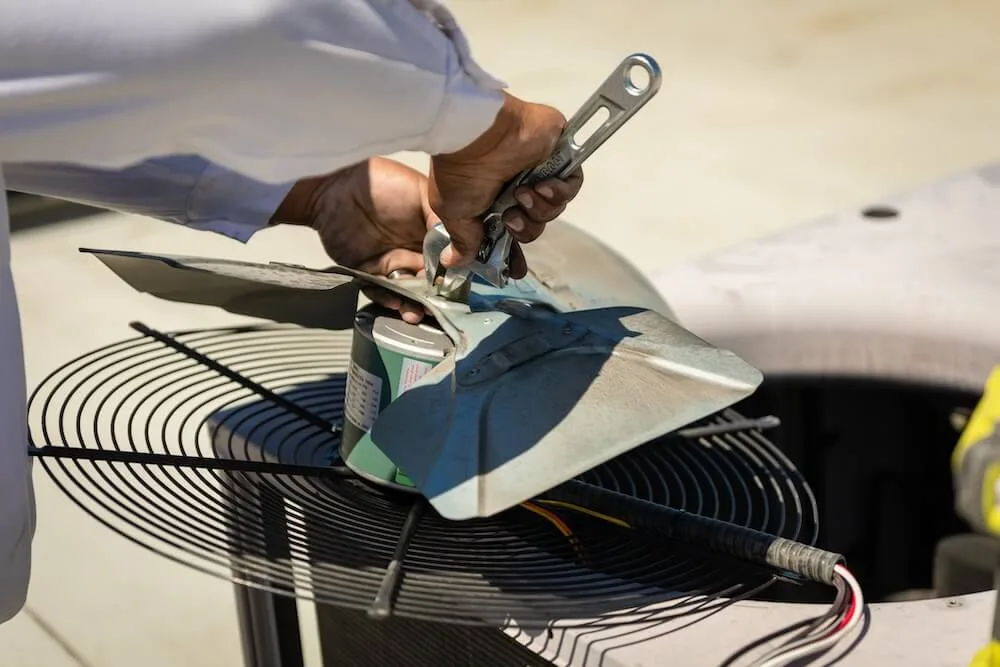
4. Condenser Fan Motor Failure
The condenser fan motor drives the blade that pulls air through the outdoor coil. In Las Vegas, these motors operate in 115-degree-plus ambient temperatures for months at a time, and the bearings degrade faster than in mild climates. Carrier uses quality motors, but no motor is immune to desert heat exposure over 8-12 years.
Symptoms: Screeching or grinding noise from the outdoor unit, fan spinning slowly or intermittently, system running but not cooling effectively, high head pressure.
Typical repair cost: $300-$600 including parts and labor. OEM Carrier motors are recommended for Infinity series units; universal replacements are acceptable for Comfort series.
Prevention: Motor bearings are checked during maintenance visits. A motor drawing higher-than-rated amperage is showing early signs of failure and should be scheduled for replacement during a non-emergency window.
5. Control Board Failures (Infinity Series)
The Infinity series uses sophisticated electronic control boards to manage the Greenspeed variable-speed compressor operation, communication with the Infinity thermostat, and system diagnostics. These boards are more complex (and more expensive) than the simple relay boards found in single-stage systems. In our experience, Carrier's Infinity control boards are reliable overall, but when they do fail, the repair cost is significant.
Symptoms: Error codes on the Infinity thermostat, system not responding to thermostat commands, intermittent operation that does not correlate with temperature settings, communication errors between indoor and outdoor units.
Typical repair cost: $500-$1,200 including parts and labor. OEM board required — there is no universal replacement for Infinity control boards.
Prevention: Ensure proper voltage supply to the system (brownouts and voltage spikes from NV Energy's grid during peak summer demand can damage control boards). A whole-home surge protector ($150-$300 installed) is inexpensive insurance for a $12,000+ Infinity system.
For more on system longevity and when to repair versus replace, see our guide on how long AC units last in Las Vegas.
Who Should Buy a Carrier AC System
After installing and servicing Carrier systems across every neighborhood in the Las Vegas valley, we have developed a clear picture of which homeowner profiles benefit most from choosing Carrier over other premium brands.
Carrier Is the Right Choice If:
- Budget optimization is your priority: Carrier consistently offers the lowest installed pricing among the three premium brands (Carrier, Lennox, Trane) at every tier. If you want the best possible system within a fixed budget, Carrier typically delivers 1-2 SEER2 points more efficiency per dollar spent than the competition.
- You plan to sell the home within 5-10 years: Carrier's name recognition with buyers and home inspectors is the strongest of any HVAC brand. A home listing that specifies "Carrier Infinity" air conditioning carries more market value perception than some lesser-known brands, even if the technical specs are comparable.
- Long-term serviceability matters: If you value the ability to choose from multiple service providers over the system's life (rather than being dependent on a single dealer), Carrier's larger network provides more flexibility. Every HVAC company in Las Vegas can service Carrier equipment.
- You want the highest ambient temperature rating: For homes where the condenser unit is located in a particularly hot microclimate — against a west-facing block wall, on a concrete pad with no shade, or in an enclosed courtyard — Carrier's 125-degree Infinity rating provides the most thermal headroom available in a residential system.
- You are replacing an existing Carrier system: If your home already has Carrier-compatible line sets, electrical connections, and thermostat wiring, a Carrier-to-Carrier replacement can be simpler and less expensive than switching brands. The existing infrastructure often matches the new system's requirements without modification.
Consider an Alternative If:
- Maximum efficiency is your top priority: Lennox offers 28.0 SEER2 (SL28XCV) versus Carrier's 26.0 SEER2 maximum. If you will be in the home for 15+ years and electricity costs are your primary concern, the Lennox flagship offers the lowest possible operating cost. See our efficiency savings analysis for exact dollar comparisons.
- Compressor longevity is your primary concern: Trane's TruComfort compressors have the strongest industry track record for multi-decade durability, and select Trane models offer a lifetime compressor warranty. See our Trane vs. Carrier comparison.
- You want the quietest possible system: While the Infinity 26 at 51 dB is excellent, Lennox's mid-range Elite series is generally quieter than Carrier's mid-range Performance series. If you are shopping in the $8,000-$10,000 range and noise is critical, compare the specific models at that price point.
How We Install Carrier Systems in Las Vegas
The equipment is only as good as the installation. A $14,000 Carrier Infinity 26 installed with incorrect refrigerant charge, undersized ductwork, or improper electrical connections will underperform a $7,000 system installed correctly. Here is what a proper Carrier installation from The Cooling Company includes:
- Manual J load calculation: We calculate your home's specific cooling load based on square footage, insulation levels, window orientation, ceiling height, and Las Vegas climate data. This determines the correct system size. Oversizing (a common contractor shortcut) causes short cycling, poor humidity control, and premature component wear.
- Manual D duct design verification: We verify that your existing ductwork can deliver the required airflow for the new system. If ductwork modifications are needed, we identify and address them before installation — not after.
- Refrigerant charge verification: We weigh in the exact manufacturer-specified refrigerant charge and verify subcooling and superheat values at commissioning. Incorrect charge is the single most common installation defect industry-wide and can reduce system efficiency by 10-20%.
- Electrical verification: Proper wire gauge, breaker sizing, and disconnect installation per NEC and Clark County code requirements.
- Warranty registration: We register your system with Carrier within 24 hours of installation, ensuring full 10-year warranty coverage.
- Clark County permit and inspection: Every installation includes a building permit and final inspection by Clark County — required by law and necessary for warranty validity.
For the full scope of what professional installation includes, visit our AC installation page or review our new AC system buying guide.
Energy Cost Comparison: Carrier Models in Las Vegas
The operating cost difference between Carrier's least and most efficient models is substantial in our climate. Las Vegas AC systems run 2,400-3,000 hours per year — roughly 2.5 times the national average. Every SEER2 point saves more dollars here than in almost any other U.S. market.
The following estimates assume a 3-ton system in a 2,000 square foot Las Vegas home with an NV Energy electricity rate of approximately 12 cents per kWh:
| Carrier Model | SEER2 | Est. Annual Cooling Cost | Annual Savings vs. 14.3 SEER2 | 15-Year Savings vs. 14.3 |
|---|---|---|---|---|
| Comfort 14 (24ACC4) | 14.3 | $1,050-$1,200 | Baseline | Baseline |
| Comfort 15 (24ACC5) | 15.2 | $990-$1,130 | $60-$70 | $900-$1,050 |
| Performance 17 (24TPB7) | 17.0 | $880-$1,010 | $170-$190 | $2,550-$2,850 |
| Infinity 21 (24VNA0) | 21.0 | $710-$820 | $340-$380 | $5,100-$5,700 |
| Infinity 24 (24VNA4) | 24.0 | $630-$720 | $420-$480 | $6,300-$7,200 |
| Infinity 26 (24VNA6) | 26.0 | $580-$660 | $470-$540 | $7,050-$8,100 |
These savings estimates assume consistent electricity rates. NV Energy rates have increased an average of 2-4% annually over the past decade, which means actual cumulative savings will likely be higher than these projections. For a more detailed efficiency analysis using your specific home size and system configuration, see our real-numbers efficiency savings guide or call (702) 567-0707 for a personalized assessment.
Carrier R-454B Refrigerant Transition
The HVAC industry is in the middle of a federally mandated refrigerant transition. R-410A — the standard refrigerant in residential AC systems since the early 2000s — is being phased down in favor of lower-GWP (global warming potential) alternatives. Carrier was among the first major manufacturers to bring a next-generation residential system to market with R-454B, which they brand as "Puron Advance."
R-454B has a GWP of 466, compared to R-410A's GWP of 2,088 — a 78% reduction. The refrigerant performs similarly to R-410A in terms of cooling capacity and system efficiency, but it is classified as "mildly flammable" (A2L safety classification), which requires updated installation procedures, service equipment, and storage protocols.
Currently, only the Carrier Infinity 26 (24VNA6) uses R-454B. All other Carrier residential systems continue to use R-410A. For Las Vegas homeowners, this means:
- R-410A systems purchased today will be serviceable for their full lifespan. R-410A is not being banned — only the manufacture of new R-410A equipment is being phased down. Existing R-410A refrigerant will remain available for service and recharging throughout the life of your system.
- R-454B systems are forward-looking but require a knowledgeable installer. Not every Las Vegas HVAC contractor has completed R-454B training and certification yet. The Cooling Company is certified for R-454B installation and service.
- The choice between R-410A and R-454B should not be the deciding factor. Choose the system that best fits your budget, efficiency needs, and performance requirements. The refrigerant transition will not leave R-410A system owners stranded.
Frequently Asked Questions
What is the best Carrier AC for Las Vegas?
The Carrier Infinity 26 (24VNA6) is the best overall Carrier AC for Las Vegas. Its 26.0 SEER2 efficiency, variable-speed Greenspeed Intelligence compressor, 125-degree maximum ambient rating, and 51 dB sound level make it the strongest Carrier option for extreme desert conditions. For homeowners on a mid-range budget, the Performance 17 (24TPB7) at 17.0 SEER2 with two-stage cooling is the best value in the Carrier lineup.
How much does a Carrier AC cost installed in Las Vegas?
Carrier AC installed pricing in Las Vegas ranges from $5,200 for a 2-ton Comfort 14 to $17,000+ for a 5-ton Infinity 26. A typical 3-ton system — the most common residential size in the Las Vegas valley — ranges from $5,800 (Comfort 14) to $14,000 (Infinity 26). These prices include standard installation with permit and inspection but exclude ductwork modifications, which can add $500-$3,000 depending on scope. Call (702) 567-0707 for an exact quote based on your home.
Is Carrier or Lennox better for Las Vegas?
Both are excellent for Las Vegas. Lennox offers higher maximum efficiency (28.0 vs. 26.0 SEER2) and generally quieter mid-range units. Carrier offers lower pricing, a larger dealer network, better parts availability, and the highest ambient temperature rating (125 degrees) in the industry. We install both and recommend based on each homeowner's specific priorities and budget. See our detailed Lennox vs. Carrier comparison.
Does Carrier work well in 115-degree heat?
Yes. Carrier's Infinity series is rated to 125 degrees ambient — the highest published rating of any major residential brand. The Performance series is rated to 120 degrees, and even the Comfort series is rated to 115 degrees. We have installed hundreds of Carrier systems across the Las Vegas valley that perform reliably through our hottest summers. The 125-degree Infinity rating provides genuine safety margin for units installed in hot microclimates near west-facing walls or on unshaded concrete pads.
What NV Energy rebates are available for Carrier in 2026?
NV Energy PowerShift rebates for Carrier AC systems range from $300 to $1,200 depending on efficiency. The Performance 17 qualifies for $300-$500 (base tier), and the Infinity 21, 24, and 26 qualify for $800-$1,200 (ultra-high tier). The Comfort 14 and 15 do not meet the minimum 16.0 SEER2 threshold. Note that the federal 25C tax credit was terminated for 2026 installations — NV Energy rebates are the primary financial incentive this year.
How long does a Carrier AC last in Las Vegas?
A properly installed and maintained Carrier system typically lasts 15-20 years in Las Vegas. The desert climate's extreme heat, UV exposure, and dust shorten equipment life compared to mild climates — a system that might last 20-25 years in the Pacific Northwest will typically last 15-18 years here. Regular annual maintenance is the single most impactful factor in extending system life. Carrier's Infinity series, with its higher build quality and WeatherArmor Ultra cabinet, tends to reach the upper end of this range.
Is the Carrier Infinity worth the extra cost over Performance?
For homeowners who will live in the home for 10+ years, the Infinity series is typically worth the premium. The variable-speed compressor delivers $300-$500 per year in energy savings over the two-stage Performance series, plus substantially better comfort (tighter temperature control, better dehumidification) and significantly lower noise levels. For a 3-ton system, the Infinity 21 costs approximately $2,500-$3,000 more installed than the Performance 17. At $350+ annual energy savings plus the higher NV Energy rebate ($800-$1,200 vs. $300-$500), the payback period is 4-6 years.
What is Greenspeed Intelligence?
Greenspeed Intelligence is Carrier's proprietary variable-speed compressor control technology, used in the Infinity series. The system modulates the compressor across up to 700 discrete operating positions between approximately 25% and 100% capacity, finding and maintaining the exact output needed to hold the thermostat setpoint. This eliminates the on-off cycling of single-stage systems and the two-speed stepping of two-stage systems, producing the most stable indoor temperatures and the lowest energy consumption of any Carrier compressor technology. It requires pairing with the Carrier Infinity Touch thermostat to achieve its full modulation range.
Should I buy a Carrier system with R-410A or R-454B?
If your budget supports the Infinity 26 (the only current Carrier residential system using R-454B), it is the more future-forward choice. However, R-410A systems purchased today will be fully serviceable for their entire 15-20 year lifespan — R-410A refrigerant is not being banned and will remain available for service. Choose based on efficiency, features, and budget rather than refrigerant type alone.
Can The Cooling Company install Carrier even though you are a Lennox dealer?
Absolutely. We are a Lennox Premier Dealer, which means Lennox is our primary product line and we have the deepest expertise with Lennox systems. But we install Carrier, Trane, and other major brands regularly. Our technicians are trained and certified to install and service Carrier equipment, and we provide the same quality installation, warranty registration, and ongoing service regardless of which brand you choose. Our job is to match you with the right system for your specific home and budget — not to push one brand over another.
How does Carrier compare to Rheem and Trane for Las Vegas?
Carrier generally outperforms Rheem on build quality, efficiency ceiling, and warranty structure, while competing closely with Trane on overall quality. Trane's advantage is compressor durability and the Spine Fin coil design. Carrier's advantage over Trane is pricing, dealer network size, and higher maximum SEER2 (26.0 vs. 21.5). See our Rheem vs. Carrier comparison and Carrier vs. Lennox vs. Trane comparison for detailed breakdowns.
What size Carrier AC do I need for my Las Vegas home?
Most Las Vegas homes between 1,500 and 2,500 square feet require a 3 to 4-ton system. Homes above 2,500 square feet typically need 4 to 5 tons. However, square footage alone is an unreliable sizing method — window orientation, insulation quality, ceiling height, number of stories, and even the age of the home all affect cooling load. We perform a Manual J calculation for every installation to determine the exact correct size. An oversized system is as problematic as an undersized one: it short-cycles, wastes energy, and fails to control humidity. Call (702) 567-0707 for a free sizing assessment.
Does Carrier offer financing for Las Vegas installations?
Yes. Carrier offers several financing options through their credit program, including promotional periods with reduced or deferred interest. The Cooling Company also offers our own financing options that may provide better terms depending on your credit profile. We present all available financing options during the in-home consultation so you can compare and choose the best fit. Visit our financing page or call (702) 567-0707 to discuss options.
Get a Carrier Quote from The Cooling Company
We install Carrier systems across every neighborhood in the Las Vegas valley — from Henderson and Green Valley to Summerlin, North Las Vegas, Centennial Hills, and everywhere in between. Every Carrier installation includes Manual J sizing, permit and inspection, warranty registration, and our workmanship guarantee.
Whether you are replacing a failed system today or planning an upgrade for next season, we will give you an honest assessment of which Carrier model (or which brand entirely) makes the most sense for your specific home, budget, and priorities. No pressure, no upselling — just the same straightforward analysis you have read in this guide, applied to your situation.
Call (702) 567-0707 or request a free quote online. We respond to every inquiry within one business day.
For more brand comparisons and buying guides, see our best air conditioners for extreme heat in Las Vegas, our HVAC system cost by brand guide, and our complete guide to replacing your air conditioner in 2026.