


Short answer: Commercial HVAC systems in Las Vegas can save 10–15% on energy costs through retro-commissioning, BAS tuning, and prioritizing fixes to controls, coils, filters, and economizers. In Las Vegas, factor in extreme commercial heat loads (110°F+ summer days), desert dust requiring frequent coil cleaning, monsoon season impacts on condensate systems, and peak demand charges that make preventive maintenance essential for controlling energy bills. Track kW/ton, runtime hours, and outdoor-air fraction to measure impact and plan refrigerant repairs to meet EPA and DOE rules.
For more information, see our guide on commercial AC maintenance costs.
For more information, see our guide on commercial HVAC maintenance best practices.
For more information, see our guide on commercial HVAC maintenance costs.
Key Takeaways
- Fix controls, coils, filters, and economizers first for fast wins.
- Retro-commissioning and BAS tuning commonly yield 10–15% energy savings.
- Track kW/ton, runtime hours, and outdoor-air fraction to measure impact.
- Plan refrigerant repairs to meet EPA and DOE rules and avoid fines.
- Las Vegas commercial heat loads, dust, and peak demand charges make preventive maintenance critical.
What are the top quick commercial HVAC fixes?
Start with a short audit of runtime, BAS schedules, and maintenance logs. Look for mismatched schedules, stuck dampers, or unlogged setpoint changes. Small control tweaks often restore ventilation while cutting runtime without big capital expense.
Next inspect coils, filters, and drain pans for dirt and blockages. Dirty coils can raise chiller kW/ton by 5–15% and cut airflow. Clean coils and swap filters before adding major upgrades. Many systems regain capacity with these simple steps.
Las Vegas context: Commercial buildings here face extreme heat loads (110°F+ summer days) that force systems to run 8–12 hours daily during peak season. Desert dust storms foul coils and filters faster than in milder climates, requiring monthly filter checks and quarterly coil cleaning. Monsoon season humidity spikes stress condensate drainage systems, while peak demand charges make preventive maintenance essential for controlling energy bills. These local factors amplify the importance of the quick fixes outlined above.
Which units cause the biggest energy use?
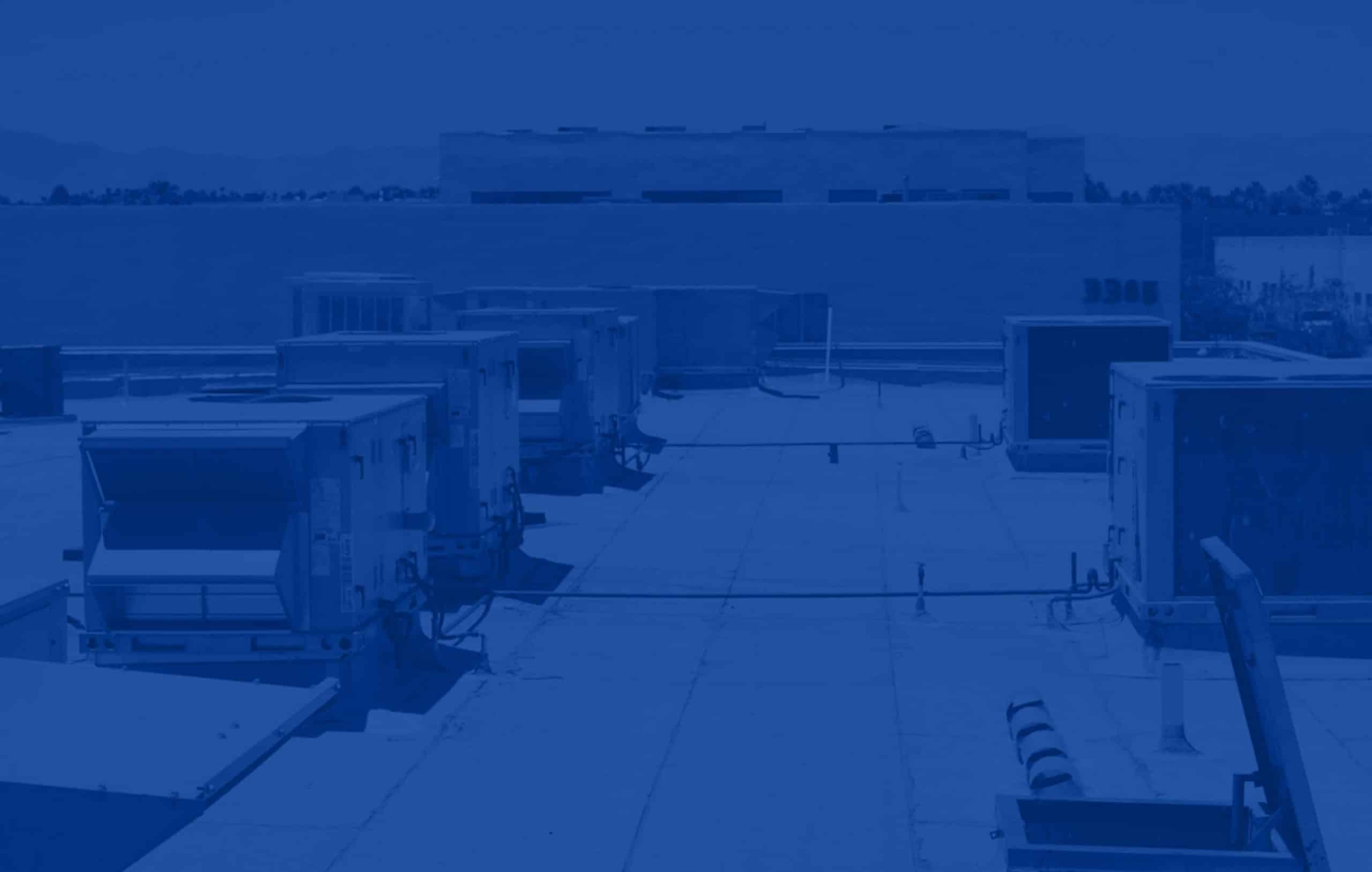
Central chilled-water plants and large chillers often drive most electric load in big buildings. Rooftop units and large air-handling units add fan and pump energy. Spot the high-run units by logging runtime hours and kW draw over a week.
How to spot failing rooftop units?
Listen for hard starts, loud bearings, or abnormal compressor clunks. Check for oil stains near access panels and look for short cycling on the unit display. Frequent repeated starts often mean an electrical, control, or refrigerant problem that needs fast attention.
What 7 urgent fixes should you prioritize?
Tune BAS schedules and setpoints first. Align occupied schedules, night setbacks, and override rules. Proper schedules stop wasted runtime in empty zones and reduce energy waste during off hours. (DOE Better Buildings HVAC)
Clean coils and change filters second. Clogged coils and dirty filters lower heat transfer and raise fan power. Use pressure-drop tracking to know when filters need replacing. That keeps fans from overworking and restores airflow. In Las Vegas: Desert dust requires monthly filter checks and quarterly coil cleaning. After dust storms, inspect and clean coils immediately to prevent airflow problems.
Repair economizers and outdoor-air dampers third. Faulty economizers can over-introduce or block outdoor air. Calibrate travel limits and verify actuators. A working economizer saves cooling energy when outdoor air is usable. Las Vegas note: During monsoon season, economizers must handle sudden humidity spikes without overloading systems.
Fix refrigerant leaks fourth. Low charge robs capacity and raises run time. Recover and repair leaks, then recharge to OEM specs. Use leak logs and track refrigerant weight after repair.
Add VFDs on fans and pumps fifth. VFDs cut energy when flow needs vary. Use them with proper controls so fans slow when full flow isn't needed. Install soft starts where motors stress belts and starters. Cost driver: VFDs typically cost $2,000–$5,000 per unit installed but can reduce fan energy by 30–50%, with NV Energy rebates available.
Learn about available federal tax credits for energy-efficient HVAC equipment.
Balance airflow and pressure sixth. Use pitot or capture hoods and adjust diffusers. Balanced systems deliver correct ventilation and reduce hot or cold spots. Pressure control reduces infiltration and saves energy.
Retro-commission controls and sequences seventh. Verify setpoints, resets, and interlocks. Fix logic bugs and add fault detection to keep savings over time. Retro-commissioning often pays back in 1–3 years.
How to assess IAQ improvements quickly?
Run short-term CO2 logging in high-occupancy zones for 24–72 hours. CO2 spikes reveal under-ventilation. Pair CO2 data with relative humidity logs to find comfort and mold risk windows.
Inspect filter MERV ratings and supply-air temperatures after changes. Upgrading to MERV 8–13 often improves particle capture. Check fan static to make sure higher MERV filters do not exceed system capability.
Why refrigerant leaks matter for compliance?
Leaks raise operating costs and can violate EPA rules on handling and reporting refrigerants. Phasedown schedules affect which refrigerants you can buy or reuse. Track leaks and follow certified repair practices to avoid fines and lost capacity.
Try our energy savings calculator to see how much you could save.
How do rooftop units get fixed fast?
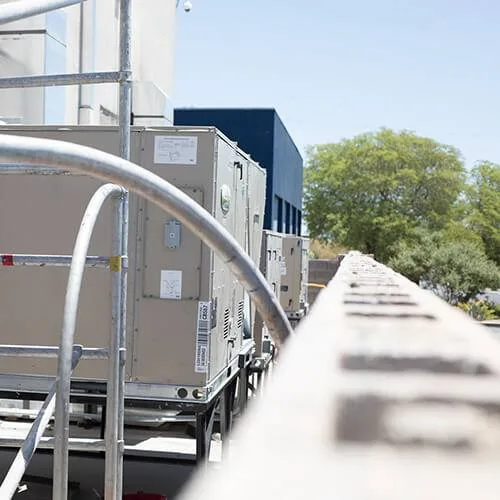
RTUs are often reachable and lend themselves to targeted fixes. A trained tech can restore capacity in a day by swapping filters, cleaning coils, and tuning controls. Those steps usually reduce call-backs and restore designed airflow. (DOE Better Buildings HVAC)
For bigger failures like compressors or blowers, plan for staged repairs. Use temporary cooling like portable units or hot-gas bypass to keep tenants safe while parts arrive. Coordinating roof rigging and power availability speeds the process.
Which rooftop inspection steps save hours?
Start with a visual and sound check of belts, filters, and panels. Confirm control power and thermostat operation. Early checks find simple items that cause most RTU failures and stop needless part swaps.
How to replace failing compressors quickly?
Confirm diagnosis with amperage, oil, and pressure checks. Recover refrigerant and plan for certified recovery and reuse where allowed. Source OEM or approved reman compressors to fit the model. Coordinate a lift plan for rooftop access to avoid delays.
What filter changes cut energy use?
Choose correctly sized pleated filters with the right MERV for the space. Replace heavily loaded filters rather than waiting by schedule only. Track pressure drop across filters and swap when rise is 0.3–0.5 inches of water column.
When to clean coils vs replace them?
Clean coils if fins are intact and tubing shows no leaks. Use coil cleaners and low-pressure washing. Replace coils when fins are crushed, tubes corroded, or when leaks persist after cleaning. Good cleaning often restores 80–90% of heat transfer.
How do AHUs affect ventilation?
AHUs mix and condition outdoor air for many zones. A stuck mixing damper or failed heat wheel cuts fresh air and raises CO2. Repair energy recovery devices and confirm airflow to each zone. Balanced AHUs deliver better IAQ and lower overall energy.
When should you repair vs replace equipment?
Decide using age, efficiency, runtime, and repair history. A simple rule is to replace when repair plus future maintenance costs exceed 50% of replacement cost. Check refrigerant availability and code rules before choosing to repair old units.
Also factor downtime risk and tenant impact. High-run equipment with long daily hours often justifies faster replacement than low-use units. Add rebates and maintenance savings to payback math to see the real case.
What payback justifies a full replacement?
Aim for a simple payback under 5–10 years based on expected building life. Higher-run systems and rising utility rates make faster paybacks acceptable. Include local rebates to improve the numbers and shorten payback.
How to estimate lifecycle costs simply?
Add first cost, annual energy, and annual maintenance over expected life. Compare options with rough net present value if you can. For quick choices, use installed kW/ton and projected annual kWh to benchmark alternatives. (DOE Better Buildings HVAC)
Which metrics show system inefficiency?
Watch kW/ton for chillers and IEER or SEER for packaged units. Log fan horsepower per delivered CFM and monitor part-load efficiency. Sudden shifts in these metrics point to refrigerant low charge, fouled coils, or control bugs.
What incentives reduce upgrade costs?
Check local utility rebates for VFDs, efficient chillers, and BAS upgrades. State and federal incentives can lower upfront cost and shorten payback by 1–3 years. Ask your utility rep for available programs before you size a project.
Las Vegas rebates: NV Energy offers commercial rebates for efficient RTUs, chillers, VFDs, and BAS upgrades. Rebates typically require pre-approval and specific documentation before equipment purchase. Missing pre-approval can void incentives. Contact NV Energy early and review their commercial guide. Contractors who know local rebate steps can save days in paperwork and help lock in incentives that change payback math.
How can controls and BAS save energy?
Controls tune equipment to real building use and cut wasted runtime. Simple BAS changes like night setback, occupied scheduling, and optimized reset curves often cut energy by double digits. Small programming fixes deliver steady, low-risk payback.
Advanced BAS features add fault detection and diagnostics. Automated alarms for filter pressure and economizer faults point techs to problems fast. Demand-control ventilation using CO2 sensors saves energy in variable-occupancy spaces.
What savings do BAS retrofits deliver?
BAS retrofits commonly save 10–30% depending on prior control quality. Projects that add optimized schedules and FDD often fall near 15% savings. Measure before and after with kW logging to confirm results for stakeholders.
Browse our project portfolio to see examples of our installation work.
How do sensors improve sequencing?
CO2 and occupancy sensors let the BAS reduce ventilation in empty zones. Temperature and humidity sensors allow staged start and stop of equipment. Proper sensor placement and periodic calibration are key to avoid false readings.
What control upgrades are low cost?
Swap old pneumatic thermostats for digital controls and enable night setback. Add VFDs to constant-speed fans. Set up simple demand-control ventilation with CO2 sensors. These moves cost little and often pay back in under two years for busy buildings.
What maintenance prevents costly failures?
A clear preventive maintenance plan avoids emergency work and keeps efficiency high. Log refrigerant charge, water chemistry, belt condition, and bearing temps. Replace worn parts before they cascade into larger failures and schedule seasonal pre-start checks.
Use trend logs to spot slow declines before a breakdown. Track runtime hours, kilowatts, and key temperatures. Trending uncovers creeping refrigerant loss, dirty heat exchangers, and failing bearings earlier than spot checks.
How often should preventive maintenance occur?
Schedule seasonal checks - spring for cooling and fall for heating. High-use plants need monthly or quarterly service. Critical systems like data centers or hospitals often get weekly checks and redundant spares to avoid downtime. (ASHRAE Technical Resources)
Las Vegas maintenance schedule: Commercial buildings here need pre-season checks in May before peak cooling months (June–September). During peak summer, monitor refrigerant levels and compressor amps weekly during heat waves. After dust storms or monsoon events, inspect filters and coils immediately. Quarterly maintenance is standard, but monthly filter checks are recommended during dusty spring and summer months.
What checklist prevents IAQ problems?
Include filters, coil cleanliness, drain pan condition, and outdoor-air damper function. Log CO2 and relative humidity and check condensate drains. Seasonal cleanings and timely filter swaps keep mold and odors from developing.
How to prioritize lubrication and belts?
Lubricate motors per the OEM interval and inspect belts for cracking. Replace belts at first sign of glazing or frayed edges. Proper oiling and belt tension reduce motor load and extend component life.
What testing finds hidden duct leaks?
Use duct pressurization with a calibrated fan or a tracer gas test to find leaks. Infrared scans show cold spots where ducts lose conditioned air. Seal leaks and retest to confirm pressure and flow gains.
When to replace worn VFDs?
Replace drives that overheat, fault often, or show capacitor loss. New VFDs run cooler and add better part-load efficiency. Consider a bypass for critical fans during a drive swap to keep systems online.
How does filtration affect health?
Higher MERV filters remove smaller particles and reduce allergens and some pathogens. Check fan capacity before upgrading to avoid overloading motors. For high-risk spaces, use MERV13 or add HEPA purifiers to support IAQ goals.
What contractor questions ensure compliance?
Ask about licenses, EPA refrigerant certification, and NATE or manufacturer training. Request references for similar buildings and proof of insurance. Confirm they follow local codes and provide clear scopes with warranty terms.
Next steps and local help?
Prepare a short scope before the site visit. List building hours, critical zones, equipment ages, and BAS access. Include recent utility bills to help techs size recommended measures and estimate payback quickly.
Assign one onsite point person for keys and roof access. Gather recent maintenance logs and share past failures. Clear access and good records make assessments quicker and less costly. That saves hours on site and speeds repair timelines.
How to prepare a site for inspection?
Give the techs BAS credentials or a BAS read-only account if possible. Provide roof access and lists of locked rooms. Tell them where spare parts and manuals live. That preparation avoids wasted trips.
Who to call for certified commercial service?
Las Vegas area readers: call The Cooling Company at (702) 567-0707 for fast, certified commercial HVAC service in Las Vegas, Henderson, and North Las Vegas. The team offers BAS tuning, refrigerant repairs, retro-commissioning, preventive maintenance plans, and emergency repairs with clear scopes and fast turnarounds. We understand Las Vegas commercial heat loads, dust management, and peak demand charge optimization.
Outside the Las Vegas area: ask for NATE-certified technicians and an HVAC firm experienced with ASHRAE standards and commercial BAS work. That helps ensure proper refrigerant handling and code compliance. Then consider local partners who can work with your commissioning agent.
Final checklist and closing notes
Start with a measured baseline: log kW, runtime hours, kW/ton, and CO2 for at least one week. Prioritize fixes that restore intended controls and remove dirt from coils and filters. Those moves usually yield the fastest energy and IAQ wins.
Commercial HVAC optimization checklist
- ✓ Conduct energy audit: log kW, runtime hours, kW/ton, and CO2 for baseline
- ✓ Review BAS schedules: align occupied schedules, night setbacks, override rules
- ✓ Inspect coils and filters: clean coils quarterly, change filters monthly in Las Vegas
- ✓ Check economizers: calibrate travel limits, verify actuators
- ✓ Fix refrigerant leaks: recover, repair, recharge to OEM specs
- ✓ Evaluate VFD upgrades: assess payback with NV Energy rebates
- ✓ Balance airflow: use pitot or capture hoods, adjust diffusers
- ✓ Plan retro-commissioning: verify setpoints, resets, interlocks
- ✓ Schedule preventive maintenance: quarterly standard, monthly during peak season
- ✓ Track metrics: monitor kW/ton, runtime hours, outdoor-air fraction
- ✓ Review utility bills: correlate energy use with weather and occupancy
- ✓ Document findings: maintain logs for trend analysis and compliance
Call The Cooling Company at (702) 567-0707 if you are in Las Vegas, Henderson, or North Las Vegas and want certified commercial HVAC service, including BAS tuning, preventive maintenance plans, and energy optimization. If you are outside that area, ask for NATE-certified techs and a commissioning provider to validate complex work. Good records and trend logs protect your investment.
Local essentials and challenges
Las Vegas systems operate under intense rooftop heat and long cooling seasons, so efficiency improvements must account for high run hours and rapid dust buildup. Monsoon humidity spikes add latent load and can overwhelm drain systems. These conditions make airflow, controls, and coil cleanliness the highest-impact levers.
Cost drivers for optimization projects
- Controls/BAS retrofit scope and sensor density
- Coil cleaning, airflow balancing, and duct sealing needs
- VFD upgrades on supply, exhaust, and condenser fans
- Refrigerant repairs and compliance documentation
- Roof access constraints and lift coordination
- Utility rebate pre-approval and measurement plans
Decision guidance for upgrades
- Start with low-cost controls tuning before major replacements.
- Target the highest kW/ton units first for quick payback.
- Bundle VFDs with controls improvements to maximize savings.
- Validate savings with before/after trend logs and utility bills.
Prevention to keep savings
- Inspect and clean coils quarterly, and after dust storms.
- Check filter pressure drop monthly during peak season.
- Verify economizer dampers before summer and after monsoons.
- Document control setpoints to prevent drift over time.
Neighborhoods we serve around Las Vegas
We work with facilities in Summerlin, Henderson, North Las Vegas, Downtown, The Lakes, Silverado Ranch, and Spring Valley. Older retail strips and mixed-use corridors often benefit most from controls tuning and airflow balancing.
Trust and guarantees
- Serving Las Vegas since 2011 with 55+ years of combined experience
- Licensed, EPA-certified technicians with BAS expertise
- BBB A+ rated and Lennox Premier Dealer
- Upfront pricing and a 100% satisfaction guarantee on work performed
Visit our Las Vegas location
Share This Page
About The Cooling Company
The Cooling Company has been serving the Las Vegas valley with professional HVAC services for over a decade. Our team of licensed, NATE-certified technicians specializes in air conditioning repair, heating system maintenance, and complete HVAC installations. We're committed to providing honest, reliable service with upfront pricing and a 100% satisfaction guarantee on all work performed.
- Phone: (702) 567-0707
- Reviews: 4.8/5 stars (780+ reviews) - See reviews
Service Areas
We proudly serve homeowners and businesses throughout the Las Vegas metropolitan area, including Las Vegas, Henderson, and North Las Vegas. Our service technicians are available for same-day appointments in most areas, with emergency service available 24/7 for urgent HVAC issues.
Need HVAC Service in Las Vegas?
The Cooling Company provides expert HVAC service throughout Las Vegas, Henderson, and North Las Vegas. Our licensed technicians deliver honest assessments, upfront pricing, and reliable results.
Call (702) 567-0707 or visit commercial HVAC, AC repair, maintenance, or installation for details.