

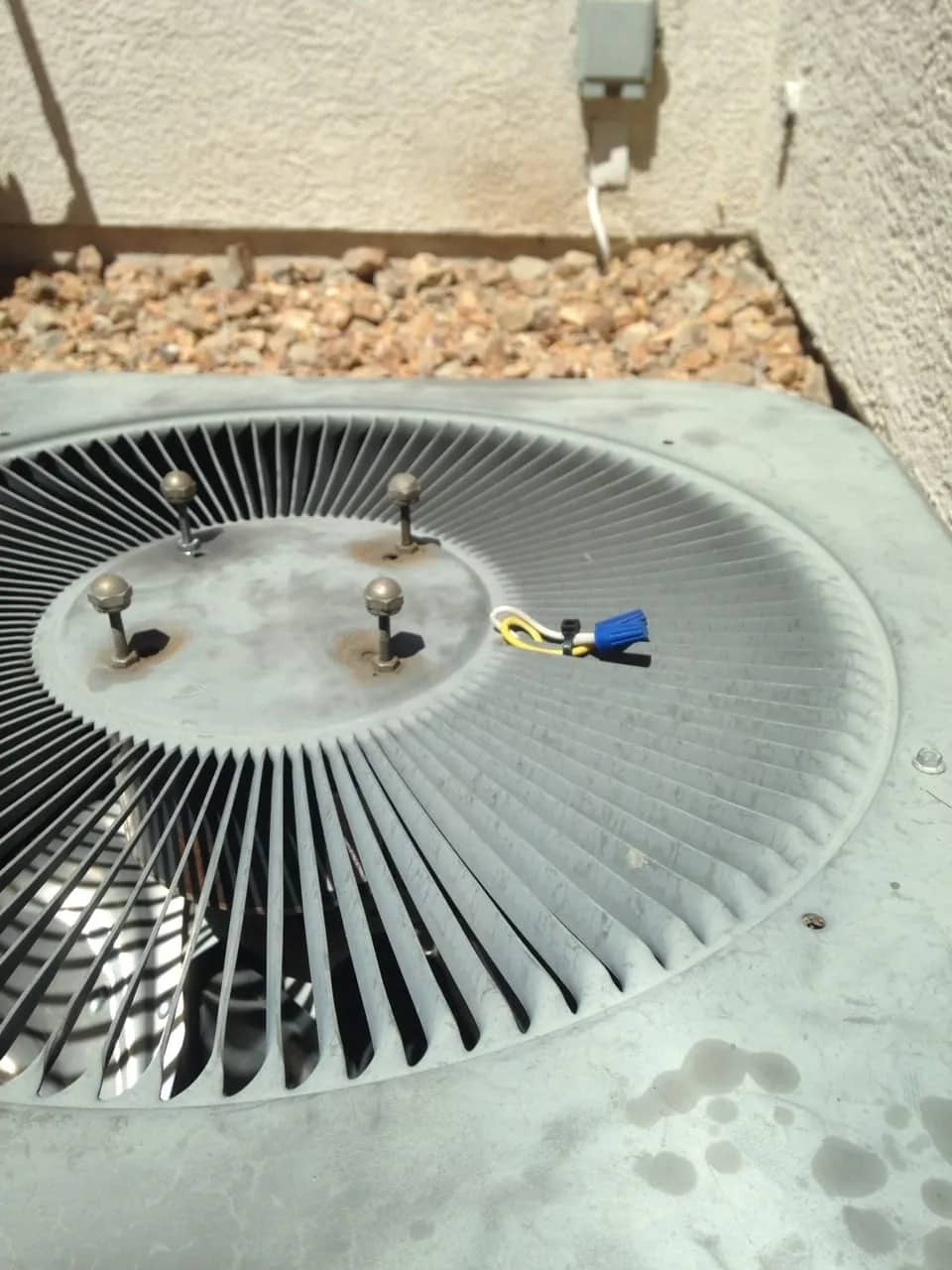
Short answer: Commercial AC unit costs range from $1,500-$4,500 per ton installed for rooftop units, with total project costs typically $50,000-$500,000+ depending on building size. In Las Vegas, extreme heat (110°F+ summers), desert dust, and high energy costs make right-sizing, modern controls, and regular maintenance critical for controlling both upfront and operating costs. Focus on installed cost per ton, lifecycle savings, and request AHRI-certified performance data before signing contracts.
For more information, see our guide on commercial HVAC maintenance costs.
For more information, see our guide on commercial HVAC systems guide.
Las Vegas Commercial AC Cost Considerations
Las Vegas presents unique factors that significantly impact commercial AC costs:
- Extreme heat drives capacity needs: Design temperatures exceed 115°F, requiring 20-30% more capacity than moderate climates, increasing upfront costs
- Extended cooling season: AC systems run 10-18 hours daily from March through October, making efficiency upgrades pay back faster
- Desert dust requires frequent maintenance: Monthly filter changes and quarterly coil cleaning add to operating costs but prevent efficiency loss
- Monsoon season impacts: July-September humidity spikes add cooling load, requiring systems sized for peak conditions
- High energy costs: NV Energy's commercial rates and demand charges (1-7 PM) make efficiency critical; premium equipment often pays back in 3-5 years
- Rooftop exposure: Intense UV and heat accelerate equipment wear, shortening replacement cycles compared to other climates
- Peak demand charges: Staging systems and smart controls can reduce monthly demand charges by 20-40%

Decision Checklist: Commercial AC Procurement
Use this checklist when planning commercial AC projects in Las Vegas:
- Load calculation: Has a professional calculated cooling loads using Las Vegas design temperatures (115°F+)?
- Right-sizing: Is equipment sized for actual loads, not oversized "to be safe"? (Oversizing increases costs and reduces efficiency)
- Controls strategy: Do plans include modern controls, staging, and demand management to reduce peak charges?
- Efficiency targets: What SEER/EER ratings are specified? (Higher efficiency costs more upfront but saves significantly in Las Vegas)
- Maintenance plan: Is a preventive maintenance contract included in lifecycle cost calculations?
- Rebate eligibility: Have utility rebates been identified and pre-approved before equipment selection?
- AHRI certification: Do proposals include AHRI-certified performance data, not just manufacturer claims?
- Commissioning scope: Is functional testing and commissioning included to verify performance?
- Warranty terms: What warranty coverage is included, and how quickly can contractors respond to issues?
- Lifecycle analysis: Have you compared 15-year total cost of ownership, not just first cost?
Key Takeaways
- Target right-sizing, controls, and commissioning for fastest savings.
- Use installed-cost rules of thumb and lifecycle math, not vendor sticker price.
- Ask for AHRI data, utility rebate pre-approvals, and a commissioning scope before signing.
N/A: Short note about keywords and content intent
N/A is shown here only to reflect the provided primary-keyword field in the assignment. The article focuses on practical steps to reduce installed and lifecycle cost for commercial air conditioning. That means detailed budgeting, procurement steps, and technical points to keep surprises out of the final invoice.
This section clarifies that the article does not push a single brand solution. It emphasizes measurable metrics such as kWh per ton, chilled-water delta-T, and verified AHRI ratings. Use these metrics to compare alternatives and protect expected savings.
Why prioritize AC cost reduction?
Commercial cooling often drives large utility bills and directly affects tenant comfort and retention. Cooling loads can dominate operating expenses in warm climates or high-occupancy buildings. Reducing AC cost early in a project improves net operating income and lowers lifetime risk.
Early choices make the largest difference. System type, controls, refrigerant family, and commissioning all shape installed cost and future performance. Address these items during procurement and design so contractors price them consistently. Planning also reduces downtime risk and avoids costly mid-life retrofits.
Choosing cost-effective options protects budgets. Consider utility rates, demand charges, and rebate opportunities during selection. Buildings with long run hours or high peak demand typically see faster payback on higher-efficiency equipment. Document expected savings and require verification to ensure incentives and lifecycle claims are realized.
What drives lifecycle cost?
Lifecycle cost is the sum of upfront purchase and decades of operation. Energy consumption, maintenance, repairs, and downtime all matter. A lower sticker price can hide higher energy bills or repeated repairs.
Measure kWh per ton, runtime hours, and demand peaks to compare options. Track metrics such as chilled-water delta-T and fan watts per CFM to spot inefficiency. Use those data to forecast payback and total cost of ownership rather than relying on list price alone.
Try our energy savings calculator to see how much you could save.
When should you replace versus repair?
A good rule of thumb is to replace when a repair exceeds roughly 40 percent of the installed replacement cost. Frequent failures, obsolescent refrigerant, or lack of spare parts are additional triggers to replace.
Repair if the unit has life left and upgrades will not correct systemic inefficiency. Always weigh downtime, tenant impact, and warranty status. Request a lifecycle bid from contractors to make tradeoffs clear and to see predicted long-term costs.
What costs make up a commercial AC project?
A full project budget must go beyond the equipment list price. Freight, rooftop structural work, curb adapters, controls, electrical upgrades, and piping can add materially to the total. Design fees, permits, and disposal of old refrigerant are real line items that owners sometimes forget.
Contingency and commissioning fees typically add five to ten percent. Rooftop rigging and crane time are frequent surprises. Ask for a line-item bid that separates equipment, materials, labor, and soft costs. That makes it easier to compare bids and spot outliers before signing a contract.
Equipment and material costs?
Equipment prices vary by capacity, efficiency rating, and options. Variable-speed compressors, economizers, and integrated controls increase list price. Acoustic packages and corrosion protection also add cost. Materials include ductwork, insulation, vibration isolation, valves, wiring, and piping.
Freight for rooftop units and chillers can be a large single line item. Ask vendors for shipped weight and rigging requirements. Include spare parts for critical components in the budget so small failures do not become major outages.
For a detailed cost breakdown, see our HVAC pricing guide.
Installation and labor costs?
Labor rates depend on local market conditions, union status, and contractor availability. Rigging, crane time, and rooftop access increase labor line items. Off-hour work or street lane closures add premiums.
Request a local labor breakdown from bidders. That helps ensure you compare apples to apples. When bidders provide detailed labor line items, you can spot travel, staging, and overtime charges that otherwise hide inside a lump sum.
Soft costs and permits?
Design, engineering, permit fees, and utility coordination are soft costs that appear early. Structural drawings for rooftop work or curb modifications often take time and money. Commissioning, training, and initial spare parts belong in soft costs and protect expected performance.
Plan for project management and testing time. Including soft costs in the contract reduces change orders and helps maintain the schedule. Utility rebate pre-approvals often require documentation that must be budgeted and tracked during the project.
Learn about available federal tax credits for energy-efficient HVAC equipment.
How to estimate installed cost?
Estimate installed cost by combining rules of thumb with site-specific data. Normalize bids to dollars per ton installed and include soft costs. Dollars-per-ton is a useful common metric when you require bidders to include the same scope and testing requirements.
Compare lifecycle cost, not only first cost. Get at least two lifecycle bids to validate assumptions. Require AHRI-certified capacity and efficiency numbers in proposals to ensure quoted tonnage matches delivered performance. That prevents acceptance of undersized equipment marketed at lower unit price.
What are typical price ranges by equipment?
Package rooftop units (RTUs) often range from roughly $1,500 to $4,500 per ton installed. Price depends on size, controls, and options. VRF systems can be 10 to 40 percent higher than like-capacity packaged systems, mainly due to branch-circuiting and refrigerant piping.
Chilled-water central plants commonly range from $3,000 up to $10,000 or more per ton, depending on towers, pumps, redundancy, and controls. Local bids will refine these ranges for your market and climate.
How do chillers differ in upfront price?
Air-cooled chillers typically cost less to install because they avoid towers and water systems. They can lose efficiency at high ambient temperatures, which reduces savings in hot climates. Water-cooled chillers require towers and water treatment and usually cost more up front.
For large loads, water-cooled systems often run more efficiently and can have longer life. Include tower water treatment and maintenance costs in lifecycle calculations to compare real operating cost across chiller types.
How do regional labor rates affect bids?
Local labor markets, permitting timelines, and contractor competition shape final price. Union labor, scarce rigging crews, or congested urban sites drive up labor and staging costs. Remote sites add travel and lodging charges.
Ask bidders for a local labor breakout. That transparency helps identify travel premiums, off-hour work, or special permits that inflate bids. It also helps when you need to value-engineer scope without changing performance targets.
When should you focus on efficiency?
Prioritize efficiency when operating hours are high or when demand charges are material. Buildings that run around the clock or have heavy daytime peaks get faster payback on premium equipment. Climate matters: hot or humid climates often justify higher-efficiency choices.
Plan efficiency upgrades around tenant schedules and low season windows. Contractors are more available in shoulder seasons and can complete work with less disruption. Early planning also secures rebate slots which can meaningfully reduce installed cost.
Does oversizing increase lifecycle cost?
Yes. Oversized systems short-cycle, which wastes energy and increases wear. Short-cycling also reduces humidity control and can lower occupant comfort. Right-sized systems run longer at efficient part-load points and reduce maintenance needs.
Use accurate load calculations and consider diversity for multi-tenant sites. Include airflow testing and balancing in the acceptance scope so delivered capacity matches modeled capacity and the equipment performs as expected.
How much can controls improve efficiency?
Controls can reduce HVAC energy by roughly ten to thirty percent when properly specified and commissioned. Variable-frequency drives, optimized sequences, setback schedules, and demand limiting all capture savings. Integration with a building automation system (BAS) increases the value and enables trend monitoring.
Commissioning and ongoing maintenance are essential. Poorly tuned controls will not deliver projected savings. Include functional testing and seasonal checks in the commissioning scope to capture persistent savings and validate sequences.
Will demand control ventilation save money?
Demand control ventilation (DCV) reduces outside air conditioning when occupancy is low. It works well in conference areas, large meeting rooms, and other variable-occupancy spaces. Savings depend on the percentage of outside air and fan power.
Select DCV for spaces with large occupancy swings and verify sensor placement during commissioning. Proper sensor siting and calibration are critical to avoid comfort complaints and preserve energy savings.
How to choose the right system?
Match the system to the building load, tenant needs, and maintenance capacity. Small, simple buildings often benefit from RTUs because they have lower first cost and simple service needs. Complex multi-zone buildings may get better comfort and efficiency from VRF or chilled-water systems.
Also consider operations staff and spare-parts logistics. A simpler system can cost less over time if in-house staff can maintain it. Conversely, a more sophisticated system can be worth the extra cost if it reduces energy and tenant complaints over the long term.
VRF or rooftop units: which fits better?
VRF systems fit when many independent zones require tight temperature control. VRF provides high part-load efficiency and individual zone control. They often have higher installed cost but can save energy and offer better tenant comfort in multi-zone buildings.
RTUs are attractive for straightforward loads and easy maintenance access. They usually have lower installed cost and simpler service needs, which benefits buildings with limited HVAC staff or tight capital budgets.
What makes chillers worth the investment?
Chillers are worth it when centralization yields lower $ per ton and easier maintenance for larger sites. Central plants can provide redundancy and efficient part-load control with VFD pumps and towers. They also simplify spare parts and operator training over campuses.
Consider the lifecycle benefits and include tower water treatment and condenser maintenance in models. Thermal storage can also add value by shifting loads off peak periods and reducing demand charges.
How important are controls and BAS?
Controls and a BAS tie equipment, schedules, and metering into a single strategy. Good controls capture savings from efficient hardware and reduce operator error. They make troubleshooting faster and allow trending to detect drift or failures early.
Budget for secure networking and routine BAS support. A BAS that is neglected loses much of its value. Plan for software updates, trending review, and staff training as part of ongoing operating cost.
Maintenance, warranties, and procurement strategies
Maintenance and warranty terms reduce lifecycle risk. Preventive maintenance such as coil cleaning, filter changes, refrigerant leak checks, and seasonal tune-ups prevent efficiency loss. A preventive maintenance contract often pays for itself through avoided failures and extended equipment life.
Procurement strategy matters. Design-bid-build with performance specs typically yields clear comparisons and competitive pricing. Design-build can speed delivery and reduce coordination risk. Always require AHRI data, commissioning, and fixed-price deliverables to avoid change-order surprises.
What maintenance reduces unexpected expense?
Regular maintenance keeps systems efficient and reduces emergency calls. Timed filter changes, coil cleaning, belt inspections, and refrigerant charge checks are low cost and high value. Keep a small spare-parts inventory for critical items like fan motors, contactors, and sensors.
Track maintenance costs against downtime and tenant complaints. Use that data to adjust PM frequency and parts stocking. Preventive actions usually cost far less than reactive repairs and lost revenue from tenant disruption.
Las Vegas-Specific Maintenance and Prevention Tips
Las Vegas commercial AC systems require specialized maintenance due to extreme conditions:
- Monthly filter changes: Desert dust clogs filters faster than other climates; change filters monthly during peak season (March-October)
- Quarterly coil cleaning: Rooftop units accumulate dust and debris quickly; professional coil cleaning every 3 months maintains efficiency
- Pre-monsoon inspections: Schedule comprehensive inspections before July to ensure systems can handle humidity spikes
- Peak season monitoring: Monitor system performance during June-September heat waves; early detection prevents costly failures
- Refrigerant level checks: High ambient temperatures stress systems; check refrigerant levels quarterly to prevent efficiency loss
- Electrical component inspection: Heat accelerates electrical wear; inspect contactors, capacitors, and wiring annually
- Drain line maintenance: Clear condensate drains monthly to prevent water damage and system shutdowns
- Thermostat calibration: Verify thermostat accuracy seasonally; incorrect readings waste energy and reduce comfort
- Demand management: Use controls to stagger system starts and reduce peak demand charges during 1-7 PM periods
- Documentation: Keep detailed maintenance logs; track energy use to identify efficiency degradation early
How long before payback on efficiency upgrades?
Payback varies with hours of use, the delta in efficiency, and available incentives. Typical simple payback windows range from two to eight years. High-use facilities often see paybacks at the shorter end of that range.
Run both simple payback and full lifecycle cost models. Include utility escalation and measurement-and-verification if incentives require proven savings. That gives a realistic projection of owner benefit over time.
Which contractors reduce procurement risk?
Choose contractors with commercial references and commissioning experience. Look for NATE or factory-certified technicians and a record of meeting warranty obligations. Fixed-price bids with itemized scopes reduce change orders.
Request references for similar projects and confirm AHRI data, lead times, and subcontractor lists. Check warranty response times in your region so you know who responds when failures occur.
Ready to get a site survey and estimate?
A site survey and two lifecycle bids give a realistic installed cost and a clear path to rebates. Include a commissioning agent and rebate pre-approval language in bid documents so expected savings are protected and project timelines shorten. Fixed-price proposals with clear exclusions make apples-to-apples comparisons possible.
When you request a site survey, ask bidders for AHRI-certified performance data, a commissioning scope, and a refrigerant strategy. Require a line-item installed-cost breakdown so you can compare labor, materials, and soft costs across proposals. That limits surprises at contract time.
How to request a site survey?
Provide the building square footage, equipment ages, and recent utility bills when you schedule a survey. Note roof access, curb sizes, and electrical service details so bidders can give more accurate early pricing. Invite operations staff to attend so the surveyor can confirm schedules and access.
Ask for a written scope, a photo set, and nameplate copies during the visit. A clear early installed-cost range helps you budget and shortlists contractors for full proposals. Schedule the survey during normal business hours and confirm safety and access protocols.
What information should you prepare for bids?
Prepare load calculations, equipment nameplates, electrical service details, and photos of rooftops and mechanical rooms. Share tenant hours and unusual schedules so bidders can model real loads. Include any rebate targets and incentive requirements you want bidders to meet.
Ask bidders to include commissioning plans, expected lead times, and warranty terms. That ensures proposals address more than first cost and reduces the chance of unexpected charges or performance shortfalls after installation.
Ready to Get Accurate Commercial AC Cost Estimates?
Sources and compliance notes
- DOE Better Buildings HVAC: see the US Department of Energy guidance on HVAC technology and best practices at the linked resource above.
- Request AHRI-certified performance data and include commissioning in contracts to protect expected savings and limit retrofit surprises.
Critical compliance note: Always verify refrigerant regulations and local codes before selecting equipment. Plan for technician training and documented refrigerant handling to avoid service and retrofit risk.
Related reading: what to explore next?
Expand your knowledge with these related guides from our experts. Each article provides in-depth information to help you make informed decisions about your HVAC system and home comfort needs.
About The Cooling Company
The Cooling Company has been serving the Las Vegas valley with professional HVAC services for over a decade. Our team of licensed, NATE-certified technicians specializes in air conditioning repair, heating system maintenance, and complete HVAC installations. We're committed to providing honest, reliable service with upfront pricing and a 100% satisfaction guarantee on all work performed.
- Phone: (702) 567-0707
- Reviews: 4.8/5 stars (780+ reviews) - See reviews
Service Areas
We proudly serve homeowners and businesses throughout the Las Vegas metropolitan area, including Las Vegas, Henderson, and North Las Vegas. Our service technicians are available for same-day appointments in most areas, with emergency service available 24/7 for urgent HVAC issues.
Share This Page
References
- U.S. Department of Energy (Energy.gov) (accessed 2026-01-03)
- U.S. Environmental Protection Agency (EPA) (accessed 2026-01-03)
- ASHRAE (Standards and guidance) (accessed 2026-01-03)
- ENERGY STAR (Heating & cooling) (accessed 2026-01-03)
Need HVAC Service in Las Vegas?
The Cooling Company provides expert HVAC service throughout Las Vegas, Henderson, and North Las Vegas. Our licensed technicians deliver honest assessments, upfront pricing, and reliable results.
Call (702) 567-0707 or visit commercial HVAC, AC repair, maintenance, or installation for details.