


Short answer: Discover HVAC maintenance tips for building managers to prioritize controls, filtration and refrigerant strategy to cut energy bills and protect occupants.
Quick answer: This guide gives building managers clear, practical steps for commercial HVAC. It covers system types, controls, refrigerant risk, and maintenance checks. Use it to prioritize upgrades, estimate costs, and know when to hire licensed contractors. Follow the checks and documentation tips to protect budgets and occupant health. (ASHRAE Technical Resources)
Key Takeaways
Start here to get fast wins and avoid big risks. Begin with control tuning, filtration upgrades, and commissioning. Plan refrigerant transitions and document work to meet code and incentive rules. Track energy and occupant feedback to justify larger replacements later.
- Controls tuning, filtration, and commissioning often give the best near-term ROI.
- HVAC can be 35–45% of building energy; small percent cuts save large dollars.
- Plan refrigerant strategy now to avoid stranded equipment and supply risk.
What is commercial HVAC and why care?
Commercial HVAC delivers heating, cooling, and ventilation to offices, stores, and other nonresidential buildings. Managers must balance comfort, energy cost, and code compliance. Good systems protect people, keep equipment safe, and reduce emergency repair bills over time.
Decisions also affect health and tenant relations. Poor ventilation raises sick days and complaints. Codes such as ASHRAE 62.1 set minimum ventilation and shape retrofit choices. Consider both near-term savings and long-term risk when planning changes. For a broader look at the equipment options available, see our guide on types of commercial HVAC systems.
How does a commercial HVAC system work?
A commercial system moves heat and fresh air to control comfort and indoor air quality. Cooling removes heat from rooms and rejects it outside. Heating adds heat with boilers, heat pumps, or packaged gas units.
Controls tell equipment when to run and how hard. Sensors read temperature, humidity, and CO2. Actuators change dampers and valves to match schedules and loads. A BAS ties it all together for monitoring and trend logging.
What energy share does HVAC hold (U.S. EIA data)?
HVAC often leads commercial energy use. Space heating and cooling plus fans can reach 35 to 45 percent of total site energy. That share varies by climate, building type, and operations.
Use EIA CBECS data to benchmark your site against peers. Small HVAC percentage cuts can give large dollar savings. Benchmarking helps scope projects and set realistic goals for upgrades.
Why do occupant comfort and IAQ matter?
Comfort affects productivity, tenant retention, and complaints. Comfortable occupants perform better and raise fewer issues. Indoor air quality affects health and can raise legal or regulatory risk.
Improving filtration and ventilation cuts particle and CO2 levels. Track both subjective feedback and objective IAQ data after upgrades. Show improvements to tenants and owners with simple before-and-after metrics.
What is CBECS and why use it?
CBECS is the U.S. EIA survey for commercial energy use. It gives national and regional benchmarks by building type. Managers use it to compare site energy and spot outliers for investigation.
Pair CBECS numbers with your utility bills to find savings potential. Use the data when estimating project impact and when communicating goals to stakeholders and owners.
How do ventilation, heating, and cooling differ?
Ventilation brings outdoor air to dilute indoor contaminants and to control humidity. Heating adds thermal energy for cold weather comfort. Cooling removes heat and moisture to hold setpoints in hot weather.
Each function uses different gear and energy. Ventilation needs fans and sometimes energy recovery. Heating may need boilers or heat pumps. Cooling uses RTUs, chillers, or VRF systems depending on scale.
Which HVAC system types should I consider?
Select systems based on building size, climate, and tenant needs. Compare capital cost, operating cost, maintenance needs, and expected life. Factor in refrigerant rules to avoid early replacements. (ASHRAE Technical Resources)
Start with an inventory of existing units, ages, and failure history. Consider staged upgrades like controls or hybrid heat-pump conversions before full replacements. Life-cycle cost helps pick the best option for your budget.
For a detailed cost breakdown, see our commercial HVAC cost guide.
How do packaged rooftop units differ?
Packaged rooftop units place all main parts in one unit on the roof. They save indoor mechanical space and cut installation time. RTUs are common for small to mid-size retail and office buildings.
Modern RTUs can include ECM fans, modulating compressors, and smart controls. Proper sizing and commissioning matters. Units that are too large can short-cycle and waste energy and comfort.
What are the pros and cons of chillers?
Chillers scale well for large cooling loads and central plants. They often deliver better part-load efficiency with variable-speed drives and optimized pumps. Chilled-water systems suit multi-story buildings and campuses.
They require more capital and skilled O&M. Chiller plants need pumps, piping, and cooling towers. Retrofit cost can be high, but energy payback may justify the investment for large, cooling-dominant sites.
How do variable refrigerant flow systems work?
VRF systems circulate refrigerant between outdoor condensing units and many indoor heads. Each indoor unit controls its zone independently. Inverter compressors adjust capacity to match load closely.
VRF suits multi-zone spaces and limits ductwork needs. Technician training and careful piping design are essential. Choose VRF where zone control and efficiency matter more than simple O&M.
What about boilers and hydronic systems?
Hydronic systems move hot water through piping to radiators, fan coils, or radiant panels. Boilers provide the heat and pumps move the water. This approach gives even comfort and good control.
Condensing boilers and high-efficiency pumps cut fuel use. Retrofits can be disruptive and require careful staging. Plan piping and tenant impact before committing to hydronic upgrades.
Learn about available rebates and promotions for energy-efficient HVAC equipment.
What ASHRAE guidance applies?
ASHRAE 62.1 sets commercial ventilation and IAQ criteria. ASHRAE 90.1 defines energy efficiency baselines used in codes. ASHRAE 15 covers refrigeration safety for many systems.
Explore our commercial HVAC maintenance tips for keeping systems running efficiently.
Follow these standards when designing or retrofitting systems. They give minimum ventilation rates, economizer rules, and safety measures. Use them as technical guides for performance and compliance.
How to prioritize upgrades and controls?
Prioritize measures that cut operating cost and improve reliability. Start with low-cost fixes that yield fast savings. Use audits and simple payback to rank projects and justify capital outlays.
Include risk factors such as refrigerant availability and code timelines. Balance tenant impact and capital cycles. A phased plan helps spread costs while keeping buildings performing well.
Which measures give fastest payback?
Controls fixes, schedule corrections, and basic repairs often deliver the fastest payback. Fixing economizers, tightening schedules, and sealing ducts can pay back in one to three years. Filter upgrades and basic commissioning also show quick returns.
Utility rebates and incentive programs shorten payback further. Combine HVAC measures with lighting or envelope work to boost total savings and make projects more attractive to owners. For more on budgeting, see our commercial HVAC replacement cost guide.
How much can controls reduce energy use?
Controls can cut HVAC energy by ten to thirty percent when systems are miscontrolled. Savings depend on baseline conditions. Demand-driven ventilation and proper sequences typically offer the largest gains.
Verify savings with trend data and metering after commissioning. Budget for BAS upkeep so gains do not erode. Well-tuned controls keep systems from running when they are not needed. (ASHRAE Technical Resources)
What is demand control ventilation (DCV)?
DCV adjusts outdoor-air intake using occupancy cues such as CO2 sensors. It reduces ventilation when spaces are empty or lightly used. That lowers fan energy and conditioning loads while keeping acceptable IAQ.
Set DCV up to meet ASHRAE 62.1 where occupancy varies. Ensure fans can handle added filter pressure drop. Keep sensors calibrated and check the control logic annually.
How to evaluate advanced controls and BMS?
Look for vendors with open communication standards like BACnet. Open protocols reduce vendor lock-in and ease future upgrades. Also evaluate FDD tools and reporting capabilities.
Prioritize cybersecurity and staff training. Run a pilot to validate benefits before scaling. Require documentation and a measured savings plan in contracts for larger rollouts.
What are sequencing and setpoint best practices?
Use setback schedules for unoccupied hours and mild demand-based setpoints during work hours. Avoid extreme setpoint swings that stress equipment. Sequence economizers and compressors to avoid simultaneous peak operation.
Document sequences and test them with commissioning. Keep sequences simple to start and add complexity only when savings justify it. Communicate setpoints to tenant reps to avoid surprises.
What EPA filtration guidance applies?
EPA guidance often recommends MERV 13 filters where systems can handle the added pressure. Higher MERV filters catch more fine particles and improve indoor air quality. Confirm that fans can overcome the higher pressure drop before upgrading.
Use portable HEPA units in high-risk zones as a supplement. Track filter pressure drop and change filters on schedule to avoid energy penalties from clogged filters.
What savings come from commissioning?
Commissioning finds control faults, sensor drift, and sequence errors that often persist. Typical savings range from ten to thirty percent in many retrofits. The work often pays back quickly through recovered performance.
Plan retro-commissioning every three to seven years. Use commissioning before large replacements to spot low-cost fixes that defer capital spend. Track post-commissioning energy to confirm savings.
How to size projects for capital budgets?
Use life-cycle cost analysis that includes capital, operating, maintenance, and incentive effects. For major systems, model energy with tools such as EnergyPlus. For smaller jobs, simple payback is often enough.
Group projects into tiers: immediate fixes, medium controls and filtration, and long-term replacements. Align projects with capital cycles and tenant use. Allow contingency for unexpected site conditions.
When must contractors or specialists be called?
Call licensed HVAC contractors for refrigerant work, pressurized systems, and permit-required work. Controls network changes and major retrofits also need specialist skills. Safety and code work belong to licensed pros.
Use third-party commissioning agents for objective testing. Bring in MEP engineers for major plant changes and IT for BAS cybersecurity. Early specialist input reduces surprises and keeps schedules on track.
How to manage refrigerant and code risk?
Refrigerant rules affect long-term operating cost and supply risk. The AIM Act and EPA rules are phasing down many HFCs. Plan a refrigerant strategy to avoid stranded assets as rules tighten.
Consider technician training and recovery gear when switching refrigerants. Low-GWP options reduce regulatory risk but may need safety features. Factor refrigerant choices into life-cycle cost and replacement timing.
What refrigerant phases and low-GWP options exist?
The AIM Act phases down HFCs through 2036, pushing adoption of low-GWP gases. Options include HFO blends, A2L mildly flammable refrigerants, and CO2 for some uses. Each option brings trade-offs in safety and efficiency. (ASHRAE Technical Resources)
Choose refrigerants that match long-term serviceability and code paths. Consider technician availability and safety training needs. Include refrigerant transition cost in your life-cycle analysis before choosing equipment.
How do codes and future bans affect choices?
Codes can restrict refrigerant types, require safety features, and set leak detection rules. Some states move faster than federal rules. Buying equipment that is likely to be banned soon risks early replacement.
Work with contractors and engineers to pick compliant equipment. Design systems for easier future retrofits where possible. Monitor state and federal rules to adjust project timing.
What are compliance steps and documentation?
Keep refrigerant purchase, recovery, and repair logs per EPA and state rules. For large systems, maintain annual leak calculations and repair records. Save commissioning and sensor calibration reports for audits.
Use certified technicians for refrigerant handling and keep training records. Store equipment manuals and nameplates for inspectors. Good filing reduces audit risk and helps with rebates and warranties.
How to troubleshoot and maintain systems?
Proactive maintenance prevents failures and keeps efficiency high. Schedule seasonal tuneups, filter changes, and trend reviews. Track temperature, runtime, and energy to spot issues early.
Make a preventive maintenance plan with clear tasks, frequencies, and responsible staff. Train in-house teams for basic checks and call contractors for complex repairs. Keep spare parts for common failures.
What daily checks should facility teams perform?
Daily rounds should check thermostats, BAS alarms, and visible leaks. Listen for unusual noises and note odd odors near mechanical rooms. Confirm critical equipment runs during occupied hours.
Log anomalies and follow an escalation plan. Brief digital logs help spot trends over weeks. Quick daily checks catch many problems before they grow.
How to use energy baselines and benchmarks?
Create a baseline from twelve months of utility data. Adjust for weather and occupancy to normalize the baseline. Compare current use to the baseline to measure savings from projects.
Use EUI and CBECS benchmarks for peer comparison. Install submeters to isolate HVAC performance. Regular benchmarking helps prioritize investigations into energy drift.
What preventive maintenance tasks matter most?
Clean coils, confirm refrigerant charge, and check economizer function. Test belts and bearings, inspect wiring, and verify VFD settings. Keep drainage and condensate paths clear to avoid water damage.
Follow manufacturer schedules and adapt for site conditions. Track part life and plan spares for high-failure items. Good PM lowers emergency calls and extends equipment life.
How often should filters and belts be changed?
Filter frequency depends on MERV rating, site dust load, and runtime. Inspect filters monthly and change them every one to three months in many sites. Higher MERV often means more frequent changes.
Inspect belts quarterly for wear and correct tension. Replace belts with cracks, fraying, or glazing. Document schedules and costs to optimize intervals and avoid sudden failures.
What ASHRAE commissioning checks prevent faults?
Key checks include sensor calibration, economizer operation, and control sequence validation. Measure airflow, static pressure, and verify setpoints across zones. Test actuators, dampers, and safety interlocks.
Record results and fix gaps quickly. Commissioning finds small faults that often cause high energy waste. Repeat tests after major repairs or system changes. (DOE Better Buildings HVAC)
How to detect refrigerant leaks fast?
Watch for longer compressor run-times, odd pressure readings, or weak cooling. Visual checks around service ports and joints can help. Electronic leak detectors speed up location of leaks.
Log refrigerant use and inspect per EPA rules. Early leak detection lowers environmental harm and reduces the chance of costly lost-charge replacements. Train staff to spot early signs.
What OSHA safety rules protect technicians?
OSHA calls for safe access, fall protection, and lockout-tagout for mechanical work. Technicians need training in refrigerant hazards and proper PPE. Confined-space and hot-work rules apply in many mechanical rooms.
Require contractors to provide MSDS sheets and follow site safety plans. Keep emergency procedures and first-aid supplies available. A strong safety focus reduces accidents and liability.
How to track and act on fault detection?
Use BAS FDD to flag abnormal patterns like short-cycling and economizer faults. Prioritize faults by energy and safety impact. Assign faults to technicians with clear timelines for repair.
Document fixes and verify with trend checks. For recurring faults, invest in root-cause analysis. Regular FDD review keeps maintenance focused on high-impact issues.
What tools support remote monitoring?
Cloud BAS dashboards, submeters, and IoT sensors enable remote trend review and alarm delivery. CO2 and occupancy sensors support smarter ventilation. Mobile apps let techs view trends and respond fast.
Choose secure systems with open APIs for analytics. Remote monitoring finds problems sooner and reduces site visits. Budget for data storage and analytics to turn data into action.
How to use DOE and utility incentives?
Many utilities and DOE programs offer rebates for efficient equipment, controls, and commissioning. Check local utility incentives for RTU, chiller, and BAS upgrades. Use these funds to improve payback.
Apply early and collect required documentation. Some incentives require pre-approval or measured savings validation. Incentives can change project economics and speed decision making.
What are common quick fixes versus repairs?
Quick fixes include filter swaps, setpoint fixes, and basic economizer repairs. These often restore performance and have fast paybacks. Major repairs like compressor swaps need more capital and downtime.
Compare repair cost, downtime, and remaining life when deciding to repair or replace. Sometimes replacement is cheaper over the long term, especially for old, inefficient units.
How to plan seasonal tuneups?
Schedule cooling tuneups in spring and heating tuneups in fall. Include coil cleaning, refrigerant checks, combustion tests for gas equipment, and sequence verification. Align tuneups with low-occupancy windows to limit disruption.
Track tuneup findings over years to spot aging trends. Use the results to time replacements and budget capital work before failures occur.
When to schedule professional retrocommissioning?
Plan retro-commissioning when energy shows unexplained drift, after major occupancy changes, or every three to seven years. Professionals find persistent faults and optimize system interactions for better efficiency.
Attach measured-savings verification to retro-commissioning when possible. Use findings to build a multi-year capital plan that balances quick fixes and long-term replacements.
Local essentials and challenges for Las Vegas commercial HVAC
Las Vegas facilities face long cooling seasons, heavy rooftop exposure, and dusty conditions that stress coils and filters. Peak summer demand can drive higher utility rates, so runtime reduction and demand management matter more here than in milder climates. Roof access, crane availability, and safety compliance also shape project timelines.
For local compliance, confirm ASHRAE 90.1 and 62.1 expectations, Nevada mechanical code updates, and utility rebate rules before scoping projects. In the Las Vegas Valley, look for contractors familiar with rooftop unit staging, tenant work windows, and NV Energy documentation requirements.
Local cost drivers for commercial projects
- Rooftop access constraints, crane mobilization, and off-hours work to avoid tenant disruption.
- High ambient temperatures that require upgraded economizers, condenser sizing, or advanced controls.
- BAS integration, network security, and trending setup for multi-tenant buildings.
- Refrigerant transition planning, leak detection, and documentation for compliance.
Decision guidance for building managers
- Stabilize: fix scheduling, economizers, and sensor calibration first.
- Verify: confirm energy baseline and trending for at least 30 days.
- Phase: bundle low-risk controls and filtration with one major mechanical upgrade per cycle.
- Document: require commissioning reports and refrigerant logs for rebates and audits.
Prevention and reliability
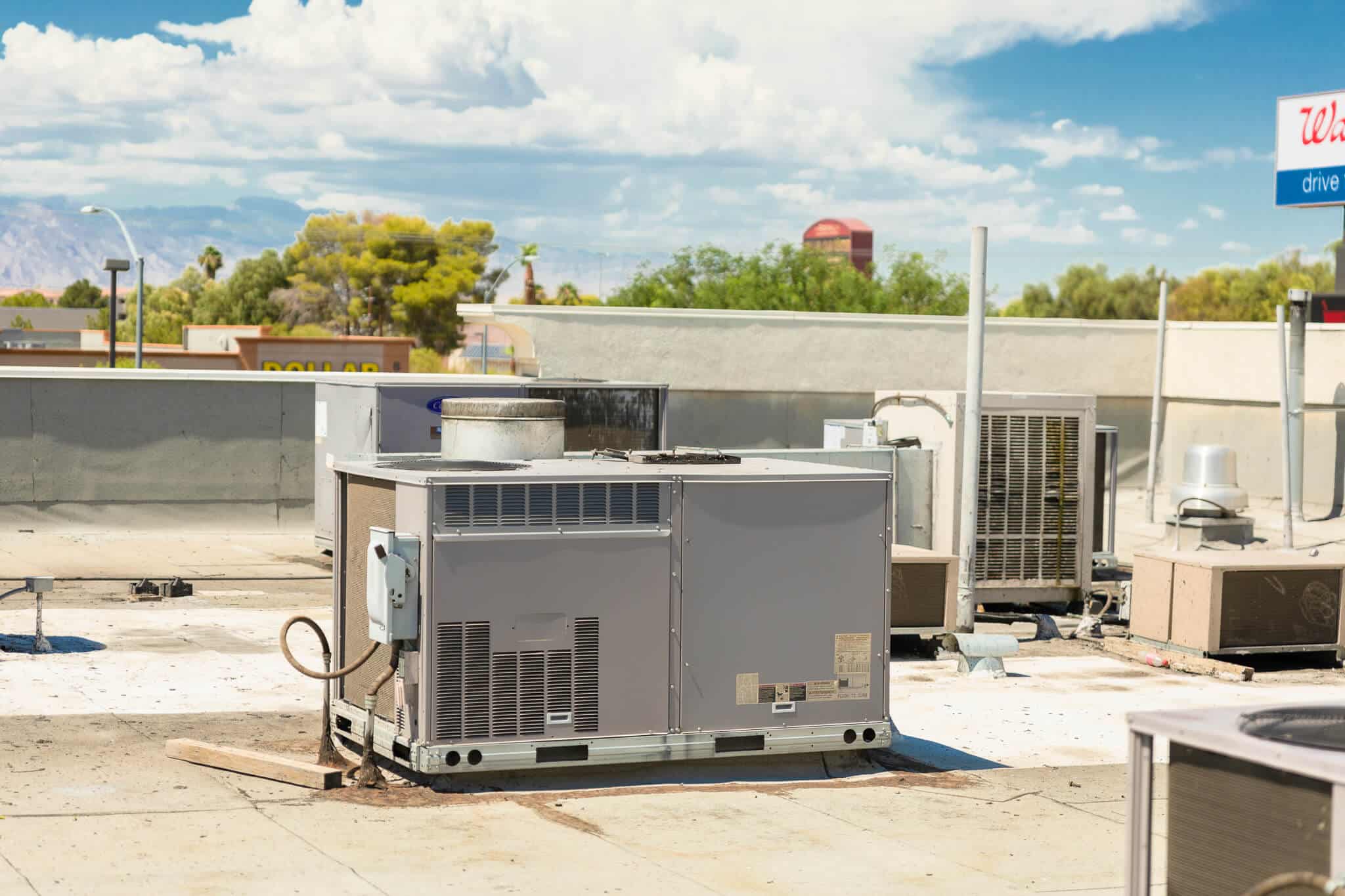
Preventive maintenance in Las Vegas should prioritize coil cleaning, condenser fan checks, and filter changes aligned with dust load and runtime. Verify economizer dampers, belt tension, and condensate drain performance before peak summer. Track alarms weekly during hot months to catch faults early.
Neighborhoods and facility types we serve
We support offices, retail, warehouses, and multi-tenant properties across Downtown, the Resort Corridor, Summerlin, Henderson, North Las Vegas, and Spring Valley. For facilities on the Strip or in dense business districts, plan for after-hours work windows and added rooftop access coordination.
Trust and guarantees
- Serving Las Vegas since 2011 with 55+ years combined experience.
- Licensed, EPA-certified, and NATE-certified technicians.
- BBB A+ rated with a 100% satisfaction guarantee.
- Lennox Premier Dealer with documented commissioning and compliance logs.
Map: The Cooling Company in Las Vegas
Ready to schedule a local assessment?
For Las Vegas area sites, call The Cooling Company at (702) 567-0707 to schedule a commercial HVAC survey and written scope. Our team provides NATE-certified technicians, BAS troubleshooting, commissioning, and retrofit planning tailored to Nevada climate and code.
We serve Las Vegas, Henderson, and North Las Vegas with on-site assessments, incentive capture, and refrigerant transition planning. If you are outside our area, ask vendors for NATE-certified technicians and third-party commissioning. For Nevada work, request The Cooling Company and call (702) 567-0707.
About The Cooling Company
The Cooling Company has been serving the Las Vegas valley with professional HVAC services for over a decade. Our team of licensed, NATE-certified technicians specializes in air conditioning repair, heating system maintenance, and complete HVAC installations. We're committed to providing honest, reliable service with upfront pricing and a 100% satisfaction guarantee on all work performed.
- Phone: (702) 567-0707
- Reviews: 4.8/5 stars (780+ reviews) - See reviews
Service Areas
We proudly serve homeowners and businesses throughout the Las Vegas metropolitan area, including Las Vegas, Henderson, and North Las Vegas. Our service technicians are available for same-day appointments in most areas, with emergency service available 24/7 for urgent HVAC issues.
References
- U.S. Department of Energy (Energy.gov) (accessed 2026-01-03)
- U.S. Environmental Protection Agency (EPA) (accessed 2026-01-03)
- ASHRAE (Standards and guidance) (accessed 2026-01-03)
- ENERGY STAR (Heating & cooling) (accessed 2026-01-03)
Share This Page
Need HVAC Service in Las Vegas?
The Cooling Company provides expert HVAC service throughout Las Vegas, Henderson, and North Las Vegas. Our licensed technicians deliver honest assessments, upfront pricing, and reliable results.
Call (702) 567-0707 or visit HVAC services, maintenance, heating, or installation for details.