

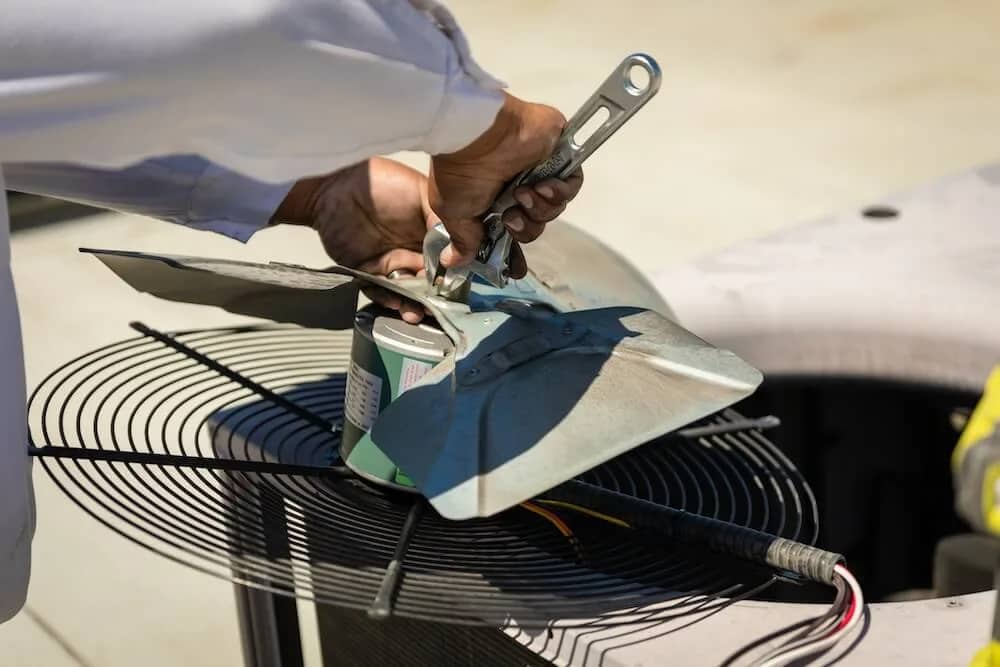
Short answer: In Las Vegas, a heat pump and a central AC use identical compressor technology to cool your home — the cooling performance is the same. The difference is what happens in winter. A heat pump reverses its cycle to heat your home, eliminating the need for a separate furnace. A central AC unit does cooling only, so you still need a gas or electric furnace for heating. For most Las Vegas homeowners replacing their AC system in 2026, a heat pump is the stronger financial choice: slightly higher upfront cost ($14,000–$22,000 vs. $13,000–$18,000 for a 3-ton system), but you eliminate the separate furnace expense, qualify for higher NV Energy PowerShift rebates ($500–$2,000 vs. $300–$1,200), and potentially drop your gas bill entirely. That said, if you just installed a new furnace or have a very large home with existing gas infrastructure, sticking with a central AC still makes sense. Here is the complete comparison with real numbers. Call (702) 567-0707 for a free in-home assessment.
Key Takeaways
- Cooling performance is identical: A heat pump in cooling mode IS a central AC. Same compressor technology, same refrigerant cycle, same cooling capacity. You will not feel any difference on a 115-degree Las Vegas day.
- Heat pumps add free heating capability: The reversing valve lets a heat pump extract outdoor heat in winter — replacing both your AC and your furnace with one system. Central AC does cooling only.
- Installed cost for a 3-ton system: Central AC runs $13,000–$18,000. Heat pump runs $14,000–$22,000. The heat pump premium is $1,000–$2,000 — but that premium buys you a complete heating system too.
- NV Energy PowerShift rebates favor heat pumps: Heat pumps qualify for $500–$2,000 in NV Energy rebates (based on efficiency tier). Central AC qualifies for $300–$1,200. The federal 25C tax credit was terminated for 2026 installations.
- 10-year total cost of ownership favors heat pumps for most Las Vegas homes — the eliminated gas bill and higher rebates more than offset the initial price premium.
- Las Vegas winters are ideal for heat pumps: Average January lows of 33°F are well above the efficiency threshold where heat pumps struggle. You get near-peak heating efficiency all winter.
- Central AC + furnace still wins in specific scenarios: If you just replaced your furnace, have a 3,500+ sq ft home, or strongly prefer the feel of gas heat, a standalone AC replacement is the right call.

Why this comparison matters
Most "heat pump vs. AC" articles online are really comparing heat pumps to gas furnaces for heating. We already wrote that guide — see our gas furnace vs. heat pump comparison for the full heating-system breakdown. But that is not the decision most Las Vegas homeowners actually face when they call us.
Here is what actually happens: your air conditioner is 12–18 years old, it is struggling through another Las Vegas summer, and you need to replace it. Your HVAC contractor says, "You could replace the AC, or you could go with a heat pump." Now you are comparing two outdoor units that look almost identical, sit in the same spot on your concrete pad, and connect to the same ductwork. One costs more. One does more. Which one do you choose?
That is this article. A direct, numbers-first comparison between installing a new central air conditioner versus installing a new heat pump — from the perspective of a Las Vegas homeowner making a purchasing decision right now, in 2026.
I am Wellington Santana, owner of The Cooling Company. We are a Lennox Premier Dealer with 780+ reviews at a 4.8-star rating. We install both central AC systems and heat pumps every week. I am going to give you the same honest breakdown I give homeowners sitting in their living room — including the situations where a standard central AC is the better choice.
How central AC and heat pumps actually work
The first thing to understand is that a heat pump and a central air conditioner are not fundamentally different machines. They share the same core technology. The difference comes down to one component: a reversing valve.
Central air conditioner: A split-system central AC has an outdoor unit (the condenser) and an indoor coil (the evaporator). The compressor in the outdoor unit pressurizes refrigerant, which circulates between the two coils. In the indoor coil, the refrigerant absorbs heat from your home's air. It carries that heat to the outdoor coil and releases it. That is how your house gets cooler — the system moves heat from inside to outside.
Heat pump: A heat pump has the exact same components — outdoor unit, indoor coil, compressor, refrigerant lines. The single addition is a reversing valve that can switch the direction of refrigerant flow. In summer, it works identically to a central AC: pulling heat from inside and dumping it outside. In winter, the valve reverses the flow: the system pulls heat from outdoor air and moves it inside. Same compressor, same coils, same refrigerant — just running in the opposite direction.
That is the entire mechanical difference. A heat pump is a central air conditioner with a reversing valve and a few control-board modifications. This is why the outdoor units look nearly identical on your concrete pad, why they connect to the same ductwork, and why the cooling performance is the same.
For a deeper technical explanation, our heat pump glossary entry covers the refrigerant cycle in detail. You can also see the U.S. Department of Energy's heat pump guide for independent technical information.
Cooling performance: identical in every way that matters
I want to be absolutely clear on this point because it is the most common misconception I hear from homeowners: a heat pump in cooling mode performs identically to a central air conditioner of the same capacity and efficiency rating.
If you install a 3-ton, 17 SEER2 central air conditioner, it will produce the same cooling output, the same airflow, the same dehumidification, and the same comfort level as a 3-ton, 17 SEER2 heat pump running in cooling mode. The compressor does the same work. The refrigerant cycle is the same. The indoor coil is the same size. The ductwork does not care which type of outdoor unit is connected to it.
There is no "cooling penalty" for choosing a heat pump. None. Zero. I have seen competing contractors tell homeowners that heat pumps "don't cool as well" or "aren't designed for extreme heat like Las Vegas." That is simply not true. Every major manufacturer — Lennox, Trane, Carrier, Rheem, Goodman — designs their heat pump outdoor units with the same condenser coil area, same compressor technology, and same fan motors as their equivalent AC units at the same SEER2 rating.
During a 115-degree July afternoon in Las Vegas, your heat pump will cool your home exactly as effectively as a central AC of the same size and rating. Period. If someone tells you otherwise, they either do not understand the technology or they are trying to steer you toward a different sale.
For help sizing the right system for your home, see our new AC system buying guide or our AC installation page for details on our process.
The heating bonus: what a heat pump adds
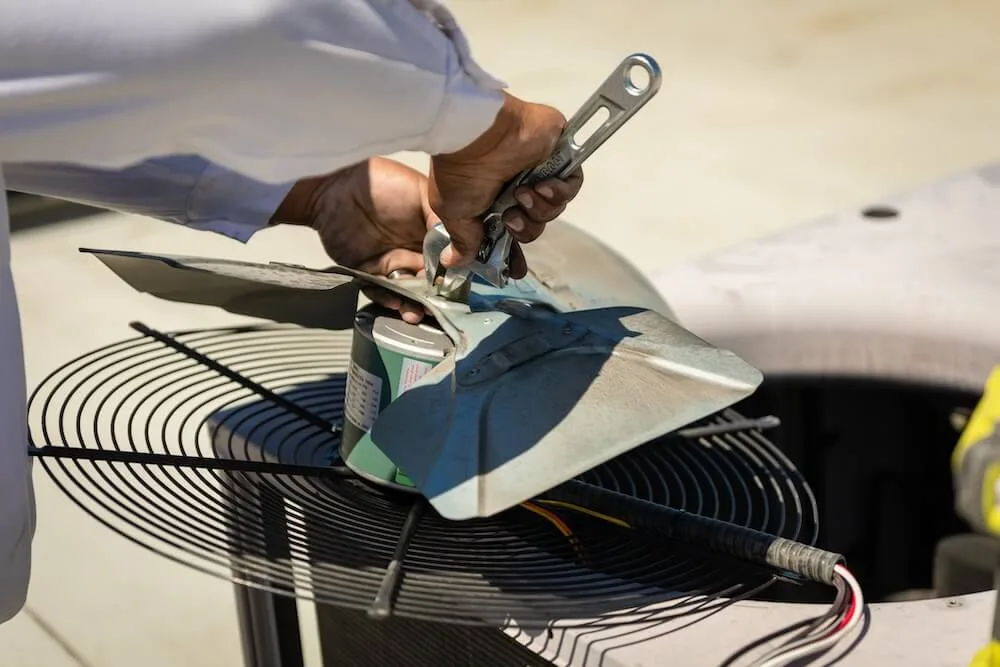
Here is where the value proposition shifts. A central air conditioner does exactly one thing: cooling. When winter hits, you need a completely separate system — a gas furnace, an electric furnace, or electric resistance heat strips — to warm your home. That second system has its own installed cost, its own maintenance schedule, its own fuel source, and its own eventual replacement date.
A heat pump eliminates all of that. When your thermostat calls for heat, the reversing valve activates, the system runs in reverse, and you get heating through the same equipment that cooled your home all summer. One system, year-round comfort, one maintenance contract.
How effective is heat pump heating in Las Vegas? Extremely effective. Modern heat pumps maintain strong heating output well below freezing. The typical operating range for a quality split-system heat pump is efficient down to about 25–30 degrees Fahrenheit, with most models capable of providing heat (at reduced efficiency) down to 5°F or lower. In Las Vegas, our average January low is 33°F. Our 99% heating design temperature — the coldest temperature we experience for 99% of heating hours — is around 28–32°F depending on your neighborhood elevation.
This means a standard heat pump handles virtually our entire Las Vegas heating season without breaking a sweat. You do not need a cold-climate heat pump. You do not need backup heat strips (although most heat pumps include them as emergency backup). You just need a properly sized, quality heat pump — the same type being installed in new construction throughout Summerlin, Henderson, and North Las Vegas right now.
The heating output feels different from a gas furnace. A furnace blows air at 120–140°F in short, aggressive cycles. A heat pump delivers air at 90–105°F in longer, gentler cycles. The end result is the same indoor temperature, but the feel is different. Some people prefer the blast of hot air from a furnace; others prefer the steady, even warmth from a heat pump. Neither is wrong — it is a genuine comfort preference. For more on this comparison, our gas furnace vs. heat pump article covers the comfort differences in depth.
Installed cost comparison (2026 Las Vegas pricing)
Here are real installed costs for the Las Vegas market as of March 2026. These include equipment, labor, permit, refrigerant line set, thermostat compatibility check, and standard installation. Prices reflect a range from budget-tier to premium equipment.
| System Type | Efficiency Tier | Installed Cost (3-Ton) | What You Get |
|---|---|---|---|
| Central AC | 14.3–16 SEER2 (standard) | $13,000–$15,000 | Cooling only |
| Central AC | 17–24 SEER2 (premium) | $7,800–$9,775 | Cooling only |
| Heat Pump | 14.3–16 SEER2 (standard) | $14,000–$17,000 | Cooling + heating |
| Heat Pump | 17–24 SEER2 (premium) | $9,400–$12,650 | Cooling + heating |
The heat pump premium: At the standard tier, a heat pump costs roughly $1,000–$2,000 more than an equivalent central AC. At the premium tier, the gap is $1,600–$2,875. That premium buys you a complete heating system — a capability that would cost $3,500–$7,000 if you purchased a separate gas furnace.
Put differently: the cheapest way to get both heating and cooling is a standard-tier heat pump at $14,000–$17,000. The equivalent AC-plus-furnace combination runs $16,500–$22,000 ($13,000–$15,000 for the AC plus $3,500–$7,000 for the furnace). The heat pump saves $2,500–$5,000 on the combined equipment purchase.
For more detailed pricing on AC-only replacements, see our AC replacement cost guide. For heat pump pricing by brand, our best heat pumps for Las Vegas 2026 guide has model-by-model comparisons.
Energy cost comparison: AC + gas furnace vs. heat pump only
The installed cost tells half the story. The other half is what you pay every month to run the system. Here is where a heat pump-only home starts pulling ahead — because you can potentially eliminate your gas bill entirely.
Assumptions for this analysis:
- 2,000 sq ft single-story home in the Las Vegas valley
- NV Energy residential electricity rate: $0.12/kWh average
- Southwest Gas residential rate: $1.15/therm
- Cooling: approximately 2,800 hours/year (April through October in Las Vegas)
- Heating: approximately 900 hours/year (November through March)
- Cooling load: 36,000 BTU/h (3-ton system)
- Heating load: 36,000 BTU/h at design conditions
Scenario 1: Central AC (16 SEER2) + Gas Furnace (96% AFUE)
- Annual cooling electricity cost: approximately $1,050–$1,250
- Annual gas heating cost: approximately $350–$420
- Southwest Gas fixed monthly charges (12 months): approximately $144/year
- Annual furnace maintenance (1 tune-up): $100–$150
- Annual AC maintenance (1 tune-up): $100–$150
- Total annual operating cost: $1,744–$2,114
Scenario 2: Heat Pump (16 SEER2 / 9.0 HSPF2) — cooling and heating
- Annual cooling electricity cost: approximately $1,050–$1,250 (same as central AC at same SEER2)
- Annual heating electricity cost: approximately $280–$360
- No gas bill (eliminate Southwest Gas service entirely): $0
- Annual heat pump maintenance (2 tune-ups — spring and fall): $150–$250
- Total annual operating cost: $1,480–$1,860
Annual savings with heat pump: $254–$264 per year.
The savings come from two places. First, the heat pump is slightly more efficient for heating at Las Vegas winter temperatures — delivering 2.5 to 3.5 units of heat per unit of electricity consumed, compared to 0.96 units per unit of gas in a 96% AFUE furnace (when you convert to equivalent BTU costs). Second, and often overlooked, you eliminate the Southwest Gas fixed monthly service charge of approximately $12/month ($144/year). Even if you barely use your gas furnace, you still pay that monthly charge as long as you have gas service.
If your home uses gas for other appliances (water heater, stove, dryer), you will keep the gas service and that fixed charge regardless. The heating-only savings then narrow to roughly $70–$120 per year. But if heating is your only gas use — common in many newer Las Vegas homes — dropping the gas service entirely is where the real operational savings live.
At the premium efficiency tier, the math tilts further. A 20 SEER2 heat pump versus a 16 SEER2 central AC saves an additional $200–$400 per year in cooling costs alone, because you are running a much more efficient system during the 2,800 hours of Las Vegas cooling season. That is where the SEER2 rating really earns its money — during our brutal summers. Read our guide on high-efficiency AC savings in Las Vegas for the detailed calculations on cooling-season electricity reduction.
NV Energy PowerShift rebate comparison
Important note on the federal 25C tax credit: The Section 25C Energy Efficient Home Improvement Credit was terminated for equipment installed after December 31, 2025, under the One Big Beautiful Bill Act (Public Law 119-21, signed July 4, 2025). This credit previously offered up to $2,000 for qualifying heat pumps and $600 for qualifying central AC systems. It is no longer available for 2026 installations. For full background, see our 2026 HVAC rebates and tax credits guide.
For 2026 installations, NV Energy's PowerShift rebate program is the primary financial incentive. These are utility-funded rebates that operate independently of federal tax policy and remain fully available. Here is how heat pumps and central AC systems compare:
| Equipment Type | Efficiency Requirement | NV Energy Rebate |
|---|---|---|
| Central AC (standard efficiency) | 16.0+ SEER2 | $300–$500 |
| Central AC (high efficiency) | 18.0+ SEER2 | $500–$1,200 |
| Heat Pump (standard efficiency) | 16.0+ SEER2 / 8.1+ HSPF2 | $500–$1,000 |
| Heat Pump (high efficiency) | 18.0+ SEER2 / 9.0+ HSPF2 | $1,000–$2,000 |
Heat pumps consistently qualify for higher NV Energy rebates because they reduce peak electrical demand in winter (by replacing electric resistance heat or reducing gas consumption that creates upstream emissions). NV Energy's efficiency program is designed to reduce load on the grid — and heat pumps, with their 250–350% heating efficiency, do that better than any other heating technology.
Rebate advantage for heat pumps: $200–$800 more than equivalent central AC. On a high-efficiency heat pump installation, you may receive $1,500–$2,000 in NV Energy rebates — compared to $500–$1,200 for a high-efficiency central AC. That rebate difference directly offsets much of the heat pump's higher installed cost.
NV Energy PowerShift rebate funds are allocated annually and are first-come, first-served. The 2024 program budget was exhausted by July 2024, so timing matters. We recommend checking current fund availability at nvenergy.com and moving promptly when you are ready. As a Lennox Premier Dealer, The Cooling Company handles all NV Energy rebate paperwork for our customers — we submit the application on your behalf and ensure you receive every dollar you qualify for.
10-year total cost of ownership analysis
This is where the full picture comes together. Here is a side-by-side 10-year ownership cost breakdown for both paths, using mid-range equipment in each category.
| Cost Category | Central AC (17 SEER2) + Gas Furnace (96% AFUE) | Heat Pump (17 SEER2 / 9.5 HSPF2) |
|---|---|---|
| Equipment + installation | $8,200 (AC) + $5,500 (furnace) = $13,700 | $10,200 |
| NV Energy PowerShift rebate | -$750 (AC only; furnaces generally do not qualify) | -$1,500 |
| Net installed cost | $12,950 | $8,700 |
| Annual cooling electricity (10 yr) | $11,500 ($1,150/yr) | $11,500 ($1,150/yr) |
| Annual heating fuel (10 yr) | $3,750 ($375/yr gas) | $3,200 ($320/yr electric) |
| Gas service fixed charges (10 yr)* | $1,440 ($144/yr) | $0 (no gas service needed) |
| Maintenance (10 yr) | $2,500 ($250/yr: 2 tune-ups for 2 systems) | $2,000 ($200/yr: 2 tune-ups for 1 system) |
| 10-Year Total Cost | $32,140 | $25,400 |
*Gas service fixed charge calculation assumes heating is the only gas use and the homeowner discontinues Southwest Gas service after switching to a heat pump. If gas is retained for other appliances (water heater, stove), the gas fixed charge applies to both scenarios and the gap narrows by $1,440.
10-year savings with heat pump: approximately $6,740.
Even in the less favorable scenario — where you keep gas service for other appliances — the heat pump still saves roughly $5,300 over 10 years, driven primarily by the lower combined equipment cost (one system vs. two) and the higher NV Energy rebate.
The heat pump reaches payback (catches up to where you would have been with the cheaper AC-only purchase) in approximately year 2–3 when comparing full system replacement. If you are comparing just AC-to-heat-pump (keeping an existing furnace as backup), the payback on the incremental heat pump premium ($1,000–$2,000) takes roughly 3–5 years through operating cost savings.
For financing options that spread these costs over time, see our HVAC financing page — we have programs that make the heat pump option accessible even when budgets are tight.
Las Vegas climate advantage for heat pumps
Las Vegas is, genuinely, one of the best climates in the country for heat pump systems. Here is why, by the numbers.
Heat pump efficiency is measured by COP (coefficient of performance) — the ratio of heat energy delivered to electrical energy consumed. At 47°F outdoor temperature, a quality heat pump might deliver a COP of 3.5 — meaning 3.5 units of heat for every unit of electricity. As outdoor temperature drops, COP decreases. At 17°F, that same unit might deliver a COP of 1.8. In Minneapolis, where January averages -3°F, that efficiency drop is a serious problem. In Las Vegas, it is nearly irrelevant.
Las Vegas winter temperature profile:
- Average December low: 37°F — heat pump COP: approximately 3.2–3.5
- Average January low: 33°F — heat pump COP: approximately 2.8–3.2
- Average February low: 38°F — heat pump COP: approximately 3.2–3.5
- Days below 32°F per year: approximately 15–20 (mostly brief overnight lows)
- Days below 25°F per year: fewer than 3 on average
- Hours below 20°F per year: essentially zero in most valley locations
Your heat pump spends its entire Las Vegas heating season operating at or near its peak efficiency range. The "heat pump efficiency cliff" that people in cold climates worry about simply does not apply here. Our mild winters are the heat pump's ideal operating environment — cold enough that you want heat, but warm enough that the heat pump delivers it efficiently.
There is also a summer advantage. Las Vegas summers are brutal, but they are dry. Heat pumps and central AC systems both perform better in dry climates because the condenser coil can reject heat more efficiently when there is less humidity in the outdoor air. Our desert climate actually helps your system work less hard per ton of cooling — which is one reason why Las Vegas homes often get away with slightly smaller systems than homes in humid climates like Houston or Miami at the same square footage.
New construction across the valley reflects this reality. Builders in Summerlin, Henderson, Centennial Hills, and Seven Hills are increasingly defaulting to heat pumps in standard specifications. The economics and the climate data both support it.

When central AC + furnace still makes sense
I am a heat pump advocate, but I am an honest contractor first. Here are the real-world scenarios where a central AC replacement — not a heat pump — is the right call for a Las Vegas homeowner.
1. Your furnace is relatively new and working well. If you replaced your gas furnace within the last 5–7 years and it is running fine, there is no economic reason to abandon it by switching to a heat pump. Replace the AC with a high-efficiency central AC unit, keep your working furnace, and re-evaluate the heat pump question when the furnace eventually needs replacement. Paying $7,500+ for a heat pump to replace a $5,000 furnace that still has 15 years of life makes no financial sense.
2. Your home is very large (3,500+ sq ft) and you value fast heating. Large homes in Henderson, Summerlin, and Centennial Hills sometimes benefit from the raw BTU output of a high-capacity gas furnace. A furnace can blow 120–140°F air into a large duct system and heat a 4,000 sq ft home quickly on a cold January morning. A heat pump delivering 95–105°F air to the same large duct system takes longer to reach setpoint. For smaller homes (under 2,500 sq ft), this difference is negligible. For very large homes, some homeowners find it noticeable.
3. You have a strong preference for gas heat. This is subjective, but it is real. Some homeowners grew up with gas furnaces, they like the feel of hot forced air, and they do not want to change. That is a valid preference. A high-efficiency 96% AFUE gas furnace is an excellent product. If that is what makes you comfortable, get a good central AC for cooling and a good furnace for heating. You will not be making a "bad" choice — just a different one.
4. Your home uses gas for multiple appliances. If your gas line also serves your water heater, stove, pool heater, and dryer, you are keeping Southwest Gas service regardless. The economic case for a heat pump weakens because you cannot eliminate the gas fixed monthly charge. The savings from heat pump heating alone ($70–$120/year over a 96% AFUE furnace) may not justify the higher upfront cost if you are keeping gas anyway.
5. Budget is the primary constraint right now. A standard-tier central AC at $13,000–$15,000 is simply less money out of pocket today than a heat pump at $14,000–$17,000. If your budget is tight and you need cooling immediately, a central AC gets you there for less upfront cost. The 10-year economics favor the heat pump, but not everyone has the capital or financing appetite for the higher initial investment.
Our team at The Cooling Company will always give you the honest recommendation for your specific situation. If a central AC makes more sense for your home, that is what we will tell you. Visit our AC replacement page or call (702) 567-0707 for a free assessment.
The dual-fuel option: heat pump + gas furnace backup
There is a third path that splits the difference: a dual-fuel system. This pairs a heat pump with a gas furnace in one integrated setup. The system's controls automatically choose the most efficient heat source based on outdoor temperature.
How dual-fuel works:
- Above approximately 30–35°F outdoor temperature: the heat pump handles all heating (highest efficiency)
- Below 30–35°F: the system switches to the gas furnace (faster heating, more capacity at extreme cold)
- Cooling season: the heat pump operates as the AC (identical to standalone heat pump)
The "balance point" — the temperature at which the system switches from heat pump to furnace — is programmable by your installer. In Las Vegas, we typically set it at 30–32°F because that is the temperature below which gas heating becomes more cost-effective than heat pump heating at current Southwest Gas and NV Energy rates.
In Las Vegas, the heat pump handles 90–95% of all heating hours. Our average winter low stays well above the balance point. The gas furnace only fires on the handful of nights per year when temperatures drop near or below freezing — typically 15–20 nights total, and usually only for a few hours each night.
Dual-fuel installed cost: $12,000–$17,500 for a complete system, depending on efficiency tier. This is the most expensive option upfront, but it gives you maximum flexibility and comfort assurance. The heat pump portion qualifies for NV Energy PowerShift rebates.
Who should consider dual-fuel:
- Homeowners with existing gas infrastructure who are not ready to go fully electric
- Larger homes (2,500+ sq ft) where heating speed on cold nights matters
- Properties at higher elevations in the Las Vegas valley (parts of Henderson, Summerlin, and Mt. Charleston foothill communities run 3–8 degrees cooler than the valley floor)
- Homeowners who want the efficiency of a heat pump but the psychological comfort of knowing gas backup is there
For most Las Vegas homes under 2,500 sq ft, a standalone heat pump handles the job without needing the gas backup. Dual-fuel is the premium choice for larger homes or homeowners who want zero compromises. For more on this option, our gas furnace vs. heat pump guide covers dual-fuel in detail.
Variable-speed vs. single-stage: both types compared
Whether you choose a central AC or a heat pump, one of the biggest decisions affecting your comfort and energy bills is the compressor type. This choice applies equally to both system types.
Single-stage (fixed-speed) systems:
- The compressor is either fully on or fully off — running at 100% capacity whenever it cycles on
- Creates temperature swings: the house overcools or overheats slightly, then the system shuts off and waits until the temperature drifts again
- Lower upfront cost — typically the standard and budget tiers in both AC and heat pump lines
- Less efficient overall because the system runs at full capacity even when partial capacity would suffice
- Available in both central AC and heat pump models
Two-stage systems:
- The compressor has two operating levels — typically 70% and 100% capacity
- Runs at the lower stage most of the time, stepping up to full capacity only on extreme temperature days
- Better temperature consistency and slightly better efficiency than single-stage
- Mid-range pricing — the sweet spot for many Las Vegas homeowners
- Available in both central AC and heat pump models
Variable-speed (inverter-driven) systems:
- The compressor can modulate continuously from approximately 25% to 100% capacity
- Runs at exactly the output level needed at any given moment — sipping energy on mild days, ramping up only when needed
- Best temperature consistency: virtually eliminates hot and cold spots, maintains temperature within 0.5°F of setpoint
- Highest efficiency ratings (20+ SEER2 for AC, 20+ SEER2 / 10+ HSPF2 for heat pumps)
- Quieter operation — running at 30–40% capacity most of the time means lower fan and compressor noise
- Premium pricing, but best long-term value in a cooling-dominated climate like Las Vegas
In Las Vegas specifically, variable-speed technology provides outsized benefits. Because we run our cooling systems for 2,800+ hours per year, a system that can cruise at 40% capacity on a 95-degree day (rather than cycling on and off at 100%) saves significant electricity over the season. The efficiency gains compound across thousands of operating hours.
For heat pumps, the variable-speed advantage extends to heating mode as well. An inverter-driven heat pump can ramp down to 25–30% capacity on a 50-degree Las Vegas winter evening and ramp up to 100% on the occasional 30-degree night. Single-stage heat pumps blast full capacity regardless — wasting energy when the load is light.
Both Lennox and Trane offer excellent variable-speed options. For brand-specific comparisons, see our Trane vs. Carrier heat pump comparison or our single-stage vs. two-stage vs. variable-speed AC guide.
Frequently asked questions
Is a heat pump or central AC better for Las Vegas?
For most Las Vegas homeowners, a heat pump is the better overall value. Cooling performance is identical to a central AC at the same SEER2 rating, but the heat pump adds year-round heating capability — eliminating the need for a separate furnace. Our mild winter climate (average January low of 33°F) keeps heat pump heating efficiency high all season. The main exception is if you already have a working furnace and only need to replace the AC — in that case, a central AC replacement at the lower price point makes sense.
Does a heat pump cool as well as a central AC in extreme Las Vegas heat?
Yes, identically. A heat pump in cooling mode is mechanically the same as a central AC — same compressor technology, same refrigerant cycle, same capacity. A 3-ton, 17 SEER2 heat pump produces the same cooling output as a 3-ton, 17 SEER2 central AC on a 115-degree day. There is no cooling performance difference between the two system types when sized and rated equally.
How much more does a heat pump cost than a central AC in Las Vegas?
For a 3-ton split system in Las Vegas, the installed cost premium is approximately $1,000–$2,000 depending on efficiency tier. Standard-tier heat pumps run $14,000–$17,000 vs. $13,000–$15,000 for equivalent central AC. However, a heat pump replaces both your AC and your heating system. If you need both heating and cooling, a heat pump costs significantly less than buying a central AC and a separate furnace ($16,500–$22,000 combined).
Are there federal tax credits for heat pumps in 2026?
No. The federal Section 25C Energy Efficient Home Improvement Credit was terminated for equipment installed after December 31, 2025, under the One Big Beautiful Bill Act (signed July 4, 2025). This credit previously offered up to $2,000 for qualifying heat pumps. However, NV Energy PowerShift rebates remain available for 2026 — offering $500–$2,000 for qualifying heat pumps and $300–$1,200 for qualifying central AC systems. These utility rebates are the primary financial incentive for 2026 HVAC installations. See our complete 2026 rebates guide for full details.
Can a heat pump replace my existing central AC without major modifications?
In most cases, yes. A heat pump outdoor unit connects to the same refrigerant lines and the same indoor air handler or coil as a central AC. The main additions are wiring for the reversing valve control and potentially upgrading the thermostat to one that supports heat pump mode. If your ductwork and air handler are in good condition, the swap from AC to heat pump is straightforward. Your installer may also need to add a condensate drain for the outdoor unit (which produces moisture in heating mode). Visit our heat pump installation page for details on what the process involves.
What happens to my gas furnace if I install a heat pump?
You have three options. First, you can remove the gas furnace entirely and rely solely on the heat pump for heating — this is the most common choice in Las Vegas, and it works well given our mild winters. Second, you can keep the furnace as a backup in a dual-fuel configuration, letting the heat pump handle most heating and the furnace kick in on the coldest nights. Third, you can leave the furnace in place but disconnected, keeping it as a future option. We recommend the first option for most Las Vegas homes under 2,500 sq ft, and the dual-fuel option for larger homes.
Do heat pumps work efficiently in the desert climate?
Exceptionally well — Las Vegas is one of the best climates in the country for heat pumps. Our winters are mild enough that heat pumps operate at high COP (coefficient of performance) throughout the entire heating season. Our summers are hot but dry, which actually helps both heat pumps and central AC systems reject heat more efficiently through the condenser coil. Desert conditions are close to ideal for heat pump technology.
How long does a heat pump last compared to a central AC in Las Vegas?
Both systems typically last 15–20 years with proper maintenance. Central AC units sometimes edge toward 18–20 years in Las Vegas because they only run during cooling season (though that is a long, hard season). Heat pumps run year-round — cooling in summer, heating in winter — which means more total operating hours. However, modern heat pumps are engineered for year-round duty, and with biannual maintenance (spring and fall tune-ups), a quality heat pump from Lennox, Trane, or Carrier will reliably serve a Las Vegas home for 15–18 years. See our heat pump maintenance page for recommended service intervals.
What SEER2 rating should I look for in Las Vegas?
We recommend a minimum of 16 SEER2 for Las Vegas, with 18–20+ SEER2 being the sweet spot for long-term value. The current federal minimum is 14.3 SEER2 for our climate zone, but in a market where your AC runs 2,800+ hours per year, every point of SEER2 translates to real electricity savings. A jump from 14.3 to 20 SEER2 saves approximately $350–$500 per year in Las Vegas cooling costs. For detailed math, see our SEER2 ratings explained guide.
Is it worth getting a variable-speed heat pump or AC in Las Vegas?
In Las Vegas, yes — variable-speed systems provide the best return on investment of anywhere in the country. The reason is operating hours. A variable-speed inverter compressor delivers its biggest efficiency gains during mild conditions when it can run at 30–50% capacity. In Las Vegas, that includes roughly 60–70% of our cooling hours (spring, fall, and milder summer days) and virtually all heating hours. The electricity savings compound across thousands of hours per year. For a full breakdown, read our single-stage vs. two-stage vs. variable-speed guide.
Can I use my existing thermostat with a heat pump?
It depends on the thermostat. Heat pumps require a thermostat with "O" and "B" terminal connections for the reversing valve. Most modern smart thermostats (Ecobee, Google Nest, Honeywell) support heat pump mode. Older mechanical or basic digital thermostats designed for AC-only or furnace-only systems may need to be replaced. Your installer will verify compatibility during the quote visit. In many cases, upgrading to a smart thermostat at the time of heat pump installation is a smart move — NV Energy also offers $75–$125 in rebates for qualifying smart thermostats.
Do I need a bigger electrical panel for a heat pump?
Usually not. A heat pump draws similar electrical current to a central AC of the same size, because the compressor and fan motors are essentially the same. If your existing electrical panel and breaker handled your old AC, it will handle a replacement heat pump. The exception is if you are upgrading from a significantly smaller system to a larger one, or if your panel is already near capacity with other loads. Your installer should evaluate panel capacity during the site survey. If an upgrade is needed (rare for replacements), a 200-amp panel upgrade in Las Vegas typically runs $1,800–$3,500.
What brands make the best heat pumps for Las Vegas?
Lennox, Trane, and Carrier consistently lead in our market for reliability, efficiency ratings, and warranty coverage. As a Lennox Premier Dealer, we install and service the full Lennox lineup — including the XP25 variable-speed heat pump at 23.5 SEER2. We also install Trane and other major brands. For detailed brand comparisons, our best heat pumps for Las Vegas 2026 guide ranks specific models by value, efficiency, and warranty.
Should I get a heat pump if I am selling my house soon?
If your current AC is failing and you plan to sell within 1–2 years, a standard-tier central AC ($13,000–$15,000) may be the more practical investment — lower outlay, and the home still shows well with a new cooling system. If you plan to stay 3+ years, the heat pump's operating savings start adding up and the dual-function capability can be a selling point. Las Vegas buyers are increasingly educated about heat pump technology, and "new heat pump system" is a positive feature in home listings.
How do NV Energy rebates work for heat pumps vs. central AC?
NV Energy's PowerShift rebate program offers $500–$2,000 for qualifying heat pump installations and $300–$1,200 for qualifying central AC installations, based on efficiency tier. The rebate is applied directly at installation or reimbursed within 6–10 weeks of application. Your HVAC contractor (The Cooling Company handles this for all our customers) submits the rebate application with the AHRI certificate proving your system meets the efficiency requirements. Rebate funds are first-come, first-served each program year, so timing matters. Check current availability at nvenergy.com.
The bottom line
Here is how I summarize this decision for homeowners sitting in my office:
If you are replacing both your heating and cooling systems — or if your AC is dying and your furnace is also getting old — a heat pump is the clear winner. You get one system instead of two, lower combined cost, higher NV Energy rebates, and lower operating costs over 10 years. In Las Vegas, the climate hands you an advantage that homeowners in cold states simply do not get.
If you are replacing only your AC and your furnace is in good shape — it is a closer call. The heat pump still makes long-term economic sense (you avoid a future furnace replacement), but the immediate savings are smaller. A central AC replacement at $13,000–$18,000 versus a heat pump at $14,000–$22,000 means you are paying a premium of $1,000–$2,000 for heating capability you may not need for another 10–15 years. That premium may still be worth it for the NV Energy rebate advantage and the option to drop gas service — but it is a legitimate decision point, not a slam dunk.
If budget is the single most important factor — a standard-tier central AC at $13,000–$15,000 installed gets you reliable cooling for the least money out of pocket. No shame in that choice. When the furnace eventually needs replacement, revisit the heat pump question at that time.
Whatever you choose, choose quality equipment installed correctly. In Las Vegas, your outdoor unit endures temperature extremes that most of the country never sees — 115°F summers and occasional freezing nights. Proper installation, correct refrigerant charge, and matched indoor/outdoor components matter more than the AC-vs-heat-pump question. A well-installed, properly sized 16 SEER2 system outperforms a poorly installed 22 SEER2 system every time.
Ready to compare specific options for your home? Request a free quote online or call us at (702) 567-0707. We will walk your home, assess your ductwork and existing equipment, calculate your heating and cooling loads, and give you honest side-by-side pricing for both central AC and heat pump options — with all applicable NV Energy rebates calculated upfront.
Need HVAC Service in Las Vegas?
The Cooling Company provides expert HVAC installation, repair, and maintenance throughout the Las Vegas valley. As a Lennox Premier Dealer with 780+ reviews at 4.8 stars, we deliver honest assessments, upfront pricing, and results that last.
Call (702) 567-0707 or visit our service pages: heat pump installation, AC installation, AC replacement, or heating replacement.
Neighborhoods we serve
- Summerlin, Downtown Summerlin, The Lakes, and Queensridge
- Henderson, Green Valley, Seven Hills, and Anthem
- North Las Vegas, Aliante, and Centennial Hills
- Spring Valley, Paradise, Enterprise, and Silverado Ranch
- Downtown Las Vegas, Rancho, Arts District, and Boulder City
Sources and further reading
- U.S. Department of Energy — Heat Pumps
- U.S. Department of Energy — Central Air Conditioning
- ENERGY STAR — Certified Heat Pumps
- AHRI Directory — Certified HVAC Equipment Ratings
- NV Energy — Efficiency Programs and Rebates
- Southwest Gas — Current Nevada Residential Rates