
Short answer: Las Vegas has some of the hardest water in the United States, averaging 16 to 22 grains per gallon (275 to 375 parts per million) -- classified as "very hard" to "extremely hard." That mineral-laden water wreaks havoc on your HVAC system, coating evaporator coils with scale that reduces cooling efficiency by 10 to 30%, destroying water heater elements years ahead of schedule, and creating calcium buildup that clogs condensate drains and corrodes plumbing connections. The damage is gradual and invisible until performance drops or something fails. A combination of regular HVAC maintenance, water softening, and descaling treatments is the most effective defense.
How Hard Is Las Vegas Water, Exactly?
Water hardness is measured in grains per gallon (gpg) or parts per million (ppm). Here is where Las Vegas falls on the scale:
- Soft water: 0 to 3.5 gpg (0 to 60 ppm)
- Moderately hard: 3.5 to 7.0 gpg (61 to 120 ppm)
- Hard: 7.0 to 10.5 gpg (121 to 180 ppm)
- Very hard: 10.5+ gpg (181+ ppm)
- Las Vegas municipal water: 16 to 22 gpg (275 to 375 ppm) -- off the top end of "very hard"
The primary minerals causing hardness in Las Vegas water are calcium carbonate and magnesium. The Las Vegas Valley Water District reports seasonal variation, but the water consistently tests in the extremely hard range year-round. Some areas served by well water test even higher.
For comparison, cities known for "hard water" like Phoenix (10 to 15 gpg) and San Antonio (12 to 17 gpg) still have softer water than Las Vegas. We are dealing with some of the highest mineral concentrations of any major city in the country.
How Hard Water Damages Your Evaporator Coil
Your evaporator coil is the indoor component of your AC that absorbs heat from your home's air. As warm air passes over the cold coil, two things happen: the air cools down, and moisture condenses on the coil surface (like water droplets forming on a cold glass on a summer day).
That condensation should drip into a drain pan and flow out through the condensate drain line. But in Las Vegas, the process creates a problem unique to hard water regions:
- Condensation forms on the coil. This is normal and expected.
- Some of that moisture evaporates as the system cycles on and off throughout the day. When water evaporates, the minerals stay behind.
- Mineral deposits accumulate on the coil fins, forming a thin layer of calcium and magnesium scale.
- The scale layer thickens over seasons, insulating the coil surface and reducing its ability to absorb heat from the air.
- Your AC loses cooling capacity and runs longer to compensate, increasing energy consumption and wear.
The Numbers: What Scale Costs You
- Light scale buildup (1-2 years without cleaning): 5 to 15% efficiency reduction, adding $100 to $300 per year to cooling costs in Las Vegas
- Moderate scale buildup (3-4 years): 15 to 25% efficiency reduction, adding $300 to $600 per year, plus increased risk of coil freeze-ups
- Heavy scale buildup (5+ years): 25 to 40% efficiency reduction, high risk of coil failure requiring replacement at $800 to $2,500
Scale does not just reduce efficiency. A heavily scaled coil restricts airflow across its surface, which can cause the coil to drop below freezing temperature and form ice. A frozen coil blocks airflow entirely, and the system either shuts down on a safety switch or the compressor overheats trying to push refrigerant through an iced-over coil. Either way, you are calling for an emergency AC repair on a hot afternoon.
How Hard Water Destroys Water Heaters
If hard water quietly degrades your AC, it loudly destroys your water heater. The heating element inside a tank water heater is ground zero for mineral accumulation, and Las Vegas hard water accelerates failure dramatically.
Tank Water Heaters
Inside a conventional tank water heater, calcium carbonate precipitates out of the water as it is heated and settles to the bottom of the tank. Over time, this sediment layer grows into a thick blanite-like deposit that:
- Insulates the tank floor from the burner (gas) or heating element (electric). The heater must work harder and longer to heat water through the mineral barrier, consuming 15 to 25% more energy.
- Creates hot spots on the tank bottom that accelerate corrosion and can cause premature tank failure -- turning a 12-year water heater into an 8-year water heater or worse.
- Produces popping, rumbling, or cracking sounds as trapped water beneath the sediment layer turns to steam. Those noises are the sound of your water heater's lifespan shortening.
- Clogs the drain valve, making routine flushing difficult or impossible -- which compounds the problem.
In Las Vegas, water heater manufacturers' expected lifespans should be discounted by 25 to 40%. A tank water heater rated for 12 years may last 7 to 9 years without proactive descaling maintenance.
Tankless Water Heaters
Tankless water heaters are not immune to hard water damage. The heat exchanger inside a tankless unit is particularly vulnerable to scale buildup because it concentrates water flow through small passages at high temperatures -- exactly the conditions that maximize mineral precipitation.
Without annual descaling (flushing with vinegar or a commercial descaling solution), a tankless water heater in Las Vegas can lose significant capacity within 2 to 3 years and may fail within 5 to 7 years instead of the expected 15 to 20 year lifespan.
Condensate Drain and Drain Pan Damage
The condensate produced by your AC's evaporator coil flows into a drain pan and then out through a drain line, typically a 3/4-inch PVC pipe that routes to an exterior wall or floor drain. In Las Vegas, hard water minerals create two problems in this system:
- Mineral buildup inside the drain line gradually narrows the pipe diameter, restricting flow. Combined with algae growth (which thrives in the warm, moist environment), the drain line can clog completely -- causing water to back up into the drain pan and overflow onto your ceiling, floor, or into your ductwork.
- Mineral deposits in the drain pan create rough surfaces that trap additional debris and algae, accelerating blockages and potentially causing the pan itself to corrode and leak.
Condensate drain clogs are one of the most common AC service calls in Las Vegas. The water damage from an overflow can cost $500 to $5,000 or more depending on where the unit is located and how long the leak persists before discovery. This is entirely preventable with regular maintenance that includes drain line clearing.
Impact on Evaporative Coolers (Swamp Coolers)
Some Las Vegas homes, particularly older ones, use evaporative coolers either as primary or supplemental cooling. These systems are the most directly affected by hard water because they work by evaporating water to cool air -- and every gallon that evaporates leaves its full mineral content behind.
- Evaporative pads calcify rapidly, reducing airflow and cooling effectiveness. Pads that should last an entire season may need replacement monthly in Las Vegas.
- The water reservoir, pump, and distribution system accumulate heavy scale that requires frequent descaling or component replacement.
- The mineral-laden water mist can deposit calcium on ductwork interiors, furniture, and electronics if the system is not properly maintained.
Plumbing System Damage: The Full Picture
Hard water does not limit its damage to HVAC components. Your entire home plumbing system is under constant mineral assault:
- Pipe interior scaling: Galvanized steel pipes (common in homes built before 1990) are especially vulnerable. Mineral buildup narrows pipe diameter over time, reducing water pressure and flow. Some older Las Vegas homes have lost 30 to 50% of their original pipe capacity to scaling.
- Fixture corrosion: Faucets, showerheads, and valves accumulate mineral deposits that cause stiffness, leaks, and eventual failure. The white crust you clean off your faucet aerator every few months is the same process happening throughout your system.
- Appliance damage: Dishwashers, washing machines, and refrigerator ice makers all suffer reduced lifespan from hard water. The heating elements in dishwashers and washing machines are particularly affected.
- Toilet components: Fill valves, flappers, and flush mechanisms deteriorate faster in hard water, leading to running toilets that waste water and money.
Our plumbing services include diagnosing and addressing hard water damage throughout your home's water system.
Solutions: How to Protect Your HVAC and Plumbing
1. Annual Professional HVAC Maintenance
The most important defense against hard water HVAC damage is regular professional maintenance. A thorough annual tune-up includes:
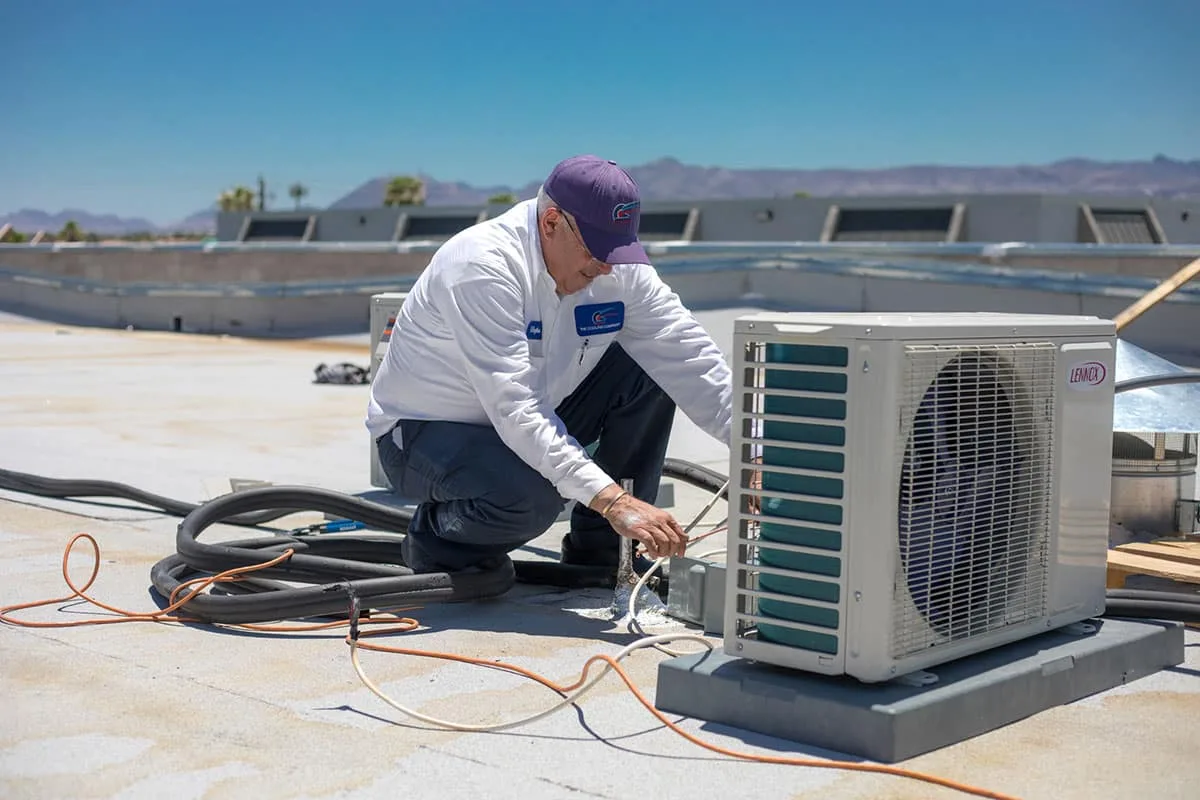
- Evaporator coil inspection and cleaning: Removing mineral scale before it reaches efficiency-killing levels. In Las Vegas, coil cleaning should happen annually at minimum -- some systems benefit from semi-annual cleaning.
- Condensate drain line clearing: Flushing the drain line to prevent mineral and algae clogs. A treatment tablet or regular vinegar flush between professional visits extends protection.
- Drain pan inspection: Checking for mineral buildup, corrosion, cracks, and proper drainage.
- Condenser coil cleaning: While the outdoor coil is less affected by hard water, dust and debris combined with mineral-laden moisture from condensation still cause buildup.
2. Whole-Home Water Softener
A water softener is the most comprehensive solution to hard water problems. It removes calcium and magnesium ions from your water supply before they reach any fixture, appliance, or HVAC component in your home.
- How it works: Water passes through a tank of resin beads that exchange calcium and magnesium ions for sodium ions. The resin is periodically regenerated with a salt brine solution.
- Installation cost: $1,500 to $3,500 for a whole-home system, installed
- Annual operating cost: $100 to $200 for salt and minimal electricity
- What it protects: Every water-using appliance, fixture, and system in your home
- ROI: Most Las Vegas homeowners recover the cost within 3 to 5 years through extended appliance life, reduced HVAC maintenance, lower energy costs, and fewer plumbing repairs
A water softener does not remove all minerals or make your water pure -- it specifically targets the hardness minerals that cause scale. Many Las Vegas homeowners pair a water softener with a reverse osmosis system at the kitchen sink for drinking water.
3. Water Heater Maintenance
Protect your water heater investment with regular maintenance:
- Tank water heaters: Flush the tank every 6 to 12 months to remove sediment. In Las Vegas, 6-month intervals are recommended. Check and replace the anode rod every 2 to 3 years -- this sacrificial rod corrodes in place of the tank, and hard water depletes it faster.
- Tankless water heaters: Descale annually by circulating white vinegar or a commercial descaling solution through the heat exchanger for 45 to 60 minutes. Most tankless units have service valves designed for this purpose.
- Consider a water softener upstream: Softened water dramatically extends water heater life regardless of type.
4. Condensate Drain Treatment
Between professional maintenance visits, you can help prevent condensate drain clogs:
- Pour one cup of white vinegar or a condensate drain tablet into the drain line access point every 1 to 2 months during cooling season
- Check the condensate drain exit point outside your home monthly to verify water is flowing when the AC is running
- Consider installing a condensate drain safety switch if you do not already have one -- this float switch shuts down the AC if the drain line clogs, preventing water damage before it starts
5. Scale-Resistant Equipment
When it comes time to replace HVAC or plumbing equipment, consider options with improved hard water resistance:
- Coated evaporator coils: Some manufacturers offer coils with hydrophilic coatings that help condensation sheet off more cleanly, reducing mineral deposit adhesion
- Stainless steel heat exchangers: For tankless water heaters, stainless steel resists scale buildup better than copper
- PEX plumbing: If repiping, PEX tubing resists mineral scaling better than copper or galvanized steel
The Cost of Doing Nothing
Hard water damage is cumulative and accelerating. The longer mineral deposits build, the faster the damage compounds. Here is what unchecked hard water costs a typical Las Vegas homeowner over a 10-year period:
- Reduced AC efficiency: $1,500 to $5,000 in excess energy costs
- Premature AC coil replacement: $800 to $2,500 (one or more replacements)
- Premature water heater replacement: $1,200 to $3,000 (replacing 3 to 5 years early)
- Condensate drain overflow damage: $500 to $5,000+ per incident
- Plumbing fixture replacements: $500 to $2,000
- Reduced appliance lifespans: $1,000 to $3,000
- Total potential cost: $5,500 to $20,500 over 10 years
Compare that to the cost of prevention: annual HVAC maintenance ($100 to $150 per year), a water softener ($2,000 to $3,500 installed), and periodic water heater flushing ($100 to $200 per year). The math overwhelmingly favors proactive protection.
The Cooling Company: HVAC and Plumbing Under One Roof
Hard water damage does not respect the boundary between your HVAC system and your plumbing. That is why The Cooling Company offers both HVAC services and professional plumbing services -- giving you one team that understands how these systems interact and can address the complete picture.
Whether you need evaporator coil cleaning, water heater descaling, water softener installation, or a comprehensive assessment of hard water damage throughout your home, our licensed technicians handle it all. As a BBB A+ rated company with over 55 years of combined experience, we have seen the full range of hard water damage in Las Vegas homes and know exactly how to combat it.
We serve homeowners across the entire Las Vegas Valley, including Summerlin, Henderson, North Las Vegas, Green Valley, Centennial Hills, Mountains Edge, Aliante, Southern Highlands, Anthem, Enterprise, Paradise, Spring Valley, and Sunrise Manor.
Call (702) 567-0707 to schedule your maintenance or plumbing assessment, or book your appointment online. Protect your home's most expensive systems from the mineral assault that Las Vegas water delivers every single day.
Related Resources
- HVAC Maintenance Plans
- Plumbing Services
- Why Is My Energy Bill So High in Las Vegas?
- How to Maximize AC Efficiency
- HVAC Tune-Up Checklist
- AC Repair Services