
Short answer: Las Vegas monsoon season (June through September) brings dust storms, sudden humidity spikes, and power surges that cause specific, predictable HVAC damage — clogged condenser coils, corroded electrical connections, stressed compressors, and moisture in ductwork. Most of the damage is preventable with pre-season maintenance and a few targeted protections. Call The Cooling Company at (702) 567-0707 to schedule a pre-monsoon inspection.
Key Takeaways
- Dust storms (haboobs) are the #1 HVAC threat during monsoon season. A single dust storm can coat your condenser coil with enough fine particulate to reduce airflow by 30–40%. Your compressor works harder, runs hotter, and ages faster.
- Power surges kill capacitors and control boards. Monsoon lightning strikes cause voltage spikes that travel through the grid. A $15 surge protector at the outdoor disconnect can save a $200–$400 capacitor or a $500–$1,200 control board.
- Sudden humidity creates condensation where it doesn't belong. When relative humidity jumps from 10% to 50% in an hour, moisture condenses on cold metal surfaces throughout the system — including inside electrical panels and on control board circuits.
- Your air filter becomes a dust storm casualty. After a major haboob, the filter can go from clean to fully loaded in 24–48 hours. Check and replace it after every significant dust event.
- The damage is cumulative. One dust storm doesn't destroy a condenser. But a summer of repeated events — dust coating, rain washing silt into the coil, sun baking it on — builds up a layer that a garden hose can't remove. Professional coil cleaning after monsoon season restores efficiency.
What Monsoon Season Actually Means for Las Vegas
People who've never lived here don't realize that Las Vegas has a monsoon season. They picture the dry, moonscape desert from the movies. But every summer, a dramatic moisture shift happens. The North American Monsoon pumps tropical moisture from the Gulf of California into the desert Southwest. The result: dust storms, thunderstorms, flash floods, and humidity levels that catch newcomers off guard.
For HVAC equipment, monsoon season is a stress test. Your outdoor condenser unit sits exposed to:
- Haboobs — massive dust walls that can reduce visibility to zero and carry tons of fine particulate per cubic mile
- Microbursts — sudden downdraft winds of 60–80 mph that throw debris, tear at wiring, and topple unsecured equipment
- Lightning — direct strikes and grid-transmitted surges that fry electronics
- Flash flooding — standing water around the condenser pad
- Humidity swings — from 10% to 50%+ within hours, back to 15% the next day
I've seen the aftermath of 35 monsoon seasons in this valley. Here's what each of these events does to HVAC equipment, and what you can do about it.
Threat #1: Dust Storms and Your Condenser Coil
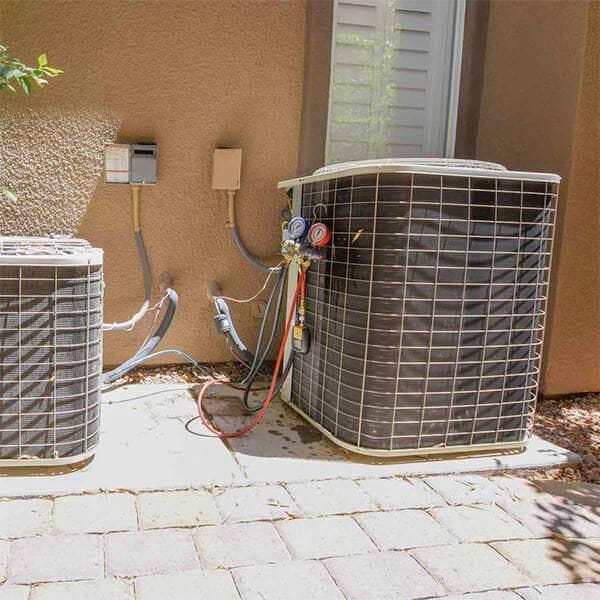
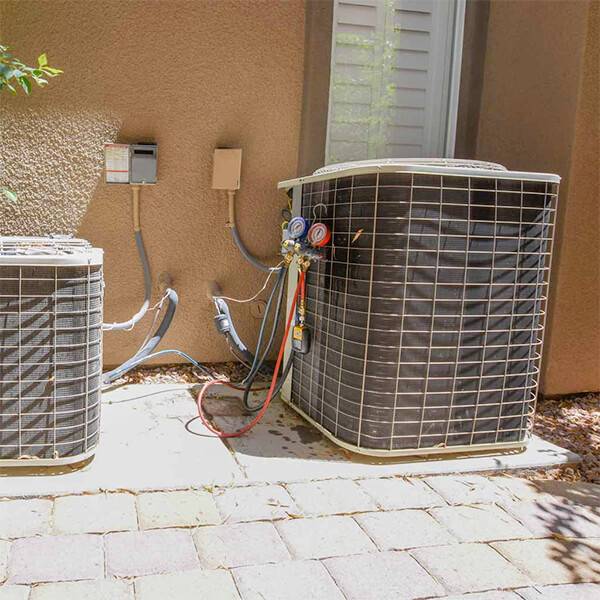
The condenser coil on your outdoor unit is designed to release heat by passing outdoor air through thin aluminum fins packed tightly together. When those fins are clogged with dust, the air can't flow, heat can't transfer, and the system struggles.
Las Vegas dust is uniquely problematic. It's not like the chunky dirt you'd find in a garden — it's fine, powdery desert silt (called caliche) mixed with construction particulate, road dust, and mineral deposits. This fine dust penetrates deep into the coil fins where larger debris would bounce off.
A single haboob doesn't destroy a condenser coil. But here's the pattern I see every monsoon season:
- Dust storm coats the coil with a fine layer of particulate.
- A few days later, a monsoon thunderstorm hits. Rain washes some dust off the outer surface but pushes the rest deeper into the coil and bonds it to the fins with moisture.
- The next day, 110°F sun bakes the wet silt into a hard crust on the coil surface.
- Another dust storm adds another layer.
- Repeat four to six times over the summer.
By September, the coil has a baked-on layer of desert concrete that a garden hose won't touch. Head pressure climbs. The compressor runs hotter. Energy bills spike. And the system is aging at twice the normal rate.
Protection:
- Before monsoon season (May): Schedule a professional coil cleaning as part of your spring AC tune-up. Starting the season with a clean coil gives you a buffer.
- After major dust storms: Rinse the condenser with a garden hose from the inside out (spray outward through the fins). This won't remove the deep-set stuff, but it clears the fresh surface dust before it gets rained on and baked.
- After monsoon season (September/October): Schedule a professional coil cleaning with chemical treatment. This is the one that removes the baked-on season residue. Cost: $150–$250. Worth every cent.
- Consider a condenser coil guard. Not the solid covers (those trap heat and moisture) — I mean the mesh screens designed for dusty environments. They filter large debris while allowing airflow. They do require cleaning, but they extend the time between professional cleanings.
Threat #2: Power Surges from Lightning
Monsoon thunderstorms bring lightning — and lightning doesn't have to hit your house to damage your HVAC equipment. A strike on a power line a mile away sends a voltage surge through the grid that reaches your condenser's electrical components in microseconds.
The components most vulnerable to surge damage:
- Capacitor — the most common casualty. A voltage spike can blow a capacitor instantly, leaving you with a system that won't start. Replacement: $150–$350.
- Compressor motor windings — a severe surge can punch through the insulation on compressor windings, causing a dead short. This is a compressor replacement: $2,500–$4,500.
- Control board — the circuit board inside the air handler that manages the system's logic. A fried control board means nothing works. Replacement: $500–$1,200 depending on the brand.
- Thermostat — smart thermostats are essentially small computers. A surge through the low-voltage wire can kill them. Replacement: $150–$300.
Protection:
- Install a whole-home surge protector on your main electrical panel. An electrician can install one for $200–$400. It clamps voltage spikes before they reach any equipment in the house — not just HVAC, but also electronics, appliances, and lighting.
- Install a dedicated HVAC surge protector at the outdoor disconnect switch. These are $15–$30 for the part and can be installed during a regular service visit. They protect specifically against surges traveling to the condenser through the dedicated circuit.
- Unplug the smart thermostat during severe storms if it's a plug-in model. Most hardwired thermostats are protected by the home surge protector, but USB-powered or battery-backed models can be unplugged as a precaution.
I'll be honest: most homeowners don't think about surge protection until after they've lost a component. A $30 surge protector at the disconnect versus a $350 capacitor or a $1,200 control board — the math speaks for itself.
Threat #3: Humidity and Condensation
Las Vegas spends most of the year below 20% relative humidity. HVAC equipment here is accustomed to dry conditions. When monsoon moisture arrives and humidity jumps to 40–60%, the sudden change creates problems:
Condensation on cold surfaces. Refrigerant lines, evaporator coils, and the air handler cabinet are all colder than the surrounding air when the AC is running. In low humidity, a thin layer of condensation forms and drips into the drain pan — normal operation. In high humidity, the condensation rate doubles or triples. The drain line has to handle more water. The drain pan fills faster. If the drain line was partially clogged (see our preventable failures post on drain clogs), the increased volume overwhelms it.
Moisture inside electrical enclosures. When humid air enters the outdoor unit's electrical compartment, moisture condenses on the cooler metal surfaces of contactors, terminal blocks, and the control board. This accelerates corrosion, causes intermittent electrical contacts, and can create short circuits. I've seen contactors corrode so badly during monsoon season that they fuse shut — the compressor runs nonstop until the overload trips.
Mold in ductwork. In attic ductwork, the temperature differential between the cold supply air inside the duct and the hot humid attic air outside the duct can cause condensation on the duct's outer surface. Over weeks of monsoon humidity, this creates conditions for mold growth on and around the duct insulation. If the duct insulation gets wet and stays wet, mold colonies can establish and eventually affect indoor air quality.
Protection:
- Verify your condensate drain is clear before monsoon season. This is standard practice during a spring tune-up.
- Check the drain pan float switch. This safety device should shut off the AC before the pan overflows. Make sure it's present and functional.
- Inspect attic ductwork insulation after monsoon season. If the insulation is wet, matted, or smells musty, it should be replaced. If you see actual mold growth, call for professional duct remediation — don't try to clean it yourself, as disturbing mold colonies releases spores into the air.
- Run a dehumidifier in problem areas during the worst humidity weeks if your AC can't keep up. Portable dehumidifiers in a musty closet or utility room can keep humidity below the 60% threshold where mold growth accelerates.
Threat #4: Wind-Blown Debris
Monsoon microbursts produce sudden wind gusts of 60–80 mph. I've seen outdoor units knocked off their pads, refrigerant lines yanked from connections, and condenser fans destroyed by impact from airborne objects.
The more common damage is less dramatic but still consequential:
- Branches, tumbleweeds, and trash pressed against the condenser — blocking airflow and potentially bending coil fins
- Gravel and small rocks thrown into the coil — denting fins and creating permanent airflow restrictions
- Patio furniture, pool equipment, and loose objects striking the unit — denting the cabinet, bending the fan blade, or cracking the refrigerant line guard
Protection:
- Maintain 2-foot clearance around the condenser. Remove anything that could become a projectile in high winds — loose pavers, empty pots, lightweight furniture.
- Anchor the condenser pad if you're in an area prone to flash flooding. Water rushing across a concrete pad can shift it, tilting the unit and stressing refrigerant connections.
- Don't build a solid fence or enclosure around the condenser. I see homeowners do this for aesthetics, and it causes more problems than it solves. The unit needs airflow on all four sides. If you want to screen it, use a louvered or lattice design with at least 3 feet of clearance.
- After a major storm, walk the perimeter before starting the system. Check for debris against the coil, damage to the fan blade (visible through the top grille), and water pooling around the base.
Threat #5: Dust Infiltrating Your Indoor Air
Desert dust doesn't just attack the outdoor unit. During a haboob, fine particulate enters your home through every crack, gap, and unsealed opening — around doors, windows, dryer vents, and plumbing penetrations. This dust gets pulled into the return air system and loaded onto your air filter.
After a major dust storm, I've seen filters that were installed two days prior look like they'd been in service for two months. The filter becomes the first casualty, and if it clogs before you notice, you get the frozen-coil, restricted-airflow cascade described in our AC warm air troubleshooting guide.
Protection:
- Check your air filter the day after every major dust storm. If it's visibly loaded, replace it immediately. Don't wait for the "change filter" reminder on your thermostat — it's based on time, not actual dust load.
- Seal gaps around doors and windows. Weatherstripping and door sweeps aren't just for energy savings — they keep dust out during storms. A $20 roll of weatherstripping pays for itself in filter replacements.
- Run the system fan on ON during a dust storm (even if you turn the AC off). This keeps air circulating through the filter, which captures airborne dust before it settles on surfaces. You'll need to replace the filter sooner, but your home will be cleaner.
- Consider an air filtration upgrade. A MERV 13 filter captures fine dust particles that a MERV 8 filter lets through. For homes in dusty areas (near open desert, construction zones, or major roads), the upgrade is worth the slight increase in filter cost.
The Monsoon HVAC Calendar
Here's my recommended timeline for protecting your system through monsoon season:
| When | What to Do | Why |
|---|---|---|
| May (pre-season) | Professional tune-up if not done in March/April. Install surge protector at disconnect. Clear condenser area. | Start the season with clean coils, tested components, and surge protection. |
| After each dust storm | Check and replace air filter. Rinse condenser with hose (inside out). Walk the perimeter for debris. | Prevents dust buildup that compounds with each event. |
| After each thunderstorm | Verify system starts normally. Check for standing water around condenser. Listen for unusual sounds. | Catches surge damage or flood damage early. |
| July/August (mid-season) | Replace air filter regardless of appearance. Check condensate drain for blockage. Monitor humidity inside. | Mid-season filter change ensures adequate airflow during peak load. |
| September/October (post-season) | Professional condenser coil cleaning. Duct inspection for moisture/mold. Full system check before fall transition. | Removes season-long buildup. Catches moisture damage before mold establishes. |
Cost of Prevention vs. Storm Damage
| Protection | Cost | What It Prevents | Potential Damage Cost |
|---|---|---|---|
| HVAC surge protector | $15–$30 | Capacitor or control board failure | $200–$1,200 |
| Whole-home surge protector | $200–$400 installed | All electronics + HVAC components | $2,000–$10,000+ |
| Post-storm filter replacement (4x/season) | $50–$100/season | Frozen coil, restricted airflow | $600–$1,800 |
| Post-season professional coil cleaning | $150–$250 | Compressor overheating, premature failure | $2,500–$4,500 |
| Post-season duct inspection | $100–$200 | Mold growth, IAQ problems | $1,000–$5,000 for remediation |
Total cost of full monsoon protection: roughly $500–$1,000 for the season. Total potential damage from an unprotected system: $3,000–$15,000+. And the protection steps take a total of maybe two hours of your time across the entire summer.
Frequently Asked Questions
Should I turn off my AC during a dust storm?
Ideally, yes — turn off the outdoor unit (you can leave the indoor fan running to filter indoor air). During an active haboob, the condenser fan pulls dust-laden air directly through the coil, packing the fins with particulate. If you're home and see the wall of dust coming, switch the thermostat to FAN ONLY until the dust settles — usually 20–40 minutes. Realistically, most dust storms happen when you're not home or not paying attention, so don't stress over the ones you miss. Just rinse the coil afterward.
How do I know if lightning damaged my HVAC system?
The most common sign is a system that won't start after a storm. If you hear the thermostat click, the indoor fan runs, but the outdoor unit is silent — check the breaker first, then suspect a blown capacitor or fried control board. Some surge damage is subtle: intermittent operation, random shutdowns, or error codes on the thermostat. If your system starts behaving erratically after a thunderstorm, mention the storm timing when you call for service. It helps us focus the diagnosis.
Does homeowner's insurance cover monsoon HVAC damage?
It depends on the cause. Lightning damage (a "sudden and accidental" event) is typically covered under standard homeowner's insurance. Wind damage and debris impact are usually covered. But gradual damage from dust accumulation, corrosion, or neglected maintenance is not — that's classified as wear and tear. If you file a lightning or storm damage claim, document everything: photos of the damage, the date and time of the storm, and the technician's written diagnosis identifying the storm as the cause.
Is Las Vegas monsoon season getting worse?
Based on my 35 years here, the storms are more intense but not necessarily more frequent. We've always had monsoon season. What's changed is the amount of exposed desert being disturbed by construction, which puts more dust into the air, and the urban heat island effect, which can amplify convective storm activity. Whether that's a long-term trend or cyclical variation, the practical takeaway is the same: protect your equipment.
Get Ahead of Monsoon Season
Don't wait for the first haboob to remind you. Schedule your pre-season inspection now and have your system storm-ready before June.
Call (702) 567-0707 or book online. We serve the entire Las Vegas Valley — Henderson, Summerlin, North Las Vegas, Green Valley, Enterprise, and all surrounding areas. NV License #0075849.