

Short answer: Learn HVAC maintenance tips to assess Lennox EL18XV specs in Henderson, check AHRI ID, high‑ambient curves and startup so you can buy with confidence.
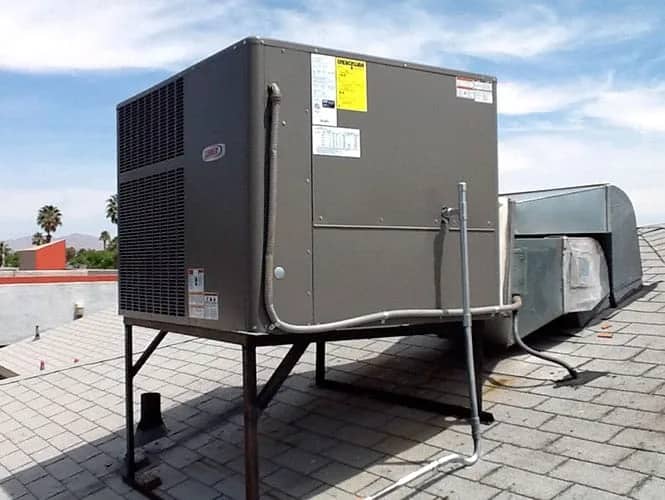
The Lennox EL18XV is a packaged rooftop unit used for small to mid commercial buildings. Before buying, verify AHRI data, high‑ambient sensible capacity, refrigerant, electrical needs, and curb fit. Require a documented startup and 30–90 day commissioning report to confirm performance in hot, dry Henderson summers. See the ASHRAE Technical Resources for standards and guidance.
Key Takeaways
- Use a room-by-room Manual J load calculation (not a square-foot rule).
- Select equipment with Manual S and verify ducts with Manual D for comfort and efficiency.
- Avoid oversizing: short-cycling wastes fuel and can create uneven temperatures.
This article lists the checks most owners and contractors should perform before ordering or installing an EL18XV in Henderson, NV. It covers performance data, installation needs, code and rebate compliance, startup testing, and field follow‑up. The goal is to help you avoid common rooftop problems like low sensible capacity, poor airflow, and missing paperwork that can void rebates or warranties.
What is the EL18XV and who should consider it?
The Lennox EL18XV is a rooftop packaged unit designed for commercial cooling and heating. It is intended for small to mid‑size buildings that need a single rooftop solution. Typical buyers include facility managers, building owners, and mechanical contractors who want a consolidated unit that handles both cooling and heating loads.
Before committing, check structural and mechanical integration. Weight, curb footprint, and factory options can change the delivered unit's size and mass. Confirm the EL18XV matches the mechanical drawings and rooftop structural capacity. A mismatch leads to added cost for adapters or roof reinforcement.
Facility criteria for considering the EL18XV?
Owners should evaluate access, roof loading, and the ease of routine service. If your roof has limited access or strict load limits, plan for those constraints. Rooftop service clearance and walkway needs are common sources of conflict in tight roof layouts.
Also factor in local climate. In Henderson, the dry heat makes sensible capacity and high‑ambient ratings more important than in milder climates. Verify the model supports the sensible cooling you need for peak summer loads.
Factory options and model variants?
Lennox offers EL18XV variants with different compressor counts, airflow options, and control packages. Some models have single compressors for simplicity. Two‑compressor versions add redundancy and can improve part‑load efficiency. Other suffixes indicate economizer options, sound attenuation, or enhanced filtration.
Check model suffixes carefully on submittals. Changes to compressors, economizers, or sound packages can affect weight, electrical draw, and tested capacities. Include the exact option list with the AHRI ID to avoid mismatches at delivery.
Weight, curb, and roof considerations?
The weight and curb size determine rigging plans and roof support needs. Rooftop units require matched curbs or adapters to seal properly and to provide structural support. Verify curb flange details and mounting points. Poor curb fit increases air leakage and water infiltration risk.
Ask the mechanical engineer to confirm roof load capacities and to provide guidance on pad or curb reinforcements if needed. Getting this right before delivery saves time and avoids rooftop modifications after the unit arrives.
How to read EL18XV performance tables
Performance tables show gross and net cooling, sensible heat, airflow, and power under set test conditions. They are written for engineers and often assume familiarity with AHRI test points. Read column headers closely to find the test outdoor and return air temperatures used to derive the numbers.
Do not assume test conditions match your site. Standard AHRI numbers are useful for comparisons but may not reflect peak day performance in Henderson. Ask Lennox or your rep for extended high‑ambient curves that show sensible capacity and power at 95–115°F outdoor temperatures.
Understanding gross vs net capacity?
Gross capacity is the coil output without fan heat. Net capacity subtracts supply fan heat and any control loads. For rooftop units, differences between gross and net can be significant because supply fans add heat back to the conditioned air stream. Use net capacity for load matching.
Sensible capacity is the dry cooling output that reduces temperature. It is the number to watch in arid climates. Latent capacity becomes less critical in dry Nevada, though it still matters for any humid spaces.
High‑ambient derates and how to apply them?
Manufacturer derate curves show how capacity falls as outdoor temperature rises. For the EL18XV, request or require curves that cover 95–115°F. As a rule of thumb, expect a 5–15% sensible derate near extreme peaks, but rely on factory data instead of guesses.
Include rooftop solar gains and duct run heat when sizing. These additions increase sensible loads and may require upsizing or additional ventilation to maintain comfort on the hottest days.
Test conditions that affect EER and IEER?
EER depends on outdoor and return air conditions plus humidity at the test point. Different test procedures produce different EER numbers. Verify whether the provided EER follows current DOE test methods like EER2 if you need it for rebates.
Learn about available federal tax credits for energy-efficient HVAC equipment.
IEER captures part‑load behavior and is usually more relevant for annual operating cost estimates. Ask for part‑load maps or IEER values and use them with expected runtime profiles to estimate energy bills.
For a detailed cost breakdown, see our HVAC pricing guide.
What installation and electrical checks matter?
Rooftop units require structural, electrical, and mechanical checks before delivery and during installation. Confirm curb dimensions, roof load capacity, and crane access early. Plan for conduit, disconnects, and any step‑up transformers before rigging day. Missing electrical details cause site delays and overtime charges.
Also plan for vibration isolation, condensate routing, and service clearances. Crew safety and easy access for filters and coil cleaning reduce future service costs. Include these items in the contract so the installer is responsible for providing them.
Electrical nameplate and service requirements?
Read the unit nameplate for voltage, phase, full load amps, and locked rotor amps. Note the minimum circuit ampacity and breaker size. High startup currents must be addressed to avoid nuisance trips or feeder issues.
Coordinate with the electrical contractor early to confirm building service capacity. If a transformer is required, determine location and conduit runs well in advance to sync with rigging schedules.
Fan, compressor, and airflow confirmation
Match compressor count and motor horsepower to the spec sheet airflow and allowable external static pressure. Confirm the drive type and any available speeds. Incorrect fan sizing or low external static pressure specs reduce airflow and harm performance.
Measure airflow during startup and compare to spec sheet values. Low airflow reduces sensible capacity and raises run times. Record test data in the startup report and address deficiencies immediately.
Rooftop curbs, adapters, and sealing
Most rooftop units need a manufacturer‑matched curb or adapter. Confirm curb height, flange detail, and required sealing materials. A proper curb ensures sealing, reduces thermal bridging, and supports the unit.
If a mismatch exists, order a factory adapter or plan for a custom curb. Never rely on field shims alone; they often cause leaks and premature unit movement.
How to check code and rebate compliance
Energy codes and utility rebate programs set efficiency and documentation rules. Use the AHRI certificate and manufacturer spec sheet to show compliance with codes such as ASHRAE 90.1 and local amendments. Keep paperwork organized for inspectors and rebate administrators.
Utility programs often require pre‑approval, model lists, and performance proof. Missing paperwork can delay or void rebate payments. Track submissions and serial numbers in a dedicated folder to simplify audits.
Codes and local requirements in Henderson
ASHAE 90.1 sets minimum efficiency and control criteria at a national level. Nevada and Clark County may add local amendments. Verify local mechanical code for ventilation, economizer use, and required control sequences.
Confirm whether mandatory economizer or demand control ventilation rules apply to your building type or project size. These requirements affect both compliance and potential rebate eligibility.
Documenting for rebates and inspections
Utility programs usually require the AHRI certificate, spec sheet, invoice, and signed startup report. Some want photos of installed units and serial numbers. Collect these items and submit them per program instructions.
Match the AHRI ID to program tiers and keep installation dates and serial numbers handy. A clear paper trail prevents disputes and speeds rebate processing.
How should commissioning and startup be done?
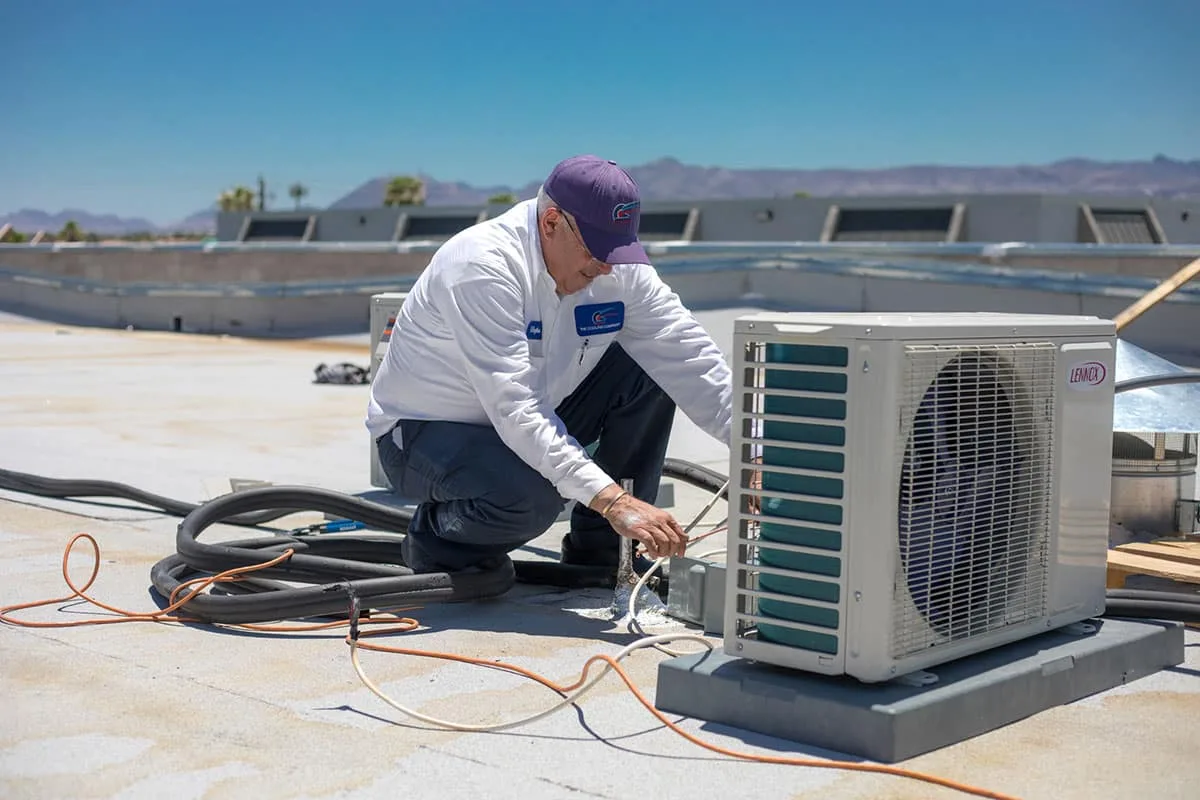
A formal startup verifies refrigerant charge, airflow, controls, and safeties under load. Require a measured startup report that lists temperatures, pressures, amps, and airflow. Schedule a follow‑up tune‑up at 30–90 days to catch early drift or minor refrigerant loss that appears after initial run‑in.
Include test procedures in the contract and require the installer to deliver signed reports and baseline data in the warranty folder. Baseline data helps with future troubleshooting and supports warranty and rebate claims.
Field tests to include on startup
Measure supply and return temperatures, suction and discharge pressures, and superheat and subcooling. Log total unit amps and verify economizer operation and safeties. Check control interlocks and building automation points if present.
Use calibrated instruments and record steady‑state data. Transient readings can be misleading. Ensure the unit runs long enough at step loads to stabilize readings before finalizing the report.
Measured capacity verification and follow‑up
Collect steady‑state data and calculate delivered sensible and latent capacity. Compare field measurements to AHRI values at similar outdoor conditions. If performance falls short, document corrective actions and retest.
Schedule a hot‑season follow‑up within the first summer to verify performance at peak conditions. Capture data on the hottest days to confirm sensible capacity and adjust controls as needed.
Need HVAC service help in Las Vegas?
If you're facing an HVAC emergency in Las Vegas, Henderson, or North Las Vegas, The Cooling Company offers fast, reliable service from licensed technicians. We understand that heating and cooling emergencies don't wait for business hours.
Call us now at (702) 567-0707 for emergency service. Our team is ready to help restore your comfort quickly and safely.
Who should you call for on‑site evaluation?
When you need an on‑site EL18XV review in the Las Vegas area, call The Cooling Company at (702) 567-0707. They provide field verification, measured startup, and a written commissioning plan. Their crews work across Las Vegas, Henderson, and North Las Vegas and are familiar with local codes and rebate processes.
Outside the service area, ask any contractor for NATE‑certified technicians and the same AHRI documentation and high‑ambient curves. Require a signed startup report and 30–90 day follow up no matter who performs the work to ensure proper commissioning and to support warranty and rebate claims.
See why homeowners trust us — view our industry awards and certifications.
What to expect from a field evaluation
A field evaluation should include a curb and structural check, electrical service review, and a review of mechanical drawings. Technicians will verify crane access, lifting points, and clearances. They will also review the spec sheet and AHRI certificate and confirm factory options.
Expect a written report with photos, weight and dimension checks, and a punch list of required changes. Good reports reduce surprises on installation day and form part of the project record for rebates and warranties.
Choosing a contractor outside the area
If you hire an out‑of‑area contractor, verify their qualifications. Ask for NATE certification, commercial experience, and references for similar rooftop installs. Confirm they will provide the same test data and startup reports required by your utility or project specifications.
Require written commitments for follow‑up visits and documentation. Contractors that resist documented startup procedures or 30–90 day follow ups create risk for rebates and long‑term performance.
Final recommendations and next steps
Always require the Lennox spec sheet and AHRI ID before placing an order. Make high‑ambient sensible capacity a top evaluation point for Henderson. Add startup and a 30–90 day commissioning call to the contract to prove delivered performance and protect your investment.
Budget early for rigging, curb adapters, vibration isolation, and condensate details. Keep utility rebate forms and startup reports together to speed claims. If you need an on‑site review or certified startup, call The Cooling Company at (702) 567-0707 for Las Vegas, Henderson, and North Las Vegas service.
Record keeping and warranty protection
Collect and store AHRI certificates, spec sheets, invoices, signed startup reports, serial numbers, and commissioning reports. Keep both digital and paper copies. These documents are essential for warranty claims and rebate audits.
Include commissioning records with warranty registration. A clear audit trail reduces disputes and speeds resolution if problems occur.
You Might Also Like
This aspect deserves careful consideration as you evaluate your options. Understanding the details helps you make more informed decisions. Consulting with qualified professionals provides additional insights specific to your situation. Take time to consider how this information applies to your particular needs and circumstances. Making well‑informed choices typically leads to better long‑term outcomes and greater satisfaction.
- ac repair costs
- troubleshooting hvac odors
- ruud furnace problems
- trane furnace repair henderson
- how much to install hvac system in old house
About The Cooling Company
The Cooling Company has been serving the Las Vegas valley with professional HVAC services for over a decade. Our team of licensed, NATE-certified technicians specializes in air conditioning repair, heating system maintenance, and complete HVAC installations. We're committed to providing honest, reliable service with upfront pricing and a 100% satisfaction guarantee on all work performed.
- Phone: (702) 567-0707
- Reviews: 4.8/5 stars (780+ reviews) - See reviews
Service Areas
We proudly serve homeowners and businesses throughout the Las Vegas metropolitan area, including Las Vegas, Henderson, and North Las Vegas. Our service technicians are available for same-day appointments in most areas, with emergency service available 24/7 for urgent HVAC issues.
References
- U.S. Department of Energy (Energy.gov) (accessed 2026-01-02)
- U.S. Environmental Protection Agency (EPA) (accessed 2026-01-02)
- ASHRAE (Standards and guidance) (accessed 2026-01-02)
- ENERGY STAR (Heating & cooling) (accessed 2026-01-02)
Need HVAC Service in Las Vegas?
The Cooling Company provides expert HVAC service throughout Las Vegas, Henderson, and North Las Vegas. Our licensed technicians deliver honest assessments, upfront pricing, and reliable results.
Call (702) 567-0707 or visit HVAC services, HVAC maintenance, heating, or AC repair for details.