

CAV (Constant Air Volume)
Constant Air Volume (CAV) systems deliver a steady airflow while adjusting air temperature to meet heating or cooling needs. Unlike VAV systems that vary airflow, CAV keeps flow constant, making it simpler and often lower cost but less energy efficient in spaces with changing loads. CAV works best for single-zone buildings or areas with stable occupancy.
💡 Key Takeaways
- ✓Constant Air Volume (CAV) systems deliver a steady airflow while adjusting air temperature to meet heating or cooling needs. Unlike VAV systems that vary airflow, CAV keeps flow constant, making it simpler and often lower cost but less energy efficient in spaces with changing loads. CAV works best for single-zone buildings or areas with stable occupancy.
- ✓CAV systems are simpler to design and install than VAV.
- ✓Variable speed drives can improve CAV energy efficiency.
- ✓Regular filter changes and duct inspections keep airflow steady.
CAV (Constant Air Volume)
/kɒnˈstænt ˈɛər ˈvɒljum/
Definition
Constant Air Volume (CAV) systems deliver a steady airflow while adjusting air temperature to meet heating or cooling needs. Unlike VAV systems that vary airflow, CAV keeps flow constant, making it simpler and often lower cost but less energy efficient in spaces with changing loads. CAV works best for single-zone buildings or areas with stable occupancy.
What is a CAV system?
A CAV system delivers constant airflow and adjusts air temperature to maintain comfort in a space.
Source: The Cooling Company

Quick Facts
How CAV (Constant Air Volume) Works
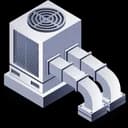
CAV keeps airflow constant while temperature changes.
Real-World Application
A movie theater or assembly hall with consistent occupancy can use a CAV system to maintain comfort with simple, reliable control.
Pro Tip
If your building has stable loads, CAV can be cost-effective; if loads vary, compare with VAV for energy savings.
“If your building has stable loads, CAV can be cost-effective; if loads vary, compare with VAV for energy savings.”
Important Things to Keep in Mind
- CAV systems are simpler to design and install than VAV.
- Variable speed drives can improve CAV energy efficiency.
- Regular filter changes and duct inspections keep airflow steady.
Did You Know?
CAV systems were among the earliest large-building HVAC designs, dating back to the early 20th century.
FAQ
Is CAV more efficient than VAV?
Not usually. VAV adjusts airflow to match demand and is often more efficient in variable-load spaces.
Where are CAV systems commonly used?
Single-zone buildings, assembly spaces, and areas with consistent occupancy.
Can CAV systems be improved for efficiency?
Yes. Adding variable speed drives and proper controls can reduce energy use.
Related Services
Need help with cav (constant air volume)? Our licensed technicians in Las Vegas are ready to assist.
Share This Page
Why Homeowners Trust Us

Explore Efficient HVAC Solutions for Your Space
Get a Free Estimate
Fill out the form below. Our goal is to reach you within minutes.