

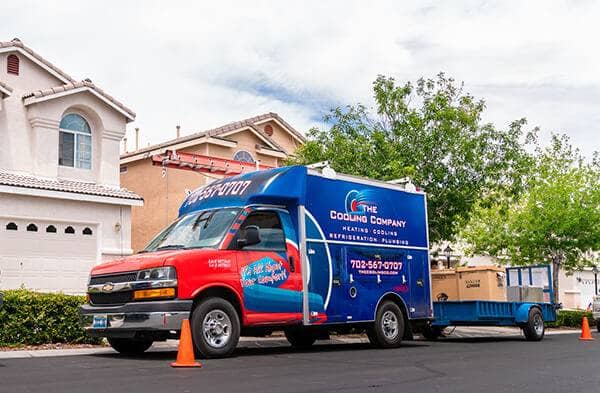
Short answer: 2026 brings significant changes to AC replacement. New R-454B refrigerant requirements, updated SEER2 efficiency minimums, and expanded federal tax credits up to $2,000 are reshaping the market. Whether your current system is failing or you want to upgrade before summer, this guide covers everything from the new regulations to choosing the right system, what proper installation looks like, and how to maximize rebates. If you are replacing an AC in the Las Vegas area, the stakes are higher than most cities because your system runs 2,500-3,500 hours per year and a bad installation will cost you thousands in wasted energy.
Ready to get started? Call (702) 567-0707 for a free in-home assessment or visit our AC installation page.
Replacing your air conditioner is one of the largest home improvement investments you will make. In Las Vegas, where cooling accounts for 50-70% of summer electricity costs, the system you choose and how it is installed will affect your comfort and budget for the next 15-20 years. The decisions you make in 2026 carry more weight than in previous years because the industry is in the middle of a major transition: new refrigerants, new efficiency standards, and new financial incentives that can save or cost you thousands of dollars depending on what you know before you buy.
This guide is brand-agnostic. We will cover every system type, every price range, and every regulation change so you can walk into any contractor's office as an informed buyer. We will also be honest about where the industry cuts corners and what separates a quality installation from one that will cause problems for years.
Key Takeaways for AC Replacement in 2026
- New refrigerant era: Manufacturers have transitioned to R-454B refrigerant as of January 2025. R-410A systems are still legal to install from existing stock, but new production uses R-454B with 78% lower global warming potential.
- SEER2 is now the standard: All efficiency ratings use the new SEER2 testing protocol. The minimum in Las Vegas and the Southwest is 14.3 SEER2 for split systems. Older SEER numbers no longer apply to new equipment.
- Heat pump tax credits reach $2,000: Federal tax credits for qualifying heat pump systems are up to $2,000 in 2026. Standard AC systems qualify for up to $600. These are dollar-for-dollar tax credits, not deductions.
- Installation quality matters more than brand: A premium system installed poorly will underperform a mid-range system installed correctly. Insist on Manual J load calculations, proper commissioning, and permit inspections.
- Las Vegas pricing ranges from $4,500 to $25,000+ depending on system type, efficiency level, and installation complexity. Get at least 2-3 quotes and compare them carefully.
- NV Energy rebates stack with federal credits: You can combine utility rebates ($200-$800) with federal tax credits to significantly reduce your out-of-pocket cost.
- The best time to replace is before your system fails: Emergency replacements in July limit your options and often cost more. Plan ahead when you have time to compare and negotiate.
What Has Changed in 2026: The New AC Landscape
If you last bought an air conditioner five or ten years ago, the market has changed substantially. Three major shifts are happening simultaneously, and understanding all three will help you make a smarter purchase.
The R-454B Refrigerant Mandate
The EPA's HFC phasedown regulations drove manufacturers to transition new equipment production to R-454B refrigerant starting in January 2025. This is part of a broader global effort to reduce the climate impact of refrigerants, following the Kigali Amendment to the Montreal Protocol.
What this means in practice: R-410A systems are still legal to purchase and install. Manufacturers built up inventory before the transition, and contractors can sell through that existing stock. However, new production lines are R-454B, and over the course of 2026, the balance will shift heavily toward R-454B equipment on dealer shelves. If you want an R-410A system, options will narrow as the year progresses.
For a deeper look at the refrigerant transition timeline and what it means for existing systems, see our R-410A phaseout guide.
SEER2: The New Efficiency Standard
SEER2 (Seasonal Energy Efficiency Ratio 2) replaced the old SEER testing protocol. The new standard uses a higher external static pressure during testing, which more closely mimics real-world conditions where ductwork creates resistance against airflow. All new equipment is now rated using SEER2.
The practical impact: SEER2 numbers are slightly lower than old SEER numbers for the same equipment. A system that would have been rated 16 SEER under the old standard might be rated 15.2 SEER2 under the new one. This does not mean the equipment got less efficient; the test got more realistic. The minimum efficiency for split systems in hot-dry climates like Las Vegas is 14.3 SEER2. For a thorough explanation of how SEER2 works, visit our SEER2 glossary entry.
Updated Federal Tax Credit Requirements
The Inflation Reduction Act extended and expanded energy efficiency tax credits through 2032. In 2026, qualifying heat pump systems are eligible for up to $2,000 in federal tax credits under the Energy Efficient Home Improvement Credit, while qualifying central AC systems (non-heat-pump) are eligible for up to $600. The catch: your system must meet specific efficiency thresholds set by the Consortium for Energy Efficiency (CEE) highest efficiency tier to qualify. Not every system on the market meets these requirements.
Why These Changes Matter for Buyers Right Now
These three changes converge to create both opportunity and confusion. The opportunity is real: a qualifying heat pump installation in Las Vegas can earn you $2,000 in federal tax credits plus $200-$800 in NV Energy rebates, potentially reducing a $15,000 system to an effective cost of $12,200-$12,800. The confusion is also real: contractors with varying levels of knowledge will give you conflicting advice about refrigerants, ratings, and incentives. The more you understand before getting quotes, the better decisions you will make.
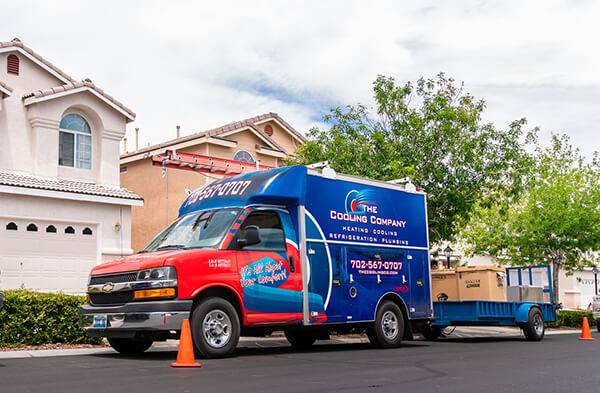
The Refrigerant Transition Explained: R-410A to R-454B
The shift from R-410A to R-454B is the most significant change in residential HVAC in over two decades, comparable to the earlier transition from R-22 (Freon) to R-410A. Understanding what is happening and why will help you evaluate competing claims from contractors and make a confident decision.
What Is R-454B?
R-454B is a hydrofluoroolefin (HFO) blend refrigerant classified as A2L, meaning it has low toxicity and is mildly flammable. It was developed specifically as a replacement for R-410A in residential and light commercial HVAC systems. Major manufacturers including Lennox, Carrier, Trane, Rheem, Goodman, and others have released R-454B product lines.
Why the Change
R-410A has a Global Warming Potential (GWP) of 2,088, meaning one pound of R-410A released into the atmosphere has the same warming effect as 2,088 pounds of carbon dioxide. R-454B has a GWP of 466, a 78% reduction. When multiplied across millions of HVAC systems nationwide, this reduction is substantial.
The transition is driven by both the EPA's SNAP rules and the AIM Act (American Innovation and Manufacturing Act of 2020), which mandates an 85% phasedown in HFC production and consumption by 2036.
What R-454B Means for Buyers
R-454B systems may cost slightly more than equivalent R-410A systems in the near term. The technology is mature and has been tested extensively, but new product lines and updated components (safety sensors, modified service valves) contribute to a modest price premium. As production scales up and R-410A inventory depletes, this gap will close. From a performance standpoint, R-454B systems operate at similar efficiency levels to their R-410A predecessors.
Can You Refill an Old System with R-454B?
No. R-454B cannot be used as a drop-in replacement for R-410A or R-22. These refrigerants operate at different pressures, require different lubricating oils, and have different system design requirements. Mixing refrigerants or using the wrong refrigerant in a system designed for another will cause compressor failure, void warranties, and create safety hazards. If your existing system needs refrigerant, it must be recharged with the refrigerant it was designed for.
Should You Buy R-410A Now While It Is Cheaper?
This is one of the most common questions we hear, and the honest answer is nuanced. R-410A systems currently available from existing inventory are often priced $500-$1,500 less than comparable R-454B models. R-410A refrigerant will remain available for servicing existing systems for at least 15-20 years, so you will not be stranded. Your R-410A system will not become illegal to operate or service.
However, R-454B is the future of the industry. Over time, R-410A refrigerant costs for service calls will likely increase as production decreases, similar to what happened with R-22. If you are buying a system you plan to keep for 15-20 years, R-454B positions you on the right side of the transition. If budget is your primary concern and you plan to replace again in 10-12 years, an R-410A system from existing stock is a perfectly reasonable choice.
Safety: Is R-454B Safe for Homes?
Yes. The A2L "mildly flammable" classification sounds concerning, but context matters. A2L refrigerants have a very low flame propagation speed and require a specific concentration and ignition source to combust. R-454B systems include built-in refrigerant leak detection sensors that shut the system down if a leak is detected. By comparison, propane (used in some refrigeration) is classified A3 (highly flammable) and is vastly more dangerous. Natural gas, which runs through most homes' furnaces and stoves, is also significantly more flammable than R-454B.
Updated building codes (UL 60335-2-40) require the safety sensors and system design features that make A2L refrigerants safe for residential use. There is no realistic risk to homeowners from a properly installed R-454B system.
Step-by-Step: The Professional AC Replacement Process
Knowing what the replacement process should look like helps you evaluate contractors. If a company skips steps, that is a red flag. Here is what a thorough, professional AC replacement looks like from start to finish.
Step 1: In-Home Assessment
A qualified technician visits your home to evaluate your current system, ductwork condition, insulation quality, and any comfort complaints you have. They should ask about hot and cold spots, humidity issues, noise concerns, and which rooms matter most to you. This visit typically takes 45-90 minutes for a thorough evaluation. Be wary of companies that quote over the phone without seeing your home.
Step 2: Manual J Load Calculation
This is the gold standard for proper system sizing, and it is the step that separates professional installations from guesswork. A Manual J calculation accounts for your home's square footage, insulation levels, window sizes and orientation, ceiling heights, number of occupants, appliance heat output, and local climate data.
In Las Vegas, the design day temperature is 115 degrees F (some engineers use 117 degrees F for a safety margin). This is critical because the national AHRI standard test condition is 95 degrees F, which drastically underestimates cooling demand in the desert. A system sized for Phoenix or Las Vegas needs to handle 20+ degrees more temperature differential than systems in moderate climates. If your contractor sizes your system based on square footage alone ("one ton per 500 square feet" is a common rule of thumb), find a different contractor. For a full breakdown of how proper sizing works in the desert, see our Las Vegas AC sizing guide.
Step 3: Get Multiple Quotes
Get at least 2-3 written quotes from licensed, insured contractors. Each quote should include the specific equipment model numbers, SEER2 ratings, warranty terms, scope of work (what is included and what is not), permit costs, and a timeline. Compare apples to apples: make sure quotes cover the same scope, including thermostat, disconnect, pad or bracket, line set, and any ductwork modifications.
Our guide on choosing the best HVAC contractor covers what to look for in detail.
Step 4: System Selection
Based on the load calculation and your budget, select the system type (split, packaged, heat pump, or ductless), the brand, and the efficiency level. Your contractor should present at least two or three options at different price points and explain the trade-offs. Do not let anyone pressure you into a decision on the spot. A reputable company will give you time to compare. For a detailed breakdown of brand options, see our top 25 AC brands for 2026 guide.
Step 5: Scheduling the Installation
Typical installation timelines range from 1-3 days depending on complexity. A straightforward like-for-like replacement (same system type, same location, good ductwork) can often be completed in one day. If ductwork modifications, electrical upgrades, or system type changes are involved, plan for two to three days. Summer is peak season in Las Vegas, so scheduling 2-4 weeks in advance is common from May through September.
Step 6: Installation Day
On installation day, crews will disconnect and remove the old equipment, prepare the installation site (pad, electrical, refrigerant lines), install the new outdoor and indoor units, connect refrigerant lines (brazing with nitrogen purge), connect electrical and thermostat wiring, and charge the system with the correct amount of refrigerant. Expect the home to be without cooling during installation, so plan accordingly during summer months.
Step 7: Commissioning
This is the most important step and the one most companies skip or rush through. Commissioning means verifying that the installed system actually performs to specification. It includes measuring airflow across the evaporator coil, verifying refrigerant charge by checking superheat and subcooling, testing static pressure in the ductwork, calibrating the thermostat, checking all electrical connections and amp draws, and running the system through a complete heating and cooling cycle.
A system that is undercharged by just 10% will lose 20% of its efficiency and cooling capacity. A system with restricted airflow will freeze up, short-cycle, and fail prematurely. Commissioning catches these problems on day one instead of letting them silently drain your wallet for years. When comparing quotes, ask each contractor specifically what their commissioning process includes.
How to Choose the Right System Type
There are four primary system types for residential cooling in Las Vegas. Each has distinct advantages depending on your home's construction, your budget, and your comfort priorities. For a deeper comparison of the two most common types, see our packaged unit vs. split system guide.
Central Split System
The most common configuration in Las Vegas. A split system has two main components: an outdoor condenser unit (the box on the side of your house or on the roof) and an indoor air handler or furnace (typically in the garage, attic, or closet). Refrigerant lines and electrical wiring connect the two. This is the best choice for homes with existing ductwork in good condition.
- Best for: Most single-family homes with existing ductwork
- Efficiency range: 14.3-28 SEER
- Pros: Widest selection of brands and models, highest available efficiency ratings, flexible placement options, quiet outdoor units available
- Cons: Requires space for both indoor and outdoor components, ductwork must be in good condition for optimal performance
Packaged Unit
All components are housed in a single outdoor cabinet, typically installed on the roof or on a concrete pad beside the home. Packaged units are common in older Las Vegas homes, townhouses, and condominiums where there is no attic, closet, or garage space for an indoor unit.
- Best for: Homes without interior space for an air handler, existing packaged unit replacements
- Efficiency range: 14.3-18 SEER2
- Pros: Single-location installation, no indoor space required, simpler installation in some cases
- Cons: Lower maximum efficiency than split systems, fewer model options, roof installations require crane access
Heat Pump
A heat pump operates like an air conditioner in summer but reverses the refrigerant cycle in winter to heat your home. In Las Vegas, where heating is needed only 20-30 nights per year and winter lows rarely drop below 30 degrees F, a heat pump can handle both seasons efficiently. Heat pumps qualify for the highest federal tax credits ($2,000 vs. $600 for standard AC) and are increasingly popular in the desert.
- Best for: Homeowners who want heating and cooling from one system and want to maximize tax credits
- Efficiency range: 14.3-24+ SEER2 (cooling), 7.8-13+ HSPF2 (heating)
- Pros: Heats and cools, highest tax credit eligibility, very efficient in mild winters, no gas line needed for heating
- Cons: Higher upfront cost than AC-only, supplemental electric heat strips needed for the coldest nights, slightly less heating efficiency below 30 degrees F
For more on heat pump options, see our heat pump installation page.
Ductless Mini-Split
Individual wall-mounted or ceiling-mounted units provide heating and cooling to specific rooms or zones. Each indoor unit connects to an outdoor compressor via a small refrigerant line. Ductless systems are ideal for room additions, converted garages, older homes without ductwork, or supplemental cooling for problem rooms.
- Best for: Additions, homes without ductwork, supplemental cooling for hot rooms, casitas and guest houses
- Efficiency range: 17-42 SEER2 (single-zone models reach the highest ratings)
- Pros: No ductwork needed (eliminating 20-30% duct losses), individual room temperature control, very high efficiency, quiet operation
- Cons: Higher cost per ton of cooling than central systems, visible indoor wall units, each zone requires its own indoor unit, not ideal for whole-home cooling in large houses
System Type Comparison at a Glance
| System Type | Best For | Efficiency (SEER2) | Typical Price Range (Installed) | Key Advantage |
|---|---|---|---|---|
| Central Split | Most homes with ductwork | 14.3 - 28.0 | $4,500 - $22,000+ | Widest selection, highest efficiency ceiling |
| Packaged Unit | No indoor space for air handler | 14.3 - 18.0 | $5,000 - $16,000 | All-in-one, no indoor footprint |
| Heat Pump | Heating + cooling, max tax credits | 14.3 - 24.0+ | $5,500 - $25,000+ | $2,000 federal tax credit, dual function |
| Ductless Mini-Split | Additions, no ductwork, zone control | 17.0 - 42.0 | $3,000 - $9,000 per zone | No duct losses, room-by-room control |
Understanding SEER2 Ratings and Energy Bill Impact
SEER2 is the simplest way to compare AC efficiency across brands and models. Think of it like miles per gallon for your air conditioner: the higher the number, the less electricity the system uses to produce the same amount of cooling. But unlike MPG, where the difference between 25 and 30 is modest, the difference between 14.3 SEER2 and 28 SEER can mean cutting your cooling electricity bill nearly in half.
SEER2 Tiers Explained
- Minimum (14.3 SEER2): Meets current federal requirements for the Southwest. Budget-tier equipment. Single-stage compressor with basic functionality.
- Good (16-18 SEER2): Mid-range equipment. Often two-stage compressors that run at a lower, quieter speed most of the time and ramp up only on the hottest days. Meaningful energy savings over minimum.
- Excellent (19-24 SEER2): Premium equipment. Typically features inverter-driven variable-speed compressors that continuously adjust output to match demand. Significantly quieter, more even temperatures, and lower humidity.
- Best available (26-28 SEER2): Ultra-premium. The Lennox SL28XCV, for example, achieves up to 28 SEER with a fully variable-speed inverter compressor. Maximum efficiency, whisper-quiet operation, and the most precise temperature control available.
What SEER2 Means for Your Las Vegas Energy Bill
The following estimates assume a typical 2,500 square foot Las Vegas home with NV Energy rates of $0.12-$0.14 per kWh. Actual costs vary based on insulation, thermostat settings, duct condition, and usage patterns.
| SEER2 Rating | Estimated Annual Cooling Cost | Annual Savings vs. Minimum | 10-Year Savings vs. Minimum |
|---|---|---|---|
| 14.3 (minimum) | $1,400 - $1,600 | Baseline | Baseline |
| 17.0 (good) | $1,200 - $1,350 | $200 - $250 | $2,000 - $2,500 |
| 20.0 (excellent) | $1,000 - $1,150 | $400 - $450 | $4,000 - $4,500 |
| 26.0 (premium) | $800 - $900 | $600 - $700 | $6,000 - $7,000 |
| 28.0 (best available) | $750 - $850 | $650 - $750 | $6,500 - $7,500 |
Payback Period Analysis
The payback period depends on the price premium for higher efficiency versus the annual energy savings. In Las Vegas, where cooling seasons are long and intense, higher-efficiency systems pay back faster than in moderate climates.
- 14.3 to 17 SEER2: Upgrading typically costs $1,500-$3,000 more. At $200-$250 annual savings, payback is 6-12 years. Solid investment for budget-conscious buyers.
- 14.3 to 20 SEER2: Upgrading typically costs $4,000-$7,000 more. At $400-$450 annual savings, payback is 9-16 years. Factor in rebates and tax credits to improve the math.
- 14.3 to 26+ SEER2: Upgrading typically costs $8,000-$14,000 more. At $600-$700 annual savings plus potential $2,000 tax credit (heat pump), payback is 9-17 years. Best justified when comfort, noise reduction, and humidity control are priorities alongside efficiency.
The key insight: in Las Vegas, even mid-range efficiency upgrades produce meaningful savings because your system runs so many hours per year. Our HVAC system cost guide provides additional pricing breakdowns.
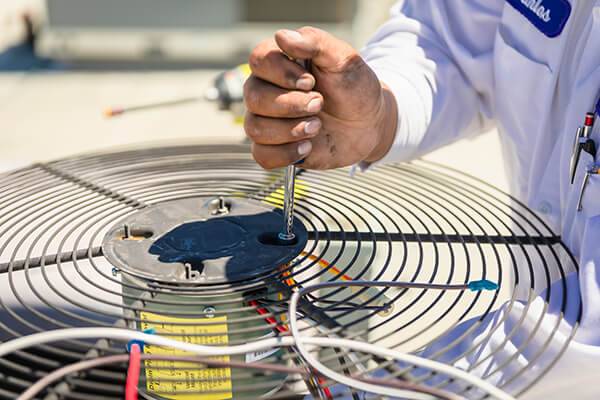
2026 Federal Tax Credits for AC and Heat Pump Systems
The Inflation Reduction Act created generous tax credits for energy-efficient HVAC equipment, and these credits remain available through 2032. Understanding the details can save you thousands of dollars.
Central AC (Non-Heat-Pump): Up to $600
Qualifying central air conditioning systems are eligible for a tax credit of up to $600. To qualify, the system must meet the Consortium for Energy Efficiency (CEE) highest efficiency tier, which typically requires 16+ SEER2 for split systems — you can verify specific models on the ENERGY STAR certified product finder. Budget-tier 14.3 SEER2 systems do not qualify. This credit is per tax year, so if you replace one system in 2026, you can claim up to $600 on your 2026 tax return.
Heat Pumps: Up to $2,000
This is the significant incentive. Qualifying heat pump systems are eligible for a tax credit of up to $2,000 per year. The system must meet CEE highest efficiency tier requirements. This $2,000 credit is separate from and in addition to other energy efficiency credits, meaning it does not share the $1,200 annual cap that applies to other home improvement credits like insulation and windows.
For Las Vegas homeowners, this creates a compelling financial case for choosing a heat pump over a standard AC system. The $1,400 difference between a $600 AC credit and a $2,000 heat pump credit can offset most or all of the price premium for choosing a heat pump. And since Las Vegas heating needs are minimal, a heat pump handles winter efficiently without the need for a separate furnace.
Requirements to Qualify
- Primary residence: The system must be installed in your primary home (not rental properties, second homes, or new construction)
- Placed in service in 2026: The system must be installed and operational during the 2026 tax year
- Efficiency requirements: Must meet CEE highest efficiency tier at time of purchase
- Claimed on your tax return: You must have sufficient tax liability to use the credit (it is non-refundable, meaning it can reduce your tax to zero but not generate a refund)
How to Claim the Credit
File IRS Form 5695 (Residential Energy Credits) with your annual tax return. Keep three documents: your contractor invoice showing the system model and installation date, the manufacturer's certification statement confirming the system meets efficiency requirements, and the AHRI certificate showing the matched system ratings (which you can look up on the AHRI Directory). Your contractor should provide these. If they do not offer them proactively, ask.
Important distinction: A tax credit is a dollar-for-dollar reduction of the tax you owe. If you owe $5,000 in federal taxes and claim a $2,000 heat pump credit, you pay $3,000. This is far more valuable than a tax deduction, which only reduces your taxable income.
NV Energy Rebates and Local Incentives
In addition to federal tax credits, NV Energy offers rebates for high-efficiency cooling equipment installed in their service territory, which covers the entire Las Vegas valley.
Current NV Energy Rebate Structure
NV Energy's residential rebate program typically offers $200-$800 for qualifying high-efficiency air conditioning and heat pump installations. Rebate amounts vary based on the efficiency level of the installed equipment, with higher-efficiency systems earning larger rebates. Program details and amounts can change annually, so verify current offerings through the NV Energy PowerShift program or ask your contractor for the latest rebate schedule before purchasing.
Stacking Incentives
Federal tax credits and NV Energy rebates can be combined. There is no rule preventing you from claiming both. For a qualifying heat pump installation, the math can look like this:
- System installed cost: $15,000
- Federal tax credit: -$2,000
- NV Energy rebate: -$400 to -$800
- Effective cost: $12,200 - $12,600
That is a potential savings of $2,400-$2,800, which can cover the price difference between a standard efficiency system and a premium one. Ask your contractor to help you identify all available rebates and credits before making your final decision.
Financing Options for AC Replacement
A new air conditioning system is a significant investment, and most homeowners benefit from understanding their financing options before committing to a purchase.
Manufacturer Financing
Most major manufacturers offer promotional financing through their dealer networks. Lennox, for example, offers 0% interest for qualified buyers on select systems with approved credit. These promotions typically run for 12-72 months depending on the program and equipment selected. As a Lennox Premier Dealer, The Cooling Company can walk you through current Lennox financing offers.
HVAC Company Financing
Many HVAC companies partner with third-party lenders to offer in-house financing. Terms and rates vary widely, so read the fine print. Look for the total cost of financing (not just the monthly payment), any deferred interest traps (where 0% interest retroactively applies if the balance is not paid in full by the end of the promotional period), and early payoff penalties.
Home Equity Options
Home equity loans and HELOCs (Home Equity Lines of Credit) often offer the lowest interest rates because they are secured by your home. If you have significant equity, these can provide rates substantially below personal loans or credit cards. The downside is a longer approval process and the risk of using your home as collateral.
Personal Loans
Unsecured personal loans from banks, credit unions, or online lenders are another option. Rates depend on your credit score and range from 6% to 36%. The advantage is speed and simplicity. The disadvantage is typically higher interest rates than home equity options.
What Monthly Payments Look Like
To give you a sense of the monthly commitment at different system tiers (assuming 60-month financing at typical rates):
- Budget system ($5,000-$7,000): $90-$135/month at 0% promotional, or $95-$145/month at 7.9% APR
- Mid-range system ($8,000-$12,000): $135-$200/month at 0% promotional, or $160-$245/month at 7.9% APR
- Premium system ($13,000-$18,000): $215-$300/month at 0% promotional, or $260-$365/month at 7.9% APR
- Ultra-premium system ($19,000-$25,000): $315-$415/month at 0% promotional, or $380-$510/month at 7.9% APR
Factor in the tax credit and rebate when evaluating affordability. A $15,000 heat pump with a $2,000 tax credit and $500 rebate has an effective cost of $12,500. If you apply the tax credit refund toward the loan balance, your effective monthly payment drops further. For a thorough walkthrough of every financing pathway — including options for homeowners with limited credit history — see our AC replacement financing guide for every credit score.
Red Flags in Contractor Quotes
The HVAC industry, like any home services industry, has both excellent and questionable operators. Knowing what to watch for protects you from overpaying, getting undersized or oversized equipment, or ending up with a poor installation that causes years of problems.
No Manual J Load Calculation
If a contractor sizes your system based on square footage alone, by matching the tonnage of your old system, or by any method other than a proper load calculation, that is the single biggest red flag. Oversized systems short-cycle (turn on and off rapidly), fail to dehumidify, wear out faster, and waste energy. Undersized systems run constantly without reaching the set temperature on the hottest days. Either mistake costs you money every month the system operates.
Oversizing the System
Some contractors deliberately oversize because it seems like more value ("bigger is better") and reduces callback risk on the hottest days. In reality, an oversized system in Las Vegas creates temperature swings, increased wear on the compressor, and higher energy bills. A correctly sized system should run nearly continuously on a 115-degree design day. That is by design, not a sign of a problem.
No Mention of Commissioning
If the quote does not include system commissioning, refrigerant charge verification, airflow measurement, or static pressure testing, the company is planning to install the equipment and walk away without verifying it works correctly. This is like buying a car without the dealer ever test-driving it.
Suspiciously Low Bids
If one quote is 30-50% lower than the others, investigate why. Common cost-cutting shortcuts include using thinner copper line sets, skipping the nitrogen purge during brazing, reusing old line sets or disconnects, undersizing ductwork, skipping permits, and using subcontractors with less training. These shortcuts may not be visible on installation day but will show up as higher energy bills, premature equipment failure, and voided warranties.
No Permit
Clark County requires permits for HVAC replacement. A permit ensures the installation is inspected by a third party and meets code requirements. Companies that skip permits are either unlicensed, cutting corners, or both. Always verify that your contractor pulls a permit and that you receive the inspection sign-off.
High-Pressure Sales Tactics
Phrases like "this price is only good today," "we have one unit left at this price," or "if you sign now I can take another $500 off" are manipulation tactics. Reputable companies provide written quotes that are valid for a reasonable period (typically 30 days). If a contractor pressures you to sign immediately, they are counting on you not comparing their quote to competitors. Our guide to avoiding HVAC scams in Las Vegas covers the full playbook of red flags, and our breakdown of what a good HVAC quote includes gives you a checklist to hold every bidder accountable.
No Written Warranty Terms
Your quote should clearly state what is covered, for how long, and by whom. Manufacturer warranties (typically 5-10 years on parts, sometimes limited lifetime on compressors and heat exchangers) are separate from labor warranties provided by the installing contractor. Get both in writing. If the contractor's labor warranty is less than one year, or if they cannot provide warranty terms in writing, look elsewhere.
No References or Reviews
A company that cannot provide customer references or has few online reviews may be new, inexperienced, or operating under a new name after problems with a previous business. Check Google, Yelp, and the Better Business Bureau. Look for patterns in reviews, not just the overall rating.
What Proper Installation Looks Like
Installation quality determines how well your system performs, how long it lasts, and how much it costs to operate. The difference between a mediocre installation and a proper one can be 15-30% of your system's efficiency, meaning a 20 SEER2 system installed poorly might actually perform like a 14-17 SEER2 system in practice.
The Three Manuals
Professional HVAC design follows ACCA (Air Conditioning Contractors of America) standards:
- Manual J: Heating and cooling load calculation. Determines how many BTUs your home needs.
- Manual S: Equipment selection. Matches specific equipment models to the calculated load.
- Manual D: Duct design. Sizes ductwork to deliver the correct airflow to each room.
Most residential contractors perform Manual J (or should). Fewer perform Manual S and Manual D formally, though experienced contractors often account for these factors through experience. If your ductwork is being modified or replaced, Manual D calculations prevent airflow problems.
Brazing vs. Flare Fittings
Refrigerant line connections should be brazed (soldered at high temperature) with a nitrogen purge flowing through the lines during the brazing process. The nitrogen prevents oxidation (scale) from forming inside the lines, which can clog the system's metering device and reduce efficiency. Flare fittings are acceptable for some connections but are more prone to leaks over time. Brazing with nitrogen purge is the gold standard.
Proper Refrigerant Charge
The correct amount of refrigerant must be measured, not estimated. Technicians use superheat and subcooling measurements to verify the charge is within the manufacturer's specifications. A system that is 10% undercharged loses approximately 20% of its capacity and efficiency. A system that is overcharged can damage the compressor. "Topping it off" without measuring is not acceptable practice.
Static Pressure Testing
Ductwork should not exceed 0.5 inches of water column (WC) total external static pressure. Higher pressure means the ductwork is too restrictive, forcing the blower to work harder, reducing airflow, and increasing energy consumption. Many Las Vegas homes with original builder-grade ductwork have static pressures well above this threshold, especially after years of accumulated dust and degradation. A good installer will measure and address ductwork issues during replacement.
Commissioning Checklist
After installation, a proper commissioning process includes:
- Airflow measurement at the air handler (CFM per ton)
- Superheat and subcooling readings to verify refrigerant charge
- Supply and return air temperature split (typically 15-22 degrees F for AC)
- Static pressure at the air handler
- Amp draw on compressor and blower motor versus nameplate ratings
- Thermostat calibration and programming
- Visual inspection of all connections, drainage, and clearances
- Customer walkthrough explaining filter location, thermostat operation, and maintenance schedule
Permits and Inspections
In Clark County (which covers Las Vegas, Henderson, and North Las Vegas), HVAC replacement requires a mechanical permit and a subsequent inspection. The inspector verifies that the installation meets code requirements including proper clearances, electrical connections, condensate drainage, and equipment ratings. Never let a contractor tell you a permit is not needed for a replacement. It is required, and skipping it can create problems if you sell your home or file an insurance claim.
Installation Quality Matters More Than Brand
This is worth emphasizing: a mid-range system installed correctly will outperform a premium system installed poorly. Industry studies consistently show that installation quality accounts for more performance variation than equipment brand or model. A perfectly sized, properly charged, correctly ducted 17 SEER2 system will cool your home more efficiently and last longer than a 24 SEER2 system that is oversized, undercharged, and connected to restrictive ductwork. Invest in a good installer first, then choose the best equipment your budget allows. For more on what professional installation involves, see our residential HVAC guide.
Expected Costs by System Type and Tier
The following pricing reflects the Las Vegas market in 2026 and includes equipment, installation labor, permits, standard thermostat, and basic ductwork connections. Prices do not include major ductwork modifications, electrical panel upgrades, or structural changes, which are quoted separately based on scope.
| System Type | Budget (14-15 SEER2) | Mid-Range (16-18 SEER2) | Premium (19-24 SEER2) | Ultra-Premium (25+ SEER2) |
|---|---|---|---|---|
| Central Split (AC only) | $4,500 - $6,500 | $7,000 - $10,000 | $11,000 - $16,000 | $17,000 - $22,000+ |
| Heat Pump | $5,500 - $8,000 | $8,500 - $12,000 | $13,000 - $18,000 | $19,000 - $25,000+ |
| Packaged Unit | $5,000 - $7,500 | $8,000 - $11,000 | $12,000 - $16,000 | -- |
| Ductless Mini-Split (per zone) | $3,000 - $4,500 | $4,500 - $6,500 | $7,000 - $9,000 | -- |
Notes on pricing: These ranges are broad because they account for different tonnage sizes (2-5 ton), brand price tiers, and installation complexity. A simple like-for-like replacement with good ductwork and easy access falls toward the lower end. Complex installations involving ductwork modifications, attic work, structural supports, or electrical upgrades land toward the higher end. Always get itemized quotes so you can compare specific costs, not just bottom-line totals.
For detailed Lennox-specific pricing, see our Lennox system pricing guide. For a broader cost overview, our HVAC system cost breakdown covers additional factors that affect your final price. If you are narrowing your brand shortlist, our Carrier systems guide and Trane systems guide provide model-by-model analysis with Las Vegas performance data for each manufacturer's full lineup.
Las Vegas-Specific Sizing and Installation Considerations
Las Vegas is not a typical market for HVAC. The extreme heat, low humidity, intense sun exposure, and specific building practices in the valley create unique challenges that affect system sizing, equipment selection, and installation quality. Any contractor working in Las Vegas should account for all of the following factors.
Design Day Temperature
The design day temperature for Las Vegas is 115 degrees F, based on ASHRAE 0.4% design conditions. Some engineers use 117 degrees F to provide an additional safety margin. This means your system must be sized to maintain your desired indoor temperature when it is 115 degrees F outside. The AHRI standard rating condition of 95 degrees F significantly underestimates the demand placed on equipment in the desert. A system rated at 5 tons of capacity at 95 degrees F will deliver meaningfully less capacity at 115 degrees F due to the reduced temperature differential between the refrigerant and the outdoor air.
Attic Equipment Heat Gain
Many Las Vegas homes have their air handler installed in the attic. During summer, attic temperatures can reach 140-160 degrees F. An air handler operating in this environment absorbs heat through its cabinet, warming the cooled air before it reaches your rooms. A proper load calculation adds 10-15% capacity to account for this heat gain. If your air handler is in the attic and your contractor does not account for this, your system will underperform on the hottest days.
Duct Losses in Attic Installations
Ductwork running through a 150-degree attic is fighting physics. Even with R-8 insulation (the most common duct insulation in Las Vegas), attic ducts can lose 20-30% of their cooling before it reaches the registers. Poorly sealed duct connections make this worse. During replacement, have your contractor inspect duct insulation and sealing. Upgrading to R-8 insulation (if currently lower) and sealing all joints with mastic can improve system performance by 15-20% without changing a single piece of equipment. Our guide to replacing ductwork with a new AC covers when duct replacement makes sense versus when sealing and insulating is sufficient.
Orientation and Sun Exposure
West-facing walls and windows in Las Vegas absorb intense afternoon sun during the hottest part of the day. Rooms on the west side of your home will require more cooling capacity than east-facing rooms of the same size. A proper Manual J calculation accounts for window orientation, shading (or lack thereof), and wall construction. If you have large west-facing windows without shade, consider adding window film or exterior shading in addition to your new AC system for the best results.
Pool Equipment Proximity
Las Vegas has one of the highest rates of residential pool ownership in the country. If your pool equipment (especially the heat pump or gas heater) is located near your AC's outdoor condenser, the hot exhaust from the pool heater can be drawn into the condenser, reducing its efficiency. During installation, ensure adequate clearance between the outdoor unit and any heat-generating equipment. Minimum recommended distance is typically 10 feet, though more is better.
For a broader look at what extreme heat demands from an AC system, see our guide on the best air conditioners for extreme heat in Las Vegas.
When to Replace vs. When to Repair
Not every AC problem requires a full replacement. Here are the guidelines that help you make an honest assessment.
Consider Replacement When:
- Age: Your system is 12-15+ years old and experiencing problems. Most AC systems in Las Vegas last 12-18 years due to the extreme operating conditions.
- Repair cost exceeds 50% of replacement: If a major repair (compressor, coil, multiple components) costs more than half what a new system would cost, replacement is usually the better investment.
- R-22 refrigerant: If your system uses R-22 (Freon), which was phased out in 2020, refrigerant costs for service are extremely high ($100-$200+ per pound) and rising. Replacement makes financial sense.
- Frequent repairs: If you have spent more than $1,500-$2,000 on repairs in the past two years, the system is telling you something.
- Rising energy bills: If your NV Energy bills are climbing despite similar usage patterns, declining system efficiency may be the cause.
- Comfort problems: Uneven temperatures, humidity issues, excessive noise, or inability to maintain setpoint on hot days.
Repair May Be Sufficient When:
- The system is under 10 years old with a single, defined problem
- The repair cost is under $1,000 and the system has been reliable
- The issue is a component like a capacitor, contactor, or fan motor rather than a compressor or coil
- The system still meets your comfort needs and energy efficiency expectations
For help diagnosing current problems, our AC repair page covers common issues and our Lennox repair guide addresses brand-specific concerns.
Maintenance: Protecting Your Investment
A new AC system is a major investment, and proper maintenance is essential to achieving its full lifespan and rated efficiency. In Las Vegas, where systems work harder than nearly anywhere else in the country, maintenance is not optional.
- Filter changes: Every 30-90 days depending on filter type, pets, and dust levels. Las Vegas dust and construction activity clog filters faster than average.
- Professional maintenance: Twice per year (spring for cooling, fall for heating). Includes refrigerant check, coil cleaning, electrical inspection, and airflow verification.
- Condenser cleaning: The outdoor unit collects dust, debris, and cottonwood fluff. Keep 2 feet of clearance around the unit and rinse the coils with a hose monthly during peak season.
- Duct inspection: Every 3-5 years, have ducts inspected for leaks, disconnections, and insulation degradation, especially in attic installations.
Neglecting maintenance can reduce system efficiency by 5-15% per year and shorten lifespan by 3-5 years. Most manufacturer warranties require proof of regular maintenance to remain valid. For more on what maintenance involves, see our HVAC maintenance page.
Frequently Asked Questions
How much does it cost to replace an air conditioner in Las Vegas in 2026?
Full system installed costs in Las Vegas range from $4,500-$7,000 for budget brands (Goodman, Amana, Payne) to $17,000-$25,000+ for ultra-premium systems (Lennox SL28XCV, Carrier Infinity 26). These prices include the outdoor condenser, indoor coil, labor, refrigerant, thermostat, and standard accessories. Ductwork modifications, electrical upgrades, and permit fees can add $1,000-$5,000. Federal tax credits up to $2,000 for heat pumps and NV Energy rebates of $200-$800 can reduce your effective cost significantly.
Should I buy an R-410A or R-454B system in 2026?
If given the choice, we recommend R-454B for new installations. It is the industry's future, and choosing it now means your system will not face potential supply tightening as R-410A production declines. That said, R-410A systems from existing inventory are often $500-$1,500 cheaper, and R-410A refrigerant will remain available for service for decades. If budget is your primary concern and you plan to replace again in 10-12 years, R-410A is a reasonable choice.
What SEER2 rating should I choose for Las Vegas?
At minimum, 14.3 SEER2 is required in the Southwest. For Las Vegas, we recommend 17+ SEER2 as the sweet spot for budget-conscious buyers — the annual savings of $200-$250 over the minimum pay back the upgrade in 6-12 years. For maximum efficiency and comfort, 20+ SEER2 variable-speed systems deliver the best long-term value in our extreme climate. In Las Vegas, higher-efficiency systems pay back 2-3x faster than in moderate climates because your system runs 2,500-3,500 hours per year.
How do I qualify for the $2,000 federal heat pump tax credit?
Install a qualifying heat pump system in your primary residence that meets the Consortium for Energy Efficiency (CEE) highest efficiency tier. The system must be installed and operational during the 2026 tax year. File IRS Form 5695 with your tax return, keeping your contractor invoice, manufacturer certification statement, and AHRI certificate. The $2,000 credit is a dollar-for-dollar tax reduction — not a deduction — and is separate from the $1,200 annual cap on other home improvement credits.
What is the most important thing to look for in an AC installer?
A proper Manual J load calculation. If a contractor sizes your system based on square footage alone, by matching your old system's tonnage, or without visiting your home, find a different contractor. In Las Vegas, where the design day temperature is 115 degrees F, correct sizing is critical. Also insist on documented commissioning (superheat, subcooling, and airflow measurements) after installation. A properly installed mid-range system will outperform a poorly installed premium system every time.
Is a heat pump or standard AC better for Las Vegas?
For most Las Vegas homeowners, a heat pump is the smarter choice in 2026. Las Vegas heating needs are minimal (20-30 cold nights per year), and a heat pump handles both cooling and heating from a single system. The financial case is strong: heat pumps qualify for up to $2,000 in federal tax credits versus $600 for standard AC systems. That $1,400 difference often covers the price premium for choosing a heat pump. The main exception is homes with existing gas furnaces in good condition where the homeowner prefers gas heat.
Ready to Replace Your AC? Get a Free Quote
The Cooling Company performs Manual J load calculations on every installation — no guesswork, no oversizing, no undersizing. As a Lennox Premier Dealer, we carry systems from budget-friendly to ultra-premium across multiple brands, and our pricing is transparent and upfront. Every installation includes full commissioning with documented superheat, subcooling, and airflow measurements.
We will also help you navigate tax credits, NV Energy rebates, and financing options so you understand the true cost before you commit. For Lennox-specific options, see our Lennox replacement guide.
Call (702) 567-0707 or visit AC installation for a free in-home quote.
Related Brand Guides
- AC Brand Hub — Compare all major HVAC brands we install and service
- Brand Comparison Tool — Side-by-side matchups to simplify your decision
- Lennox Pricing Guide — Detailed installed costs for every Lennox tier
- Carrier AC Systems — Full Infinity, Performance, and Comfort lineup
- Goodman Pricing Guide — Budget-friendly options with Daikin engineering
Need HVAC Service in Las Vegas?
The Cooling Company provides expert HVAC service throughout Las Vegas, Henderson, and North Las Vegas. Our licensed technicians deliver honest assessments, upfront pricing, and reliable results.
Call (702) 567-0707 or visit HVAC services, HVAC maintenance, heating, or AC repair for details.