

Ductless Mini-Splits in Las Vegas: The Complete Guide for Homeowners
Short answer: Ductless mini-split systems are ideal for Las Vegas homes that need cooling in spaces without ductwork — converted garages, casitas, ADUs, additions, and problem rooms that never get comfortable. A single-zone system typically costs $3,000-5,500 installed, and multi-zone setups run $6,000-14,000 depending on the number of indoor units. Modern mini-splits rated for 115°F+ operation deliver 20-30% energy savings over central systems by eliminating duct losses and providing zone-by-zone control. For Las Vegas homeowners, the most common use case is garage cooling, followed by casita/ADU conditioning and fixing hot rooms in two-story homes.
Ready to explore mini-split options? Visit our ductless mini-split service page or call (702) 567-0707 for a free estimate.
What a Mini-Split Actually Is (and How It Works)
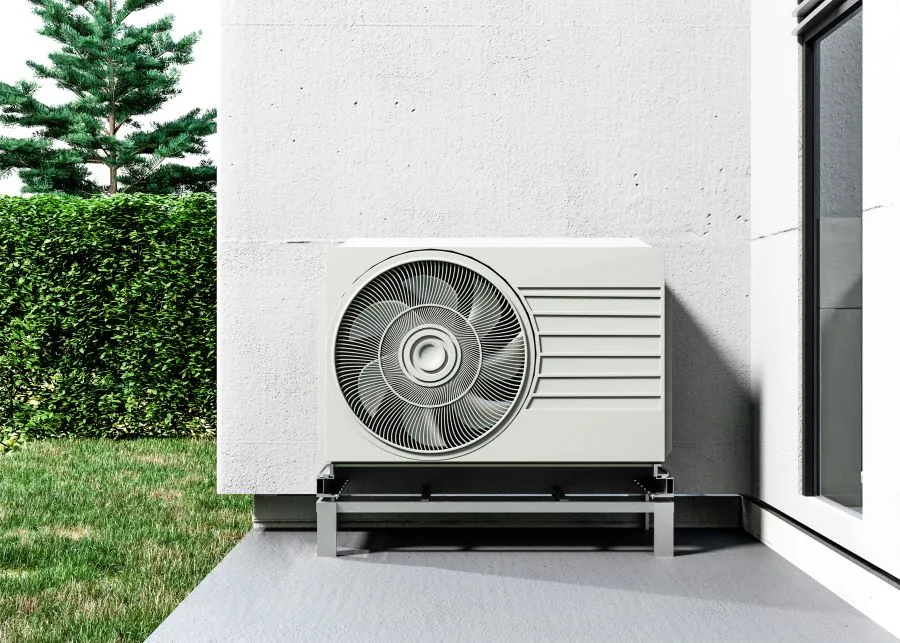
A mini-split is a split air conditioning system — meaning it has an outdoor unit and an indoor unit connected by refrigerant lines — that does not require ductwork. The "mini" part refers to the smaller size of the outdoor condenser compared to a traditional central AC system.
The indoor unit (called a head or air handler) mounts on a wall, ceiling, or floor and blows conditioned air directly into the room. The outdoor unit (the condenser/compressor) sits outside, typically on a concrete pad or wall bracket. The two are connected by a small bundle of refrigerant lines, a condensate drain, and control wiring that passes through a 3-inch hole in the wall. That is the entire installation footprint.
Modern mini-splits use inverter-driven compressors, which is the technology that makes them so efficient. Instead of cycling on at full blast and then shutting off completely (like a traditional AC), an inverter compressor adjusts its speed continuously to match the cooling demand. Think of it as the difference between a light switch and a dimmer — the dimmer uses only the energy needed for the brightness you want. This variable-speed operation is why mini-splits achieve SEER2 ratings of 20-42, compared to 14-21 for most central systems.
Most mini-splits are also heat pumps, meaning they reverse the refrigerant cycle to provide heating in winter. In Las Vegas, where winter lows occasionally dip into the 20s-30s, this dual function eliminates the need for a separate heating source in the conditioned space.
Single-Zone vs. Multi-Zone: Which Setup Do You Need?
This is the first decision point, and it is straightforward.
Single-zone means one outdoor unit connected to one indoor unit. You are conditioning one room. This is the most common setup for garage conversions, single casitas, home offices, and additions. It is the most cost-effective option when you only need to address one space.
Multi-zone means one outdoor unit connected to two, three, four, or even five indoor units. Each indoor unit is independently controlled — bedroom at 72, office at 68, guest room off entirely. The outdoor unit modulates its capacity to match the combined demand.
| Configuration | Typical Cost (Installed) | Best For |
|---|---|---|
| Single-zone (9,000-12,000 BTU) | $3,000-4,200 | Single bedroom, home office, small addition |
| Single-zone (18,000-24,000 BTU) | $4,000-5,500 | Garage, large room, casita |
| Dual-zone (2 indoor units) | $6,000-8,500 | ADU with bedroom + living area |
| Tri-zone (3 indoor units) | $8,500-11,000 | Pool house, multi-room addition |
| Quad-zone (4 indoor units) | $10,000-14,000 | Whole-home replacement, large ADU |
A word of caution on multi-zone systems: each additional indoor unit adds complexity, cost, and potential failure points. If you only need cooling in one room, a single-zone is simpler, cheaper, and more efficient. Do not over-buy.
Indoor Unit Types: Wall, Ceiling, and Floor
The indoor unit style affects aesthetics, airflow distribution, and cost. Here is what each option looks like in practice.
Wall-Mount Units
The most common type by far. Mounts high on the wall (typically 7-8 feet up), blows air outward and downward. These are the most affordable and easiest to install. The main drawback: they are visible. They look like a sleek white rectangle, about 32 inches wide and 12 inches tall. In a garage or utility space, nobody cares. In a living room with carefully curated decor, some homeowners find them intrusive.
Ceiling Cassette Units
Recessed into the ceiling, with only a flat grille visible from below. These distribute air in four directions, which creates more even temperatures in larger rooms. They cost $500-1,200 more than wall-mounts and require ceiling access for installation (typically a dropped ceiling or attic space above). Popular in casitas and pool houses where aesthetics matter and ceiling access is available.
Floor-Mount Units
Sits against the wall near the floor, similar to a baseboard heater in appearance. These work well in rooms with large windows or limited wall space, and they are excellent for heating because warm air rises naturally from the low discharge point. Less common in Las Vegas because cooling is the primary need, and high-mounted units distribute cool air more effectively (cold air sinks).
Concealed Duct Units
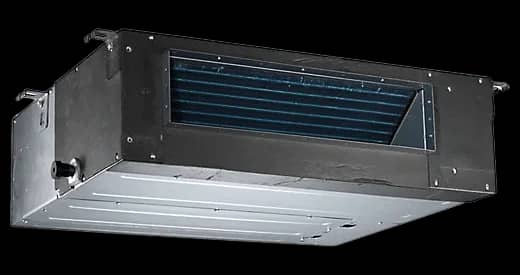
A slim air handler that hides inside a ceiling cavity or closet and connects to short duct runs. This is the option for homeowners who want the efficiency of a mini-split with zero visible indoor equipment. Costs $800-1,500 more than wall-mounts and requires more installation work, but the result is invisible — just standard supply grilles in the ceiling. This option works particularly well for remodels where appearance is critical.
How Mini-Splits Handle Las Vegas Extremes
This is the question every Las Vegas homeowner asks, and the answer has changed dramatically in the past decade.
Older mini-splits had a maximum operating temperature of around 104-110 degrees F. In a city that hits 115+ degrees multiple times every summer, that was a problem. The compressor would throttle back or shut down entirely during the hottest hours — exactly when you needed it most.
Current-generation mini-splits from major manufacturers are rated to operate at outdoor temperatures of 115-122 degrees F in cooling mode. Mitsubishi's M-Series and P-Series are rated to 115 degrees F. Daikin's FIT and Aurora lines handle up to 122 degrees F. Fujitsu's Halcyon line is rated to 115 degrees F. LG's Art Cool and standard wall-mounts operate to 118 degrees F.
At the extreme upper end of Las Vegas heat (115-120 degrees F, which happens a handful of days per year), even properly rated units experience some capacity reduction — typically 5-15%. This means a unit that delivers 18,000 BTU at 95 degrees might deliver 15,500-17,000 BTU at 118 degrees. A competent installer accounts for this by selecting a unit with enough headroom to handle peak conditions without struggling.
The critical factor in Las Vegas is not just the air temperature — it is the radiant heat load. Concrete block walls, tile roofs, and asphalt driveways absorb solar radiation all day and re-radiate it. A garage with a south-facing wall that has been baking in direct sun since noon has a much higher cooling load than the air temperature alone would suggest. This is why Manual J load calculations matter so much here — generic rules of thumb from moderate climates undersize systems for Las Vegas conditions.
The Garage Cooling Breakthrough
Garage cooling is the number one reason Las Vegas homeowners call about mini-splits, and it is not close. The combination of no existing ductwork, extreme heat loads, and growing use of garages as functional living spaces creates a problem that only a mini-split solves well.
Here is why the alternatives fall short:
| Cooling Method | Upfront Cost | Monthly Operating Cost (Summer) | Effective Temp Drop | Drawbacks in Las Vegas |
|---|---|---|---|---|
| Portable AC (14,000 BTU) | $400-700 | $80-120 | 8-15 degrees F | Dehumidification adds heat back, exhaust hose radiates heat, struggles above 110F |
| Window unit (large) | $300-600 | $60-100 | 10-20 degrees F | Requires window or wall cutout, noisy, poor efficiency, security concern |
| Evaporative cooler | $200-500 | $20-40 | 15-25 degrees F (dry days only) | Useless during monsoon humidity, adds moisture to enclosed space, rust risk for tools |
| Extend existing ductwork | $2,500-6,000 | $40-70 (added load) | 20-30 degrees F | Existing system may be undersized for added load, long duct runs lose efficiency, may void warranty |
| Ductless mini-split | $3,500-5,500 | $35-55 | 35-50+ degrees F | Higher upfront cost, requires professional installation |
The mini-split wins on effective cooling, operating cost, and reliability. The only category where it loses is upfront cost, but the math reverses within 2-3 years when you factor in energy savings and the fact that portable units typically last 3-5 years while mini-splits last 15-20.
A few garage-specific installation notes that matter in Las Vegas:
- Insulate the garage door. An uninsulated single-panel steel door turns the garage into an oven. Even a DIY insulation kit ($100-200) reduces the cooling load by 15-25%. A proper insulated door ($800-1,500 installed) can cut it by 40%+.
- Seal the weather stripping. Gaps around the garage door frame, the door to the house, and any utility penetrations bleed conditioned air. Spending $50-100 on weather stripping can reduce runtime by 10-15%.
- Consider the outdoor unit location. The condenser should not sit on the west or south side of the garage where it bakes in direct afternoon sun. A shaded north or east location improves efficiency by 3-5%. If shade is unavailable, a condenser shade structure (not blocking airflow) helps.
For a deep dive into garage cooling specifically, see our mini-split for garage guide.
Casitas, ADUs, and Pool Houses
The ADU (accessory dwelling unit) boom in Las Vegas has created massive demand for mini-split systems. Clark County updated its ADU ordinances to allow more homeowners to build backyard units, and every one of them needs cooling. Running ductwork from the main house to a detached structure is expensive, impractical, and usually violates code. A mini-split is the standard solution.
For a typical 400-600 square foot casita or ADU, a dual-zone system (one unit in the living/kitchen area, one in the bedroom) provides comfortable, independently controlled cooling for $6,000-8,500 installed. Single-zone systems work for studio-style ADUs under 400 square feet at $3,500-5,000.
Pool houses are similar but have unique considerations: higher humidity from pool proximity, frequent door opening, and often large glass areas facing the pool. Size up by 15-20% compared to an enclosed room of the same square footage.
Brand Comparison for Desert Performance
Not all mini-splits are built equal, and desert conditions expose the differences. Here is how the major brands stack up for Las Vegas installations based on our experience with thousands of units in the field.
| Brand | Max Operating Temp | SEER2 Range | Warranty (Compressor) | Desert Reliability | Price Range (Single-Zone Installed) |
|---|---|---|---|---|---|
| Mitsubishi (M-Series) | 115 degrees F | 17-33 | 7 years (12 with registration) | Excellent — gold standard for desert climates | $3,800-5,500 |
| Daikin (FIT / Aurora) | 122 degrees F | 17-30 | 12 years | Excellent — highest max temp rating, strong parts network | $3,500-5,200 |
| Fujitsu (Halcyon) | 115 degrees F | 16-33 | 7 years (10 with registration) | Very good — reliable, slightly less local parts availability | $3,200-4,800 |
| LG (Art Cool / Standard) | 118 degrees F | 17-28 | 7 years (10 with registration) | Good — competitive pricing, solid performance | $3,000-4,500 |
Our recommendation for Las Vegas: Mitsubishi and Daikin lead the pack. Mitsubishi's inverter technology is the most refined, with the smoothest compressor modulation and the quietest operation. Daikin offers the highest maximum operating temperature and strong warranty coverage. Fujitsu and LG are solid mid-tier choices that perform well for budget-conscious homeowners.
One factor that matters more than brand: the installer. A premium Mitsubishi unit installed poorly will underperform a mid-tier LG unit installed correctly. Refrigerant charge, line set routing, electrical connections, and drainage all affect performance and longevity. More on that below.
Energy Savings Math for Las Vegas
Mini-split efficiency gains come from two sources: eliminating duct losses and enabling zone control.
Duct Loss Elimination
In a typical Las Vegas home, the ductwork runs through the attic. During summer, attic temperatures reach 150-160 degrees F. Even well-insulated ducts (R-8) lose 15-25% of their cooling capacity to the attic before the air reaches the room. Poorly insulated or leaky ducts (common in homes built before 2000) can lose 30-40%.
A mini-split delivers conditioned air directly into the room with zero duct loss. For a space that would otherwise require a duct run through a 155-degree attic, the mini-split delivers 100% of its rated capacity to where you need it.
Zone Control Savings
Central AC systems cool the entire house to the same temperature, regardless of which rooms are occupied. A mini-split only cools the room it serves, and only when you want it cooled. If you add a mini-split to a garage workshop and only use the workshop 20 hours per week, you are paying for cooling only during those 20 hours — not 168.
Real Numbers
A typical 18,000 BTU mini-split with a SEER2 of 20, running 8 hours per day during Las Vegas summer months (June-September), consumes approximately 720 kWh per month. At NV Energy's average residential rate of $0.12-0.14/kWh, that is $86-101 per month. A comparable window unit or portable AC doing the same job (at SEER2 of 9-12) would consume 1,200-1,600 kWh, costing $144-224 per month.
Annual savings: $400-700. Payback on the cost difference between a mini-split and a portable/window unit: 4-6 years, after which the mini-split saves money for the remaining 10-15 years of its life.
For help estimating your specific situation, try our energy savings calculator.
Maintenance in Dusty Desert Conditions
Las Vegas dust is the enemy of mini-split efficiency. The fine alkaline desert dust — combined with construction dust from the constant development around the valley — clogs filters and coats coils faster than in most climates. A mini-split filter that lasts 90 days in Portland lasts 30-45 days in Las Vegas.
Here is the maintenance schedule we recommend for Las Vegas mini-split owners:
- Every 2-4 weeks (summer): Clean or replace the air filter. Most mini-split filters are washable — pull them out, rinse under warm water, let dry completely, reinstall. Takes five minutes.
- Every 3-4 months: Inspect the outdoor unit. Clear any debris, vegetation, or dust buildup around the condenser coils. Ensure at least 24 inches of clearance on all sides.
- Annually (spring, before summer): Professional maintenance. A technician cleans the indoor coil, checks refrigerant charge, inspects electrical connections, clears the condensate drain, and verifies airflow. This service typically costs $125-175 per indoor unit.
- Every 2-3 years: Deep cleaning of the indoor unit. This involves removing the unit from the wall, chemically cleaning the coil and blower wheel, and flushing the drain pan. Desert dust creates a biofilm on indoor coils that reduces efficiency by 10-20% if left unchecked. This service runs $200-300.
Neglecting maintenance in Las Vegas conditions will cut a mini-split's lifespan from 15-20 years down to 8-12. Dirty coils force the compressor to work harder, increasing energy consumption by 15-30% and accelerating wear on the most expensive component in the system.
Learn more about keeping your system running efficiently on our AC maintenance page.
Red Flags When Hiring a Mini-Split Installer
The mini-split market has attracted a wave of installers who range from excellent to dangerously unqualified. Here is what to watch for:
- No Manual J load calculation. If the installer sizes the unit by "eyeballing" the room or using a square-footage-only formula, walk away. Undersized units cannot keep up with Las Vegas peak heat. Oversized units short-cycle, waste energy, and fail to dehumidify (relevant during monsoon season).
- No EPA 608 certification. Federal law requires anyone handling refrigerant to hold EPA Section 608 certification. Ask to see it.
- No Clark County permit pull. Mini-split installations in Clark County require an HVAC mechanical permit. Skipping the permit saves the installer time and money but leaves you with an uninspected installation, potential code violations, and home insurance complications.
- Pre-charged line sets with flare fittings. Some budget installers use pre-charged line sets with flare connections instead of properly brazed copper lines. Flare fittings in Las Vegas conditions — with extreme thermal cycling between 115-degree days and 35-degree winter nights — are leak-prone. Brazed connections cost more in labor but last the life of the system.
- Outdoor unit placed in full afternoon sun. A condenser baking on a west-facing wall in July is working 5-10% harder than necessary. A competent installer considers unit placement as part of the design.
- No vacuum and pressure test. After connecting the line set, the installer must pull a deep vacuum (below 500 microns) and hold it to verify there are no leaks or moisture in the system. Skipping this step causes premature compressor failure from moisture contamination. If you do not see them connect a vacuum pump and micron gauge, ask why.
A properly installed mini-split should run quietly, cool effectively on the hottest days, and last 15-20 years with routine maintenance. A poorly installed one will leak refrigerant within 2-3 years, develop drainage problems, and cost more in repairs than it saved on the initial install.
For professional AC installation done right, The Cooling Company pulls permits, performs Manual J calculations, brazes all connections, and vacuum-tests every system we install.
When a Mini-Split Is Not the Right Answer
Mini-splits are excellent for specific applications, but they are not universal solutions. Here are situations where a different approach makes more sense:
- Whole-home replacement. If your central AC system is failing and you need to cool 2,000+ square feet with multiple rooms, a central split system or packaged unit is usually more cost-effective and provides more even distribution than a multi-zone mini-split with 5+ heads.
- Existing ductwork in good condition. If the room already has ductwork from the central system and the issue is just that the current unit is undersized or failing, replacing or upgrading the central system may be simpler and cheaper than adding a separate mini-split.
- Temporary cooling needs. If you need cooling for a room you will only use for a year or two (staging area during a remodel, temporary home office), a portable unit is cheaper despite higher operating costs.
For whole-home cooling options, see our AC installation page and AC replacement guide.
The Bottom Line
For Las Vegas homeowners with a space that needs cooling and no ductwork to reach it, a ductless mini-split is the most effective, efficient, and durable solution available. The technology has matured to the point where modern units handle 115+ degree heat without flinching, deliver 20-30% energy savings over alternatives, and last 15-20 years with basic maintenance.
The key decisions are simple: single-zone or multi-zone, wall-mount or ceiling cassette, and which brand fits your budget and performance expectations. The most important decision is the installer — a skilled technician who performs a proper load calculation, brazes connections, pulls permits, and places the outdoor unit thoughtfully.
Call The Cooling Company at (702) 567-0707 or book online for a free in-home assessment. We will measure the space, calculate the load, recommend the right equipment, and give you a written quote the same day.
Frequently Asked Questions
How much does a ductless mini-split cost in Las Vegas?
A single-zone mini-split in Las Vegas typically costs $3,000-5,500 fully installed, depending on the brand, capacity, and installation complexity. Multi-zone systems with 2-4 indoor units range from $6,000-14,000. These prices include the equipment, labor, line set, electrical work, and Clark County permit.
Can a mini-split handle 115-degree heat in Las Vegas?
Current-generation mini-splits from major brands (Mitsubishi, Daikin, Fujitsu, LG) are rated to operate at 115-122 degrees F. At extreme temperatures, units may experience 5-15% capacity reduction, which a competent installer accounts for during the sizing process. Properly sized and installed mini-splits maintain comfortable indoor temperatures even on the hottest Las Vegas days.
Is a mini-split better than extending ductwork to my garage?
In most cases, yes. Extending ductwork costs $2,500-6,000, adds load to your existing system (which may already be at capacity), loses 15-25% of cooling capacity through attic duct runs, and may void your existing system warranty. A mini-split operates independently, delivers 100% of its cooling capacity directly to the garage, and costs about the same as a duct extension while running more efficiently.
How often do mini-split filters need cleaning in Las Vegas?
Every 2-4 weeks during summer and every 4-6 weeks during winter. Las Vegas desert dust and construction particulates clog filters significantly faster than in moderate climates. Most mini-split filters are washable — rinse under warm water, dry completely, and reinstall. Neglecting filter cleaning reduces efficiency by 10-20% and shortens equipment life.
Do mini-splits provide heating too?
Most modern mini-splits are heat pumps that provide both cooling and heating. They reverse the refrigerant cycle to extract heat from outdoor air and deliver it inside. In Las Vegas, where winter lows rarely drop below the mid-20s, mini-split heat pumps provide efficient heating for supplemental or primary use in the spaces they serve. Heating mode consumes less energy than electric resistance heaters and eliminates the need for a separate heating system in garages, casitas, and ADUs.
What size mini-split do I need for a Las Vegas garage?
Most Las Vegas garages (400-500 square feet) require an 18,000-24,000 BTU mini-split, depending on insulation, sun exposure, and garage door condition. An insulated two-car garage with a south or west-facing door in full sun may need 24,000 BTU, while a well-insulated garage with minimal sun exposure may get by with 18,000 BTU. A Manual J load calculation is the only reliable way to determine the correct size.
How long does a mini-split installation take?
A single-zone mini-split installation typically takes 4-8 hours (one day). Multi-zone systems with 2-3 indoor units take 1-2 days. The timeline depends on mounting locations, line set routing distance, electrical work required, and whether a new dedicated circuit needs to be run from the panel. Most installations require no major structural modifications — just a 3-inch hole per indoor unit for the line set.
Will a mini-split increase my home's resale value?
A professionally installed mini-split in a finished garage, casita, or ADU adds functional square footage to the home, which can positively affect resale value. A cooled and heated garage or ADU in Las Vegas is significantly more usable and appealing to buyers than an unconditioned space. The return depends on the quality of the overall conversion, but the cooling system is typically a requirement for counting the space as livable area in real estate listings.