

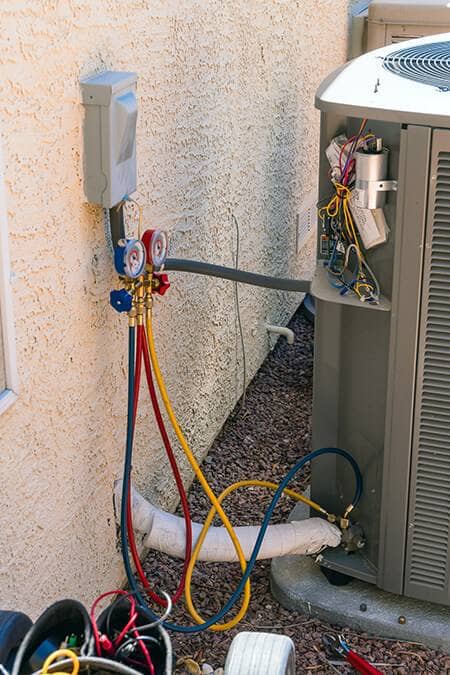
Emergency Air Conditioning: Get Rapid Cooling Rentals Immediately
Short answer: When cooling fails or heat becomes a health threat, quick and clear action matters. Move people to safety, gather site facts, and call vendors for rental equipment. In Las Vegas, where summer temperatures regularly exceed 110°F and AC systems run 10-11 months per year, rapid cooling rentals are critical for comfort and safety. Desert heat, dust storms, and high energy costs make proper equipment sizing and vendor selection essential for effective temporary cooling.

Las Vegas Emergency Cooling Context
Las Vegas homeowners and businesses face unique challenges with emergency cooling due to extreme desert heat. The Las Vegas Valley experiences 310+ days of direct sunlight annually, with summer highs regularly reaching 110-115°F. Unlike moderate climates, AC systems here operate nearly year-round, which increases wear and the likelihood of failures during peak heat. Desert dust storms can clog filters and coils faster, leading to airflow issues and compressor strain that trigger emergency calls.
During peak summer months (June through September), cooling demand surges, and same-day rental equipment becomes critical for comfort and safety. After-hours and weekend calls typically add 20-50% surcharges to rental rates. Neighborhoods across the valley—from Summerlin and Henderson to North Las Vegas, Paradise, and Enterprise—all face similar heat challenges, but building size, occupancy, and equipment needs vary significantly. Commercial facilities may need chiller trailers, while residential homes often need portable or spot coolers.
Key Takeaways
- Prioritize safety: move vulnerable people to cooler areas immediately
- Gather site information: square footage, power capacity, access points
- Choose appropriate equipment: spot coolers for small spaces, chillers for large areas
- Verify vendor credentials: licensing, insurance, certifications
- Expect 24-72 hour delivery for larger equipment
The content below is written for facility managers, building operators, and on-site responders. Use it as a checklist and decision guide. Keep a printed or digital copy where staff can reach it during an emergency. For background on efficiency and system basics, see the U.S. Department of Energy guide on air conditioning efficiency in the Sources section.
When should you call for emergency cooling?
Call an emergency cooling vendor as soon as heat puts people or equipment at risk. If your home AC unit has failed, start with our AC repair service for fast diagnosis. Waiting until a system fails completely can cost time and increase danger. If occupants include the elderly, infants, or people on electrically powered medical devices, make the call early. Early notification improves the chance of same-day or next-day mobilization, especially during high demand.
Also call when critical equipment shows signs of thermal stress. Server racks, telecom gear, and production machinery can degrade quickly at high temperatures. Electronics often fail within hours if ambient temperature and humidity exceed manufacturer limits. If uptime or safety is at stake, request top-priority mobilization and a service-level agreement (SLA) that reflects the clinical or operational risk.
What to do in the first 30 minutes?
In the first 30 minutes move people to the coolest available rooms or to an off-site cool space. Provide water and encourage rest. Turn on fans where safe and avoid crowded, unventilated areas. If possible, power down nonessential equipment to reduce internal heat gains and preserve battery-backed systems for critical loads.
Gather site data for the vendor while you act to protect occupants. Measure dry-bulb temperature and relative humidity with a basic hygrometer. Photograph affected areas, electrical panels, roof curbs, and failed equipment. Note the hottest zones and any airflow blockages. This data speeds vendor sizing and helps avoid sending the wrong equipment.
When is it life-safety?
A life-safety event exists when rising indoor temperatures threaten heat stroke, heat exhaustion, or the operation of life-support devices. If anyone relies on oxygen concentrators, ventilators, dialysis machines, or other life-sustaining gear, escalate immediately. Vendors and emergency services need that context to assign appropriate resources.
For life-safety calls, request strict SLA terms such as a 2–4 hour arrival window and documented commissioning within the SLA. Ask for written confirmation of priority so dispatchers and field crews have clear instructions. This documentation helps enforce the priority in high-demand situations.
How do rental options compare?
Rental options vary by speed, capacity, humidity control, and complexity of hookup. Spot coolers and portable split units are fastest to deliver. They work well for single rooms, nurse stations, and small equipment closets. These units can be ducted for targeted cooling and often require little mechanical work to place.
Chiller trailers and temporary chilled-water systems take longer to install but handle much larger loads. They offer better humidity control and steady performance for data centers and large spaces. Rooftop swap-outs restore permanent capacity when a compatible replacement and crane are available. Costs and lead times change with market demand and location, so plan staged responses: immediate spot cooling first, then chiller trailers or rooftop swaps within 24–72 hours.
What are portable vs spot-cooler pros?
Portable ACs and spot coolers are fast to deploy and need minimal site work. They are useful for quick relief in small rooms and for isolating hot spots. Spot coolers often come with flexible ducting options for exhaust and supply, which lets you target heat without major system changes.
Their main downsides are limited dehumidification and the need to manage exhaust. Exhaust must be routed outdoors or to a return plenum. Over long outages, portables can raise indoor humidity and increase electrical load. Use them as temporary measures while arranging larger systems for sustained cooling.
How does a rental chiller differ from AC?
Rental chillers produce chilled water to feed existing coils or temporary air handlers. They are designed for larger loads and for better humidity control. Chiller trailers require pump skids, temporary piping, and thorough commissioning, which increases setup time and logistical needs compared to portable units.
Expect 12–72 hours for hookup and commissioning of a chiller trailer, depending on site complexity. Chillers reduce dew point and protect sensitive equipment more reliably than many ducted spot coolers. For sustained operation, a chiller can be more fuel-efficient and stable than multiple portable units.
When choose rooftop unit swap-out?
Rooftop swap-outs work well when a single rooftop unit (RTU) fails and an identical or compatible replacement is available. The swap restores the permanent HVAC configuration without temporary piping. Swap-outs avoid the complexities of temporary chilled-water or split-air systems when access and parts are straightforward.
Swap-outs require crane access, roof curb checks, and staging space. Confirm curb compatibility, roof load limits, and transport routes with the vendor. If the replacement is on hand and access is simple, swap-outs can return normal operation quickly. If parts must be sourced or customization is needed, expect longer timelines. For permanent residential replacement, see our guide on what to budget for a new AC system.
How to choose a vendor quickly
Pick vendors who provide clear SLAs, a varied fleet, and documented safety and refrigerant compliance. Ask about depot locations and fleet size to gauge their ability to meet demand during heat waves. Vendors with multiple depots or national networks reduce the risk of fleet depletion in your region.
When comparing quotes, require itemized costs for mobilization, delivery, hookup, crane work, labor, and demobilization. Get mobilization timelines and proof of spare-part availability. Favor vendors who give written SLAs with defined response windows and commissioning checklists rather than verbal promises.
What checklist should you use to vet vendors?
Use a checklist that covers response time, equipment inventory by model and tonnage, mobilization ETA, power and piping needs, and a site safety plan. Require itemized costs, warranty terms for rental hardware, and escalation contacts. Ask for sample commissioning checklists and photos from similar jobs.
Also confirm refrigerant family and service records if refrigerant handling is required. For roof or occupied-building installs, review fall-protection and jobsite safety plans. A thorough checklist reduces surprises during installation and protects site staff and occupants.
Which certifications should you require?
Require NATE-certified technicians or local-equivalent HVAC credentials for major installs. For refrigerant work, insist on EPA Section 608 certification. If the site is a hospital or lab, request staff with ASHRAE experience and documented infection-control procedures for temporary systems.
Certifications show baseline competence, but also ask for recent job references. A well-documented project history helps confirm a vendor can perform under compressed timelines. Verify local licensing and municipality requirements before work begins.
Does the vendor carry liability insurance?
Always confirm General Liability and Workers' Compensation limits before crews arrive. Request a certificate of insurance that names your organization as an additional insured. This shields you for crane work, roof access, and accidental damage during fast mobilizations.
Have your procurement or risk team review and approve insurance forms quickly. Vendors who delay or cannot show adequate limits present financial risk and should not start work until coverage is confirmed.
What are typical costs and timelines?
Budget items include equipment rental, delivery, crane lifts, hookup labor, and expedited fees. Also include fuel, generator rental, or electrical distribution if needed. Spot coolers are usually the lowest daily cost but do not scale well. Chiller trailers and temporary air handlers cost more per day but can be cheaper per ton over a multi-week outage.
Prices and lead times vary by market and season. During regional heat events, expect higher rates and slower arrival times. Negotiate weekly or multi-week terms when outages may last; longer terms often reduce daily rates. Add contingency funds for overtime, crane wait time, and unexpected labor.
How much is daily rental for chillers?
Small portable chillers often rent in a range that reflects tonnage and features. Rates can start near the low hundreds per day and rise with size and urgency. Mid-size to large chillers will cost more, often reaching several thousand dollars per day in urgent situations.
Weekly and monthly rates usually lower the effective daily cost. Ask vendors about minimum rental periods and what is included in the rate. Delivery, hookup, basic monitoring, and skilled commissioning may be billed separately, so confirm all line items.
What are expedited delivery fee ranges?
Expedited fees vary widely by vendor and market conditions. Expect surcharges from roughly 10% up to 100% of base delivery costs for rush mobilization, night or weekend lifts, and overtime crews. Crane operators and specialized rigging on short notice add to the expense.
If you expect frequent emergencies, negotiate capped expedited fees into a standing agreement. Require written approval for overtime and standby charges to control costs. Clarify billing for hold or standby time if lifts are delayed.
How soon can standby generators be sourced?
Local generator fleets for common sizes and ATS (automatic transfer switch) configurations can often be delivered within 24–72 hours. Larger gensets, parallel configurations, or long fuel runs take more time. Confirm wiring and ATS compatibility before acceptance.
Vendors can pre-configure switchgear to speed hookup, but this requires electrician time and planning. If building electrical capacity is limited, temporary distribution panels and subfeed breakers are common solutions and add installation time.
How to deploy temporary cooling onsite
Good site preparation speeds installation and reduces risk. Identify staging areas with clear truck access and mark roof edges and curb locations. Protect floors and finishes where heavy equipment will move. Provide current single-line drawings and label electrical panels to help vendor electricians plan.
Coordinate crane placement early and confirm roof load capacity. Assign a single point-of-contact for the vendor and a simple on-site chain of command for safety and decisions. Clear work zones with signage and barriers to keep occupants safe and crews efficient. Obtain permits in advance when required for crane lifts or roof work.
What site prep steps protect equipment?
Protect floors and finishes with plywood, mats, or pads under heavy gear. Cover vents or ceilings if dust or debris may fall. Secure staging areas and lock or tag circuits that the temp equipment will use to prevent accidental power loss to critical systems.
Give vendor teams keys or escorts in advance to avoid access delays. For hospitals and labs, require infection-control measures like sealed doorways or negative-pressure zones for temporary systems when applicable.
How should power and panel capacity be assessed?
Compare the unit kW and starting amps with panel capacity and breaker sizing. Verify available phases, neutral sizing, and main bus limits. If building capacity is insufficient, vendors often supply generators or temporary distribution panels.
Have a licensed electrician review the one-line drawing and mark available circuits before vendor arrival. This reduces last-minute rewiring and unexpected charges for emergency feeders.
How to plan ducting and airflow paths?
Route supply and return ducts to minimize bends and length. Use the largest practical duct diameter and secure joints with approved HVAC tape to reduce leaks. Position supply outlets to prevent short-circuiting cooled air back into returns.
If the unit exhausts heat outdoors, confirm exhaust paths and sealing so warm air does not re-enter the cooled space. In data centers, maintain positive pressure and monitor for hot spots to protect equipment.
What monitoring will prevent thermal alarms?
Install remote temperature and humidity sensors tied to phones or the building management system (BMS). Set thresholds and escalation procedures so staff get alerts before setpoints are breached. Place redundant sensors in key rooms and racks for failover.
Ask vendors to provide basic telemetry or on-site monitoring during commissioning. This ensures the temporary system is stable and gives early warning if conditions change.
Emergency Cooling Rental Decision Checklist
- ✓ Is this a life-safety emergency (vulnerable occupants, medical equipment)?
- ✓ Have you assessed space size and power capacity?
- ✓ Do you need spot coolers (small spaces) or chillers (large areas)?
- ✓ Is the vendor licensed, insured, and certified?
- ✓ Have you confirmed delivery timeline and SLA?
- ✓ Have you prepared site access and staging areas?
- ✓ Do you have monitoring plan for temporary equipment?
Prevention Tips for Las Vegas Homeowners and Businesses
Preventive maintenance reduces emergency cooling needs, especially in Las Vegas heat:
- Annual HVAC maintenance: Schedule spring AC maintenance tune-ups before peak heat
- Filter changes: Replace filters every 1-3 months, especially during dust storms
- Coil cleaning: Clean indoor and outdoor coils annually
- Monitor system performance: Track energy bills and temperature consistency
- Backup cooling plan: Identify rental vendors before emergencies
- Power capacity assessment: Know your electrical capacity for temporary equipment
- Document system information: Keep model numbers and service records
How do I get emergency cooling now?
Follow a short, repeatable process: gather information, prioritize life-safety and critical loads, call vendors with clear SLAs, and prepare the site. Document decisions and keep lines of communication open during mobilization. Clear documentation and a single point-of-contact speed response and reduce mistakes.
Las Vegas-area readers should call The Cooling Company at (702) 567-0707 for 24/7 emergency cooling in Las Vegas, Henderson, and North Las Vegas. Ask for immediate spot-cooler dispatch, chiller trailer mobilization, or rooftop swap support. When you call, clearly state life-safety issues or critical loads to secure rapid mobilization.
We offer:
- 24/7 emergency response with fast dispatch
- Rental equipment coordination (spot coolers, chillers)
- Licensed, EPA-certified, and NATE-certified technicians
- Clear, upfront pricing with written estimates
- Priority scheduling for life-safety emergencies
What happens after I place an emergency order?
After you place an order, the vendor should confirm site details, power needs, staging areas, and lift constraints. A technician will arrive per the SLA to set up and commission equipment. Expect a handover sheet with operating limits, monitoring points, and escalation contacts once the system is stable.
Keep lines open and track the vendor ETA. If permits, crane timing, or access issues arise, communicate changes immediately. If you need to escalate, use the emergency contact and SLA given at order time.
What should non-Las Vegas readers ask for?
Ask for NATE-certified techs and proof of EPA Section 608 certification for refrigerant work. Verify local mechanical licensing and confirm refrigerant type is allowed in your jurisdiction. Request sample SLAs showing response time, mobilization terms, and spare-part access.
For critical sites, ask for project references of similar scope. Vendors with experience in similar buildings shorten install time and reduce risk. Demand itemized quotes so you can compare costs accurately across providers.
You Might Also Like
This section lists related topics that expand on maintenance, troubleshooting, and system replacement considerations. Use these articles to plan long-term responses, prepare maintenance schedules, or troubleshoot HVAC odors and equipment faults.
- rheem service professionals vegas
- troubleshooting hvac odors
- ruud furnace problems
- trane furnace repair henderson
- how much to install hvac system in old house
Need HVAC service help in Las Vegas?
If you face an HVAC emergency in Las Vegas, Henderson, or North Las Vegas, The Cooling Company offers fast, reliable service from licensed technicians. We understand that heating and cooling emergencies do not wait for business hours. Call us now at (702) 567-0707 for emergency service. Our team is ready to help restore your comfort quickly and safely.
Related services: AC Repair | AC Installation | AC Maintenance
About The Cooling Company
The Cooling Company has been serving the Las Vegas valley with professional HVAC services for over a decade. Our team of licensed, NATE-certified technicians specializes in air conditioning repair, heating system maintenance, and complete HVAC installations. We're committed to providing honest, reliable service with upfront pricing and a 100% satisfaction guarantee on all work performed.
- Phone: (702) 567-0707
- Reviews: 4.8/5 stars (780+ reviews) - See reviews
Service Areas
We proudly serve homeowners and businesses throughout the Las Vegas metropolitan area, including Las Vegas, Henderson, and North Las Vegas. Our service technicians are available for same-day appointments in most areas, with emergency service available 24/7 for urgent HVAC issues.
Share This Page
Sources
Understanding sources helps you make informed decisions about emergency cooling and rental options. The U.S. Department of Energy explains air conditioning basics and efficiency considerations. Review these materials when planning long-term responses and when selecting equipment that matches your site's needs.
- U.S. Department of Energy (Energy.gov) (accessed 2026-01-03)
- U.S. Environmental Protection Agency (EPA) (accessed 2026-01-03)
- ASHRAE (Standards and guidance) (accessed 2026-01-03)
- ENERGY STAR (Heating & cooling) (accessed 2026-01-03)
- U.S. Department of Energy, Air Conditioning basics and efficiency: Energy.gov HVAC efficiency basics
Need HVAC Service in Las Vegas?
The Cooling Company provides expert HVAC service throughout Las Vegas, Henderson, and North Las Vegas. Our licensed technicians deliver honest assessments, upfront pricing, and reliable results.
Call (702) 567-0707 or visit AC repair, maintenance, heating, or installation for details.