

Short answer: Spring AC tune-up season in Las Vegas opens in March and slams shut by late April — once 100°F days arrive in May, every HVAC company in the Valley is running emergency calls, not preventive visits. A professional tune-up runs $89 at The Cooling Company (included free with a Comfort Club membership). Do 10 homeowner prep steps now, book your professional 21-point inspection before April 30, and your system will be ready for whatever Southern Nevada throws at it this summer.
Key Takeaways
- Book before April 30. Once 100°F days hit in May, every HVAC company shifts to emergency mode — preventive slots disappear.
- 10 homeowner tasks you can do today with no tools: filter, vents, thermostat, outdoor unit clearance, drain line, and more.
- Professional 21-point tune-up: $89 (free for Comfort Club members). Catches capacitor, refrigerant, and electrical issues before they become emergencies.
- Skipping your tune-up costs real money: A dirty system runs 20–30% less efficiently — adding $40–$80/month to summer bills.
- Red flags to watch for: Capacitor failure ($150–$300), refrigerant leak ($300–$1,500), contactor wear ($200–$400). What to check if your AC stops working.
Why March Is Make-or-Break Month in Las Vegas
Most of the country treats AC tune-ups as a spring ritual — something to get done before Memorial Day, when the weather finally turns. In Las Vegas, that timeline is dangerously compressed.
By the third week of April, average highs in the Valley are pushing 90°F. By mid-May, triple digits are routine. And by June 1, every HVAC company in Southern Nevada is at full emergency capacity — technicians running back-to-back calls, parts on backorder, and wait times stretching from days into weeks. Calling for a "tune-up" in June is like trying to get a primary care appointment the day before you leave for vacation. It's not happening, or it's happening at a price premium you'd rather avoid.
The scheduling window that matters is March 15 through April 30. That six-week stretch is when you can book a tune-up at your convenience, get a next-day appointment, and have your tech spend the time actually looking at your system — not rushing between emergency calls in a city where 115°F is a real possibility by late June.
Beyond scheduling, March is when problems are cheapest to catch. A failing capacitor detected in March costs $150–$300 to replace. The same capacitor failing at 1 PM on July 15 means no cooling for hours, an emergency service call premium, and a technician who gets to your house at 8 PM because four other homes in your neighborhood experienced the same failure on the same afternoon. The part is still $150. Everything around it gets expensive fast.
Las Vegas AC systems also run harder than anywhere else in the country — 2,500 to 3,000 hours annually versus 800–1,200 hours for homes in moderate climates. That runtime accumulates wear on every electrical component, every motor bearing, and every pound of refrigerant your system contains. Annual maintenance isn't optional here. It's the minimum viable maintenance schedule for a climate this extreme.
The Homeowner Checklist: 10 Things You Can Do Today
Before your tech arrives — or even if you're still deciding whether to book — there are 10 tasks any homeowner can complete safely without tools or technical training. Do all of them. They take about two hours total, they cost almost nothing, and they give your professional tune-up a cleaner baseline to work from.
1. Replace Your Air Filter
This is the highest-impact single action on this list. In Las Vegas, filters should be changed every 30–45 days during active cooling season — not the 90-day interval printed on the packaging. That recommendation was written for moderate climates. Our monsoon season (July–September) pushes enormous volumes of fine desert particulate into the atmosphere, and that dust accumulates in filters faster here than anywhere in the country. If your filter is more than six weeks old right now, replace it before the tech arrives. A clogged filter restricts airflow, causes the evaporator coil to freeze, and forces the blower motor and compressor to work harder — and is the number one cause of AC blowing warm air. Every hour of operation through a dirty filter accelerates wear. Use MERV 8–11 for most Las Vegas homes.
2. Open Every Supply and Return Vent
Walk through every room and confirm that supply vents (where cool air blows out) and return grilles (where air returns to the system) are fully open and unobstructed. Closing vents in unused rooms is a persistent myth — it doesn't save energy. It creates pressure imbalances that stress ductwork, reduce airflow at the coil, and can push the system into short-cycling. Furniture, rugs, drapes, and boxes pushed against return grilles are among the most common causes of uneven cooling we see in Las Vegas homes.
3. Replace Thermostat Batteries
If your thermostat runs on AA or AAA batteries, replace them now. A low-battery thermostat is a surprisingly frequent cause of "AC failure" calls we respond to — the system is fine, but the thermostat is giving erratic signals or losing its programming. While you're there, verify that your cooling schedule actually reflects your 2026 routine. Did you update it after the holidays? Does it still show last year's work-from-home schedule? Set it now for what summer will actually look like: a pre-cool ramp that starts 30–45 minutes before you normally arrive home, a slightly elevated setpoint overnight (78–80°F), and occupied-hours settings that aren't trying to maintain 68°F when it's 115°F outside.
4. Clear Outdoor Unit Clearance
Walk to your outdoor condenser and remove any debris that accumulated over winter — leaves, seed pods, landscape rock, anything that's blown against or into the unit. The condenser needs at least 18–24 inches of open clearance on all sides for adequate airflow. Trim any shrubs or plants that have grown into that space over the winter. While you're there, give the coil fins a gentle rinse with a garden hose — spray from the inside out if you can, or rinse down the outside fins. Do not use a pressure washer; it bends the delicate aluminum fins and reduces efficiency.
5. Flush the Condensate Drain Line
The condensate drain line removes the moisture your system pulls from indoor air. In Las Vegas, this line runs outside year-round and sits idle during winter. Algae, dust, and mineral deposits can partially or fully clog the drain over the off-season. A clogged drain causes water to back up into the drain pan, then overflow — leading to ceiling damage, mold growth, and potentially water damage to the air handler itself. Flush the line now with a cup of white vinegar poured into the access port near the indoor air handler. Follow with plain water. If the line is completely blocked, a wet vac at the exterior outlet usually clears it.
6. Inspect All Return Air Grilles
Return air grilles — usually the large, louvered covers in hallways or living areas — accumulate dust and pet hair faster than any other part of the system. Remove each grille cover and clean it. A vacuum with a brush attachment handles most buildup; a soapy rinse for heavy accumulation. While the grille is off, shine a flashlight into the duct opening and look for obvious blockages or debris. A clean return grille allows unrestricted airflow back to the air handler, which is what keeps the system from running hot and wearing out early.
7. Do a Visual Duct Check
If your home has accessible ductwork — in a basement, crawlspace, or through attic access — spend 10 minutes walking the main duct runs. Look for disconnected joints, collapsed flex duct, or sections where insulation has fallen away. Las Vegas homes lose an estimated 20–30% of conditioned air to duct leaks, and that loss starts at day one for improperly sealed systems. Note anything that looks wrong and mention it to your tech. Duct repairs and sealing are not DIY projects, but catching them visually gives your pro a focused starting point.
8. Label Your Breaker Panel
This is a two-minute task that pays dividends the first time a tech needs to quickly cut power to your system. Locate your air conditioner breaker in the main panel — usually a double-pole 30–60 amp breaker — and confirm it's labeled correctly. While you're there, verify the breaker hasn't tripped to the middle position (partially tripped). A partially tripped breaker to the AC circuit will cause the system to run in a degraded state that looks like refrigerant loss. Turn it fully off and back on to reset if it's partially tripped, then see if normal operation resumes.
9. Program a Summer Cooling Schedule
The single most impactful thing you can do for your summer energy bill is run a realistic cooling schedule rather than maintaining a constant setpoint all day. The Department of Energy estimates that setback scheduling saves 10–15% on cooling costs. For Las Vegas, a reasonable summer baseline: 80–82°F while away during work hours, pre-cooling to 76°F starting 45 minutes before you return, and 76–78°F overnight. Your system will run longer cycles but fewer of them — which is actually easier on compressors than constant short cycling against an impossible setpoint.
10. Confirm Ceiling Fan Direction
Ceiling fans should run counterclockwise in summer — when viewed from below, blades should push air downward, creating a wind-chill effect. The direction switch is typically a small toggle on the fan housing. Running fans in the correct direction allows you to raise your thermostat setpoint 2–4°F without any perceptible comfort loss, which directly reduces compressor runtime and extends system life. Turn ceiling fans off in empty rooms — they cool people, not rooms, and running them in an unoccupied space just wastes electricity.

The Professional 21-Point Tune-Up: What Your Tech Actually Checks
A professional AC tune-up is not a cleaning visit. It is a systematic mechanical and electrical evaluation of every component in your system — performed by a licensed technician using calibrated instruments that can detect problems invisible to the naked eye. Here's exactly what a thorough 21-point inspection covers.
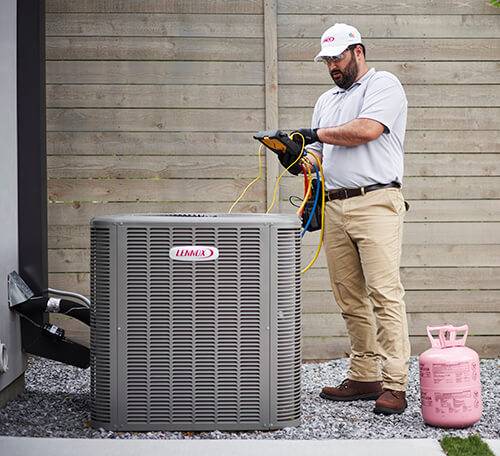
- Refrigerant charge verification — Using manifold gauges, the tech measures system pressures and calculates superheat and subcooling to confirm the refrigerant charge is within manufacturer specifications. A low charge indicates a leak. An overcharge stresses the compressor. Both conditions degrade efficiency and accelerate component wear.
- Leak detection sweep — An electronic leak detector sweeps all refrigerant circuit connection points — Schrader valves, service ports, flare fittings, and coil joints. Refrigerant doesn't evaporate; any low charge means the system is leaking somewhere.
- Electrical connection inspection and torque — Every terminal connection in the disconnect box, contactor, and control board is checked for corrosion, arcing marks, and proper torque. Loose or corroded connections cause resistance heating that leads to component failures and is a fire risk.
- Capacitor test — Run capacitors are tested with a capacitance meter. Capacitors are the single most common failure point in Las Vegas systems — the combination of extreme heat and constant start-stop cycling degrades them faster than almost any other market. A capacitor reading below 90% of its rated value gets replaced before it fails completely.
- Contactor inspection — The contactor — the electrical relay that controls power to the compressor and condenser fan — is inspected for pitting, carbon buildup, and proper gap. A worn contactor can arc and weld itself closed, causing the compressor to run continuously. It can also fail to close, causing a no-start condition.
- Condenser coil cleaning — The outdoor coil is cleaned with coil cleaner and rinsed thoroughly. A dirty condenser coil can reduce system efficiency by 20–30% and forces head pressure to rise, putting direct stress on the compressor. Post-monsoon and post-winter, Las Vegas condensers typically have significant dust buildup even after homeowner rinsing.
- Evaporator coil inspection — The indoor coil is visually inspected for mold, debris accumulation, and signs of corrosion or refrigerant leaks (oily residue). Evaporator coil access typically requires opening the air handler cabinet.
- Blower motor amp draw — The tech clamps an ammeter around the blower motor leads and measures actual amp draw versus nameplate rating. A motor drawing more amps than rated is overheating or failing. A motor drawing less may have a weak capacitor or worn windings.
- Condenser fan motor amp draw — Same test on the outdoor fan motor. Failed or failing condenser fan motors are one of the most common causes of compressor overheating and thermal lockout during peak summer heat.
- Compressor amp draw — Compressor amp draw is measured at all three legs for three-phase commercial equipment, or at both legs for single-phase residential units. Elevated draw indicates a struggling compressor; a reading above locked-rotor amperage with no startup means the compressor has seized.
- Temperature differential test — The tech measures return air temperature (entering the evaporator) and supply air temperature (leaving the evaporator) with a digital thermometer. Normal split for a properly charged system is 16–20°F. A lower differential indicates a refrigerant issue, airflow problem, or dirty coil. A higher differential can indicate a refrigerant overcharge or blocked airflow.
- Thermostat calibration check — The tech verifies thermostat accuracy against a calibrated reference thermometer and checks that control wiring connections are secure at the air handler.
- Duct pressure test (spot check) — On systems with accessible ductwork, the tech can perform a simplified duct pressure test by measuring static pressure in the supply plenum. Elevated static pressure indicates a blocked filter, undersized duct, or restriction — all of which stress the blower motor and reduce system capacity.
- Drain pan and condensate system check — The drain pan is inspected for standing water, algae, and cracks. The drain line is tested for free flow.
- Safety controls test — High-pressure cutout, low-pressure cutout, and thermal overload controls are verified functional. These are the safety circuits that prevent catastrophic compressor failure when conditions are abnormal.
- Start assist components check — Hard-start kits and start capacitors (if installed) are tested for proper function. In Las Vegas, hard-start kits are frequently recommended for systems that experience frequent cycling, reducing compressor startup stress.
- Disconnect and disconnect block inspection — The outdoor disconnect box is inspected for fuse condition, overheating signs, and moisture intrusion.
- Refrigerant line insulation inspection — The insulated suction line running from the outdoor unit into the home is checked for cracked, missing, or deteriorated insulation. Exposed suction lines in Las Vegas heat absorb heat rapidly, reducing system efficiency and causing moisture to condense on line surfaces.
- Filter check and airflow verification — The tech confirms filter condition and verifies airflow across all accessible supply registers with a flow hood or anemometer.
- System efficiency estimate — Based on all measurements taken, the tech provides a system efficiency assessment — how close is the system running to its rated SEER capacity under current conditions?
- Written findings and recommendations — Every issue found is documented, categorized by urgency, and presented in writing with cost estimates before any work is done. No surprises, no work without approval.
Our tune-up fee is $89. That covers the full 21-point inspection. If any repairs are recommended, you'll receive a written estimate and decide whether to proceed. Learn more about our AC maintenance service or call (702) 567-0707 to book.
"During spring tune-ups, my team finds problems on nearly every system that has not been serviced in over a year. The most common one? A capacitor reading at 80-85 percent of its rated value. The homeowner has no idea — the system still turns on, still cools the house. But that capacitor is going to fail the first week it hits 110 degrees and the system is cycling hard. We replace it for $200 in April, or the homeowner calls us in July with no AC and a four-hour wait. That is the whole value of a tune-up in one example."
— Frank Santana, General Manager, The Cooling Company
Red Flags Your Tech Might Find (and What They Cost to Fix)
Most Las Vegas systems that haven't been serviced in over a year have at least one item that needs attention. Here's a realistic look at what techs commonly find during spring tune-ups and what those findings cost to address — versus what they cost when they become emergency failures in July.
| Issue Found | Severity | Cost to Fix in Spring | Cost if It Fails in Summer |
|---|---|---|---|
| Weak capacitor (below 90% rated value) | Moderate — will fail within 1 season | $150–$300 | $150–$300 + emergency call premium $75–$150 |
| Pitted or worn contactor | Moderate — intermittent failures likely | $150–$350 | $150–$350 + emergency premium + potential compressor damage |
| Low refrigerant charge (leak present) | High — compressor damage accelerates | $300–$800 (leak repair + recharge) | $500–$2,500+ if compressor is damaged by running low |
| Dirty condenser coil (30%+ blockage) | Moderate — efficiency loss, compressor stress | $0 (included in tune-up) | Compressor burnout from high head pressure: $1,800–$3,500 |
| Condenser fan motor amp draw elevated | High — motor failure imminent | $300–$600 | $300–$600 + emergency premium + potential compressor overheating |
| Blower motor bearing wear | Moderate — reduced airflow, eventual failure | $400–$800 | $400–$800 + emergency premium + air handler flooding from coil freeze |
| Clogged condensate drain | Low-Moderate — water damage risk | $0 (DIY flush) or $75–$150 | Water damage to ceilings, walls, flooring: $500–$5,000+ |
| Cracked or leaking evaporator coil | High — refrigerant loss, system cannot cool | $1,200–$2,500 | Same cost + emergency timing + extended no-cooling period |
| Failed start capacitor / no hard-start kit | Moderate — compressor struggles to start | $150–$400 | Compressor failure from repeated hard starts: $1,800–$3,500 |
| Loose electrical connection | High — fire risk, intermittent failures | $0–$100 (included in inspection) | Component failure, possible electrical fire |
The pattern is consistent: every issue that costs $150–$400 to address in spring costs $75–$200 more in emergency premiums alone if it fails during summer peak — plus the potential cascade damage when one failing component forces another into failure conditions.
The Case for a Maintenance Plan
The math on a Comfort Club maintenance plan is straightforward: you pay a flat annual fee, and in return you get two professional tune-ups per year (spring and fall), priority scheduling, a waived diagnostic fee on any service call, and a discount on parts and labor for any repairs needed during the plan year.
Here's what that actually means in practice for a Las Vegas homeowner:
- Two tune-ups included — Spring AC inspection ($89 value) + fall heating inspection ($89 value) = $178 in tune-up value alone, before any other plan benefits.
- Priority scheduling — When it's July and your system fails, plan members move to the front of the dispatch queue. In a city where every HVAC company is running 12-hour days during peak heat, priority scheduling is worth real money. Non-members may wait 5–10 days for a non-emergency appointment. Plan members get same-day or next-day service.
- Waived diagnostic fee — Our standard diagnostic fee is $89. Plan members pay $0 on service calls. If you need even one repair visit during the summer, that's $89 back in your pocket before the discount on parts and labor.
- Parts and labor discount — Plan members receive a discount on parts and labor for any repair. On a $400 capacitor and contactor job, that adds up to real savings.
- Transferable to new owners — If you sell your home, the plan transfers, which is a documented selling point for buyers who already know Las Vegas summers.
Comfort Club members also receive automatic spring and fall scheduling reminders — no need to remember to call us. We reach out when it's time, you confirm, we show up. It's the maintenance schedule that actually gets followed because it doesn't depend on you remembering.
Ready to join? View Comfort Club plan options or call (702) 567-0707.
"You can see the difference the moment you open the air handler. A system that has been maintained every year has clean coils, tight electrical connections, and components that test within spec. A system that has been ignored for three years has a condenser coil that looks like a dusty blanket, capacitors reading 20 percent below rated, and corroded wire terminals that are one monsoon away from arcing. Both systems might be the same age, same brand, same model — but one has three to five years of life left and the other is a breakdown waiting to happen."
— The Cooling Company service team
How Seasonal Maintenance Affects Your Energy Bills
NV Energy rates in Southern Nevada are tiered — the more electricity you use in a billing period, the higher the rate per kilowatt-hour for usage above each threshold. During summer, when AC systems run longest, most Las Vegas households push well into the higher tiers. That makes every point of system efficiency worth more than it would be in a flat-rate market.
Here's what a poorly maintained system actually costs you on a monthly basis:
Dirty condenser coil: A condenser coil blocked by 25–30% of its fin area (common in Las Vegas after a monsoon season without a professional cleaning) can reduce system efficiency by 20–30%. On a home spending $300/month on summer cooling, that's $60–$90 in wasted electricity — every single month. Across four summer months (May–August), that's $240–$360 in avoidable cost.
Low refrigerant charge: A system running 10% low on refrigerant loses approximately 20% of its cooling capacity. To compensate, the system runs longer cycles — sometimes double the runtime of a properly charged system — to deliver the same cooling effect. Double the runtime means double the electricity at NV Energy's higher summer tier rates.
Clogged air filter: A filter at 60–70% blockage restricts airflow enough that the blower motor works significantly harder to move the same volume of air. Blower motor electricity consumption can increase 20–50% with a dirty filter. The motor also runs hotter, which shortens its lifespan independently of the efficiency loss.
The cumulative effect: A system with a dirty coil, slightly low refrigerant, and a two-month-old filter might be running at 50–60% of its rated efficiency. A home that should spend $250 in a summer month on cooling is instead spending $400–$500. Across a Las Vegas summer season (May through September), that's $750–$1,250 in excess electricity cost — far more than the cost of a tune-up.
The Comfort Club maintenance plan pays for itself in energy savings alone for most Las Vegas households. The emergency call avoidance is the bonus.
What Happens If You Skip the Tune-Up
We keep records. After 15 years of serving Las Vegas, Henderson, Summerlin, North Las Vegas, and the surrounding communities, we know exactly what failure mode follows what maintenance gap. Here are three scenarios we see play out every summer.
Scenario One: The Compressor That Burned Out in July
A homeowner in Henderson skipped the spring tune-up two years in a row. The system was an eight-year-old Carrier — young enough that most homeowners wouldn't consider replacement. What we found when we got there on July 18: the condenser coil was blocked with two years of accumulated dust and debris, head pressure was running 50 PSI above normal for the ambient temperature, and the compressor had been operating at the edge of its thermal limits for weeks. The compressor seized. Replacement cost: $2,400 for parts and labor. The homeowner was without AC for four days while we located the right compressor for their unit. A spring tune-up — coil cleaning and a refrigerant charge check — would have cost $89 plus any refrigerant needed. The condenser coil cleaning alone, done in April, almost certainly would have prevented the compressor failure entirely by keeping head pressure within safe limits.
Scenario Two: The Refrigerant Leak Nobody Caught
A Summerlin homeowner noticed the system wasn't cooling as well as it used to but assumed it was just "running hard in the heat." By the time they called us in late June, the system had been running low on R-410A for at least one full cooling season. The evaporator coil was showing the early signs of freeze-up damage from the moisture cycling caused by running low. We found the leak — a pinhole in the evaporator coil joint, a common failure mode in Las Vegas systems due to copper corrosion from our hard water and air chemistry. Repair: evaporator coil replacement at $1,800, plus refrigerant recharge at $340, plus leak detection labor. Total: over $2,200. Caught at a spring tune-up, before the coil deteriorated: the leak might have been a $300–$400 repair at the fitting level, with no coil replacement required.
Scenario Three: The Capacitor Failure on 115°F Day
This is the most common scenario we see, and it plays out dozens of times every summer across the Valley. A capacitor that was reading at 85% of rated capacity in March — not worth replacing yet, but worth monitoring — gets flagged at the spring tune-up. If the homeowner declines the recommended replacement, they're taking a calculated risk. If the homeowner skipped the tune-up entirely, there's no warning at all. On a 115°F day in late July, when the system is starting and stopping dozens of times as the thermostat cycles, the capacitor fails. The compressor won't start — just hums. The house climbs to 90°F+ within an hour. The homeowner calls us (and four other companies) at the same time. The capacitor costs $150–$250 to replace. The emergency call premium is $75–$150. The wait time is 6–12 hours because every company in the Valley is running the same call. Total cost: $300–$450, avoidable discomfort, and a reminder of why spring maintenance matters. The capacitor replacement in April: $150–$250, booked at your convenience, done in 45 minutes.
Frequently Asked Questions
How much does a spring AC tune-up cost in Las Vegas?
The Cooling Company charges $89 for a professional AC tune-up in Las Vegas. That includes the full 21-point inspection, all testing, coil cleaning, and a written findings report. Comfort Club maintenance plan members receive the tune-up at no additional charge — it's included in the annual plan. Some companies advertise tune-ups for $49–$59, but those visits typically involve a brief visual check and filter reminder rather than comprehensive electrical testing, refrigerant measurement, and coil cleaning. Compare the scope, not just the price. Call (702) 567-0707 to schedule your inspection.
When is the best time to schedule a spring AC tune-up in Las Vegas?
The ideal window is March 15 through April 30. In this window, HVAC companies are between seasons — scheduling is flexible, appointments are available quickly, and technicians aren't rushing between emergency calls. By May, appointment availability tightens significantly as triple-digit days start driving emergency call volume. Scheduling in March also gives maximum lead time if parts need to be ordered — refrigerant, coil replacements, and certain blower motors can have lead times of several days to two weeks during peak season.
Do Comfort Club members really get their tune-up for free?
Yes. Two professional tune-ups per year — one in spring for the AC system and one in fall for the heating system — are included in every Comfort Club membership at no additional charge. The plan also includes priority scheduling, a waived $89 diagnostic fee on service calls, and a discount on parts and labor for any repairs. For most Las Vegas homeowners who need at least one service call per year in addition to their tune-ups, the plan pays for itself. Visit our maintenance plans page for current pricing and to enroll.
Can a spring tune-up really prevent major AC failures?
Yes — with the caveat that it prevents the failures that develop predictably over time, not random failures from manufacturing defects. Capacitor failure is predictable: capacitors degrade at measurable rates, and a tech with a capacitance meter can identify a capacitor that will fail within one season. Contactor wear is visible during inspection. Refrigerant leaks show up in pressure readings before they cause coil or compressor damage. Condenser coil blockage is directly measurable and directly addressable at the tune-up visit. The failures that surprise homeowners in July are almost never random — they're the predictable endpoint of a condition that was developing for months and would have been visible during a spring inspection.
Are NV Energy rebates available for AC maintenance or upgrades in 2026?
NV Energy's PowerShift rebate program offers up to $3,200 for qualifying high-efficiency equipment replacements, including central air conditioning systems and heat pumps that meet program efficiency thresholds. The rebates are for equipment replacement, not tune-ups — but if your tech's spring inspection reveals that your aging system is approaching the end of its useful life, this is an excellent time to explore replacement options and claim available rebates before the program's budget is fully allocated. Ask your technician about current PowerShift eligibility during your spring visit, or call us at (702) 567-0707 to discuss whether your system qualifies.
What should I do if my AC is already struggling before the tune-up?
Call us immediately at (702) 567-0707 and describe the symptoms — warm air from vents, unusual noises, system running constantly without reaching the set temperature, or system not starting at all. We'll determine whether you need an emergency diagnostic visit or can schedule a tune-up appointment quickly. Do not attempt to run a struggling system continuously through increasing heat — a system that's borderline now will likely fail completely once outdoor temperatures push above 95°F. Our AC repair page covers diagnostic pricing and what to expect from a service visit.
How long does a professional AC tune-up take in Las Vegas?
A thorough 21-point tune-up typically takes 60–90 minutes for a standard single-system home. Homes with two systems, complex duct configurations, or deferred maintenance items may take longer. We recommend being home for the visit so the technician can discuss findings with you directly, answer questions, and show you anything of concern before leaving. If repairs are needed beyond the tune-up scope, the tech will provide a written estimate and you decide whether to proceed before any additional work begins.
Related Guides
- AC Not Turning On? — 8 things to check before calling for repair
- AC Blowing Warm Air? — 7 causes, repair costs, and the fix
- When to Replace Your AC in Las Vegas — the 2026 homeowner's replacement timeline
- NV Energy PowerShift Rebate 2026 — save up to $3,200 on a qualifying system
Don't Wait for the Heat — Schedule Your Tune-Up Now
Las Vegas summers are non-negotiable. From the first week of May through late September, your air conditioning system is not a luxury — it is life-safety infrastructure. The difference between a system that runs reliably through 115°F days and one that fails on the hottest afternoon of the year almost always comes down to whether it was properly maintained in spring.
The complete spring preparation playbook:
- Complete the 10-item homeowner checklist this weekend — filter, vents, thermostat, outdoor unit, drain line, returns, ducts, breaker, schedule, fans
- Book your professional 21-point tune-up before April 30 — before scheduling gets tight and before the heat arrives
- If you're not already a Comfort Club member, now is the right time to enroll — your spring tune-up is included, and you'll have priority access all summer
- Ask your tech about your system's remaining useful life — if it's 12+ years old and has had multiple repairs, a replacement conversation now (with NV Energy PowerShift rebates available) beats an emergency replacement in July
The Cooling Company serves Las Vegas, Henderson, Summerlin, North Las Vegas, and all surrounding communities in Southern Nevada. Our licensed technicians hold Nevada contractors licenses #0075849 (C-21) and #0078611 (C-1D). We've been doing this in the desert long enough to know exactly what your system needs to survive another summer.
Call (702) 567-0707 to schedule your spring tune-up, or book online. Same-day and next-day appointments are available now — before the summer rush begins.
Related services: HVAC Maintenance | Comfort Club Plans | AC Repair | AC Replacement | Book Online
Share This Page
Need HVAC Service in Las Vegas?
The Cooling Company provides expert HVAC service throughout Las Vegas, Henderson, North Las Vegas, Summerlin, and all of Southern Nevada. Our licensed technicians deliver honest assessments, upfront pricing, and reliable results.
Call (702) 567-0707 or visit HVAC maintenance, maintenance plans, AC repair, or AC replacement for details.