


Short answer: Your water heater's T&P (temperature and pressure) relief valve is a critical safety device that prevents tank rupture if temperature exceeds 210°F or pressure exceeds 150 PSI. Test it once a year by lifting the lever — water should flow freely and stop when released. Las Vegas hard water causes mineral buildup that can seal the valve shut, making annual testing essential. Replacement costs $20–$30 for the part or $100–$200 professionally installed.
Every tank water heater in your Las Vegas home has a small brass valve on the side or top with a flip lever and a discharge pipe running down toward the floor. That is the temperature and pressure relief valve — the T&P valve — and it is the single most important safety device on the entire unit. If the thermostat fails and temperature climbs past 210°F, or if system pressure exceeds 150 PSI, the T&P valve opens and dumps water to prevent the tank from rupturing. Without it, or with a stuck one, a water heater becomes a potential steam bomb. We've responded to calls where a failed T&P valve led to a blown tank fitting that flooded an entire garage in under an hour. Testing this valve takes less than 60 seconds once a year, and it could save your home.
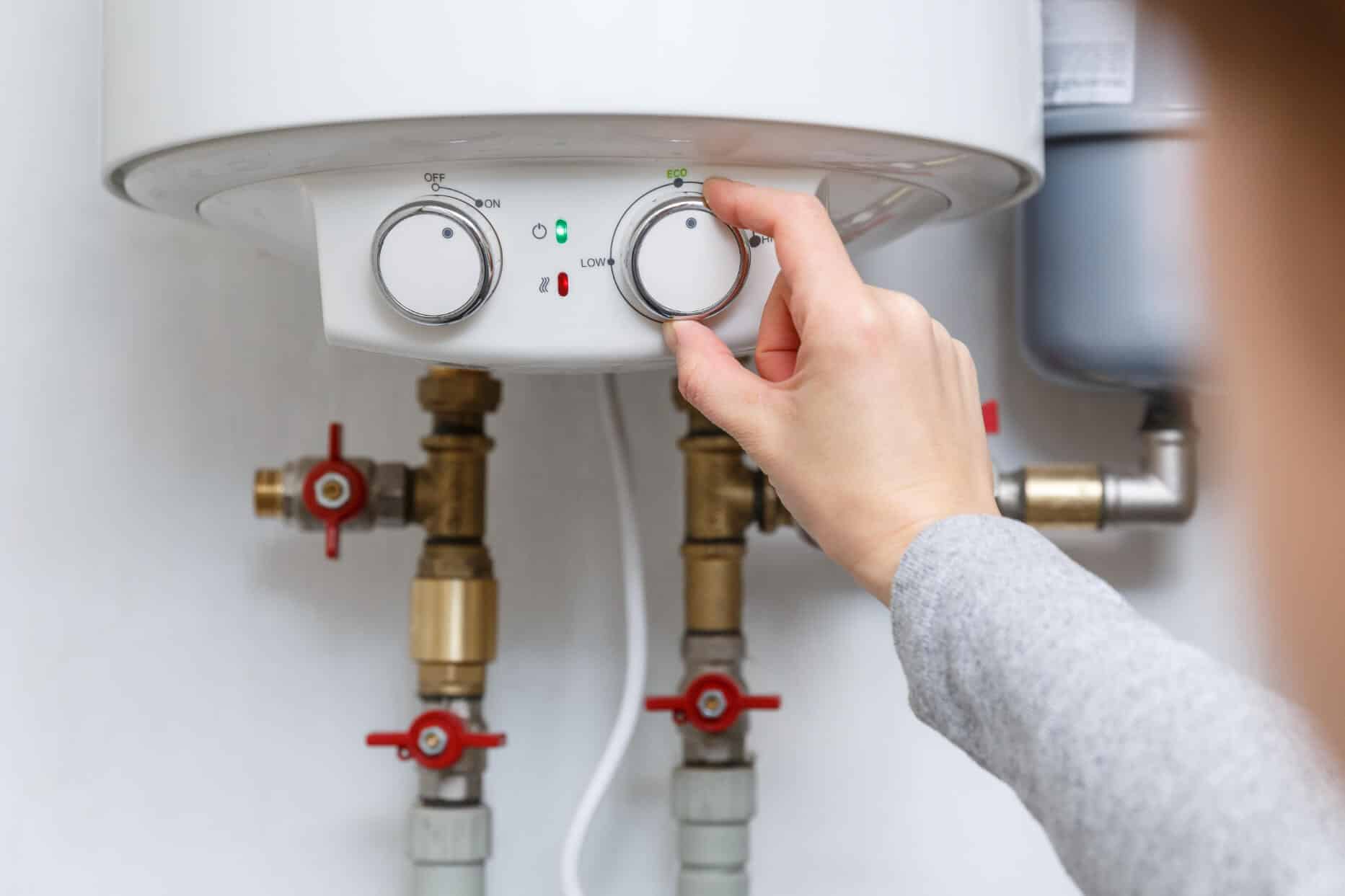
What is a T&P valve and how does it work?
The temperature and pressure relief valve is a spring-loaded safety device rated to open at a specific threshold — typically 150 PSI or 210°F, whichever is reached first. The valve body threads into a port on the tank wall, usually on the upper side or top, and a discharge tube directs the released water safely toward the floor or a drain. When conditions inside the tank exceed safe limits, the spring compresses, the valve seat lifts, and water escapes to relieve the pressure or temperature buildup.
Think of it as a pressure cooker's safety vent. If the heating element or gas burner continues to fire after the thermostat fails, the water temperature rises unchecked. Water at 212°F at atmospheric pressure turns to steam. In a sealed tank holding 40 to 50 gallons, that steam expansion generates enormous force — enough to launch a water heater through a roof. This is not theoretical. The Mythbusters crew demonstrated it, and plumbing trade journals document real-world tank explosions. The T&P valve exists specifically to prevent that scenario. It is not optional, and it is not a feature you can ignore.
Every tank water heater sold in the United States ships with a T&P valve installed from the factory. Most are stamped with their rating directly on the body: 150 PSI and 210°F. The valve should always match or exceed the working pressure and temperature rating of the tank. If you replace a T&P valve yourself or hire someone to do it, confirming the rating match is step one.
Why Las Vegas is hard on T&P valves
T&P valves are designed to last the life of the water heater under normal conditions. Las Vegas conditions are not normal. Two factors unique to the valley accelerate T&P valve failure well ahead of schedule: hard water and thermal expansion.
Hard water mineral buildup. Las Vegas water, sourced primarily from Lake Mead via the Colorado River, tests between 16 and 25 grains per gallon of hardness. That translates to roughly 270 to 425 milligrams per liter of dissolved calcium and magnesium. The U.S. Geological Survey classifies anything over 180 mg/L as "very hard" — we exceed that threshold year-round. Inside your water heater, those dissolved minerals precipitate out as calcium carbonate scale every time the water is heated. That scale accumulates on every internal surface, including the T&P valve's spring mechanism and seat.
Over time, mineral deposits cement the valve in the closed position. The spring still works. The seat still exists. But a layer of calcium between the moving parts physically prevents the valve from opening when it needs to. We have pulled T&P valves off tanks in Henderson and Summerlin that were locked solid with white mineral crust — valves that would not have opened under any conditions. On a tank with a failed thermostat, that is a catastrophic failure waiting to happen.
Thermal expansion from extreme heat. Water expands when heated. A 40-gallon tank at 60°F that gets heated to 120°F gains roughly half a gallon of volume. In a closed plumbing system — which is what most Las Vegas homes have thanks to backflow prevention valves on the main supply — that extra volume has nowhere to go. Pressure in the system climbs, sometimes reaching 100 to 120 PSI during heavy heating cycles. Most homes in the valley don't have expansion tanks installed, which means the T&P valve absorbs the pressure spikes every time the water heater cycles. During summer months, when incoming water temperature from the municipal supply can reach 85 to 90°F and ambient garage temperatures hit 115°F or higher, these thermal cycling events happen frequently. Each small pressure spike exercises the valve, and if the seat is already compromised by mineral scale, it either weeps constantly or seizes shut. Neither outcome is acceptable.
Step-by-step: how to test your T&P valve
Testing a T&P valve is straightforward and takes under a minute. We recommend doing this once a year — ideally during a fall or spring routine when you're also flushing sediment from the tank. Here is the procedure we walk homeowners through:
Step 1 — Clear the area. Make sure nothing is stored against the water heater or blocking the discharge tube. The discharge pipe should terminate 6 inches or less above the floor or into a drain. It should never be capped, plugged, or connected to a closed pipe. If yours is capped, remove the cap before testing — and leave it off permanently.
Step 2 — Place a bucket under the discharge tube. When you test the valve, hot water will come out. A 5-gallon bucket positioned under the end of the discharge pipe keeps the floor dry and protects your feet from scalding water. Wear closed-toe shoes. The water coming out of this valve is at tank temperature — typically 120 to 140°F.
Step 3 — Lift the lever. The T&P valve has a metal lever or tab on top. Lift it straight up — about halfway is sufficient. You should hear a rush of water and see it flowing through the discharge pipe into your bucket. If water flows freely: the valve is functional. Release the lever and the flow should stop immediately and completely.
Step 4 — Evaluate the result. Three possible outcomes:
- Water flows when lifted, stops when released. The valve is working correctly. No action needed until next annual test.
- No water comes out, or only a trickle. The valve is likely stuck or mineral-scaled internally. Do not force it. A stuck T&P valve needs to be replaced — it cannot be cleaned or repaired in place.
- Water continues to drip or flow after you release the lever. The valve seat is damaged or debris is preventing a full seal. This valve needs replacement. A continuously dripping T&P valve wastes water (potentially 1 to 5 gallons per day), creates moisture problems, and indicates the valve cannot hold a reliable seal.
Step 5 — Check the discharge pipe. While you're down there, verify the pipe is intact, not corroded, and not routed upward at any point. Water should flow strictly downward by gravity. The pipe should be the same diameter as the valve outlet — typically 3/4 inch — and should not be reduced in size at any fitting. Building code requires this for a reason: a restricted discharge pipe creates backpressure that prevents the valve from relieving fully.
One important caution: if you have never tested the T&P valve on an older water heater — say 8 years or more — there is a small risk that lifting the lever on a heavily scaled valve could cause it to leak continuously after the test because sediment dislodges from the seat. This is actually a good thing to discover during a controlled test rather than during an actual over-pressure event. If the valve starts dripping after testing, replace it. The valve was already compromised; the test simply revealed it.
Signs your T&P valve needs replacement
Between annual tests, watch for these indicators that the valve is failing or has already failed:
- Dripping or weeping from the discharge pipe. Even occasional drips mean the valve seat is not holding. This is the most common symptom we see on service calls.
- Visible mineral crust on the valve body or lever. White or tan calcium deposits around the valve indicate hard water has penetrated the mechanism. If it looks scaled on the outside, it's worse on the inside.
- The lever won't move. If you can't lift the test lever with normal hand force, the valve is seized. Do not use pliers or a wrench on the lever — you risk breaking the valve body off the tank. A seized valve must be replaced by a plumber.
- Corrosion on the valve body or discharge pipe. Green oxidation on brass, or rust on a galvanized discharge tube, indicates long-term moisture exposure that weakens the components.
- The valve is more than 5 years old in Las Vegas. Manufacturers rate T&P valves for the life of the tank, but that assumes moderate water conditions. In our hard water, we recommend proactive replacement every 4 to 5 years even if the valve tests fine. A T&P valve costs $15 to $30 for the part — it's the cheapest insurance on your water heater.
Replacement cost and what to expect
T&P valve replacement is one of the least expensive plumbing repairs, and one of the most impactful from a safety standpoint. Current pricing in the Las Vegas market:
- T&P valve part: $15 to $30 for a standard Watts or Rheem replacement valve rated at 150 PSI / 210°F.
- Professional installation: $100 to $200 total, including the valve. The job takes a licensed plumber 20 to 40 minutes — drain a few gallons from the tank, unthread the old valve, wrap the threads with Teflon tape, install the new one, refill, and test.
- Discharge pipe replacement (if needed): Add $30 to $75 if the existing copper or CPVC discharge tube is corroded or improperly routed.
If you're handy with plumbing and comfortable working around a hot water heater, a DIY replacement is feasible. The valve is a standard 3/4-inch NPT thread. You'll need a pipe wrench, Teflon tape, and a garden hose to drain the tank down below the valve port. The critical point: match the replacement valve's BTU and PSI rating to the tank's label — never install a lower-rated valve. And always confirm the discharge pipe is properly routed after installation.
For most homeowners, having a licensed plumber handle this during an annual maintenance visit is the most practical approach. We include T&P valve testing in our standard water heater service calls and can replace it on the spot if it fails the test.
Thermal expansion: the hidden pressure problem
A properly functioning T&P valve is the last line of defense, but it shouldn't be the first. If your T&P valve is weeping regularly — opening slightly during normal heating cycles — the real problem is usually excessive system pressure from thermal expansion, not a defective valve.
Las Vegas homes built after the late 1990s are required to have a backflow prevention device on the main water supply line. That device creates a closed system: water can flow in from the street, but it cannot flow back out. When the water heater fires and the water expands, there's no outlet for the extra volume. Pressure climbs. The T&P valve bleeds off the excess.
The correct solution is a thermal expansion tank — a small pressurized tank (typically 2 to 5 gallons) installed on the cold water inlet line to the water heater. It absorbs the expanded volume without raising system pressure. A properly sized and charged expansion tank keeps system pressure below 80 PSI during heating cycles, which is well within the comfort zone for both the T&P valve and all the other plumbing fixtures in the house.
Cost for a thermal expansion tank installed in Las Vegas runs $150 to $350 depending on tank size and access. If your T&P valve is chronically dripping or you're replacing it every year or two, an expansion tank will resolve the root cause and dramatically extend the life of both the valve and the water heater itself. We check for expansion tanks during every water heater service call and recommend installation when the system lacks one.
When to call a professional
Testing the T&P valve is a safe DIY task for most homeowners. Replacing it is within reach if you have basic plumbing skills. But certain situations call for a licensed plumber:
- The valve is seized and won't lift by hand. Forcing a corroded valve risks breaking the fitting and flooding the area with tank-temperature water.
- The valve is leaking from the body (not the discharge pipe). A leak at the threads or the valve body itself means the tank port or the valve is damaged. This needs professional assessment — the tank port threads may need to be cleaned and retapped, or the tank may be compromised.
- The discharge pipe is routed improperly or missing. Code requires the discharge pipe to terminate within 6 inches of the floor, point downward, and not be reduced in size. If yours goes into a wall, connects to a drain line under pressure, or has been removed entirely, a plumber needs to correct it.
- You've replaced the valve and it still leaks. This usually indicates excessive system pressure from thermal expansion. A plumber can test static and dynamic pressure with a gauge, diagnose whether an expansion tank is needed, and install one. System pressure above 80 PSI during heating cycles confirms the diagnosis.
- The water heater is more than 10 years old. If you're dealing with a T&P valve issue on an aging tank, the better question might be whether the entire unit is due for replacement. We'll give you an honest assessment of remaining tank life versus the cost of ongoing repairs.
Our plumbing team handles T&P valve replacements, expansion tank installations, and full water heater service throughout Las Vegas, Henderson, North Las Vegas, Summerlin, and the surrounding communities. Call (702) 567-0707 to schedule.
Frequently Asked Questions
How often should I test the T&P valve on my water heater?
Test it once a year at minimum. In Las Vegas, where hard water accelerates mineral buildup on internal valve components, annual testing is essential to confirm the valve hasn't seized. The test takes under a minute: lift the lever, verify water flows freely through the discharge pipe, and confirm it stops completely when you release the lever. If you're on a maintenance plan, we include this in every water heater service visit.
Why is my T&P valve dripping or leaking water?
Two common causes. First, the valve seat is worn or has mineral debris preventing a full seal — the valve needs replacement ($100 to $200 installed). Second, excessive system pressure from thermal expansion is forcing the valve open during normal heating cycles. If you have a closed plumbing system (most Las Vegas homes do) and no thermal expansion tank, the T&P valve is absorbing pressure spikes every time the water heater fires. Installing a thermal expansion tank ($150 to $350) resolves the root cause and stops the chronic dripping.
Can I cap or plug the T&P valve discharge pipe to stop a leak?
Absolutely not. Capping, plugging, or restricting the discharge pipe is a serious safety hazard and a building code violation. The discharge pipe is the exit path for emergency pressure relief. If the valve cannot discharge freely, pressure builds unchecked inside the tank, which can result in a catastrophic rupture. If the valve is leaking, replace the valve — never block the outlet. If you've found a capped discharge pipe in your home, have it corrected immediately by a licensed plumber.
How much does it cost to replace a water heater T&P valve in Las Vegas?
The valve itself costs $15 to $30 at any plumbing supply house. Professional installation runs $100 to $200 total including the valve, labor, and Teflon tape. The job takes 20 to 40 minutes for a licensed plumber. If the discharge pipe also needs replacement due to corrosion, add $30 to $75. Given that a T&P valve failure can lead to a tank rupture and thousands of dollars in water damage, this is one of the highest-value plumbing repairs you can make.
What is a thermal expansion tank and do I need one?
A thermal expansion tank is a small pressurized vessel (2 to 5 gallons) installed on the cold water supply line to your water heater. It absorbs the volume increase that occurs when water is heated in a closed plumbing system. Most Las Vegas homes have backflow prevention valves that create a closed system, which means thermal expansion has no outlet except the T&P valve. If your T&P valve drips regularly or you've replaced it more than once in three years, an expansion tank is likely the real fix. Cost is $150 to $350 installed. Call us at (702) 567-0707 and we can test your system pressure to confirm whether you need one.
Protect Your Water Heater and Your Home
The Cooling Company is a licensed HVAC and plumbing contractor serving Las Vegas, Henderson, North Las Vegas, Summerlin, and the surrounding communities. Whether you need a T&P valve test, a replacement, a thermal expansion tank installation, or a full water heater inspection, our team handles it with upfront pricing and same-day service in most cases.
Call (702) 567-0707 to schedule a water heater safety check. Ask about our maintenance plans — annual plumbing and HVAC service that keeps every safety device in your home working the way it should.