
Short answer: Las Vegas air conditioners fail an average of 5-7 years earlier than the national average because five compounding environmental factors destroy components faster than any other major U.S. city: sustained ambient temperatures above 115°F that push condensers past their design limits, desert dust and sand that clogs coils three times faster than national norms, hard water (284 ppm average) that corrodes evaporator coils and clogs drain systems, intense UV radiation that degrades wiring insulation, capacitors, and fan blade polymers, and 2,500-3,500 annual cooling hours compared to the 1,000-1,500 national average. The good news: each of these killers has specific, actionable countermeasures. Call The Cooling Company at (702) 567-0707 to discuss a protection plan for your system.
Key Takeaways
- Las Vegas AC lifespan is 8-12 years versus the 15-20 year national average — a gap driven entirely by environmental conditions, not product quality. The same unit that lasts 18 years in Atlanta lasts 10-12 in Las Vegas.
- Extreme heat is the primary killer: At 115°F ambient temperature, a standard single-stage compressor operates near or above its rated high-pressure limit. Sustained high-pressure operation accelerates wear on compressor bearings, valves, and winding insulation.
- Dust causes more coil damage than most homeowners realize: A single Las Vegas haboob deposits more particulate on a condenser coil than weeks of normal operation in most U.S. cities. Clogged coils raise head pressure further, compounding heat stress.
- Hard water destroys evaporator coils over time: Las Vegas municipal water averages 284 parts per million total dissolved solids. Minerals deposit on evaporator coil surfaces and in condensate drain systems, reducing heat transfer efficiency and eventually causing coil corrosion.
- UV radiation is an underappreciated HVAC killer in the desert: Las Vegas averages 294 days of sunshine per year. UV degrades capacitor housings, plastic fan blades, wiring insulation, and condenser cabinet finishes in 5-8 years rather than the 12-15 typical in cloudier climates.
- Runtime hours dwarf national norms: 3,000 hours per year means Las Vegas systems accumulate the equivalent of 6-7 years of national-average wear in a single year. After 10 Las Vegas summers, your system has the operational age of a 60-70 year national-average system.
The Truth About AC Life Expectancy in Las Vegas
Walk into any Las Vegas HVAC supply house and ask the counter staff what they see most of: they will tell you 8-to-10-year-old systems coming in for replacement that the national guides say should have 7 more years of life. They see compressors that failed at year 9 when the same model might run 18 years in Minneapolis. They see condenser coils so corroded and clogged that cleaning is no longer possible. They see capacitors that failed at two years instead of five.
This is not a brand-quality problem. It is a Las Vegas problem. And it is five specific, identifiable problems that interact with each other in ways that accelerate overall system failure. Understanding each one — the physics of what happens, the specific damage it causes, and what you can do about it — is the foundation of protecting your investment.
The U.S. Department of Energy estimates average central air conditioner life expectancy at 15-20 years. That estimate assumes maintenance and moderate operating conditions. In Las Vegas, properly maintained systems from premium manufacturers reach 14-18 years. Neglected systems commonly fail at 5-8 years. The gap between those two outcomes is entirely within a homeowner's control. If you're seeing warning signs that your system may not make it, our guide to the 10 signs you need a new AC in Las Vegas covers each signal with Las Vegas-specific context.
For guidance on selecting a system that survives desert conditions best, see our best air conditioners for extreme Las Vegas heat guide and our top 25 AC brands rankings. This article focuses on the why — why Las Vegas destroys systems, what the specific damage mechanisms are, and what proven countermeasures actually work.
Killer 1: Extreme Heat — 115°F Pushes Systems Past Design Limits
The Physics of Why Heat Kills Compressors
An air conditioner works by moving heat from inside your home to outside. The outdoor condenser coil is where that heat transfer happens. For the coil to reject heat, it must be hotter than the outdoor air. In a mild climate where outdoor temperatures peak at 95°F, a well-designed system operates with a coil temperature around 120-125°F — a comfortable margin for efficient heat rejection.
In Las Vegas, when outdoor air temperature reaches 115°F, the condenser coil must operate at 140-150°F to reject heat effectively. This is not a small difference. Every additional degree of coil temperature translates to higher refrigerant condensing pressure. Higher condensing pressure means the compressor must work harder to pump refrigerant against that pressure. And harder compressor operation means higher operating temperatures inside the compressor itself.
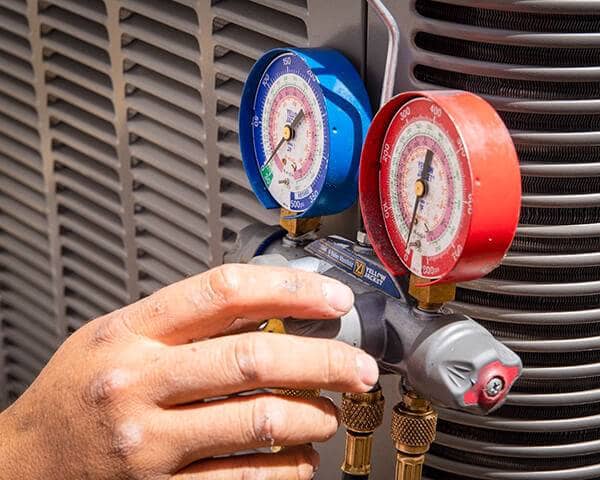
Standard residential compressors are designed with maximum operating pressures in mind. R-410A refrigerant (the standard in systems installed through 2024) has a condensing pressure around 415 psi at 120°F coil temperature and approaches 490-510 psi at 145°F coil temperature. Sustained operation near the high end of the design envelope accelerates wear on every component inside the compressor: the reciprocating or scroll compressor valves, the motor windings, and the oil lubrication system that keeps metal surfaces separated.
Modern variable-speed and inverter compressor designs handle this better than single-stage compressors because they can modulate output downward when extreme heat makes full operation inefficient. A single-stage compressor has only two states: full on or full off. In 115°F heat, it hammers away at full capacity, generating maximum internal heat and pressure, until it satisfies the thermostat or fails trying.
Specific Damage From Sustained High Heat
| Component | National Average Failure Rate | Las Vegas Failure Rate | Failure Mechanism |
|---|---|---|---|
| Compressor | Failure at year 12-18 | Failure at year 7-12 | Bearing wear from sustained high-pressure operation; winding insulation breakdown from heat |
| Capacitor | Replacement at year 5-8 | Replacement at year 2-5 | Capacitance value degrades faster at high temperatures; electrolyte evaporation in extreme heat |
| Contactor | Replacement at year 5-10 | Replacement at year 3-7 | Contact pitting from arcing accelerated by high-amperage starts in extreme heat |
| Fan motor | Failure at year 10-15 | Failure at year 6-10 | Bearing failure from heat; winding insulation breakdown |
| Condenser coil | Replacement at year 12-18 | Replacement at year 8-14 | Formicary corrosion and joint stress from thermal cycling at extreme temperatures |
Countermeasures Against Extreme Heat
Choose equipment rated for high-ambient operation. The best manufacturers publish performance data at 115°F and above. Look for systems that maintain high EER2 at elevated temperatures. The Lennox SL28XCV, Carrier Infinity 26, and Trane XV20i all have documented high-ambient performance data available. Generic "SEER2" ratings tell you nothing about 115°F operation.
Maintain condenser clearance strictly. The outdoor condenser unit needs unrestricted airflow on all sides: 24 inches minimum on all sides, 48 inches above. Restricting airflow raises coil temperature, raises condensing pressure, and accelerates every failure mechanism described above. Decorative fencing, shrubs growing close to the unit, and stored items near the condenser are all common in Las Vegas yards and all cause measurable damage.
Install a condenser coil protectant coating. Products like Nu-Calgon Coil Coating or Lennox's Quantum Coil technology apply a protective layer that improves heat rejection efficiency and reduces operating temperatures. Applied by a professional during a tune-up, these coatings reduce condenser coil temperature by 8-15°F — a meaningful improvement in 115°F ambient conditions.
Consider a condenser shade structure, carefully. A shade structure over the condenser that blocks direct solar radiation on the unit while allowing unrestricted airflow can reduce ambient temperature at the coil by 10-15°F. The critical requirement: the structure must not restrict airflow. Open-sided pergola structures with 50% or greater open area on the sides are appropriate; solid fencing or walls are counterproductive and harmful.
Upgrade to variable-speed or inverter-driven equipment. When the time comes for replacement, choose a system with an inverter compressor and variable-speed motor. These systems manage extreme heat far better by modulating output rather than hammering at full capacity. They also consume dramatically less electricity during the 90%+ of hours when the load is less than maximum.
Killer 2: Desert Dust and Sand — Coil Clogging at 3x the National Rate
What Las Vegas Dust Actually Does to HVAC Equipment
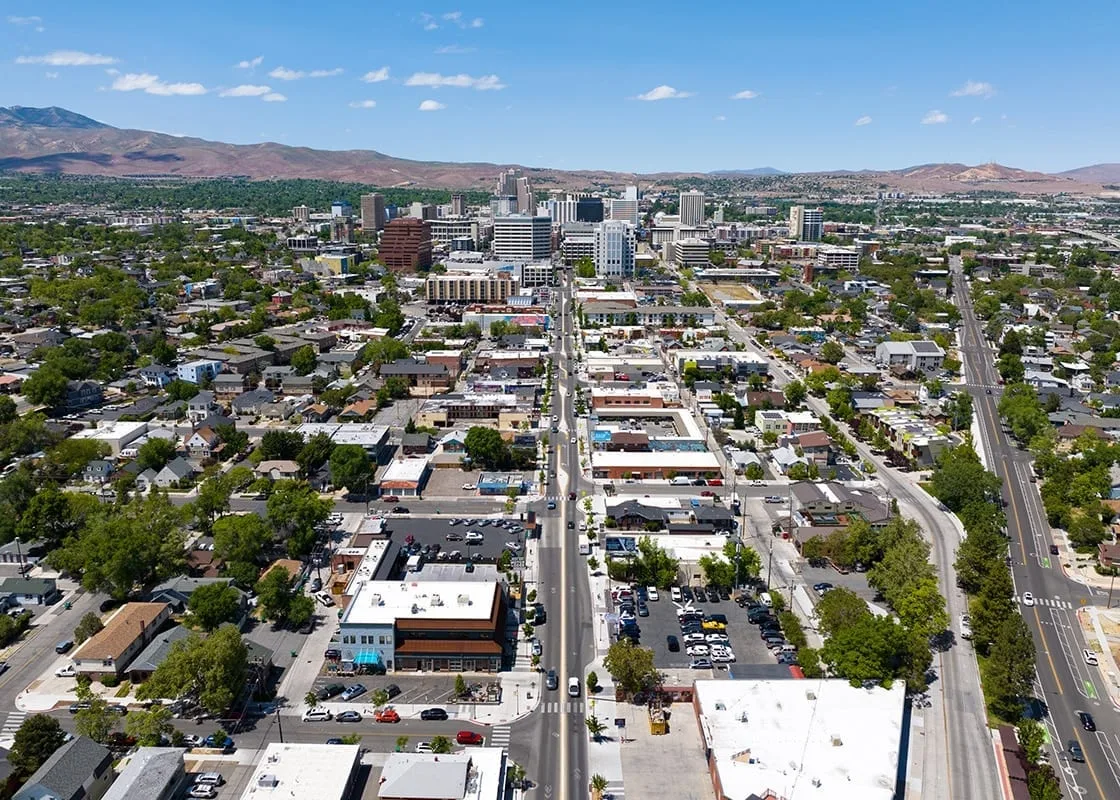
Las Vegas sits in the Mojave Desert surrounded by hundreds of miles of exposed soil, sand, and construction activity. The particulate environment is measurably more aggressive than most U.S. cities. EPA particulate matter data for the Las Vegas valley consistently shows elevated PM10 levels (particles 10 microns and smaller) compared to national averages, driven by both natural desert dust and the region's ongoing construction activity.
This particulate attacks two components of your HVAC system simultaneously: the air filter and the condenser coil.
On the filter side, Las Vegas dust means filters load to maximum restriction in 30-45 days during summer rather than the 90 days the manufacturer printed on the packaging. A fully loaded filter restricts airflow to the evaporator coil, reducing heat absorption and causing the coil to drop below freezing. Ice forms on the coil, blocking airflow completely. The compressor continues running with no load, causing liquid refrigerant to slug back into the compressor. A single ice-up event can damage a compressor. Repeated events destroy it.
On the condenser coil side, dust bypasses the indoor filter entirely because it comes from outside. Every time the condenser fan runs, it draws outdoor air (with all its suspended particulate) through the coil fins. Over time, this deposits a layer of dust on the interior fin surfaces — the surfaces responsible for heat rejection. A 0.1-inch dust layer on condenser fins reduces heat transfer efficiency by 15-25%, raising condensing pressure and compressor operating temperature, which in 115°F heat already strains the system.
The Haboob Effect
Las Vegas experiences haboobs (dust storms) multiple times per summer. A significant haboob in July 2023 deposited measurable dust accumulation across the entire valley in a single hour-long event. After a haboob, condenser coils in Las Vegas can have visible gray-brown coating on the fin surfaces. Running a system with a severely dust-coated condenser in summer heat is a guaranteed way to stress the compressor.
The problem is compounded by location: most condensers in Las Vegas sit on the south or west side of the home, directly facing afternoon prevailing winds that carry dust from open desert areas. Homes near construction zones, dirt roads, or the urban-desert interface (much of the valley's newer development) face even higher dust loads.
How Dust Damages the Evaporator Coil
The evaporator coil (the indoor coil) is protected from outdoor dust by the air filter — but only if the filter is doing its job. When filters are changed too infrequently (the 90-day schedule on the package), Las Vegas dust bypasses or saturates the filter and begins depositing on the evaporator coil fins. Unlike the condenser coil, which can be rinsed with a garden hose, cleaning a loaded evaporator coil is a professional job requiring chemical coil cleaner, often a tarp to protect flooring, and sometimes refrigerant recovery depending on coil access.
Evaporator coil cleaning, when needed, costs $100-$350 depending on access and severity. This is entirely avoidable with proper filter maintenance.
Countermeasures Against Desert Dust
Monthly filter replacement during cooling season. This is not negotiable in Las Vegas. Use a MERV 10-11 pleated filter for most homes. Higher MERV ratings help but increase static pressure — ensure your system's blower can handle the restriction. See our complete Las Vegas HVAC maintenance checklist for detailed filter guidance.
Consider a 5-inch media filter housing upgrade. A 5-inch media filter has 4-5 times the surface area of a 1-inch filter. This means it captures more particulate before reaching maximum restriction, extending service intervals to 6-9 months. For homes near construction or with high dust loads, this upgrade pays for itself quickly in avoided filter costs and reduced coil contamination.
Post-haboob condenser inspection and rinse. After any significant dust storm, inspect the condenser visually before running the system. If there is visible coating on the fins, rinse gently with a garden hose from the inside out (or from the top, pushing air direction through the fins) at low pressure. Do not use a pressure washer — it bends fins and reduces heat transfer.
Annual professional condenser coil cleaning. A garden hose rinse removes surface dust but does not penetrate the full depth of the coil fins. Annual professional cleaning with an appropriate coil cleaner (Nu-Calgon Evap Pow'r or equivalent) reaches the full depth and removes accumulated bio-growth, minerals, and embedded particulate. This is a standard part of every quality AC tune-up.
Return air pathway protection. In homes with return air pathways through unconditioned spaces (attic chases, wall cavities), dust and air quality in those spaces affects the filtration load. Sealed return air plenums directly connected to the air handler are superior to distributed return pathways through building cavities.
The Interaction Effect: Why All Five Killers Together Are Worse Than the Sum
Each killer described in this guide is damaging when acting alone. What makes Las Vegas uniquely destructive is that all five operate simultaneously, compounding each other's damage in ways that are not simply additive. Consider how they interact on a single July afternoon:
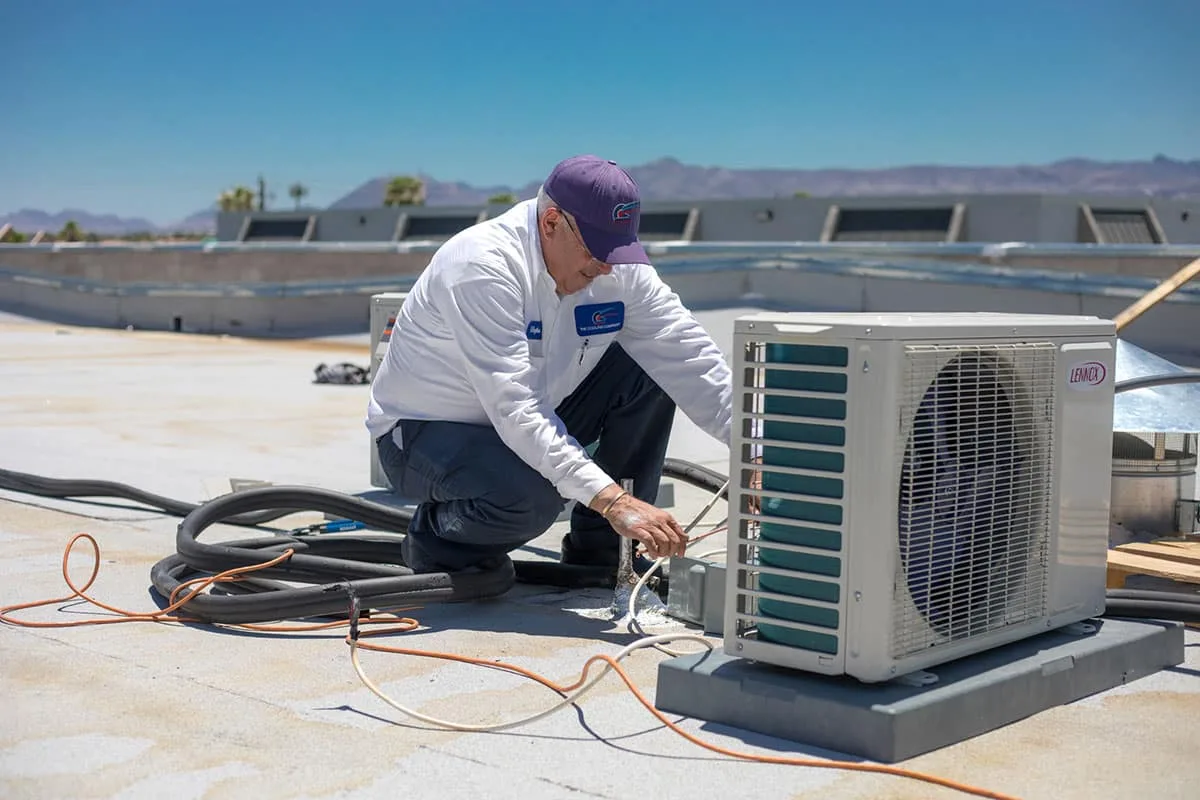
Extreme heat raises condensing pressure, forcing the compressor to work harder. Desert dust has coated the condenser coil fins from last week's haboob, raising condensing pressure further. The air filter is at 45 days and beginning to restrict airflow, reducing evaporator coil heat absorption. UV radiation has degraded the refrigerant line insulation enough that the suction line is absorbing heat from the 110°F outdoor air, superheating the refrigerant returning to the compressor. And the system has already run 2,900 hours this year — well above the national average for an entire season. The capacitor is at 4.5 years old and the capacitance value is dropping.
Each of these factors alone would not cause immediate failure. Together, on the hottest afternoon of the year, they push a compressor that is 2-3 years closer to failure than it would be in a moderate climate over the edge. This is why Las Vegas sees so many compressor failures on the hottest days of the year — not because the systems are poorly made, but because five compounding stressors converge at precisely the moment of peak demand.
Understanding this interaction is the argument for comprehensive maintenance rather than addressing single issues in isolation. Cleaning the condenser coil while leaving the filter unchanged helps, but does not solve the problem. Replacing the capacitor without addressing duct leakage helps, but does not fully protect the system. The comprehensive approach — monthly filters, twice-annual professional tune-ups, UV-protected insulation, and proactive component replacement — addresses all five killers together, which is the only way to achieve the full benefit of each individual intervention.
Killer 3: Hard Water — The Silent Destroyer of Evaporator Coils and Drain Systems
How Hard Is Las Vegas Water?
Las Vegas gets most of its water from Lake Mead via the Colorado River. The Las Vegas Valley Water District publishes annual water quality reports showing total hardness consistently in the range of 250-300 parts per million (mg/L), with calcium carbonate as the primary mineral. For reference, water above 180 ppm is classified as "very hard." Las Vegas water at 250-300 ppm is in the upper range of that category.
This affects HVAC systems in two specific ways: evaporator coil mineral scale accumulation and condensate drain system calcification.
Mineral Scale on Evaporator Coils
When your air conditioner removes humidity from the air, condensate water drips off the evaporator coil fins and into the drain pan. In Las Vegas, that water carries 250-300 ppm of dissolved minerals. Some of that water evaporates back off the coil fins rather than fully draining — it is a moist, warm environment. When the water evaporates, the minerals remain on the fin surfaces as a white, chalky scale deposit.
Over time (typically 5-10 years of operation), this mineral scale builds up on evaporator coil fins the same way it builds on faucet aerators and shower heads. The scale is an excellent thermal insulator — terrible for a component whose job is to transfer heat from air to refrigerant. A 1-millimeter scale layer on evaporator fins reduces heat transfer efficiency by 10-20%. This forces the compressor to work harder to achieve the same cooling, raises operating pressure and temperature, and contributes to premature failure.
Mineral scale also narrows the airflow passages between fins. In severe cases, accumulated scale combined with dust can block airflow through sections of the coil, creating cold spots that freeze and hot spots that restrict airflow. We have seen Las Vegas evaporator coils in 12-15 year old systems that were effectively coated with a 2-3mm mineral crust across most of their fin surface area.
Condensate Drain System Calcification
The condensate drain line — typically 3/4-inch PVC — carries mineral-laden condensate water from the air handler to the exterior of the home. Over time, minerals deposit inside the drain line, reducing its internal diameter. This is exactly the same mechanism that clogs household plumbing in hard-water areas. A partially blocked drain line flows slowly; a fully blocked line overflows the drain pan.
In Las Vegas's monsoon season (July-September), a properly functioning 3-ton AC system removes 15-25 gallons of condensate per day. If that drain line is blocked or severely restricted, that water volume has nowhere to go except the drain pan. Pan overflow from an attic air handler can cause:
- Ceiling drywall saturation and collapse in severe cases
- Insulation damage in the attic
- Mold growth in ceiling cavities (extremely difficult and expensive to remediate)
- Electrical damage to fixtures below the air handler
Water damage remediation from a condensate overflow in a Las Vegas attic typically costs $2,000-$8,000 depending on the extent of the damage and whether mold remediation is required.
Countermeasures Against Hard Water Damage
Annual professional condensate drain flush. During every professional tune-up, the technician should flush the condensate drain with pressurized water or use a wet-dry vacuum at the outlet to clear any restriction. This is standard on any quality tune-up; if your contractor does not do this, ask specifically for it.
Biannual DIY drain line maintenance during monsoon season. Between professional visits, pour half a cup of distilled white vinegar (slightly acidic — effective at dissolving calcium carbonate scale) into the drain access port near the air handler, followed by water. Do this monthly during July-September when condensate volume is highest and the drain is most likely to back up.
Whole-home water softener. A water softener eliminates the hard water problem at the source for all household plumbing and HVAC condensate. Ion exchange softeners replace calcium and magnesium ions with sodium ions, producing water that does not form scale. Installation cost is $800-$2,500. In Las Vegas, water softeners protect not just HVAC systems but also water heaters, dishwashers, washing machines, and plumbing fixtures from scale accumulation. The total benefit across all household systems often justifies the investment.
Acid-wash evaporator coil cleaning. When mineral scale has accumulated significantly on an evaporator coil, a professional cleaning with an acid-based coil cleaner (carefully applied to avoid damaging aluminum fins) removes the scale buildup and restores heat transfer efficiency. This is a more intensive service than standard coil cleaning and may cost $150-$300. For systems more than 8 years old in Las Vegas, this service is often warranted and can extend system life significantly.
Install a secondary float switch on the condensate drain pan. A secondary safety float switch shuts off the AC system if the primary drain fails and the pan begins filling. These cost $30-$50 in parts and are an inexpensive insurance policy against the $2,000-$8,000 water damage scenario. Any home with an air handler in the attic should have one.
Killer 4: UV Radiation — 294 Sunny Days per Year Destroys Polymer Components
What UV Radiation Does to HVAC Equipment
Las Vegas averages 294 days of sunshine per year — more than virtually any other major U.S. city. UV radiation is the primary mechanism of outdoor material degradation: it breaks polymer chains in plastics, rubbers, and insulation materials, causing brittleness, cracking, and eventual failure.
For your outdoor HVAC system, the specific components at risk from UV exposure are:
Wiring insulation and jacket materials. The electrical conduit, disconnect box wiring, and low-voltage thermostat wiring between the outdoor unit and disconnect are all exposed to UV. Plastic insulation that might last 20-25 years in a partially shaded location in a mild climate becomes brittle and begins cracking in 10-15 years in Las Vegas sun exposure. Cracked wiring insulation is a short-circuit and fire risk.
Capacitor housings. Run and start capacitors sit inside the condenser unit cabinet but near ventilation openings where UV can reach them. Capacitor electrolyte also degrades faster at sustained high temperatures. In Las Vegas, capacitors that have a rated life of 8-12 years under moderate conditions commonly fail at 3-6 years. The capacitor is the most frequently replaced component in Las Vegas HVAC systems. We replace hundreds of them every summer.
Fan blade materials. Condenser fan blades are typically made from reinforced polymer or glass-fiber-reinforced polymer. UV breaks down the polymer matrix over time, causing the blades to become brittle. A blade failure — where a blade cracks and fragments at 1,100 RPM — can destroy the condenser coil, the fan motor, and the cabinet. UV-degraded blades typically show visible fading, chalking, and hairline cracking before complete failure, but they are often not inspected at the detail level needed to catch this during marginal tune-ups.
Cabinet coating and metal protection. The condenser cabinet is typically baked-on powder coat or painted galvanized steel. UV and extreme heat cycles cause paint to fade, chalk, and eventually crack. Once the protective coating is compromised, the underlying metal is exposed to oxygen and humidity, accelerating corrosion. This is less of a functional problem (the cabinet is aesthetic), but cabinet degradation is a leading indicator of overall system condition and component UV exposure.
Refrigerant line insulation (Armaflex/foam). The suction line (large copper line) between the outdoor and indoor units is insulated with closed-cell foam to prevent condensation and heat gain. In Las Vegas sun, un-protected foam insulation deteriorates visibly within 3-5 years. Degraded insulation allows the suction line to absorb heat from the hot outdoor environment, which superheats the refrigerant returning to the compressor. The compressor is designed to pump cool gas, not hot gas. Superheated refrigerant returning to the compressor raises compressor discharge temperature, leading to oil breakdown and accelerated wear.
Countermeasures Against UV Damage
UV-resistant refrigerant line insulation. When line insulation is replaced (typically every 5-8 years in Las Vegas), specify UV-resistant insulation with a foil or UV-stabilized jacket. Standard black foam insulation without UV protection will degrade to powder in 4-6 Las Vegas summers. Foil-jacketed insulation lasts significantly longer.
Annual visual inspection of wiring and insulation. During your professional tune-up, ask the technician to specifically inspect the outdoor wiring, disconnect box, and refrigerant line insulation for UV damage. Early replacement of degraded wiring insulation prevents shorts; early replacement of refrigerant line insulation prevents compressor damage from superheated suction.
Proactive capacitor replacement. Because capacitors fail so reliably and predictably in Las Vegas — typically at 3-6 years — some homeowners choose to proactively replace capacitors at year 4-5 during a scheduled tune-up rather than waiting for failure. Capacitor replacement during a tune-up costs $80-$150. Emergency capacitor replacement on a Saturday in July costs $250-$450. The math is clear.
Fan blade inspection at every tune-up. A quality technician will inspect fan blades for UV degradation at every tune-up: looking for chalking, fading, hairline cracks, and deformation. A fan blade that shows significant UV degradation should be replaced proactively. A replacement blade costs $50-$100; a failed blade that destroys a coil costs $500-$1,500.
Shade structure for south and west-facing units. A properly designed shade structure (open-sided, unrestricted airflow, mounted above the unit) that blocks direct solar radiation on the cabinet and top of the unit reduces UV exposure dramatically and also lowers ambient air temperature around the unit by 10-15°F. This is one of the more cost-effective investments for a unit that will be in place for many years.
Killer 5: 2,500-3,500 Annual Runtime Hours — More Wear Per Year Than Any Other City
Why Runtime Hours Matter More Than Calendar Age
Mechanical components fail based on wear cycles, not calendar time. A compressor has a rated operational life in total hours of compression cycles. A fan motor has a rated bearing life in operating hours. Capacitors have a rated capacitance life in a combination of charge-discharge cycles and operating temperature hours.
In a moderate U.S. climate (think Kansas City or Charlotte), a central air conditioner runs approximately 1,000-1,500 hours per year. In Las Vegas, the same system runs 2,500-3,500 hours per year. This means a Las Vegas system accumulates 2-3 years' worth of national-average wear in a single calendar year.
After 10 calendar years in Las Vegas, your air conditioner has accumulated the equivalent operational wear of a 20-30 year old system in a moderate climate. The compressor that is rated for 80,000-100,000 hours of operation has been running nonstop at near-maximum capacity for 30,000+ hours. Capacitors that are rated for 6 years of average operation have been through 6 years of above-average cycling in above-average heat.
Las Vegas Runtime vs. National Average
| City | Cooling Degree Days (annual) | Estimated AC Runtime Hours | Relative Wear vs Las Vegas |
|---|---|---|---|
| Las Vegas, NV | 3,800-4,200 | 2,500-3,500 | Baseline (most demanding) |
| Phoenix, AZ | 4,000-4,500 | 2,800-3,600 | Comparable (similar extreme heat) |
| Miami, FL | 3,200-3,600 | 2,200-2,800 | High (more hours, lower peak temps) |
| Dallas, TX | 2,500-2,800 | 1,800-2,200 | High (hot summers, shorter season) |
| Atlanta, GA | 1,600-2,000 | 1,200-1,600 | Moderate |
| Chicago, IL | 700-900 | 500-800 | Low |
| Seattle, WA | 200-400 | 100-300 | Very low |
The Compounding Effect of All Five Killers
Each of the five killers described above is damaging on its own. What makes Las Vegas particularly destructive to HVAC equipment is that all five operate simultaneously and compound each other's effects.
Consider a compressor operating in Las Vegas: it faces extreme heat (raising operating pressure and temperature), degraded dust-coated condenser coils (further raising condensing pressure and temperature), reduced airflow from dust-loaded filters (reducing evaporator efficiency and potentially causing ice-up), and it is doing all of this for 3,000 hours per year. The interaction of these stressors means that a compressor in Las Vegas does not experience 5x the stress of a compressor in Seattle — it may experience 10x or more, because the stressors compound rather than simply add.
This is why we say a Las Vegas system without good maintenance is on track to fail in 5-8 years. The failures are not random — they are predictable consequences of specific, identifiable environmental conditions. And every one of those conditions has effective countermeasures.
What Brands Survive Las Vegas Best
Not all HVAC brands are equally well-suited to Las Vegas conditions. Our experience servicing thousands of Las Vegas systems since 2011 has given us a clear picture of which manufacturers build equipment that holds up and which build equipment that struggles.
Key Attributes That Predict Las Vegas Survival
Corrosion-resistant coil technology. Lennox's Quantum Coil uses polymer-coated aluminum fins that resist the corrosion mechanisms that attack standard copper-aluminum coils in alkaline desert air. Carrier's WeatherArmor utilizes similar coating technology. Standard bare aluminum or copper coils corrode faster in Las Vegas's combination of alkaline dust, hard water condensate, and UV.
Inverter-driven compressors. As discussed under Killer 1, inverter compressors handle extreme heat far better than single-stage compressors by modulating output rather than cycling at full capacity. Premium lines from Lennox (SL28XCV, XC21), Carrier (Infinity 26, 24), Trane (XV20i, XV18), Daikin, Mitsubishi, and others feature inverter technology. Standard builder-grade single-stage units do not.
Documented high-ambient performance ratings. The best manufacturers publish capacity and efficiency data at 115°F and 125°F ambient temperature. If a manufacturer does not publish this data, it is likely because the numbers are poor. Lennox, Carrier, and Trane all publish high-ambient performance tables. Request this data for any system you are evaluating.
Quality condenser cabinet and component protection. Look for powder-coated galvanized steel cabinets (not bare steel), UV-resistant fan blades, and properly gasketed electrical compartments. Budget-tier equipment from any brand often uses lower-grade materials in these areas.
For detailed brand comparisons and model-specific recommendations for Las Vegas conditions, see our top 25 air conditioning brands for 2026 and best air conditioners for extreme Las Vegas heat guides.
The Real Cost of System Failure: A 15-Year Comparison
Understanding the financial case for proper maintenance and component protection helps frame the investment decisions clearly.
| Scenario | System Life (Las Vegas) | Total 15-Year Cost |
|---|---|---|
| No maintenance, builder-grade system | 5-7 years to first major failure; replacement at year 7-9 | Initial system: $4,000-$6,000. Repairs: $1,500-$3,000. Replacement at year 8: $6,000-$9,000. 15-year total: $12,000-$18,000+ |
| Adequate maintenance, mid-tier system | 10-13 years before major failure | Initial system: $5,000-$8,000. Maintenance: $2,500-$4,500 (15 years). Repairs: $1,000-$2,000. 15-year total: $8,500-$14,500 |
| Proper desert maintenance, premium system | 15-20 years, possible 15-year span without replacement | Initial system: $8,000-$14,000. Maintenance: $3,000-$5,250 (15 years). Repairs: $500-$1,500. 15-year total: $11,500-$20,750 |
| Premium system + countermeasures (shade, UV insulation, water softener) | 18-22 years | Initial system + upgrades: $10,000-$16,000. Maintenance: $3,000-$5,250. Minimal repairs: $500-$1,000. 15-year total: $13,500-$22,250 — but no replacement needed in 15 years |
The premium system with proper maintenance does not always produce the lowest 15-year cost on paper — but it produces it with confidence and without the disruption and discomfort of a system failure in July heat. The scenario that produces the worst total cost and the worst experience is the builder-grade system without maintenance that fails early and requires replacement on a timeline the homeowner did not choose.
Practical Protection Plan: What to Implement First
If you are reading this and concerned about your current system, prioritize these actions roughly in order of impact and cost-effectiveness:
- Get on a proper filter change schedule. Monthly during summer (May-September), every 45-60 days during winter. Cost: $15-$25 per filter. Impact: protects evaporator coil, maintains airflow, prevents ice-up and compressor damage. This is the highest-impact, lowest-cost protective measure available.
- Schedule twice-annual professional tune-ups. Spring (March-April) and fall (October). Cost: $89-$150 per visit. Impact: catches capacitor degradation, low refrigerant, dirty coils, and electrical problems before they become expensive failures. See our Las Vegas HVAC maintenance checklist for full detail.
- Replace refrigerant line insulation if it is degraded. If your outdoor line insulation is cracked, crumbling, or missing, replace it with UV-protected foil-jacketed insulation. Cost: $100-$250 for a professional replacement. Impact: prevents superheated suction gas from damaging the compressor.
- Install a condensate drain secondary float switch. If you have an attic air handler without one. Cost: $30-$50 plus labor. Impact: prevents water damage from drain overflow during monsoon season.
- Proactively replace capacitors if system is 4+ years old. Ask your technician to test capacitance values and replace any capacitor measuring below 90% of rated value, rather than waiting for failure. Cost: $80-$150 per capacitor. Impact: avoids emergency failure during peak summer heat.
- Consider a shade structure if your unit is south or west facing. Cost: $300-$800 DIY, $500-$1,500 installed. Impact: reduces ambient temperature at coil by 10-15°F and UV exposure. Most effective for newer premium systems that will benefit from reduced operating stress for many years.
- Evaluate a whole-home water softener. If your system is more than 5 years old and you have not had one, discuss with a plumber. Cost: $800-$2,500. Impact: eliminates mineral scale accumulation in evaporator coil and drain system. Protects water heater, plumbing fixtures, and appliances simultaneously.
Frequently Asked Questions
How long should an air conditioner last in Las Vegas?
With proper desert maintenance — monthly filter changes in summer, twice-annual professional tune-ups, proactive capacitor replacement, and condenser coil cleaning — a quality system from a premium brand (Lennox, Carrier, Trane, Daikin) should last 14-18 years in Las Vegas. Without maintenance, 5-8 years is common. The difference is almost entirely maintenance and component care, not luck. The same system that lasts 18 years in Charlotte will last 12-14 in Las Vegas with proper maintenance, or 6-8 without it.
Why do capacitors fail so often in Las Vegas?
Capacitors fail faster in Las Vegas for two compounding reasons: heat and UV. Capacitors contain electrolyte that evaporates faster at sustained high temperatures. They also contain polymer housing materials that degrade under UV radiation. In a moderate climate, capacitors typically last 5-8 years. In Las Vegas, 3-6 years is typical. This is so predictable that we recommend proactive replacement of any capacitor that tests below 90% of rated capacitance at the 4-year mark. Replacing a capacitor during a scheduled tune-up costs $80-$150. Emergency capacitor replacement on a Saturday in July costs $250-$450.
Does the brand of AC unit matter for Las Vegas conditions?
Yes, significantly. Systems with coil protection technology (Lennox Quantum Coil, Carrier WeatherArmor, Trane DuraTuff), inverter-driven compressors, and UV-resistant cabinet materials outperform standard units in Las Vegas conditions. Builder-grade single-stage units from any brand struggle more in extreme heat because they cannot modulate output — they cycle at full capacity in 115°F ambient temperatures, generating maximum internal stress. For a detailed comparison of which brands and models perform best in Las Vegas conditions, see our best air conditioners for extreme heat guide.
Can hard water really damage my AC system?
Yes. Las Vegas water at 250-300 ppm total dissolved solids is significantly harder than the national average. Over 5-10 years, mineral scale accumulates on evaporator coil fins (reducing heat transfer efficiency and eventually causing corrosion), inside condensate drain lines (causing blockages and potential overflow water damage), and in condensate drain pans. A whole-home water softener eliminates this at the source and protects all household water systems. Without a softener, regular professional coil cleaning and drain maintenance are essential countermeasures.
How does Las Vegas dust affect my system compared to other cities?
Significantly worse. Las Vegas's Mojave Desert location, combined with ongoing valley construction and natural erosion, produces particulate levels measurably higher than most U.S. cities. The EPA's air quality data for the Las Vegas valley reflects elevated PM10 levels. This means air filters load 2-3 times faster than the packaging suggests, condenser coils accumulate dust faster and require more frequent professional cleaning, and haboob events can coat a condenser coil heavily enough to warrant immediate cleaning before operating the system. Monthly filter changes in summer and professional coil cleaning at every tune-up are the appropriate countermeasures.
Is it worth repairing a Las Vegas AC system that is more than 10 years old?
It depends on the repair cost relative to system replacement cost and the system's overall condition. Our general guideline is the "5000 rule": multiply the repair cost by the system's age. If the result exceeds $5,000 (for example, a $600 repair on an 8-year-old system is $4,800 — likely repair; a $600 repair on a 12-year-old system is $7,200 — lean toward replacement), the repair is questionable. For compressor replacements specifically, a Las Vegas system that is 10+ years old and needs a compressor at $1,500-$3,000 is almost always better served by replacement: a new system comes with a full warranty, improved efficiency, and no deferred maintenance from the old equipment. For guidance on replacement decisions, see our complete guide to replacing your air conditioner.
How can I tell if my system is being damaged by the Las Vegas environment right now?
Several warning signs indicate ongoing environmental damage: the system running longer than it used to without reaching the setpoint temperature (could indicate dirty coils, low refrigerant from a slow leak, or reduced blower efficiency); higher electricity bills without a change in usage (efficiency loss from dirty coils or low refrigerant); visible debris or dust coating on the condenser fins; cracked or missing refrigerant line insulation on the outdoor section; and ice forming on the refrigerant lines or around the air handler (filter restriction, low airflow, or low refrigerant). If you notice any of these, call for a professional diagnostic. Catching and correcting these issues early prevents more expensive failures.
Topic: AC System Protection in Las Vegas
For a systematic approach to keeping your system running through the harsh Las Vegas climate, our annual Las Vegas HVAC maintenance checklist provides a month-by-month guide to every task you should perform. If your current system is approaching the end of its useful life, our complete replacement guide explains what to look for in a Las Vegas-appropriate system. When it is time to choose equipment, our desert extreme heat air conditioner rankings focus specifically on high-ambient performance.
Call (702) 567-0707 to schedule a system assessment or maintenance visit with one of our licensed technicians.
Need HVAC Service in Las Vegas?
The Cooling Company is a family-owned, Lennox Premier Dealer serving the Las Vegas Valley since 2011. We understand the five killers that destroy AC systems in Las Vegas because we maintain and repair hundreds of systems every year in our extreme climate. With 780+ Google reviews and a 4.8/5 rating, our customers trust us to keep their systems running reliably through desert summers. Licensed, bonded, and insured (NV License #0082413), we provide transparent, upfront pricing with written quotes and stand behind every maintenance visit and repair with a workmanship warranty.
Call (702) 567-0707 or visit HVAC services, HVAC maintenance, heating, or AC repair for details.