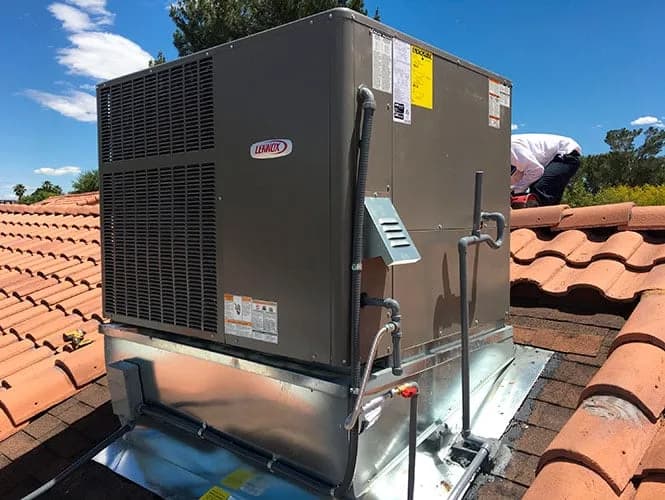

A chiller is an HVAC system that cools water or a water‑glycol mixture, then circulates it to air handlers or process equipment for cooling. Chillers use vapor‑compression or absorption cycles and are common in commercial and industrial buildings that need precise temperature control.
/ˈtʃɪlər/
A chiller is an HVAC system that cools water or a water‑glycol mixture, then circulates it to air handlers or process equipment for cooling. Chillers use vapor‑compression or absorption cycles and are common in commercial and industrial buildings that need precise temperature control.
What does a chiller do?
It removes heat from water or glycol and circulates the cooled fluid to HVAC equipment or processes.
Source: The Cooling Company

Air‑cooled and water‑cooled chillers serve different needs.
Office buildings use chillers to cool water that feeds air‑handling units, keeping large areas comfortable and energy‑efficient.
Maintain proper refrigerant charge and keep heat‑exchange tubes clean to preserve chiller efficiency.
“Maintain proper refrigerant charge and keep heat‑exchange tubes clean to preserve chiller efficiency.”
Advanced chillers with variable‑speed drives can reduce energy use by up to 30% versus older fixed‑speed models.
What is the difference between air‑cooled and water‑cooled chillers?
Air‑cooled chillers reject heat to outdoor air, while water‑cooled chillers use cooling towers and typically have higher efficiency.
Do chillers require regular maintenance?
Yes. Tube cleaning, refrigerant checks, and control calibration are essential for efficiency and reliability.
Where are chillers used most often?
Large commercial buildings, hospitals, data centers, and industrial facilities.
Need help with chiller? Our licensed technicians in Las Vegas are ready to assist.
Fill out the form below. We typically respond within minutes.