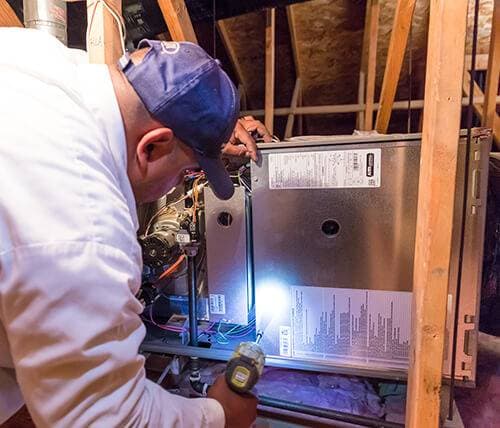

A flame sensor is a safety device in gas furnaces, boilers, and water heaters that verifies a burner flame is present. If no flame is detected, the control board shuts off fuel to prevent gas buildup and unsafe operation. Clean sensors ensure reliable ignition and safe heating.
/fleɪm ˈsɛnsər/
A flame sensor is a safety device in gas furnaces, boilers, and water heaters that verifies a burner flame is present. If no flame is detected, the control board shuts off fuel to prevent gas buildup and unsafe operation. Clean sensors ensure reliable ignition and safe heating.
What does a flame sensor do?
It confirms a burner flame is present and shuts off gas if flame is not detected.
Source: The Cooling Company

Flame sensors confirm ignition and shut fuel off if needed.
A furnace that starts then shuts off after a few seconds often has a dirty flame sensor, which a technician can clean during maintenance.
Include flame sensor cleaning in annual heating tune-ups to prevent nuisance shutdowns.
“Include flame sensor cleaning in annual heating tune-ups to prevent nuisance shutdowns.”
Flame sensors use a small electrical current through the flame to verify safe ignition.
Can I clean a flame sensor myself?
Some homeowners can, but it’s safest to have a technician clean and inspect it during maintenance.
What are signs of a bad flame sensor?
Short cycling, burners shutting off quickly, or repeated ignition failures.
Is a flame sensor the same as an ignition sensor?
It’s often referred to as the flame or ignition sensor, but its job is to confirm flame presence.
Need help with flame sensor? Our licensed technicians in Las Vegas are ready to assist.
Fill out the form below. We typically respond within minutes.