
A plate heat exchanger transfers heat between two fluids using stacked metal plates. The large surface area and narrow flow channels enable efficient heat exchange for HVAC, refrigeration, and water heating applications. These exchangers are compact, efficient, and can handle a range of temperatures and pressures.
/pleɪt hiːt ɪkˈstʃeɪndʒər/
A plate heat exchanger transfers heat between two fluids using stacked metal plates. The large surface area and narrow flow channels enable efficient heat exchange for HVAC, refrigeration, and water heating applications. These exchangers are compact, efficient, and can handle a range of temperatures and pressures.
Why are plate heat exchangers efficient?
They use a large surface area and thin channels to transfer heat quickly.
Source: The Cooling Company

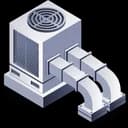
Hot and cold fluids pass in alternating channels.
A residential heat pump uses a plate heat exchanger to move heat efficiently between refrigerant and the water or air circuit.
Keep plates clean and systems properly sealed to maintain efficiency and prevent leaks.
“Keep plates clean and systems properly sealed to maintain efficiency and prevent leaks.”
Plate heat exchangers became widely adopted after advances in materials and manufacturing improved efficiency.
Are plate heat exchangers better than shell-and-tube?
They are more compact and efficient in many applications, but selection depends on flow, pressure, and maintenance needs.
Do plate heat exchangers clog easily?
They can if water quality is poor, which is why filtration and regular cleaning matter.
Can plate heat exchangers be serviced?
Yes. Many designs allow disassembly for cleaning and gasket replacement.
Need help with plate heat exchanger? Our licensed technicians in Las Vegas are ready to assist.
Fill out the form below. We typically respond within minutes.