

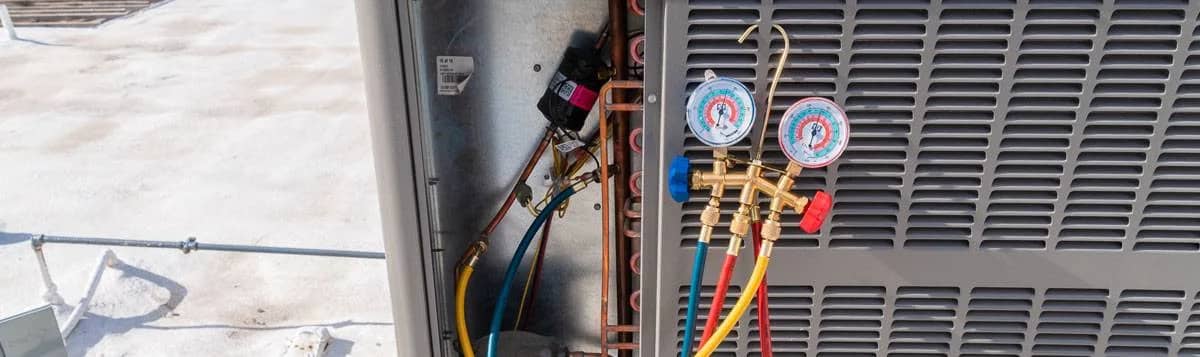
Short answer: Heat pumps are an excellent choice for Las Vegas homes in 2026. The mild Las Vegas winters (design low of 28°F) mean a heat pump rarely operates in the extreme cold that limits heat pump performance in northern climates. In cooling mode, a high-efficiency heat pump delivers the same or better performance than a traditional AC. The Lennox SL28XCV heat pump leads our ranking at 28 SEER and 10.5 HSPF2, followed by the Carrier Infinity 26 and the Trane XV20i. Federal tax credits up to $2,000 and NV Energy rebates up to $2,000 can together offset $4,000 of the purchase price on qualifying systems. For most Las Vegas homeowners upgrading from a traditional AC to a heat pump, the combination of incentives and energy savings makes the math genuinely compelling.
Call (702) 567-0707 for a free heat pump assessment, or visit our heat pump installation page.
Las Vegas is one of the best cities in America for heat pump technology. This surprises many homeowners who associate heat pumps with cold northern climates and assume they are irrelevant in the desert. The opposite is true. Heat pumps work by moving thermal energy rather than generating it — in cooling mode, they extract heat from inside your home and reject it outdoors, exactly like a traditional air conditioner. In heating mode, they extract heat from outdoor air and move it inside. The critical variable is outdoor temperature: the colder it gets outside, the harder a heat pump works to extract heat.
Las Vegas winters are mild. The design heating temperature (the lowest outdoor temperature used for load calculations) is 28°F. Winter nights that reach 25°F or below are rare. Modern variable-speed heat pumps maintain full heating capacity down to 5°F or lower. Las Vegas never threatens those limits. The result is a heat pump that delivers year-round comfort without the efficiency penalties that make heat pumps impractical in Minneapolis or Chicago.
This guide ranks the top heat pump systems for Las Vegas in 2026, explains the efficiency ratings that matter in the desert, covers the cost and incentive landscape, and addresses the specific installation considerations that Las Vegas homes present. For context on how heat pumps compare to traditional AC systems in overall replacement decisions, see our Complete Guide to Replacing Your Air Conditioner in 2026.
Key Takeaways
- Las Vegas is ideal heat pump territory. Mild winters (design low 28°F) mean heat pumps operate in their efficiency sweet spot year-round. No auxiliary heat backup is needed for the vast majority of Las Vegas winters.
- Variable-speed heat pumps dramatically outperform single-stage in Las Vegas summer heat. Inverter-driven compressors that modulate output maintain cooling capacity better at 115°F and provide superior dehumidification during monsoon season (July–September).
- SEER2 and HSPF2 are both important, but SEER2 matters more in Las Vegas. Las Vegas has roughly 3,000–3,500 cooling hours per year and 400–700 heating hours. Weight your efficiency comparison accordingly — cooling efficiency drives 80%+ of energy costs.
- Federal tax credits favor heat pumps. The Section 25C credit provides up to $2,000 for qualifying heat pumps versus up to $600 for central AC systems. This makes heat pump economics substantially better than simple payback calculations suggest.
- NV Energy heat pump rebates reach $2,000 on qualifying high-efficiency ducted systems, stackable with the federal tax credit for a combined incentive of up to $4,000.
- Ductless mini-split heat pumps serve rooms without ductwork or as supplements to central systems in problem rooms. They are not replacements for whole-home central systems in most Las Vegas homes.
Why Heat Pumps Work in Las Vegas
The physics of heat pump operation rewards Las Vegas conditions in multiple ways.
The Mild Winter Advantage
Heat pump heating efficiency degrades as outdoor temperature drops. A heat pump that delivers 3.5 units of heat energy for every unit of electrical energy it consumes (a coefficient of performance of 3.5) at 47°F outdoor temperature might deliver only 2.0 COP at 20°F. Below 0°F, most standard heat pumps provide very little heating capacity at all.
In Las Vegas, winter lows average 35–42°F from December through February. Even on cold nights, the heat pump rarely operates below 30°F for more than a few hours. At these temperatures, a modern variable-speed heat pump maintains a COP of 2.5–3.5 — meaning it delivers 2.5–3.5x more heat energy than the electrical energy it consumes. Compare this to electric resistance heating (COP of 1.0) or even a high-efficiency gas furnace (efficiency of 0.95, or effectively a COP of 0.95 when converting fuel to heat). The heat pump wins decisively in Las Vegas winters.
The Summer Equivalence
In cooling mode, a heat pump is functionally identical to a traditional central air conditioner. The same compressor, the same refrigerant circuit, the same condenser coil rejecting heat outdoors, the same evaporator coil absorbing heat indoors. The only addition is a reversing valve that allows the refrigerant circuit to run in either direction. When comparing heat pumps to central ACs for Las Vegas, evaluate their cooling performance and SEER2 ratings exactly as you would evaluate any other AC system.
The Monsoon Humidity Factor
Las Vegas experiences monsoon season from approximately July through mid-September. During this period, afternoon humidity can spike from 10% to 50%+ within hours as storms move through. A variable-speed heat pump runs longer at lower capacity during these periods, providing dramatically better dehumidification than a single-stage system that cycles on and off. In a monsoon afternoon, the difference between a variable-speed heat pump and a single-stage AC is 15–20 percentage points of relative humidity — and that comfort difference is obvious.
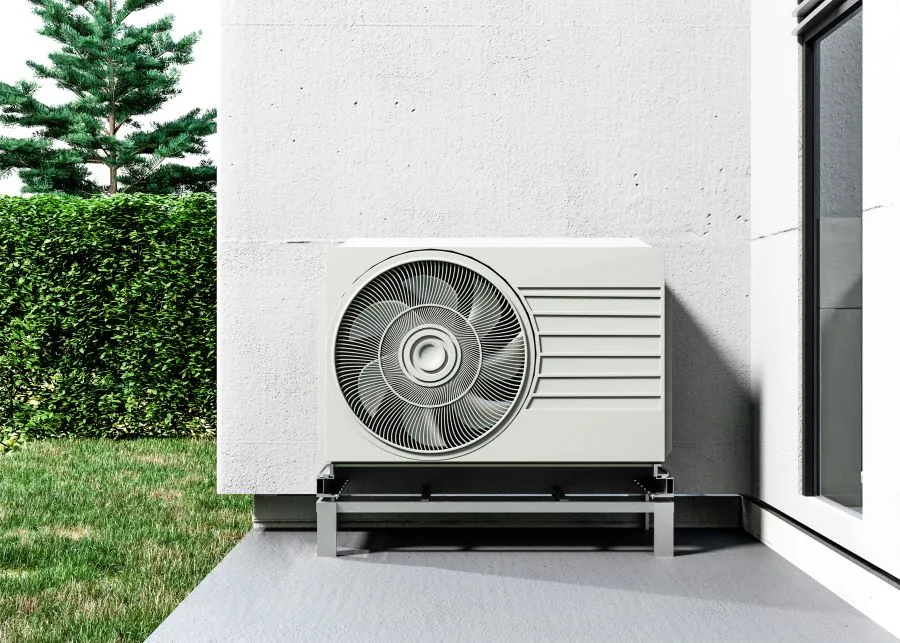
Top 10 Heat Pumps for Las Vegas in 2026
1. Lennox SL28XCV — Our Top Pick for Las Vegas
The Lennox SL28XCV (XCV = eXtreme Comfort Variable) is the most efficient ducted heat pump on the U.S. market in 2026 at 28 SEER and 10.5 HSPF2. The inverter-driven scroll compressor operates across 65 stages of capacity from 35% to 100%, adjusting output in real-time based on demand. At 115°F outdoor temperature — Las Vegas July afternoon standard — the SL28XCV maintains 85–90% of its rated cooling capacity, outperforming every comparable unit we have installed.
The SL28XCV uses R-454B refrigerant (also known as Puron Advance), compliant with 2025 EPA Section 608 requirements. The unit pairs with the Lennox XP25 air handler and iComfort S30 smart thermostat for a fully communicating system. The iComfort S30 monitors system performance, alerts for maintenance, and integrates with NV Energy's Smart Saver program.
Installed cost (3-ton, Las Vegas): $14,000–$17,500+
SEER2 / HSPF2: 28.0 / 10.5
Sound level: 59 dBA
Warranty: 10 years parts, 10 years compressor (with registration)
NV Energy rebate eligible: Yes, maximum tier
Federal 25C credit: Yes (up to $2,000)
2. Lennox XP25 — High Efficiency Without the Ultra-Premium Price
The XP25 delivers 25.0 SEER2 and 10.5 HSPF2 at a meaningfully lower price than the SL28XCV. It uses the same inverter-driven variable-speed compressor technology and pairs with the same air handlers and controls. The practical performance difference between the XP25 and SL28XCV in Las Vegas conditions is modest — perhaps $80–$120 per year in energy costs. The XP25 is our recommended Lennox heat pump for most Las Vegas homeowners who want premium performance without the flagship premium price.
Installed cost (3-ton, Las Vegas): $12,000–$15,000+
SEER2 / HSPF2: 25.0 / 10.5
Sound level: 62 dBA
Warranty: 10 years parts, 10 years compressor
NV Energy rebate eligible: Yes, high tier
Federal 25C credit: Yes (up to $2,000)
3. Carrier Infinity 26 Heat Pump (25HCB6)
The Carrier (up to 21 SEER2) and 9.5 HSPF2, it pairs with the Infinity system's variable-speed air handler and Infinity Touch control. The WeatherArmor Ultra cabinet provides genuine corrosion resistance for desert conditions. Carrier's dealer network in Las Vegas is robust, making service and parts readily available.
The Infinity 26 uses a two-stage compressor rather than the fully variable inverter-driven compressor in the Lennox SL28XCV and XP25. In practice, this means the Carrier offers excellent efficiency but slightly less precision in humidity control at low loads. For homeowners who are not Lennox loyalists, the Carrier Infinity 26 is the best alternative. Our complete Carrier systems guide for Las Vegas covers their full heat pump and AC lineup in detail.
Installed cost (3-ton, Las Vegas): $11,500–$14,500+
SEER2 / HSPF2: 26.0 / 9.5
Sound level: 56 dBA
Warranty: 10 years parts, 10 years compressor
NV Energy rebate eligible: Yes, high tier
Federal 25C credit: Yes (up to $2,000)
4. Trane XV20i Heat Pump (TWA / TWE)
Trane's XV20i delivers 20.0 SEER2 and 10.0 HSPF2 with a variable-speed TruComfort compressor. Trane systems are known for mechanical robustness — the "It's Hard to Stop a Trane" brand positioning reflects genuine build quality rather than pure marketing. The XV20i's two-speed TruComfort compressor does not modulate as continuously as the Lennox or Daikin inverter-driven units, but it delivers reliable, efficient performance in Las Vegas conditions.
Trane pairs the XV20i with the XL824 or XL1050 ComfortLink II connected thermostat, which provides remote monitoring and integrates with NV Energy demand response programs. The Trane warranty includes 10 years on both parts and compressor with registration. For a full breakdown of the Trane lineup and how each model performs in desert conditions, see our best Trane HVAC systems for Las Vegas guide.
Installed cost (3-ton, Las Vegas): $11,000–$13,500+
SEER2 / HSPF2: 20.0 / 10.0
Sound level: 55 dBA
Warranty: 10 years parts, 10 years compressor
NV Energy rebate eligible: Yes, standard tier
Federal 25C credit: Yes (up to $2,000)
5. Daikin DZ20VC / Fit Heat Pump
Daikin's U.S. residential products bring Japanese inverter technology developed for decades in the global market. The DZ20VC delivers 20.0 SEER2 with a fully inverter-driven rotary compressor and a 12-year parts and compressor warranty — the longest warranty in this comparison. Daikin's Fit system offers a compact side-discharge condenser design that is useful on tight Las Vegas lots where standard rear-discharge units create clearance problems near walls or fences.
Daikin's Las Vegas dealer network is smaller than Lennox or Carrier, which can mean longer wait times for specialty parts. For homeowners who value the warranty and technology but are comfortable with a less extensive local service network, the DZ20VC is an excellent choice.
Installed cost (3-ton, Las Vegas): $10,000–$13,000
SEER2 / HSPF2: 20.0 / 10.0
Sound level: 58 dBA
Warranty: 12 years parts, 12 years compressor
NV Energy rebate eligible: Yes, standard tier
Federal 25C credit: Yes (up to $2,000)
6. American Standard Platinum 20 Heat Pump
American Standard (a Trane company) offers the Platinum 20 at 20.0 SEER2 with variable-speed operation. The Platinum 20 shares core engineering with the Trane XV20i — same parent company, similar components — at a slightly lower price point. Performance in Las Vegas conditions is comparable to the Trane. The acculink communicating system and Nexia connected home integration provide smart thermostat functionality.
Installed cost (3-ton, Las Vegas): $10,000–$13,000
SEER2 / HSPF2: 20.0 / 9.5
Sound level: 55 dBA
Warranty: 10 years parts, 10 years compressor
NV Energy rebate eligible: Yes, standard tier
Federal 25C credit: Yes (up to $2,000)
7. Rheem Prestige Series Heat Pump (RP20)
Rheem's Prestige Series RP20 delivers 20.0 SEER2 with a variable-speed compressor at a price point that undercuts Carrier and Lennox by $1,500–$3,000. Rheem manufactures its own compressors in the U.S. and has one of the stronger Las Vegas dealer networks of any mid-tier brand. The EcoNet smart home system integration provides monitoring and demand response capability.
Our experience with Rheem in Las Vegas: solid mid-tier performance, good parts availability, competitive pricing. The premium brands outperform at extreme temperatures, but the gap is less dramatic than the price difference suggests for homeowners who prioritize value.
Installed cost (3-ton, Las Vegas): $9,000–$12,000
SEER2 / HSPF2: 20.0 / 9.5
Sound level: 72 dBA
Warranty: 10 years parts, 10 years compressor
NV Energy rebate eligible: Yes, standard tier
Federal 25C credit: Yes (up to $2,000)
8. Goodman GVZC20 Heat Pump
The Goodman GVZC20 at 20.0 SEER2 is the highest-efficiency ducted heat pump from Goodman's lineup and one of the best values in the market if upfront cost is the primary concern. The GVZC20 uses a variable-speed compressor and qualifies for both NV Energy rebates and the federal 25C credit. Goodman backs the compressor with a lifetime warranty — genuinely unique in the industry.
The Goodman premium tier genuinely reduces the performance gap with Carrier and Trane. The GVZC20 in Las Vegas conditions performs respectably. Our caveat remains consistent: budget brands show faster degradation curves in 3,000+ hours per year operation, and the lifetime compressor warranty covers the part but not the $500–$1,200 labor to replace it. For homeowners with limited upfront budget, the GVZC20 with lifetime compressor warranty is a reasonable choice. For homeowners who can swing the extra $1,500–$3,000, we recommend stepping up to Rheem, Trane, or Carrier.
Installed cost (3-ton, Las Vegas): $7,500–$9,500
SEER2 / HSPF2: 20.0 / 9.0
Warranty: 10 years parts, Lifetime compressor
NV Energy rebate eligible: Yes, standard tier
Federal 25C credit: Verify specific model on CEE list
9. Mitsubishi Electric Hyper-Heating INVERTER (H2i) — Ducted
Mitsubishi's ducted H2i system brings the brand's global inverter expertise to whole-home applications. The H2i designation indicates cold-climate heat pump capability — rated to maintain full heating capacity down to -13°F, which is substantial overkill for Las Vegas winters but indicates a compressor designed for extreme performance in both directions. The cooling performance at 115°F is excellent, with variable-speed operation providing smooth, consistent temperature control.
Mitsubishi ducted systems require a Mitsubishi-certified contractor and are priced at a premium. Their Las Vegas dealer network is more limited than Lennox or Carrier. For homeowners who prioritize Japanese inverter engineering and are committed to finding a qualified Mitsubishi installer, the H2i is worth consideration.
Installed cost (3-ton, Las Vegas): $11,500–$15,500+
SEER2 / HSPF2: 20.5 / 11.0
Warranty: 12 years parts and compressor (with registration)
10. Bosch BOVA Heat Pump
Bosch's BOVA series is a newer entrant to the U.S. residential heat pump market, bringing variable-speed inverter technology at a price point between Goodman and Carrier. The BOVA at 17.0–20.0 SEER2 delivers solid efficiency, qualifies for NV Energy rebates and the federal 25C credit, and is backed by a 10-year compressor warranty. Bosch's U.S. HVAC dealer network is expanding but remains thinner than the major brands in Las Vegas, which is a practical consideration for service and parts.
Installed cost (3-ton, Las Vegas): $9,000–$12,000
SEER2 / HSPF2: 17.0–20.0 / 9.0
Warranty: 10 years parts, 10 years compressor
Ducted vs. Ductless Heat Pumps for Las Vegas
The systems ranked above are all ducted central heat pumps — they replace a traditional central air conditioner and use the home's existing duct system to distribute conditioned air. Ductless mini-split heat pumps serve a different application.
When a Ductless Mini-Split Makes Sense in Las Vegas
- Room additions or converted garages: Adding a room to a Las Vegas home without extending the existing duct system. A 9,000–18,000 BTU wall-mounted mini-split handles a single room addition cost-effectively.
- Homes without existing ductwork: Some older Las Vegas homes and converted spaces have no central duct system. A multi-zone mini-split system provides whole-home coverage without the cost of installing new ductwork.
- Supplemental cooling for hot rooms: A room that never gets cool enough from the central system — a western-facing master bedroom in an east-west oriented Las Vegas home, for example — can be supplemented with a wall-mounted unit.
- Detached structures: Casitas, workshops, or garages that need independent comfort control.
When a Ducted Central Heat Pump Is the Right Answer
For the typical Las Vegas home with an existing duct system, a central heat pump is almost always more efficient and more cost-effective than converting to a multi-zone ductless system. A 5-zone ductless system covering a 2,500-square-foot home runs $17,000–$28,000 installed. A high-efficiency ducted heat pump covering the same home runs $12,000–$16,500. The ductless system has advantages in zoning precision, but the cost premium is substantial and the visual impact of wall-mounted indoor units is not for every homeowner.
Understanding Heat Pump Efficiency Ratings: SEER2 and HSPF2
Heat pumps are rated on two efficiency scales: SEER2 for cooling and HSPF2 for heating. Both are "Version 2" metrics introduced in 2023 to replace the older SEER and HSPF standards, which used a more favorable test methodology.
SEER2 (Seasonal Energy Efficiency Ratio 2)
SEER2 measures average cooling efficiency over a full cooling season. Higher SEER2 = lower cooling costs. The Southwest federal minimum in 2026 is 14.3 SEER2 for split heat pump systems. Premium systems reach 28 SEER. The critical Las Vegas caveat: SEER2 is measured at an average outdoor temperature profile, not at 115°F. For desert cooling performance, also ask for EER2 data, which measures efficiency at a single high-temperature point and is more predictive of Las Vegas summer performance.
HSPF2 (Heating Seasonal Performance Factor 2)
HSPF2 measures average heating efficiency over a full heating season. Higher HSPF2 = lower heating costs. The federal minimum for heat pumps in 2026 is 7.5 HSPF2. Premium systems reach 10.5+ HSPF2. In Las Vegas, HSPF2 matters less than SEER2 because the city has roughly 400–700 heating hours per year versus 3,000–3,500 cooling hours. When comparing heat pumps for Las Vegas, weight SEER2 roughly 5x more than HSPF2 in your efficiency comparison.
Heat Pump Cost by Tonnage in Las Vegas
| System Size | Home Size (LV) | Entry Tier (Installed) | Mid Tier (Installed) | Premium Tier (Installed) |
|---|---|---|---|---|
| 2-ton | 800–1,100 sq ft | $6,500–$8,500 | $8,500–$11,000 | $11,000–$14,000 |
| 2.5-ton | 1,100–1,400 sq ft | $7,000–$9,000 | $9,000–$12,000 | $12,000–$15,500+ |
| 3-ton | 1,400–1,900 sq ft | $7,500–$9,500 | $9,500–$13,000 | $13,000–$17,500+ |
| 3.5-ton | 1,900–2,300 sq ft | $8,500–$11,000 | $11,000–$14,500 | $14,500–$19,000+ |
| 4-ton | 2,300–2,800 sq ft | $9,500–$12,500 | $12,500–$16,000 | $16,000–$20,500+ |
| 5-ton | 2,800–3,500+ sq ft | $11,500–$15,000 | $15,000–$19,500 | $19,500–$25,000+ |
Heat pump installation costs run approximately 8–15% higher than equivalent traditional AC installations because of the additional complexity of the reversing valve system, the higher-efficiency refrigerant management requirements, and the longer commissioning time. For a complete cost breakdown including NV Energy rebates and tax credits, see our AC Replacement Cost Las Vegas 2026 guide. If the upfront investment is a concern, our AC replacement financing guide walks through every payment option available to Las Vegas homeowners regardless of credit score.
Federal Tax Credits for Heat Pumps: Section 25C
The federal Energy Efficient Home Improvement Credit (IRS Section 25C) provides a 30% tax credit up to $2,000 for qualifying heat pump systems installed in primary residences. This is the most valuable incentive in the HVAC market — not a deduction but a direct reduction in federal tax liability.
Qualifying requirements for the maximum $2,000 credit as of 2026:
- The system must be a heat pump (not a standard central AC)
- Must meet CEE Advanced Tier efficiency requirements: 20.0+ SEER2, 10.0+ EER2, 10.5+ HSPF2 (split systems)
- Must be installed in your primary residence (not a rental property)
- Must be installed by a licensed contractor (retain the invoice and AHRI certificate)
- Claim on IRS Form 5695
Note: The annual $2,000 credit for heat pumps is separate from the $600 cap for central AC systems and the $600 cap for air handlers. You can claim the full $2,000 heat pump credit plus the $600 air handler credit if you install a qualifying heat pump and a new qualifying air handler in the same tax year, for a combined maximum of $2,600. The total energy efficiency credit claimed in a single year is capped at $3,200 when combined with insulation, windows, and other qualifying improvements.
NV Energy Rebates for Heat Pumps
NV Energy's residential rebate program provides the following for qualifying heat pump installations in 2026:
| Heat Pump Type | Minimum Efficiency | Rebate Amount |
|---|---|---|
| Ducted heat pump | 17.0 SEER2 / 8.5 HSPF2 | $500–$1,000 |
| Ducted heat pump (high efficiency) | 20.0 SEER2 / 9.5 HSPF2 | $1,000–$1,500 |
| Ducted heat pump (ultra-high efficiency) | 22.0+ SEER2 / 10.0+ HSPF2 | $1,500–$2,000 |
| Ductless mini-split (single zone) | 20.0 SEER2 / 9.5 HSPF2 | $200–$400 |
| Ductless multi-zone system | 20.0 SEER2 / 9.5 HSPF2 | $400–$800 |
Your contractor applies for NV Energy rebates on your behalf after installation using the paid invoice and AHRI certification. Rebates are issued as checks sent directly to the homeowner. Confirm with your contractor before installation that the specific model you are purchasing is on NV Energy's current qualified product list — rebate eligibility is by model number, not just efficiency rating, and the list updates quarterly.
Stacking Incentives: Maximum Savings Example
Here is a worked example of maximum incentive stacking for a Las Vegas homeowner installing a Lennox XP25 heat pump (3-ton) in 2026:
| Item | Amount |
|---|---|
| Installed cost (Lennox XP25, 3-ton) | $13,500 |
| NV Energy rebate (ultra-high efficiency tier) | -$1,800 |
| Federal 25C heat pump credit (30% × $13,500, capped at $2,000) | -$2,000 |
| Lennox seasonal promotion (spring 2026) | -$500 |
| Net cost after incentives | $9,200 |
The $9,200 net cost compares favorably with a mid-efficiency traditional central AC at $8,000–$10,500 installed with no heat pump incentives. When you factor in the annual energy savings from higher efficiency plus the elimination of gas heating costs (if replacing a gas system), the heat pump upgrade pays back in 5–8 years in Las Vegas conditions.
Heat Pump Installation Considerations Specific to Las Vegas
One factor that does not appear in any manufacturer's spec sheet: installation quality matters as much as the equipment itself. A proper Manual J load calculation, a verified refrigerant charge, and ductwork that delivers the correct airflow to each room are the difference between a premium system that performs at its rated SEER2 and one that underperforms for its entire lifespan. In Las Vegas's demanding climate, shortcuts in any of these areas compound over thousands of annual operating hours. When evaluating contractors, ask specifically whether they perform a full load calculation and whether they verify refrigerant charge with gauges at commissioning — not just by weight.
Condenser Placement and Clearance
Las Vegas lots are frequently tight, and many homes have condenser units adjacent to block walls or fences. Heat pumps require adequate airflow across the condenser coil to reject heat efficiently. In Las Vegas summer heat, recirculation of hot exhaust air — where the unit draws in air it just rejected — causes efficiency losses and premature component failure. Standard clearance requirements are 18–24 inches on all sides, 5 feet above. In practice, the south side of a Las Vegas home is the hottest condenser location; north and east sides run 10–15°F cooler in the afternoon and should be preferred where possible.
Refrigerant Line Set Length and Insulation
Las Vegas attics reach 140–160°F in summer. Refrigerant line sets running through attic spaces must be insulated with a minimum of R-6 foam insulation to prevent suction line heat gain, which reduces cooling capacity and efficiency. Many older Las Vegas homes have underinsulated or deteriorated line set insulation. Replacing line set insulation at the time of installation is a worthwhile addition if the existing insulation is in poor condition.
Emergency Heat Backup
Las Vegas's mild winters mean most homeowners do not need emergency electric resistance backup heat in their air handler. However, some homeowners choose to install a small electric heat strip (5–10 kW) as insurance against the rare extreme cold event. We typically recommend a 5 kW strip for Las Vegas heat pumps — enough to cover the rare nights below 25°F without the operating cost penalty of a larger strip that runs frequently in colder climates.
Hard Water and Refrigerant Lines
Las Vegas's hard water (among the hardest in the U.S. at 278+ ppm) affects copper refrigerant lines over time. Copper line sets in high-mineral-contact environments can experience accelerated corrosion, particularly where condensation occurs on suction lines. Modern R-454B refrigerant systems with proper line set insulation reduce moisture contact points. Inspect line set connections at the condenser and air handler for corrosion at every annual maintenance visit.
For a complete overview of desert HVAC maintenance requirements, see our Best Air Conditioners for Extreme Heat Las Vegas guide.
Heat Pump vs. Traditional AC: The Las Vegas Comparison
| Factor | Traditional Central AC | Heat Pump | Las Vegas Verdict |
|---|---|---|---|
| Cooling performance | Equivalent | Equivalent | Tie |
| Heating efficiency | N/A (separate system) | COP 2.5–3.5 in LV winters | Heat pump wins |
| Upfront cost | $6,500–$16,000+ | $7,500–$25,000+ | Traditional AC lower |
| Federal incentives | Up to $600 | Up to $2,000 | Heat pump wins |
| NV Energy rebates | Up to $1,200 | Up to $2,000 | Heat pump wins |
| Operating cost | Higher (gas heat) | Lower (electric heat) | Heat pump wins (NV Energy rates) |
| Net cost after incentives | $5,900–$14,800 | $5,500–$21,000 | Comparable at mid tier |
Frequently Asked Questions
Do heat pumps work in Las Vegas summer heat?
Yes. In cooling mode, a heat pump is functionally identical to a traditional central air conditioner. It uses the same refrigerant cycle, the same compressor, and the same coils to remove heat from your home. A high-efficiency heat pump with an inverter-driven compressor actually outperforms many single-stage traditional ACs in Las Vegas summer conditions because it modulates output continuously rather than cycling on and off in extreme heat. The Lennox SL28XCV and XP25 heat pumps both maintain 85–90% of rated cooling capacity at 115°F outdoor temperature.
Will a heat pump keep my Las Vegas home warm in winter?
Yes, without any auxiliary heat for almost all Las Vegas winters. Las Vegas's design heating temperature is 28°F, and modern variable-speed heat pumps maintain full rated heating capacity down to 5°F or lower. Even during the rare Las Vegas cold snap with overnight lows of 25–28°F, a properly sized heat pump will maintain your home at 70°F comfortably. We typically install a small 5 kW electric strip heater as insurance, but it rarely activates in Las Vegas conditions.
What is the best heat pump for Las Vegas in 2026?
The Lennox SL28XCV is the highest-performing ducted heat pump available in Las Vegas in 2026 at 28 SEER and 10.5 HSPF2, with inverter-driven variable-speed technology that delivers superior performance at extreme temperatures and during monsoon humidity spikes. For homeowners who want premium performance at a lower price, the Lennox XP25 at 25.0 SEER2 is our recommended choice. The Carrier Infinity 26 and Trane XV20i are the best alternatives if you prefer non-Lennox equipment.
How much can I save with NV Energy rebates and federal tax credits on a heat pump?
A qualifying high-efficiency heat pump in Las Vegas can receive an NV Energy rebate of $1,500–$2,000 plus a federal Section 25C tax credit of up to $2,000, for a combined incentive of $3,500–$4,000. This makes the net cost of a premium heat pump comparable to a mid-tier traditional AC system, with better energy efficiency and lower long-term operating costs. Confirm specific model qualification before purchase — not all systems at a given SEER2 rating are on both NV Energy's and CEE's qualified product lists.
Should I replace my gas furnace with a heat pump in Las Vegas?
For most Las Vegas homeowners, yes. Las Vegas winters are mild enough that a heat pump handles all heating needs at a lower cost than a gas furnace. NV Energy's tiered electricity rates make winter heat pump operating costs competitive with or lower than gas in Las Vegas. The combination of no gas heating costs, a $2,000 federal heat pump credit, and a $1,500–$2,000 NV Energy rebate makes the transition to all-electric heat pump operation financially compelling. The exception: if your current gas furnace is under 10 years old, run the math on keeping the existing furnace and adding a high-efficiency central AC — the economics may favor a traditional AC replacement over a heat pump upgrade for another 5 years. We cover the full decision framework in our heat pump vs. central AC comparison for Las Vegas.
What size heat pump do I need for a Las Vegas home?
Las Vegas homes require a proper Manual J load calculation at 115°F design temperature for accurate sizing. General guidelines: 800–1,100 sq ft = 2-ton, 1,100–1,400 sq ft = 2.5-ton, 1,400–1,900 sq ft = 3-ton, 1,900–2,300 sq ft = 3.5-ton, 2,300–2,800 sq ft = 4-ton, 2,800–3,500+ sq ft = 5-ton. These ranges are 10–20% larger than national sizing charts because of Las Vegas's extreme heat load. Never accept sizing based on square footage alone.
How long do heat pumps last in Las Vegas?
Well-maintained variable-speed heat pumps last 15–20 years in Las Vegas when properly maintained. Las Vegas's extreme heat does accelerate component wear — capacitors, contactors, fan motors, and belt drives see more stress than in milder climates. Annual professional maintenance is essential. Systems that skip maintenance for multiple years tend to see compressor failures at 10–12 years rather than 18–20 years. Budget $200–$350 per year for annual maintenance, which is the best investment you can make in system longevity.
Need Heat Pump Service in Las Vegas?
We install, service, and maintain heat pumps across the Las Vegas Valley. As a Lennox Premier Dealer, we are certified to install the complete Lennox heat pump lineup including the SL28XCV, XP25, and XP21, and we handle all NV Energy rebate paperwork. With 780+ Google reviews and a 4.8/5 rating since 2011, we stand behind every installation.
Call (702) 567-0707 for a free heat pump assessment and quote. Or explore our resources:
- Heat Pump Installation Services
- New System Installation
- Financing Options
- AC Replacement Cost Guide 2026
- Complete Guide to Replacing Your Air Conditioner in 2026
- HVAC Financing Guide 2026
- Compare HVAC Brands for Las Vegas
- Side-by-Side Brand Comparison Tool
- U.S. Department of Energy: Heat Pump Systems