

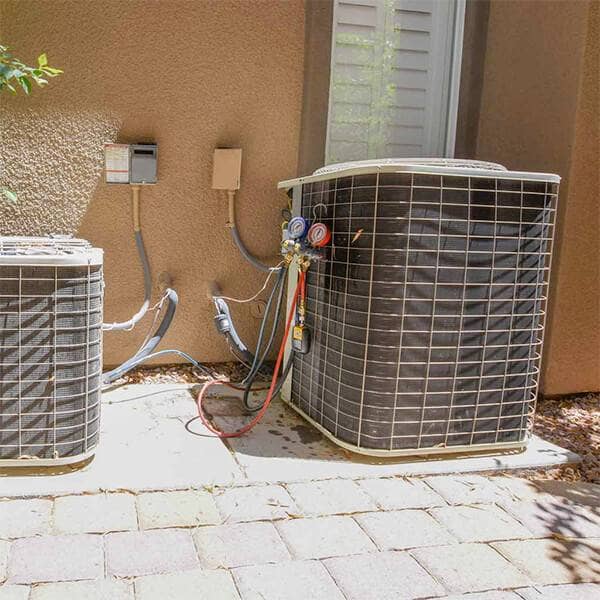
Short answer: Las Vegas HVAC systems need monthly air filter changes during peak summer (June-August) and every 30-60 days year-round — compared to the 90-day national recommendation — because desert dust, sand, and construction particulates clog filters three times faster. Professional maintenance should happen twice per year: a comprehensive AC tune-up in March-April before the brutal summer season, and a heating system inspection in October before winter. Each professional visit costs $89-$150 and extends system life by years. Without proper maintenance in Las Vegas, systems that should last 15-20 years fail in 8-12. Call The Cooling Company at (702) 567-0707 to schedule your next tune-up.
Key Takeaways
- Filter changes every 30 days in summer: Las Vegas dust loads are 3x the national average. Monthly filter replacement during June-August is non-negotiable for airflow, efficiency, and evaporator coil protection.
- Two professional tune-ups per year: Spring (March-April) for AC preparation before the 115°F design day, and fall (October) for heating system verification. Each visit should cost $89-$150 from a reputable contractor.
- Condenser coil cleaning is critical here: In Las Vegas, desert dust and particulates coat condenser coils after every haboob. Dirty coils force the compressor to work harder in already-extreme heat, accelerating failure.
- Drain line maintenance prevents water damage: High summer humidity during monsoon season (July-September) generates significant condensate. Blocked drain lines cause evaporator pan overflow and ceiling or wall water damage.
- Maintenance extends system life from 8-12 years to 15-20 years: Las Vegas conditions are already hard on HVAC equipment. Consistent maintenance is the single most effective way to protect your investment.
- Maintenance plans save money long-term: Annual maintenance contracts ($150-$350/year) typically include priority scheduling, discounted repairs, and guaranteed response times — valuable when your AC fails at 115°F on a Saturday night.
- Warranty protection requires documentation: Most manufacturers require proof of annual professional maintenance to honor equipment warranties. Keep all service records.
Why Las Vegas HVAC Maintenance Is Different
Every HVAC manufacturer publishes a maintenance schedule. Most of those schedules were written with a national average climate in mind: moderate humidity, moderate dust levels, 1,000-1,500 cooling hours per year, and summers that peak around 95 degrees Fahrenheit. Las Vegas is none of those things.
Our systems run 2,500 to 3,500 hours per year — more than double the national average. Our design day temperature is 115°F, meaning engineers size systems for that extreme, not for a comfortable 85-degree afternoon. Our Mojave Desert environment generates dust, sand, and construction particulates that are measurably more destructive to HVAC equipment than what contractors deal with in most other U.S. cities. Our hard water — averaging 284 parts per million calcium carbonate — causes mineral deposits in evaporator coils and condensate drain systems that simply do not occur at the same rate elsewhere.
What this means practically: the 90-day filter replacement interval printed on your filter packaging was not written for Las Vegas. The "annual tune-up" recommendation that many national HVAC guides give is insufficient here. And the idea that you can skip a year of maintenance because the system seems to be running fine will cost you a compressor — a $1,500-$3,000 repair — or a full system replacement a decade before you should need one.
We have serviced tens of thousands of Las Vegas systems since 2011. The correlation between maintenance history and system lifespan is not subtle. Well-maintained systems routinely hit 18-22 years in Las Vegas. Neglected systems fail at 7-10 years, sometimes earlier. This checklist reflects what we actually do for our own maintenance plan customers, not a generic national template.
The Complete Month-by-Month HVAC Maintenance Calendar
January: Mid-Winter System Check
January in Las Vegas averages a high of 57°F with lows near 37°F. Your heating system is carrying the load. This is also the time when most homeowners are not thinking about HVAC — which is precisely when deferred maintenance accumulates.
DIY tasks for January:
- Replace the air filter. Even in winter, Las Vegas dust means 30-60 day changes are appropriate. A 1-inch pleated filter in a dusty home should come out no later than 60 days after the last change.
- Test your thermostat accuracy. Place a separate digital thermometer near the thermostat. If the reading is off by more than 2°F, the thermostat may need recalibration or replacement. Inaccurate thermostats cause short-cycling and energy waste.
- Check all supply and return registers for obstruction. Furniture moved over the holidays is a common culprit. Blocked registers create pressure imbalances that stress the blower and reduce comfort.
- Inspect the area around your outdoor condenser unit for debris — particularly holiday decorations, dead vegetation, or anything that landed during winter winds.
- Test carbon monoxide detectors if you have a gas furnace. Replace batteries if they have not been changed in 12 months.
Professional tasks for January:
January is not typically when you need a professional HVAC visit unless something is wrong. If your heating system has not had a professional inspection since last October, now is a good time to schedule one. If you are on a maintenance plan, your fall visit should have covered heating system inspection. Use January to schedule your spring AC tune-up — technician availability is excellent in January and deteriorates sharply as March approaches.
February: Pre-Spring Preparation
February is your last easy month before the HVAC calendar gets demanding. Temperatures begin climbing, and the early birds who book their AC tune-ups now get preferred scheduling and often better pricing than those who wait until April when every HVAC company in the valley is booked three weeks out.
DIY tasks for February:
- Replace air filter if 30-60 days have passed since the last change.
- Walk the perimeter of your home and inspect any visible ductwork in the garage, attic access areas, or crawl spaces. Look for disconnected sections, obvious gaps, or insulation damage. Attic temperatures in Las Vegas can reach 150°F in summer — poorly insulated or disconnected ducts waste 20-30% of your cooling before it reaches the living space.
- Check the condensate drain line. During winter, drain lines can accumulate mold and algae growth even without heavy condensation. Pour a cup of distilled white vinegar into the drain access port (usually near the air handler) and flush with water.
- Inspect the outdoor condenser unit. Look for bent fins on the coil, debris between the fins, and signs of corrosion or pest damage. Straighten bent fins with a fin comb if you have one — damaged fins reduce heat transfer efficiency.
- Test your programmable or smart thermostat's scheduling function. Confirm that summer programming (78°F occupied, 85°F away) is ready to activate when temperatures rise.
Professional tasks for February:
Book your spring AC tune-up now. If you have a maintenance contract, confirm your spring appointment is scheduled. If you are not on a plan, call before March — we book up quickly. If your system is more than 10 years old, ask about a full diagnostic inspection that includes refrigerant charge verification, electrical component testing, and a written assessment of remaining component life.
March: Spring AC Tune-Up Month
March is the single most important month in the Las Vegas HVAC calendar. Your air conditioner needs to be fully inspected, cleaned, and verified before temperatures start pushing into the 80s and 90s. A system that has a weak capacitor, low refrigerant charge, or dirty coils that is put to work in March heat will fail catastrophically in June. Finding and correcting these problems in March costs $89-$150 for a tune-up. Discovering them in July on a Saturday afternoon costs emergency service rates, extended wait times, and potentially a ruined compressor.
DIY tasks for March:
- Replace air filter.
- Clear a minimum of 24 inches of clearance around all sides of the outdoor condenser unit. Trim any shrubs or vegetation that grew over winter. Las Vegas landscaping grows faster than most homeowners realize in spring.
- Gently rinse the outdoor condenser coil fins with a garden hose — use low pressure from the inside out (top down through the fins) to remove dust and debris accumulated over winter. Do not use a pressure washer; it damages fins.
- Check that outdoor unit is level. Frost-heave is less of a concern in Las Vegas than in northern climates, but soil settling can tilt the unit and cause refrigerant oil pooling in the compressor.
- Test your AC on a cool day before temperatures get serious. Turn it to cooling mode for 15-20 minutes and confirm cold air at the registers.
What a professional AC tune-up includes (March):
A thorough professional AC tune-up for a Las Vegas home should cover every item on the following list. If your contractor's tune-up does not include refrigerant charge verification, electrical component testing, and a written report, find a different contractor.
| Service Item | Why It Matters in Las Vegas | Frequency |
|---|---|---|
| Refrigerant charge verification | Low refrigerant causes compressor overheating and failure in extreme heat; even a 10% undercharge cuts efficiency by 20% | Annual |
| Condenser coil cleaning (chemical flush) | Desert dust coats coils and raises head pressure; dirty coils reduce efficiency 15-30% | Annual minimum, twice per year for high-dust locations |
| Evaporator coil inspection | Dust bypass from clogged filters coats evaporator coils; cleaning requires refrigerant recovery in severe cases | Annual visual; cleaning as needed |
| Capacitor testing | Capacitors are the #1 failure item in Las Vegas; heat degrades capacitance value; test with capacitor meter | Annual |
| Contactor inspection | Contactors pit and corrode in Las Vegas heat and dust; pitted contactors cause hard starts and compressor damage | Annual |
| Electrical connection tightening | Thermal cycling loosens connections; loose connections cause arcing, component failure, and fire risk | Annual |
| Condensate drain flush | Algae growth in monsoon season can block drain; overflow causes water damage | Annual minimum; biannual during monsoon season |
| Blower motor and belt inspection | Worn belts or failing motors reduce airflow; low airflow causes evaporator coil freeze-up | Annual |
| Thermostat calibration | Off-calibration thermostat causes system to short-cycle or run continuously | Annual |
| Static pressure measurement | High static pressure indicates duct restriction or undersized return; stresses blower motor | Annual |
| Filter replacement | Fresh filter for the start of cooling season | Annual start of season, monthly thereafter |
| System performance test (temperature differential) | Confirms system is achieving proper supply-to-return temperature difference (typically 16-22°F in Las Vegas) | Annual |
Professional tune-up cost in Las Vegas ranges from $89 to $150 for a standard single-system residential visit. Multi-system homes, homes with heat pumps, or homes requiring significant cleaning may cost $150-$250. Be wary of $49 or $59 "specials" — they typically involve a cursory visual inspection and a sales pitch for unnecessary repairs. Be equally wary of contractors who decline to check refrigerant charge without charging extra; that is a fundamental element of any honest AC tune-up.
April: Pre-Summer Final Check
By April, Las Vegas temperatures are regularly hitting the 80s. Your AC is running daily. Any issues discovered now are still relatively easy to address before the system faces sustained 110°F+ ambient temperatures in June, July, and August.
DIY tasks for April:
- Replace air filter. If you replaced it in March during or just before your tune-up, check whether it needs replacement based on actual dust loading rather than calendar date. Hold the filter up to light — if you cannot see light through it, replace it.
- Verify your programmable thermostat schedule is active for cooling season.
- Check the condensate drain line outlet (usually a PVC pipe exiting near the foundation) for active draining. On a humid day, you should see some dripping. If it has been draining but suddenly stops, the line may be blocked.
- Inspect window seals, door weatherstripping, and attic hatch insulation. Every gap that lets conditioned air escape or hot attic air enter increases the load on your AC.
- Consider a UV treatment or algaecide tablet in the condensate drain pan to prevent algae growth before peak monsoon season humidity hits in July.
May: Cooling Season Officially Begins
May marks the start of serious cooling demand in Las Vegas. Daily highs regularly exceed 95°F. The AC runs for 8-12 hours per day or more. Filter replacement timing becomes critical — a clogged filter in May becomes an evaporator coil freeze-up or compressor failure in July.
DIY tasks for May:
- Replace air filter. Monthly is the floor in summer, not the goal. In high-dust homes, check every 3 weeks.
- Walk all supply registers and return grilles in the home and confirm none are blocked. Move furniture if necessary. Closed or blocked registers do not save energy — they create pressure imbalances that damage the blower motor over time.
- Check outdoor condenser unit for vegetation growth. Spring growth in Las Vegas can send shoots into the condenser area quickly. Maintain 24-inch clearance on all sides and 48 inches above the unit.
- Confirm the outdoor unit's disconnect switch box is closed properly after any work done during the spring tune-up.
- If you have a variable-speed motor system, verify that the dehumidification mode is programmed and active for the upcoming monsoon season.
June: Peak Season Begins — System Stress Is Maximum
June is when Las Vegas AC systems face their first serious test. Before monsoon moisture arrives (typically mid-July), June combines extreme heat with very low humidity — the "dry heat" that pushes temperatures past 110°F. Low humidity means the evaporator coil does not have as much moisture to remove, so the system is working primarily on sensible (temperature) load. The stress is on the condenser side: the outdoor unit is rejecting heat into ambient air that is already 110-115°F.
DIY tasks for June:
- Replace air filter. No exceptions. A dirty filter in June heat can cause evaporator coil freeze-up, which triggers compressor liquid slugging, which destroys a compressor in days.
- Monitor your system for warning signs: unusual sounds (grinding, squealing, banging), ice on the refrigerant lines near the air handler, reduced airflow from registers, or the system running constantly without reaching setpoint. Any of these symptoms in June heat requires a service call — they will not resolve themselves and the damage accelerates in extreme heat.
- Check the area around the outdoor condenser after every significant wind event. June monsoon precursors can blow debris. Plastic bags, tumbleweeds, and construction materials are common culprits in Las Vegas.
- Set your thermostat schedule to allow the home to warm up during away hours (85°F is typical) rather than trying to keep it at 72°F 24 hours a day. The system cooling from 85°F to 78°F runs shorter cycles and is dramatically more efficient than trying to maintain 72°F during a 115°F afternoon. See our detailed guide on best thermostat settings for Las Vegas.
July and August: Monsoon Season — Humidity Adds a New Challenge
Las Vegas receives its annual monsoon moisture July through mid-September. Relative humidity that sits at 5-15% in June can spike to 40-60% during monsoon events. This creates a very different challenge for your HVAC system: it now has to handle both sensible cooling load and latent (humidity removal) load simultaneously, while outdoor ambient temperatures remain above 110°F.
DIY tasks for July and August:
- Replace air filter monthly. During monsoon season, increased particulate from storms can accelerate loading — check filters more frequently.
- After each haboob (dust storm), inspect the outdoor condenser. Haboobs coat condenser coil fins with fine dust that significantly impairs heat rejection. In the worst cases, the coating is visible as a uniform gray layer. A gentle hose-down (low pressure, inside out) after a severe haboob is appropriate and should be done before the unit runs again.
- Check condensate drain outlet more frequently. High humidity during monsoon season generates substantially more condensate. If the drain line is partially blocked from algae growth, it will overflow during high-humidity events.
- Do not set the fan to "ON" continuously during monsoon season. The "ON" setting runs the blower 24/7, pulling humid air over the evaporator coil even when the system is not actively cooling. During monsoon periods, this re-evaporates moisture back into the airstream. Use "AUTO" so the blower only runs during cooling cycles.
- If you have a smart thermostat with humidity control (such as the Lennox iComfort S30 or Ecobee SmartThermostat), verify that the humidity setpoint is active. A target indoor humidity of 45-50% during monsoon season prevents mold growth and improves comfort significantly.
Professional service during July-August:
If you have not had a professional tune-up since early spring, this is a critical period. A system running continuously in 115°F heat with marginal refrigerant charge, weak capacitors, or dirty coils will fail during this period. If you notice any performance degradation — less cool air, longer run cycles, unusual sounds — call for service immediately rather than waiting to see if it gets better. It will not get better; it will get worse, and the failure will happen on the hottest day of the year.
September: Late Summer Transition
By September, temperatures are beginning to moderate slightly (though days above 100°F remain common through mid-October). The cooling load decreases but the system is still running daily. This is a good month to assess your system's condition after the brutal summer and plan for fall maintenance.
DIY tasks for September:
- Replace air filter. Monsoon season is winding down, but dust levels remain elevated.
- Inspect the condensate drain system and clean the drain pan if there is any residue or algae growth.
- Check the outdoor condenser unit for any visible damage from the summer season: bent coil fins, signs of refrigerant oil leakage (oily residue near refrigerant line connections), or any signs of electrical arcing near the disconnect box or capacitor area.
- Begin planning your fall heating system inspection. Book the appointment now for October — contractors get busy in October as temperatures drop and homeowners discover their heat does not work.
October: Heating System Pre-Season Inspection
October is when your furnace or heat pump heating function gets its annual checkup. In Las Vegas, heating season is relatively short but can bring genuine cold — overnight lows below 30°F occur multiple times per winter, and a day spent without heat in January is genuinely miserable even in the desert.
What a professional heating tune-up includes:
| Service Item | Gas Furnace | Heat Pump |
|---|---|---|
| Heat exchanger inspection | Critical — cracks cause CO poisoning risk | N/A |
| Igniter and flame sensor cleaning | Required — dirty sensors cause no-heat calls | N/A |
| Burner cleaning and adjustment | Ensures clean combustion and efficiency | N/A |
| Flue pipe inspection | Required for safe exhaust | N/A |
| Refrigerant charge check in heating mode | N/A | Required — low charge reduces heating capacity |
| Reversing valve test | N/A | Verifies heating/cooling mode switching |
| Defrost board test | N/A | Ensures proper defrost cycle in cold weather |
| Blower motor and belt inspection | Required | Required |
| Thermostat calibration | Required | Required |
| Filter replacement | Required | Required |
| Electrical connections | Required | Required |
| Emergency heat test | N/A (electric backup coils tested) | Required — auxiliary heat must function |
The October heating inspection is where we catch the problems that accumulate over summer: capacitors weakened by heat that will fail when the system switches to heating mode, contactors pitted from summer cycling, and refrigerant that leaked slowly during the high-pressure summer operation. A $100-$150 fall tune-up that catches a weak capacitor saves you a $350 emergency repair in January.
November and December: Heating Season Operations
DIY tasks for November and December:
- Replace air filter every 30-60 days during heating season. Las Vegas is dustier in winter than most people realize — low humidity means dust does not settle quickly.
- Test carbon monoxide detectors. Replace batteries annually — October or November is a good time.
- Keep the outdoor condenser or heat pump unit clear of debris. After wind events, check for plastic bags or other material that could block airflow.
- If you have a gas furnace, inspect visible flue pipe runs annually for rust, gaps, or disconnections. Carbon monoxide from a cracked heat exchanger or disconnected flue is an invisible, lethal hazard.
- Use December to schedule next spring's AC tune-up. The best technicians book up quickly for March-April. Scheduling now often allows you to secure preferred timing and sometimes early-booking pricing.
DIY Tasks vs. Professional Tasks: A Clear Breakdown
Not everything on this checklist requires a technician. Understanding which tasks you can safely do yourself versus which require a licensed professional saves money and prevents accidents.
Safe DIY Tasks
- Air filter replacement (1-inch pleated or 5-inch media filters)
- Clearing debris from around outdoor condenser unit
- Gentle coil fin cleaning with a garden hose (low pressure only)
- Straightening bent condenser fins with a fin comb
- Flushing condensate drain line with diluted white vinegar
- Cleaning supply and return register grilles
- Testing thermostat accuracy with a separate thermometer
- Programming thermostat schedules
- Checking for visible ductwork damage in accessible areas
- Replacing thermostat batteries
- Testing carbon monoxide detectors
Tasks That Require a Licensed HVAC Technician
- Refrigerant charge verification and adjustment (EPA Section 608 certification required)
- Electrical component testing (capacitors, contactors, relays)
- Heat exchanger inspection and integrity testing
- Evaporator coil cleaning (requires coil cleaner chemicals and often refrigerant recovery)
- Condenser coil chemical flush (requires appropriate cleaning agents)
- Duct leakage testing and duct sealing (requires blower door equipment)
- Static pressure measurement and airflow diagnosis
- Compressor amperage draw testing
- Blower motor replacement
- Any gas furnace work (combustion analysis, heat exchanger, igniter, gas valve)
- Refrigerant leak testing and repair
Air Filter Selection for Las Vegas: What Works and What Doesn't
The air filter market is full of products optimized for national average conditions. Las Vegas requires more thought.
Filter MERV Ratings in the Desert
Air filters are rated on the MERV (Minimum Efficiency Reporting Value) scale from 1-16 for residential use. Higher MERV = smaller particles captured = more airflow restriction. The Las Vegas dilemma: you want high filtration to protect equipment from dust, but excessive restriction starves the system of airflow and causes problems of its own.
| MERV Rating | Particle Size Captured | Las Vegas Recommendation | Change Interval |
|---|---|---|---|
| MERV 6-8 | 3-10 microns (dust, pollen) | Minimum acceptable — loads faster in desert | 30 days during summer |
| MERV 10-11 | 1-3 microns (mold, pet dander, construction dust) | Best for most Las Vegas homes | 30-45 days during summer |
| MERV 13 | 0.3-1 micron (bacteria, smoke, virus carriers) | Good for allergy sufferers; verify your system can handle the restriction | 30-45 days during summer |
| MERV 14+ | Sub-micron particles | Generally not appropriate without system modification; restricts airflow excessively | Not recommended without HVAC consultation |
| 5-inch media filters (MERV 11-13) | 1-3 microns | Best overall solution for Las Vegas — large surface area resists loading | Every 6-9 months |
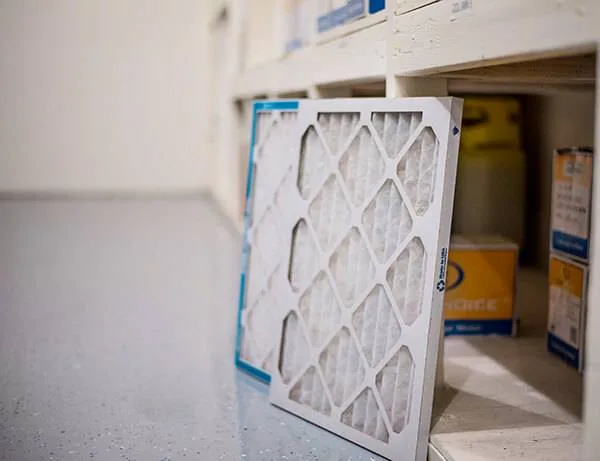
The most practical solution for most Las Vegas homeowners is either a quality 1-inch MERV 11 pleated filter changed monthly during summer (every 60 days during winter), or a 5-inch media filter housing installed at the return air with a MERV 11-13 media filter changed twice per year. The 5-inch media filter has significantly more surface area than a 1-inch filter, resists loading longer, and provides better particle capture without excessive restriction.
Never use fiberglass "blue" filters in Las Vegas. They capture only the largest particles, do nothing for the fine desert dust that damages evaporator coils, and give false confidence that your system is protected when it is not.
Ductwork Inspection and Maintenance
Las Vegas attic temperatures can reach 150°F or higher during summer. Ductwork running through this environment faces extreme thermal stress. Duct insulation degrades faster here than in moderate climates, and connections between flex duct sections and metal trunk lines loosen from thermal expansion and contraction over years of operation.
Signs of Ductwork Problems
- Rooms that are consistently hotter or cooler than the rest of the home
- High energy bills despite a functioning AC system
- Excessive dust in the home shortly after cleaning
- System running continuously without reaching setpoint
- Unusual sounds (rattling, whistling) from ductwork during operation
- Visible gaps, disconnections, or damaged insulation in accessible attic sections
Duct Leakage Standards
Energy codes and best practices target total duct leakage of less than 4% of system airflow for existing homes and less than 3% for new construction. Our experience in Las Vegas is that many existing homes have duct leakage of 20-35% — meaning nearly a third of the conditioned air you are paying to cool leaks into the 150°F attic before reaching any living space. Duct sealing with mastic compound (not tape — duct tape fails in heat) is one of the highest-return investments a Las Vegas homeowner can make, often reducing cooling bills by 15-25%.
Professional duct leakage testing using a blower door and duct pressurization equipment costs $150-$300. Duct sealing costs $500-$2,000 depending on system size and access. The energy savings typically generate payback in 2-5 years at Las Vegas electricity rates.
Condensate Drain System Maintenance
Every central air conditioning system removes moisture from indoor air as a byproduct of cooling. In Las Vegas, the volume of moisture removed varies dramatically: in June's dry heat, it may be minimal. During monsoon season (July-September), a properly functioning 3-ton AC system removes 15-25 gallons of water per day from the air in a typical home.
All of that water goes through the condensate drain system: from the evaporator coil drain pan, through a PVC drain line, to the exterior of the home or to a condensate pump that lifts it to a drain. Algae, mold, and mineral deposits from hard Las Vegas water can block this system. When it blocks, water overflows the drain pan, which sits inside the air handler — typically in the attic. Overflow from an attic air handler causes ceiling damage, drywall damage, and mold growth that can cost thousands to remediate.
Condensate Drain Maintenance Schedule
- Monthly during monsoon season (July-September): Check that the condensate drain outlet is dripping or flowing on humid days. Pour half a cup of diluted bleach (1:10 bleach-to-water ratio) or distilled white vinegar into the drain access port to inhibit algae growth.
- Every 3-6 months: Flush the drain line with water to verify free flow. Use a wet-dry vacuum at the exterior drain outlet to clear any partial blockages.
- Annually (during professional tune-up): Have the technician run a complete condensate drain flush, inspect the drain pan for cracks or corrosion, and verify that the drain pan safety switch (if present) is functional. This switch shuts off the system if the drain pan fills with water.
- If you use condensate treatment tablets: Algaecide tablets placed in the drain pan are effective at preventing growth. Replace per manufacturer instruction, typically every 3 months. Do not use tablets with products that could damage PVC or metal drain pans.
What Professional HVAC Maintenance Plans Include and Cost
Many Las Vegas HVAC contractors offer annual maintenance plans. These typically bundle two professional tune-ups per year (spring AC and fall heating) with additional benefits that make them worthwhile for most homeowners.
Typical Maintenance Plan Components
- Spring AC tune-up (all items listed in the March section above)
- Fall heating tune-up (gas furnace or heat pump)
- Priority scheduling for repair calls (often same-day in season)
- Discounted labor rates on repairs (typically 10-20% off standard rates)
- Discounted parts pricing
- No overtime or weekend surcharges for emergency calls (some plans)
- Maintenance records provided for warranty compliance
Maintenance Plan Pricing in Las Vegas
| Plan Type | Typical Annual Cost | What's Included |
|---|---|---|
| Basic (single system) | $150-$200/year | Two tune-ups, priority scheduling |
| Standard (single system) | $200-$300/year | Two tune-ups, priority, discounted repairs, filter included |
| Premium (single system) | $300-$450/year | Two tune-ups, all above plus no after-hours charges |
| Multi-system (two systems) | $300-$500/year | Two tune-ups per system, all standard benefits |
Compare the plan cost against two individual tune-ups at $89-$150 each ($178-$300 total) plus emergency service call rates of $150-$250 for after-hours service. For most homeowners with a system older than 5 years, a maintenance plan pays for itself with a single avoided after-hours service call.
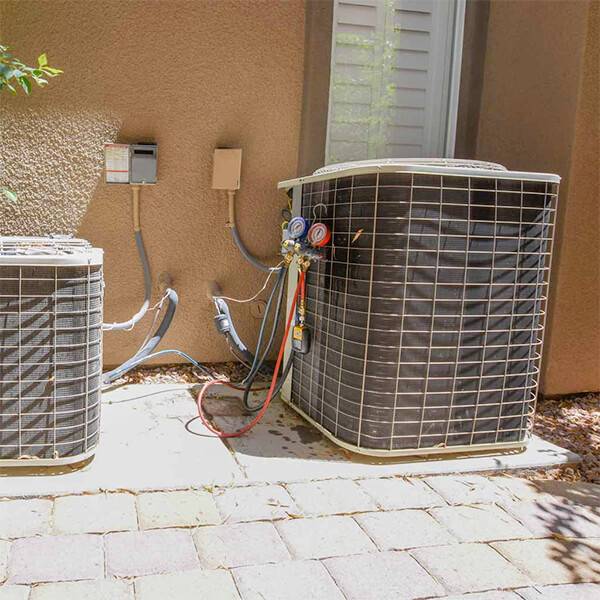
How Maintenance Extends System Life: The Numbers
The U.S. Department of Energy estimates average air conditioner life expectancy at 15-20 years. That estimate is based on moderate climates with adequate maintenance. In Las Vegas, the harsh operating conditions compress that range significantly.
Expected System Life by Maintenance Level
| Maintenance Level | National Average Life | Las Vegas Life (Actual) |
|---|---|---|
| No maintenance (filters rarely changed, no tune-ups) | 8-10 years | 5-8 years |
| Minimal (filter changes occasionally, tune-up every 3-5 years) | 10-13 years | 7-10 years |
| Adequate (annual tune-up, filter every 90 days) | 13-16 years | 10-13 years |
| Proper desert maintenance (twice-annual tune-up, monthly filters in summer) | 16-20 years | 14-18 years |
| Excellent (twice-annual professional service plus proactive component replacement) | 20+ years | 18-22 years |
A $3,000-$5,000 system replacement that happens 10 years early because of neglected maintenance represents a far greater cost than 20 years of maintenance plans. The math is unambiguous.
Warranty Protection and Documentation
Most major HVAC manufacturers — including Lennox, Carrier, Trane, and Daikin — require proof of annual professional maintenance to honor equipment warranties beyond the base period. Lennox, for example, extends compressor and parts warranties from 5 years to 10 years when the equipment is registered and maintained by a dealer. Without maintenance documentation, a compressor failure at year 7 may be a warranty claim. Without documentation, it is a $1,500-$3,000 out-of-pocket repair.
Keep every service record your HVAC contractor provides. Photograph the paperwork. If your contractor provides electronic service records through an app or email, save them. If you need to make a warranty claim, you will need: the original installation invoice showing model and serial numbers, equipment registration confirmation, and documentation of annual professional maintenance visits.
As a Lennox Premier Dealer, we maintain complete service records for all customers and can provide manufacturer-required maintenance documentation directly to Lennox if a warranty claim is needed. This is one of the concrete benefits of staying with a single established contractor rather than using a different company every year.
Quick Reference: Las Vegas HVAC Maintenance Calendar
| Month | Key DIY Tasks | Professional Tasks |
|---|---|---|
| January | Filter check, thermostat test, CO detector check | Schedule spring tune-up now |
| February | Filter change, condensate drain flush, ductwork visual inspection | Book spring AC tune-up before March rush |
| March | Filter change, clear 24" condenser clearance, gentle coil rinse | Comprehensive AC tune-up ($89-$150) |
| April | Filter change, verify thermostat schedule, check drain outlet | Follow-up if any issues from March tune-up |
| May | Filter change, check all registers, maintain condenser clearance | None unless system shows issues |
| June | Filter change (monthly now), monitor for warning signs, thermostat setback | Call immediately if any performance issues |
| July | Filter change, post-haboob coil check, drain line check (increased flow) | Emergency service if needed; consider mid-season coil cleaning if dusty |
| August | Filter change, fan set to AUTO for monsoon, humidity monitoring | None unless system shows issues |
| September | Filter change, drain pan clean, condenser inspection after summer | Schedule fall heating tune-up for October |
| October | Filter change, test heat before cold nights | Heating system tune-up ($89-$150) |
| November | Filter check, CO detector battery replacement | Schedule next spring AC tune-up |
| December | Filter check, keep condenser clear of debris | Book spring AC appointment early |
Frequently Asked Questions
How often should I change my air filter in Las Vegas?
Monthly during the cooling season (May through September) is our standard recommendation for most Las Vegas homes with 1-inch pleated filters. Homes with pets, high foot traffic, nearby construction, or visible dustiness may need changes every 2-3 weeks. During winter, every 45-60 days is typically appropriate. If you upgrade to a 5-inch media filter system, you can extend intervals to every 6-9 months because the larger surface area captures more particulate before restriction becomes a problem. The test is simple: hold the filter up to light. If you cannot see light through it, replace it regardless of the calendar date.
Is one professional tune-up per year enough for a Las Vegas HVAC system?
No. National recommendations of one annual tune-up are written for moderate climates. In Las Vegas, where AC systems run 2,500-3,500 hours per year compared to the 1,000-1,500 hour national average, two professional visits are the appropriate minimum — one in spring (March-April) for the AC before summer, and one in fall (October) for the heating system before winter. If your system is more than 10 years old or has had previous reliability issues, additional visits during peak season may be warranted.
What happens if I skip professional HVAC maintenance for a year or two?
In most U.S. climates, skipping a year of professional maintenance causes gradual efficiency decline and slightly higher repair probability. In Las Vegas, the consequences are more severe because systems operate under extreme stress for so many hours. The most common consequences we see from skipped maintenance are: capacitor failure during summer peak (the #1 service call in Las Vegas), compressor failure from low refrigerant charge that went undetected, evaporator coil freeze-up from dirty filters and coils, and condensate drain overflow causing ceiling damage during monsoon season. A single missed maintenance visit that leads to a compressor replacement ($1,500-$3,000) or water damage remediation ($2,000-$8,000) is dramatically more expensive than years of maintenance contracts.
Do I need to clean my condenser coils more often than the annual tune-up?
Possibly, especially after significant dust storms. Las Vegas haboobs can deposit a visible layer of fine dust on condenser fins in a single event. If you can see a gray coating on the coil fins after a storm, a gentle rinse with a garden hose before the next operation is appropriate. More thorough chemical cleaning — which reaches deeper into the coil — should be done by a professional annually at minimum, and biannually for homes near construction, dirt roads, or areas with heavy dust events. A dirty condenser coil forces your compressor to work harder against elevated head pressure. In 115°F ambient temperatures, this additional stress accelerates compressor wear significantly.
What should professional HVAC maintenance cost in Las Vegas?
A legitimate professional tune-up from a licensed Las Vegas HVAC contractor should cost $89-$150 for a single residential system. Contractors offering $39-$59 tune-up specials are typically performing a cursory inspection and using the visit as a sales opportunity for unnecessary repairs rather than performing actual maintenance. Contractors charging $200+ per visit for standard maintenance may be priced appropriately for premium plans that include added benefits, but standard tune-up service does not warrant that rate. Get a written description of what the tune-up includes before agreeing to the service.
Does my HVAC warranty require professional maintenance?
Most major manufacturers — including Lennox, Carrier, Trane, and Daikin — require documented annual professional maintenance to honor extended warranty coverage. Lennox's standard equipment warranty is 5 years for parts and 5 years for the compressor. Registering the equipment and maintaining it with a Lennox Premier Dealer extends coverage to 10 years for parts and compressor. Without maintenance documentation, warranty claims beyond the base period can be denied. Always get a written service receipt after every professional visit and keep records for the life of the equipment.
Is a maintenance plan worth the money compared to paying per visit?
For most Las Vegas homeowners with a system more than 5 years old, yes. Two individual tune-ups at $89-$150 each total $178-$300. A maintenance plan at $200-$300 per year provides the same two tune-ups plus priority scheduling (which is genuinely valuable during a Las Vegas summer heat wave), discounted repair rates, and in many cases, reduced or waived after-hours service fees. If your system requires even one emergency repair call per year, the plan typically pays for itself. The older the system, the more valuable the plan — repair probability increases with age, and Las Vegas heat makes failures more likely during peak season.
Topic: Professional Maintenance Services
For a detailed look at how Las Vegas conditions specifically damage HVAC equipment and accelerate failure, see our guide on why Las Vegas homes destroy air conditioners. If you are evaluating a new system installation, our complete guide to replacing your air conditioner covers sizing, selection, and installation considerations specific to the desert climate.
For homeowners comparing system options, our best air conditioners for extreme heat in Las Vegas ranks the top performers for desert conditions. Our top 25 air conditioning brands provides broader market context.
Ready to get your system on a proper maintenance schedule? Call (702) 567-0707 or visit our HVAC maintenance page. We serve Las Vegas, Henderson, North Las Vegas, and the surrounding valley.
Need HVAC Service in Las Vegas?
The Cooling Company provides expert HVAC service throughout Las Vegas, Henderson, and North Las Vegas. Our licensed technicians deliver honest assessments, upfront pricing, and reliable results.
Call (702) 567-0707 or visit HVAC services, HVAC maintenance, heating, or AC repair for details.