

Short answer: Discover HVAC maintenance tips and compare Lennox furnace models to cut heating bills with AFUE, blower and sizing guidance for smarter savings today.
Short answer: pick Merit for low upfront cost, Elite for a balance of efficiency and value, and Dave Lennox Signature for top efficiency and comfort. Focus on Manual J sizing, proper venting, and a variable-speed blower. Compare AFUE, staging, and projected payback before you accept any dealer quote. For technical background, consult the ASHRAE Technical Resources: ASHRAE Technical Resources.
Key Takeaways
- Use a room-by-room Manual J load calculation (not a square-foot rule).
- Select equipment with Manual S and verify ducts with Manual D for comfort and efficiency.
- Avoid oversizing: short-cycling wastes fuel and can create uneven temperatures.
This guide walks through Lennox lines, key features, cost factors, and the tests you should insist on at installation. Use it to prepare questions for dealers and to compare written quotes. It highlights practical trade-offs between upfront price and lifetime costs. Keep notes on your current system, and insist on documentation for Manual J, combustion testing, and AHRI matches.
Lennox Furnace Models and Series Overview?
Lennox organizes furnaces into three main series: Merit, Elite, and the Dave Lennox Signature Collection. Each series targets different priorities. Merit is the value line. Elite is the mid-range option that mixes efficiency and comfort features. The Signature Collection focuses on the highest AFUE and advanced modulation and blower controls.
Choosing a series starts with your goals: lower upfront cost, balanced value, or top performance. Other factors matter too: climate, ownership horizon, and duct system condition. Installation requirements such as venting, condensate drains, and matching indoor coils affect the installed cost. Always request a line-item quote.
Merit series: durability and low cost
Merit furnaces focus on simple design and reliable operation. They often use single-stage burners and standard blowers. These units suit homeowners with tight budgets or short ownership plans. Their straightforward components can mean cheaper parts and easier repairs in some markets.
Merit units typically deliver AFUE in the low-to-mid 80s up to low 90s for some condensing models. For mild climates or rental properties, Merit can be a practical choice if the main goal is low initial cost rather than maximum savings.
Elite series: balance of efficiency and comfort
The Elite line adds features that improve part-load performance and noise. Many Elite furnaces include two-stage burners and ECM blower options. When paired with efficient indoor coils, some Elite models can reach mid-90s AFUE.
Elite units reduce short cycling and improve steady airflow. The upgraded blower options provide better humidity control and quieter operation. Compare installed costs for ECM blowers and two-stage burners before deciding.
Dave Lennox Signature Collection: top efficiency and modulation
The Signature Collection targets buyers who want the tightest temperature control and the highest AFUE. These furnaces commonly include modulating burners and advanced control boards for precise heat delivery.
Expect the best comfort and quiet operation in this tier. Payback depends on climate and fuel price. In cold climates, higher AFUE and modulation often return savings faster. In mild climates, comfort and noise reduction may be the main benefits.
Efficiency, AFUE, and Payback
Efficiency ratings and expected payback are central to furnace selection. AFUE describes efficiency under test conditions, but real savings depend on runtime, local gas prices, and thermostat behavior. A clear written comparison of installed cost versus expected annual fuel savings helps make the choice practical.
When dealers provide proposals, ask for simple payback tables. Those should show installed price, estimated annual fuel cost with current system, and estimated annual fuel cost with the new system. Also include expected energy savings and years to payback under current gas rates.
Try our energy savings calculator to see how much you could save.
Are condensing furnaces worth the premium?
Condensing furnaces capture extra heat from exhaust gases and commonly reach AFUEs above 90%. They require PVC or corrosion-resistant venting and a condensate drain. Installation typically costs more because of vent and condensate work.
If you plan to stay in your home five to ten years, a condensing unit often makes financial sense in colder climates. Compare the installed premium to projected yearly savings to calculate payback. Get written estimates that separate venting and drain costs.
How does AFUE translate to annual savings?
AFUE is the fraction of fuel converted to heat under test conditions. To estimate savings, calculate your current annual heating cost and multiply by the percentage improvement in AFUE. For example, moving from 80% to 95% AFUE gives an efficiency gain of 15 percentage points.
Real savings vary with climate, insulation, and usage. Use a Manual J output or your recent fuel bills for a tighter estimate. Ask dealers to run the numbers with your local gas rate and typical heating hours.
What payback can Lennox models deliver?
Payback depends on the AFUE improvement and local fuel costs. For instance, if you save $400 a year but pay $3,000 more up front, payback is about 7.5 years. Higher gas prices or larger AFUE gains shorten payback.
Rebates and tax credits can improve economics. Request a simple cash-flow chart from each dealer that shows installed cost, rebates, and yearly savings. That makes comparison easier than comparing sticker prices alone.
Learn about available federal tax credits for energy-efficient HVAC equipment.
Blowers, Staging, and Comfort Features
Blower type and staging affect comfort and energy use. Variable-speed ECM blowers and modulating burners offer the best steady comfort. Two-stage systems and ECMs cut noise and short cycling and can enable zoning with less static pressure issues.
When reviewing proposals, confirm the blower motor type and how staging or modulation is commissioned. Proper factory or field setup is required to get the expected comfort and efficiency from advanced features.
What is two-stage versus modulating?
Two-stage furnaces have low and high output steps. They run primarily at low stage and switch to high when needed. This reduces temperature swings and improves part-load efficiency compared with single-stage units.
Modulating furnaces vary output across many small steps to precisely match the load. Modulation gives the smoothest temperature control and the highest part-load efficiency. It does cost more and requires careful commissioning.
How does an ECM blower save energy?
ECM blowers are electronically commutated motors that run more efficiently than older PSC motors. They vary speed to match airflow needs, reducing fan energy use and improving humidity control.
Because ECMs run at lower speeds for most of the time, they reduce noise and provide steadier airflow. Variable-speed ECMs also support zoning better than single-speed motors.
How does variable-speed airflow help?
Variable-speed blowers adjust airflow to current demand rather than running full speed constantly. This yields more even temperatures, quieter operation, and lower fan electricity use.
They reduce drafts and help maintain comfort in distant rooms. For zoning, variable-speed blowers avoid large pressure swings that can occur with single-speed fans and closed dampers.
Sizing, Ducts, and Installation Quality
Correct sizing and ductwork condition influence both comfort and system efficiency. Oversized furnaces short cycle and waste energy. Undersized furnaces run long and may fail in extreme weather. Documented Manual J load calculations are essential for proper sizing.
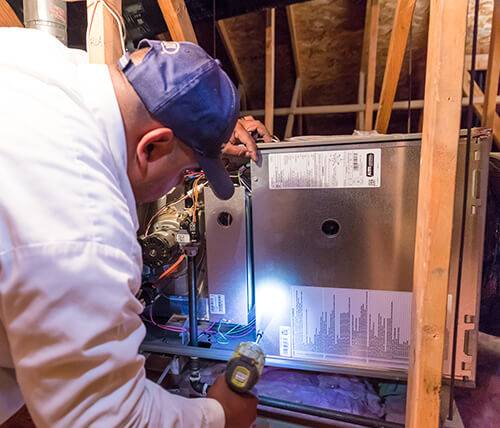
Installation quality often determines real-world AFUE and safety. Proper venting, combustion setup, static pressure testing, and duct sealing matter more than small differences in model lines. Insist on written test results from the installer.
What is Manual J and why is it needed?
Manual J is the industry standard for residential heating and cooling load calculations. It accounts for insulation, windows, orientation, and climate to size equipment correctly.
Quick rules of thumb are inaccurate. A documented Manual J reduces oversizing risk and provides a defensible basis for equipment selection. Ask for the calculation before accepting a final quote.
What role does proper sizing play?
Proper sizing prevents short cycling and improves comfort. Oversized systems switch on and off often, increasing wear and reducing efficiency. Undersized units can leave rooms cold on very cold days.
Installers should use Manual J for loads and Manual S for equipment selection. If a dealer cannot provide those documents, consider another contractor.
How important is duct static pressure?
Static pressure is the resistance to airflow in the duct system. High static pressure reduces airflow, increases noise, and can void manufacturer performance claims if outside limits.
Technicians should measure static pressure during startup and provide readings. If static pressure is too high, duct modification or a different blower setup may be needed.
Costs, Rebates, and Getting Quotes
Compare at least three written quotes with the same scope of work. Apples-to-apples comparisions require matching scope: Manual J, duct repairs, venting changes, thermostat type, and warranty terms. Line-item pricing helps reveal real differences in labor and parts.
Include expected permit work in the quote. Ask which rebates the dealer will handle and which you must submit. Keep copies of all paperwork for rebate and warranty purposes.
Which rebates and incentives apply?
Rebates vary by utility and region and change over time. Many utilities and some state programs reward high-efficiency furnaces, particularly those at or above 95% AFUE or paired with efficient controls.
Dealers often know current programs and can help submit paperwork. Still, verify rebate rules, deadlines, and required documentation yourself. Save serial numbers and installation proofs.
How to compare upfront and lifecycle cost?
Consider installed price, estimated annual fuel and electricity costs, and projected maintenance over 10–15 years. Include rebates and expected resale or home-value effects if relevant.
Life-cycle cost calculators help. Also weigh non-monetary benefits like comfort, humidity control, and quiet operation. Those may justify higher upfront costs when payback is borderline.
Verification, Commissioning, and Tests
A quality installer will document combustion, venting, static pressure, and airflow measurements. Proper commissioning validates that modulating or two-stage systems operate as intended and that warranties remain valid.
If an installer is unwilling to provide test printouts and AHRI match certificates, consider another contractor. Documentation protects you and gives confidence that the system meets claimed performance.
How to verify combustion and venting?
Combustion tests use a flue gas analyzer to measure O2, CO2, and carbon monoxide levels. Installers should record draft, stack temperature, and gas input and show printouts.
Vent materials, slope, and termination must meet local code. Condensing units need correct condensate drain routing and corrosion-resistant venting. Request combustion test printouts and vent plans.
Which diagnostics and tests prove a good install?
Look for static pressure readings, airflow or CFM measurements, and combustion analysis on the final paperwork. Technicians should confirm thermostat calibration and condensate drainage.
For modulating systems, verify stage sequencing and control communications. A copy of test results should be left with the homeowner for warranty and rebate records.
Final call to action
Las Vegas area readers: Ready for a precise Lennox quote with professional installation? Call The Cooling Company at (702) 567-0707 for fast, NATE-certified service. The company installs and services Lennox furnaces across Las Vegas, Henderson, and North Las Vegas. Ask for Manual J sizing, combustion testing, and a detailed line-item proposal.
Outside the Las Vegas area: Ask any dealer for NATE-certified technicians, documented Manual J and Manual S calculations, AHRI match certificates, and combustion test printouts. Keep all documentation for rebates and warranty claims.
What to prepare before a professional quote?
Gather your current furnace model and age, recent service notes, and 12 months of utility bills. Note problem rooms, odd noises, or drafty areas. Provide square footage and insulation details for faster, more accurate bids.
Photos of the existing unit, venting, and utility closet help reduce on-site surprises. List must-have features such as zoning, humidification, or smart thermostat compatibility to ensure consistent quotes.
Related Guides
The following guides provide more detail on model-specific issues and local pricing. Review them after you get initial quotes so you can ask targeted questions and verify model numbers and expected options.
- “lennox hvac model guides” (TCC: Topic)
- “lennox ml296u furnace install summerlin”
- “lennox el296v furnace cost henderson”
- “lennox slp99v furnace price las vegas”
Related service: Need furnace service in Las Vegas? Explore our furnace repair and heating maintenance services for Las Vegas homeowners.
Need HVAC service help in Las Vegas?
While many homeowners can handle basic HVAC maintenance, some tasks require professional expertise. If you're in the Las Vegas area and need help beyond DIY solutions, The Cooling Company is here for you.
Call (702) 567-0707 to schedule a professional assessment. Our licensed technicians can identify issues that might not be obvious and ensure your system runs efficiently.
About The Cooling Company
The Cooling Company has been serving the Las Vegas valley with professional HVAC services for over a decade. Our team of licensed, NATE-certified technicians specializes in air conditioning repair, heating system maintenance, and complete HVAC installations. We're committed to providing honest, reliable service with upfront pricing and a 100% satisfaction guarantee on all work performed.
- Phone: (702) 567-0707
- Reviews: 4.8/5 stars (780+ reviews) - See reviews
Service Areas
We proudly serve homeowners and businesses throughout the Las Vegas metropolitan area, including Las Vegas, Henderson, and North Las Vegas. Our service technicians are available for same-day appointments in most areas, with emergency service available 24/7 for urgent HVAC issues.
Sources
- U.S. Department of Energy (Energy.gov) (accessed 2026-01-02)
- U.S. Environmental Protection Agency (EPA) (accessed 2026-01-02)
- ASHRAE (Standards and guidance) (accessed 2026-01-02)
- ENERGY STAR (Heating & cooling) (accessed 2026-01-02)
Related reading: Lennox EL296V furnace costs.
Need HVAC Service in Las Vegas?
The Cooling Company provides expert HVAC service throughout Las Vegas, Henderson, and North Las Vegas. Our licensed technicians deliver honest assessments, upfront pricing, and reliable results.
Call (702) 567-0707 or visit heating, furnace repair, heat pump installation, or heating maintenance for details.