

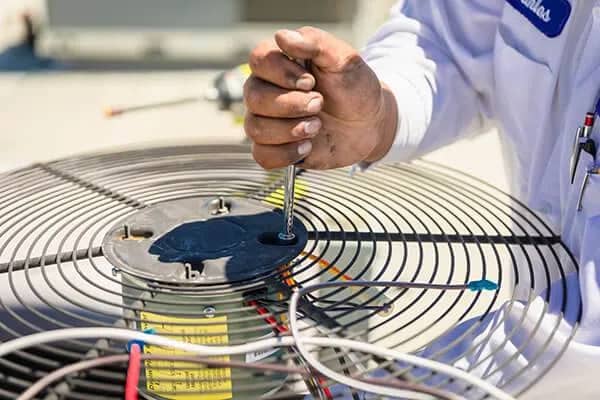
Short answer: The seven most expensive AC maintenance mistakes in Las Vegas are: skipping spring tune-ups ($150 tune-up vs. $1,500-$3,500 compressor failure), setting the thermostat below 72°F (compressor icing and strain), closing vents in unused rooms (pressure imbalance that cracks duct joints), neglecting filter changes in dusty desert air, covering or enclosing the outdoor unit, DIY refrigerant top-offs (EPA violations and masked leaks), and waiting until the system completely fails to call for help. Each mistake has a specific mechanical consequence and a real dollar cost — and every one of them is avoidable.
The Expensive Education
A homeowner in Summerlin called us last August after three different companies had added refrigerant to her system over two summers. Each visit cost $250-$400. Each time, the system cooled well for six to eight weeks, then started blowing warm again. By the time we arrived, she'd spent over $1,100 on refrigerant alone.
The problem was a hairline crack in the evaporator coil — a $1,400 repair that should have been diagnosed and fixed the first time. Instead, she paid for the leak three times over without ever actually fixing it.
That's how most AC damage works in Las Vegas. It's rarely one catastrophic event. It's a series of small mistakes, each one reasonable-sounding on its own, that compound into a system failure costing thousands. Here are the seven we see most often.
Mistake 1: Skipping the Spring Tune-Up
What homeowners think
"My AC worked fine last September when I shut it off. It'll be fine when I turn it on in May."
What actually happens
During the six months your AC sits idle through Las Vegas fall and winter, several things change. Dust from fall winds and winter construction settles on the condenser coil. Capacitors — which degrade whether they're running or not — lose another few microfarads of capacitance. Spiders build nests in the contactor housing (this is astonishingly common in the valley). Refrigerant continues to seep through any existing micro-leak.
When you flip the system on in May and it starts working, you assume everything is fine. It's not. It's running with degraded components in conditions that are about to get exponentially harder. The first 100°F day of June is a stress test for every part in your system, and the parts that degraded over winter are the first to fail.
The real cost
A spring tune-up costs $89-$175 and includes the inspection, testing, and cleaning that catches these problems. A mid-July emergency compressor failure costs $1,500-$3,500 for the repair alone, plus $75-$150 in after-hours fees, plus two to three days of waiting in a 110°F house while parts arrive.
The tune-up-to-breakdown cost ratio is roughly 1:20. No other home maintenance investment has that kind of return.
Mistake 2: Setting the Thermostat to 68°F When It's 115°F Outside
The logic
"It's brutally hot. I want to be cold. If I set it to 68, the house will cool down faster."
What happens mechanically
Setting the thermostat lower doesn't make the AC cool faster — it's not a throttle. Your system delivers the same BTUs per hour regardless of whether the setpoint is 76 or 68. The difference is that at 68, the system never reaches the setpoint on a 115°F day, so the compressor runs continuously without cycling off.
Continuous runtime isn't inherently destructive — your system is designed to run for extended periods. The problem is the temperature differential. Residential AC systems are engineered to maintain a 20-25°F difference between indoor and outdoor temperatures. Asking the system to hold 68°F when it's 115°F outside is a 47-degree differential — nearly double the design spec.
The result: the evaporator coil drops below 32°F, moisture on the coil freezes, ice builds up, airflow drops, and the remaining exposed coil surface gets even colder. Eventually, the entire coil is encased in ice. At that point, no air gets through. The system is running, the compressor is working, and you're getting zero cooling.
Worse, liquid refrigerant can wash back to the compressor — a condition called liquid slugging that can crack compressor valves and destroy the unit in a single event.
What to do instead
Set your thermostat to 76-78°F during extreme heat days. Yes, it's warmer than you'd prefer. But the system will actually maintain that temperature, cycle normally, and keep running all summer. Use ceiling fans to create a wind-chill effect that makes 78°F feel closer to 73°F. Close blinds on south- and west-facing windows from noon through sunset.
If 78°F genuinely isn't comfortable, 74°F is a reasonable compromise on most days — but watch for ice on the copper lines going into your air handler. Frost or ice on those lines means the system is being pushed too hard.
Mistake 3: Closing Vents in Unused Rooms
The logic
"Nobody uses the guest bedroom. If I close the vent, more air goes to the rooms I actually use."
The physics
Your AC system is a fixed-capacity blower pushing air through a network of ducts sized for a specific total airflow — usually 400 CFM per ton of cooling. When you close a register, you don't redirect that air to other rooms. You increase static pressure in the duct system.
Higher static pressure does three things. First, it reduces total airflow across the evaporator coil, which can cause the coil to freeze (same problem as Mistake 2). Second, it pushes air through gaps and seams in the ductwork that normally don't leak significantly — a pressurized duct system can lose 20-30% of its air into the attic instead of your rooms. Third, in older duct systems, the increased pressure can crack joints, pop flex duct connections off metal boots, and create permanent leaks.
We've crawled through attics in Green Valley and Henderson neighborhoods and found duct joints blown apart — flex duct pulled right off the collar — in homes where the homeowner had been closing half the vents for years. The duct system couldn't handle the pressure, and every BTU of cooling dumped into the attic was wasted energy and wasted money.
The cost
Duct repair runs $350-$1,200 per damaged section. A full duct seal and pressure test runs $1,500-$3,500. And until the damage is found and fixed, you've been paying to cool your attic — adding $40-$80/month to your NV Energy bill with zero comfort benefit.
The correct approach: leave all vents open. If certain rooms are consistently too hot or too cold, the solution is duct balancing — adjusting dampers in the duct system to distribute air proportionally — not closing registers. If your ducts have accumulated years of desert dust alongside any damage, our honest guide to duct cleaning in Las Vegas explains when cleaning genuinely helps and when it's money wasted.
Mistake 4: Ignoring Filter Changes in the Dustiest City in America
How fast filters clog in Las Vegas
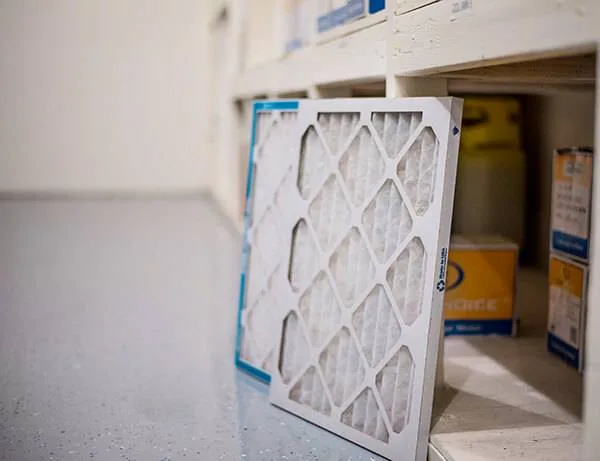
In a typical Midwest or East Coast home, a standard 1-inch MERV 8 filter lasts 90 days. In Las Vegas, that same filter is visibly gray within 21 days and functionally clogged within 30-45 days — sometimes faster during monsoon season (July through September) or when construction is active nearby.
Las Vegas doesn't just have more dust. The dust is different. Desert particulate includes fine caliche (calcium carbonate), silica, and gypsum — particles that are harder and more abrasive than typical household dust. They embed in filter media rather than sitting on the surface, which means a Las Vegas filter that looks "okay" can already be significantly restricting airflow.
What a clogged filter actually does to your system
A restricted filter reduces airflow across the evaporator coil. The coil temperature drops. Ice forms. The system loses cooling capacity. Your thermostat calls for more runtime. The compressor runs longer, harder, and hotter. Components wear faster. Your energy bill climbs 10-25% because the system is cycling inefficiently.
A $6 filter, changed monthly, prevents all of this. A filter left in place for six months in Las Vegas can cause a frozen coil, a flooded compressor, or a burned-out blower motor — repairs running $400-$2,500.
What to use
MERV 8-11 pleated filters, changed every 30 days from April through October. MERV 13 or higher is great for air quality but can restrict airflow in systems not designed for high-static filters — check with your AC maintenance technician before upgrading. Four-inch media filters (installed in a filter cabinet at the air handler) last 6-12 months even in Las Vegas conditions, hold more dust, and restrict less airflow — they're the best option if your system supports them.
Mistake 5: Covering or Enclosing the Outdoor Unit
The aesthetic impulse
Outdoor AC units aren't pretty. Homeowners in neighborhoods with strict HOA standards — The Lakes, Inspirada, Lake Las Vegas — sometimes build lattice screens, decorative walls, or planting beds around the condenser to hide it.
The thermodynamic reality
Your condenser needs unrestricted airflow on all four sides and open sky above the fan discharge. Any obstruction — a fence panel 12 inches away, a decorative rock wall, dense oleander hedging — traps the hot exhaust air the unit is trying to reject. That hot air gets recirculated back through the condenser coil, raising the effective inlet temperature by 10-20°F.
On a 110°F day, a condenser surrounded by a decorative enclosure can experience effective inlet temperatures of 125-130°F. That's enough to trigger high-pressure lockout, even on a perfectly maintained system.
Full covers placed over the unit during winter trap moisture inside the cabinet. Moisture corrodes the coil fins, the fan blade, and the electrical connections. We've replaced condenser coils that were structurally sound from an age standpoint but corroded through from four winters under a vinyl cover.
What works instead
Maintain 24 inches of clearance on all sides and 60 inches above. If HOA rules require screening, use a structure with at least 50% open area (widely spaced slats, not solid panels) and leave the top completely open. Shade the unit from direct sun with a purpose-built overhead shade that doesn't restrict vertical airflow. Never use a full cover — the unit is designed to withstand weather.
Mistake 6: DIY Refrigerant Top-Offs
The YouTube temptation
Videos make it look simple: buy a can of R-410A (or whatever refrigerant your system uses), connect the hose, add gas until the system cools again. What the videos don't mention could cost you thousands — or get you fined.
Why this is a serious problem
Legal issue first. Under EPA Section 608, only EPA-certified technicians are legally authorized to purchase and handle HVAC refrigerants. Homeowners adding refrigerant to their own system are violating federal law. Fines can reach $44,539 per day per violation. While enforcement against individual homeowners is rare, the regulation exists because mishandled refrigerants are potent greenhouse gases — R-410A has a global warming potential 2,088 times greater than CO2.
Mechanical issue. Refrigerant charge is precise. A 3-ton AC system holds approximately 6-12 pounds of R-410A, and the correct charge is determined by measuring subcooling and superheat — not by "adding until it feels cold." Overcharging by as little as 10% can cause liquid slugging, high head pressures, and compressor damage. Undercharging by 10% reduces cooling capacity by 15-20% and causes the compressor to overheat.
Diagnostic issue. Refrigerant doesn't evaporate or get consumed. If your system is low, it's leaking. Adding refrigerant without finding and fixing the leak is the HVAC equivalent of adding oil to a car with a cracked engine block — you're masking the real problem. Meanwhile, the leak continues, the refrigerant you added escapes, and you're back to warm air in six weeks.
The right approach
Call a licensed technician. A proper refrigerant service includes leak detection (electronic sniffer, UV dye, or nitrogen pressure test), leak repair, system evacuation if contaminated, and a weighed charge to manufacturer specifications. Total cost: $250-$800 depending on the leak location. That's a one-time fix versus $250-$400 every few months for a top-off that never solves the problem.
Mistake 7: Waiting Until the System Completely Fails
The slow slide
Most AC failures don't happen suddenly. They announce themselves weeks or months in advance. The system takes 45 minutes to cool the house instead of 25. One room stays three degrees warmer than the rest. The outdoor unit makes a clicking sound when it starts up. The energy bill is $30 higher than last July for no obvious reason.
Homeowners notice these signals and rationalize them. "It's just a really hot summer." "That room's always been warm." "Energy rates went up." By the time the system actually stops working — the compressor locks up, the capacitor blows, the fan motor seizes — the repair is two or three times more expensive than it would have been when the first symptom appeared.
What early intervention actually costs
| Symptom | Early Repair Cost | Ignored-Until-Failure Cost |
|---|---|---|
| Clicking at startup (weak capacitor) | $150 - $300 | $1,500 - $3,500 (burned compressor) |
| Slowly rising energy bills (dirty coil or low charge) | $89 - $400 | $600 - $1,200/year in wasted energy + coil replacement |
| Uneven cooling between rooms (duct leak) | $350 - $800 (seal the leak) | $1,500 - $3,500 (full duct repair after pressure damage) |
| System running longer each day (failing metering device) | $250 - $600 | $1,200 - $2,800 (frozen coil, compressor damage) |
| Warm air from some vents (partial blockage) | $150 - $400 (clear the restriction) | $800 - $2,000 (blower motor failure from overwork) |
| Mild refrigerant leak (6-12 month decline) | $300 - $800 (find and fix leak) | $1,500 - $4,000+ (compressor burnout from running low) |
The pattern
Early problems are cheap to fix because only one component is affected. Ignored problems cascade — a failing capacitor causes the compressor to draw high amps, which overheats the contactor, which pits the contact surfaces, which causes arcing, which damages the wiring. By the time the system stops, you're replacing three parts instead of one.
The Full Picture: What These Mistakes Actually Cost
| Mistake | Prevention Cost | Failure Cost | Savings |
|---|---|---|---|
| Skipping spring tune-up | $89 - $175/year | $1,500 - $3,500 | Up to $3,400 |
| Thermostat set too low | $0 (just adjust it) | $400 - $2,500 (frozen coil, compressor damage) | Up to $2,500 |
| Closing vents | $0 (just open them) | $350 - $3,500 (duct damage, energy waste) | Up to $3,500 |
| Neglecting filters | $48 - $72/year (monthly changes) | $400 - $2,500 (frozen coil, motor failure) | Up to $2,450 |
| Covering/enclosing outdoor unit | $0 (just don't do it) | $300 - $2,800 (overheating, coil corrosion) | Up to $2,800 |
| DIY refrigerant top-offs | $250 - $800 (one proper repair) | $1,500 - $4,000+ (compressor burnout, fines) | Up to $3,200+ |
| Waiting until total failure | $150 - $600 (early repair) | $1,500 - $8,000+ (cascade failure or replacement) | Up to $7,400+ |
The Maintenance Plan Math
A maintenance plan with The Cooling Company costs less per year than a single emergency service call. It includes the spring and fall tune-ups, priority scheduling during peak season (so you're not waiting three days when it's 115°F), and discounts on parts and labor if a repair is needed.
The homeowners who cost themselves the least money on HVAC are the ones who spend the most on prevention. That's not a sales pitch — it's the math we see play out across thousands of service calls every year in the Las Vegas Valley.
What Good Maintenance Actually Looks Like
- March-April: Schedule your spring AC tune-up. Coil cleaning, refrigerant check, capacitor test, electrical inspection.
- Monthly (May-October): Change air filter. Rinse condenser coil with garden hose. Check for unusual sounds, smells, or performance changes.
- July-August: Pay attention. This is when marginal components fail. If something changes — longer run times, warmer air, higher bills — call for service early.
- October-November: Schedule your fall HVAC tune-up. Switch focus to heating system inspection, burner cleaning, heat exchanger check.
- Year-round: Keep 24 inches of clearance around outdoor unit. Never cover it. Leave all vents open. Don't touch the refrigerant.
Frequently Asked Questions
Is a spring AC tune-up really necessary if my system is only 2 years old?
Yes. Age protects against wear-related failures (like compressor burnout), but it doesn't protect against dust accumulation, capacitor degradation, or refrigerant leaks from manufacturing defects. New systems in Las Vegas accumulate condenser debris just as fast as old ones. The tune-up also validates your warranty — many manufacturers require annual professional maintenance to keep the warranty active.
What thermostat temperature do HVAC technicians actually set in their own homes?
Most of us set 76-78°F during summer days and 74-76°F at night. We know from experience that running the system at 72°F or lower on 115°F days causes icing, increases energy costs by 15-25%, and shortens component life. Ceiling fans make 78°F feel like 73-74°F for a fraction of the energy cost.
How do I know if my air filter is the right MERV rating for my system?
Check the static pressure across your filter. A technician can measure this during a tune-up — ideal is 0.1 to 0.3 inches of water column across the filter when new. If your system has standard 1-inch filter slots, MERV 8-11 is generally safe. MERV 13 and above may restrict airflow unless your system has a wider filter cabinet or a variable-speed blower designed for higher static pressure. When in doubt, a MERV 8 pleated filter changed monthly is better than a MERV 13 filter left in place for three months.
My HOA requires me to screen the outdoor unit. What can I do?
Request a variance citing equipment manufacturer requirements — most HOAs will accommodate documented technical needs. If they insist on screening, use a structure with at least 50% open area (slatted fence with gaps equal to the slat width), maintain 24+ inches of clearance on all sides, and leave the top completely open. Some homeowners use decorative metal grate panels that meet HOA aesthetics while preserving airflow. We can provide a letter documenting the technical requirements for your HOA board.
Can I buy R-410A refrigerant at a hardware store and add it myself?
No. As of January 2025, EPA regulations restrict the sale of R-410A and other HFC refrigerants to EPA Section 608-certified technicians only. Even if you could obtain it, adding refrigerant without proper subcooling/superheat measurements risks overcharging (which damages the compressor) or undercharging (which overheats the compressor). More importantly, if your system needs refrigerant, it has a leak — and adding gas without fixing the leak is wasting money.
What's the single most important maintenance task for Las Vegas homeowners?
Changing the air filter monthly during cooling season. It costs $4-$8 per filter, takes 30 seconds, and prevents the cascade of problems that lead to frozen coils, compressor strain, and blower motor failure. If you only do one thing, do this. If you do two things, add a spring tune-up. Those two actions together prevent roughly 80% of the mid-summer failures we see in the valley.
Stop Paying for Mistakes You Didn't Know You Were Making
Every homeowner on this list thought they were doing the right thing — or at least not doing anything wrong. The reality is that Las Vegas puts unique demands on air conditioning systems, and the maintenance habits that work in milder climates fall short here.
A single AC repair call during peak summer costs more than a full year of proper maintenance. Call us at (702) 567-0707 or Schedule Now to set up a tune-up, get on a maintenance plan, or just ask questions about what your system needs. We'd rather keep your AC running than fix it after it breaks.