

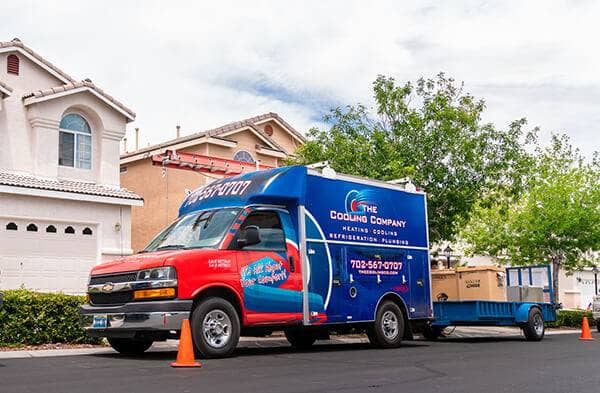
Short answer: Lennox takes the #1 spot in our 2026 air conditioning brand rankings, driven by the SL28XCV's industry-leading 28.0 SEER2 rating, whisper-quiet 56 dB operation, and Quantum Coil durability. Carrier (#2) and Trane (#3) remain elite competitors with unmatched dealer networks and legendary reliability. For budget buyers, Goodman and Amana deliver strong value backed by Daikin engineering. The right brand depends on your priorities: efficiency, durability, price, or feature set. Need expert guidance? Call The Cooling Company at (702) 567-0707 for a free consultation.
Key Takeaways
- Lennox leads in efficiency: The SL28XCV achieves 28 SEER — the highest residential rating available in 2026 — with an inverter compressor and R-454B-ready design.
- Carrier and Trane remain powerhouses: Carrier's Infinity 26 (24 SEER2) and Trane's XV20i (21.5 SEER2) offer the strongest dealer networks and proven track records in extreme heat.
- Daikin's quiet takeover continues: As the parent company of Goodman and Amana, Daikin now influences nearly 40% of the U.S. residential HVAC market through its family of brands.
- The R-454B transition is underway: New EPA mandates mean manufacturers are shifting from R-410A refrigerant to the lower-GWP R-454B, affecting pricing and availability across all brands.
- Federal tax credits favor efficiency: Qualifying heat pump and AC systems can earn homeowners up to $2,000 under Section 25C credits — making premium brands more accessible.
- Desert performance matters: In Las Vegas, where summer temperatures exceed 115 degrees F, not every brand performs equally. Our rankings factor in extreme-heat reliability, not just lab-tested specs.
How We Ranked: Our Methodology
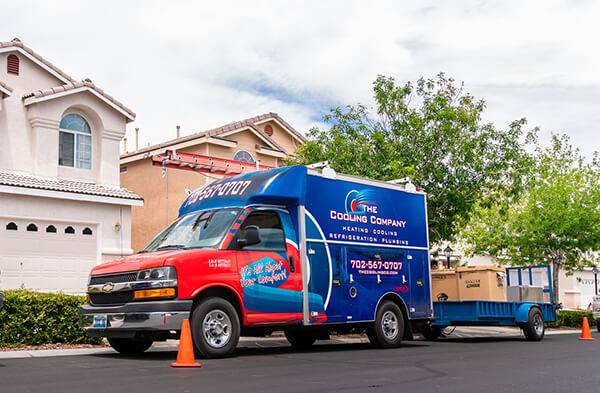
This is not a list cobbled together from press releases. Our rankings reflect real-world experience installing, servicing, and repairing these systems across thousands of homes in the Las Vegas Valley — where air conditioning is not a luxury but a survival necessity. We evaluated each brand across six weighted criteria:
1. SEER2 Efficiency (25% weight)
The SEER2 rating measures seasonal cooling efficiency under the updated M1 testing standard (which uses higher static pressure to simulate real ductwork), as defined by the Department of Energy's central air conditioning efficiency standards. Higher SEER2 means lower electricity bills. We evaluated each brand's top-tier and mid-tier models, not just their flagship numbers.
2. Reliability and Longevity (25% weight)
We drew on failure-rate data, industry service reports, and our own decades of field experience to assess which brands hold up year after year. A system that hits 20 SEER2 on paper but fails in year six is not a good system.
3. Warranty Coverage (15% weight)
We compared compressor warranties, parts warranties, and what the fine print actually requires (registration deadlines, dealer-installed stipulations, labor coverage vs. parts-only). A 10-year warranty that requires professional installation and registration within 90 days is very different from a lifetime compressor warranty with no strings attached.
4. Price-to-Value Ratio (15% weight)
We assessed installed costs relative to the performance, features, and longevity each brand delivers. A $13,000 system that lasts 20 years with minimal repairs can be a better value than a $5,000 system that needs a compressor at year eight.
5. Desert and Extreme-Heat Performance (10% weight)
This is where our Las Vegas expertise becomes directly relevant. Some systems that perform well in mild climates struggle when ambient temperatures hit 115 degrees F or higher. We factored in condenser coil design, compressor durability under sustained heat load, and how each brand handles the unique challenges of desert dust, UV exposure, and hard water from mineral-heavy Las Vegas water supplies.
6. Parts Availability and Service Network (10% weight)
When your AC fails on a 118-degree day, you need parts available locally — not shipped from a warehouse in three to five business days. We evaluated dealer density, parts distribution, and how easy (or difficult) each brand makes it for contractors to source components.
Quick-Reference Ranking Table
| Rank | Brand | Flagship Model | SEER2 Range | Price Tier | Warranty | Best For |
|---|---|---|---|---|---|---|
| 1 | Lennox | SL28XCV | Up to 28.0 | $$$$ | 10-yr compressor + parts w/ labor | Maximum efficiency and quiet operation |
| 2 | Carrier | Infinity 26 (24VNA6) | Up to 24.0 | $$$$ | 10-yr compressor + parts | Brand trust and dealer network |
| 3 | Trane | XV20i | Up to 21.5 | $$$$ | 12-yr compressor, 10-yr parts | Durability and longevity |
| 4 | Daikin | DX20VC | Up to 22.0 | $$$ | 12-yr compressor, 10-yr parts | Inverter technology and global R&D |
| 5 | American Standard | AccuComfort Platinum 20 | Up to 21.5 | $$$ | 12-yr compressor, 10-yr parts | Trane quality at a lower price |
| 6 | Rheem | Prestige RA20 | Up to 20.5 | $$$ | 10-yr compressor + parts | Smart home integration |
| 7 | Bryant | Evolution Extreme 26 (186CNV) | Up to 24.0 | $$$ | 10-yr compressor + parts | Carrier engineering at mid-tier price |
| 8 | Ruud | Ultra Series UA20 | Up to 20.5 | $$$ | 10-yr compressor + parts | Contractor-preferred Rheem alternative |
| 9 | Bosch | IDS Premium (BVA-36WN1-M20) | Up to 20.0 | $$$ | 10-yr compressor + parts | Heat pump innovation |
| 10 | Mitsubishi Electric | M-Series / P-Series | Up to 20.0+ | $$$-$$$$ | 12-yr compressor, 5-yr parts | Ductless and zoned systems |
| 11 | Heil | QuietComfort Deluxe (HXA624GKA) | Up to 19.0 | $$ | 10-yr compressor + parts | Quiet operation on a budget |
| 12 | Goodman | GSXC18 | Up to 17.2 | $$ | Lifetime compressor (select), 10-yr parts | Best overall budget value |
| 13 | Amana | ASX16 | Up to 16.0 | $$ | Lifetime compressor, 10-yr parts | Lifetime warranty confidence |
| 14 | York | Affinity YXV | Up to 20.0 | $$-$$$ | 10-yr compressor + parts | Commercial-grade residential systems |
| 15 | Coleman | Echelon | Up to 20.0 | $$-$$$ | 10-yr compressor + parts | Contractor-channel reliability |
| 16 | Fujitsu | Halcyon Series | Up to 19.0+ | $$-$$$ | 7-yr compressor, 5-yr parts | Mini-split zoning flexibility |
| 17 | LG | LGRED Series | Up to 19.0+ | $$-$$$ | 10-yr compressor, 5-yr parts | Ductless innovation and design |
| 18 | Maytag | iQ Drive | Up to 20.5 | $$-$$$ | 12-yr compressor, 10-yr parts | Appliance-brand familiarity |
| 19 | Armstrong Air | 4SHP20LX | Up to 20.0 | $$ | 10-yr compressor + parts | Lennox quality at a lower price |
| 20 | Ducane | 2AC16 Series | Up to 16.0 | $-$$ | 10-yr compressor + parts | Budget Lennox-family entry point |
| 21 | Payne | PG16NA | Up to 16.0 | $-$$ | 10-yr compressor + parts | Budget Carrier option |
| 22 | Comfortmaker | SoftSound Deluxe | Up to 19.0 | $$ | 10-yr compressor + parts | Quiet residential comfort |
| 23 | Tempstar | DLX Series | Up to 19.0 | $$ | 10-yr compressor + parts | Contractor-driven installs |
| 24 | Day & Night | Performance Series | Up to 18.0 | $$ | 10-yr compressor + parts | Reliable mid-range performance |
| 25 | Keeprite | N/A (Contractor channel) | Up to 17.0 | $-$$ | 10-yr compressor + parts | Canadian and contractor markets |
Prices vary significantly by region, dealer, and installation complexity. The tiers above reflect condenser-only pricing: $ = under $3,000, $$ = $3,000-$6,000, $$$ = $6,000-$10,000, $$$$ = $10,000+. Full system installs (condenser + coil + labor + accessories) typically add 40-60% to these figures. For detailed pricing in the Las Vegas market, see our complete guide to replacing your air conditioner in 2026.
The 25 Best Air Conditioning Brands of 2026: In-Depth Reviews
1. Lennox — Best Overall Efficiency and Comfort
Parent Company: Lennox International (NYSE: LII)
Flagship Model: SL28XCV
SEER2 Range: 14.0 - 28.0
Warranty: 10-year compressor and parts with labor coverage (when registered within 60 days)
Price Range: $7,250 - $13,950 (condenser only, flagship tier)
We rank Lennox first because the data demands it. The SL28XCV achieves 28 SEER — the highest seasonal efficiency rating of any residential air conditioner on the market in 2026. That is not marketing; it is measured, tested, and verified under the DOE's M1 testing protocol. For homeowners in Las Vegas, where AC accounts for 40-60% of summer electricity bills, the difference between a 16 SEER2 system and a 28 SEER2 system translates to hundreds of dollars annually.
The SL28XCV uses a true variable-capacity inverter compressor that modulates continuously from roughly 35% to 100% capacity. In practice, the system runs at low speed most of the time, maintaining temperature within 0.5 degrees F of the thermostat setting. The result is remarkably even comfort with virtually no temperature swings. It operates at just 56 dB at the outdoor unit — quieter than a normal conversation.
Lennox's Quantum Coil technology uses aluminum alloy instead of traditional copper-aluminum construction. The advantage is significant in desert environments: the Quantum Coil resists corrosion from hard water, mineral deposits, and UV degradation far better than standard coils. We have seen conventional coils develop formicary corrosion and leak refrigerant in as little as five to seven years in Las Vegas. Quantum Coils routinely last the full life of the system. For more on why Lennox leads the industry, see our deep-dive analysis.
The SL28XCV is also R-454B-ready, meaning it is designed to work with the next-generation low-GWP refrigerant that is replacing R-410A under EPA mandates. Buying an R-454B-compatible system today means your investment is future-proofed.
Pros:
- Highest residential SEER2 rating available (28.0)
- Quietest operation in its class (56 dB)
- Quantum Coil technology — exceptional desert durability
- Variable-capacity inverter for precise temperature control
- R-454B ready — future-proofed for refrigerant transition
- iComfort S30 smart thermostat integration with air quality monitoring
Cons:
- Premium pricing — the SL28XCV condenser alone starts around $7,250, with full installs easily exceeding $15,000
- Proprietary iComfort ecosystem means you are locked into Lennox's thermostat platform for full functionality
- Parts sourcing can be dealer-dependent; not every HVAC company stocks Lennox components (see our Lennox repair cost guide for typical service pricing)
- Warranty requires professional installation and timely registration
Best for: Homeowners who prioritize maximum efficiency, whisper-quiet operation, and long-term value. Ideal for desert climates where AC run hours are extreme and energy savings compound significantly. If you are investing in a 15-20 year system, Lennox's engineering justifies the premium.
For a detailed cost breakdown, see our Lennox system pricing guide.
2. Carrier — Best Brand Legacy and Dealer Network
Parent Company: Carrier Global Corporation (NYSE: CARR) — spun off from United Technologies in 2020
Flagship Model: Infinity 26 (24VNA6)
SEER2 Range: 14.0 - 24.0
Warranty: 10-year compressor and parts (when registered within 90 days)
Price Range: $5,500 - $11,000 (condenser only, flagship tier)
Let us be direct: Carrier could arguably be #1 on this list. The company that Willis Carrier founded in 1902 — literally inventing modern air conditioning — has an unmatched combination of brand trust, dealer coverage, and engineering pedigree. In nearly every zip code in America, you can find an authorized Carrier dealer. That ubiquity matters when you need emergency service on a 118-degree Las Vegas afternoon.
The Infinity 26 (24VNA6) uses Carrier's Greenspeed Intelligence technology, which pairs a variable-speed compressor with an adaptive-speed indoor blower. The system achieves up to 24 SEER2 and modulates in fine increments to maintain comfort. It is not quite at Lennox's 28 SEER level, but the gap narrows considerably when you factor in Carrier's lower installed cost and broader parts availability.
Carrier's WeatherArmor Ultra protection package is engineered for harsh environments. The galvanized steel cabinet, composite base pan, and coated coils hold up well in desert conditions — though in our experience, they are somewhat more susceptible to corrosion than Lennox's Quantum Coil over a 15+ year timeframe.
For a detailed comparison, our Lennox vs. Carrier analysis for Henderson homes covers the specific trade-offs between these two premium brands.
Pros:
- Largest authorized dealer network in the country — service is never far away
- Greenspeed Intelligence delivers excellent variable-speed comfort
- Historic brand trust — over 120 years of continuous innovation
- Strong parts availability across virtually all markets
- Infinity smart thermostat ecosystem is well-regarded
Cons:
- SEER2 ceiling (24.0) trails Lennox's 28.0 by a meaningful margin
- Premium pricing that approaches Lennox without matching peak efficiency
- Warranty registration has a 90-day window; missing it drops coverage significantly
- Some contractors report the Infinity communicating system can be complex to troubleshoot
Best for: Homeowners who value the security of the largest service network combined with top-tier performance. If parts availability and rapid service are your priorities — and they should be in extreme climates — Carrier is an outstanding choice. For a deeper look at every Carrier model available in our market, see our best Carrier AC systems for Las Vegas in 2026.
3. Trane — Best Durability and Build Quality
Parent Company: Trane Technologies (NYSE: TT)
Flagship Model: XV20i
SEER2 Range: 14.5 - 21.5
Warranty: 12-year compressor, 10-year parts (when registered)
Price Range: $5,000 - $10,500 (condenser only, flagship tier)
"It's Hard to Stop a Trane" is one of the most honest slogans in the HVAC industry. Many contractors — ourselves included — have serviced Trane units that are 20+ years old and still running strong. The Climatuff compressor, which Trane manufactures in-house, is legendary for its longevity under sustained heat loads.
The XV20i achieves up to 21.5 SEER2 with variable-speed operation. While that efficiency ceiling is lower than both Lennox and Carrier, Trane's engineering philosophy prioritizes durability over peak specs. The XV20i's fully enclosed cabinet with powder-coated galvanized steel is built like a tank. In the Las Vegas desert, where units endure punishing UV radiation and blowing dust, that ruggedness has real value. For a direct comparison with Lennox, see our Lennox vs. Trane analysis for Las Vegas.
Trane's 12-year registered compressor warranty is among the longest from a major brand (excluding lifetime warranties from budget brands with different fine print). Their ComfortLink II communicating system offers good smart-home integration, though it is not as feature-rich as Lennox's iComfort or Carrier's Infinity.
Pros:
- Exceptional long-term reliability — the Climatuff compressor has one of the lowest field failure rates in the industry
- 12-year compressor warranty demonstrates manufacturer confidence
- Heavy-duty cabinet construction handles extreme environments
- Strong contractor loyalty means experienced installers are widely available
- Excellent humidity management in variable-speed mode
Cons:
- 21.5 SEER2 maximum trails both Lennox (28.0) and Carrier (24.0)
- Premium pricing relative to efficiency ceiling
- ComfortLink II system is not as intuitive as competitor smart platforms
- Heavier units can require reinforced mounting pads
Best for: Homeowners who plan to stay in their home for 15-25 years and want a system that will still be running reliably at the end of that span. If durability is your top criterion — and you do not mind sacrificing a few SEER2 points — Trane is arguably the safest long-term bet. Some contractors rank Trane #1 for longevity alone, and we respect that position. Our complete Trane systems guide for Las Vegas covers their full 2026 lineup with desert-specific performance data.
4. Daikin — Best Global Inverter Technology
Parent Company: Daikin Industries, Ltd. (Tokyo: 6367) — world's largest HVAC manufacturer
Flagship Model: DX20VC
SEER2 Range: 14.0 - 22.0
Warranty: 12-year compressor, 10-year parts (when registered)
Price Range: $4,500 - $9,000 (condenser only, flagship tier)
Daikin is the world's largest HVAC manufacturer, and its acquisition of Goodman Global in 2012 for $3.7 billion signaled its ambitions in the North American market. Today, Daikin's influence extends across three brands in this list: Daikin, Goodman, and Amana. That vertical integration gives Daikin economies of scale that few competitors can match.
The DX20VC uses Daikin's own inverter compressor technology — refined over decades of deployment across Asia and Europe, where inverter-driven systems have been standard for far longer than in the U.S. market. The system achieves up to 22.0 SEER2 with smooth modulation between approximately 40% and 100% capacity.
Daikin's manufacturing investment in North America is substantial. The company operates a massive production facility in Waller, Texas (Daikin Texas Technology Park), which is the largest HVAC manufacturing plant in the world. This matters for parts availability: Daikin components are manufactured domestically, keeping lead times short.
Pros:
- Backed by the world's largest HVAC R&D budget — Daikin invests heavily in next-generation technology
- Inverter compressor technology refined over decades of global deployment
- 12-year compressor warranty matches Trane
- Domestic manufacturing ensures parts availability
- Parent company stability — Daikin's financial strength is unmatched in the HVAC industry
Cons:
- Brand awareness in the U.S. still lags behind Carrier, Trane, and Lennox
- Dealer network is growing but not yet as dense as the "big three"
- Some proprietary components require Daikin-authorized service
- Premium Daikin-branded units are priced similarly to Carrier without matching Carrier's service infrastructure
Best for: Homeowners who want to tap into the world's most advanced inverter technology at a slightly lower price than Carrier or Lennox. Daikin is also an excellent choice for forward-thinking buyers who value the financial stability of the world's largest HVAC company.
5. American Standard — Best Trane Alternative at a Lower Price
Parent Company: Trane Technologies (NYSE: TT)
Flagship Model: AccuComfort Platinum 20
SEER2 Range: 14.3 - 21.5
Warranty: 12-year compressor, 10-year parts (when registered)
Price Range: $3,800 - $7,500 (condenser only, flagship tier)
Here is the open secret of the HVAC industry: American Standard and Trane are manufactured on the same production lines, in the same factories, by the same parent company. The internal components — compressors, coils, and circuit boards — are functionally identical. What differs is the cosmetic design, the branding, and most importantly, the price.
The AccuComfort Platinum 20 delivers up to 21.5 SEER2 using the same variable-speed technology found in Trane's premium lineup. You get Trane's Climatuff compressor, Trane's Spine Fin coil, and Trane's build quality — typically for 15-25% less than the equivalent Trane-branded model.
The trade-off? American Standard's dealer network is smaller, and the brand does not carry the same prestige. For some homeowners, the Trane name on the unit matters. For practical buyers focused on performance per dollar, American Standard is one of the smartest values in the market.
Pros:
- Trane-identical engineering and manufacturing at a lower price
- Same 12-year compressor warranty as Trane
- Proven Climatuff compressor reliability
- AccuComfort variable-speed delivers excellent temperature consistency
Cons:
- Smaller dealer network than Trane — fewer authorized service providers
- 20.0 SEER2 ceiling is lower than Trane's 21.5 (different flagship tier)
- Less brand cachet — may affect resale perception
- Smart thermostat integration not as seamless as Trane's ComfortLink
Best for: Budget-conscious homeowners who want Trane-quality construction without paying the Trane premium. If you care about what is inside the cabinet rather than what is on the nameplate, American Standard is an excellent choice.
6. Rheem — Best Smart Home Integration
Parent Company: Paloma Industries (Japan) — private
Flagship Model: Prestige RA20
SEER2 Range: 14.0 - 20.5
Warranty: 10-year compressor and parts (when registered)
Price Range: $3,500 - $7,000 (condenser only, flagship tier)
Rheem has invested heavily in its EcoNet smart platform, and the result is arguably the most connected HVAC ecosystem in the residential market. EcoNet integrates your air conditioner, furnace, water heater, and air quality monitors into a single app — something no other HVAC brand does as seamlessly. If your vision is a fully connected smart home where all comfort systems communicate, Rheem is the brand building that future.
The Prestige RA20 achieves up to 22.5 SEER2 with variable-speed operation. The system uses Rheem's proprietary Comfort Control2 communicating system, which continuously monitors over 500 operational parameters and can alert you (and your contractor) to developing issues before they become failures.
Our comparison between Lennox and Rheem heat pumps for Summerlin homes details how these two brands stack up in Southern Nevada's specific conditions.
Pros:
- EcoNet smart platform is the most comprehensive connected HVAC ecosystem
- Proactive diagnostics can catch issues before they become breakdowns
- Competitive pricing — Rheem often undercuts Carrier and Trane for comparable specs
- Strong presence in water heating means full home comfort integration
- Solid build quality with powder-coated cabinets
Cons:
- EcoNet requires Rheem-compatible components throughout — mixing brands limits functionality
- 22.5 SEER2 maximum does not reach Lennox or Carrier territory
- Parts availability can lag behind Carrier and Trane in some markets
- Warranty terms are standard (10-year) — no extended compressor warranty like Trane's 12-year
Best for: Tech-forward homeowners who want a fully integrated smart home comfort system. Rheem is also an excellent choice for new construction where you can specify Rheem across all mechanical systems (HVAC + water heating) for maximum ecosystem benefits.
7. Bryant — Best Carrier Value Alternative
Parent Company: Carrier Global Corporation (NYSE: CARR)
Flagship Model: Evolution Extreme 26 (186CNV)
SEER2 Range: 14.0 - 24.0
Warranty: 10-year compressor and parts (when registered)
Price Range: $4,500 - $9,500 (condenser only, flagship tier)
Bryant is to Carrier what American Standard is to Trane: the same engineering DNA at a more accessible price. The Evolution Extreme 26 achieves up to 24.0 SEER2 — matching the Carrier Infinity 26 — because it uses the same variable-speed compressor and condenser coil design. The difference is in the branding, cosmetic details, and dealer channel.
Where Bryant often wins is on installed price. Bryant dealers tend to be smaller, local operations with lower overhead than Carrier's premium dealer network. That translates to savings of $1,000-$2,500 on comparable system installs in our market. The trade-off is a smaller service network and less brand recognition.
Pros:
- Carrier-identical performance in the Evolution lineup
- 24.0 SEER2 flagship matches Carrier's best
- Typically $1,000-$2,500 less on installed price
- Evolution Connex smart control system is feature-rich
- Same WeatherArmor protection as Carrier
Cons:
- Smaller dealer network than Carrier
- Less brand recognition may affect resale value
- Not all Carrier parts are cross-compatible (despite shared engineering)
- Mid-tier and entry-level models diverge more from Carrier equivalents
Best for: Homeowners who have done their homework and want Carrier performance without the Carrier premium. Bryant is the informed buyer's alternative — and the efficiency numbers prove it.
8. Ruud — Best Contractor-Preferred Rheem Alternative
Parent Company: Paloma Industries (Japan) — same parent as Rheem
Flagship Model: Ultra Series UA20
SEER2 Range: 14.0 - 20.5
Warranty: 10-year compressor and parts (when registered)
Price Range: $3,200 - $6,500 (condenser only, flagship tier)
Ruud is Rheem's contractor-focused brand, built on the same production lines with the same internal components. The Ultra Series UA20 matches the Rheem Prestige RA20 at 22.5 SEER2. The primary difference is distribution: Ruud sells primarily through professional contractor channels, while Rheem has a broader retail-adjacent presence.
This contractor focus has an unexpected advantage: Ruud installations tend to be performed by experienced professionals who specialize in the brand. In our experience, a well-installed Ruud system performs identically to a Rheem — and sometimes the installation quality is higher because of the contractor channel's emphasis on technical competence.
Pros:
- Rheem-identical engineering and components
- Often 10-15% less expensive than equivalent Rheem models
- Contractor-channel focus can mean higher installation quality
- Full EcoNet compatibility for smart home integration
Cons:
- Less brand recognition than Rheem
- Consumer-facing support resources are limited compared to Rheem
- Dealer network is smaller and contractor-focused
- Resale perception is lower than the Rheem nameplate
Best for: Homeowners working with a trusted HVAC contractor who recommends Ruud. If your contractor specializes in Ruud and knows the product inside and out, you will get Rheem performance at a lower price with potentially superior installation quality.
9. Bosch — Best Heat Pump Innovation
Parent Company: Robert Bosch GmbH (Germany) — private
Flagship Model: IDS Premium (BVA-36WN1-M20)
SEER2 Range: 14.0 - 20.0
Warranty: 10-year compressor and parts (when registered)
Price Range: $4,000 - $8,000 (condenser only, flagship tier)
Bosch is a newer entrant in the U.S. residential HVAC market, but the company brings a century of German engineering and a global reputation for precision manufacturing. The IDS Premium series achieves up to 20.0 SEER2 and stands out for its heat pump capabilities — particularly its ducted mini-split technology that bridges the gap between traditional split systems and ductless units.
Where Bosch genuinely innovates is in inverter-driven heat pump technology. The IDS Premium can heat efficiently at much lower outdoor temperatures than many conventional heat pumps, making it a strong candidate for all-electric homes. In the Las Vegas market, where winter nights regularly drop into the 30s and 40s, this dual capability adds genuine value.
Pros:
- Excellent heat pump performance in both heating and cooling modes
- Ducted mini-split bridge technology is genuinely innovative
- Bosch's global engineering resources and quality standards
- Compact footprint suits homes with limited outdoor space
- Strong energy-efficiency credentials align with federal tax credits
Cons:
- Limited U.S. dealer network — finding Bosch-authorized HVAC contractors can be challenging
- Parts sourcing is more difficult than established U.S. brands
- Brand recognition in the HVAC space is low among homeowners
- Premium pricing relative to efficiency specs (paying for the Bosch name)
Best for: Homeowners pursuing all-electric homes or considering heat pump technology as a primary heating and cooling solution. Bosch is also ideal for those who value European engineering standards and are willing to invest in a less mainstream but technically advanced platform.
10. Mitsubishi Electric — Best Ductless and Zoned Systems
Parent Company: Mitsubishi Electric Corporation (Tokyo: 6503)
Flagship Model: M-Series and P-Series wall-mounted and ducted units
SEER2 Range: 15.0 - 20.0+
Warranty: 12-year compressor, 5-year parts (when registered)
Price Range: $3,000 - $6,000 per zone (installed)
If your home does not have ductwork — or if you want room-by-room temperature control — Mitsubishi Electric is the undisputed leader. The company pioneered the ductless mini-split category and remains the gold standard for zoned comfort systems. Their Hyper-Heating INVERTER (H2i) technology can deliver full heating capacity at outdoor temperatures as low as -13 degrees F, though in Las Vegas, it is the cooling performance that matters most.
Mitsubishi's systems excel in retrofit applications: older Las Vegas homes, room additions, converted garages, and casitas that lack ductwork. Rather than spending $10,000-$15,000 to install new ductwork, a multi-zone Mitsubishi system can deliver better comfort with less energy loss and zero duct leakage.
Pros:
- Unmatched ductless technology — the market leader for over 40 years
- Room-by-room zoning eliminates energy waste from conditioning unoccupied rooms
- No ductwork means no duct leakage (which can waste 20-30% of conditioned air)
- 12-year compressor warranty shows manufacturer confidence
- Hyper-Heating technology makes these true year-round systems
- Exceptionally quiet indoor units (as low as 19 dB)
Cons:
- Indoor wall units are visible and may not suit every interior design aesthetic
- Per-zone pricing adds up quickly — a 4-zone system can exceed $15,000 installed
- Parts warranty (5 years) is shorter than most whole-home systems
- Not ideal for homes with existing ductwork in good condition
- Requires specialized installation training — not every HVAC tech can service Mitsubishi systems
Best for: Homes without ductwork, room additions, multi-story homes with uneven temperatures, and homeowners who want per-room temperature control. If you are tired of one bedroom being 68 degrees while another is 76, Mitsubishi's zoning technology solves that problem permanently.
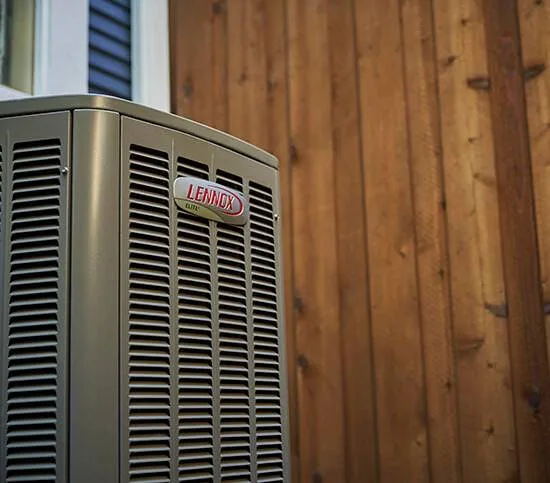
11. Heil — Best Quiet Operation on a Budget
Parent Company: International Comfort Products (ICP), a subsidiary of Carrier Global
Flagship Model: QuietComfort Deluxe (HXA624GKA)
SEER2 Range: 14.0 - 19.0
Warranty: 10-year compressor and parts (when registered)
Price Range: $2,800 - $5,500 (condenser only)
Heil sits within the ICP family of brands under the Carrier Global umbrella, and its QuietComfort Deluxe line delivers exactly what the name promises: quiet operation at a lower price point than the Carrier or Bryant flagships. The system uses sound-damping technology borrowed from the broader Carrier engineering platform, achieving noise levels competitive with units costing significantly more.
The HXA624GKA reaches up to 19.0 SEER2, which is solid for a mid-tier brand. Heil will not match the peak efficiency of the premium brands, but for homeowners who need reliable, quiet cooling without a $10,000+ investment, it fills a practical niche.
Pros:
- Near-silent operation from Carrier-family sound engineering
- Competitive pricing for the performance tier
- Carrier-family parts compatibility simplifies repairs
- Solid 10-year warranty coverage
Cons:
- 19.0 SEER2 ceiling limits energy savings potential
- Smaller dealer network than Carrier or Bryant
- Limited brand recognition — most homeowners have not heard of Heil
- Mid-tier components mean shorter expected lifespan than premium brands
Best for: Budget-conscious homeowners who value quiet operation and want a system from the Carrier engineering family without paying Carrier prices.
12. Goodman — Best Budget Value Overall
Parent Company: Daikin Industries (acquired 2012)
Flagship Model: GSXC18
SEER2 Range: 14.0 - 17.2
Warranty: Lifetime compressor warranty (select models), 10-year parts (when registered)
Price Range: $2,000 - $4,500 (condenser only)
Goodman is the best-selling residential HVAC brand in the United States by unit volume, and the reason is straightforward: Goodman delivers dependable cooling at the lowest price point from any reputable manufacturer. Since Daikin acquired Goodman in 2012, the quality has noticeably improved — Daikin invested heavily in upgrading Goodman's manufacturing processes and component quality.
The GSXC18 tops out at 17.2 SEER2 (often marketed as "18 SEER" under the old testing standard), which is not going to win efficiency awards but comfortably exceeds current federal minimums. Where Goodman shines is in the value proposition: a complete Goodman system (condenser, coil, furnace, thermostat) can be installed for less than the condenser alone from Lennox or Carrier's flagship lines. For a direct comparison of how this value equation works, see our Lennox vs. Goodman analysis.
The lifetime compressor warranty on select models is a genuine differentiator. While the fine print requires professional installation and registration, and while labor is not covered, replacing a compressor is the single most expensive AC repair — having that component warrantied for life provides real financial protection.
Pros:
- Lowest price point from any major manufacturer — best value in the market
- Lifetime compressor warranty on select models
- Daikin ownership has improved quality and component reliability
- Massive parts availability — the most widely stocked brand in the contractor channel
- Simple, proven technology that any HVAC tech can service
Cons:
- 18.0 SEER2 maximum limits energy savings — significant gap vs. premium brands
- Build quality (cabinets, coils, cosmetics) is visibly lower than premium brands
- Shorter expected lifespan — 10-15 years vs. 15-20+ for premium systems
- Entry-level models can be noisy relative to variable-speed premium units
- Single-stage and two-stage compressors only — no true variable-capacity option
Best for: Budget-focused homeowners, rental property investors, and anyone who needs reliable cooling without a premium investment. If you plan to sell your home in 5-10 years or need to equip multiple rental properties, Goodman delivers the best return per dollar invested. Wondering how Goodman stacks up against other affordable options? Our Goodman vs. Lennox comparison for Las Vegas breaks down exactly where each brand wins and loses.
13. Amana — Best Lifetime Warranty Confidence
Parent Company: Daikin Industries (same parent as Goodman)
Flagship Model: ASX16
SEER2 Range: 14.0 - 16.0
Warranty: Lifetime compressor warranty, 10-year parts (when registered)
Price Range: $2,200 - $4,000 (condenser only)
Amana and Goodman share more than a parent company — they share production lines, components, and engineering. The meaningful difference is Amana's warranty positioning: Amana offers a lifetime compressor warranty on virtually all of its models, not just select ones. For homeowners who lose sleep over potential compressor failures (which can cost $2,500-$4,500 to replace), that blanket coverage provides genuine peace of mind.
The ASX16 tops out at 16.0 SEER2, which places it at the entry-level end of the efficiency spectrum. You will not save as much on energy bills as you would with a higher-efficiency system, but the lower purchase price offsets that gap — particularly for homeowners on tight budgets or in situations where the home may change hands within a decade.
Pros:
- Lifetime compressor warranty across the lineup — strongest warranty positioning in the market
- Daikin-manufactured quality at a budget price point
- Strong brand recognition from Amana's appliance heritage
- Simple, serviceable design — any HVAC contractor can work on these systems
Cons:
- 16.0 SEER2 maximum is at the bottom of the efficiency range for 2026
- Single-stage compressors only — no variable-speed comfort
- Lifetime compressor warranty covers parts only, not labor
- Build quality and noise levels are budget-tier
Best for: Homeowners who want maximum warranty protection on a budget. Amana is also a solid choice for rental properties and investment homes where the lifetime compressor warranty transfers to subsequent owners, adding tangible resale value.
14. York — Best Commercial-Grade Residential Systems
Parent Company: Johnson Controls International (NYSE: JCI)
Flagship Model: Affinity YXV
SEER2 Range: 14.0 - 20.0
Warranty: 10-year compressor and parts (when registered)
Price Range: $3,000 - $6,500 (condenser only)
York's parent company, Johnson Controls, is one of the world's largest building technology companies. That commercial DNA permeates York's residential products: these are systems designed by engineers who also design HVAC for skyscrapers, hospitals, and data centers. The Affinity YXV achieves up to 20.0 SEER2 with variable-speed operation and benefits from commercial-grade component quality.
York's challenge in the residential market is visibility. The brand dominates commercial HVAC but has never achieved the household name recognition of Carrier, Trane, or Lennox. That obscurity can work in the buyer's favor — York systems are often priced 10-20% below comparably specced units from more famous brands.
Pros:
- Commercial-grade engineering applied to residential products
- Backed by Johnson Controls' massive global resources
- Often priced below comparably specced competitors
- Variable-speed Affinity line delivers solid comfort
- Strong track record in harsh commercial environments
Cons:
- Low residential brand recognition
- Dealer network focused on commercial — fewer residential specialists
- Smart home integration lags behind Rheem, Lennox, and Carrier
- Resale impact is neutral to negative (buyers may not recognize the brand)
Best for: Homeowners who value substance over brand prestige and want commercial-grade durability in a residential package. York is also an excellent choice for large homes and custom builds where the HVAC system is spec'd by an engineer rather than chosen by brand name.
15. Coleman — Best Contractor-Channel Reliability
Parent Company: Johnson Controls International (same parent as York)
Flagship Model: Echelon
SEER2 Range: 14.0 - 20.0
Warranty: 10-year compressor and parts (when registered)
Price Range: $2,800 - $6,000 (condenser only)
Coleman shares Johnson Controls' engineering with York but targets the contractor channel with a more streamlined product line. The Echelon series reaches up to 20.0 SEER2 and benefits from the same commercial-grade component philosophy that defines York.
Coleman's strength is its no-nonsense approach: fewer model options, straightforward features, and reliable performance. Contractors who install Coleman tend to be experienced professionals who appreciate the brand's consistency and ease of service.
Pros:
- Johnson Controls engineering and component quality
- Streamlined product line simplifies selection
- Solid 20.0 SEER2 ceiling in the Echelon line
- Competitive pricing in the contractor channel
Cons:
- Very low consumer brand awareness
- Limited direct-to-consumer resources and support
- Dealer network is small and contractor-only
- Smart home features are minimal
Best for: Homeowners whose trusted contractor recommends Coleman. If your HVAC professional has extensive experience with the brand, their installation expertise can offset the limited brand support infrastructure.
16. Fujitsu — Best Mini-Split Zoning Flexibility
Parent Company: Fujitsu General Limited (Tokyo: 6755)
Flagship Model: Halcyon Series
SEER2 Range: 15.0 - 19.0+
Warranty: 7-year compressor, 5-year parts (when registered)
Price Range: $2,500 - $5,500 per zone (installed)
Fujitsu competes directly with Mitsubishi Electric in the mini-split and ductless market, and in many ways offers comparable technology at a lower price point. The Halcyon series is well-regarded for its reliability and zoning flexibility, with multi-zone systems supporting up to eight indoor units from a single outdoor condenser.
Where Fujitsu differentiates is in its compact design — some Halcyon outdoor units are among the smallest in the industry, which matters for Las Vegas homes where the condenser often sits in tight side yards or on small rooftop pads. The system's low-ambient cooling capability also handles desert summer nights effectively when temperatures remain above 90 degrees F well past midnight.
Pros:
- Compact outdoor units suit tight installation spaces
- Multi-zone flexibility with up to 8 indoor units per outdoor unit
- Generally 15-25% less expensive than equivalent Mitsubishi systems
- Good track record for reliability in hot climates
Cons:
- Shorter warranty than Mitsubishi (7-year compressor vs. 12-year)
- Smaller U.S. dealer and service network
- Parts availability can be slower than domestic brands
- Brand recognition among U.S. homeowners is low
Best for: Homeowners considering ductless or mini-split systems who want Mitsubishi-level technology at a more accessible price. Fujitsu is also ideal for installations with space constraints where compact equipment is essential.
17. LG — Best Ductless Design and Innovation
Parent Company: LG Electronics (KRX: 066570)
Flagship Model: LGRED Series
SEER2 Range: 15.0 - 19.0+
Warranty: 10-year compressor, 5-year parts (when registered)
Price Range: $2,800 - $5,500 per zone (installed)
LG brings consumer electronics design sensibility to the HVAC space. The LGRED (Reliable to Extreme Degrees) series offers strong cold-climate heat pump performance and increasingly competitive cooling efficiency. LG's indoor units are among the most aesthetically refined in the ductless market — sleek, minimal, and available in designs that look more like modern art than HVAC equipment.
LG's compressor technology is proven across millions of home appliances, and the company's inverter compressor manufacturing scale is enormous. The 10-year compressor warranty backs that confidence. However, LG's residential HVAC dealer network in the U.S. is still developing, which can make installation and service challenging outside major metros.
Pros:
- Superior industrial design — indoor units look better than any competitor
- 10-year compressor warranty is strong for the ductless segment
- LG's massive compressor manufacturing scale ensures quality and availability
- Growing residential HVAC presence with competitive pricing
Cons:
- Residential HVAC dealer network is still developing
- Brand is better known for electronics and appliances — HVAC credibility takes time
- Service expertise for LG HVAC systems is less common than Mitsubishi or Fujitsu
- 5-year parts warranty is shorter than many competitors
Best for: Design-conscious homeowners who want ductless technology that complements modern interiors. LG is also strong for homeowners already invested in the LG smart home ecosystem (ThinQ platform).
18. Maytag — Best Appliance-Brand Familiarity
Parent Company: Nortek Global HVAC (now owned by Melrose Industries, UK)
Flagship Model: iQ Drive
SEER2 Range: 14.0 - 20.5
Warranty: 12-year compressor, 10-year parts (when registered)
Price Range: $3,000 - $6,000 (condenser only)
The Maytag name carries weight — decades of "dependability" marketing have built deep consumer trust. The iQ Drive system achieves up to 22.5 SEER2 with variable-speed operation, and the 12-year compressor warranty matches Trane and Daikin. For homeowners who recognize and trust the Maytag brand from their appliance experience, this familiarity can make the HVAC purchase decision more comfortable.
The reality, however, is that Maytag HVAC and Maytag appliances are manufactured by entirely different companies. Nortek (now Melrose Industries) licenses the Maytag name for HVAC products. The systems are competent, but the brand connection is marketing, not engineering.
Pros:
- Strong brand trust from Maytag's appliance reputation
- 12-year compressor warranty — above average
- iQ Drive variable-speed technology delivers good comfort
- 22.5 SEER2 is competitive in the mid-tier segment
Cons:
- Maytag HVAC is manufactured by Nortek, not Whirlpool (Maytag appliances) — the brand connection is licensed, not organic
- Nortek's ownership changes (now Melrose Industries) create uncertainty about long-term brand investment
- Dealer network is smaller than most brands on this list
- Parts sourcing can be challenging in some markets
Best for: Homeowners who value the Maytag brand association and want a solid mid-tier system with an above-average compressor warranty. Just understand that the Maytag dependability you experienced with your washing machine comes from different factories and different engineers.
19. Armstrong Air — Best Lennox-Quality Value
Parent Company: Allied Air Enterprises, a subsidiary of Lennox International
Flagship Model: 4SHP20LX
SEER2 Range: 14.0 - 20.0
Warranty: 10-year compressor and parts (when registered)
Price Range: $2,800 - $5,500 (condenser only)
Armstrong Air is manufactured by Lennox International through its Allied Air division — making it a direct sibling of Lennox, built in the same parent company's facilities. The 4SHP20LX achieves up to 20.0 SEER2 and benefits from Lennox's engineering heritage, though it uses conventional coil construction rather than Lennox's proprietary Quantum Coil technology.
For homeowners who want to buy into the Lennox family at a more accessible price, Armstrong Air represents a smart middle ground. You get Lennox International's quality control and manufacturing standards without paying for the flagship features and brand premium that come with the Lennox nameplate.
Pros:
- Manufactured by Lennox International — shared engineering DNA and quality standards
- 20.0 SEER2 is solid for the mid-tier price point
- Significantly less expensive than equivalent Lennox models
- Good parts availability through the Allied Air distribution network
Cons:
- No Quantum Coil — uses conventional coil technology that is more susceptible to desert corrosion
- Limited dealer network compared to Lennox
- No iComfort smart thermostat compatibility
- Lower brand recognition — virtually unknown among homeowners
Best for: Homeowners who want Lennox family manufacturing quality at a mid-tier price. Armstrong Air is a particularly good choice if you find a contractor who specializes in the brand and knows the Allied Air product line inside and out.
20. Ducane — Budget Lennox-Family Entry Point
Parent Company: Lennox International (Allied Air Enterprises division)
Flagship Model: 2AC16 Series
SEER2 Range: 14.0 - 16.0
Warranty: 10-year compressor and parts (when registered)
Price Range: $1,800 - $3,500 (condenser only)
Ducane is the entry-level brand in the Lennox International family, positioned below both Lennox and Armstrong Air. The 2AC16 series maxes out at 16.0 SEER2 — the minimum for this tier — but benefits from Lennox International's manufacturing oversight and quality control processes.
Where Ducane makes sense is in cost-sensitive applications where the Lennox family name on the corporate backing provides more confidence than a standalone budget brand. Rental property owners, for example, can install Ducane systems knowing that Lennox International stands behind the warranty.
Pros:
- Lennox International manufacturing quality at budget pricing
- Strong 10-year warranty for the price tier
- Simple, reliable systems that are easy to service
- Good choice for investment properties and rentals
Cons:
- 16.0 SEER2 maximum is entry-level efficiency
- Single-stage compressors only — no variable-speed comfort
- Very limited brand recognition and dealer support
- Basic feature set with no smart home integration
Best for: Budget-conscious homeowners and rental property investors who want the security of Lennox International's corporate backing without paying for premium features they do not need.
21. Payne — Budget Carrier Option
Parent Company: Carrier Global Corporation
Flagship Model: PG16NA
SEER2 Range: 14.0 - 16.0
Warranty: 10-year compressor and parts (when registered)
Price Range: $1,800 - $3,500 (condenser only)
Payne is to Carrier what Ducane is to Lennox: the entry-level brand that provides corporate backing at the lowest price point. The PG16NA achieves up to 16.0 SEER2 using proven single-stage technology. The system is straightforward, reliable, and designed for price-sensitive markets where the priority is functional cooling at the lowest possible installed cost.
Carrier's engineering influence is present in Payne's component quality, though the systems lack the advanced features (variable-speed, communicating controls, premium sound dampening) found in Carrier and Bryant. For builders and property managers who need to equip multiple units cost-effectively, Payne provides a legitimate path to Carrier-family quality without the premium price.
Pros:
- Carrier Global corporate backing at budget pricing
- Proven single-stage technology — simple and reliable
- Parts availability benefits from the broader Carrier supply chain
- 10-year warranty is solid for the price tier
Cons:
- 16.0 SEER2 ceiling is minimum-tier efficiency
- No variable-speed or advanced comfort features
- Higher noise levels than premium Carrier systems
- Limited dealer attention — contractors tend to push higher-margin Carrier and Bryant units
Best for: Builders, property managers, and budget-focused homeowners who want Carrier-family reliability at the lowest entry point. Payne makes the most sense for applications where functional cooling is the priority and advanced comfort features are unnecessary.
22. Comfortmaker — Quiet Residential Comfort from the Carrier Family
Parent Company: International Comfort Products (ICP), a subsidiary of Carrier Global
Flagship Model: SoftSound Deluxe
SEER2 Range: 14.0 - 19.0
Warranty: 10-year compressor and parts (when registered)
Price Range: $2,500 - $5,000 (condenser only)
Comfortmaker is another ICP brand under the Carrier Global umbrella, sharing engineering and manufacturing with Heil, Tempstar, and Day & Night. The SoftSound Deluxe line emphasizes quiet operation — a feature that matters more than most homeowners realize until they live next to a noisy condenser on a Las Vegas summer night when they want to have their windows open for the first time in months.
At up to 19.0 SEER2, Comfortmaker occupies the mid-tier efficiency range. The value proposition is sound-dampened Carrier-family engineering at a moderate price.
Pros:
- Sound-dampened design for quiet outdoor operation
- Carrier Global engineering and component quality
- Mid-tier pricing with decent efficiency
- Cross-compatible parts with other ICP brands simplify repairs
Cons:
- Low brand awareness among homeowners
- Limited dealer support and marketing
- 19.0 SEER2 ceiling is mid-pack
- No premium smart home features
Best for: Homeowners in close-quarters neighborhoods (common in Las Vegas subdivisions) where outdoor noise matters, and who want a moderate price from the Carrier engineering family.
23. Tempstar — Contractor-Driven Installs from the Carrier Family
Parent Company: International Comfort Products (ICP), a subsidiary of Carrier Global
Flagship Model: DLX Series
SEER2 Range: 14.0 - 19.0
Warranty: 10-year compressor and parts (when registered)
Price Range: $2,500 - $5,000 (condenser only)
Tempstar is ICP's contractor-channel counterpart to Comfortmaker, sharing identical engineering and manufacturing. The DLX Series matches Comfortmaker's specs at up to 19.0 SEER2. The primary difference is the distribution model: Tempstar is marketed and sold exclusively through professional contractors, which means you are unlikely to encounter the brand unless your HVAC professional specifically recommends it.
This contractor focus has a practical advantage: Tempstar installations are performed by professionals who have chosen to specialize in the brand. That self-selection can mean higher installation quality — the contractor knows the product intimately, carries the right parts, and has resolved the common installation challenges before arriving at your home.
Pros:
- Carrier Global engineering at competitive pricing
- Contractor-focused distribution means experienced installers
- Cross-compatible with other ICP brand parts
- Solid 10-year warranty for the price tier
Cons:
- Virtually no brand recognition outside the trade
- Limited consumer-facing support and resources
- Cannot compare prices easily — contractor-only channel
- 19.0 SEER2 ceiling limits efficiency gains
Best for: Homeowners whose trusted HVAC contractor recommends Tempstar from experience and expertise. The brand works best when installation quality is ensured by a knowledgeable professional.
24. Day & Night — Reliable Mid-Range Performance
Parent Company: International Comfort Products (ICP), a subsidiary of Carrier Global
Flagship Model: Performance Series
SEER2 Range: 14.0 - 18.0
Warranty: 10-year compressor and parts (when registered)
Price Range: $2,200 - $4,500 (condenser only)
Day & Night rounds out the ICP mid-tier brands with its Performance Series, achieving up to 18.0 SEER2. The brand name itself nods to the 24-hour reliability promise: your system should perform consistently whether it is 3 PM or 3 AM. In Las Vegas, where AC systems often run 18-20 hours per day during peak summer, that around-the-clock dependability is more than marketing — it is a functional requirement.
Like its ICP siblings, Day & Night shares Carrier Global engineering DNA and cross-compatible parts. The slight step down from Comfortmaker and Tempstar's 19.0 SEER2 ceiling reflects Day & Night's positioning as a value-oriented option within the ICP family.
Pros:
- Carrier Global engineering at value pricing
- Solid reliability for around-the-clock operation
- Cross-compatible ICP parts for easy repairs
- 10-year warranty is competitive at this price
Cons:
- 18.0 SEER2 ceiling is below ICP siblings Comfortmaker and Tempstar
- Minimal brand recognition
- Very limited dealer presence — finding Day & Night specialists is difficult
- No advanced features or smart connectivity
Best for: Budget-conscious homeowners in markets where Day & Night dealers are available, who want Carrier-family reliability without flagship pricing.
25. Keeprite — Contractor-Channel and Canadian Market Specialist
Parent Company: International Comfort Products (ICP), a subsidiary of Carrier Global
Flagship Model: N/A (sold through contractor channel only)
SEER2 Range: 14.0 - 17.0
Warranty: 10-year compressor and parts (when registered)
Price Range: $2,000 - $4,000 (condenser only)
Keeprite rounds out our list as the ICP brand with the strongest presence in the Canadian market. The brand is rare in the U.S. and virtually unknown in the Las Vegas market. We include it for completeness and because homeowners relocating from Canada may have experience with the brand.
Keeprite shares ICP's engineering platform and benefits from Carrier Global's component quality. The systems are dependable and well-suited to the Canadian climate, where heating performance is paramount. In the Las Vegas cooling-dominant market, Keeprite's limited dealer presence and lower efficiency ceiling make it a less practical choice than other ICP siblings.
Pros:
- Carrier Global engineering in a budget package
- Strong reputation in Canadian markets
- Reliable basic systems with proven components
- 10-year warranty is standard ICP coverage
Cons:
- Virtually no U.S. dealer presence — extremely difficult to find service
- 17.0 SEER2 maximum is below most competitors on this list
- No U.S. consumer support infrastructure
- Not optimized for cooling-dominant desert climates
Best for: Homeowners in Canadian markets or border regions where Keeprite dealers are established. Not recommended for Las Vegas or other U.S. desert markets due to limited dealer and parts availability.
How to Choose the Right AC Brand for Your Home
With 25 brands to consider, narrowing the field requires a structured decision framework. Here is how to approach it based on your priorities:
Start with Your Budget
Be honest about what you can invest. A complete AC replacement in 2026 ranges from $4,500 for a basic Goodman or Amana system to $20,000+ for a fully loaded Lennox or Carrier flagship installation. Finance options are available — see our financing guides — but understand the total cost before committing.
- Under $6,000 installed: Goodman, Amana, Payne, Ducane
- $6,000 - $10,000 installed: Rheem, Ruud, Armstrong Air, York, Coleman, Heil
- $10,000 - $15,000 installed: American Standard, Daikin, Bryant, Bosch, Maytag
- $15,000+ installed: Lennox, Carrier, Trane (flagship models)
Factor in Your Climate
In Las Vegas, your AC system runs 4,000-5,000+ hours per year — roughly three times what a system in Seattle logs. That extreme usage amplifies the difference between efficiency levels. A system with 28 SEER vs. 16.0 SEER2 saves approximately $600-$900 per year in our market. Over 15 years, that is $9,000-$13,500 in energy savings — which often justifies the higher upfront cost of a premium brand. For more on desert-specific performance, read our guide to the best air conditioners for extreme heat in Las Vegas.
Consider Your Home Size and Layout
- Small homes (under 1,500 sq ft): A mid-tier brand like Rheem or Goodman often provides the best value — premium efficiency features have less room to recoup their cost.
- Medium homes (1,500 - 2,500 sq ft): This is where variable-speed systems from American Standard, Daikin, or Bryant deliver the strongest comfort improvements.
- Large homes (2,500+ sq ft): Lennox, Carrier, or Trane flagship systems with variable-capacity operation are worth the investment — they handle the complex load demands of large spaces most effectively.
- Homes without ductwork: Mitsubishi Electric or Fujitsu ductless systems avoid the cost and efficiency loss of new ductwork installation.
Prioritize Your Must-Haves
- Maximum efficiency: Lennox SL28XCV (28 SEER)
- Maximum durability: Trane XV20i
- Best dealer network: Carrier Infinity 26
- Best smart integration: Rheem EcoNet ecosystem
- Best budget value: Goodman GSXC18
- Best warranty: Amana (lifetime compressor)
- Best ductless: Mitsubishi Electric M-Series
- Best heat pump: Bosch IDS Premium
Do Not Forget the Installer
This is the point we cannot stress enough: a $15,000 Lennox system installed incorrectly will underperform a $6,000 Goodman system installed by an expert. The quality of the installation — proper sizing, correct refrigerant charge, sealed ductwork, appropriate airflow — accounts for 70-80% of real-world system performance. Choose a qualified HVAC contractor with experience in your chosen brand, proper licensing, and a track record you can verify. And be cautious of deals that seem too good to be true — our guide on why cheap AC installation costs more in Las Vegas explains the hidden expenses that follow a cut-rate install.
For a structured walkthrough of the entire purchase process, our new AC system buying guide takes you from sizing and brand selection through installation day and beyond.
2026 Market Changes You Should Know
The R-454B Refrigerant Transition
The HVAC industry is in the middle of the most significant refrigerant transition since the R-22 phase-out. Under the EPA's HFC phasedown regulations, manufacturers are shifting from R-410A (with a Global Warming Potential of 2,088) to R-454B (GWP of 466) — a 78% reduction in climate impact. Manufacturing of new R-454B equipment began in January 2025, with a sell-through period allowing existing R-410A inventory to be sold and installed.
What this means for buyers in 2026:
- R-454B systems are now available from most major manufacturers, including Lennox (the SL28XCV is R-454B-ready), Carrier, and Trane.
- R-410A systems are still being sold during the sell-through period, often at discounted prices. Buying R-410A is not a mistake — the refrigerant will remain available for decades for service and recharging. But R-454B systems are the future-proofed choice.
- R-454B is mildly flammable (A2L classification), which means installation requires technicians trained in A2L handling. Not all HVAC companies have completed this training yet. Ask your contractor specifically about their A2L certification before hiring.
Updated SEER2 Minimums
The Department of Energy's updated efficiency standards, which took effect January 1, 2023, raised minimum efficiency requirements using the new SEER2 metric (tested under more realistic conditions than the original SEER). In the Southwest region (including Las Vegas), the minimum residential AC efficiency is 14.3 SEER2 for split systems. Any system you purchase in 2026 will meet this minimum, but the range above it — from 14.3 to 28.0 — represents enormous variation in operating cost.
Federal Tax Credits Under Section 25C
Homeowners who install qualifying high-efficiency HVAC equipment in 2026 can claim federal tax credits of up to $2,000 under the Energy Efficient Home Improvement Credit (Section 25C of the Internal Revenue Code, extended through 2032 by the Inflation Reduction Act). Qualifying equipment generally must meet or exceed the highest efficiency tier established by the Consortium for Energy Efficiency (CEE).
Key details:
- Central air conditioners: Up to $600 credit for qualifying units (typically 16+ SEER2) — verify your equipment on the ENERGY STAR certified product finder
- Heat pumps: Up to $2,000 credit for qualifying heat pump systems — the most generous HVAC credit available
- The credits are annual — you can claim them each year you make qualifying improvements
- Must be primary residence — rental properties and second homes do not qualify
These credits can meaningfully offset the premium cost of high-efficiency brands like Lennox, Carrier, and Trane. A $2,000 heat pump credit on a heat pump installation brings the effective cost gap between premium and budget brands much closer together.
Frequently Asked Questions
What is the most reliable AC brand in 2026?
Trane consistently ranks at or near the top for long-term reliability, with the lowest field failure rates among major brands over a 15-year period. Lennox and Carrier are close behind. For budget brands, Goodman's reliability has improved significantly since the Daikin acquisition. That said, installation quality affects reliability more than brand choice — a properly installed mid-tier system will outperform a poorly installed premium system every time.
Is Lennox worth the premium price?
In cooling-dominant markets like Las Vegas, yes — for homeowners who plan to stay in their home for 10+ years. The 28.0 SEER2 rating translates to measurably lower electricity bills that compound over the system's lifespan. The Quantum Coil's desert corrosion resistance adds longevity that conventional coils cannot match. However, if your budget is constrained or you plan to move within five years, the premium may not pay back fully. See our detailed Lennox replacement guide for 2026 for a complete cost-benefit analysis.
Should I buy an R-410A or R-454B system in 2026?
If given the choice, we recommend R-454B for new installations. The refrigerant is the industry's future, and choosing it now means your system will not need adaptation or face potential supply tightening as R-410A production eventually declines. That said, R-410A systems purchased during the sell-through period remain fully supported — R-410A refrigerant will be manufactured and available for service for decades. If an R-410A system offers a significant price advantage, it is not a bad choice.
How much does a new AC system cost in Las Vegas in 2026?
Full system installed costs in the Las Vegas market range from approximately $4,500-$7,000 for budget brands (Goodman, Amana, Payne) to $12,000-$20,000+ for premium brands (Lennox SL28XCV, Carrier Infinity 26, Trane XV20i). These figures include the outdoor condenser, indoor evaporator coil, labor, refrigerant, thermostat, and basic accessories. Variables like ductwork modification, electrical upgrades, and permit fees can add $1,000-$5,000. For a detailed breakdown, see our complete AC replacement guide.
Do I need a variable-speed AC system?
Variable-speed (also called variable-capacity or inverter-driven) systems provide the best comfort, efficiency, and humidity control. They cost more upfront but deliver tangible benefits: more even temperatures, quieter operation, and lower energy bills. In Las Vegas, where AC runs thousands of hours annually, the efficiency gains of variable-speed operation are amplified. For homes under 1,200 square feet with a tight budget, a quality two-stage system can be a reasonable compromise. For larger homes or homeowners who prioritize comfort, variable-speed is worth the investment.
Which AC brands perform best in extreme desert heat?
Brands with the strongest desert track records include Lennox (Quantum Coil resists desert corrosion), Trane (Climatuff compressor handles sustained heat loads), and Carrier (WeatherArmor protection against UV and dust). Daikin's inverter technology also performs well under extreme conditions. We recommend avoiding any brand with limited desert installation history — manufacturers that test primarily in moderate climates may not account for the unique stresses of 115+ degree ambient temperatures, blowing dust, and hard water mineral deposits. Read our full analysis of the best ACs for extreme Las Vegas heat.
Need Help Choosing the Right AC Brand?
The Cooling Company is a Lennox Premier Dealer serving Las Vegas, Henderson, and North Las Vegas. Our NATE-certified technicians can help you navigate the 2026 market and find the perfect system for your home and budget.
Call (702) 567-0707 or visit AC installation to schedule a free in-home assessment.
Related Brand Guides
- AC Brand Hub — Compare all major HVAC brands we install and service in Las Vegas
- Brand Comparison Tool — Side-by-side matchups of the top brands
- Lennox Brand Guide — Full lineup, pricing, warranty, and Las Vegas performance
- Carrier Brand Guide — Dealer network, Infinity series, and desert reliability
- Trane Brand Guide — Durability, Climatuff compressor, and long-term value
- Rheem Brand Guide — EcoNet smart integration and mid-tier value
- Goodman Brand Guide — Best budget value with Daikin engineering
- Daikin Brand Guide — Global inverter technology and manufacturing scale
Need HVAC Service in Las Vegas?
The Cooling Company provides expert HVAC service throughout Las Vegas, Henderson, and North Las Vegas. Our licensed technicians deliver honest assessments, upfront pricing, and reliable results.
Call (702) 567-0707 or visit HVAC services, HVAC maintenance, heating, or AC repair for details.