

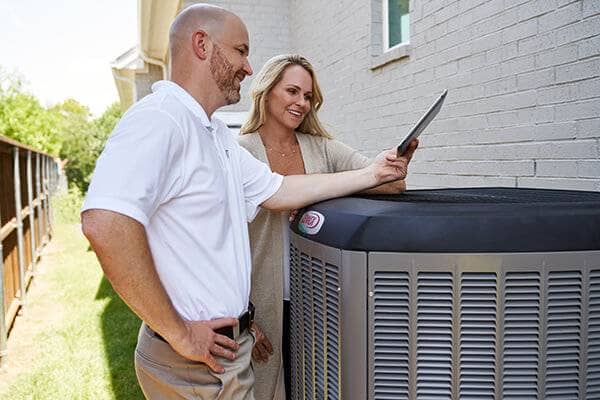
Short answer: In Las Vegas, replace your AC when it is 8 years or older AND showing signs of failure, or when any unit fails the 5,000 rule (age × repair cost exceeds $5,000). The national average AC lifespan of 15–20 years does not apply here — desert heat, 4,000+ hours of annual runtime, and constant thermal stress cut that to 8–12 years. The best time to replace is right now, in spring, before summer prices rise 10–20% and wait times stretch to days. NV Energy PowerShift rebates of up to $3,200 are active. New system costs run $11,000–$27,000 depending on size and efficiency, with financing from approximately $130/month.
Call (702) 567-0707 to schedule a free in-home assessment, or book online. We will tell you honestly whether it is time to replace or whether a repair will buy you meaningful additional years.
Key Takeaways
- Las Vegas AC units last 8–12 years, not the 15–20 years cited in national guides. The math of when to replace changes accordingly.
- March through May is the optimal replacement window. Spring installations avoid emergency summer pricing, deliver better scheduling availability, and allow unhurried installation quality that directly affects system longevity.
- Seven warning signs indicate an AC is at end of life — age over 8 years, repeat repairs, R-22 refrigerant, uneven cooling, rising energy bills, unusual noises, and humidity problems during monsoon season.
- Two decision frameworks cut through the noise: the 5,000 rule (age × repair cost) and the 50% rule (repair cost vs. replacement cost). Use both before signing anything.
- NV Energy PowerShift rebates are live at up to $3,200 for qualifying heat pump systems. The federal 25C tax credit expired December 31, 2025. HEEHR federal rebates (up to $8,000 for heat pumps) are expected in Nevada during 2026.
- Financing makes replacement accessible. Most Las Vegas homeowners finance — approximately $130/month makes a quality system manageable on virtually any household budget.
The Spring Window: Why March–May Is the Best Time to Replace in Las Vegas
If your system is 10 years old and limping, here is the most important thing you can do today: call a contractor while the weather is still bearable. Not because your unit is about to die this week — though it might — but because the difference between replacing in April and replacing in July is worth $1,500 to $3,000 in real money, plus a dramatically better installation experience.
Las Vegas HVAC contractors run at full capacity from late May through September. Every technician is dispatched, wait times for non-emergency work stretch to five days or more, and contractors who would normally spend six hours commissioning your system properly are cutting the process short because there are four more emergency calls queued behind yours. Emergency replacement pricing typically runs 10–20% above standard pricing — and that premium reflects genuine cost pressure, not contractor greed.
The spring window — March through May — is the single best time to plan a replacement for three concrete reasons.
Scheduling availability is excellent. Contractors are fully staffed but not yet overwhelmed. Most can schedule a planned replacement within two to five business days. That availability means the crew that shows up to your home is not exhausted from a 90-hour week in 115-degree heat, and the installation gets the attention it deserves.
Pricing is at or below the annual average. Spring is one of two windows (the other is October through November) where contractors are competing for jobs rather than rationing their time. This competitive environment translates to better quotes, more willingness to negotiate on equipment tiers, and sharper pricing on financing promotions.
You can stack rebates at their peak. NV Energy PowerShift rebates are available right now, and equipment supply is good. Waiting until July means installing whatever is in local distributor stock rather than choosing the system that best fits your home and qualifies for the highest rebate tier.
"Every year I watch the same thing happen. In March and April, my crews can schedule an installation for Tuesday and take their time doing it right — running the load calculation, picking the perfect equipment, commissioning everything to spec. By July, we are booked out a week and running installs back to back in 115-degree heat. The homeowner pays more, the crew is under pressure, and nobody is as happy with the experience. Spring is when you get our best work at our best price. I am not just saying that — the numbers prove it every single year."
— Frank Santana, General Manager, The Cooling Company
If you are reading this in March 2026 and your system is 9, 10, or 11 years old, schedule the assessment now. The consultation is free. The information is valuable regardless of what you decide. And if replacement makes sense, doing it now rather than during the July crisis puts $1,500 or more back in your pocket before you have even accounted for rebates.

7 Signs Your AC Is Dying
Systems rarely die without warning. In Las Vegas, where failure happens fast and hard, recognizing the warning signs gives you the gift of time — time to replace on your schedule rather than in a July emergency. Here are the seven signals that consistently precede end-of-life AC failure in the desert.
Sign 1: Your System Is 8 Years Old or More
Age is the most reliable predictor of remaining system life, and in Las Vegas, the age threshold is lower than most guides suggest. The national average lifespan for a central air conditioner is 15–20 years. In Las Vegas, expect 8–12 years. The physics are straightforward: a system that runs 4,000 hours per year accumulates wear roughly twice as fast as one running 2,000 hours in a moderate climate.
A system that is 8 years old has delivered more than 30,000 hours of runtime in Las Vegas conditions. At that point, every major component — compressor, evaporator coil, condenser coil, capacitors, contactors, blower motor — has been stressed by thousands of thermal cycles in extreme heat. The question is not whether failure is coming. It is when.
If your system is under 8 years old, repair almost always makes sense unless the failure is catastrophic (compressor replacement on an entry-tier system). If you are between 8 and 12 years old, apply the frameworks in the next section. Over 12 years in Las Vegas, lean strongly toward replacement.
"The systems that make it to 12 or even 14 years in Las Vegas all have one thing in common — consistent maintenance from day one. Two tune-ups a year, filters changed every month in summer, and small repairs handled the week they show up instead of being ignored. The systems that die at 7 or 8 years? Skipped maintenance, ran on clogged filters for months, and had warning signs that nobody addressed until the compressor gave out. It is not luck. It is maintenance."
— The Cooling Company service team
Sign 2: You Have Repaired It More Than Once in the Past Two Years
One repair does not make a pattern. Two repairs in two years means something different: systemic wear. When capacitors, contactors, fan motors, and circuit boards start failing in sequence, it is not a string of bad luck — it is a system entering its terminal decline phase. In Las Vegas heat, what starts as a capacitor failure in spring often cascades into a contactor failure in summer and a compressor failure in fall.
Track your repair history. If you have spent $1,200 on repairs in the past 24 months on a 10-year-old system, apply the 5,000 rule (covered in the next section) to each repair individually, then ask yourself whether additional spending on the same system is rational.
Sign 3: Your System Still Uses R-22 Refrigerant
If your system was installed before 2010, there is a strong chance it uses R-22 (Freon) refrigerant. The EPA completed the R-22 phase-out in 2020. The only R-22 available today is reclaimed or recycled stock, and it costs $75–$150 per pound — five to ten times the cost of modern R-410A refrigerant.
An R-22 system needing a refrigerant recharge is not just expensive today — it will be more expensive next year as supply tightens. A 5-pound recharge that costs $500–$1,000 in refrigerant alone, plus $400–$800 to repair the leak, is money invested in a platform with no future. You cannot convert an R-22 system to a modern refrigerant without replacing the compressor and coils — at which point you have paid most of the cost of a new system without the efficiency, warranty, or reliability benefits.
Any R-22 system that needs any repair over $400 is a replacement candidate. Full stop. For a complete breakdown of why R-22 systems are at end of life, see our guide on navigating the R-22 phase-out.
Sign 4: Some Rooms Are No Longer Cooling Properly
Uneven cooling — rooms that used to be comfortable but now stay 5–8 degrees warmer than the thermostat setpoint — is a classic sign of a system losing capacity. As compressors age and refrigerant coils develop hairline leaks, the system's ability to remove heat from the air degrades. The easiest rooms to cool (closest to the air handler, best-insulated) stay comfortable while the hardest rooms (upstairs, south-facing, farthest from the air handler) reveal the system's declining capacity first.
Before attributing uneven cooling solely to the system, have a technician verify there are no duct issues — collapsed flex duct, disconnected runs, or severely leaking duct connections can mimic the same symptoms. If the ductwork is intact and the system still cannot maintain temperature in specific rooms, the problem is the system's capacity. For a complete look at what causes certain rooms to stay hot, read our guide on why upstairs rooms stay hotter than downstairs.
Sign 5: Your Energy Bills Are Rising Without Explanation
In Las Vegas, where summer electricity bills already run $200–$400 per month for a typical home, a 10–15% increase year over year is not inflation — it is your AC losing efficiency. Compressors that run dirty, coils with accumulated scale from Las Vegas hard water (16+ grains per gallon), and refrigerant that is slightly low all force the system to work harder to move the same amount of heat.
Compare your NV Energy bills for the same month year over year, controlling for weather. If your bills are climbing 15% or more annually without a corresponding increase in household size, thermostat setpoint, or unusual weather, the system's efficiency is degrading. A new system at 16–20 SEER2 replacing an original 10–13 SEER unit can reduce cooling costs by $400–$700 per year in Las Vegas conditions — a real, compounding annual return on the replacement investment.
Sign 6: Unusual Noises Have Started
A functioning AC makes one primary sound: the steady hum of the compressor and the whoosh of airflow through the supply vents. Sounds outside that baseline are almost always a symptom, not a quirk. The sounds to take seriously are:
- Banging or clanking: Loose or broken components inside the compressor — often a sign of compressor mechanical failure
- Screaming or screeching: Failing bearings in the blower motor or condenser fan motor
- Rattling: Debris in the condenser, loose panels, or beginning stages of component vibration failure
- Clicking beyond the normal start/stop: May indicate a failing relay or electrical issue
- Hissing or bubbling near the lines: Refrigerant leak — refrigerant under pressure hisses at the leak point; bubbling near the coil can indicate refrigerant boiling at the wrong stage of the refrigeration cycle
Never ignore noises. In Las Vegas heat, what begins as a minor bearing squeal in May becomes a seized motor in July. A technician who hears these sounds on an aging system will often recommend replacement because the noise is a leading indicator of cascading failure.
Sign 7: Your Home Feels Humid During Monsoon Season
Las Vegas monsoon season (July through September) brings humidity levels that surprise many valley residents — 40–60% relative humidity during afternoon storms. A functioning modern AC system is surprisingly effective at dehumidification: as warm air passes over the cold evaporator coil, moisture condenses and drains out through the condensate line. A system running at full capacity and properly sized for your home will maintain indoor humidity below 50% even during monsoon surges.
An aging system that has lost capacity, has dirty coils, or is running with low refrigerant cannot remove moisture as efficiently. If your home feels sticky or clammy during monsoon afternoons despite the AC running constantly, that is a symptom of a degraded system — and it matters for more than comfort. Indoor humidity above 55% creates conditions for mold growth, particularly in closets, bathrooms, and behind walls.
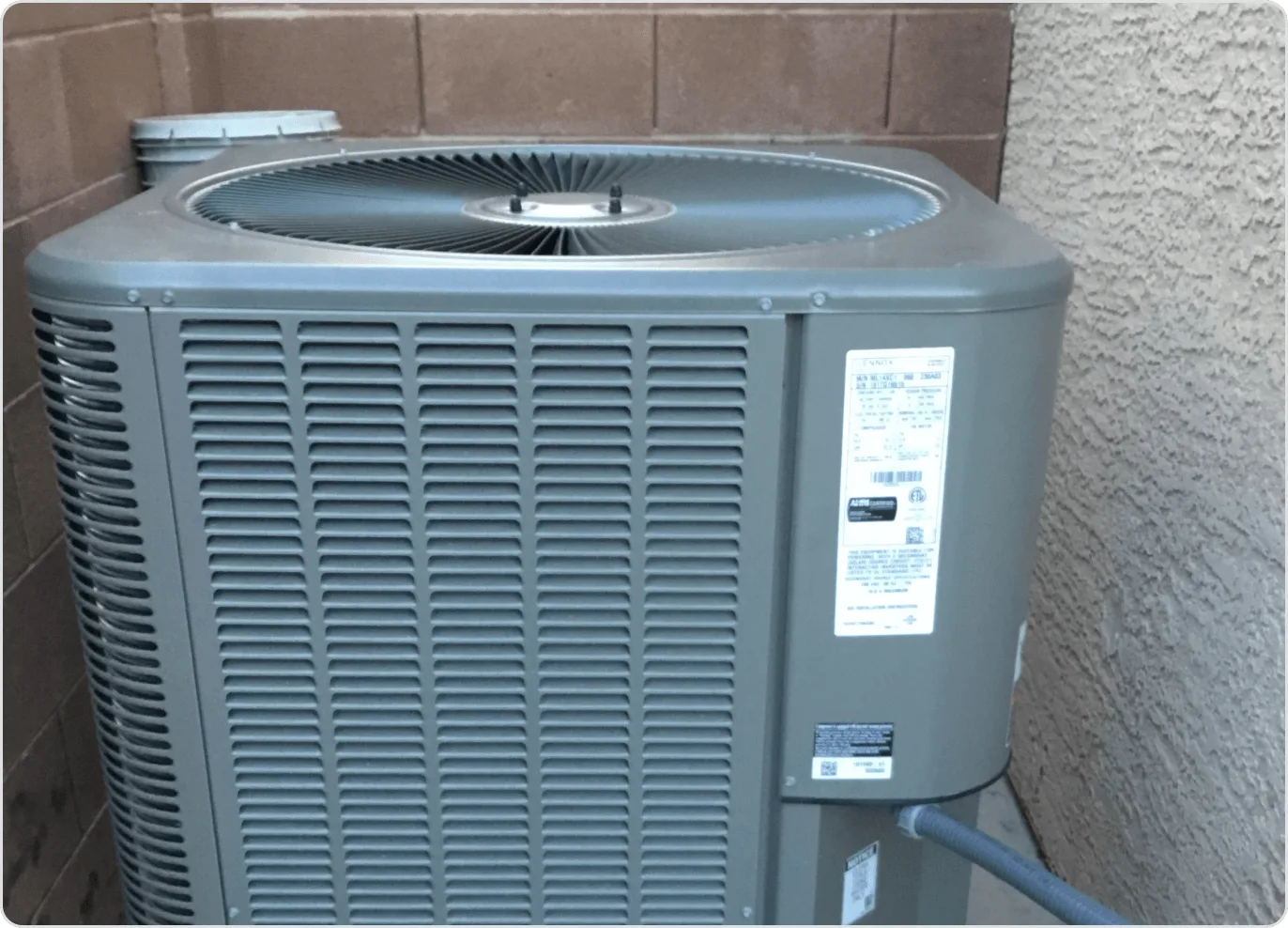
The $5,000 Rule and the 50% Rule
Before signing any repair quote for a system that is showing age-related symptoms, run it through two decision frameworks. Either one is useful alone. Together, they give you a clear, defensible answer.
The 5,000 Rule
Multiply your system's age in years by the repair cost in dollars. If the result exceeds $5,000, replace.
Age (years) × Repair cost ($) = Decision number
If the result is under $5,000, repair is likely worth it. If it exceeds $5,000, replacement is almost always the smarter financial choice.
Here is how the math plays out for common Las Vegas scenarios:
| System Age | Repair Cost | Decision Number | Recommendation |
|---|---|---|---|
| 6 years | $450 (capacitor + contactor) | $2,700 | Repair — clear choice |
| 9 years | $700 (blower motor) | $6,300 | Replace — lean strongly toward replacement |
| 11 years | $600 (refrigerant recharge + leak repair) | $6,600 | Replace — especially if system uses R-22 |
| 13 years | $350 (capacitor) | $4,550 | Repair this time — but plan replacement |
| 14 years | $2,500 (evaporator coil) | $35,000 | Replace — no question |
| 10 years | $1,800 (compressor) | $18,000 | Replace — compressor failure on a decade-old system |
The 5,000 rule is a blunt instrument but a useful one. It captures the essential truth: the older a system is, the less value a repair delivers, because you are buying fewer remaining years of reliable operation per dollar spent. For a side-by-side comparison of this rule against the 50% rule with Las Vegas-specific examples, see our AC questions answered guide.
The 50% Rule
The 50% rule is the second filter. If the repair cost exceeds 50% of what a new system would cost, replace.
Example: A new 3-ton system installed in Las Vegas costs $13,000–$18,000. If the repair quote on your existing 3-ton system is $3,000 or more — especially on a system 8+ years old — you are approaching or exceeding 20–25% of replacement cost for a repair that does not reset the system's age or address any of the other aging components still installed.
Compressor replacements ($1,800–$3,500 installed) are the most common scenario where the 50% rule applies. At $2,500 on a 10-year-old system, you are spending 15–20% of replacement cost to restore one component while the coils, capacitors, contactors, and blower motor on that system are the same age as the failed compressor. The compressor repair buys you some time — maybe three to five years — but at a cost that does not reflect the true remaining value of the system.
When the Rules Conflict
Occasionally the rules point in different directions. A 13-year-old system with a $350 capacitor repair scores $4,550 on the 5,000 rule (under the threshold) and represents just 2% of replacement cost (well under the 50% rule). Both rules say repair — and in this case, repair is right. The capacitor is a routine wear item, the repair is cheap, and the system has a chance of delivering another season of reasonable service. But if that same 13-year-old system needs the capacitor replaced again six months later — apply the 5,000 rule to the cumulative repair total of the past 12 months, not just the single event.
Why AC Units Die Faster in Las Vegas
Understanding why Las Vegas is harder on AC equipment than virtually any other American city helps you calibrate your expectations and make better decisions about maintenance, timing, and system selection.
Runtime: 4,000+ Hours Per Year
The single biggest factor is how long your system runs. A residential AC in Denver, Portland, or Chicago runs 1,000–1,500 hours per year. In Las Vegas, that number is 3,500–4,500 hours — more than double. Every hour of runtime is wear on the compressor (the most expensive component), the condenser fan motor, the blower motor, the capacitors, the contactors, and the refrigerant circuit. A 10-year-old Las Vegas AC has accumulated as many operational hours as a 20-year-old AC in a moderate climate.
This is the primary reason the national average lifespan of 15–20 years does not apply to Las Vegas and why every recommendation in this guide is calibrated to desert conditions, not national averages.
Desert Dust and Condenser Degradation
Las Vegas dust is relentless. Fine desert particulate clogs condenser coil fins, reducing airflow across the coil and forcing the compressor to work against higher head pressures. During monsoon season, haboobs deposit thick layers of silt on outdoor units in minutes. A condenser coil running at 20% reduced airflow operates at significantly higher temperatures and pressures, accelerating wear on every component downstream of the coil — particularly the compressor.
Annual condenser coil cleaning is not optional in Las Vegas — it is the single highest-value maintenance task you can perform. Our spring AC tune-up checklist covers exactly what needs to happen before summer. A dirty condenser on a new system will age it faster than a clean condenser on a five-year-old system. If your current system has never had its condenser professionally cleaned, that is worth knowing before you decide whether to repair or replace.
Thermal Cycling: 115°F Days and Cool Desert Nights
Las Vegas summer days reach 115°F. Desert nights drop to 85–90°F. That 25–30 degree daily temperature swing means every component in your outdoor unit expands and contracts with each cycle. Refrigerant copper line fittings, electrical connections, and sheet metal housing all fatigue under repeated thermal stress. Over a decade, that fatigue manifests as refrigerant micro-leaks, electrical connection failures, and housing degradation that accelerates moisture and debris intrusion.
This thermal cycling is one reason Las Vegas systems develop refrigerant leaks at higher rates than systems in moderate climates — and why those leaks, once started, tend to progress.
UV Degradation: Wiring, Seals, and Insulation
Las Vegas receives 294 days of sunshine per year. Prolonged UV exposure deteriorates refrigerant line insulation, wiring jackets on outdoor conduits, rubber gaskets and seals on outdoor units, and the plastic components of outdoor housings. A 10-year-old system installed without UV-resistant line set insulation may have insulation that is cracked and brittle — allowing the refrigerant lines to absorb radiant heat from the sun rather than transferring heat only within the refrigeration circuit. This thermal intrusion reduces system efficiency and increases compressor load.
Las Vegas Hard Water and Scale
Las Vegas tap water measures 16+ grains per gallon of hardness — among the hardest municipal water in the United States. While AC systems do not consume water directly, the condensate that forms on evaporator coils and drains through condensate lines carries dissolved minerals. Over time, mineral deposits accumulate on evaporator coil surfaces, reducing heat transfer efficiency. A coil running at 80% heat transfer efficiency requires the compressor to work harder to achieve the same cooling output — accelerating compressor wear and raising energy consumption.
What a New AC System Costs in Las Vegas in 2026
Replacement cost in Las Vegas runs $11,000–$27,000 depending on system size, efficiency tier, brand, and scope of any ductwork work required. These are all-in installed costs including equipment, labor, permit, refrigerant, and standard commissioning. They do not include ductwork modifications, which add $350–$8,000 depending on condition and scope.
| System Size | Typical Home Size (Las Vegas) | Installed Cost Range | Most Common Tier |
|---|---|---|---|
| 2-ton | Under 1,000 sq ft | $11,000–$14,500 | Entry to mid-efficiency |
| 2.5-ton | 1,000–1,400 sq ft | $12,000–$16,000 | Entry to mid-efficiency |
| 3-ton | 1,400–1,900 sq ft | $13,000–$18,000 | Mid to high efficiency |
| 3.5-ton | 1,900–2,300 sq ft | $14,500–$20,000 | Mid to high efficiency |
| 4-ton | 2,300–2,800 sq ft | $16,000–$23,000 | High efficiency |
| 5-ton | 2,800–3,500+ sq ft | $18,000–$27,000+ | High to ultra-high efficiency |
For a complete breakdown by brand, efficiency tier, and neighborhood — including why Lennox, Carrier, and Trane carry different price points — see our 2026 Las Vegas AC replacement cost guide.
Why Las Vegas Costs Run Higher Than National Averages
National guides frequently quote AC replacement at $5,000–$12,000. Those numbers reflect national averages anchored by low-cost markets. Las Vegas runs higher for three reasons: larger system sizes (Las Vegas homes need more tons per square foot than national sizing charts suggest), higher-than-average labor rates driven by a tight market for licensed Nevada C-21 technicians, and the need for equipment specified for extreme heat conditions. A unit that performs adequately at 95°F outdoor temperature in a moderate market is not the right unit for 115°F Las Vegas summers.
Financing: What Does This Actually Cost Per Month?
Most Las Vegas homeowners finance AC replacement. With qualifying credit, 0% financing promotions are frequently available for 18–24 months through contractor lending partners. On a $15,000 system financed at 0% over 18 months, the payment is approximately $833/month. Stretched over 36 months at a low promotional rate, it is closer to $420/month.
For longer-term financing at market rates (7–12% APR over 60–84 months), a $15,000 system runs approximately $300–$350/month. Smaller systems or lower efficiency tiers can bring that to approximately $130–$180/month on a 60-month term at current rates. Explore our AC installation page for current financing options and to get a payment estimate for your specific situation.
One often-overlooked element of the monthly math: a new 18 SEER2 system replacing a 10-year-old 10 SEER unit can save $400–$600 per year in electricity. At current NV Energy rates, that is $33–$50 per month in savings that effectively offsets part of the financing payment.

Rebates and Incentives Available Right Now
The rebate landscape changed significantly at the end of 2025. Here is exactly what is available, what expired, and what is coming in 2026 — so you can plan accordingly. For a deep dive into the largest single incentive, see our complete NV Energy PowerShift rebate guide.
NV Energy PowerShift Rebates: Up to $3,200 — Active Now
NV Energy's PowerShift program offers rebates on qualifying high-efficiency HVAC equipment installed by NV Energy residential customers across the Las Vegas Valley. These rebates are currently active and available to homeowners replacing their AC or switching to a qualifying heat pump system.
| Equipment Type | Minimum Efficiency | Rebate Amount |
|---|---|---|
| Central Air Conditioner | 17.0 SEER2 or higher | $300–$700 |
| Central Air Conditioner (ultra-high efficiency) | 21.0 SEER2 or higher | $700–$1,200 |
| Heat Pump (ducted, standard) | 17.0 SEER2 / 9.0 HSPF2 | $500–$1,000 |
| Heat Pump (ducted, high efficiency) | 20.0+ SEER2 / 9.5+ HSPF2 | $1,500–$3,200 |
| Smart Thermostat (ENERGY STAR) | ENERGY STAR certified | $75–$100 |
To qualify, the equipment must be installed by a licensed Nevada contractor and must appear on NV Energy's qualified product list — not all units at a given SEER2 rating qualify. Your contractor should confirm qualification before you sign. Rebate applications are submitted after installation, and checks typically arrive within 6–10 weeks of a complete application. We handle all rebate paperwork for our customers as part of the installation process.
Federal 25C Tax Credit: EXPIRED December 31, 2025
The federal Energy Efficient Home Improvement Credit (Section 25C) provided tax credits of up to $600 for qualifying central air conditioners and up to $2,000 for qualifying heat pumps. This credit expired on December 31, 2025. Installations completed on January 1, 2026 or later do not qualify for the 25C credit regardless of equipment efficiency. Any contractor or website claiming the 25C credit is still available for 2026 installations is providing incorrect information. Do not make purchasing decisions based on a credit that has expired.
HEEHR Federal Rebates for Heat Pumps: Expected in Nevada in 2026
The High-Efficiency Electric Home Rebate Act (HEEHR) — part of the Inflation Reduction Act — provides rebates of up to $8,000 for qualifying heat pump installations for income-qualifying households. Nevada is in the process of administering these federal funds, and they are expected to become available to Nevada homeowners during 2026. Exact timing and income eligibility requirements will be confirmed when the Nevada state program launches.
If a heat pump is appropriate for your home — and for many Las Vegas homeowners, it is — the combination of NV Energy PowerShift rebates (up to $3,200) and eventual HEEHR rebates (up to $8,000 for qualifying households) represents a transformative incentive stack. Our heat pump page explains how heat pumps perform in Las Vegas conditions and whether the switch makes sense for your specific situation.
Manufacturer Promotions
Lennox, Carrier, Trane, and other manufacturers run seasonal equipment promotions — extended warranties, equipment discounts, or cash-back offers — particularly in spring and fall. These promotions are not always advertised publicly and are often available only through authorized dealers. Ask your contractor what current manufacturer promotions apply to the specific models you are evaluating. Spring is the time when these promotions tend to be most generous because manufacturers are trying to move equipment before the summer rush.

The Step-by-Step Replacement Timeline: From Quote to Cool Air
For homeowners who have never replaced an AC system, the process feels opaque. Here is exactly what happens from the day you call for a consultation to the night you sleep comfortably in a home with a new system running.
Step 1: The Free In-Home Consultation (Day 1)
A technician visits your home to assess your current system and your home's cooling requirements. Expect 45–90 minutes. A thorough consultation includes: measuring your home's square footage and identifying layout characteristics, checking the current system's age, refrigerant type, and efficiency rating, inspecting accessible ductwork for leaks or damage, reviewing your utility bills to establish a baseline, and discussing your comfort complaints — which rooms are too hot, when the system seems to struggle, any noises or smells you have noticed.
At the end of the consultation, a qualified contractor will tell you honestly whether repair or replacement makes sense for your specific situation, and provide a rough cost range for both paths before the formal quote is prepared.
Step 2: The Manual J Load Calculation and System Sizing
Before a precise quote can be prepared, your home needs a Manual J load calculation — the engineering document that determines the correct system size for your specific home. In Las Vegas, this calculation uses a 115°F outdoor design temperature, your home's insulation levels, window area and orientation, ceiling height, and attic conditions. Never accept a sizing recommendation based solely on square footage. A contractor who says "you need a 3-ton system because your home is 1,800 square feet" without a load calculation is guessing — and a wrong guess costs you years of reduced efficiency and comfort.
The Manual J is the foundation of the quote. It tells you the correct tonnage and, because it documents your home's specific heat load, it provides the basis for comparing quotes from multiple contractors. Any two legitimate contractors working from the same Manual J for the same home should recommend systems within half a ton of each other.
Step 3: Collecting and Comparing Quotes (Days 2–7)
Get at least three quotes. Each should include: specific model numbers for the outdoor condenser and indoor air handler or coil, SEER2 and EER2 efficiency ratings, the permit fee, old unit disposal cost, any ductwork inspection or modification included, labor hours estimated, workmanship warranty length, and the complete commissioning process the crew will follow.
Do not compare quotes based on the bottom line alone. A $13,500 quote for a Goodman GSX16 and a $16,000 quote for a Lennox XC21 are not the same product at different prices. Compare the same system across contractors to evaluate contractor margins. Compare different systems at the same contractor to evaluate efficiency upgrade value. Our brand hub provides a side-by-side comparison of every major brand available in Las Vegas.
Step 4: Confirming Rebate Qualification and Signing the Contract
Before signing, confirm that the specific model number you are purchasing appears on NV Energy's qualified product list for the PowerShift rebate. Confirm any manufacturer promotion applies to your purchase. Get the rebate amounts in writing as part of the quote. Understand the timeline for receiving rebates (typically 6–10 weeks after installation is complete and application is submitted).
Review the contract for: the exact equipment being installed, the permit that will be pulled, the payment schedule, the workmanship warranty terms, and what happens if additional work is discovered during installation (ductwork issues, electrical upgrades needed). A reputable contractor does not add surprise charges after work begins — the contract should specify how change orders are handled.
Step 5: Installation Day (1 Day, Typically 6–10 Hours)
The installation crew typically arrives between 7 and 8 AM with all equipment loaded on the truck. The sequence:
- System shutdown and refrigerant recovery. The old system is de-energized and the refrigerant is recovered using EPA-compliant equipment. This refrigerant cannot be vented — it is a federal violation. A recovery cylinder and manifold gauge set are required tools.
- Old system removal. The outdoor condenser, indoor coil or air handler, and refrigerant line set are disconnected and removed. Disposal of the old unit is included in the quote.
- Site preparation. The condenser pad is leveled if needed. New refrigerant line set copper is run (a quality installation uses new copper, not the old line set). The electrical disconnect is inspected and upgraded if needed.
- New equipment installation. The new outdoor condenser and indoor air handler or coil are set, connected, and secured. Refrigerant lines are brazed, insulated, and pressure-tested with nitrogen before any refrigerant is introduced.
- System charging and commissioning. Refrigerant is added to the manufacturer's specified weight or subcooling/superheat targets. Airflow is verified at every supply register. Thermostat operation is tested across the full heating and cooling range.
- Final walkthrough. The crew walks you through the new thermostat, explains the filter replacement schedule, provides warranty documentation, and confirms the permit inspection schedule.
You will be without cooling during the work — plan accordingly on hot days. Most installations are complete by late afternoon. For a detailed hour-by-hour guide to what happens during installation, see our AC installation day guide.
Step 6: Permit Inspection and Documentation
A Clark County (or Henderson or North Las Vegas) mechanical permit inspector will schedule an inspection of the completed work, typically within 1–2 weeks of installation. The inspector verifies that the installation meets all applicable codes — electrical connections, refrigerant line routing, permit compliance. This is a required step that protects you as the homeowner and documents that the work was performed to code.
Keep all documentation: the permit, the commissioning report (refrigerant weight, airflow measurements), the warranty registration, and the rebate application receipt. These documents protect your manufacturer warranty and will be required if you sell your home and the buyer asks about the HVAC system.
Frequently Asked Questions
How long do AC units last in Las Vegas compared to other cities?
In Las Vegas, expect your central AC to last 8–12 years. The national average lifespan of 15–20 years does not apply to desert climates. Las Vegas systems run 3,500–4,500 hours per year — more than double what a system in a moderate climate runs — while operating in sustained heat that exceeds 110°F for weeks at a time. This compressed lifespan means replacement timelines in Las Vegas should be planned around a 10-year horizon, not the 15+ years that guides written for national audiences suggest.
Is March really the best month to replace my AC in Las Vegas?
March through May is the best window for planned AC replacement in Las Vegas. Contractor scheduling is available within a few days rather than the week-plus waits typical in June through August. Pricing is at or below the seasonal average — summer emergency replacements run 10–20% higher. Rebate applications can be processed without the volume delays that occur mid-summer. And the installation crew is working in comfortable conditions rather than racing against the calendar of 200 families waiting for service. If your system is 10+ years old and showing any warning signs, scheduling a free assessment now is the single highest-value action you can take before summer.
What rebates are available for AC replacement in Las Vegas in 2026?
NV Energy PowerShift rebates are active right now, ranging from $300–$700 for qualifying high-efficiency central AC systems and $1,500–$3,200 for qualifying high-efficiency heat pumps. The federal 25C tax credit expired on December 31, 2025 and is not available for 2026 installations. HEEHR federal rebates (up to $8,000 for qualifying heat pump installations) are expected to become available in Nevada during 2026 for income-qualifying households — timing is not yet confirmed. Always verify that the specific model you are purchasing appears on NV Energy's qualified product list before signing.
Should I replace my AC before it completely fails or wait until it breaks?
In Las Vegas, replace before failure almost every time. Waiting for complete failure means replacing in an emergency — which costs $1,500–$3,000 more, gives you less choice in equipment, often delivers a rushed installation, and exposes your household to dangerous heat while you wait for service. If your system is 10+ years old and showing any warning signs — uneven cooling, rising bills, strange noises, repeat repairs — the cost-benefit of proactive replacement is strongly positive. The exception is a young system (under 8 years) with minor symptoms: a capacitor or contactor failure on a seven-year-old system does not justify replacement.
What is the difference between replacing an AC and replacing a heat pump?
A standard central AC system cools only — a separate heating system (gas furnace, electric resistance) handles winter heating. A heat pump handles both cooling and heating by reversing the refrigeration cycle. In Las Vegas, where winters are mild (overnight lows rarely below 30°F) and heating loads are modest, heat pumps perform very well. Modern cold-climate heat pumps maintain heating efficiency down to 0°F. The advantages of switching to a heat pump in Las Vegas are primarily financial: heat pumps qualify for the highest NV Energy PowerShift rebate tier (up to $3,200) and are expected to qualify for HEEHR federal rebates when they become available. The upfront cost of a heat pump runs 10–20% more than a comparable AC-only system. For the full analysis of whether a heat pump makes sense for your Las Vegas home, visit our heat pump page.
How do I know if my AC is properly sized for my home?
The only reliable way to verify correct sizing is a Manual J load calculation performed at the Las Vegas design temperature of 115°F. As a rough indicator, your system should be able to maintain your thermostat setpoint (typically 76–78°F) even on a 115°F afternoon — though it may run continuously to do so. If your system cannot reach setpoint on a 110°F day, it is either undersized, has lost capacity due to age and wear, or is fighting inadequate insulation and air sealing. A system that short-cycles constantly (turns on and off every few minutes) is likely oversized. Both conditions reduce efficiency, comfort, and system life. When you get a replacement quote, ask to see the load calculation documentation — not just a sizing recommendation.
How quickly can The Cooling Company install a new AC system?
During the spring window (March through May), we can typically schedule a complete installation within 2–5 business days of a signed contract, assuming equipment is in stock. During summer peak season (June through August), lead times extend to 5–10 days for planned replacements, with same-day or next-day service reserved for emergency failures. Installation itself takes 6–10 hours for a standard split system replacement. Call (702) 567-0707 or book online to check current availability.
Ready to Replace? Here Is Your Next Step
The Cooling Company has been replacing air conditioners across the Las Vegas Valley since 2011. As a Lennox Premier Dealer with an A+ BBB rating and thousands of verified reviews, we provide free in-home assessments, itemized quotes, Manual J load calculations on every job, and handle all NV Energy rebate paperwork. We pull permits, commission every system to manufacturer specifications, and back our installations with a workmanship warranty.
If your system is 8 years old or more, or if any of the seven warning signs in this guide match what you are experiencing, the right move is a free assessment — not a commitment to purchase. We will tell you honestly whether repair or replacement makes sense for your specific system, your home, and your budget.
Call (702) 567-0707 to schedule your free assessment, or book an appointment online. We serve all of Las Vegas, Henderson, Summerlin, North Las Vegas, Green Valley, Centennial Hills, Enterprise, Paradise, and surrounding communities.
Related Guides
- NV Energy PowerShift Rebate 2026 — save up to $3,200 on a qualifying heat pump
- Las Vegas AC Questions Answered — the $5,000 rule, costs, and ideal temperatures
- AC Blowing Warm Air? — diagnose the cause and see repair costs
- Spring AC Tune-Up Checklist — the pre-summer maintenance every Las Vegas system needs
Related Resources
- AC Installation Services — Get a Free Quote
- Heat Pumps for Las Vegas — Full Guide
- Compare HVAC Brands for Las Vegas
- Book an Appointment Online
- 2026 Las Vegas AC Replacement Cost Guide
- AC Repair or Replace? Full Decision Guide
- What to Expect on AC Installation Day
- R-22 Refrigerant Phase-Out Guide