

A liquid receiver is a storage vessel that holds excess liquid refrigerant in HVAC, refrigeration, and some heat pump water heating systems. It ensures a steady refrigerant supply to the expansion device and helps the system adapt to changing loads while maintaining efficiency.
/ˈlɪk.wɪd rɪˈsiː.vər/
A liquid receiver is a storage vessel that holds excess liquid refrigerant in HVAC, refrigeration, and some heat pump water heating systems. It ensures a steady refrigerant supply to the expansion device and helps the system adapt to changing loads while maintaining efficiency.
What does a liquid receiver do?
It stores excess liquid refrigerant and keeps a steady supply to the expansion device.
Source: The Cooling Company

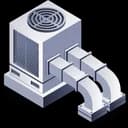
The receiver stores excess liquid refrigerant when needed.
In a commercial HVAC system, the receiver stores extra refrigerant so the system can handle changing cooling demand without losing efficiency.
Include the receiver in routine service checks to verify proper charge and watch for corrosion or leaks.
“Include the receiver in routine service checks to verify proper charge and watch for corrosion or leaks.”
Higher ambient temperatures can require larger receivers to hold additional refrigerant.
Is a liquid receiver required in every system?
No. Some systems use different refrigerant control strategies and do not need a receiver.
Can a liquid receiver affect efficiency?
Yes. Proper sizing and charge help maintain stable operation and efficiency.
Does a liquid receiver apply to water heaters?
It can in refrigerant-based or split heat pump water heating systems.
Need help with liquid receiver? Our licensed technicians in Las Vegas are ready to assist.
Fill out the form below. We typically respond within minutes.


